Specs are compiled from manufacturer listings and verified buyer reviews and can change over time — please confirm the key details on the product page before buying.
You want your music to sound like the studio mix, not a mush of bass and cymbals. The wired in-ear monitor is the tool that gets you there, and the trick is matching the driver setup to how you actually listen — a five-driver hybrid built for gaming will sound wrong on acoustic folk, and a single dynamic driver tuned for vocals may feel thin on electronic. This guide runs through nine real wired IEMs across the price ladder, explains what each driver count actually does to your ears, and tells you which one fits your daily listening.
This guide is built by comparing the manufacturers’ published specifications and the patterns across verified customer reviews, so you get each pick’s real strengths and trade-offs instead of marketing spin.
Below you’ll find picks sorted by build quality, driver layout, and how they behave in real listening sessions — not by who shouts loudest on the product page. Every pick here is a wired in-ear monitor with a detachable cable, so your first upgrade is always the cable, not a new pair. Whether you are mixing tracks on a laptop or chasing footsteps in a shooter, this breakdown of the best in-ear iem options helps you spend once and spend right.
Top Picks


How To Choose The Best In-Ear IEM
The first thing to understand is that an in-ear monitor is a wired earphone built to sit deep in your ear canal, seal out room noise, and reproduce a mix faithfully. That seal is the whole game. A loose tip leaks bass and makes every driver count irrelevant. Before you compare anything else, know that fit and tip choice will change what you hear more than the driver chart does.
Driver type: armature, dynamic, planar, or hybrid
A balanced armature is a tiny driver, often one per frequency band, that handles detail and treble with precision. A dynamic driver is a larger moving-coil driver that pushes air and gives you the thump in the low end. A planar magnetic driver uses a flat diaphragm between magnets to move air evenly across its surface, which tends to widen the soundstage and keep distortion low. A hybrid mixes two or more of these in one shell, usually a dynamic for bass plus several armatures for mids and highs. More drivers do not automatically mean better sound — tuning and crossover design decide that — but a hybrid gives the designer more tools to separate the frequency bands.
Impedance and sensitivity: will your phone drive it
Impedance is the electrical resistance of the earphone, measured in ohms, and sensitivity is how loud it gets for a given amount of power, measured in decibels. A low-impedance, high-sensitivity IEM runs loud straight from a phone or laptop headphone jack. A high-impedance model needs a dedicated amp to reach its potential. For everyday listening on a phone, look for low impedance and high sensitivity so you are not hunting for volume.
The cable and connector matter more than you think
A detachable cable is the feature that keeps a good IEM alive for years. The two common connectors are the 0.78mm 2-pin and the MMCX. A 2-pin cable pulls straight out; an MMCX cable twists and clicks. Either way, a detachable cable lets you replace a worn cable, add an inline mic for calls, or fit a Bluetooth module to go wireless. It is the single most future-proof feature on any wired IEM.
Side-by-Side Comparison
| Model | Best For | Driver Setup | Cable Connector | Connection | Amazon |
|---|---|---|---|---|---|
| KZ AS10★ Best Overall | All-round music listening | 5 balanced armature | Detachable 2-pin | Wired 3.5mm | Amazon |
| Moondrop LANBest Build | Build quality on a budget | 10mm dynamic, beryllium-plated dome | Detachable 0.78mm 2-pin | Wired 3.5mm | Amazon |
| CCA C12Top Performer | Clear highs for the money | 5BA + 1DD hybrid | Detachable 2-pin | Wired 3.5mm | Amazon |
| KZ ZS12 Pro 2 | Competitive gaming | 5BA + 1DD hybrid (6 drivers) | Detachable 2-pin | Wired 3.5mm | Amazon |
| CCA KZ AS16 Pro | Smooth treble detail | 8 balanced armature per side | Detachable 2-pin | Wired 3.5mm | Amazon |
| BASN Bmaster | Stage and studio use | Triple-driver hybrid | Detachable MMCX | Wired 3.5mm | Amazon |
| 7Hz Timeless II | Wide planar soundstage | 14.5mm planar magnetic | Detachable 2-pin | Wired 3.5mm | Amazon |
| AFUL Performer 5+2 | Studio-accurate separation | 2DD + 4BA + 1 planar (7 drivers) | Detachable 0.78mm 2-pin | Wired 3.5mm / 4.4mm balanced | Amazon |
| Kiwi Ears Astral | Reference mixing and mastering | 1DD + 6BA hybrid | Detachable 2-pin | Wired 3.5mm | Amazon |
Detailed Reviews
1. KZ AS10 In Ear Monitor
Our pick — 4.5+★ from 850+ verified ratings; the strongest balance of quality and price.
Five armatures per side that make pop music sing without a hint of harshness.
If you want one wired IEM that handles a mixed library and does not need an amp, the KZ AS10 is the pick. Each earpiece packs 5 balanced armature drivers — tiny precision drivers that split the frequency range into bands — so the low end, the vocal, and the treble each get their own driver. The tuning runs warm and full. The bass here is deeper than you’d expect from an all-armature set, and the high end stays soft rather than sharp. It is the sort of sound that flatters pop, rock, and vocal tracks without punishing them.
What wins people over is the clarity, and the sound is the thing buyers talk about far more than any other trait. The build quality follows close behind in how often it gets singled out. That adds up to a well-rounded wired set: clear armature detail, a solid shell, and enough bass that you are not reaching for an EQ. The 5-driver layout also gives you separation between instruments that a single cheap dynamic driver simply cannot match.
The catch is comfort and cable length. The 32 mentions of comfort split nearly evenly in the reviews — some wearers find the shell fine for hours, others say it starts to ache — so a tip swap and a careful fit matter here. The cable length is the louder grip: 17 of the 23 cable mentions are unhappy, so plan on swapping to a shorter detachable cable or living with the slack. Both are fixable, which is exactly why the detachable 2-pin design is worth having on your first upgrade path.
What buys it fans
- 5 balanced armature drivers per side give clear, separated detail
- Warm tuning with more bass than most all-armature IEMs
- Detachable 2-pin cable survives a cable break
- Secure fit that stays put during normal use
Where it strains
- Comfort is a coin flip for some ear shapes
- Cable length draws the most complaints of any trait
- All-armature design may feel bass-light to bass-first listeners
Reach for this if: you want one wired IEM for general music with precise armature detail.
Look elsewhere if: you need a cable that reaches across a desk without a replacement, or your ears are sensitive to shell pressure.
2. Moondrop LAN HiFi Earphone
A stainless steel shell and a beryllium-plated dome at a price that undercuts most hybrids.
The LAN is built around one 10mm dynamic driver — a single moving-coil driver with a beryllium-plated dome diaphragm, which is a stiff, light dome that resists flexing and keeps distortion low. That single driver sits in a stainless steel housing made by MIM powder metallurgy, a process that sinters metal powder into a solid shell. In your hand it feels denser and more premium than the plastic-bodied picks around it. The build quality is the most-praised trait by a wide margin, and the stainless shell is why.
What the LAN gives you is a cable you can actually upgrade. It uses a universal 0.78mm 2-pin connector, so you can swap to a monitoring cable, a mic cable for calls and gaming, or a Bluetooth cable for walking around. That is the same flexibility the pricier hybrids offer. The fit and compatibility also earn steady praise — it stays seated and works flawlessly across the 0.78mm 2-pin ecosystem.
Honest note: the sound is the most-discussed trait and it splits. Roughly two in three sound mentions are positive, and some listeners find the tuning does not impress them versus the Chu II model buyers compare it to. Durability also draws a small cluster of breakage reports around the two-month mark, though the cable is interchangeable and cheap to replace. Buy it for the shell, the single-driver clarity, and the upgrade path, not as a bass monster.
Build is the headline: the steel MIM shell and beryllium dome explain why quality outranks every other praise category in the reviews, and the 0.78mm 2-pin cable makes it a platform rather than a dead end.
Best for: a buyer who prizes a metal shell and cable swapping on a mid-budget single driver.
The caveat: its sound rarely surprises bass-lovers or anyone who already owns the Moondrop house curve.
3. CCA C12 In Ear Monitor
Six drivers per side, a gold zinc-alloy cover, and a soundstage that spreads wide across the head.
The C12 pairs 5 balanced armatures with 1 dynamic driver on each side, so the low end gets the air of a dynamic while the mids and highs get the precision of armatures. That mix delivers an extended panoramic soundstage and strong layering. The high end stays crisp without turning harsh, which is the single most-repeated thing in the reviews about it. It is a hybrid for people who listen to classical, rock, ACG, and electronic and want the mix spread out in front of them.
The shell is zinc alloy over skin-friendly resin, with slot protection meant to extend service life, and the fit stays seated and comfortable for most wearers. The 8-strand low-impedance cable is detachable for easy swapping. Sound quality is the most-praised trait, with the overall quality close behind, and it is a genuinely clear jump over a bare dynamic driver set. For the price it is one of the more complete hybrid packages in this group.
The sticking point is how the two mixed traits fall. Fit is a coin flip — some ears lock in, others cannot get a seal — and reliability splits too, with a share of buyers noting a unit that quit or a channel that stopped. That is a small slice against a large body of praise, and the detachable cable helps you rule out cable faults when diagnosing. Tighten the tips and it is a fine everyday hybrid.
Sound first, always: the clarity and the open soundstage are what this set leads with, and a 5BA+1DD layout is a lot of driver for the money.
Mind the fit: mixed fit and reliability means a careful tip selection and a cable check go a long way.
Worth it for: someone who wants armature detail plus dynamic bass and a broad soundstage on a budget.
Think twice if: your ears rarely seal well and you want zero risk of a dead channel.
4. KZ ZS12 Pro 2 In Ear Monitor
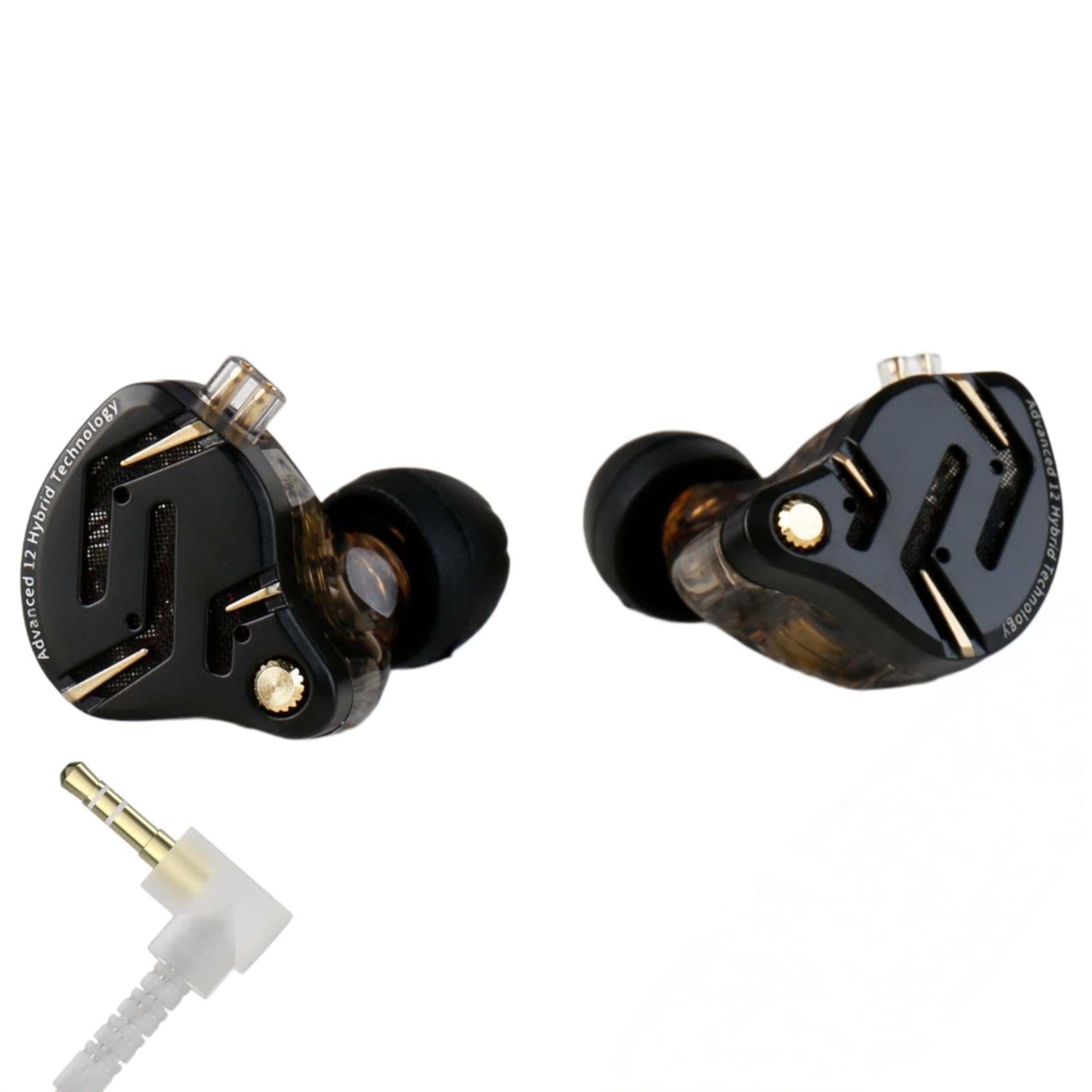
A hybrid tuned to place a footstep before you see the silhouette.
The ZS12 Pro 2 is built for the couch-and-console crowd. Each side holds 4 ultra-high-frequency 31736 balanced armatures and 1 mid-high 30019 unit, plus a 10mm ultra-low-frequency dynamic driver for the boom. A professional electronic crossover board acts as the director, splitting frequencies so the armatures and dynamic do not trespass on each other. The result is precise sound imaging and a fast transient response, which is exactly what helps you locate an opponent in an FPS. It works across music players, consoles, and laptops, and the over-ear cable keeps the shell seated in long sessions.
Sound is the runaway favorite in the reviews, and the value story follows close behind. Buyers call it some of the best sound they have heard in the range, with deep, layered low end and clear mids. The build gets solid marks too — a lightweight metal faceplate over a skin-friendly resin shell — and comfort holds up in long listening blocks. If you want one hybrid that handles both competitive shooters and music, this is the one to check.
The honest trade-off is durability and fit consistency. A small cluster of durability mentions runs negative — a few units stop working within days — and fit splits, with some buyers finding the shell too snug and others finding it loose. Volume also splits, with a handful reporting an uneven left-right balance. Against a deep pool of happy buyers those are minority notes, and the detachable cable makes an early failure cheap to debug, but it is worth knowing going in.
Why gamers reach for it
- Electronic crossover separates the 6 drivers for clean imaging
- Fast transient response helps pinpoint footsteps and gunfire
- Works from phones, consoles, and laptops with a 3.5mm jack
- Metal faceplate and resin shell keep it light on the ear
Where it wobbles
- Durability notes run negative for a small share of units
- Fit varies by ear shape
- A few report uneven left-right volume
Pick it up if: you want a hybrid tuned for competitive shooters and general music at a mid-range price.
Pass if: long-term reliability matters more than gaming precision and you want a safer track record.
5. CCA KZ AS16 Pro In Ear Monitor

Eight armatures a side and a frequency range stretching to 40000Hz, all from a 3.5mm jack.
The AS16 Pro is the driver-count champion of this group. Each side holds 8 balanced armatures — 4 high-frequency 31736 units for resolution, 2 mid 29689 units for vocals, and 1 low 22955 unit for bass — covering 20Hz to 40000Hz. A three-channel 3D-printed conduit and electronic crossover keep the bands from colliding. In practice you get a wide soundstage and a lot of fine detail, and the tuning stays smooth rather than shrill. The ergonomic cavity also isolates noise to 26dB, which is a real number worth noticing when you want the room to drop away.
What buyers key on here is the sound, with the overall quality close behind. The detachable 2-pin silver-plated cable lets you swap to a cable of your choice or pair a Bluetooth module to go wireless. The diamond-cut metal-plastic shell looks the part, and comfort gets solid marks. For a musician or audiophile who wants armature detail without jumping to the premium tier, eight drivers a side is a lot of resolution for the money.
The risk here is durability, and it is a genuine one. All of the durability mentions are negative — buyers describe a flimsy feel and units that break on first use or last only a few months — and reliability splits with a similar share of complaints. That is a real caution on an otherwise impressive set. Handle it gently, keep the cable detachable for fast swaps, and consider it a detail-first pick rather than a knock-around pair.
Detail is the draw: 8 armatures a side and 20Hz–40000Hz give you treble extension and separation that most budget hybrids cannot reach.
The genuine caution: durability notes run negative across the board, so this is not the set to toss loose into a bag.
Fits you if: you want maximum armature detail and a wide stage for music and monitoring.
Not for you if: you need a rugged daily driver that survives commuting abuse.
6. BASN Bmaster Triple-Driver In Ear Monitor
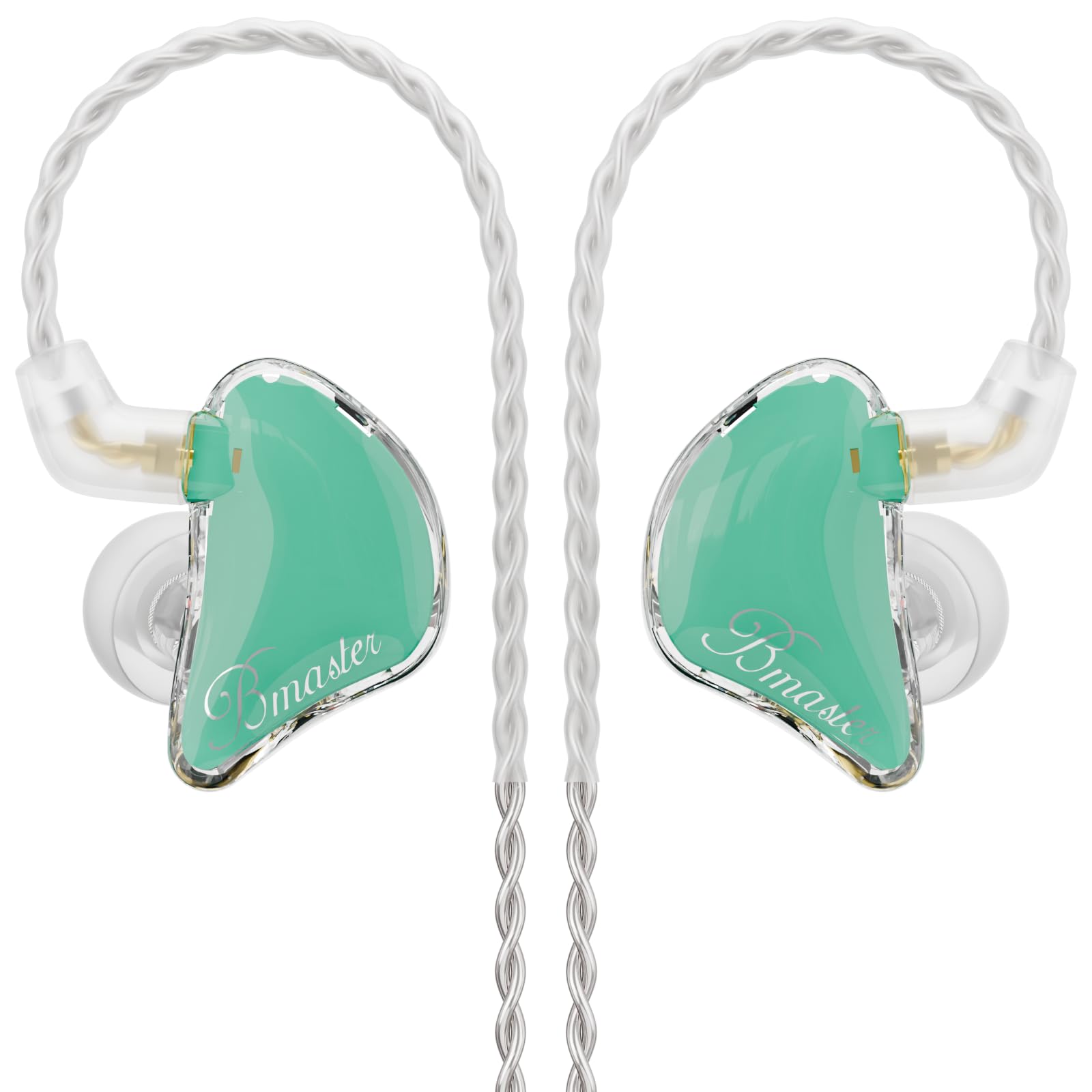
The stage performer’s starter box: two cables, nine pairs of tips, and an adapter in the case.
The Bmaster is a triple-driver hybrid — dual dynamic drivers plus one balanced armature — tuned to give you powerful bass and detailed sound. Each earpiece weighs just 2.3g, so with the earhook it stays pressure-free through a long rehearsal or a full set. The kit is the real story: a silver-plated OFC cable, an inline-mic cable, a 6.3mm adapter, nine pairs of tips (silicone and memory foam), a T-shirt clip, a cleaning brush, and a hard case. That is everything a working musician needs to walk in and plug into a mixing desk, a guitar amp, or a phone.
What buyers value most is the overall quality, with the sound and reliability close behind. The MMCX detachable design lets you pick the mic cable for calls or the silver-plated one for monitoring, without buying anything extra. The memory foam tips seal deep, which pushes isolation and bass together. For a stage, studio, or drum-practice set that has to survive being packed and unpacked, the included hard case and spare tips cover the practical bases.
The trade-off is scale: this is a smaller review base than the budget hybrids, so the pattern is thinner, and comfort still leaves room for a tip mismatch. It is a quieter pick than the driver-count leaders — not a spec monster, but a complete kit for a performer who wants one box and done.
Made for: musicians, drummers, and singers who need two cables and a hard case out of one box.
Less ideal for: listeners who only ever plug into a phone and want a single cable and low fuss.
7. Linsoul 7Hz Timeless II Planar IEM

A 14.5mm planar diaphragm that spreads the stage wider than any armature hybrid here.
This is the set for the listener who wants the sound to wrap around the head. It uses a single 14.5mm planar magnetic driver — a flat, silver-alloy-coated diaphragm driven by a dual-sided N52 magnet array — which moves air evenly across its whole surface and keeps distortion low. That is the technical reason the soundstage feels wide and the bass stays controlled rather than boomy. It is also the only pick here with a tunable nozzle: swap between the copper, stainless steel, and copper cone nozzles to nudge the ultra-highs toward your music.
What reviewers consistently praise is the planar sound and the wide stage, with the overall quality the most-discussed trait. The 4-core 7N single-crystal copper cable is detachable for swaps, and the fit and comfort hold up for desktop listening. If you listen at a desk and want the mix to feel like a room, this delivers.
The honest limits are portability and durability. Portability splits — some note it is impractical to pocket — and durability splits too. Both are minor against the volume of praise, but they fit the same story: this is a home-listening planar, not a gym companion. Keep it at your desk and it earns its keep.
The planar advantage
- 14.5mm planar driver gives a wide, airy soundstage
- Tunable nozzle shapes let you adjust the ultra-highs
- 4-core 7N single-crystal copper cable is detachable
- Controlled, detailed bass without boom
The real limits
- Large housing is awkward to pocket
- Durability notes split
- Best enjoyed at a desk, not on the move
Your set if: you listen at a desk and want a wide, precise, planar soundstage.
Skip the pocket: a big planar shell and split durability notes make it a stay-at-home pick.
8. HiFiGo AFUL Performer 5+2 IEM

Seven drivers per side and a four-way crossover that keeps bass out of the vocal.
The Performer 5+2 is a flagship hybrid done properly: 2 dynamic drivers for layered bass, 4 balanced armatures for mids and highs, and a micro planar driver extending the treble from 10kHz to 30kHz. A four-way electronic crossover plus 3D-printed acoustic tubes give each driver its own path, so bass never muddies vocals and treble never overpowers the mix. That is why it separates instruments so cleanly. The RLC frequency network smooths the resonance peaks, and the air-pressure balance system vents trapped ear pressure so long sessions stay comfortable.
It is also unusually easy to drive for this much hardware: 15Ω impedance and 109dB sensitivity mean a phone or laptop can run it directly. What it rewards is a clean source — it will reveal noise from an older device, and a clean DAC or a simple dongle tightens the bass and widens the stage. Inside the box you get an 8-strand, 144-core silver-plated copper cable, nine pairs of tips, and a hard case, in either 3.5mm single-ended or 4.4mm balanced termination.
The detail and the build are what buyers praise most, with the value and performance close behind. The catch is fit: the case is snug and the ear tips are tricky to attach, and durability splits for a small share. Neither is a deal-breaker at this build level, but expect a few minutes of tip wrestling on day one.
Reference-grade separation: seven drivers on a four-way crossover mean you hear each instrument as its own thing, and 15Ω impedance keeps it phone-friendly.
The day-one catch: snug case and fiddly tip attachment reward a patient setup.
Buy it if: you mix, monitor, or game and want pinpoint instrument separation straight from a laptop.
Hold off if: you dislike a tight case fit or frequent tip changes.
9. Linsoul Kiwi Ears Astral IEM

A tuning map built around a 2.8kHz peak — the studio-monitor sound, measured and deliberate.
The Astral is aimed at working engineers and picky listeners. It pairs a 10mm bioceramic-diaphragm dynamic driver for the low end with two custom midrange armatures and dual ultra-high tweeters. The tuning is the interesting part: a 9dB sub-bass shelf rolls off at 300Hz into a neutral midrange, and a 2.8kHz pinna-compensation peak matches how the human ear hears. That makes vocals and instruments land tonally correct, much like a studio monitor. The 3D-printed resin shell with a gold-sprinkled faceplate is built for long sessions.
What buyers hear is tight, accurate bass and the ability to pick out critical audio cues, which is exactly the point for mixing and competitive gaming. The cable earns praise and the resin shell feels high quality. For a reference-faithful set, that combination — accurate mids and a controlled low end — is the reason to choose it over a bass-forward hybrid.
The big caveat is size and comfort. The shell is large: 14 of 16 size mentions are negative, with buyers calling it massive versus what they are used to. Comfort splits too, and some find the tips uncomfortable after long use. None of that touches the sound, but small-eared listeners should try before committing.
Choose it if: you are mixing or gaming at a desk and want a measured, reference-accurate IEM.
Try first if: you have small ear canals — the large resin shell is the most common gripe.
Know the Specs
Driver configuration: what the letters and numbers mean
An IEM spec like “5BA + 1DD” means five balanced armature drivers plus one dynamic driver per earpiece. Balanced armatures are tiny precision drivers that usually handle the mids and treble; the dynamic driver handles bass. “1DD + 6BA” flips the emphasis toward armature detail, while a single “10mm dynamic” is one all-round driver. A “14.5mm planar” is a flat diaphragm that spreads air evenly and often delivers a wide stage. More drivers give the designer more control over each band, but tuning — how the crossover splits the work — decides whether it sounds clean or crowded.
Impedance and sensitivity: can your phone drive it
Impedance is the earphone’s electrical resistance in ohms; low impedance means less power is needed to reach volume. Sensitivity is how loud the IEM gets for a given input, in decibels. A low-impedance, high-sensitivity set (like 15Ω and 109dB) runs loud and clean straight from a phone or laptop jack. A low-sensitivity set may sound quiet and flat without a dedicated amp. For everyday use on a phone, favor low impedance and high sensitivity so you are not reaching for an external DAC just to hear your music.
Cable and connector: 2-pin vs MMCX
A detachable cable is the most valuable feature on a wired IEM because it lets you replace a worn cable or swap in a mic cable or Bluetooth module. The 0.78mm 2-pin pulls straight out of the shell; the MMCX connector twists and clicks. Both are reliable if handled carefully — pull the 2-pin straight, twist the MMCX gently. A detachable cable turns one set of earphones into a long-term platform, and it makes the first failure a cheap fix rather than a replacement.
Tips, shells, and noise isolation
The ear tip is the seal, and the seal is the sound. A silicone tip that seals deep gives you bass and blocks room noise; a memory foam tip adds isolation and holds the shell in place. The shell material matters too: a metal or resin shell feels more durable and often sits snugger, while a lightweight shell stays comfortable through long sessions. An isolation figure like 26dB means the shell and tip block a measurable amount of outside noise — useful on a train or in a busy room.
Common Questions
What is the difference between a balanced armature and a dynamic driver in an IEM?
Will a 2-pin and an MMCX cable fit the same IEM?
Can my phone drive a multi-driver IEM without an amp?
Do more drivers make an IEM sound better?
How do I get a good seal with an in-ear monitor?
Are in-ear monitors good for gaming?
Can I turn my wired IEM wireless?
What does impedance mean for an IEM?
How long do wired IEMs typically last?
Do I need a DAC to hear the difference in a premium IEM?
The Bottom Line
The best in-ear iem for most listeners is the KZ AS10, because its 5 balanced armature drivers give you clear, separated detail and warm bass that works across pop, rock, and vocals without needing an amp. If you want a metal shell and a true cable-swap platform, the Moondrop LAN gives you a stainless steel MIM body and a 0.78mm 2-pin connector at an entry price. And for gaming, the KZ ZS12 Pro 2 is the one to reach for, with a four-way crossover and fast imaging built to place footsteps before you see them. Choose by the driver layout that fits your listening, then dial in a good seal — the tips and fit will do more for your sound than any spec sheet.
How we choose
We do not accept paid placement. Every pick is matched to a real buyer and a real use-case; we do not hands-on test units.
Sources
Specifications: manufacturer listings and product documentation. Review insights: verified customer reviews, as of November 2026. Pricing: not shown on this page (it changes often); check the current price via the retailer link.
As an Amazon Associate, Tactical Gear Guy earns from qualifying purchases. This does not affect which products we feature.