Specs are compiled from manufacturer listings and verified buyer reviews and can change over time — please confirm the key details on the product page before buying.
If you want a daily recovery verdict rather than a raw pulse read, the Garmin Forerunner 570 is the strongest all-round pick here. It pairs a chest-strap-grade HRV picture with GPS and training guidance on your wrist. The catch most buyers learn late: a wrist optical sensor and a chest strap do not measure HRV equally well. This guide sorts the wearables from the straps so you buy the right tool for what you actually want to track.
This guide is built by comparing the manufacturers’ published specifications and the patterns across verified customer reviews, so you get each pick’s real strengths and trade-offs instead of marketing spin.
Some devices read beat-to-beat intervals from your chest, others estimate from your wrist overnight — knowing which device does which decides how much you can trust the number. Here is the honest breakdown of the best heart rate variability monitor for your training and recovery goals.
Top Picks

How To Choose The Best Heart Rate Variability Monitor
Heart rate variability (HRV) is the tiny variation in the gap between one heartbeat and the next. A chest strap catches each beat directly with electrodes on your skin, while a wrist watch reads it optically through the skin. That single difference decides how clean your HRV data is, so sort it out before you buy.
Chest strap versus wrist wearable
A chest strap like the Polar H10 or Wahoo TRACKR measures the electrical signal of your heart directly. Beat-to-beat timing comes out sharp, which is exactly what HRV needs. A wrist watch is far more convenient to wear 24/7, and overnight HRV from the wrist is fine for spotting trends over weeks. Pick a strap if you want lab-style beat timing during rest or training. Pick a watch if you want one device for sleep, recovery and workouts.
Battery hours in active mode
A strap is rated in active battery hours — the Polar H10 runs 400 hours on a button cell, while the Wahoo TRACKR runs 100 hours per charge. A watch is rated in days of smartwatch mode, like the Forerunner 570 at up to 11 days. Match the rating to your habit: a strap that dies mid-session is worthless, and a watch you must charge nightly defeats the point of overnight HRV.
Connectivity decides your app
Bluetooth and ANT+ are the two wireless standards that carry your heart data to phones, gym equipment and training apps. A strap that speaks both reaches more devices. The Polar H10 offers Bluetooth, ANT+ and 5 kHz, and can run two Bluetooth connections at once. Check that your app of choice — and your treadmill or bike — accepts the standard your monitor uses before you commit.
Side-by-Side Comparison
| Model | Best For | Form | Battery Life | Connectivity | Amazon |
|---|---|---|---|---|---|
| Garmin Forerunner 570★ Best Overall | All-round training and recovery | Wrist watch | Up to 11 days | Bluetooth, ANT+ | Amazon |
| Wahoo TRACKR HEART RATEBest Value Strap | Rechargeable chest strap | Chest strap | 100 hours | Bluetooth, ANT+ | Amazon |
| Polar H10Long-Haul Pick | Long-haul chest strap accuracy | Chest strap | 400 hours | Bluetooth, ANT+, 5 kHz | Amazon |
| Luna Band | No-subscription wrist tracking | Screenless wrist band | About a week | Bluetooth | Amazon |
| WHOOP 5.0/MG | 24/7 recovery coaching | Screenless wrist band | 14+ days | Bluetooth | Amazon |
| Garmin HRM-Fit | Women’s clip-on strap | Chest clip-on | Up to 1 year | Garmin, Bluetooth | Amazon |
| Withings Scanwatch Nova | Hybrid dress watch with EEG and SpO2 | Hybrid watch | 30 days | Bluetooth | Amazon |
| Garmin fēnix 7X Pro Sapphire Solar | Rugged solar expedition watch | Wrist watch | Up to 37 days | Bluetooth, Wi-Fi, GPS | Amazon |
| Garmin fēnix 8 Pro | Off-grid satellite connectivity | Wrist watch | Up to 27 days | LTE, Bluetooth, Wi-Fi | Amazon |
Detailed Reviews
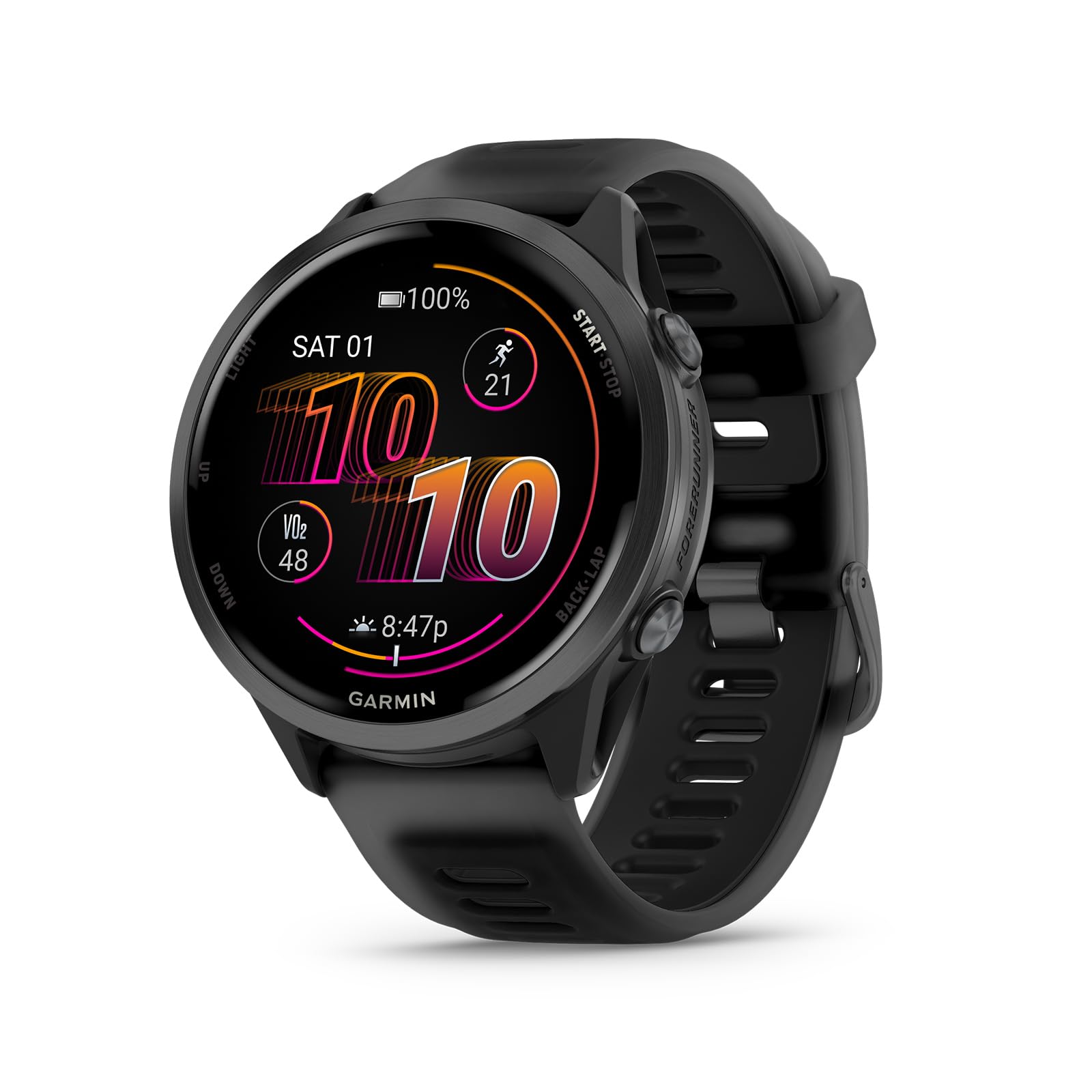
1. Garmin Forerunner® 570, 47mm, Aluminum, Black
Our pick — 4.5+★ from 600+ verified ratings; the strongest balance of quality and price.
The running watch that turns your overnight HRV into a morning go-or-rest call, all on your wrist.
Here is the buyer who gets the most from the Forerunner 570: someone training for a race who wants one device to track sleep, recovery and mileage. The screen is a bright AMOLED touchpanel paired with button controls, set in an aluminum bezel at 47 mm. That means you can swipe through data at the start line, then switch to physical buttons when your hands are cold or wet. The star feature for HRV is training readiness — a score built from your sleep quality, recovery, training load and HRV status.
Battery is a real strength here. Garmin rates it at up to 11 days in smartwatch mode and up to 18 hours in GPS mode, so you can wear it overnight for HRV without a nightly charge ritual. GPS accuracy holds up in dense city blocks and tree cover, which is exactly when most watches drift. The watch also runs personalized Garmin Coach plans and daily suggested workouts that adapt to how recovered you are.
What wins people over is how comfortable and how complete it feels on the wrist — it tracks your workouts, recovery, sleep and activity all in one place, and it wears easily all day and night. The recurring honest note is value: plenty of buyers feel it sits a little high on the ladder for what the hardware inside delivers, even while calling it their best Garmin yet. No watch is the perfect all-rounder for every budget, but this one earns the top spot on the strength of its HRV-driven readiness picture and its no-fuss overnight battery.
What earns it the top spot
- Training readiness score folds HRV status, sleep, recovery and load into one daily verdict
- Up to 11 days in smartwatch mode and up to 18 hours in GPS mode
- Comfortable enough to wear all day and overnight for sleep and HRV capture
- Bright AMOLED touchscreen plus button controls for wet or cold hands
Where it gives you pause
- Sits toward the premium end of the ladder for its hardware, so the value read runs mixed
- HRV and readiness figures are close estimates of the metrics tracked, not lab readings
Right for you if: you want one wearable that turns overnight HRV into a clear training-readiness call every morning.
Think twice if: you only want raw beat-to-beat HRV data for an app and do not need GPS or running guidance.
2. Wahoo TRACKR HEART RATE Monitor
A rechargeable chest strap that broadcasts your beat timing to nearly any app or gym rig.
If you already have a training app you love and just want clean heart-rate data feeding into it, the TRACKR is built for you. It uses a rechargeable battery rated for over 100 hours of active use — about a fifth of the Polar H10’s battery life — so most people charge it roughly once a week instead of swapping coin cells (small button batteries). The H10 clearly wins on sheer hours; the TRACKR’s trade-off is that you recharge it rather than pop in a new battery.
Connectivity is the selling point. It speaks both ANT+ and Bluetooth, so it pairs with a smart trainer, a phone app and gym equipment without a fuss. The LED status light confirms heart-rate detection, battery and connection mid-session, which saves you wondering whether a silent strap is actually recording. The sensor itself is a slim, soft strap with an elastic band that stays put through intense efforts.
The honest piece is battery reliability — the recurring theme is that charge behavior is not always steady, and a few units stop taking a charge sooner than expected. The strap also runs short, so if you have a broader chest you may need the larger band separately. Accuracy is not the concern; the monitor’s output holds up against dedicated equipment. If you want rechargeable convenience and multi-app pairing in a chest strap, this is the value play.
What carries it: dual ANT+ and Bluetooth output reaches trainers, phones and gym gear alike, and the rechargeable battery is rated for over 100 hours of active use.
The honest trade-off: battery behavior draws mixed reports and the stock band runs short for larger chests — size up if you are between bands.
Reach for this if: you want a rechargeable chest strap that pairs with your trainer and app without extra fiddling.
Look elsewhere if: you want a set-and-forget cell you never think about charging.
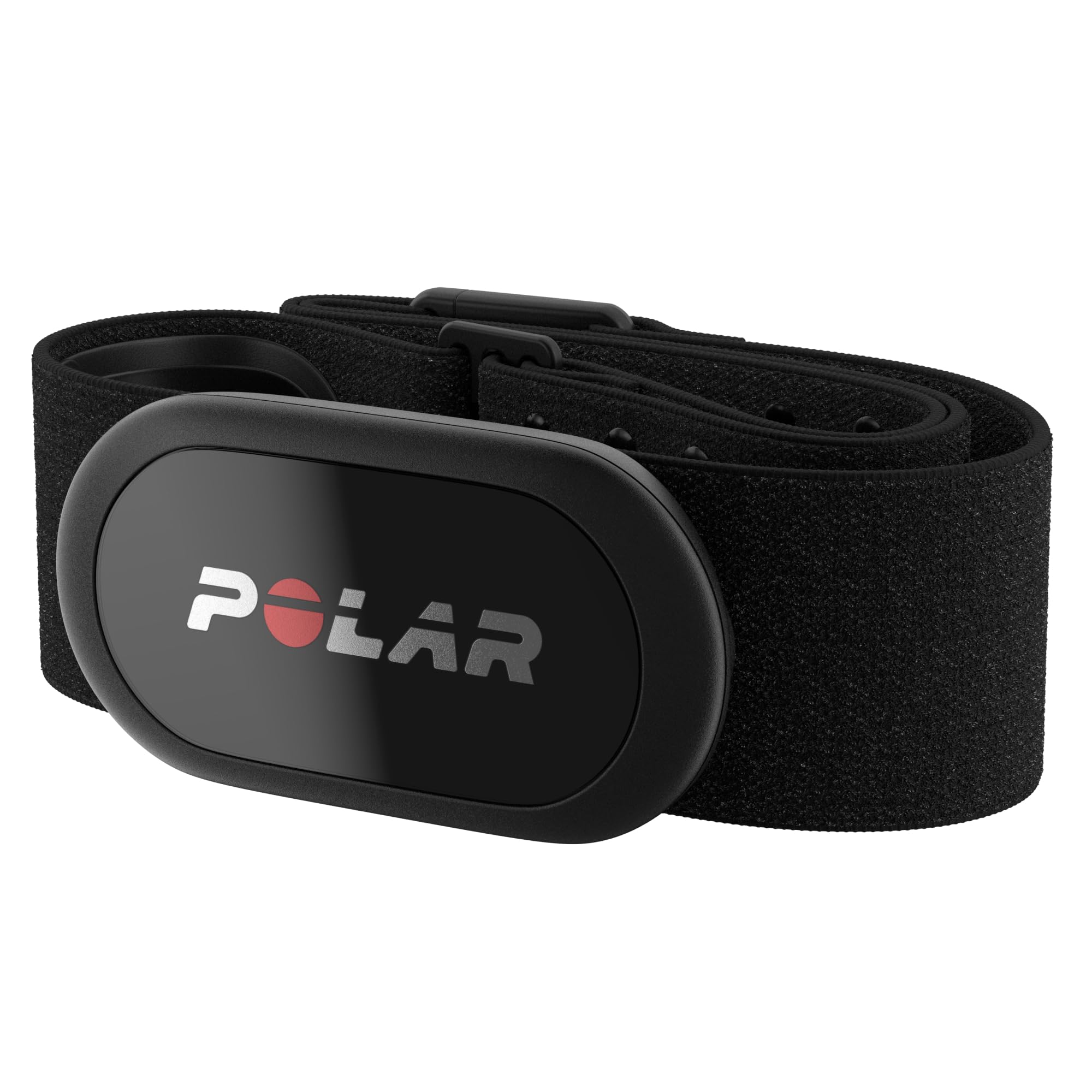
3. Polar H10 Heart Rate Monitor
The strap that set the benchmark for beat-to-beat accuracy, now the endurance champion on battery hours.
The number that matters here is 400. The Polar H10 runs 400 hours on a CR2025 button cell — four times the Wahoo TRACKR’s 100 hours — and you swap the battery rather than plug in a cable. For someone capturing HRV in the mornings and training most days, that means months of readings before you think about a new cell. The strap is fully waterproof with internal memory for multiple hours, so it can record without a phone nearby.
Connectivity is the widest on this list. It offers Bluetooth, ANT+ and 5 kHz, and it can run Bluetooth and ANT+ simultaneously along with two Bluetooth connections at once. That makes it a favorite for HRV apps that expect a clean, direct electrical signal. The PRO chest strap adds improved electrodes, an easy-to-use buckle and silicone dots to keep it sitting still — important, because a shifting strap is what spoils short-window HRV readings.
Here is the caveat you need to weigh. Reliability is the loudest long-run theme, and a meaningful slice of owners hit pairing dropouts or a sensor that quits within the first year or so. The straps themselves wear out faster than the pod. Set against that, the accuracy read is genuinely strong relative to wrist monitors. Buy it as a precision tool you will eventually service, not a forever device.
Where it shines: the 400-hour button-cell battery and triple connectivity (Bluetooth, ANT+, 5 kHz) make it the cleanest long-run data feed for HRV apps.
Know before you buy: durability and pairing reliability are the recurring concerns — expect to replace the strap band over time.
Suits: the data-first athlete who wants the sharpest beat timing and months between battery swaps.
Skip if: you want a strap you never think about — the band and pairing can demand attention.
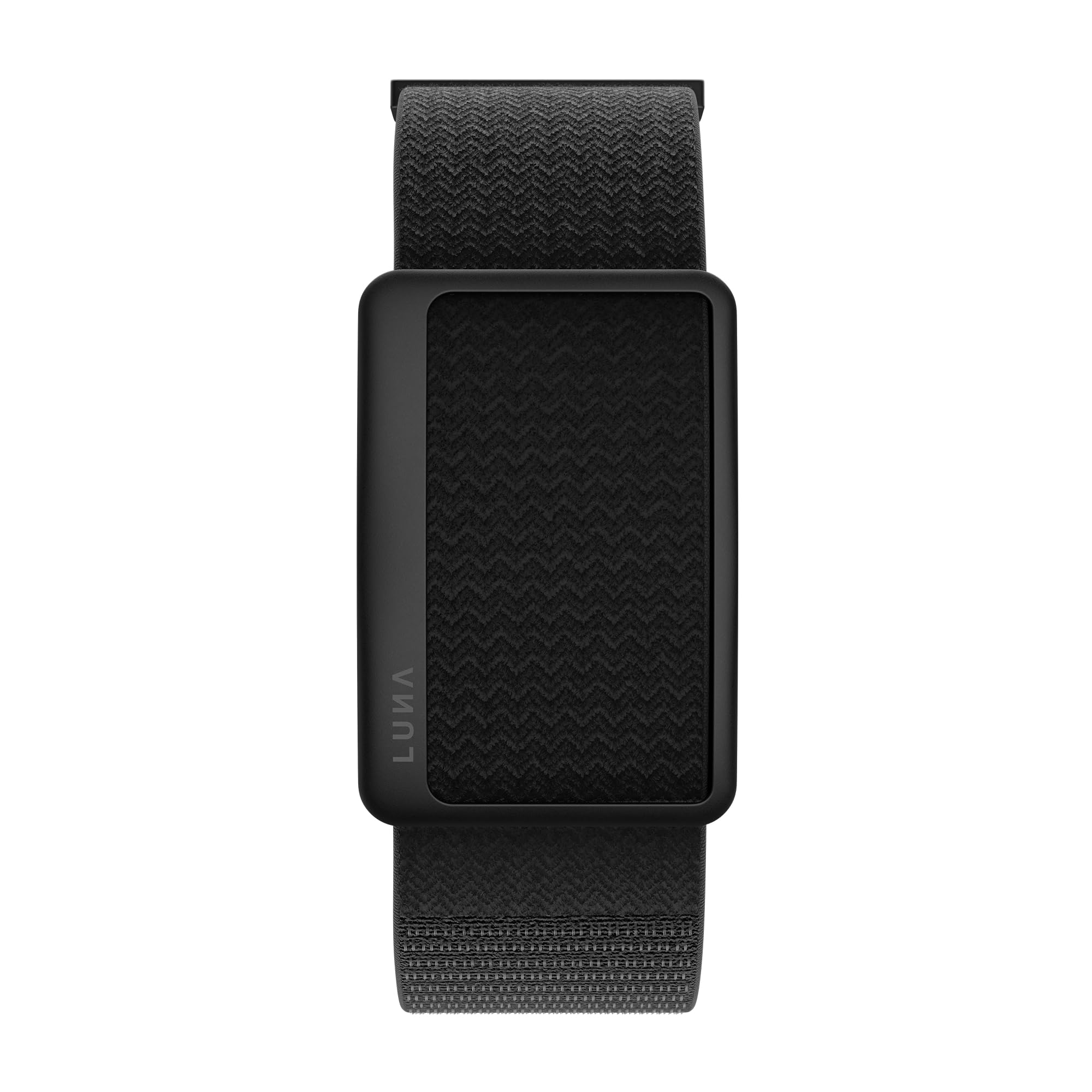
4. Luna Band – Screenless Activity and Fitness Tracker
A screenless band that tracks HRV and sleep with no monthly fee hanging over your head.
If you want recovery and sleep data without a subscription, the Luna Band is built for you. It is a screenless band powered by LifeOS — the maker says its engine was trained on 150mn+ sleep events and 5.4mn tracked behavior events — and it pulls VO2 Max (a measure of aerobic fitness), heart rate variability, blood oxygen (SpO2, the oxygen level in your blood), skin temperature, heart rate and sleep into one place. Voice control is built in, and you can toggle metrics like heart rate, SpO2, temperature and stress off individually to save battery.
You get two strap sizes in the box (S-M and M-L), so you can find a fit without an extra order, and the clean, minimal design reads more like a piece of jewelry than a gadget. The battery pushes past a week for most people, and the app presents your daily breakdown in a way that actually guides choices. The comfort holds up for overnight wear, which is what any wrist-based HRV reading depends on.
The catch is the app experience and the small install base — buyers report the interface feels less smooth than they hoped, and with a new brand you are buying into an ecosystem still finding its feet. If you want HRV and recovery for the long haul without a subscription, this is the honest contender. It just asks you to accept a leaner app in exchange for that freedom.
Why the band earns a slot
- Tracks HRV, VO2 Max, SpO2, skin temperature and sleep with no subscription
- Two strap sizes in the box — S-M and M-L — so fit is covered
- Battery runs past a week for most wearers
- Screenless, comfortable design for overnight HRV capture
What to weigh
- App interface does not land with everyone
- Newer ecosystem with a smaller track record than the big names
Best for: the subscription-averse tracker who wants overnight HRV and recovery without a recurring fee.
Not for: you if a polished, mature app ecosystem matters more than avoiding a monthly cost.
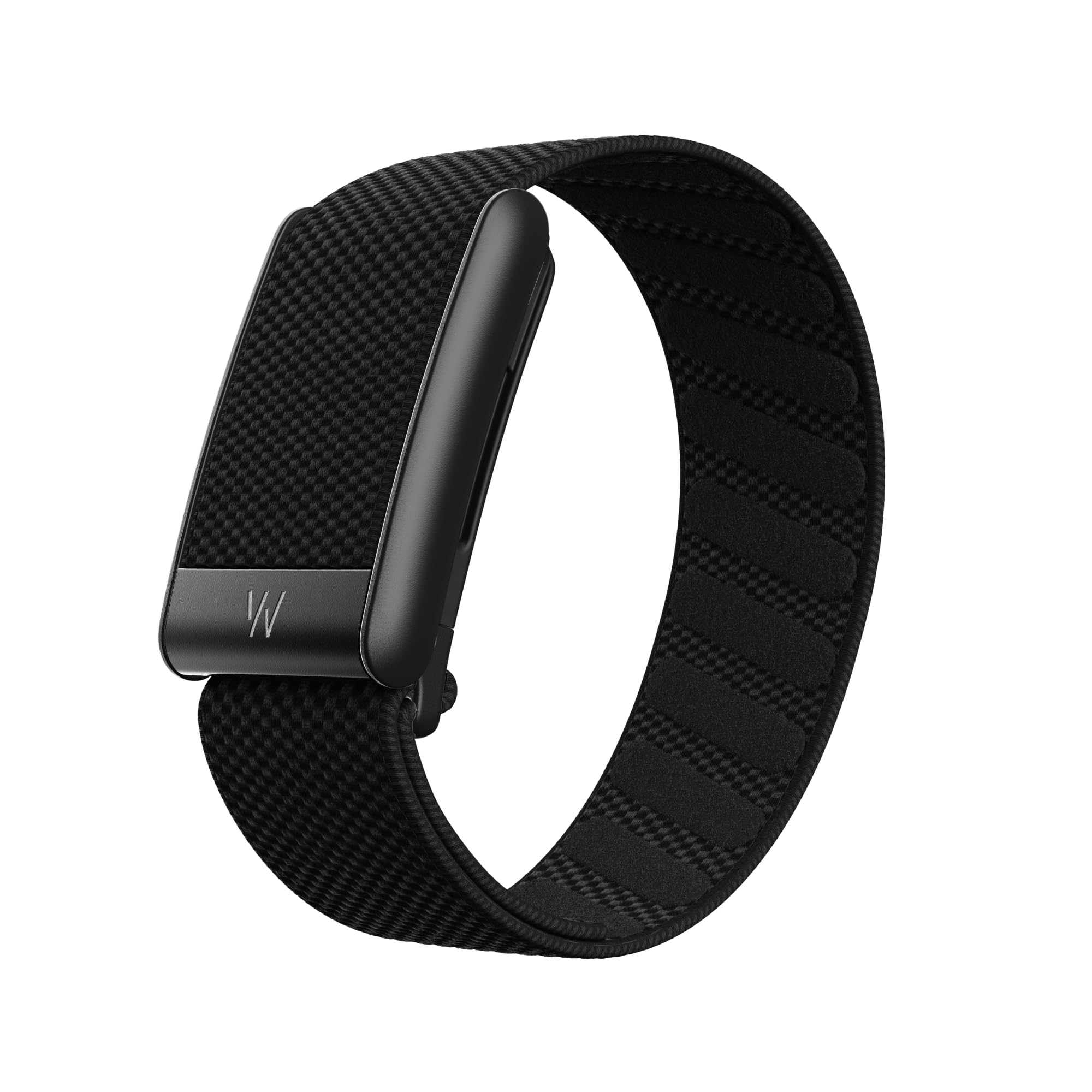
5. WHOOP 5.0/MG Wearable
The recovery-first band that reads your HRV around the clock and turns it into a coaching voice.
WHOOP takes a different tack from every watch here: there is no screen at all. Instead, the app turns a huge data set — the maker cites 140+ health and fitness metrics and 160+ daily behaviors logged in the WHOOP Journal — into guidance on what to do next. HRV is tracked continuously against your personal baseline, alongside resting heart rate, respiratory rate, blood oxygen and skin temperature. The result is a live picture of how your body is handling stress and load, not a once-a-morning number.
Battery life is the practical win at 14+ days, and the included Waterproof Wireless PowerPack lets you charge on the wrist without ever taking the band off. The device is rated IP68 water-resistant up to 10 meters for 2 hours. For overnight HRV capture, the lightweight, screenless design stays comfortable enough to sleep in, which is the whole point of a recovery tracker.
What people value is how much health context it surfaces and how it helps them understand their own body. The honest note is accuracy — some wearers find the recordings inconsistent, while others find the data comprehensive and better than wrist-based rivals. Add the membership model and the value read runs mixed for people already in the ecosystem. Buy it for the coaching and the 24/7 HRV context, not for a single hard number.
The big appeal: continuous HRV monitoring against your baseline with a coaching layer that adapts, wrapped in a screenless band that runs 14+ days and charges on your wrist.
The caveat: tracking accuracy draws mixed reports, and the membership model shapes the value read.
Worth it for: the athlete who wants a full-time recovery coach and does not mind a screenless band.
Pass on it if: you want to see a display on your wrist or own your data without a membership arrangement.
6. Garmin HRM-Fit – Women’s Heart Rate Monitor Clip-On

A chest monitor that clips to your sports bra instead of wrapping a band around your ribs.
This is the pick for the runner or lifter who finds a traditional chest strap uncomfortable. The HRM-Fit attaches to medium- and high-support sports bras with a clip-on design — longline, front-zip or light-support bras are not recommended — so there is no band cinched under the ribs. It transmits accurate real-time heart rate and heart rate variability data to compatible Garmin devices, the Tacx Training app and other smartphone apps.
The battery life is a genuine standout at up to 1 year, so you are not thinking about a charge through a full training block. It also captures running dynamics such as vertical oscillation, ground contact time, stride length and vertical ratio when paired with a compatible Garmin device. For treadmill work, it computes pace and distance for indoor track and treadmill sessions. A clip-on you forget you are wearing is one you will keep on for every session.
The honest limit is fit range and compatibility. It is purpose-built for sports bras that meet the support criteria, so a light-support bra simply will not hold it the way a proper band would. It also shines brightest inside the Garmin ecosystem. If you already train with a Garmin watch and want HRV without a rib strap, this solves a real comfort problem others ignore.
Why it is here: the bra clip-on mounting and the up-to-1-year battery make HRV capture genuinely comfortable for women who dislike chest bands.
What narrows it: it needs medium- or high-support sports bras and works best with a Garmin device.
Made for: the Garmin-training woman who wants HRV data without a band around the ribs.
Not the one if: you train in light-support or front-zip bras, or you are outside the Garmin app world.
7. WITHINGS Scanwatch Nova

A stainless-steel hybrid watch that tracks overnight HRV and still looks like a dress piece.
If you want HRV without a gadget on your wrist, the Scanwatch Nova is the one that looks like a real watch. It runs 24/7 heart rate monitoring with alerts if your rate climbs too high or dips too low, and it captures overnight heart rate variability so you can follow heart trends over time. The case and band are stainless steel, so it reads as formal where the plastic wearables read as sporty.
Battery life is outstanding at 30 days, and the maker rates a 2-hour charge time — you will spend a couple of hours a month connected to a cable, not a couple of hours a week. On the health side it adds on-demand blood oxygen and overnight tracking for breathing disturbances, plus a TempTech24/7 temperature module that tracks baseline body temp and fluctuations. Sleep tracking covers duration, light and deep sleep, interruptions, regularity and a Sleep Quality Score.
The thing you sacrifice is smartwatch depth. Notifications are minimalist, and the app flow for setting an activity mode trips up even long-time Withings wearers. What buyers celebrate is the look and the craftsmanship — it functions like a proper watch and holds its own as a dress piece. If your priority is a health-focused watch you can wear to dinner, this delivers; if you want a wrist phone, it will frustrate you.
What it does beautifully
- Overnight HRV plus 24/7 heart rate with high and low alerts
- 30-day battery life with a 2-hour charge time
- Stainless-steel case and band that pass as a real dress watch
- On-demand SpO2 and overnight temp-based respiratory insights
What you give up
- Minimal notifications compared with a full smartwatch
- Activity-mode setup in the app is fiddly even for Withings regulars
Choose it if: you want overnight HRV and heart alerts in a watch you would happily wear with a suit.
Don’t if: you want rich phone notifications and a deep app experience over looks.
8. Garmin fēnix 7X Pro Sapphire Solar

The go-anywhere expedition watch that keeps logging HRV when the trail runs out of signal.
Where the Forerunner 570 aims at the race-day runner, the fēnix 7X Pro is built for the hiker, climber or ultra runner who disappears for days. It pairs a large 1.4-inch display with a 51 mm fiber-reinforced polymer case, a titanium bezel and rear cover, and a scratch-resistant Power Sapphire solar charging lens. That solar lens uses the sun’s energy for weeks of battery life in smartwatch mode. The health side includes 24/7 monitoring with HRV status and Pulse Ox, plus advanced sleep monitoring — Garmin is careful to note these are close estimates, not medical readings.
The hardware is meant to be abused. A built-in LED flashlight with variable intensities and strobe modes lights the trail at night or the hallway at 3 a.m. Multi-band GPS with SatIQ technology sharpens positioning in tricky terrain while protecting battery. New hill score and endurance score features blend your training data into a progress read, and preloaded TopoActive maps plus Up Ahead prompts keep you on course.
The honest split is on the display and the buttons. The screen draws praise for brightness in direct sun from some and complaints about visibility from others, and a few wearers report button problems over time. What owners agree on is quality and battery — this is the model people pass down rather than replace. It also leads the fēnix 8 Pro on battery days, and that gap matters if you are off-grid for weeks.
Standout spec: the Power Sapphire solar lens delivers weeks of battery life in smartwatch mode, so an off-grid trip does not end in a dead watch.
Honest note: the display reads mixed — great in sun for some, barely visible for others — so try it in person if screen clarity matters.
Great match for: the backcountry athlete who needs HRV, maps and solar-charged staying power in one rugged case.
Overkill if: you train indoors and want a lighter running-first watch on the wrist.
9. Garmin fēnix® 8 Pro, 51mm, Sapphire, Titanium
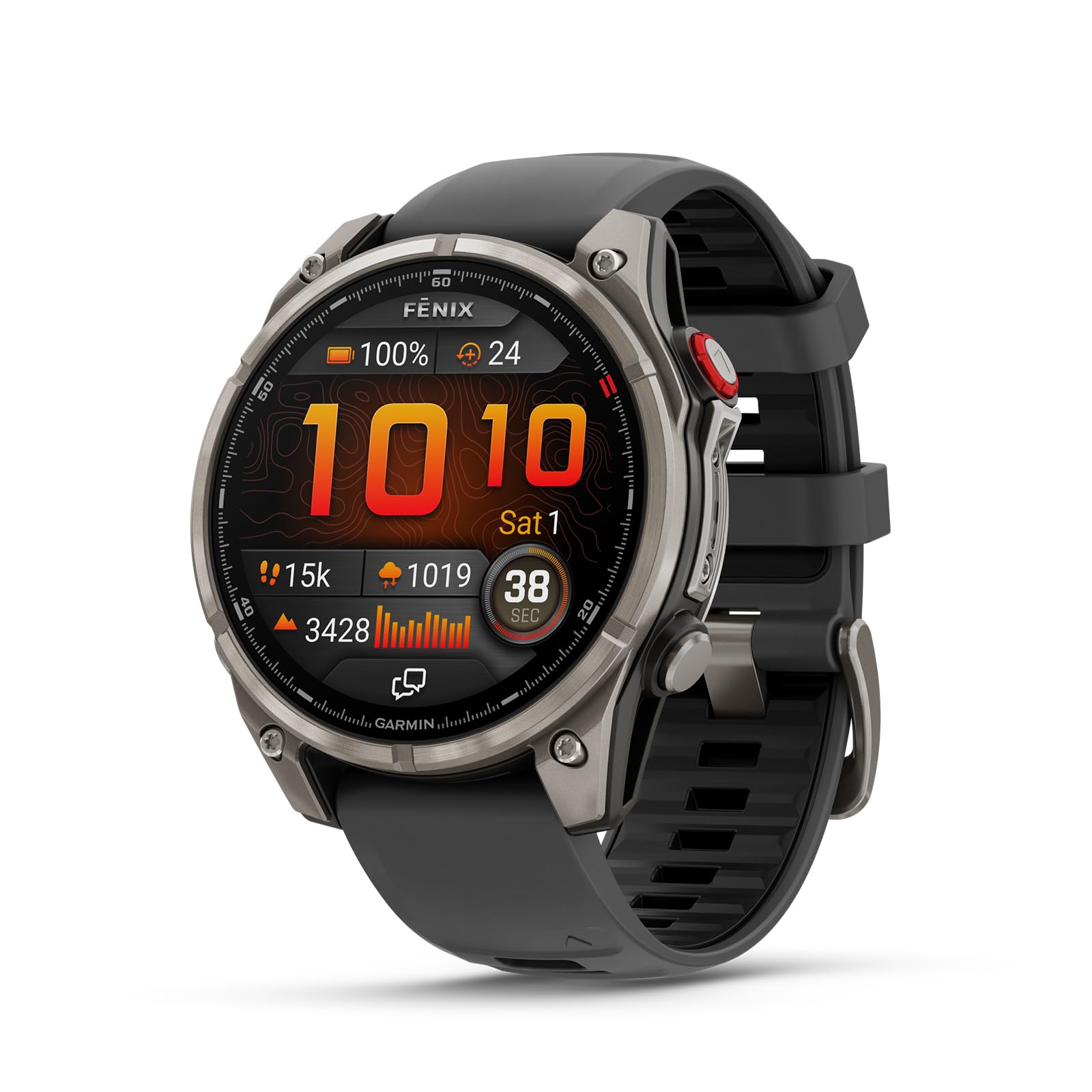
The watch that can call for help from a valley with no phone bars — and still read your HRV.
The fēnix 8 Pro is for the adventurer who goes where cell coverage ends and wants a communication lifeline on the wrist. Its headline is built-in inReach technology for two-way satellite and LTE connectivity — an active subscription is required and coverage limitations apply. In an emergency you can trigger an interactive SOS to the Garmin Response coordination center. LTE also lets you leave the phone behind, exchange messages and make voice calls from the watch.
For recovery tracking, it runs 24/7 health and wellness monitoring with wrist-based heart rate, advanced sleep monitoring, HRV status, an ECG app and Pulse Ox — Garmin again notes these are close estimates, not a medical device. The display is a bright 1.4-inch AMOLED behind a scratch-resistant sapphire lens, in a titanium case. Battery is rated at 27 days, and the watch carries a 40-meter dive rating with leakproof metal buttons for scuba and apnea activities.
The number to weigh is 27 against the fēnix 7X Pro’s dramatically longer solar-assisted run — so if raw days off-grid dominates, the 7X Pro leads on staying power. What the 8 Pro adds is the satellite lifeline and LTE. The honest sticking point is value: for many buyers the performance feels close to cheaper Garmin models, and a few report reliability quirks. You are paying for the connectivity safety net, not a leap in day-to-day metrics.
The defining feature: built-in inReach satellite and LTE connectivity with an interactive SOS to the Garmin Response center — an active subscription and coverage apply.
The honest trade-off: 27 days of battery is shorter than the fēnix 7X Pro’s solar run, and the premium buys connectivity, not bigger everyday gains.
For you if: you venture off-grid and want a satellite SOS lifeline and LTE messaging with full HRV tracking in one watch.
Not if: you stay in coverage and would rather bank the battery days of the 7X Pro.
Know the Specs
HRV Status and Beat-to-Beat Data
Heart rate variability is the millisecond variation between consecutive heartbeats. A lower HRV often reflects strain or poor recovery, while a higher figure tracks with a body that is rested. Chest straps catch this timing directly with skin electrodes, so beat-to-beat reads come out sharp. Wrist watches estimate it optically, which is fine for spotting trends over weeks but is why serious data-first athletes often add a strap.
Battery Hours vs Battery Days
Straps are rated in active battery hours and watches in days of smartwatch mode — two different clocks. A 400-hour strap like the Polar H10 is built to last months between cell swaps; a watch like the Forerunner 570 runs up to 11 days and needs recharging so it can keep capturing overnight HRV. Match the rating to your habit: overnight wear demands a multi-day watch, while a chest strap just needs enough hours to survive a session.
ANT+ and Bluetooth
These are the wireless standards that move your heart data from the sensor to your phone, gym rig or bike trainer. ANT+ is common on fitness equipment, while Bluetooth is the standard for phones and most training apps. A monitor that speaks both, like the Wahoo TRACKR or Polar H10, connects to nearly anything. One that offers a single standard, like the Bluetooth-only Luna Band, is simpler but reaches fewer machines.
Form: Strap, Clip-On, or Watch
Chest straps sit just below the ribs and stay put through hard efforts. The Garmin HRM-Fit instead clips to a sports bra for women who dislike a rib band. Wrist wearables, from the screenless WHOOP to the stainless Withings Scanwatch Nova, trade some signal purity for all-day convenience. Pick the form you will actually wear overnight, since a monitor left in the drawer records nothing.
Common Questions
Does a chest strap measure HRV more accurately than a wrist watch?
Will the Wahoo TRACKR or Polar H10 connect to my iPhone and my gym treadmill?
How often do I have to charge a chest strap versus a watch?
Can I get HRV readings without a monthly subscription?
Is a solar watch worth it if I train mostly indoors?
What does the Garmin training readiness score actually use?
Will the Garmin HRM-Fit work with a sports bra I already own?
Do I need the WHOOP membership to use the device?
Can the fēnix 8 Pro make calls without my phone nearby?
Is the overnight HRV on a hybrid watch like the Withings Scanwatch Nova useful?
The Bottom Line
For most people, the heart rate variability monitor that earns the top pick is the Garmin Forerunner 570 — it folds HRV status into a daily training-readiness read and holds an overnight charge for up to 11 days. If your priority is the sharpest beat-to-beat data, grab the Polar H10 and its 400-hour button-cell battery, or the rechargeable Wahoo TRACKR if you would rather top up than swap a cell. And for going off-grid, the Garmin fēnix 7X Pro Sapphire Solar carries the solar-charged staying power that a satellite-connected watch trades away for its SOS lifeline. The Forerunner 570 holds the strongest rating of the watches here at 4.5+ across a large owner base.
How we choose
We do not accept paid placement. Every pick is matched to a real buyer and a real use-case; we do not hands-on test units.
Sources
Specifications: manufacturer listings and product documentation. Review insights: verified customer reviews, as of November 2026. Pricing: not shown on this page (it changes often); check the current price via the retailer link.
As an Amazon Associate, Tactical Gear Guy earns from qualifying purchases. This does not affect which products we feature.