Specs are compiled from manufacturer listings and verified buyer reviews and can change over time — please confirm the key details on the product page before buying.
You want one machine that washes a family’s laundry and dries it without hauling a wet bundle into a second appliance. A full size washer dryer combo does exactly that, but the three machines here differ wildly in how they dry, how much energy they pull, and how much space they eat. The short answer: the Samsung Bespoke AI Laundry Combo is the strongest all-rounder for most households, the AEG Series 7000 suits smaller loads and gentler fabrics, and the GE Profile is the one to study carefully before you commit.
This guide is built by comparing the manufacturers’ published specifications and the patterns across verified customer reviews, so you get each pick’s real strengths and trade-offs instead of marketing spin.
Ventless heat pump drying is the technology that makes these combos possible in a closet or a hallway without an exhaust duct. Below are the capacity, energy, and drying specs that separate these three machines. These are the picks worth your attention if you want a full size washer dryer combo.
Top Picks
How To Choose The Best Full Size Washer Dryer Combo
Drying technology is the biggest decision, because it determines whether a combo dries a full load or leaves shirts damp. All three machines here use a heat pump dryer, which moves heat around a sealed loop instead of blowing hot, moist air out a duct. That is what makes a ventless install possible.
Match capacity in cubic feet to your actual loads
Capacity is stated in cubic feet, which measures the drum volume. The Samsung lists 5.3 cubic feet and the GE Profile lists 4.8 cubic feet, so the Samsung holds a bigger single load. A bigger drum matters most if you wash bulky bedding or towels for a family. Smaller, more frequent loads suit a tighter drum just fine.
Read the annual energy figure before you buy
Annual energy consumption is given in kilowatt hours per year — a kilowatt hour being one unit of electricity on your bill. This figure predicts what the machine costs to run each year. The gap between the picks here is enormous: 103 kWh per year for the Samsung against 535 for the GE Profile.
Check the power supply and the footprint
A combo that plugs into a standard 120V outlet (the ordinary household wall socket) installs in far more places than one that needs a dedicated high-voltage dryer circuit. Measure your doorway, your closet, and the depth with the door open, because these machines are heavy and wide. The GE Profile, for example, lists a depth of 54.5 inches with the door open.
Side-by-Side Comparison
| Model | Best For | Capacity | Annual Energy | Weight | Amazon |
|---|---|---|---|---|---|
| Samsung Bespoke AI Laundry Combo★ Best Overall | Most households | 5.3 cubic feet | 103 kWh per year | 317 pounds | Amazon |
| AEG Series 7000 DualSense | Gentle fabric care | 9 kg wash / 5 kg dry | — | 76.5 kg | Amazon |
| GE Profile PFQ97HSPVDS | Cycle variety | 4.8 cubic feet | 535 kWh per year | 323 pounds | Amazon |
Detailed Reviews
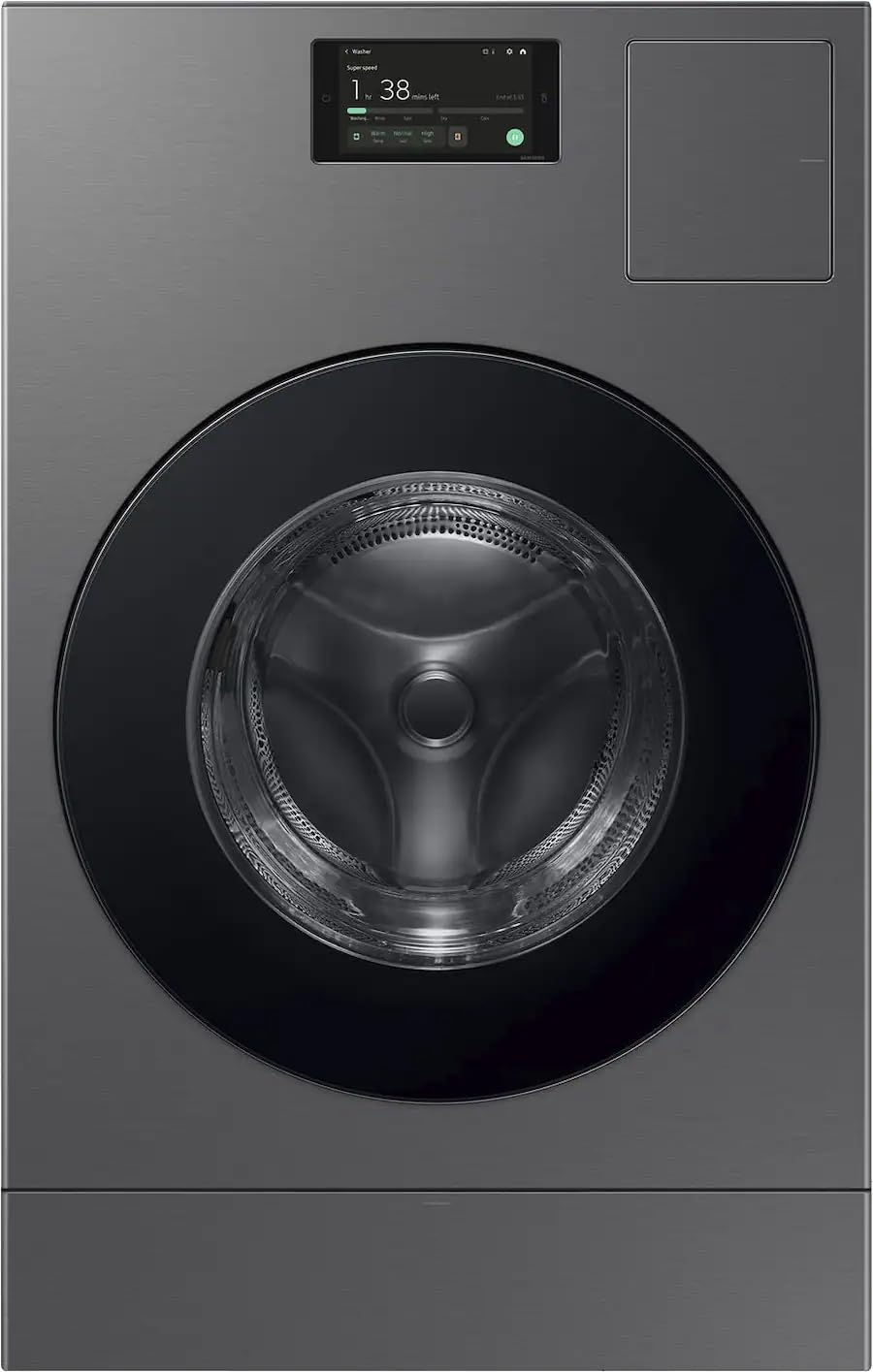
1. Samsung Bespoke AI Laundry Dryer Combo
Our pick — 4.0+★ from 30+ verified ratings; the strongest balance of quality and price.
The plug-anywhere workhorse that washes and dries a full load in 98 minutes.
The number that decides this category is annual energy consumption, and the Samsung runs at 103 kilowatt hours per year. The GE Profile below it pulls 535 kilowatt hours per year — the same measured unit, and the Samsung figure is roughly a fifth of the GE’s. That is what wins most households over: a ventless heat pump (a sealed drying loop that recycles heat instead of venting it outside) that keeps running costs at 103 kWh per year.
Capacity sits at 5.3 cubic feet, which is the largest drum of the three. Against the GE’s 4.8 cubic feet, you are getting a bigger single load in the same style of machine. The install story is the other headline: this combo plugs into any standard 120V outlet, so you do not need a dryer vent or a dedicated high-voltage dryer circuit. If your laundry corner has an ordinary wall socket and a drain, that is enough. Samsung also fits a Flex Auto Dispense system that doses up to 47 loads of detergent automatically, or flexes to 34 loads of softener alongside 25 loads of detergent when you split it.
The honest trade-off is cycle behaviour. Owners describe the wash and dry results as clean and dry overall, but drying performance draws mixed feedback — heat pump drying is slower and gentler than a hot-air tumble, so a dense load of towels can feel like it takes its time. The AI Opti Wash & Dry system reads soil level and fabric type to set the cycle, which helps, but it is not a magic shortcut on heavy items. There is also real heft here: 317 pounds, so treat installation as a two-person job and measure the doorway first.
Where it earns its keep
- 103 kWh per year keeps running costs low for a full size combo
- 5.3 cubic feet is the biggest drum in this lineup
- 120V standard outlet and no vent exhaust needed
- Auto dispense of up to 47 loads reduces measuring and mess
What to weigh first
- Heat pump drying is gentler but slower on dense loads
- 317 pounds means careful handling at install
- 98-minute cycle is the short cycle, not the heavy-duty one
Made for: a family that wants one machine, a standard outlet, and no ductwork.
Think twice if: you dry heavy towels back to back and expect hot-air speed.
2. AEG Washing Dryer Series 7000 with DualSense

Built for wool, outdoor shells, and anyone who checks the care label first.
DualSense is the whole reason to look at this AEG. It adjusts the temperature and the drum movement to match the textile in front of it, so wool and outdoor clothing get washed and dried gently rather than tossed on a generic hot cycle. There are five care programs that run a full wash-and-dry in one go, and a SpecialCare Wash-to-Dry button that lets your wash program hand off automatically to the matching dry program. If your basket is mostly delicates and technical outerwear, that hand-off saves you from babysitting the machine.
Sizing is different from the other two, and it matters. This one is rated at 9 kg for washing but 5 kg for drying — a metric capacity, so roughly two-thirds of what goes in wet can come out dry in the same cycle. In practice that means a full 9 kg wash load needs to be split before you dry it. The spin tops out at 1600 rpm (revolutions per minute), which pulls more water out before the dry phase begins. That is a useful help, but it does not change the 5 kg drying ceiling.
The steam refresh is the sleepwear-and-rewear feature: it neutralises odours and relaxes existing wrinkles in 25 minutes while using only 2 litres of water, according to AEG’s internal test with 1 kg of laundry. ProSense+ weight sensors also give you feedback on underloading or overloading as you fill the drum, and recommend a detergent amount on the display. The catch is the drum itself — it is porcelain enamel, which rewards a careful hand, and the machine weighs 76.5 kg, so plan the install with help.
Wrinkle relief: the 25-minute steam cycle is the standout for anyone who hates ironing, and it uses 2 litres of water instead of a full wash.
The honest limit: 5 kg of drying against a 9 kg wash drum means bigger loads get split, so it suits lighter households better than a busy family.
Best fit: smaller households and fabric-conscious buyers who dry wool and outdoor gear.
Look elsewhere if: you regularly wash and dry nine kilos in one uninterrupted run.
3. GE Profile PFQ97HSPVDS Washer/Dryer Combo
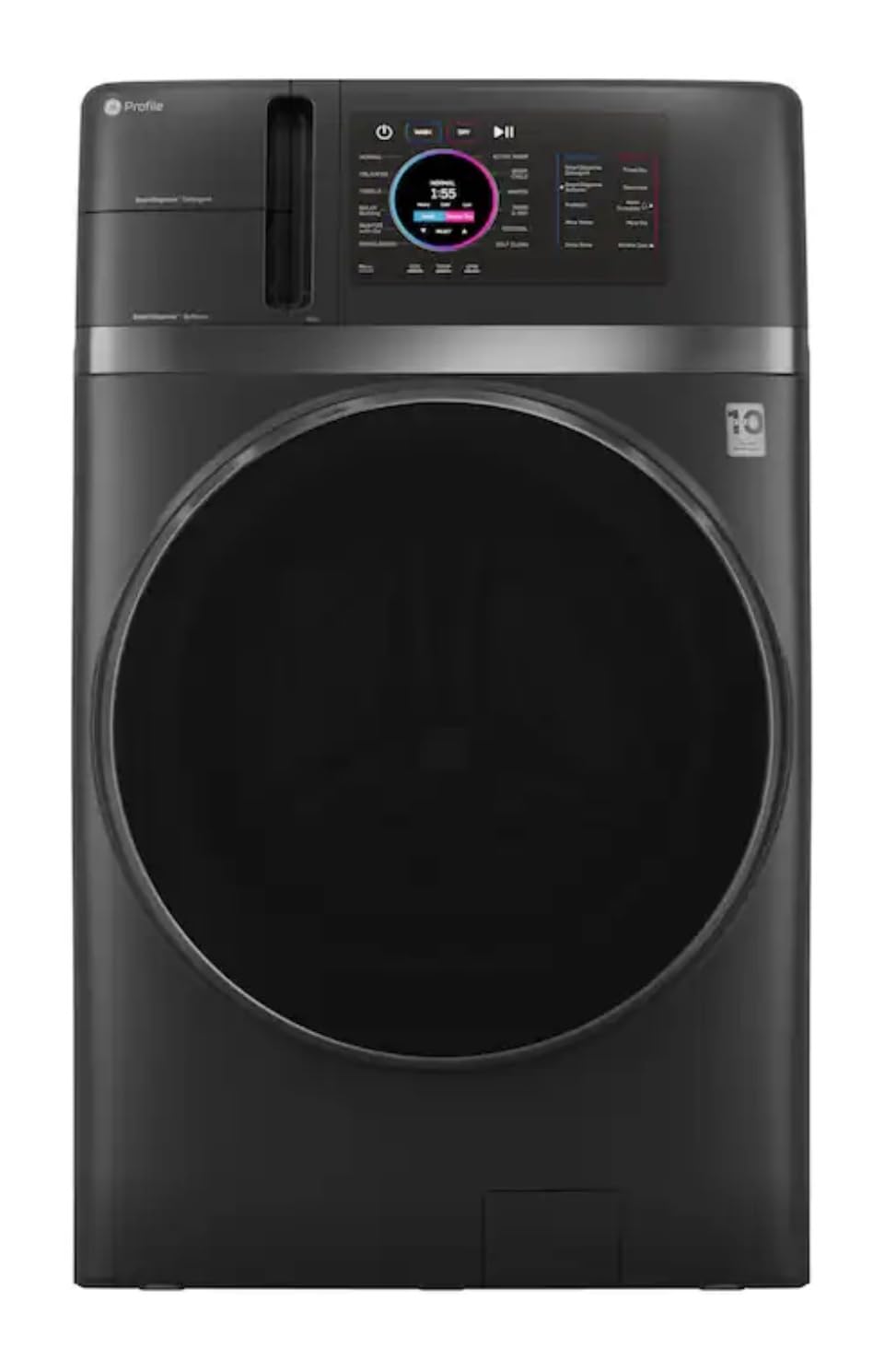
The cycle menu is enormous; the energy bill is the part to read twice.
Count the programs and the GE Profile looks like the most flexible machine here — 12 wash cycles and 14 dryer cycles give you a setting for nearly every fabric you own. That breadth is the appeal if you prefer picking a specific program over trusting an automatic sensor. The Fast Airflow Drying System works with a ventless heat pump dryer, so the no-duct install applies here too.
Then you hit the energy figure. This combo lists 535 kilowatt hours per year against the Samsung’s 103 kilowatt hours per year, which is a wide gap in what the appliance draws over a year of use. Capacity is 4.8 cubic feet, slightly under the Samsung’s 5.3 cubic feet, and it weighs 323 pounds against the Samsung’s 317 pounds — near-identical heft, marginally less room inside. At 323 pounds and 535 kWh per year, it is the heaviest and thirstiest machine here, so weigh that against its cycle variety.
Drying is where buyers split, and this is the one honest caveat worth naming. The combo is regarded as functional and convenient, and clothes do come out clean. But drying performance draws genuinely mixed feedback, with some owners finding it delivers and others finding it leaves clothes short of dry. Treat the dry phase as something to test with your own loads during the return window. The GE also lists a 54.5-inch depth with the door open, so make sure your laundry space can spare the swing.
What the cycle list buys you: 12 wash and 14 dry programs is real flexibility for a household with mixed fabrics.
The follow-up question: at 535 kilowatt hours per year you are choosing cycle choice over running cost, and a wet-load test early on will tell you whether its dry cycle suits your laundry.
Reach for this if: a deep cycle menu matters more to you than the lowest energy draw.
Pause if: you want the most efficient ventless drying in this group or the biggest drum.
Know the Specs
Annual Energy Consumption (kWh per year)
This is the electricity a machine is rated to use over a year of typical running, measured in kilowatt hours — one kilowatt hour being one unit on your power bill. A lower figure means less cost over the life of the appliance. The Samsung lists 103 kilowatt hours per year and the GE Profile lists 535, so the number is the clearest way to compare long-term running cost between two ventless combos.
Heat Pump Versus Vented Drying
A heat pump dryer moves heat around a sealed loop to dry clothes, which is why these combos need no exhaust duct. That makes them installable in a closet or a hallway where a vented dryer could not go. The trade-off is speed: heat pump drying is gentler on fabric but generally slower than hot-air venting, so dense loads of towels take longer than you may be used to.
Capacity in cubic feet versus kilograms
Capacity tells you how much laundry fits in one go. The Samsung and GE state it in cubic feet — drum volume — at 5.3 and 4.8 respectively. The AEG states it in kilograms, at 9 kg for washing and 5 kg for drying. Only compare numbers in the same unit, and remember that a combo’s drying capacity can be smaller than its washing capacity, as it is on the AEG.
Power supply and installation
The Samsung plugs into a standard 120V outlet, the ordinary household socket, which means it can go almost anywhere with a drain nearby. Higher-voltage dryer circuits need an electrician and limit where the machine can sit. Always check the footprint and the depth with the door open before delivery, because these machines weigh several hundred pounds and do not move easily once levelled.
Common Questions
Do these full size washer dryer combos need a dryer vent?
How much laundry fits in a 5.3 cubic feet combo?
Why does the AEG list 9 kg washing but only 5 kg drying?
Can I plug a washer dryer combo into a normal wall socket?
Is a heat pump dryer slower than a vented dryer?
How much electricity does a combo use in a year?
What does the AEG steam refresh do and how long does it take?
How wide and deep are these machines with the door open?
Do these combos wash and dry in one continuous cycle?
How heavy are these full size combos to install?
The Bottom Line
For most households, the full size washer dryer combo winner is the Samsung Bespoke AI Laundry Combo because it pairs the largest 5.3 cubic feet drum with 103 kilowatt hours per year and a plain 120V plug-in install — the best-balanced choice for a family that wants one machine and no ductwork. If wool, delicates, and outdoor shells fill your basket and your loads stay modest, the AEG Series 7000 and its DualSense fabric sensing plus a 25-minute steam refresh is the fit. And when a deep cycle menu matters more than running cost, the GE Profile PFQ97HSPVDS gives you 12 wash and 14 dry cycles — just weigh that against its 535 kilowatt hours per year and test the dry phase early with your own laundry.
How we choose
We do not accept paid placement. Every pick is matched to a real buyer and a real use-case; we do not hands-on test units.
Sources
Specifications: manufacturer listings and product documentation. Review insights: verified customer reviews, as of November 2026. Pricing: not shown on this page (it changes often); check the current price via the retailer link.
As an Amazon Associate, Tactical Gear Guy earns from qualifying purchases. This does not affect which products we feature.