Specs are compiled from manufacturer listings and verified buyer reviews and can change over time — please confirm the key details on the product page before buying.
A flat bench is the cheapest piece of gym equipment you will ever buy, and a wobbly one can drop a loaded barbell on you. A wobbling frame under a loaded barbell is not an annoyance — it is the moment your rep goes wrong. So the single most useful thing you can do before buying is ignore the photos and check three numbers: rated weight capacity, pad thickness, and how wide the base is. This guide checks those three numbers on every pick below.
This guide is built by comparing the manufacturers’ published specifications and the patterns across verified customer reviews, so you get each pick’s real strengths and trade-offs instead of marketing spin.
Every bench below is a true flat bench, meaning it has no incline backrest that can flex under a heavy load. You will see which ones lock onto the floor, which ones fold away, and what each one gives up — the practical way to sort a flat weight bench before you press your first heavy set on it.
Top Picks
How To Choose The Best Flat Weight Bench
Start with your heaviest working weight, then add your own body weight. The bench has to hold both at once, so a 300-pound rating and a 750-pound rating are two different products for two different lifters. Every pick here lists what it is actually rated for, so you can match the bench to your real numbers instead of a wish list.
Read the weight rating before anything else
Weight capacity (the maximum load the frame is rated to hold) is the first filter. A bench rated to 300 pounds suits bodyweight work, light dumbbells, and plyo drills. A bench rated to 1,000 pounds or more is built for a loaded barbell and a spotter leaning on it. Pay attention to whether the number is the frame rating or just the manufacturer’s recommended maximum — some listings state both.
Pad thickness and width change your press
Pad thickness is measured in inches, and it is not just comfort. A thicker pad changes how far the bar travels and how your shoulder blades sit. Pad width (front to back) decides how much of your upper back the bench actually supports — a narrow pad can leave your neck hanging past the edge. Typical flat bench pads run around 10 to 12 inches wide, with thicker 3 to 4 inch pads on the competition-style benches.
Fixed base or folding frame
A fixed frame with a wide footprint is the steadiest option and the least convenient to store. A folding bench trades a little rigidity for the ability to slide under furniture. If your gym shares space with a car or a washing machine, the folding frame is worth the trade. If your bench lives in one spot, buy the heavier, stiffer one.
Height off the floor
Bench height (the distance from the floor to the top of the pad) affects your foot drive. Around 17 to 18 inches is the common range for a flat utility bench, and some models are built to IPF (International Powerlifting Federation) bench specs for competition-standard height and pad dimensions. Taller lifters generally want the pad higher; shorter lifters often feel planted on a lower bench.
Side-by-Side Comparison
| Model | Best For | Weight Capacity | Pad Thickness | Item Weight | Amazon |
|---|---|---|---|---|---|
| REP Fitness Flat Weight Bench★ Best Overall | Best Overall | 750 pounds | 2.5 inches | 20 pounds | Amazon |
| NextRep Foldable Flat Weight BenchFolds to 5.9 Inches | Space-saving folding | 1300 pounds | — | 11 kg | Amazon |
| BODY RHYTHM Semi-Commercial Foldable Flat BenchBest Pad for the Money | Thick pad on a budget | 1000 pounds | 3 inches | 26.5 pounds | Amazon |
| TTCZ Flat Weight Utility Bench | Heavy home pressing | 1000 pounds | — | 32 pounds | Amazon |
| CAP Flat Utility Weight Bench | Entry-level all-rounder | 500 pounds | — | 30 pounds | Amazon |
| Titan Fitness Elite Series Single Post Flat Bench | Competition-style build | 1,000 LB | 2.5 inches | 56 pounds | Amazon |
| Titan Fitness TITAN Series Single Post Flat Bench | Extra-thick pad | 1,200 LB | 4 inches | 76 pounds | Amazon |
| Bells of Steel Powerlifting Flat Bench | Powerlifting specs | 1000 lb | 4 inches | 46 pounds | Amazon |
| HolaHatha Flat Weight Bench | Compact budget pick | 300 pounds | — | 21.6 lb | Amazon |
Detailed Reviews
1. REP Fitness Flat Weight Bench
Our pick — 4.5+★ from 500+ verified ratings; the strongest balance of quality and price.
A flat bench with a plywood core instead of particle board, and it shows under load.
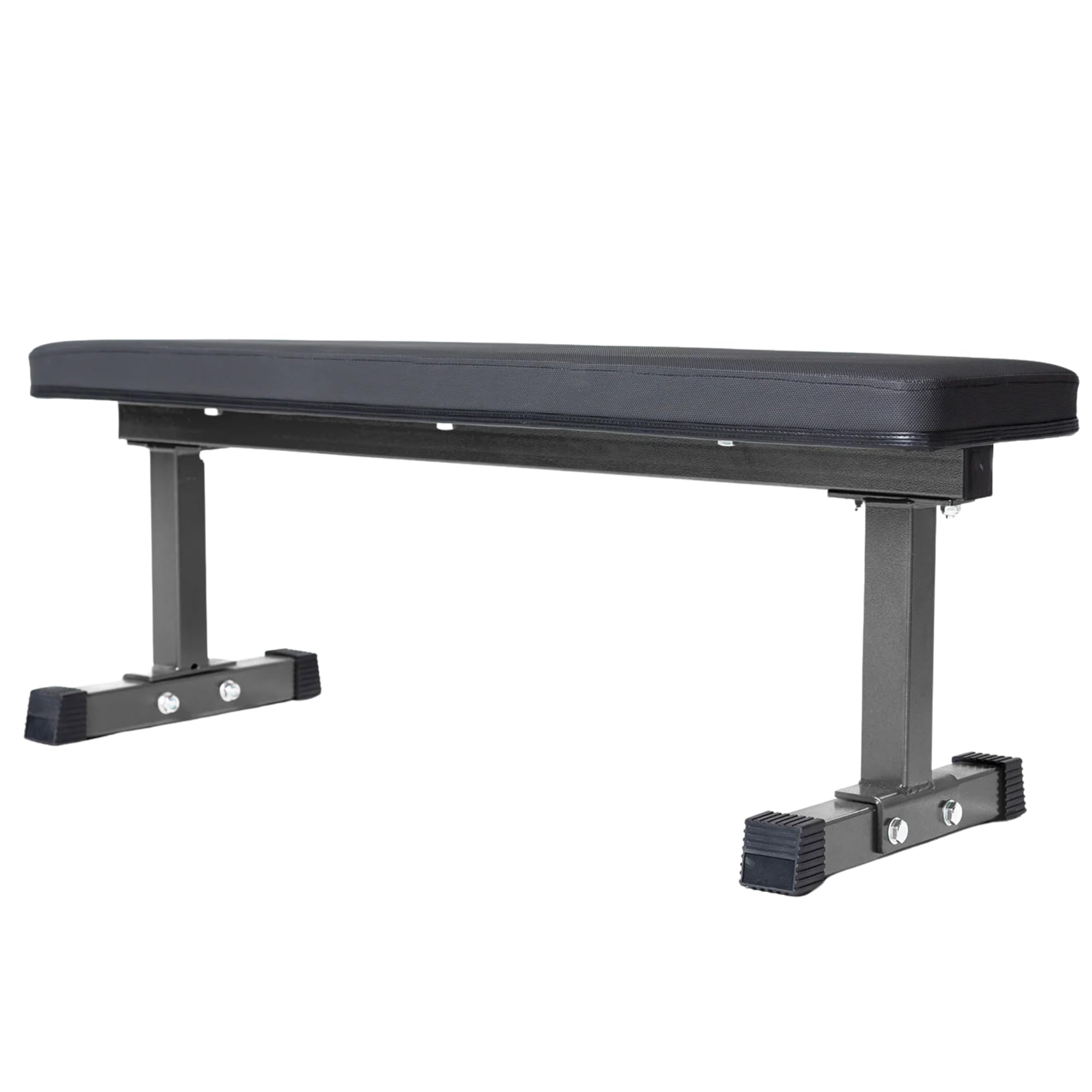
Buy this bench if you lift alone in a garage and need it to feel identical every session. Its frame is rated to hold 750 pounds, so a loaded barbell plus your body weight stays comfortably inside that limit. The pad is 12 inches wide and sits 17.5 inches off the floor, on a 16 inch base — that width gives you a stable platform for back support and leg drive during a bench press.
The stiffness comes from the frame and base layer under the vinyl. REP uses 11 gauge steel (a heavier gauge means thicker, stiffer tube walls) with a thick plywood base layer instead of particle board, then a dense foam core and a soft top layer under a grippy cover. The 2.5 inch pad is firm enough that it does not swallow the bar, and it wipes clean without much fuss. It assembles quickly, and bolting it down once you have it level keeps it planted.
Here is where it sits against the others: at 20 pounds it is the lightest proper steel bench on this list, which makes it easy to shove against a wall. That same low weight is the honest trade-off — this is a bench you position once and leave, not one you drag across a room mid-workout. Compare that to the NextRep at 11 kg, which is meaningfully heavier and folds. The REP also carries the highest rating of the group at 4.5+ stars across 500+ owners, so it takes position one on merit.
Why owners keep it
- 750 pound rating backed by 11 gauge steel and a plywood base layer, not particle board
- 12 inch wide pad at 17.5 inches high with a 16 inch base for planted leg drive
- Grippy 2.5 inch pad wipes clean and does not bottom out under a heavy press
- Light enough at 20 pounds to move and store between sessions
Where it gives ground
- No folding mechanism — it stores by leaning, not by collapsing
- Lighter frame means it can shift if you drive hard sideways on a bare floor
Reach for this if: you press a barbell at home and want a stiff, level base you can trust on every set.
Look elsewhere if: your gym doubles as a living space and you need a bench that folds to a few inches thick.
2. NextRep Foldable Flat Weight Bench
The folding bench that claims commercial-gym steel, then folds to 5.9 inches thick.
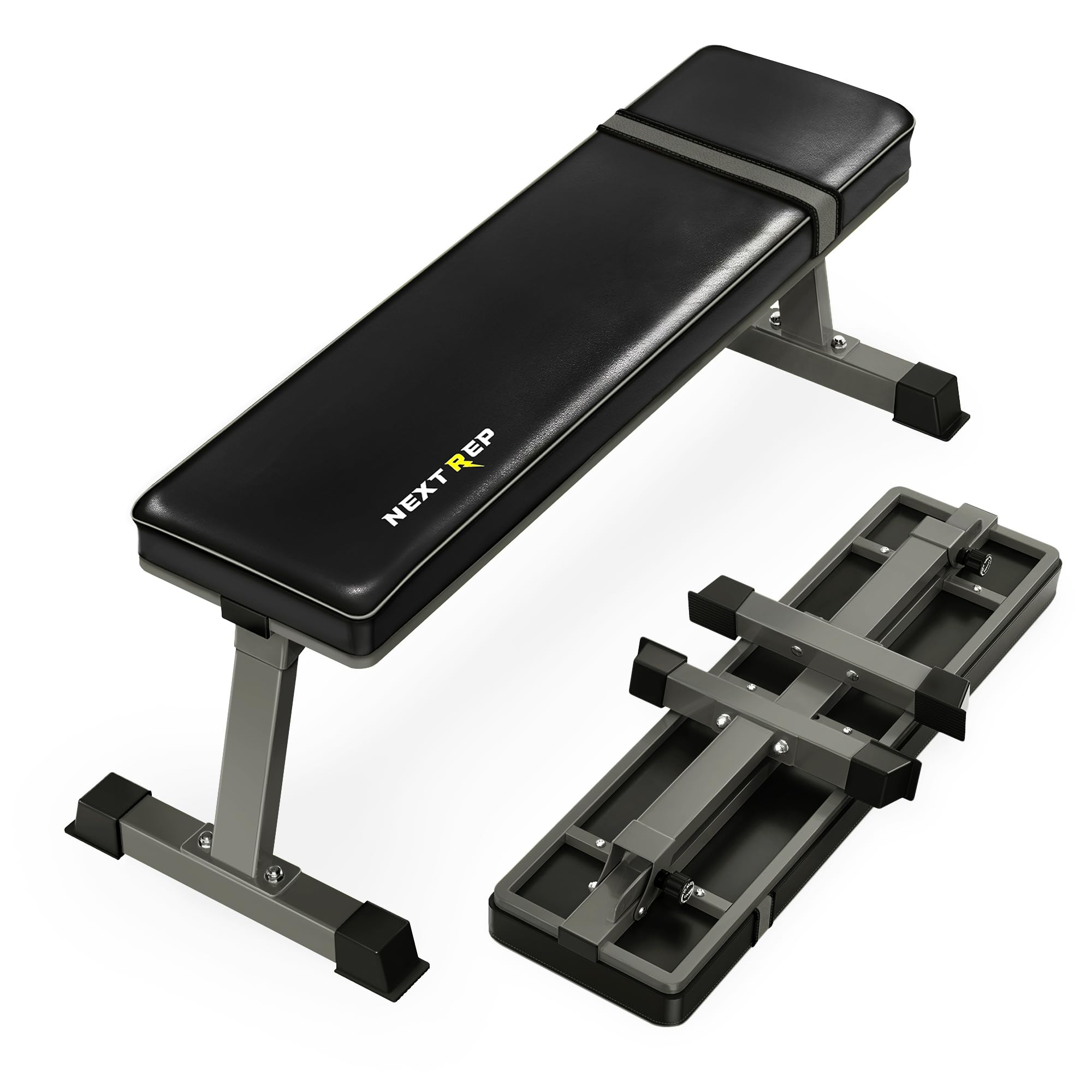
If your training space is a corner of a bedroom, this is the spec that matters: a maximum weight capacity of 1300 pounds on a frame that still folds down to 5.9 inches (15 cm) thick. That is a huge gap over the HolaHatha’s 300 pounds, and it means you can load a barbell without thinking about the frame. The quick-lock pin drops the legs in seconds, and folded it slides under furniture or leans flat against a wall.
The build is a triangular structure in commercial-grade heavy-duty steel, developed with input from powerlifters. The pad stacks three layers: high-density foam that holds its shape, a composite wood base for stiffness, and tear-resistant PU leather on top that wipes down after a sweaty session. It is built to IPF standards for bench height and pad dimensions, so your setup matches a competition bench rather than a random garage frame.
The honest catch is the folding hardware. Assembly is basic, but the foot tubes are thin enough that over-tightening the bolts deforms the metal — snug them, do not crank them. One more real note from the training floor: end-to-end stability can feel slightly loose when you really load the press, even with zero wobble reported front to back. At 11 kg it is also heavier to shift than the REP, which is the cost of a folding 1300-pound frame.
The fold-versus-stiffness question: you get a genuinely high load rating and true storage convenience in one frame, which few folding benches manage.
Treat the bolts gently: the frame rewards a light hand on assembly and a stable spot on the floor.
Built for: small-home lifters who need to fold the bench away and still want a heavy load rating.
Think twice if: you want a bench you never have to re-tighten or re-check after folding.
3. BODY RHYTHM Semi-Commercial Foldable Flat Bench
Three inches of foam, a 1000 pound rating, and it folds under a bed.
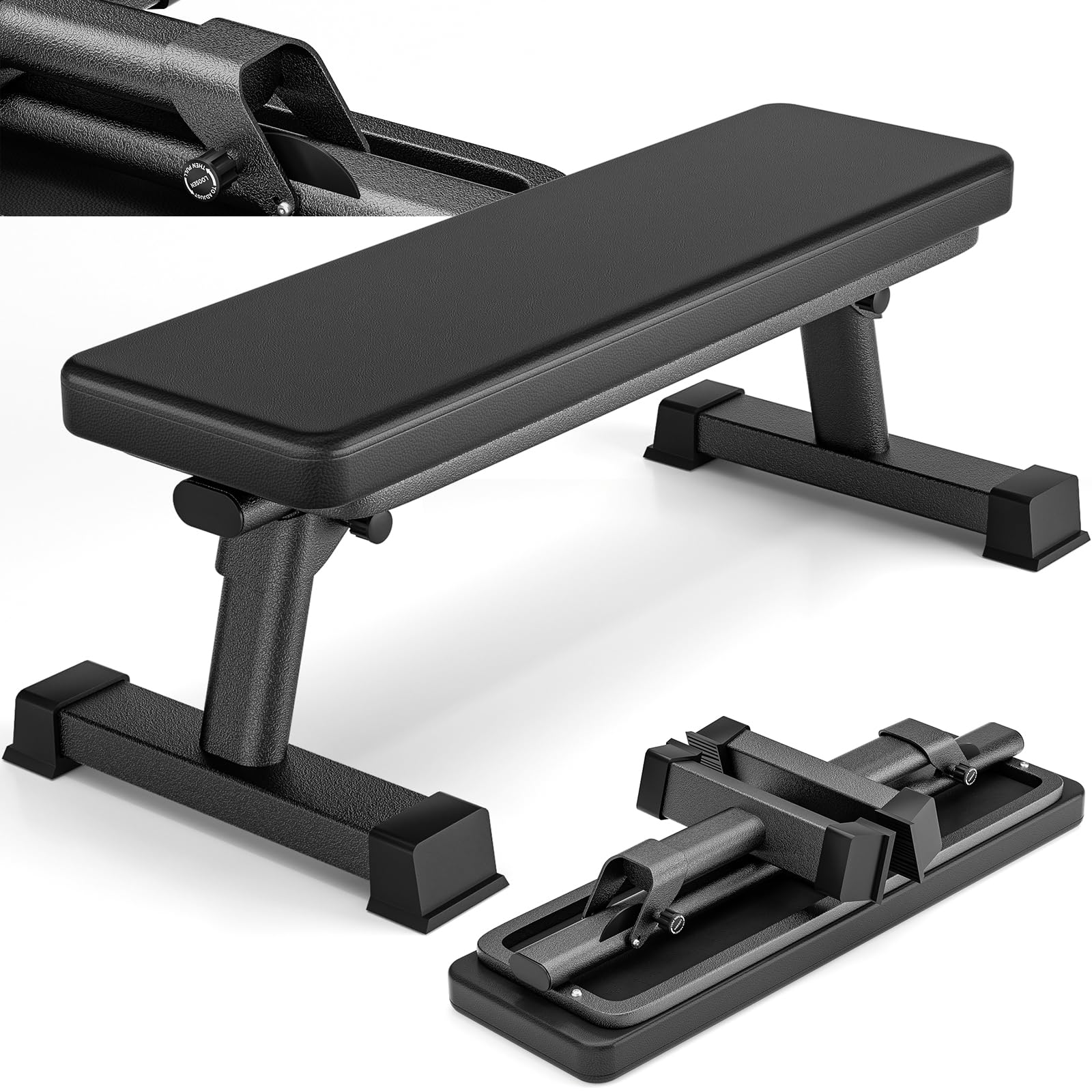
Most benches in this tier give you a thin pad and tell you it is fine. This one puts a 3 inch thick high-density foam cushion on top, covered in PU leather that wipes clean and shrugs off sweat. The 4-way steel frame is rated to bear up to 1000 pounds, and every foot wears an anti-slip rubber boot so the bench stays where you put it instead of skating across the floor mid-set.
Buyers consistently praise how well it works as a bench — it handles bodyweight moves, dumbbell work, and barbell pressing without needing a second piece of equipment. Sturdy and compact come up right behind that, and the foldability is a genuine bonus in a tight room: it tucks under beds or into a closet. Most units arrive needing no assembly at all, which is a real advantage if tools and instructions are not your thing.
The trade-off to know before you buy: the pad is comfortable and thick, but this is a home-gym frame rated at 1000 pounds — not a commercial rack bench you abuse daily with a spotter leaning on it. One owner put it plainly: it is not a bench for an 800-pound press. For a lifter working in the low-to-mid hundreds with dumbbells and a barbell, it is more bench than you will outgrow.
The comfort angle: a 3 inch pad at this tier is the standout, and the anti-slip boots back it up.
Size your ambition to the rating: treat the 1000 pound figure as the ceiling, not the target.
Your pick if: you want a thick, comfortable pad and folding storage without paying premium-tier money.
Not for you if: you press near the top of a 1000 pound rating and need commercial-rack stiffness.
4. TTCZ Flat Weight Utility Bench
A 32-pound steel utility bench that presses like a commercial gym frame.
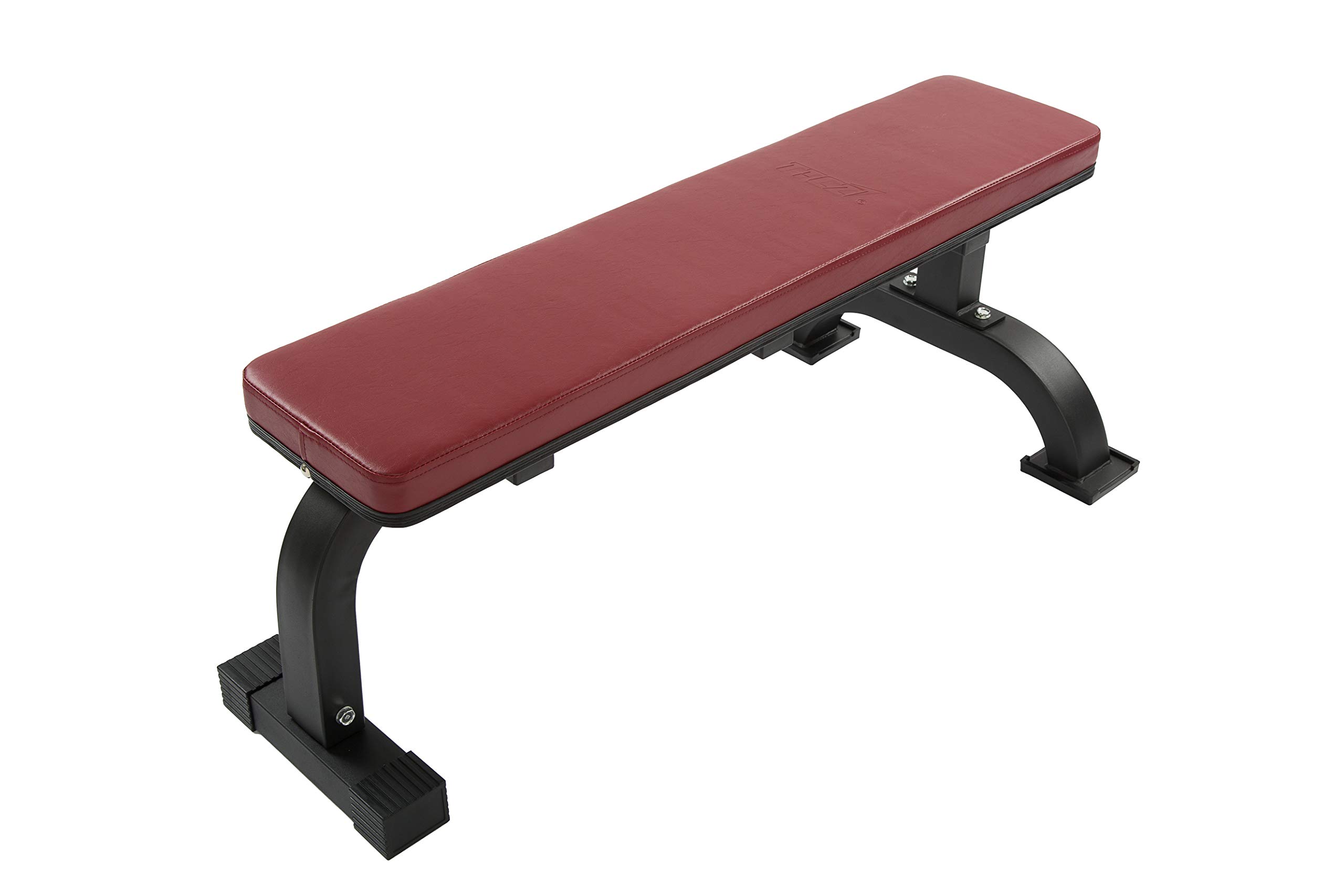
The 32-pound frame is the tell here. At 32 pounds it carries 12 pounds more steel than the REP bench above — a 60% heavier frame, and you feel that when you set it down. The all-steel construction is rated to 1000 pounds and finished in a matte coating that resists corrosion and looks tidy in a home gym. A 43.3 inch long, 10.1 inch wide pad sits at 16.5 inches off the floor, so it suits a compact lifting area without crowding it.
Owners describe it as a commercial-gym-quality bench that assembles easily with the tools in the box — most of the frame arrives pre-assembled. The thick cushion holds up under a broad range of lifters, and the pad support is generous enough that your torso stays on the bench rather than hanging over the end. One real-world report of a 405 pound press on this bench produced no stability complaints.
The real caveat is durability at the seams. The steel is solid and the pad has held up over months of use, but some buyers report weld concerns on certain units — worth knowing if you press near the top of the 750 pound rating every session. That looks like a manufacturing consistency issue rather than a design flaw, and sturdiness is what most of the feedback covers.
What the heft buys you
- 1000 pound all-steel frame at 32 pounds, heavier than the REP by 12 pounds
- Pad support that keeps your torso on the bench instead of hanging off the end
- Most of the frame ships pre-assembled, so setup is quick
The honest worry
- Weld quality is inconsistent on some units, so inspect the frame on arrival
- 10.1 inch pad width is narrower than the 12 inch pads on the top picks
Meant for: a home lifter who wants commercial-style mass on a fixed frame and will check the welds at delivery.
Look past it if: a narrow 10.1 inch pad would leave your shoulders hunting for support.
5. CAP Flat Utility Weight Bench

A 47x16x18 inch flat bench built from 11-gauge steel, priced for a first home gym.
For a beginner setting up a first lifting corner, this is a sensible starting frame. It uses 11-gauge steel and 2×2 tubing — the same heavy-gauge stock the premium benches rely on — with a recommended max weight capacity of 500 pounds. The pad is a double-stitched boxed design over carb-compliant plywood with a firm foam layer, and the whole thing measures 47 inches long, 16 inches wide, and 18 inches tall.
The finish is a durable powder coat with zinc hardware, which keeps maintenance minimal and stops rust from creeping in on a humid garage. At 30 pounds it is light enough to shift out of the way but heavy enough to feel planted once set down. CAP has been making fitness gear for decades, so the parts and construction follow a known playbook rather than a generic template.
The stability is where buyers split. Some find it steady enough for a two-person household and comfortable across a range of movements. Others describe a bench that rocks slightly, so level the floor first and tighten the bolts once it is in place — that fixes most of it. Also check the pad width against the listing at delivery: it is a touch narrower than the advertised figure on some units, so a wide-backed lifter should confirm before relying on it.
Solid first bench: 11-gauge steel and a 500 pound recommended max make it a fair starting point for dumbbell and light barbell work.
Level it before you load it: stability depends on a flat floor and snug bolts, so set it up once and check it.
Good fit for: a beginner building a first home gym around dumbbells and moderate barbell weights.
Step up if: you plan to press heavy regularly, where the premium fixed frames hold steadier.
6. Titan Fitness Elite Series Single Post Flat Bench
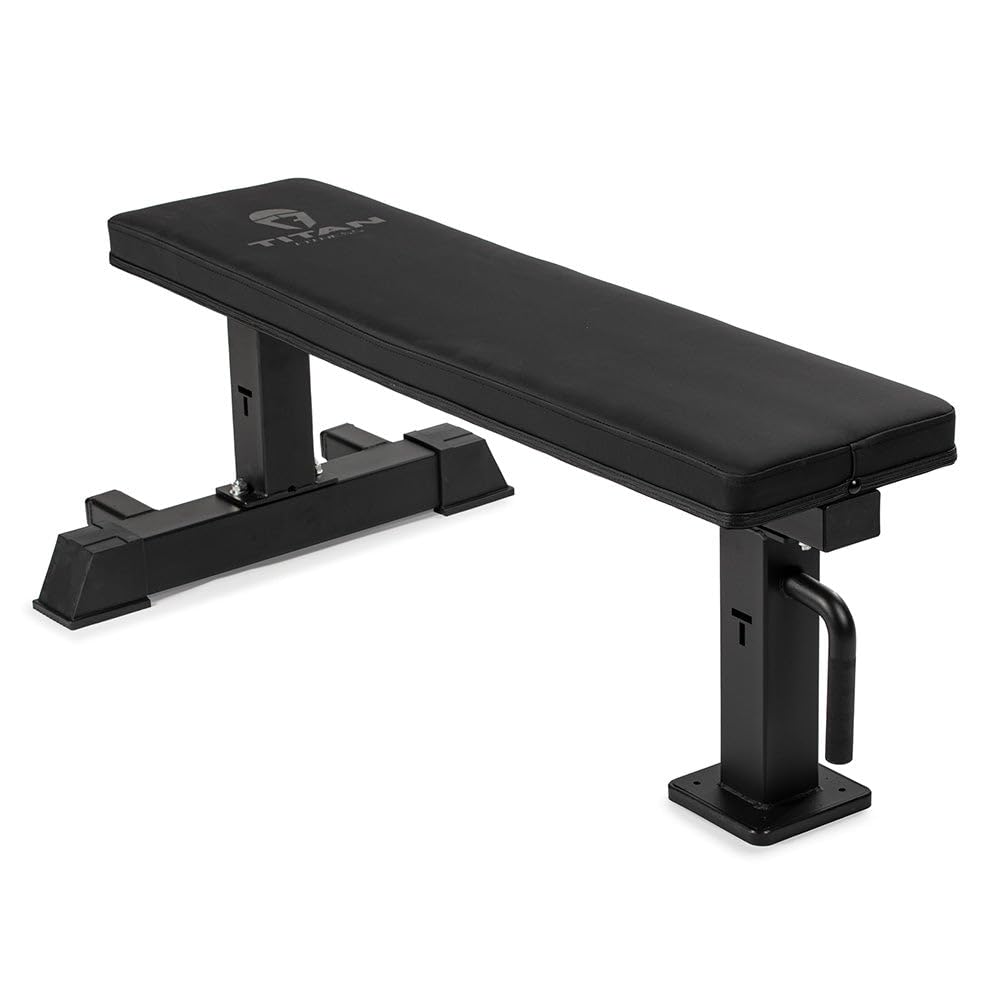
A single-post competition bench built to 1,000 LB, with a 2.5 inch HeftyGrip pad.
This bench suits the lifter who cares about foot placement as much as the pad. Its single post base (one central leg instead of a full frame) leaves the front open, so you can set your feet and arch your back without the frame getting in the way during a heavy press. It is rated to hold up to 1,000 LB for barbell and dumbbell work — bench press, pullovers, rows, tricep extensions and curls all sit comfortably inside that limit. The 2.5 inch pad uses HeftyGrip vinyl, a grippy, firm, cleanable surface.
The construction is 2×3/3×3 steel tubing, and it shows in use: owners describe it as rugged, stable, and better than expected, with assembly easy enough to knock out in a sitting. The build feels like a piece of kit you keep rather than replace. Transport wheels and a knurled textured handle make it easy to shift out of the way, though at 56 pounds it is a bench you move deliberately rather than toss aside.
Two things to know before you buy. The pad is only 2.5 inches thick, thinner than the 4 inch pads on the Titan TITAN Series and the Bells of Steel — great for competition-style presses, but a step less comfortable in long sessions. And the bench wobbles slightly if you push hard on the sides; it is built for straight-on pressing, not lateral abuse. Neither is a reason to look elsewhere if the single-post feel appeals to you.
Foot placement first: the open single-post base is the draw, and the 1,000 LB rating gives plenty of headroom.
Thinner pad than its big brother: 2.5 inches is competition-style, so softer comfort seekers should look at the 4 inch options.
Best for: a home lifter who wants a competition-style foot position and does not mind a firmer pad.
A different fit if: you want a thicker pad or you press with a lot of lateral force on the sides.
7. Titan Fitness TITAN Series Single Post Flat Bench
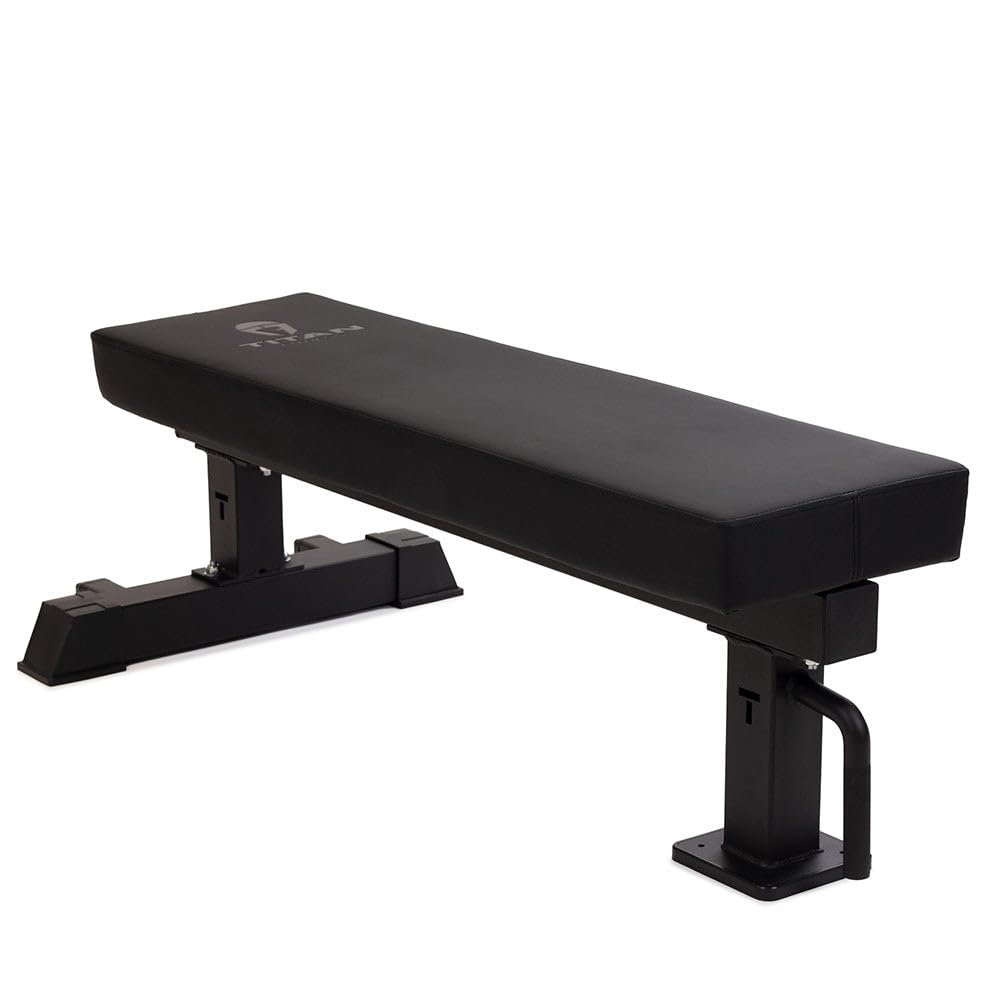
A 4 inch HeftyGrip pad over a 3×3 steel frame rated to 1,200 LB.
If the thinner pad on the Elite Series gave you pause, this bench answers it with a full 4 inches of HeftyGrip vinyl, extra thick for long pressing sessions. It is rated to hold 1,200 LB — the highest figure in this line-up alongside the NextRep’s 1300 pound claim on a folding frame. The single post base is 3×3 steel construction, and the bench measures 53 inches long, 24 inches wide, and 17.5 inches tall.
Buyers keep coming back to how solid it feels and how grippy the wide pad is. The wide pad is grippy and does not bottom out — a 6 foot 4 inch owner uses it daily with no complaints about the padding. The bench stands up on end when you are done, a real space saver in a garage. Transport wheels and a knurled textured handle (a rough grip pattern) make moving it easy, and assembly is straightforward.
The catch is weight: at 76 pounds this is the heaviest bench in the line-up, and it is not a piece you shift around casually. The single-post design also wobbles slightly if you drive hard on the sides, the same trait as the Elite Series. If your gym has the floor space, the thick pad and heavy steel make that weight worth it. If your space is tight, the folding NextRep is the better fit.
The comfort leader: 4 inches of HeftyGrip padding and a 1,200 LB rating make it the most forgiving heavy-duty press.
Weight is the price: 76 pounds makes it the heaviest bench here, so plan for a fixed spot.
Straight choice for: a garage gym with room for a heavy, thick-padded bench you leave standing.
Not the one for: a tight room that needs a bench you fold and tuck away.
8. Bells of Steel Powerlifting Flat Bench
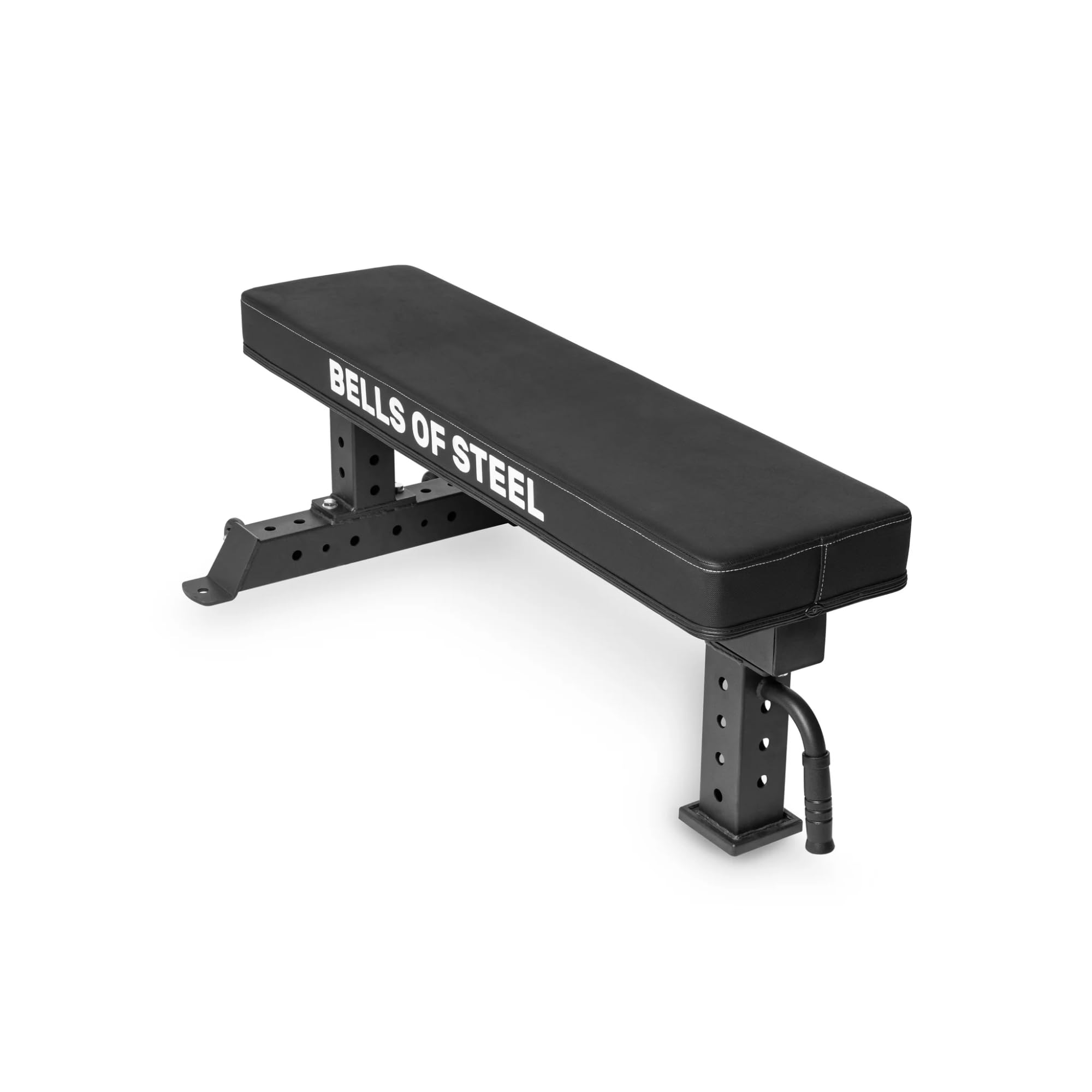
A 12-gauge powerlifting bench with a 4 inch pad and a bolt-down option.
This is the pick for a lifter who trains to a standard. The bench is built to IPF bench specs for height and pad dimensions, so your setup mirrors a competition platform. The frame is 2 mm 12-gauge steel under a black powder coat, rated to a 1000 lb capacity — enough headroom for a serious barbell press. The pad is 4 inches thick with a grippy vinyl texture, so you do not slide when you bench.
What sets this bench apart is its 3-point foot design (three contact points on the floor instead of four). It lets even the narrowest-stance bench presser adjust their feet properly, which most flat bases do not allow. The bench is 50 inches long, 24.5 inches wide, and 17 inches tall, with rear-mounted wheels and a handle for moving around the gym — or you can bolt it down if you want it immovable.
The trade-off is that this is a powerlifting tool, not a lounge bench. The 4 inch pad is comfortable and firm, but the heavy steel and narrow-stance focus mean it is not the lightest or most casual piece here — at 46 pounds it sits between the REP and the Titan TITAN. The limited lifetime warranty covers the frame, with 90 days on the pad and wheels, so wear parts are covered for a season while the structure is backed for the long haul.
Built to the standard
- IPF bench specs for height and pad dimensions
- 3-point foot design helps narrow-stance pressers set their feet
- 4 inch grippy pad over 12-gauge steel rated to 1000 lb
Worth flagging
- 46 pounds with wheels — mobile, but not an everyday folding bench
- Pad and wheels carry only 90 days of coverage versus a lifetime frame
Ideal for: a powerlifter or garage lifter chasing IPF-style dimensions and firm 4 inch padding.
skip it if: you want a folding bench or a soft pad for high-volume accessory work.
9. HolaHatha Flat Weight Bench
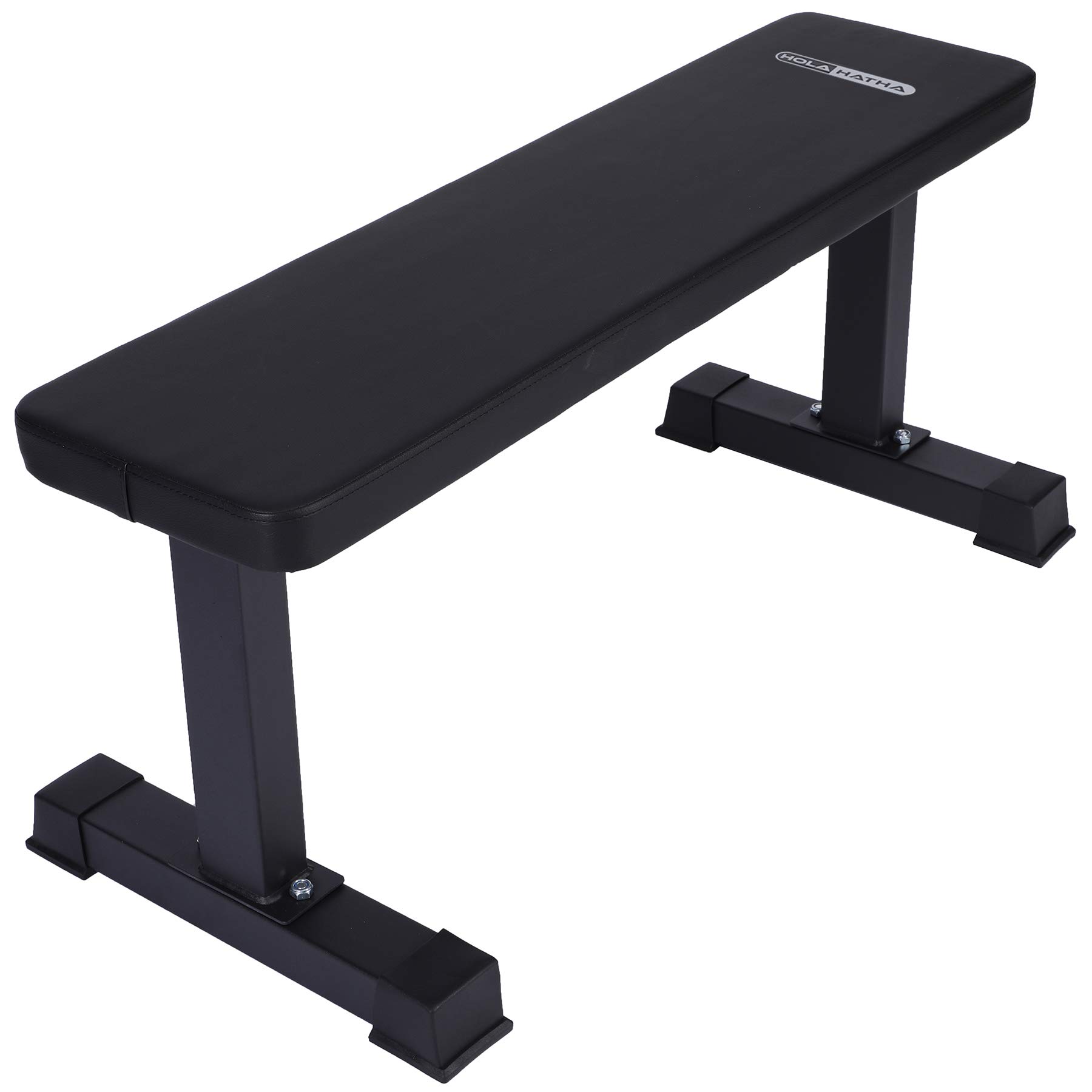
A 21.6 pound compact bench for dumbbells, planks, and a small room.
This is the smallest and lightest bench in the line-up, and it makes no secret of it. It measures 41 inches long, 11 inches wide, and 18 inches tall, weighs 21.6 lb, and is rated to support up to 600 lb. For a buyer with a corner of a spare room and a set of dumbbells, that footprint is the whole point — it fits where a full competition bench will not.
The frame is welded tube steel with a protective powder-coated finish, so it stands up to regular use without flaking. The top is high-density foam under boxed upholstery, which is comfortable enough for lifting, stretching, and planks. It is deliberately non-adjustable: a flat, level surface supports full-body movements, including exercises done lying flat, and there is nothing to wobble loose over time because nothing moves.
The honest limit is the 300 pounds maximum weight capacity listed in the technical specifications, which is lower than the 600 lb in the item description — so treat 300 as your working number and size your training to it. That makes this a bench for bodyweight, dumbbell, and light barbell work, not a heavy pressing platform. If you press a loaded bar regularly, go up to the REP or the Titan Elite instead.
Small footprint, clear ceiling: 41 x 11 x 18 inches and 21.6 lb make it easy to store and move, but stay inside the 300 pound spec.
What it is not: a heavy pressing bench, so treat dumbbells and bodyweight as its home.
Right for: a beginner with a tight room doing dumbbell and bodyweight work who needs a light, compact bench.
Go bigger if: you press a barbell regularly and need a higher-rated frame.
Know the Specs
Weight Capacity
The maximum load the frame is rated to hold, usually quoted as a round number in pounds. It should cover your body weight plus the bar and plates you press. A 300 pound rating is a light-duty bench; 1,000 pounds and up is a competition-style frame. Always check whether the listing gives the frame rating or a recommended maximum, since some benches quote both.
Pad Thickness and Width
Thickness is the foam depth in inches — often 2.5 to 4 inches on the better benches — and it changes both comfort and how far your press travels. Pad width (front to back) is how much of your upper back the bench supports. Narrower pads around 10 to 11 inches suit compact frames; the wider 12 to 16 inch pads give more room to plant your shoulders.
Frame Gauge and Tubing
Gauge is a measure of steel thickness, where a lower number means thicker, stiffer tube stock. An 11-gauge or 12-gauge frame resists flex under a loaded bar better than thin tube steel. Look for a material spec like alloy steel, 2×2 or 3×3 tubing, and a real steel base layer under the pad rather than particle board.
Bench Height and Base Width
Height is measured from floor to pad top and typically lands around 17 to 18 inches on a flat utility bench. It sets how much leg drive you get to the floor. Base width is the floor-contact span — a wider base with anti-slip feet stays planted, while a narrow single-post base gives your feet more room but can rock under sideways force.
Common Questions
Is a flat bench or an adjustable bench better for bench press?
What weight capacity do I need on a flat weight bench?
How thick should a flat bench pad be?
Will a folding flat bench wobble under heavy weight?
Can I use a flat bench for dumbbell and ab workouts?
What does IPF bench spec mean?
How high should a flat bench be off the floor?
Is a single-post bench less stable than a four-leg bench?
Should I bolt my flat bench to the floor?
Does pad material affect grip during a bench press?
The Bottom Line
For most home lifters, the flat weight bench winner is the REP Fitness Flat Weight Bench because it pairs a 750 pound rating with real 11-gauge steel and a plywood base that stays stiff under a loaded bar. If your gym space is tight and you need to fold the bench away, grab the NextRep Foldable Flat Weight Bench for its 1300 pound folding frame. And if you train to a powerlifting standard, the Bells of Steel Powerlifting Flat Bench is the one to reach for with its IPF specs and 4 inch pad.
A final nudge: the REP has earned its top spot on the strength of 500+ owner ratings and the steadiest build at this tier. The honest starting point is to buy to your actual pressing weight, check the welds and pad width at delivery, and level the floor before your first set.
How we choose
We do not accept paid placement. Every pick is matched to a real buyer and a real use-case; we do not hands-on test units.
Sources
Specifications: manufacturer listings and product documentation. Review insights: verified customer reviews, as of November 2026. Pricing: not shown on this page (it changes often); check the current price via the retailer link.
As an Amazon Associate, Tactical Gear Guy earns from qualifying purchases. This does not affect which products we feature.