Specs are compiled from manufacturer listings and verified buyer reviews and can change over time — please confirm the key details on the product page before buying.
You kneel on a spongy black mat, and it slides across the hardwood mid-plank. More padding will not stop that slide; thickness, grip and foam type have to match how you move. This guide breaks down nine black mats by what each is built for, from deep-cushion floor work to sweat-heavy flows. Match the mat to your height, stance width and whether you mostly stand or kneel.
This guide is built by comparing the manufacturers’ published specifications and the patterns across verified customer reviews, so you get each pick’s real strengths and trade-offs instead of marketing spin.
Thickness, material and width decide almost everything about how a mat feels underfoot, and the picks below range from a full inch of NBR foam to a dense 6mm TPE sheet. Below are nine black mats sorted by what they do best, from 1-inch NBR comfort slabs to 6mm TPE sheets.
Top Picks


How To Choose The Best Black Yoga Mat
The first thing to get straight is that a yoga mat is a cushion and a brake at the same time. Too little thickness and your knees complain on a hard floor; too much and your standing poses start to wobble because your feet sink instead of pressing. Most people are best served by deciding which of those two problems they have before they look at any product.
Thickness: deep cushion versus ground feel
Thickness is measured in millimeters (mm) or inches, and it is the number that shapes the whole experience. A 6mm mat is a middle ground — enough padding to take the edge off a hardwood floor without turning your balance to jelly. A 10mm mat leans toward comfort for knees, hips and elbows during floor work. A full 1-inch mat is for people who want serious padding between them and a concrete or tile floor, and who are mostly sitting, kneeling or lying rather than standing on one leg.
Material: what NBR, TPE and EVA actually mean
NBR (nitrile butadiene rubber) is the soft, spongy foam behind most extra-thick comfort mats — it cushions deeply but tends to be the least grippy when you sweat. TPE (thermoplastic elastomers) is a denser, springier foam that holds its shape better and usually wipes clean more easily. EVA (ethylene vinyl acetate) is a light, firm foam often blended into studio-style mats. NBR wins if you want plushness; TPE wins if you want a firm, stable surface.
Width and length: the number tall and broad buyers forget
A standard mat runs 24 inches wide, and plenty of people only discover that is too narrow once their hands keep landing off the edge in a wide stance. Anything at 32 inches or 36 inches gives noticeably more room for press-ups, sumo squats and lateral lunges. Length matters less for most buyers since 72 inches is common, but if you are tall, check it anyway before you commit.
Side-by-Side Comparison
| Model | Best For | Thickness | Width | Material | Amazon |
|---|---|---|---|---|---|
| Large Workout Mat 72″x32″★ Best Overall | Spacious home workouts | 0.39 in | 32 in | TPE | Amazon |
| Gaiam Thick Yoga MatBest Value | Joint-friendly floor work | 0.39 in | 24 in | NBR foam | Amazon |
| Extra Wide Yoga Mat 72″x32″Best Wide Budget | Broad-shouldered yogis | 0.24 in | 32 in | TPE | Amazon |
| Fitvids All Purpose Mat | Everyday stretching | 0.25 in | 24 in | High density foam | Amazon |
| adidas Yoga Mat | Eco-minded home practice | 0.24 in | 24.02 in | EVA + TPE | Amazon |
| Tone Fitness 1″ Mat | Deep knee and back cushioning | 1 in | 24.02 in | NBR foam | Amazon |
| YOTTOY Yoga Mat | Kneeling and sitting postures | 0.5 in | 24 in | TPE | Amazon |
| Gaiam Performance TPE Mat | Sweaty, hot sessions | 6mm | 24 in | TPE | Amazon |
| HAPBEAR Large Yoga Mat | Wide home gym footprint | 0.25 in | 36 in | TPE | Amazon |
Detailed Reviews
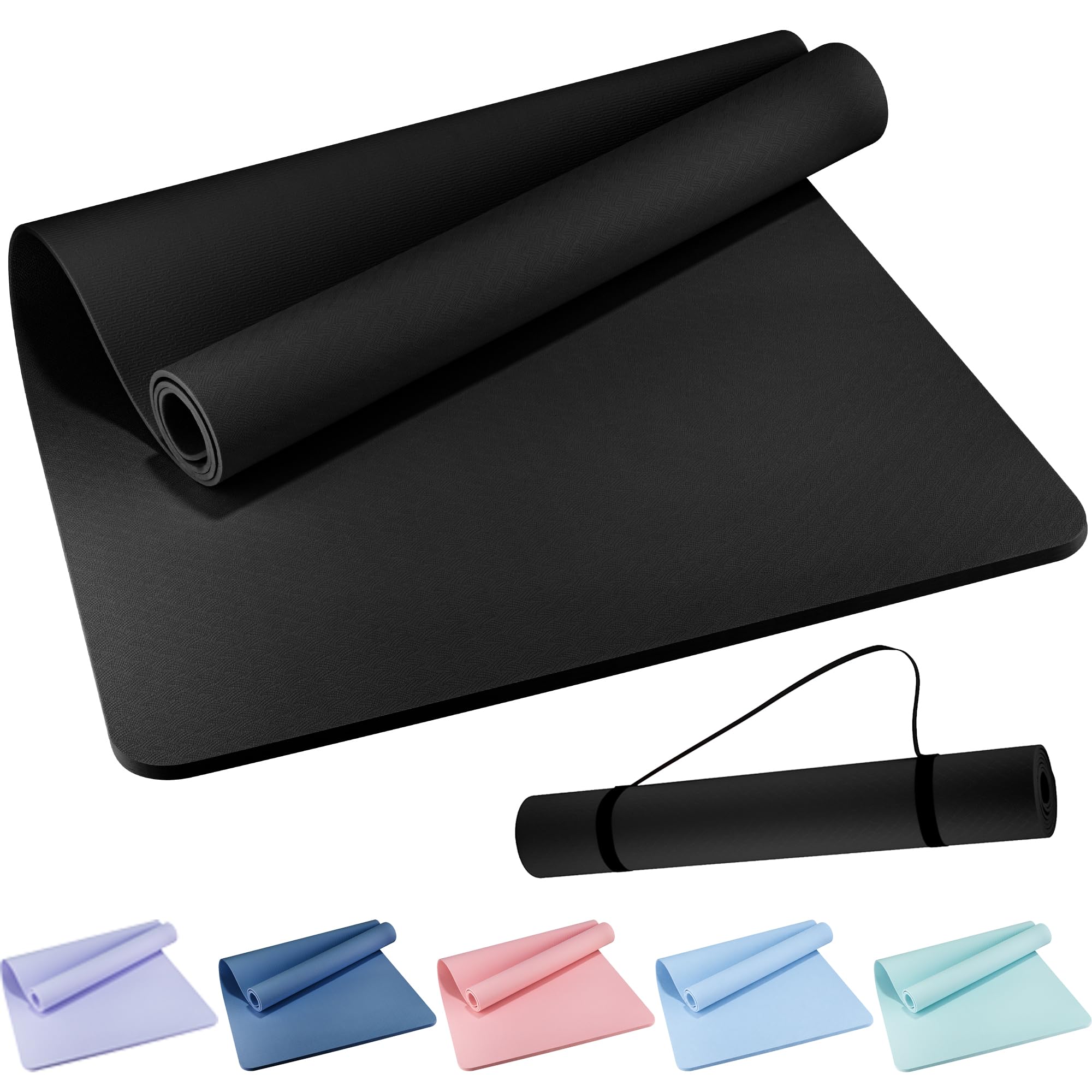
1. Large Workout Mat 10mm 72″x32″
Our pick — 4.5+★ from 600+ verified ratings; the strongest balance of quality and price.
The extra-wide workhorse that finally keeps your hands inside the mat during wide moves.
The number that changes your routine here is width. This mat runs 72 inches long by 32 inches wide, compared with a standard 24-inch yoga mat. In plain terms, your hands and feet stay on the mat during press-ups, sumo squats and lateral lunges instead of dropping off the edge onto a hard floor.
Under that surface sits a double-layered TPE build (thermoplastic elastomers, a springy foam that holds its shape). The maker notes it is denser than standard NBR foam, and the diamond texture provides grip on both sides. That dual-sided grip matters because you can flip it and still have traction against carpet, hardwood or gym flooring, so the mat grips the floor as well as your hands.
What wins people over is the build quality — it is the most praised trait by a wide margin. Buyers also consistently call out the size and the thickness, and the mat rolls up easily into the included carry bag with its adjustable shoulder strap. One trade-off worth knowing: care is hand wash only, so it is a wipe-down mat rather than a machine-washable one.
Compared with the Gaiam Thick Yoga Mat at 24 inches wide, this one gives you a 32-inch surface. It also weighs 1.8 kg against that Gaiam’s 1.27 kg, so it is the heavier of the two to haul to class.
Where it earns its keep
- 32-inch width keeps hands and feet on the mat through wide stances
- Dual-sided diamond texture grips on carpet and hardwood alike
- Waterproof and sweat-resistant surface wipes clean
- Carry bag and adjustable strap included for transport
What to weigh up
- Hand wash only, so no machine cleaning
- At 1.8 kg it is heavier than a standard-width mat to carry
Best for: anyone whose home workouts keep running past the edges of a normal mat, especially press-ups, lunges and squats.
Think twice if: you want a featherweight mat to fold into a tote for daily studio commutes.
2. Gaiam Thick Yoga Mat
A cushion-first mat for knees that complain on hardwood every single time.
At 0.39 inches thick in high-density NBR foam (nitrile butadiene rubber, the soft spongy stuff behind most comfort mats), this mat is built to take pressure off knees, hips and joints on hard floors. It measures 72 inches long and 24 inches wide, so it is a standard-width mat with an emphasis on padding rather than floor space.
Thickness is what this mat is known for, and it earns that reputation. Buyers lean on it again and again for beginners, low-impact yoga, Pilates, stretching and physical therapy work. The textured foam surface helps reduce slipping on most hard floors during dry workouts, though the softer feel prioritizes shock absorption over firmness — so it is a cushion mat, not a precision-balance mat.
The honest catches are worth naming. Gaiam says the mat uses low-odor NBR foam, but also notes an initial foam odor may be present and typically fades after airing out for 24 to 48 hours. Stability and durability draw a split response — some find it holds up and stays put, while others find it slides on smooth floors. If you mostly do floor-based, low-impact work, that trade-off is easy to live with.
Against the Large Workout Mat above, this one is the lighter carry at 1.27 kg versus 1.8 kg, but it is 24 inches wide versus 32 inches. For a mat you mostly keep at home on a tile or wood floor, that is a fair swap.
Reach for this if: your routine is stretching, Pilates and low-impact yoga and your knees want deep padding over a hard floor.
Look elsewhere if: you need a mat to hold dead still on polished floors during fast, sweaty flows.
3. Extra Wide Yoga Mat 72″ x 32″, 6mm TPE Exercise Mat
Wide enough for broad shoulders, thin enough to still feel the floor.
Start with the width, because that is the whole point. This mat measures 72 inches long by 32 inches wide, compared with the 24-inch standard. For taller and broad-shouldered users, that means you can stretch and roll without your arms landing off the mat.
At 0.24 inches versus 0.39 inches for the Gaiam mat above, it is the thinner of the two, and that is deliberate. The 6mm high-density TPE (thermoplastic elastomers, a springy, PVC-free foam) keeps a balance between cushioning and stability, protecting knees, wrists and elbows while keeping you grounded in standing poses. The double-sided design pairs a textured top for hands and feet with a wave-pattern bottom that grips wood, tile and gym floors.
Buyers respond most to the overall build, followed closely by the size — that pairing is exactly why this mat exists. It also weighs in at about 2.04 lb, rolls up easily and comes with a carrying strap. Two honest notes: TPE can carry a light smell at first, so unroll and air it out before your first session, and grip and durability draw a mixed response, so treat it as a solid general-purpose mat rather than an aggressive hot-yoga surface.
Space without the bulk: you get the same 32-inch footprint as the Large Workout Mat above but at 6mm versus 10mm, which suits people who want room to move rather than deep padding.
Pick this for: tall or broad-framed yogis who want elbow room and a firm, grounded feel in one mat.
Hold off if: you need deep, plush cushioning for sensitive knees or long floor sessions.
4. Fitvids Thick Exercise Yoga Mat

The grab-and-go mat for stretching, bodyweight work and indoor-outdoor use.
This is a standard 72-inch by 24-inch mat with a 0.25-inch thickness, so it sits in the middle of the pack on padding. What it leans on instead is double-sided non-slip surfacing, which the maker says gives it an edge against sliding and helps you keep your balance through different exercise styles.
Two practical details set it apart for casual users. It uses moisture-resistant technology, so it wipes clean with soap and water rather than needing special care. It also comes with a free yoga mat strap and is built light enough to roll and carry, which makes it a sensible mat to leave in the car or take outdoors.
Quality is the trait that stands out most in how it is received, and buyers broadly find it comfortable and functional for yoga, stretching and bodyweight exercise. The honest limits are thickness and durability — it is not as thick as the deep-cushion mats here, and long-term wear draws a split response. At 0.25 inches it is noticeably thinner than the 1-inch Tone Fitness below, so it suits everyday movement more than hard-floor joint protection.
Simple maintenance: soap and water is all this surface needs, which is a real convenience if you sweat a lot and do not want a fussy cleaning ritual.
Suits you if: you want one easy mat for stretching, light strength work and occasional outdoor sessions.
Not your pick if: your main need is deep joint cushioning for floor-based sessions on concrete.
5. adidas Yoga Mat

Brand-name feel and partly reused foam for the yogi who reads the label.
What makes this adidas mat distinct is what it is made of. The foam is a blend of 95% EVA (ethylene vinyl acetate, a light firm foam) and 5% TPE, and the maker states it is constructed using 50% reused materials. If the material story matters to you, that is the headline here rather than a headline thickness number.
The design is a medium-density feel, balancing cushioning with stability so you feel supported without sinking. The subtly textured surface and base provide traction on a range of surfaces, and the unrolled dimensions of 176 x 61 cm give ample space for beginners and experienced practitioners alike. Straps and a carry-friendly roll are part of the package, and care is a simple hand wash.
This is a mat best bought for its brand, its recycled content and its medium-firm touch rather than for sheer padding. If your priority is deep cushioning, look at the 1-inch Tone Fitness instead — but if you want a firm, stable surface with an environmental angle, this earns its place.
The one to grab if: the recycled-material story and a firm, stabilising feel are what you are shopping for.
Keep looking if: plushness is your top priority and you want to sink into thick foam.
6. Tone Fitness 1″ Extra Thick Yoga Mat

A full inch of foam for anyone who cannot kneel on a bare floor without wincing.
The defining spec here is a full 1-inch thickness in high-density NBR foam, which is the thickest mat on this list by a clear margin. That amount of padding adds comfort under knees, elbows, hips and back on hard floors, so it is aimed at Pilates, stretching, core training and floor exercises rather than fast standing flows.
It measures 72 inches by 24 inches, giving standard-width room to stretch and move, and the textured NBR surface provides grip during poses, planks and controlled movements. The foam is latex-free and wipes clean between sessions, and a carry strap is included so you can roll it up and keep it neatly stored instead of leaving it spread across the floor.
What wins people over is quality, and thickness is right behind it. Buyers find the cushioning firm enough to keep their balance and comfortable enough to stay on for long floor sessions. The one thing most discussed is the carry strap — convenient, though the response to it is split, so do not buy this expecting a premium strap. At 3.8 pounds it is a heavy roll, and this much foam is not built for one-legged balance poses.
The padding powerhouse
- 1-inch NBR foam cushions knees, hips and back
- Textured surface adds grip for poses and planks
- Latex-free and easy to wipe clean
Where it gives ground
- At 3.8 pounds it is heavy to carry around
- Full-inch foam is soft for balance-focused standing work
Made for: Pilates, stretching and floor routines where joint comfort is the deciding factor.
Skip if: you mainly practise standing balance poses and want firm ground contact.
7. YOTTOY Yoga Mat 1/2 inch

Half an inch of springy TPE that cushions kneeling postures without turning into mush.
This mat runs 12mm thick, or about 0.5 inches, in TPE foam. That puts it between the 6mm mats and the full-inch comfort slabs, and the maker pitches it specifically at kneeling and sitting postures where your joints want support.
The material story here is certification. YOTTOY states the TPE is SGS and TUV certified for environmental safety, meaning it is described as free of heavy metals and 10 harmful types of phthalate. The one-piece foam process produces a mat the maker calls non-toxic and odorless, and it is also described as waterproof and sweat-proof.
Grip is engineered two ways: granular protrusions on top increase friction and absorb sweat, while a water-ripple texture on the underside grips the floor. Cleanup is a damp cloth with cold water and mild detergent, laid flat to dry and kept out of direct sunlight. Quality is the most-praised trait, with cushioning close behind. The honest catch is stability — some find it holds firm, others find it shifts, and the mat moves around more for those users.
Compared with the 6mm Extra Wide mat above, this one is 12mm thick but stays at 24 inches wide, so you are trading floor space for padding.
Certification you can point to: SGS and TUV testing is the kind of third-party paperwork most budget mats do not mention, and it is the reason people choose this one.
Choose this if: kneeling and seated poses are the heart of your practice and you want a certified, thick TPE surface.
Consider twice if: you need the mat to stay pinned to the floor during fast transitions.
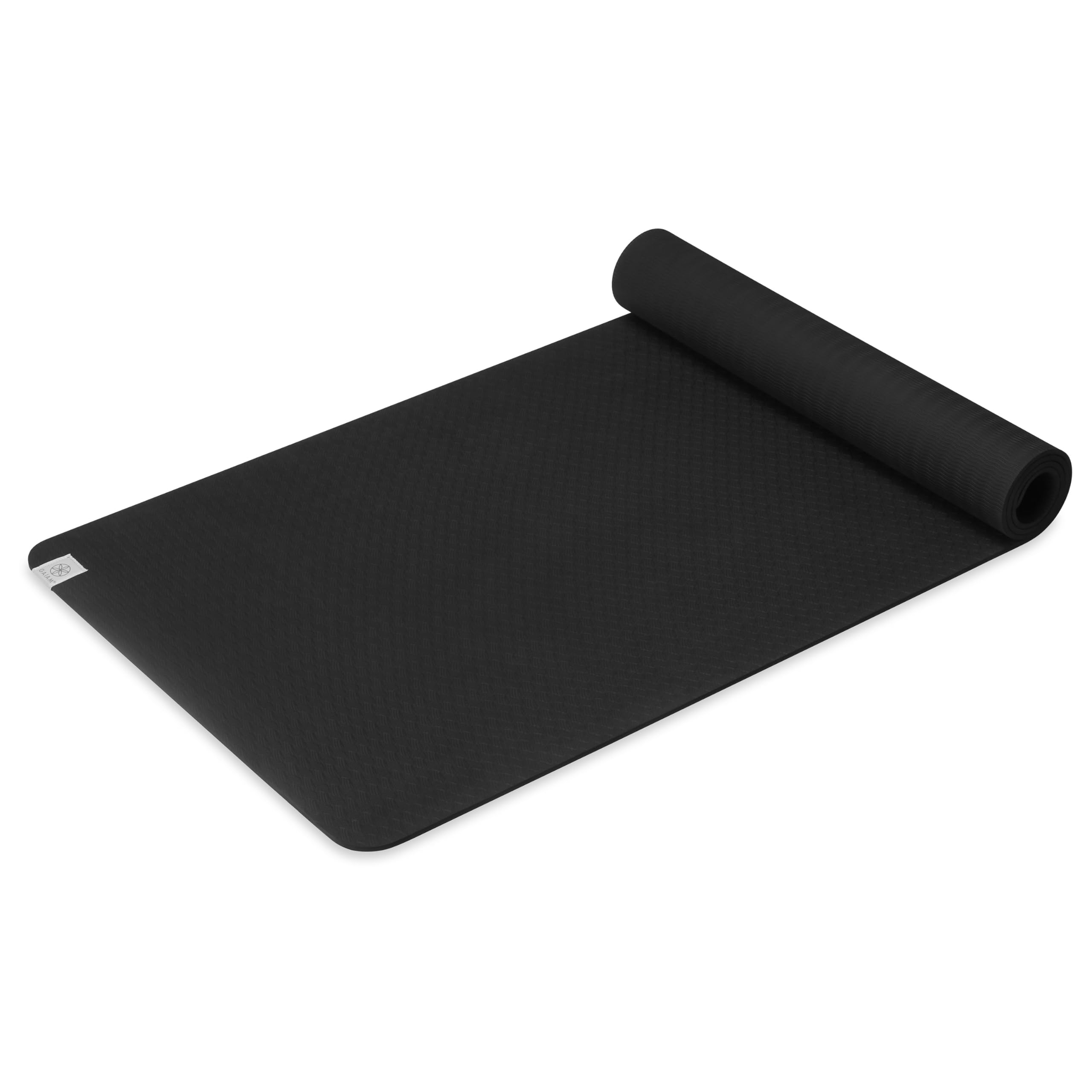
8. Gaiam Performance TPE Yoga Mat, 6mm Non-Slip
A 6mm TPE mat built around sweat, with two textures in one surface.
The 6mm thickness is the center of the design here. Gaiam describes it as targeted cushioning that protects knees, hips and spine on hard floors without the sinking feeling that throws off balance in standing poses, so it sits in that middle band between deep comfort and firm ground feel.
Two features stand out. The dual-texture surface puts a raised grip pattern on top for sweaty sessions and a smoother, denser reverse side for stability-focused Pilates and floor work. The closed-cell construction means sweat and moisture cannot seep in, so the mat wipes clean with a damp cloth instead of absorbing odors over time. It measures 68 inches by 24 inches and weighs 3 lbs, and a carry strap comes included.
The honest read is that grip draws a mixed response — some find it holds firm, others find it less grippy — and durability is also split. At 68 inches it is also shorter than the 72-inch mats here, so if you are tall, check that length against how you stretch. If you sweat hard and want an easy-clean mat, the closed-cell surface is the reason to pick it.
Easy-clean surface: the closed-cell build keeps sweat out of the foam, which is the practical win for anyone doing repeated hot sessions.
Worth it for: hot and sweaty sessions where a wipe-clean, dual-texture mat saves you the scrubbing.
Pass if: you are tall enough that a 68-inch mat leaves your toes or head hanging off.
9. HAPBEAR Large Yoga Mat 72″x36″x6mm

The biggest surface here, built for home gyms where you sprawl.
This is the widest mat on the list at 72 inches by 36 inches, compared with a standard 24-inch mat. That surface is aimed at stretching, Pilates and floor workouts where you want space to spread out without running off the edge.
At 6mm it uses a 0.25-inch-thick high-grade TPE foam and a textured, double-sided grip that stays planted on smooth surfaces. Note that the maker specifically says it is not for use on carpet. It is lightweight, and a carry bag is included, so it can travel to the gym or out to the park with you.
Buyers rate quality highest, with size close behind — that one-two is the reason to choose it. It also has two built-in caveats from HAPBEAR: some initial scent may be present, so allow 1 to 2 days to air out, and thickness draws a mixed response with some finding it great and others finding it thin. Durability and traction draw split feedback, so treat it as a spacious home mat rather than a hot-yoga specialist.
Room to spread out
- 36-inch width gives the biggest footprint of the group
- Double-sided textured grip on smooth floors
- Carry bag makes it portable despite its size
Things to know first
- Not for use on carpet, so it wants a hard floor
- Expect an initial scent that needs a day or two to air out
Reach for this if: you have a home gym or open floor and want maximum width for sprawling stretches and Pilates.
Look elsewhere if: you plan to lay it over carpet, where it is explicitly not intended.
Know the Specs
Thickness in mm or inches
Thickness is the number that decides whether you sink or stand firm. Thicker foam cushions knees, hips and elbows on hard floors, but it can make standing balance poses feel wobbly. Thinner mats keep you grounded and stable but offer less padding for long floor sessions. Pick thickness by whether you kneel or stand on one leg, not by the biggest number on the listing.
Material: NBR, TPE and EVA
NBR is the soft, spongy foam used in comfort mats — deep cushioning, but it cushions over grip. TPE is denser and springier, holds its shape better and wipes clean more easily. EVA is a light, firm foam often blended with TPE for studio-style mats. The material line tells you the feel: NBR sinks, TPE springs back, EVA stays firm.
Width and length
A standard mat is 24 inches wide, and 32- and 36-inch mats give noticeably more room for wide stances. Length matters most for tall users; 72 inches is common, but shorter mats exist, so check the length against how you stretch. A 24-inch mat keeps most hands on board; 32 and 36 inches cover wide stances and tall frames.
Grip and surface texture
Grip is what keeps the mat from sliding under you and under your hands. Textured tops, textured bottoms and dual-sided surfaces all serve different needs. Some mats grip better on hard floors than carpet, and some explicitly are not for carpet. Check the surface description closely if you sweat a lot or practice on smooth flooring.
Common Questions
Is a thicker yoga mat always better for your knees?
Will a 32-inch or 36-inch mat be too wide for my space?
Do black TPE or NBR mats have a bad smell when new?
Why does my mat slide on hardwood floors?
Can I use a yoga mat on carpet?
What is the difference between NBR and TPE foam in yoga mats?
How do I clean a black yoga mat without damaging it?
How long should a yoga mat last before it needs replacing?
Which mat is best for hot yoga or sweaty sessions?
Can a full-inch yoga mat help my tailbone or back during floor work?
The Bottom Line
For most people, the best black yoga mat is the Large Workout Mat 72″x32″, because its 32-inch width and dual-sided TPE grip cover the widest range of home workouts. If deep knee and joint padding is what you are after, the Tone Fitness 1″ Mat gives you a full inch of NBR foam. And for sweaty sessions, reach for the closed-cell Gaiam Performance TPE.
If you are unsure where to start, the extra-wide pick earns its place at the top on strength of its build and roomy design — the two things buyers care about most in a mat.
How we choose
We do not accept paid placement. Every pick is matched to a real buyer and a real use-case; we do not hands-on test units.
Sources
Specifications: manufacturer listings and product documentation. Review insights: verified customer reviews, as of November 2026. Pricing: not shown on this page (it changes often); check the current price via the retailer link.
As an Amazon Associate, Tactical Gear Guy earns from qualifying purchases. This does not affect which products we feature.