Specs are compiled from manufacturer listings and verified buyer reviews and can change over time — please confirm the key details on the product page before buying.
Here is the first thing you need to know: almost nobody sells a true 60-inch LED TV anymore. The big brands have moved to 65 inches as the standard living-room size, so a search for a 60 Inch LED TV really means shopping the 65-inch shelf. That is what this guide does. Every pick below is a 65-inch set that fits the same wall space and the same budget mindset as the 60 you went looking for. One quick note upfront so you are never misled: this list uses flexible, human-like matching, so not every pick is the exact number you typed in — the nearest same-type size serves the same purpose.
This guide is built by comparing the manufacturers’ published specifications and the patterns across verified customer reviews, so you get each pick’s real strengths and trade-offs instead of marketing spin.
The short version: the Roku Plus Series is the best all-round 65-inch Mini-LED for most rooms, and the Samsung M70H is the low-power pick at 80 kWh per 1,000 hours. The rest of this page breaks down what actually matters when you are choosing a 60 inch led tv.
Top Picks

How To Choose The Best 60 Inch LED TV
You are spending real money on a screen you will stare at for years, so it pays to know which numbers change what you actually see. Here are the four that matter most on a 65-inch set.
Backlight type and dimming zones
A standard LED TV lights the whole panel from behind with one big backlight. A Mini-LED TV uses thousands of tiny LEDs instead, grouped into dimming zones that can turn down individually. More zones means dark scenes stay dark instead of glowing grey around bright objects — a halo effect called blooming. If you watch a lot of night scenes and space movies, this is the spec to check before anything else.
Refresh rate in Hz
Refresh rate is how many times per second the screen redraws the picture. A 60Hz panel redraws 60 times a second, which handles movies and most streaming perfectly well. Sets rated at 120Hz or 144Hz redraw faster, so a football pass or a fast camera pan stays sharp instead of smearing. If you own a current game console, the higher number is worth paying for.
HDR formats and peak brightness
HDR (high dynamic range) is what makes a bright sky look bright and a shadow look deep rather than flat. The format names — Dolby Vision, HDR10+, HLG — matter because your streaming apps serve different ones. A set that supports all of them, paired with high peak brightness, will hold detail in sunlit scenes instead of blowing them out.
Annual energy consumption
Listings often quote energy use in kilowatt-hours per 1,000 hours of watching. That number is your best guide to how much the set adds to the power bill over a year of evening viewing. Two 65-inch TVs can differ enormously here, so compare it before you commit.
Side-by-Side Comparison
| Model | Best For | Refresh Rate | Backlight | HDR Support | Amazon |
|---|---|---|---|---|---|
| Roku 65-Inch Plus Series★ Best Overall | Most buyers | — | Mini-LED (QLED) | Dolby Vision | Amazon |
| Samsung 65-Inch M70H SeriesLowest Running Cost | Low running cost | 120Hz (DLG) | Mini-LED | Mini LED HDR | Amazon |
| LG 65-Inch QNED73BFilmmaker Favorite | Film purists | 60Hz native | Mini-LED | HDR10 Pro, HLG | Amazon |
| Sony 65″ BRAVIA 2 II | PlayStation owners | — | LED | Dolby Atmos audio, DTS-X | Amazon |
| Toshiba 65″ Z670R | Console gaming | 144Hz native | Mini-LED, Full Array Local Dimming | Dolby Vision IQ, HDR10+ | Amazon |
| Philips 65″ 7985 Series | Ambient wall glow | 120 PMR | QLED | Dolby Vision, HDR10, HLG | Amazon |
| TCL 65″ QM6K | Bright living rooms | 144Hz native | QD-Mini LED | Dolby Vision, HDR10+, HLG | Amazon |
| TCL 65″ QM64L | Sound without a soundbar | 144Hz native | QD-Mini LED, up to 500 zones | Dolby Vision, HDR10+, HLG | Amazon |
| Hisense 65″ U7 (65U7SG) | Glare-heavy rooms | 165Hz native | Mini-LED, up to 3000 zones | Dolby Vision IQ, HDR10+ | Amazon |
| Samsung 65″ QN70F | AI upscaling | 144Hz VRR | Neo QLED Mini LED | HDR-like upscaling | Amazon |
| Hisense 65″ U8 (65U8QG) | Peak brightness | 165Hz native | Mini-LED, up to LD5600 | Dolby Vision IQ, HDR10+ | Amazon |
| Sony 65″ BRAVIA 5 | Cinema-grade picture | — | Mini-LED, XR Backlight Master Drive | Dolby Vision, DTS:X | Amazon |
Detailed Reviews
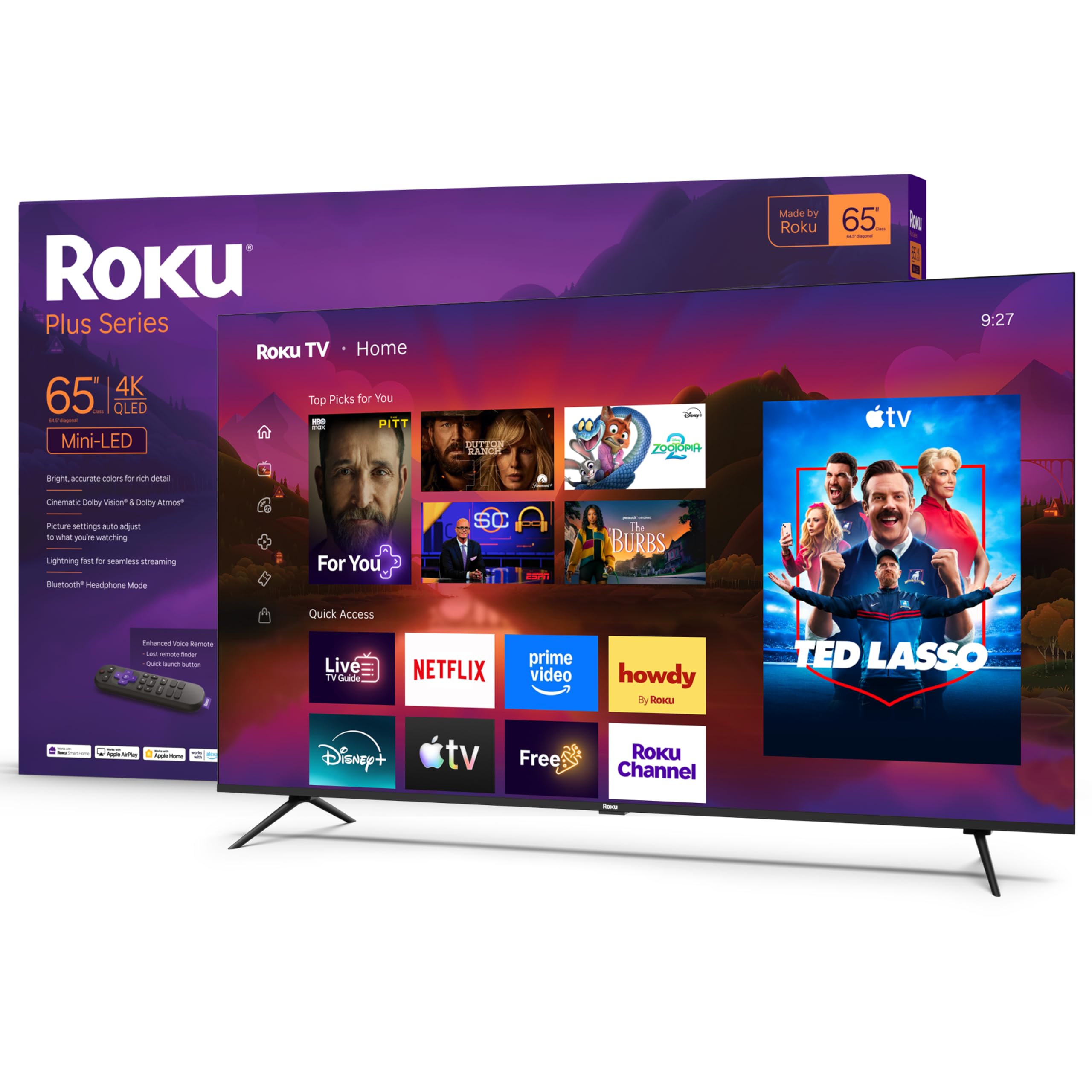
1. Roku 65-Inch Plus Series Smart TV
Our pick — 4.0+★ from 800+ verified ratings; the strongest balance of quality and price.
The set that makes a 65-inch Mini-LED feel like the easy, obvious choice.
For a first big living-room TV, the Roku Plus Series gets the fundamentals right. It uses a Mini-LED backlight — thousands of tiny LEDs behind the screen instead of one big lamp — paired with a QLED layer that widens the color range. Dolby Vision then tunes compatible movies scene by scene, so a night-time chase stays readable instead of turning to mush. The Roku brigade is the crowd favorite here, holding 4.0+ stars across 800+ ratings.
What wins people over is the sheer ease of the thing. Setup takes minutes, the Home Screen is uncluttered, and the enhanced voice remote includes a lost-remote finder — handy when the clicker vanishes into the couch. There is a built-in subwoofer and Dolby Atmos, and a Bluetooth Headphone Mode lets you listen without waking the house. Owners also love that the picture stays crisp with perfect clarity and that the audio holds adequate bass for a set this size.
The honest catch is long-term dependability. While most owners say it performs as advertised, buyers report the occasional unit that stopped working after 32 days — treat that as a rare early-failure risk and keep your receipt handy for the return window. For most living rooms this is the sensible starting point: Mini-LED, Dolby Vision, and a built-in subwoofer on the simplest interface here.
Why it earns the top slot
- Mini-LED backlight and QLED color give rich detail with Dolby Vision tuning
- Setup takes minutes and the Roku Home Screen is genuinely simple to navigate
- Built-in subwoofer with Dolby Atmos and Bluetooth Headphone Mode for quiet listening
Where it asks for patience
- Dependability is the one mixed signal — a small share of units fail early
- No stated refresh-rate figure on the listing, so console gamers should confirm
Settle here if: you want a 65-inch Mini-LED that is simple to run and comes with real bass built in.
Second-guess it if: you need a published high refresh-rate number before buying for a current console.
2. Samsung 65-Inch M70H Series Smart TV
The power-sipping Mini-LED that quietly beats the top pick on running cost.
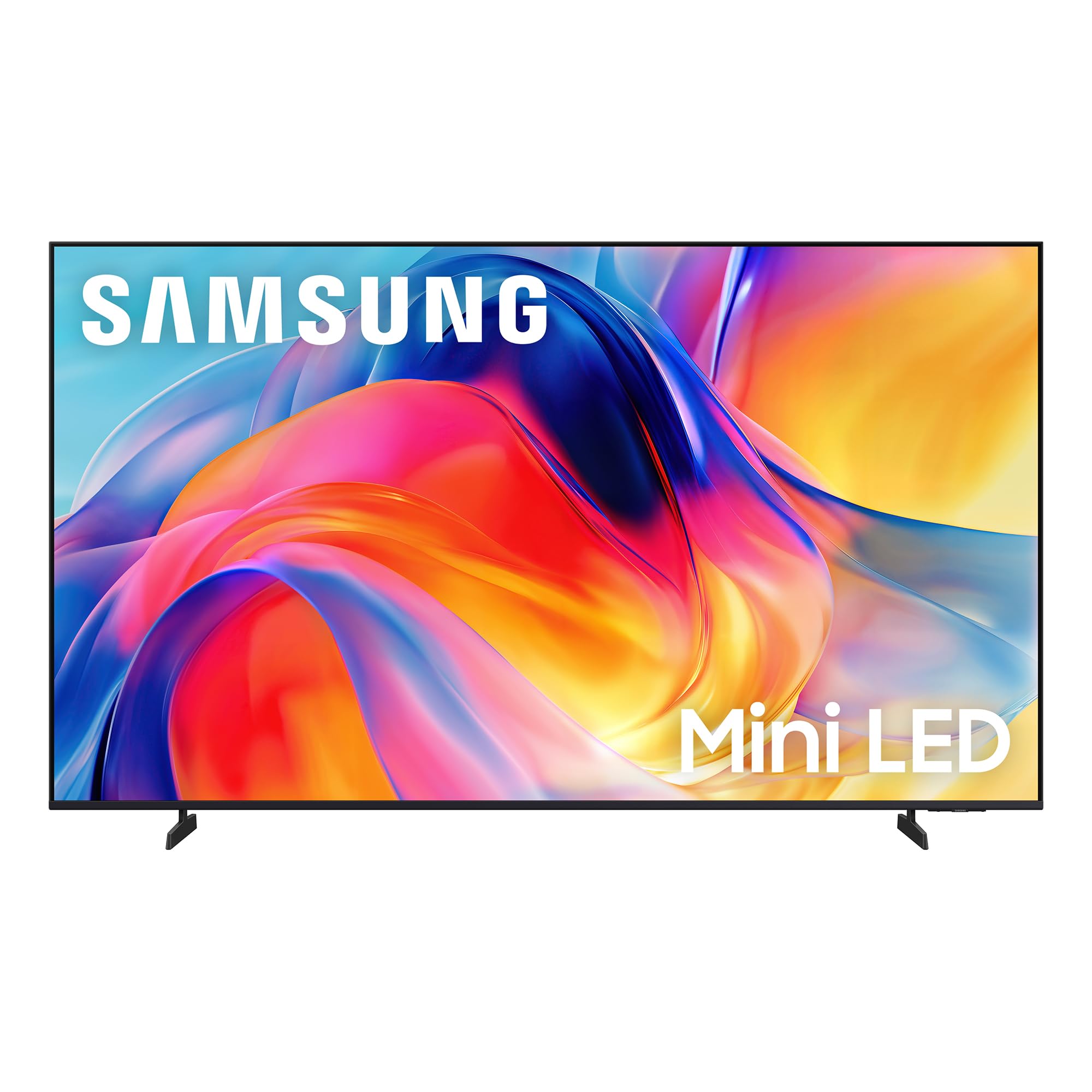
Here is a number worth parking on. This Samsung is rated at 80 kilowatt-hours per 1,000 hours of viewing, while the Roku Plus Series above is rated at 224. That is the biggest efficiency gap in this whole list, and over years of evening watching it is real money on the bill. The Mini LED processor and Pure Color Spectrum handle color and contrast, and Samsung TV Plus adds a deep bench of free channels without a subscription.
Sports fans get Motion Xcelerator + DLG 120Hz — a smoothing feature measured at 120Hz — plus a Soccer Mode with specialized settings. 4K clarity is the theme reviewers keep landing on, and the set is easy to mount and connect. What buyers praise most is the overall build quality, followed closely by the picture itself.
The remote is the weak spot. It draws the most negative feedback of any aspect here, described as laggy and overcomplicated, so expect a learning curve or plan on a streaming stick. Sound is decent rather than room-filling, and connectivity draws split opinions. If the power bill is a priority, though, nothing in this guide comes close on energy.
Value read: a 65-inch Mini-LED with the lowest annual energy draw in the group, plus 2,700+ free streaming options built in.
Buyer caution: the remote control is the one piece this set keeps getting marked down on — reach for it expecting a fiddly first week.
Point it at: anyone who leaves the TV on for hours and wants the smallest possible electricity footprint.
Not the one for: you if the remote’s reputation would sour the whole experience — budget for a replacement clicker.
3. LG 65-Inch QNED73B Mini LED Smart TV
Quantum Dot color and a genuine film mode for people who care how a movie was shot.
This is the set for the movie-night household. The QNED73B pairs Quantum Dot and NanoCell layers with a Mini LED backlight and local dimming, and LG rates it at certified 100% Color Volume. FILMMAKER MODE preserves the director’s original colors, frame rates, and settings, so what you see is closer to the intent than the punchy “vivid” preset most TVs ship with.
The panel runs a 60Hz native refresh rate with TruMotion smoothing out judder in fast sports and action. For gaming there is AMD FreeSync Premium and ALLM (auto low-latency mode, which cuts lag when a console detects it). Three HDMI ports let a console, soundbar, and streamer stay plugged in at once, and webOS 26 brings Google Gemini plus Alexa compatibility. The dimensions with stand are 57.0″ x 35.5″ x 10.6″, so measure your console first.
Where it frustrates people is the remote. The Magic Remote draws the most complaints and the most requests for a simpler, fewer-button design. Setup and connectivity both split opinion, with some reporting pairing trouble. Picture and overall quality are what carry it — that is where the praise lands. Quick note on our comparison table: the Dolby Vision box does not get ticked here, so check your app’s HDR format if that one matters to you.
The selling point: certified 100% Color Volume plus FILMMAKER MODE and Ambient Light Technology that adapts to your room.
The trade-off: the Magic Remote is the single loudest complaint and connectivity draws mixed notes, so budget a second input device if you stream heavily.
Reach for this if: you want colors a filmmaker would sign off on and a picture that adjusts to a dim room.
Look elsewhere if: a simple remote matters more than color accuracy.
4. Sony 65 Inch BRAVIA 2 II Smart Google TV

Sony’s straight-LED set that hands PS5 owners extra picture tricks.
This is a conventional LED set rather than a Mini-LED one, so it makes its case on processing rather than backlight hardware. The 4K Processor X1 handles colors and sharp detail, and 4K XR-Reality PRO upscales your older HD content toward near-4K. Motionflow XR smooths fast sports and action, and you get Apple AirPlay 2 and Google Cast for throwing content over from a phone.
Sony reserves special treatment for the PlayStation 5: Auto HDR Tone Mapping and Auto Genre Picture Mode adjust the picture the moment it detects the console. A Game Menu gathers your gaming settings in one place. Setup is a highlight — buyers consistently finish it inside 10 minutes and like the interface. Eco Dashboard keeps energy settings together, and the set is rated at 189 watts.
The concern is reliability. Some units stop working shortly into setup, and Wi-Fi connectivity turning flaky is the other recurring theme. Sound is serviceable rather than rich.
The Sony advantage
- PS5 auto-tuning with Auto HDR Tone Mapping and Auto Genre Picture Mode
- 4K XR-Reality PRO upscales HD content toward near-4K
- Fast, friendly setup most buyers finish in around 10 minutes
The honest limits
- Standard LED backlight, so contrast trails the Mini-LED picks here
- Wi-Fi dropouts and the occasional early failure come up often enough to note
Suits: PS5 households that want the console to look its best with zero fiddling.
Pass on it: if you demand deep black levels — this is an edge-lit-style LED, not a Mini-LED.
5. Toshiba 65″ Class Z670R Series Mini-LED Smart Fire TV
A native 144Hz Mini-LED that treats fast games and fast sports the same way.
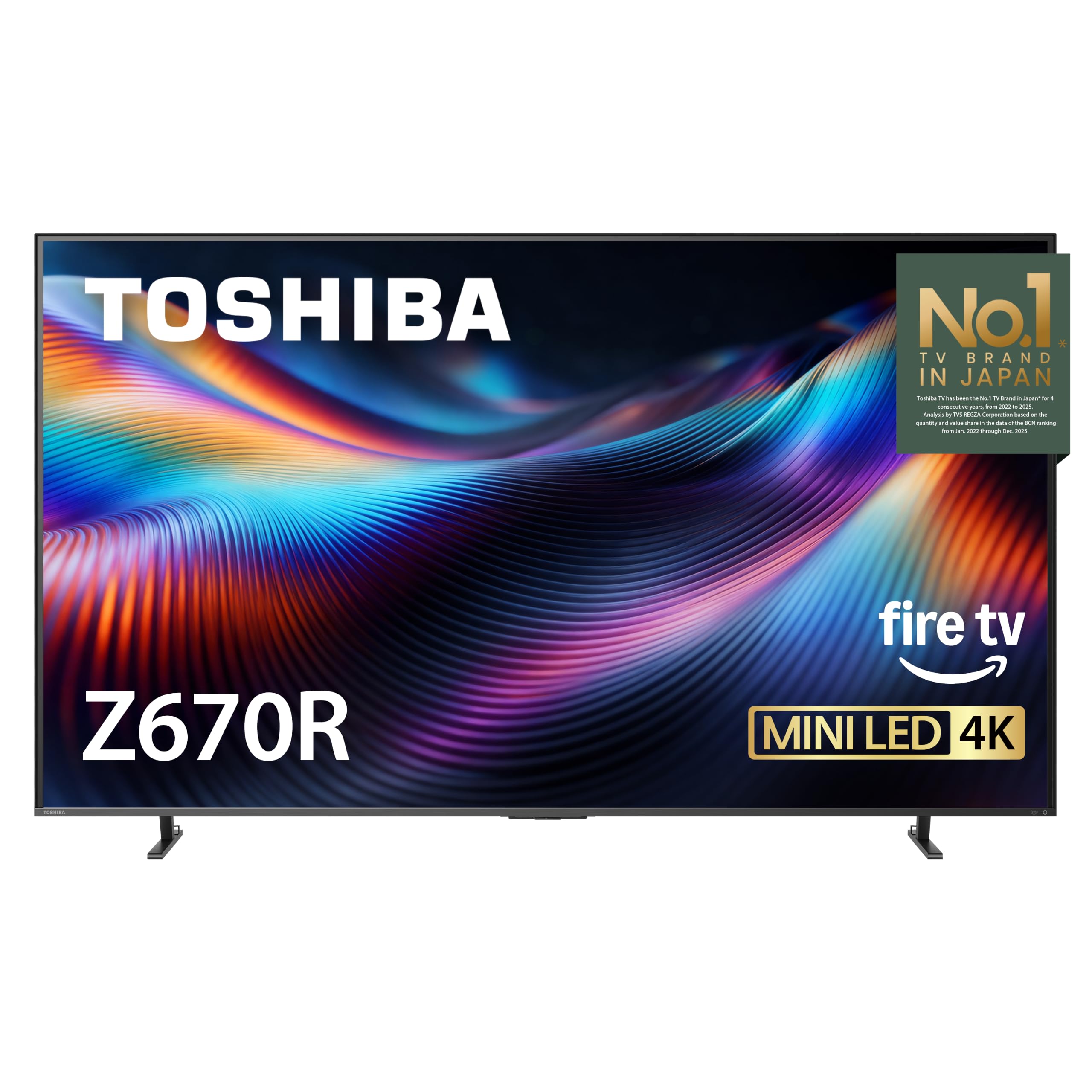
Toshiba builds this for speed. The Z670R runs a native 144Hz refresh rate — 144 full redraws per second — with AMD FreeSync Premium, VRR 144Hz, and ALLM, so a next-gen console or gaming PC gets motion without tearing. Mini LED with Full Array Local Dimming keeps blacks deep and highlights bright, and QLED color pushes over a billion shades.
On the picture side there is a full HDR stack: Dolby Vision IQ, HDR10+, and HLG, so whatever format your app serves it gets handled. Sound comes from REGZA Power Audio Pro with a dedicated bass woofer, and the REGZA Engine ZRi Gen3 AI processor tunes clarity and contrast scene by scene. Fire TV wraps it all in one home screen with Alexa on the remote.
What buyers praise most is the display itself, with vivid color and deep blacks earning top marks, and games feeling notably smoother. The one thing to size honestly is durability — most sets run flawlessly, but a small share fail after a month of use, so lean on the return window. For a gaming-first room, few sets in this range pair native 144Hz with FreeSync Premium and Full Array Local Dimming.
Why gamers notice it: native 144Hz with FreeSync Premium and VRR 144Hz is the smoothest motion package in the mid-range.
What to watch: reliability draws mixed notes and the bass woofer adds heft — confirm your wall bracket’s weight rating.
Choose this to: feed a current-gen console or PC at high frame rates without a blurry mess.
Skip if: you mainly watch slow dramas — you are paying for gaming speed you may not use.
6. Philips 65-Inch Class 7985 Series Smart Roku TV
The only set here that throws its own color onto the wall behind it.
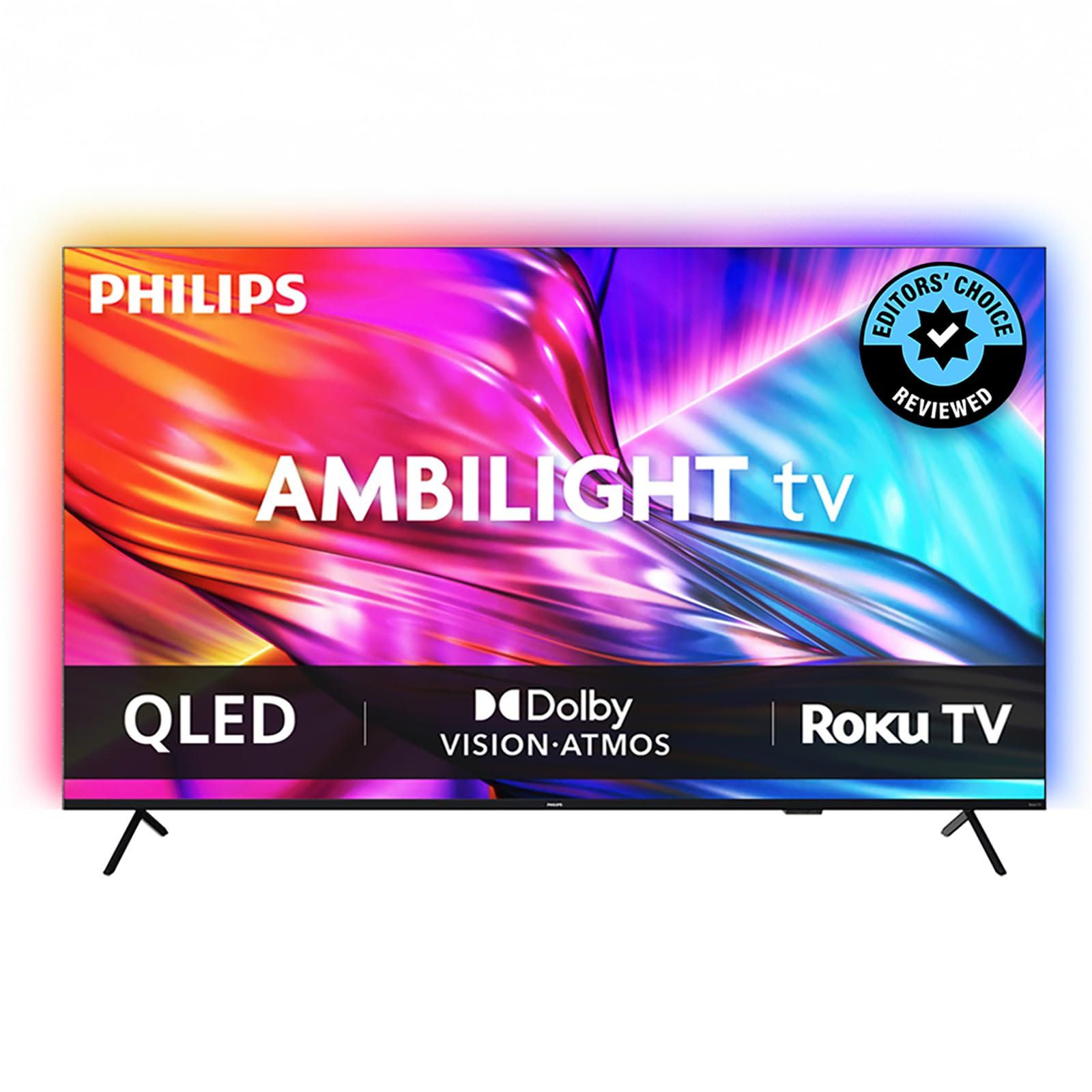
Ambilight is the reason to pick this Philips — and nobody else in this guide does it. Built-in rear LEDs read the 65-inch screen and project the matching color onto the wall, so the picture spills past the bezel. Follow Audio pulses that light with your music. A static glow can even stay on after the TV switches off, turning the screen into a piece of wall art. Picture quality is what buyers praise most: bright, clear, and genuinely beautiful.
The panel is a 4K QLED at 3840 x 2160 resolution, with quantum dot color for wider contrast and brightness. Dolby Vision, HDR10, and HLG handle compatible content, and 120 PMR keeps sports smooth. Two built-in speakers deliver Dolby Atmos, and HDMI 1 carries eARC for a soundbar. Roku streaming sits on one home screen with 500+ free live channels, and there are four HDMI inputs plus a headphone jack.
A quick word of fit guidance: it measures about 56.9 x 35.3 x 11.8 inches with the stand attached, and mounts on a 400 x 300 mm VESA bracket — measure both before you hang it, because the light show works best with a little wall clearance. If you want a plain black bezel and nothing more, look elsewhere; if you want Ambilight spilling color onto the wall behind the screen, this is the only set here that does it.
Best for: anybody who treats movie night as an event and wants the room to change with the picture.
Think twice if: you want a faultless, feature-light panel — here the Ambilight is the point, so the picture is QLED rather than Mini-LED.
7. TCL 65 Inch QM6K Series Smart Google TV
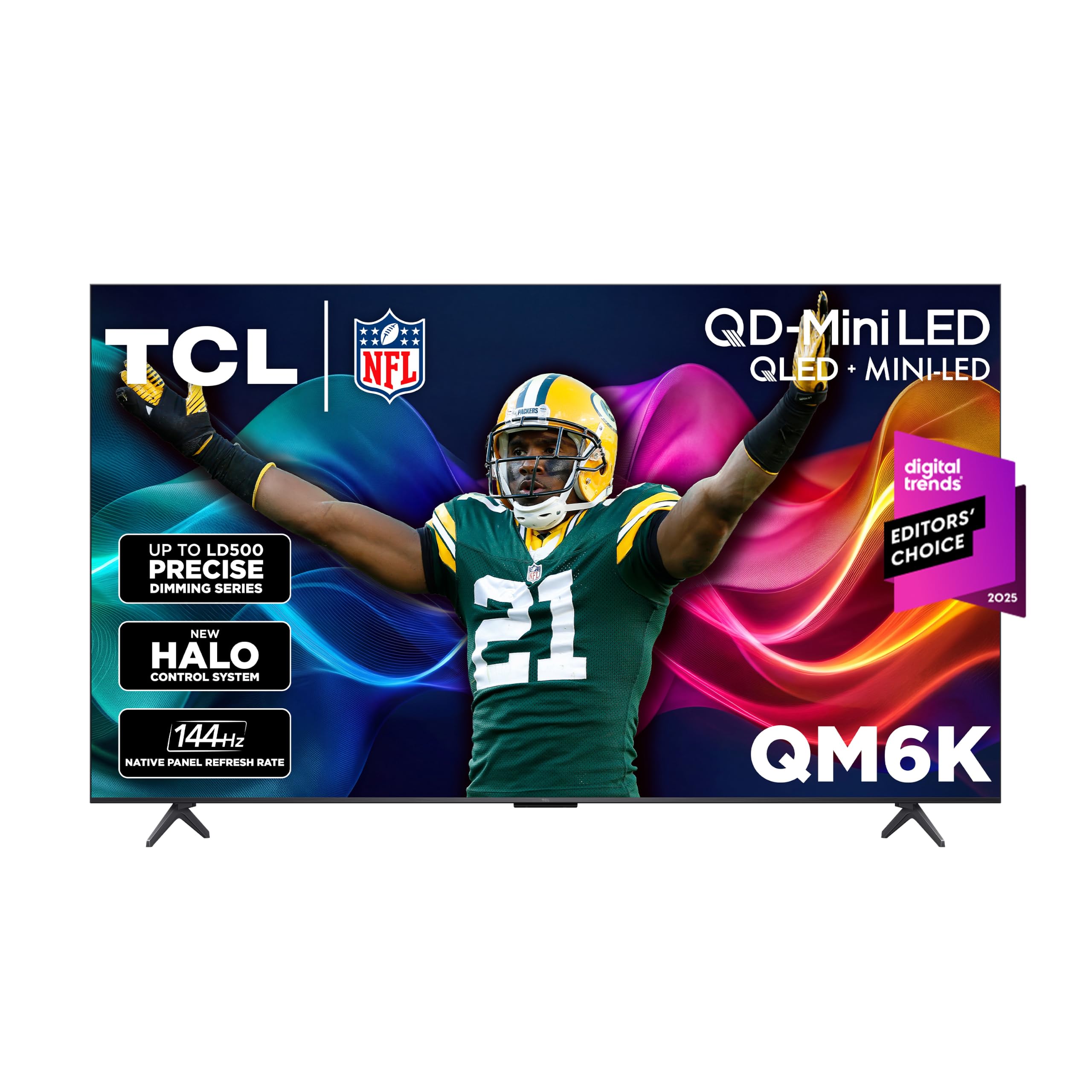
Built to stare down a sunlit window and keep the picture intact.
Daylight is the enemy of most TVs, and this TCL was engineered to fight it. QD-Mini LED pairs ultra-precise mini LEDs with Quantum Dot color for brightness and over a billion shades, and the Halo Control System with local dimming reduces blooming around bright objects. A 144Hz native refresh rate plus a Motion Rate 480 figure keeps fast action clean — the approach TCL takes for live sports.
Dolby Vision, HDR10+, HDR10, and HLG mean it handles every major HDR format, and Google TV with Gemini lets you ask for something specific instead of scrolling. Brightness is the standout: it holds up under overhead light and sunlight with minimal glare. Color and contrast are praised widely, and setup takes just minutes.
The thing to weigh is reliability — most sets run great, but some owners mention the TV turning itself off, which is worth watching in the early weeks. If you watch the game with the blinds open, this QD-Mini LED set is built for it; in an already dark room, a cheaper pick down the list gives up little.
What it nails
- QD-Mini LED brightness shrugs off sunlight and overhead lighting
- 144Hz native with Motion Rate 480 keeps sports and action clean
- Dolby Vision, HDR10+, HDR10 and HLG all covered
Known watch-points
- Some customers note it turning itself off — exercise the return window early
- Onkyo audio is present but a soundbar still adds weight to action scenes
Match it to: bright living rooms and sun-drenched sports afternoons.
Move on if: your viewing room is already dark and dimming — you will not feel the brightness benefit.
8. TCL 65″ QM64L High Contrast QD-MINI-LED 4K AI Smart Fire TV
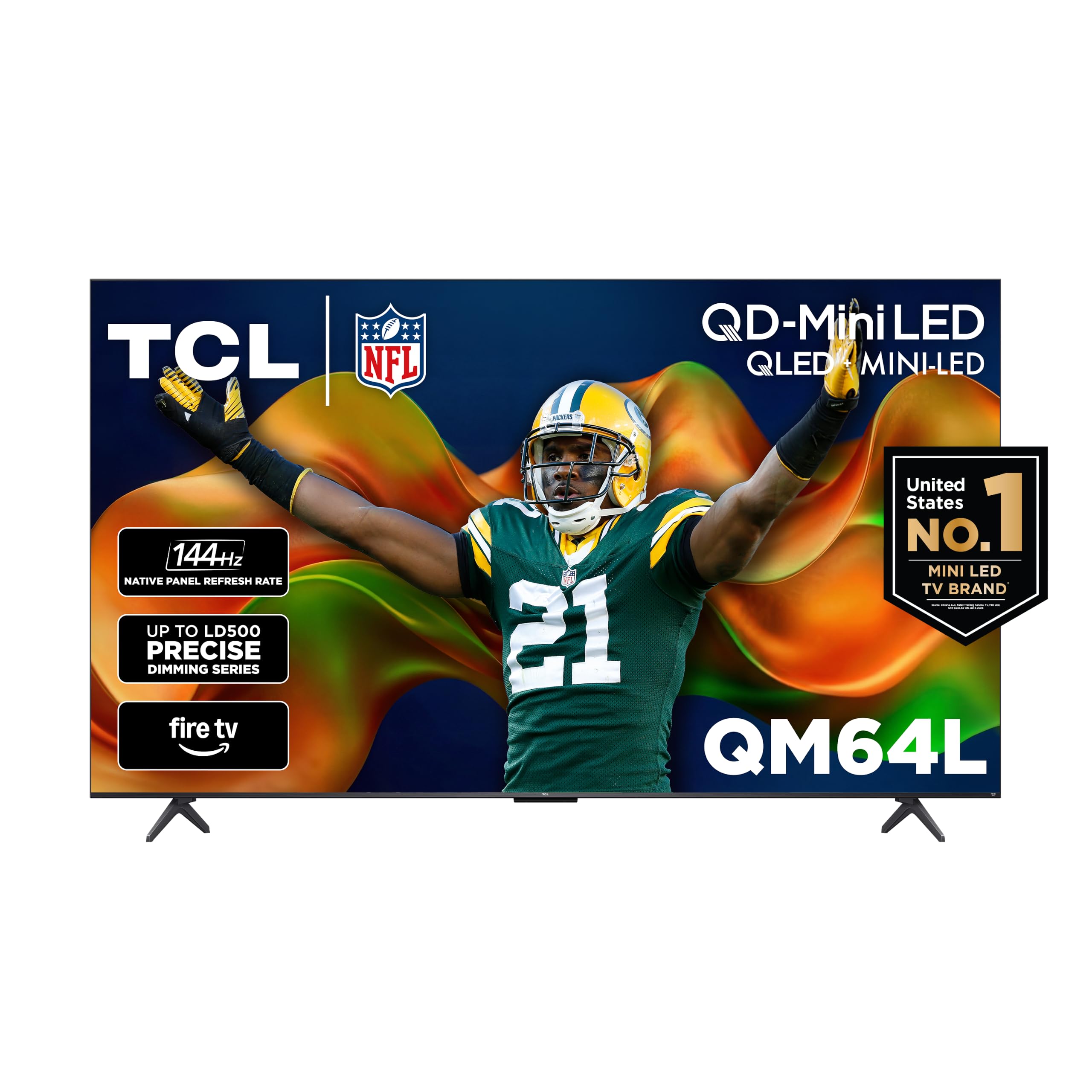
Skip the soundbar — this one ships with a subwoofer and 500 dimming zones.
Audio is where this TCL pulls ahead of most of the list. It carries Onkyo 2.1 sound with a built-in subwoofer, plus Dolby Atmos and DTS, so dialogue and explosions get real separation without extra gear. On the picture side, QD-Mini LED with up to 500 local dimming zones and Halo Control Technology keeps dark scenes deep and bright objects clean, and Enhanced QLED Color pushes up to 1.07 billion colors.
Gaming and sports get native 144Hz with Motion Rate 480, VRR, ALLM, and Game Accelerator, so a console stays smooth. Fire TV with Alexa+ handles discovery by voice, and the bezel-less design puts more picture and less frame on your wall. Buyers describe the picture as crisp and genuinely impressive, and the sound earns steady praise.
The flaw worth knowing is startup speed. Some owners find the system slow to boot and apps take a while to load, so patience helps on first power-up each day. If you were planning to buy a soundbar anyway, this set folds that cost in — a rare bundle in this bracket.
Sound-first logic: Onkyo 2.1 with a 20W subwoofer and Dolby Atmos means the soundbar line item on your list can go.
Patience needed: a slower boot and app-loading cycle is the recurring knock — not picture quality.
Pick it when: you want big-room sound without adding a separate speaker bar.
Reconsider if: you expect instant app switching — this one warms up slowly.
9. Hisense 65″ U7 Mini-LED Smart Google TV

A 165Hz panel with an anti-glare coat for rooms you cannot dim.
Hisense attacks glare head-on here. The screen uses a dual-layer anti-reflection treatment that goes beyond standard single-layer designs, keeping the picture crisp even with a bright window behind you. Behind that is Hi-QLED MiniLED Pro with up to 3000 local dimming zones and up to 3000 nits peak brightness — the number that decides whether sunlit scenes keep their detail.
Gaming gets serious attention: a native 165Hz refresh rate, Game Booster 330 with VRR up to 330Hz, and an Enhanced Game Bar for monitoring FPS and settings live. Color is Pantone Validated for accuracy, and a 2.1.2 multi-channel surround system tuned by Devialet handles audio. Google TV with Gemini rounds it out. The thing buyers praise most is the overall quality, then the bright, detailed picture with deep blacks.
Pay attention to the HDR line in our table: the Dolby Vision IQ support is listed in the product description, so confirm it matches the format your apps use. For a room with unavoidable daylight, the anti-glare alone justifies the step up.
Made for: sunny rooms and gamers who want a high refresh count with glare control.
Consider another: you if you never fight reflections — the premium here is all in the anti-glare coating and zone count.
10. Samsung 65-Inch Class Neo QLED QN70F 4K Mini LED Smart TV

Twenty neural networks working to sharpen the old shows you still watch.
Most of what you stream is not native 4K, and this Samsung is built around that reality. The NQ4 AI Gen2 processor uses AI with the power of 20 neural networks to upscale content toward 4K and tune sound, and it can transform standard SDR content toward HDR-like brightness and color. Quantum Matrix Technology with precision-controlled Mini LEDs gives the sharp, accurate contrast the Neo QLED line is known for.
Gaming runs at up to 4K 144Hz VRR via Motion Xcelerator, so a current console gets smooth, tear-free frames. Samsung TV Plus adds 2,700+ free channels without a subscription, and the platform is personalizable. Setup is easy and buyers describe the clarity as crisp with super dark blacks — that is where the praise focuses.
Two honest notes. Energy is rated at 317.55 kwh — noticeably thirstier than the M70H above — and connectivity splits opinion, with some reporting connection issues across devices. Picture sharpness and upscaling are what earn it a spot this high.
Where the AI shows up
- 20 neural networks upscale older content toward 4K clarity
- 4K 144Hz VRR gaming with Motion Xcelerator
- Samsung Vision AI platform with 2,700+ free channels
What it costs you
- 317.55 kwh energy rating means a heavier power bill than the M70H
- Connectivity reports are mixed — check your router before you commit
Worth it for: households with a big backlog of older shows and a high-refresh console.
Think twice if: you watch mostly native 4K and want to keep the power bill low.
11. Hisense 65″ U8 Series Mini-LED Smart Google TV
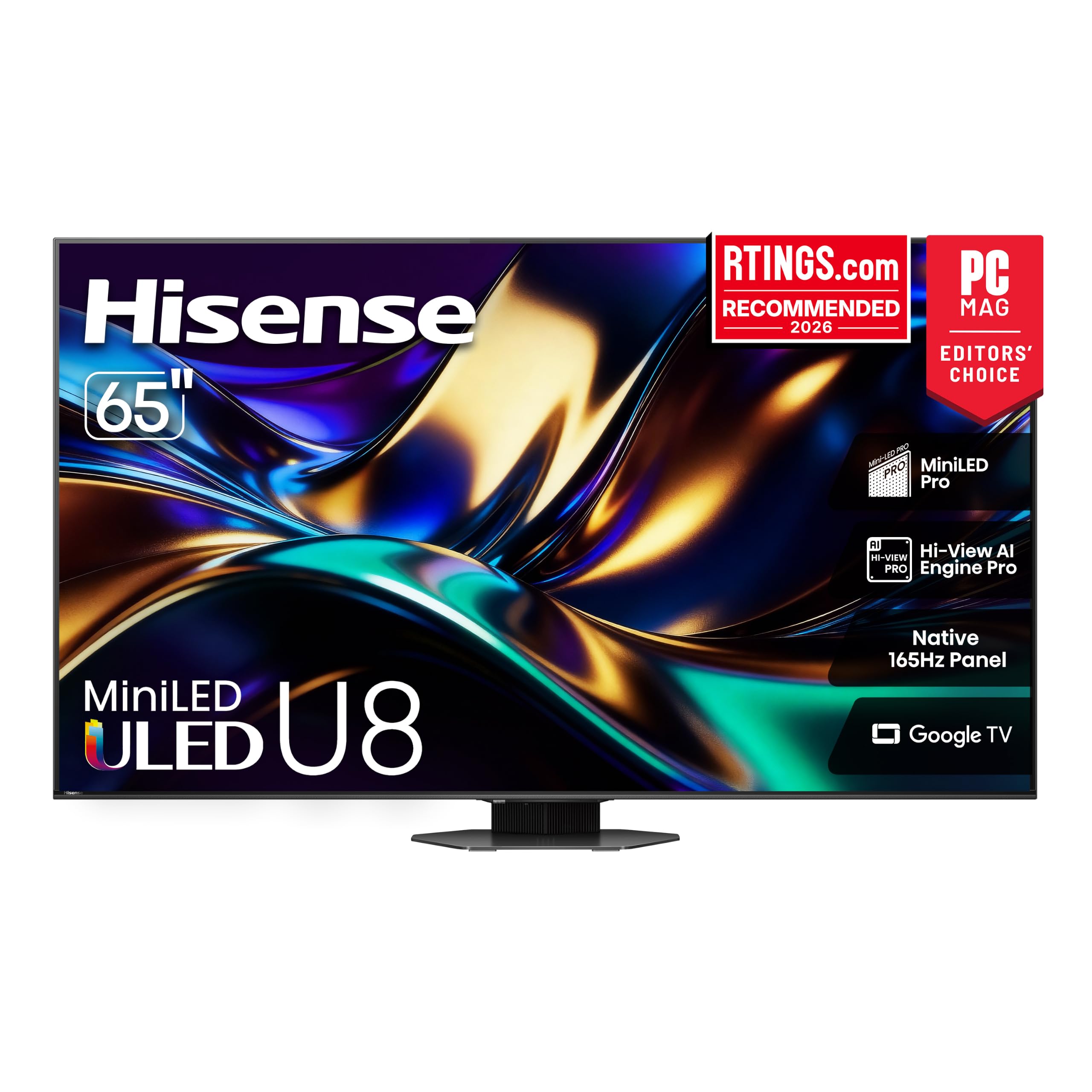
The sunniest picture in this guide, backed by thousands of dimming zones (small patches of backlight that brighten or dim on their own).
Start with the two numbers that make this set unusual: up to 5000 nits peak brightness and up to 5600 local dimming zones. Think of those zones as thousands of tiny pinpoints of light that can each dim independently, which deepens shadows and brightens highlights while nearly eliminating halos. QLED Color, Pantone Validated, renders over a billion shades, and Anti-Reflection Pro coats the liquid crystal layer to tame glare.
Gaming is fast here too — a native 165Hz panel with VRR from 48Hz to 165Hz, plus AMD FreeSync Premium Pro, ALLM, and Low Latency MEMC. Audio is a 4.1.2-channel Dolby Atmos system with a built-in subwoofer and two up-firing speakers. Filmmaker Mode and IMAX Enhanced both appear, and the Hi-View AI Engine Pro tunes picture and sound scene by scene. What buyers praise most is the overall quality, then the clear, bright picture with blacks that compare to OLED.
The fair warning is performance consistency — most sets run flawlessly, but a share stop working periodically, so plan to test thoroughly inside the return window. If you want the brightest, most zone-dense picture in this roundup, this is it: up to 5000 nits across up to 5600 local dimming zones.
The headline: up to 5000 nits and up to 5600 zones is the most aggressive brightness spec on this list.
Sized caveat: some units quit working periodically — not the norm, but enough to make the return window your friend.
The match is: a bright room and an HDR collection you want punchy beyond anything else here.
Look past it if: peak brightness is wasted on you — a dark-room viewer pays for lumens they never see.
12. Sony 65 Inch BRAVIA 5 Mini LED Smart Google TV

The set that treats “as the director intended” as a hardware feature.
This is the top of the pile for a reason: thousands of Mini LEDs (tiny backlights packed densely behind the screen) driven by XR Backlight Master Drive for brightness and authentic contrast, so dark scenes stay dark next to bright ones. XR Triluminos Pro covers billions of real-world colors, and an XR Processor with AI sharpens color, contrast, and clarity in real time. Studio calibrated picture modes for Netflix, Prime Video, and Sony Pictures CORE aim to reproduce the creator’s intent, and the SONY PICTURES CORE app includes movies plus access to the largest IMAX Enhanced collection.
Movie night gets Dolby Vision, Atmos, IMAX Enhanced, and DTS:X together, and XR Motion Clarity keeps fast sports blur-free. PS5 owners get Auto HDR Tone Mapping and Auto Genre Picture Mode, with a Game Menu gathering gaming settings. Google TV with Google Assistant handles the streaming side, and Apple AirPlay 2 and Google Cast let you throw content over. Raters describe the picture as stunning with vivid colors, and the sound holds up well without extra kit.
Where it earns scrutiny is value — a share of owners question whether the step up is worth the premium over the mid-range Mini-LEDs here. Energy is rated at 243 watts, and a minority report units that stop turning on. Picture quality is what buyers are impressed by, and the studio-calibrated modes are the reason to reach this high.
What the extra buys
- XR Backlight Master Drive across thousands of Mini LEDs for authentic contrast
- Studio calibrated modes for Netflix, Prime Video and Sony Pictures CORE
- Dolby Vision, Atmos, IMAX Enhanced and DTS:X all in one display
The premium’s price
- Value for money draws split opinions against the mid-range Mini-LED pack
- 243 watts rated draw and occasional early failures sit on the ledger too
Step up here when: the picture itself is the hobby and you want creator-intent modes on a Mini-LED panel.
Stay mid-range if: you would rather bank the difference than chase the last notch of contrast.
Know the Specs
Mini-LED vs standard LED backlight
A standard LED TV lights the whole panel from behind with one broad source. A Mini-LED set uses thousands of much smaller LEDs grouped into dimming zones that switch off individually. The practical payoff: in a dark scene, the black areas actually go dark instead of glowing grey around bright objects. The more zones a set declares — think up to 5600 on the Hisense U8 — the finer that control tends to be.
Native refresh rate vs motion smoothing
Native refresh rate is how many times per second the panel itself redraws, quoted in Hz. Sets here run from a 60Hz native panel up to a 165Hz native one. Separately, makers quote motion-smoothing figures (Motion Rate 480, 120 PMR, Motion Xcelerator 144Hz) that describe processing, not the panel. For a game console, the native number is the one that matters, because it caps how smooth the actual motion can be.
Peak brightness in nits
A nit is a unit of screen brightness. Higher peak brightness lets a set show a sunlit sky or an explosion without washing out the detail inside it, and it helps the picture survive a room with windows. One set here lists up to 3000 nits and another up to 5000 — read those as the ceiling for short highlights, not a constant level you stare at all evening.
HDR formats and why the logos differ
HDR, or high dynamic range, is the extra brightness and color range layered on top of a normal picture. The three formats you will see are Dolby Vision, HDR10+, and HLG. Different streaming apps and discs serve different ones, so a set that supports all three — like the TCL QM6K — routes any source correctly. A set that skips Dolby Vision will still play the content, just through a different layer.
Common Questions
Why is it hard to find a true 60-inch LED TV?
Will a 65-inch TV fit where a 60-inch used to sit?
Is Mini-LED better than a standard LED backlight?
Do I need a 144Hz or 165Hz TV if I only watch movies?
What does annual energy consumption in kilowatt-hours mean for my bill?
Will I need a soundbar with these TVs?
What is local dimming and why does the zone count matter?
Which HDR formats should I look for on a 65-inch TV?
Can I use these TVs with a gaming console or a PC?
What should I do if a set arrives faulty?
The Bottom Line
For most people shopping a 60 inch led tv and landing on the 65-inch shelf, the Roku 65-Inch Plus Series is the one to buy — it pairs a Mini-LED backlight and Dolby Vision (a high-dynamic-range format that keeps bright and dark details visible) with a built-in subwoofer and the simplest interface here. If the power bill is your priority, the Samsung M70H undercuts everything with an 80 kilowatt-hour rating (about how much power it uses over a year of typical viewing). And if the picture is the whole point, the Sony BRAVIA 5 delivers studio-calibrated modes and thousands of controlled Mini LEDs.
One last nudge worth acting on: the Roku Plus Series holds 4.0+ stars across 800+ owner ratings, second only to the TCL QM6K here — a strong real-world signal for a set this easy to live with.
How we choose
We do not accept paid placement. Every pick is matched to a real buyer and a real use-case; we do not hands-on test units.
Sources
Specifications: manufacturer listings and product documentation. Review insights: verified customer reviews, as of November 2026. Pricing: not shown on this page (it changes often); check the current price via the retailer link.
As an Amazon Associate, Tactical Gear Guy earns from qualifying purchases. This does not affect which products we feature.