Specs are compiled from manufacturer listings and verified buyer reviews and can change over time — please confirm the key details on the product page before buying.
Nobody sells a TV labelled exactly 53 inches, so the smart move is to stop hunting that number and start hunting the nearest real size. In practice that means a 50-inch or a 55-inch set, which sit within a couple of inches of what you were picturing and land you in the biggest, best-stocked part of the market. Everything below is matched on that basis, so you can pick by picture quality and features instead of chasing a size that was never manufactured.
This guide is built by comparing the manufacturers’ published specifications and the patterns across verified customer reviews, so you get each pick’s real strengths and trade-offs instead of marketing spin.
Below you will find eleven sets that all sit near that size, ranked by what they actually do well rather than by their badge. The quick comparison table is the fastest route if you already know your budget, and the full reviews explain which panel suits a bright room, a dark den or a console. This is the honest read on the best 53 inch TV you can realistically buy today.
Top Picks
How To Choose The Best 53 Inch TV
Start by accepting the size reality: a 53-inch panel is not a standard size any major brand builds. The two neighbouring sizes, 50 inches and 55 inches, cover the same viewing distance in most living rooms, so the decision that actually matters is panel type, not a two-inch difference. Measure the width of your stand or wall gap first, then shop inside the size that fits.
Mini-LED versus plain LED backlighting
A standard LED TV lights the whole screen from one edge or one broad strip, which is why dark scenes can look grey at the corners. Mini-LED swaps that for hundreds of tiny lights behind the picture, each dimmed in small groups. That is what produces deep blacks next to bright highlights without the glow bleeding across the screen. It costs more, but it is the single biggest jump in picture quality in this size class.
Refresh rate: what 60Hz, 120Hz and 144Hz actually mean
Refresh rate is how many times per second the screen redraws, measured in hertz. A 60Hz set is fine for films and casual streaming. A 120Hz or 144Hz panel, paired with a console or a fast PC, keeps panning shots and fast sport from smearing. Watch the marketing labels carefully: names like Motion Rate 480 or Motion Xcelerator describe processing on top of the panel, not the panel itself. The native number is the honest one.
Brightness, glare and where the television sits
A sunlit room with big windows is the enemy of any screen, and the fix is either high peak brightness or an anti-glare coating. Sets built for bright rooms push highlights hard so the picture survives daylight, while anti-reflection layers cut the mirror effect on the glass. If your sofa faces a window, weight that above almost anything else.
Sound without a soundbar
Flat panels have almost no room for speakers, so most sets sound thin from the start. Two things change that: a built-in subwoofer for actual bass, and a dedicated HDMI eARC port, which is a single cable that sends the TV’s audio out to a soundbar or receiver. If you plan to add a soundbar later, check for eARC before anything else.
Side-by-Side Comparison
| Model | Best For | Screen Size | Backlight | Refresh Rate | Amazon |
|---|---|---|---|---|---|
| Roku 55-Inch Plus Series★ Best Overall | All-round streaming value | 55 inches | Mini-LED | — | Amazon |
| Toshiba 50″ M450 SeriesCompact Pick | Smallest footprint, easy setup | 50 inches | QLED | 60Hz | Amazon |
| Philips 55-Inch 7985 AmbilightStandout Feature | Ambient wall lighting | 55 inches | QLED | — | Amazon |
| LG 55″ QNED73B | Colour accuracy and upscaling | 55 inches | Mini-LED | 60Hz | Amazon |
| TCL 55″ T7 Series | Sport and console gaming | 55 inches | Direct LED | 120Hz | Amazon |
| TCL 55″ QM64L | Bright-room movie nights | 55 inches | Mini-LED | 144Hz | Amazon |
| Sony 50″ BRAVIA 2 II | Upscaling older content | 50 inches | LED | — | Amazon |
| Hisense 55″ U7 Mini-LED | Anti-glare in a bright room | 55 inches | Mini-LED | 165Hz | Amazon |
| Samsung 55″ Neo QLED QN70F | AI upscaling and smart platform | 55 inches | Mini-LED | 144Hz | Amazon |
| Samsung 50″ The Frame LS03F | Living-room décor piece | 50 inches | QLED | — | Amazon |
| Hisense 55″ U8 Series | Maximum brightness and contrast | 55 inches | Mini-LED | 165Hz | Amazon |
Detailed Reviews
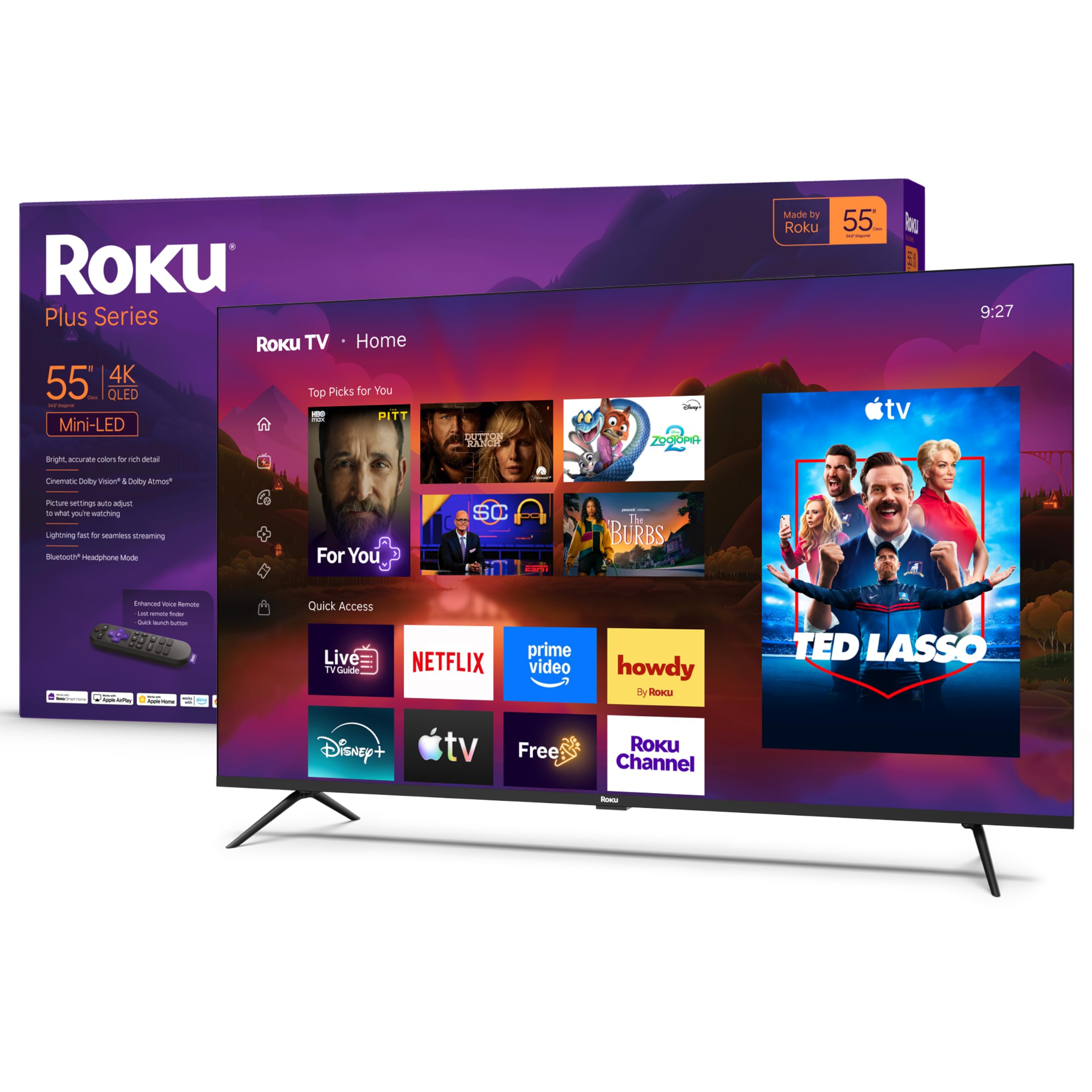
1. Roku 55-Inch Plus Series Smart TV
Our pick — 4.0+★ from 800+ verified ratings; the strongest balance of quality and price.
Mini-LED contrast and a working subwoofer, on a home screen anyone can drive.
The Roku Plus Series is the pick that makes sense for the widest range of people, because it gets the two hard things right at once. Its Mini-LED backlight uses many small lights behind the screen instead of one broad strip, so bright objects sit against genuinely dark backgrounds rather than a washed-out grey. The QLED layer on top widens the range of colour it can show, and Dolby Vision adjusts brightness scene by scene so a night-time chase does not crush into black mush.
Most flat screens sound thin, and this one dodges that with Dolby Atmos processing (surround-style audio that places sound around the room) plus a built-in subwoofer (the speaker that handles deep bass) for real low-end thump. A Bluetooth Headphone Mode keeps the audio in your ears when the house is asleep. Press the star key and the picture switches off while the audio keeps running. Setup takes minutes, and the Home Screen keeps your apps in one row instead of burying them. The enhanced voice remote has a lost-remote finder, which saves you an entire evening of searching.
Long-term reliability is this set’s one soft spot. Buyers consistently praise the picture, panel and interface — quality, picture and value come up most — but a minority of units stop working within the first month or so. Buyers report this plainly: as one puts it, reliability draws “mixed feedback” with some sets failing early. That is a real caveat, but the overwhelming majority of these panels run exactly as advertised. Budget for a little patience in the first few weeks.
What earns the top spot
- Mini-LED backlighting with QLED colour and Dolby Vision, so dark scenes hold detail and bright scenes keep their punch.
- Dolby Atmos plus a built-in subwoofer gives real bass without a soundbar purchase.
- Roku’s interface is the least confusing smart platform in this group, and the voice remote finds itself when it slips down the sofa.
- Wi-Fi, Ethernet, Bluetooth, HDMI and USB-C connections cover a console, a laptop and a stick without a hub.
Where it asks for care
- A small share of units fail early, so keep the box and the receipt for the first month.
- It is a 55-inch panel, two inches larger than the 53 inches you searched for.
Best fit for: the household that wants one screen to do streaming, sport and film without adding speakers or a streaming stick.
Look elsewhere if: you want a bigger brand name on the bezel more than you want the feature list.
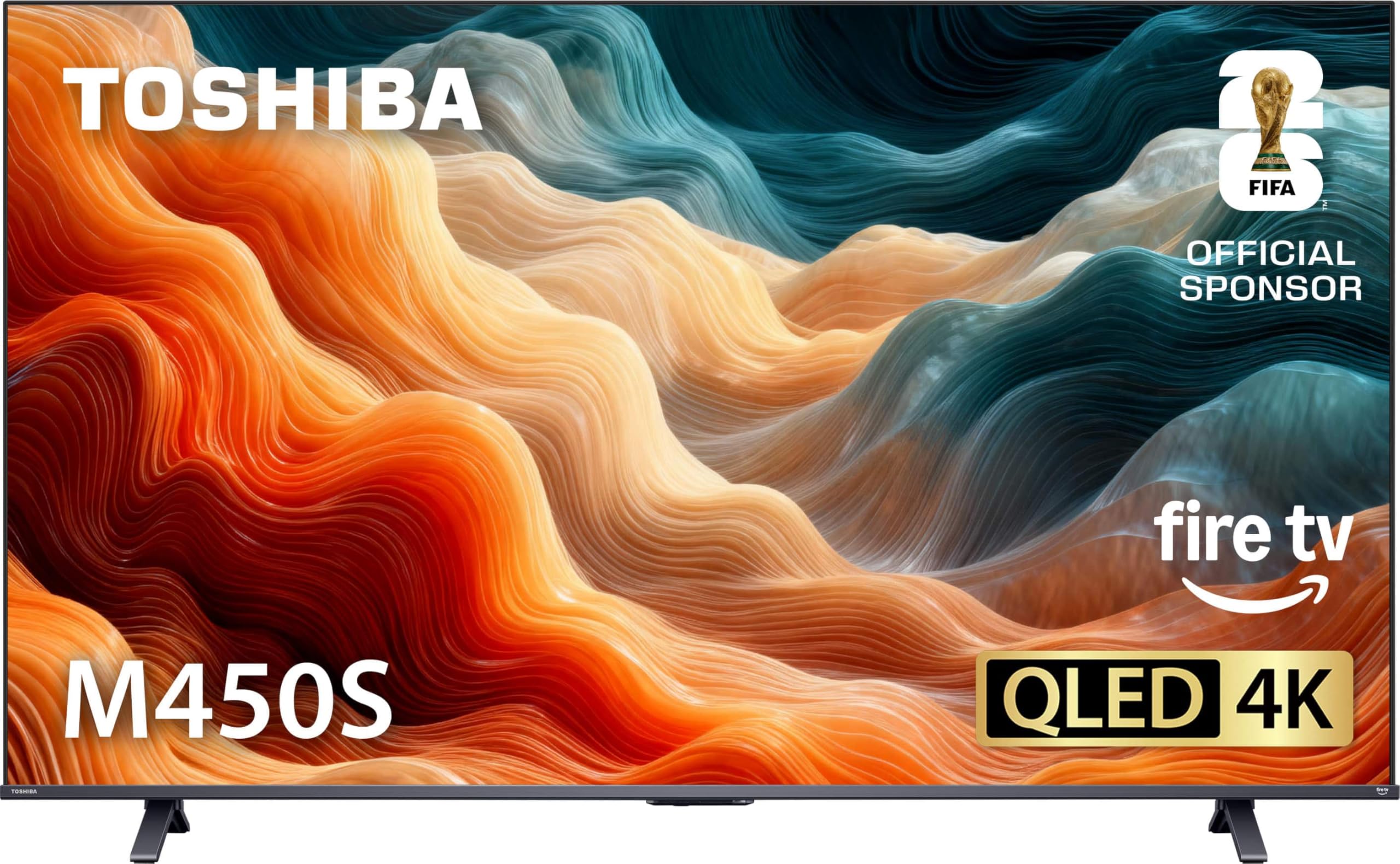
2. TOSHIBA 50″ Class M450 Series QLED 4K UHD Smart Fire TV
The genuinely 50-inch option when your wall gap will not stretch further.
If your alcove or stand is the real limit, this is the one to measure against, because it lands ten inches under the LG 55-inch set below — 50 inches versus 55. That smaller panel is the whole point for a bedroom, a kitchen corner or a snug where a 55-inch frame would overhang. Despite the smaller glass, the QLED layer still delivers the wider colour range that makes sports kits and nature footage look saturated rather than flat.
Fire TV is the operating system, which means Alexa answers when you press the voice button — find a show, change the volume, or check a score without hunting through menus. Dolby Vision and Dolby Atmos are both supported, together with HDR10+ Adaptive, which nudges brightness and contrast scene by scene when the light in your room keeps changing through the afternoon. Game Mode adds ALLM, VRR and eARC, so a console gets a low-latency path and a soundbar gets a clean single-cable hook-up.
The trade-off worth knowing before you commit is that this set’s weakest reports cluster around connectivity, with Bluetooth pairing in particular drawing complaints. Sound is also a split verdict — some find it more than adequate, others reach for a soundbar quickly — and colour accuracy is mostly praised with the occasional note that reds and pinks glow too strongly. None of that is unusual at this size and tier, but if you rely on a Bluetooth speaker or headphones, test the pairing in your return window.
Reach for this if: the space demands a true 50-inch screen and you want Fire TV’s voice search built in.
Think twice if: Bluetooth audio is central to how you watch.
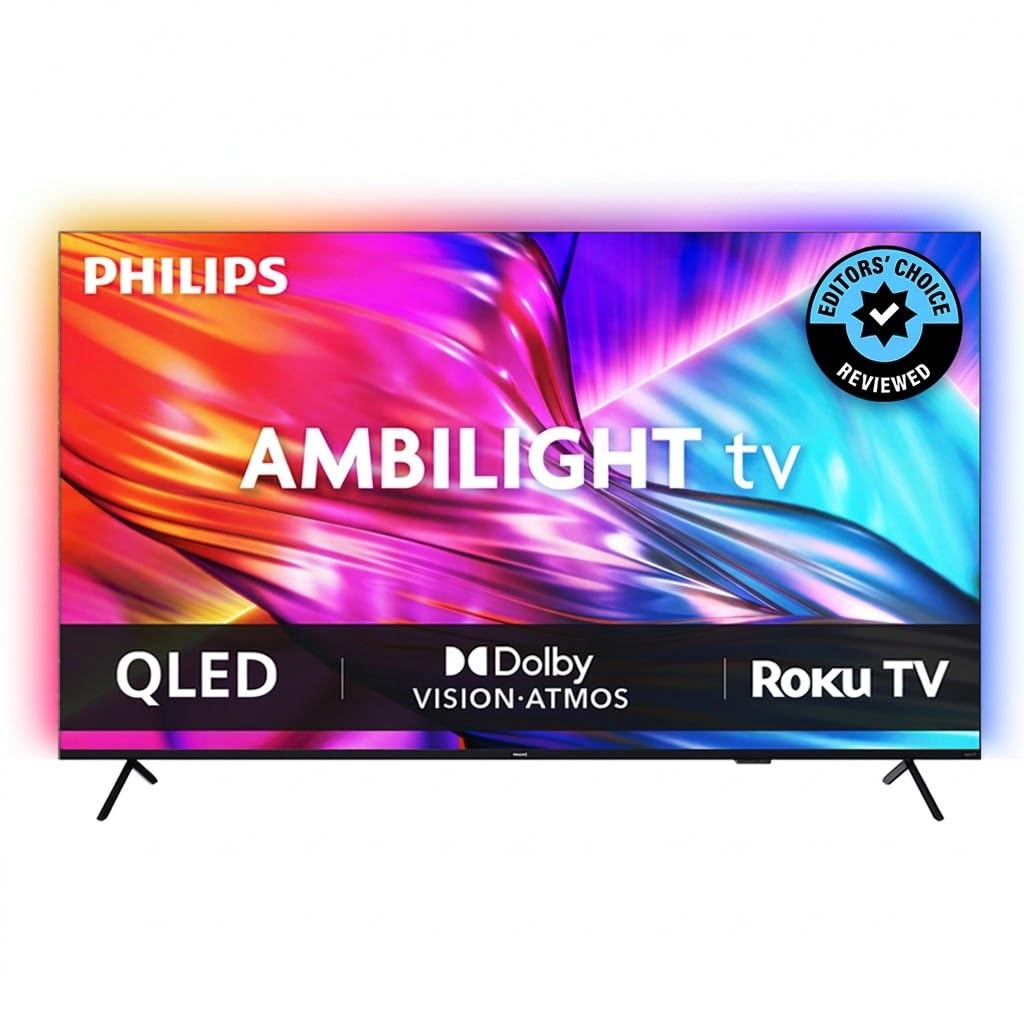
3. Philips 55-Inch 7985 Series Roku TV
Rear LEDs that paint your wall to match the picture — and keep glowing when it is off.
Ambilight is the reason to pick this set over any other 55-inch here, and it is not a gimmick once you live with it. A strip of LEDs behind the panel reads the colours on the 3840 x 2160 screen and throws matching light onto the wall, which softens the hard edge between picture and room in a dark lounge. There is a Follow Audio mode that pulses the glow with music, and a static setting that leaves a wash of colour on the wall after the screen goes dark.
The panel underneath is a QLED with Dolby Vision, HDR10 and HLG, so the colour range and contrast are handled properly across the common HDR formats. Motion runs at 120 PMR, a Philips motion measure aimed at keeping ball sports smooth. Sound comes from two built-in speakers with Dolby Atmos processing, and HDMI 1 carries eARC, which is the single cable that hands audio to a soundbar or AV receiver. Four HDMI inputs mean a cable box, a console, a soundbar and a stick can all stay plugged in at once.
What people like most is simply how it looks on the wall — the bright, clear picture and the rear lighting both come in for steady praise, and setup is quick from the box. The honest limit is the review base: this is a newer listing with far fewer owners behind it than the Roku at the top of this list, so there is less long-term history to lean on. The 48.3 x 30.7 x 10.1 inch footprint with the stand and a 200 x 100 mm VESA mount mean you can wall-hang it or sit it on a cabinet without extra parts.
The real reason to buy: no other set in this size range puts light on your wall, and in a dark room that changes how a film feels more than a small contrast bump would.
The honest catch: a shorter track record than the established picks, so you are trusting the manufacturer’s spec sheet a little more than usual.
Pick this one if: the television is the centrepiece of a dim room and you want it to look good switched off as well as on.
Pass if: you watch mostly in daylight and would never notice the glow.
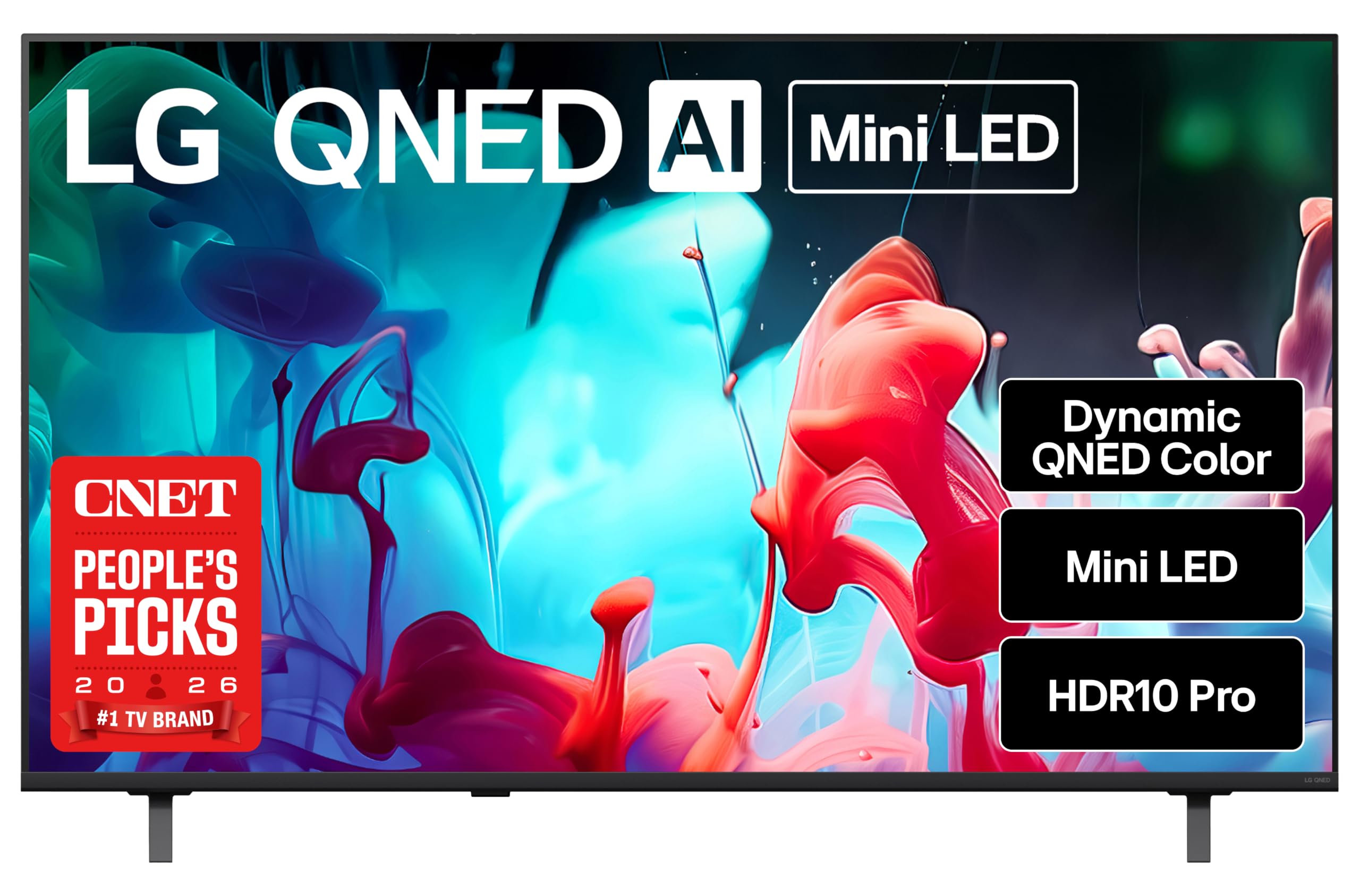
4. LG 55 inch Class QNED AI QNED73B Mini LED 4K Smart TV
Certified full colour volume, and an AI chip that quietly rescues older footage.
LG’s pitch here is colour you can measure, and the number to hold onto is 100% Colour Volume — a certified claim, according to LG, that the set holds its colour range even at bright and dark extremes, where cheaper panels lose saturation. Behind that sits a Mini-LED backlight (many tiny lights instead of one big one), so bright and dark scenes can sit side by side without one washing out the other. A 60Hz panel (the screen refreshes 60 times a second) drives it, which is fine for film and streaming and less suited to twitchy shooters.
The a7 AI Processor 4K Gen9 does the heavy lifting on older material, sharpening and upscaling standard-definition and streaming content rather than leaving it soft. HDR10 Pro adjusts brightness dynamically, and Filmmaker Mode strips out the smoothing and vivid presets so a film plays in the director’s intended colour and frame rate. webOS is the platform, with Google Gemini voice assistance, over 400 free channels via LG Channels, and a game dashboard that puts ALLM and cloud gaming controls in one menu.
Here is where this one needs a straight warning: the remote is the most criticised part of the set, with buyers wishing for fewer buttons and a simpler layout, and setup instructions get mixed reports. Picture and overall quality still carry the day — the screen itself is well liked — but that controller is the friction point you will meet on day one. If you loathe a busy remote, budget for a cheap replacement or a universal one.
Why it still earns a place: few sets at this size pair certified colour volume with a processor that genuinely improves low-quality streams.
The friction point: expect to fight the remote for the first week, and expect the written setup guide to be thinner than you would like.
Suits: the viewer who cares about accurate colour and watches a lot of older or lower-resolution content.
Not for: anyone who wants a dead-simple remote and a one-page setup sheet.
5. TCL 55 Inch T7 Series 4K 120Hz QLED Smart Google TV, 55T7
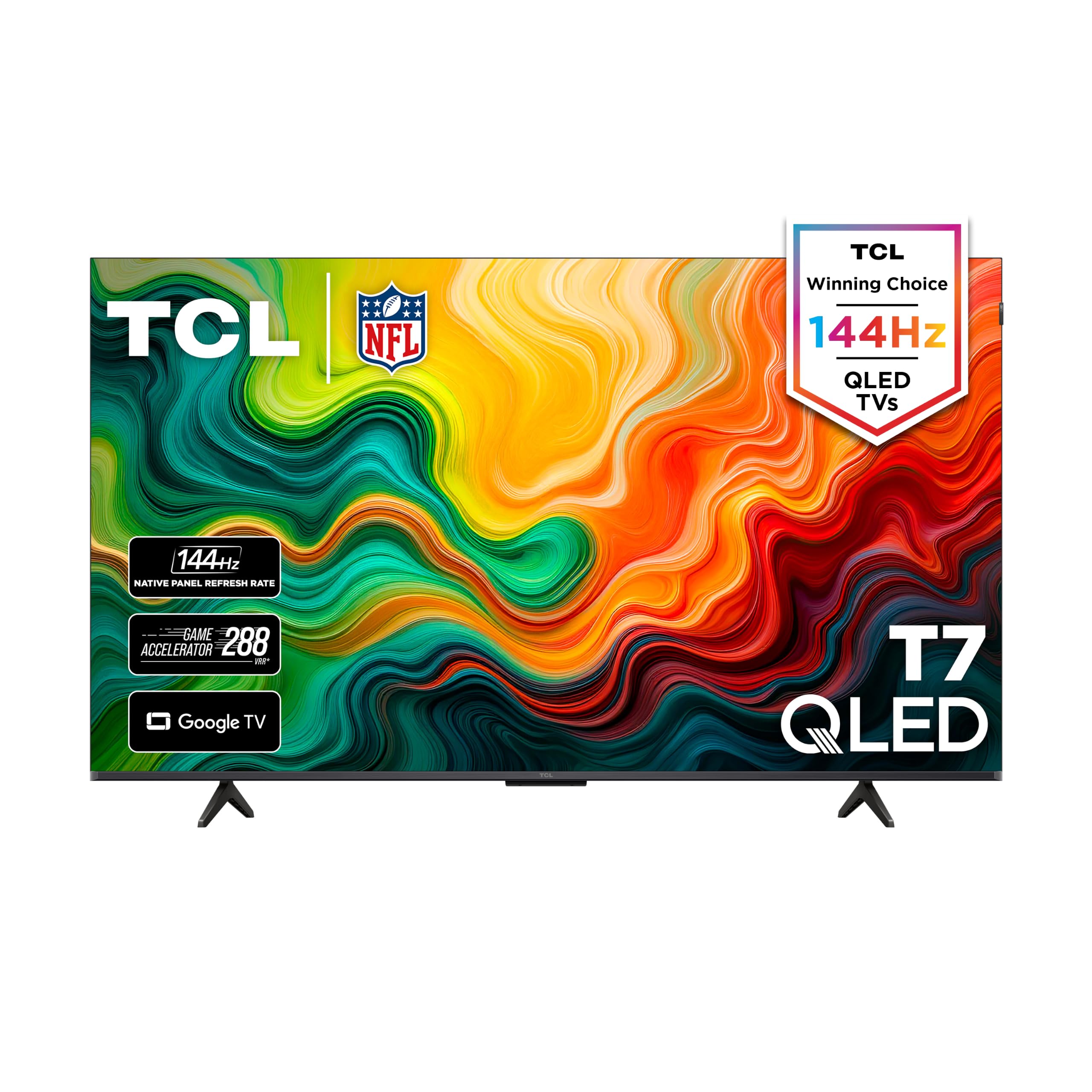
A true 120Hz panel that keeps a fast ball and a fast car both in focus.
A 120Hz refresh rate is the headline, and it matters most in exactly two places: a football match where the camera pans quickly, and a console pushing high frame rates. Because the panel itself refreshes 120 times a second, Motion Rate 480 with MEMC frame insertion has real headroom to work with, so you get smoother motion instead of the soap-opera smear cheaper processing creates. The QLED layer covers nearly the entire DCI-P3 colour space, a wide cinema colour standard, which is why the greens of a pitch and the reds of a kit both look right.
Resolution is 4K Ultra HD, four times the pixel count of a 1080p screen, and the TCL AIPQ Pro processor handles the colour, contrast and clarity tuning behind it. HDR support covers Dolby Vision, HDR10+, HDR10 and HLG, so whichever format your streaming service sends, the set can read it. Four HDMI inputs, one with eARC, let a console, a set-top box, a receiver and a stick coexist without a switch box, and Alexa, Google Assistant and Apple HomeKit all work for hands-free control.
Gaming is the strongest signal in the feedback, with the gaming-performance category landing entirely positive and several owners pointing to the 144Hz gaming capabilities as the reason they bought. Google TV pulls your apps and live channels into one screen, and Chromecast plus Apple AirPlay 2 handle casting from a phone. Reliability is the split category here, so the sensible move is to run a full week of normal viewing during the return window rather than trusting a single evening.
Go for it if: sport and a current-generation console are the two things this screen will see most.
Have a second look if: you mostly watch slow drama and would rather spend the difference on size.
6. TCL 55″ QM64L High Contrast QD-MINI-LED 4K AI Smart Fire TV
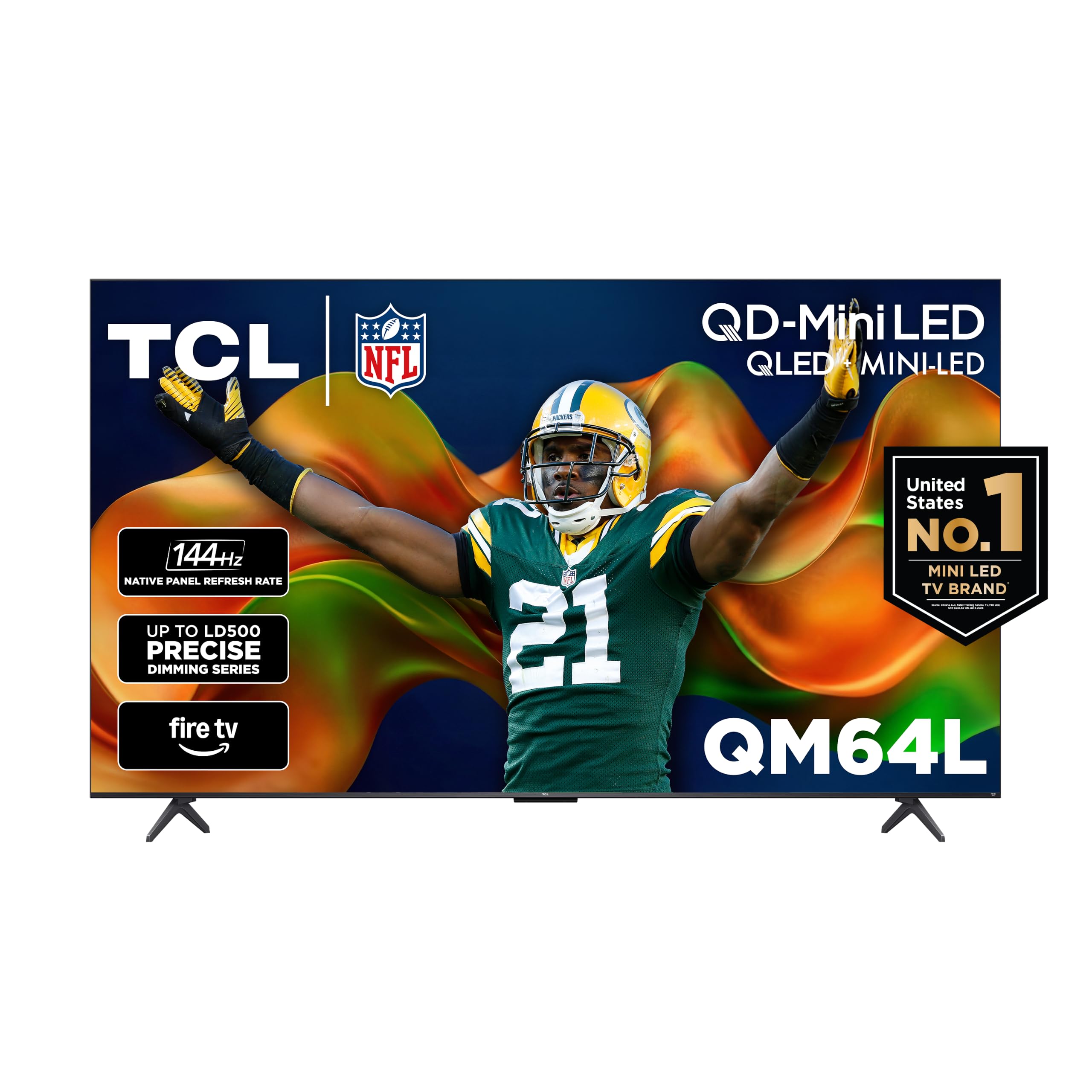
Hundreds of dimming zones, so a night scene actually stays dark.
Up to 500 local dimming zones is the number that defines this set, and it is a real advantage over the edge-lit panels further down this list. Each zone can brighten or darken independently, so a streetlight in a dark chase scene glows without a grey halo bleeding around it. TCL’s Halo Control Technology exists specifically to hold that bleeding back. The panel also runs at a native 144Hz with Motion Rate 480, VRR and ALLM, which is why it handles both a fast sport broadcast and a high-frame-rate console without judgment.
Sound is unusually well handled for a flat panel: Onkyo 2.1 audio with a 20W subwoofer gives genuine bass, supported by Dolby Atmos and DTS. In a room where you would rather not buy a soundbar, that is the difference between muffled dialogue and a usable experience. Colour reaches up to 1.07 billion shades through enhanced QLED, a bezel-less frame keeps the borders thin, and the AiPQ Pro Processor tunes colour, contrast and clarity as you watch. Fire TV with Alexa+ sits on top, with Dolby Vision, HDR10+ and HLG all supported.
The one area that consistently draws criticism is the software’s speed — the system is slow to start up and apps take their time loading, which is a familiar complaint on Fire TV sets in this tier. Reliability divides opinion too. Picture and brightness are what win the argument here, with the crispness and colour noted as genuinely impressive for the tier. Add a streaming stick and the boot-up drag largely disappears.
The case for it: five hundred dimming zones and a dedicated subwoofer in a bezel-less frame is a lot of television for the tier.
What will annoy you: Fire TV’s startup and app-loading pace is sluggish, and no amount of picture quality hides that.
Made for: a bright living room with a game console attached and no appetite for a separate soundbar.
Skip the idea if: a snappy interface matters more to you than deep blacks.
7. Sony 50 Inch BRAVIA 2 II Google TV
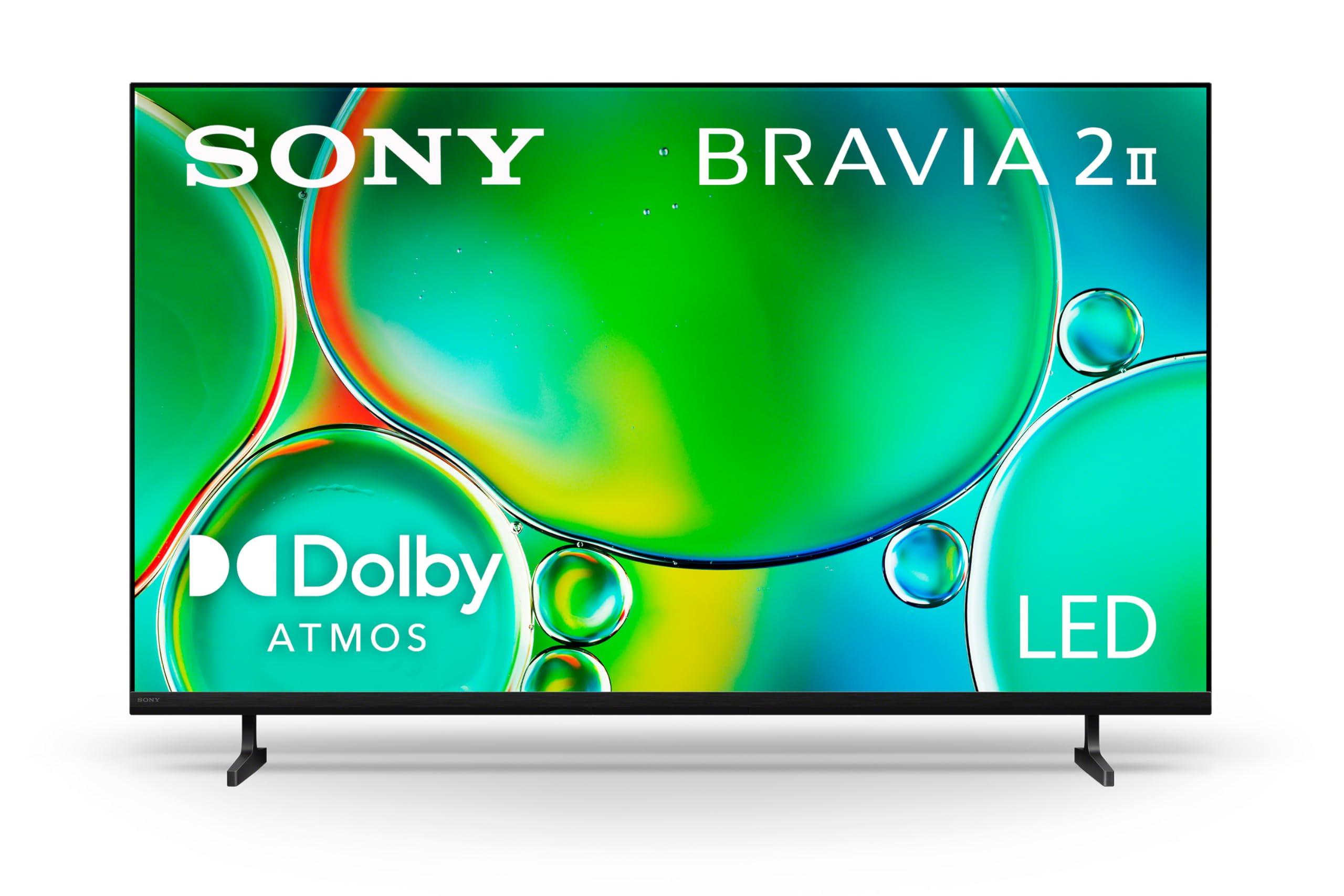
The set that makes an old DVD and a grainy stream look like they cost more.
Some televisions win on specification, and this one wins on processing. The 4K Processor X1 with 4K XR-Reality PRO rebuilds lost texture in lower-resolution footage, which is the whole reason a 50-inch Sony is worth considering if your library is older than your internet connection. Motionflow XR handles blur in fast pans, and the 50-inch panel keeps it a compact fit for a smaller room.
If there is a PlayStation 5 in the house, this set has exclusive features — Auto HDR Tone Mapping and Auto Genre Picture Mode — that adjust the picture automatically for gaming and then for streaming. A Game Menu collects all the gaming settings in one place. Google TV gathers the streaming apps, Apple AirPlay 2 and Google Cast handle casting, and the Sony Pictures Core app bundles films in. Setup is genuinely quick, with owners typically finished inside 10 minutes.
Two honest limits deserve a mention. Wi-Fi reliability is a split verdict, with several reports of the connection dropping and needing a re-join, so a wired Ethernet run removes the problem outright. Sound is also mixed, and a set this thin benefits visibly from a soundbar. The picture and overall quality are the parts that get repeated praise, and colour accuracy is well liked. Reliability is the split category — a minority of units fail early — so test thoroughly in your return window.
Where it shines: upscaling old content and pairing with a PS5 are the two things this screen does better than its spec sheet suggests.
Where it stumbles: Wi-Fi that drops and speakers that need help.
Choose this if: you have a stack of older content and a PlayStation, or a wired network point near the stand.
Choose another if: you need strong wireless stability from the start.
8. Hisense 55″ U7 Mini-LED ULED 4K Smart Fire TV (55U7SF)
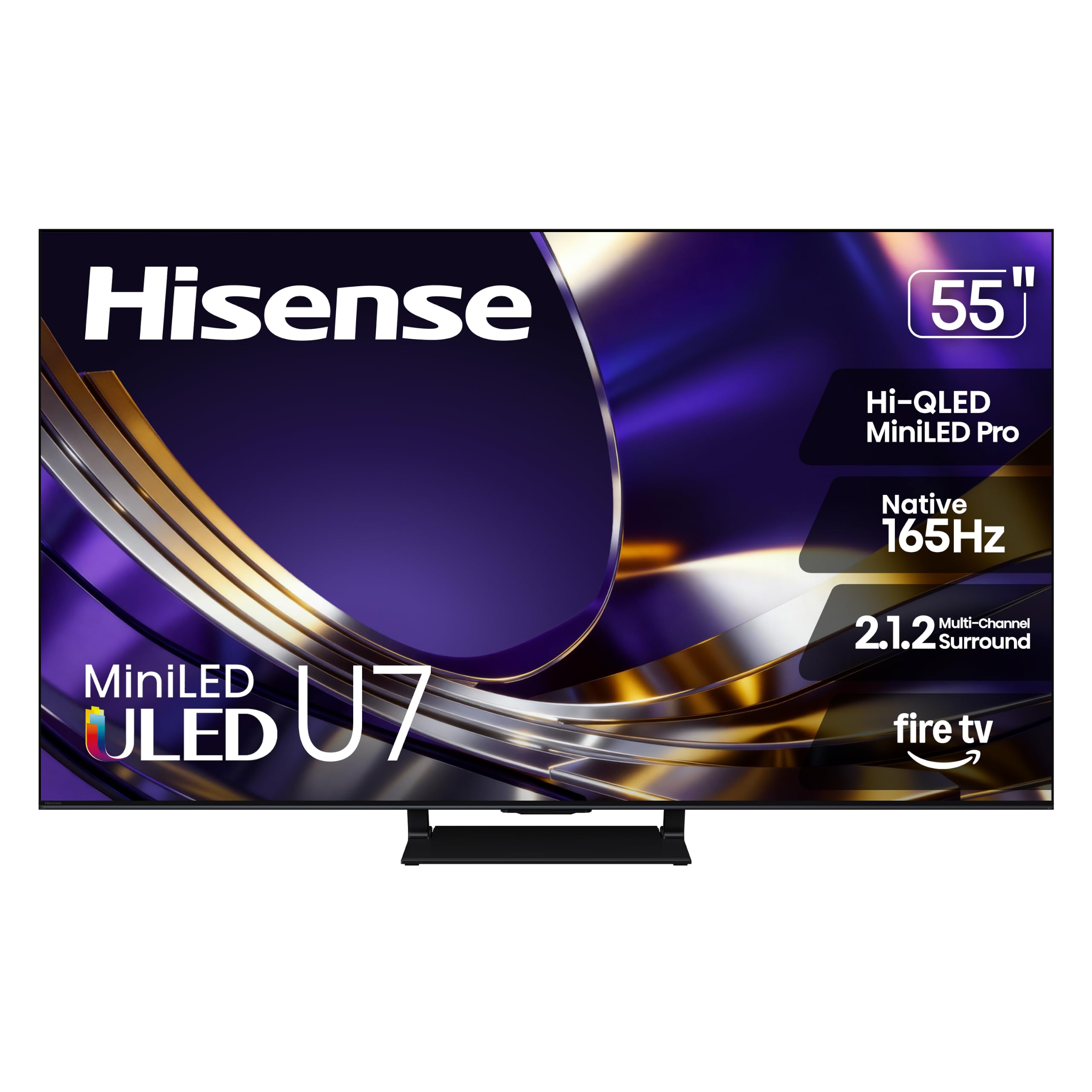
Built for the sofa that faces a window, and fast enough for a competitive console.
If your room has a window behind the sofa, the anti-reflection treatment on this screen is worth more than any extra contrast figure. A dual-layer coating sits on the glass and cuts the mirror effect from bright windows, overhead lights and afternoon sun, so the picture stays legible instead of becoming a reflection of your curtains. Underneath, thousands of Mini-LED backlights work in up to 3000 local dimming zones at up to 3000 nits peak brightness, which is what lets bright highlights survive daylight while dark scenes stay deep.
Gaming is the other half of the pitch. The panel refreshes natively at 165Hz, which is the fastest native number in this group, and VRR 330 keeps a variable frame rate from tearing. A 2.1.2 channel speaker array tuned by Devialet means surround sound without extra boxes, and the Hi-View AI Engine Pro adjusts colour, contrast and detail scene by scene without you touching a menu. Fire TV brings Alexa+ voice control along for the ride.
This is the set for someone who has already tried to watch an afternoon match with the sun in the wrong place. Brightness and depth are the parts people respond to, and the anti-glare work gets singled out as doing exactly what it promises in a bright room. It is a 55-inch panel, so confirm your wall can take the width before you commit — this is a set you buy for the room, not for the exact inch count.
The winning trade: glare handling and 165Hz in one panel is an unusual combination at this size.
Plan around this: it is a foot wider than a 50-inch set, so measure the gap before ordering.
Right for you if: the sun hits your screen for half the day and a console is part of the setup.
Wrong fit if: your room is already dark and you would rather have the smaller 50-inch footprint.
9. Samsung 55-Inch Class Neo QLED QN70F 4K Mini LED Smart TV

Twenty neural networks doing the upscaling, and 2,700+ free channels doing the rest.
The NQ4 AI Gen2 processor is the centre of this television, and its job is to take whatever resolution you feed it and push it toward 4K. Samsung quotes 20 neural networks handling that conversion, plus sound optimisation that follows what is on screen. In practice a low-bitrate stream from a lesser app looks sharper here than it has any right to. Quantum Matrix Technology, Samsung’s name for its precision-controlled Mini LEDs, keeps contrast sharp by dimming small clusters of lights rather than the whole backlight.
Motion reaches up to 4K 144Hz for VRR gaming through Motion Xcelerator, which makes fast pans and quick turns feel immediate. The platform is Samsung’s own, with 2,700+ free channels including 400+ Samsung TV Plus channels, and the whole home screen is personalisable. HDR-like processing lifts standard-dynamic-range content with brighter highlights and richer colour, so older broadcasts look less flat than their source.
Notably, this set’s weakest reports are about connectivity rather than picture — some owners hit connection trouble, while others run a Fire Cube or a 5.1 audio system through it without issue. Picture clarity, deep blacks and easy setup are the recurring strengths, and the brand’s consistency comes up often. It is a 55-inch panel, two inches larger than the 53 inches you started with.
Why the premium badge holds
- NQ4 AI Gen2 upscaling with 20 neural networks makes weak sources look better than they should.
- 144Hz VRR gaming with Motion Xcelerator keeps fast motion clean for consoles.
- 2,700+ free channels built into the platform, so there is always something on without a subscription.
- Colour and black-level balance is a repeated strength: bright scenes pop and dark scenes stay properly dark.
The parts to know about
- Connectivity is the split category, so confirm your router and devices talk to it inside the return window.
- You pay a premium for the processing rather than for extra dimming zones.
This one earns its keep when: your viewing is a mix of apps, live channels and a console, and you want the upscaling to do the tidying.
Hold back if: your network is fussy and you cannot run a cable to the stand.
10. Samsung 50-Inch Class The Frame LS03F 4K QLED Smart TV

A television that hangs flush and shows paintings instead of a blank black rectangle.
Most sets in this list are chosen for what they do while switched on. This one is chosen for what it does in between. The Frame mounts flush to the wall, takes customisable bezels, and runs a single wire to an external hub rather than a bundle of cables dangling down the plaster. In Art Mode it becomes a display for a curated collection from the Art Store or your own photos, finished with mat styles and colours, so a wall in a front room stops looking like an empty screen.
The panel is 4K QLED with the NQ4 AI Gen2 processor behind it, so the picture when it is on is not compromised by the design. The screen has a matte, virtually glare-free finish with a subtle texture that makes artwork look like a print rather than a glowing panel. VRR gaming runs up to 4K 144Hz, so a console still works on it, and Samsung Vision AI plus Alexa built-in handle the voice side.
The honest note is about how you plan to use it: a 50-inch frame on a wall is a décor decision as much as a viewing one, and the flush mount and single-wire hub are the features you are paying for. Want the biggest picture for the money? This is not that set. Want a television that disappears into a room when nobody is watching? Nothing else here does the job.
What you are really buying: a flush wall mount, an external hub and a matte art display that happens to play 4K.
The question to ask yourself: will this wall ever be seen switched off?
Fits beautifully if: the television lives in a living room where aesthetics and art matter as much as the picture.
Not the one if: you just want the largest panel for the money and would never use Art Mode.
11. Hisense 55″ U8 Series Google TV
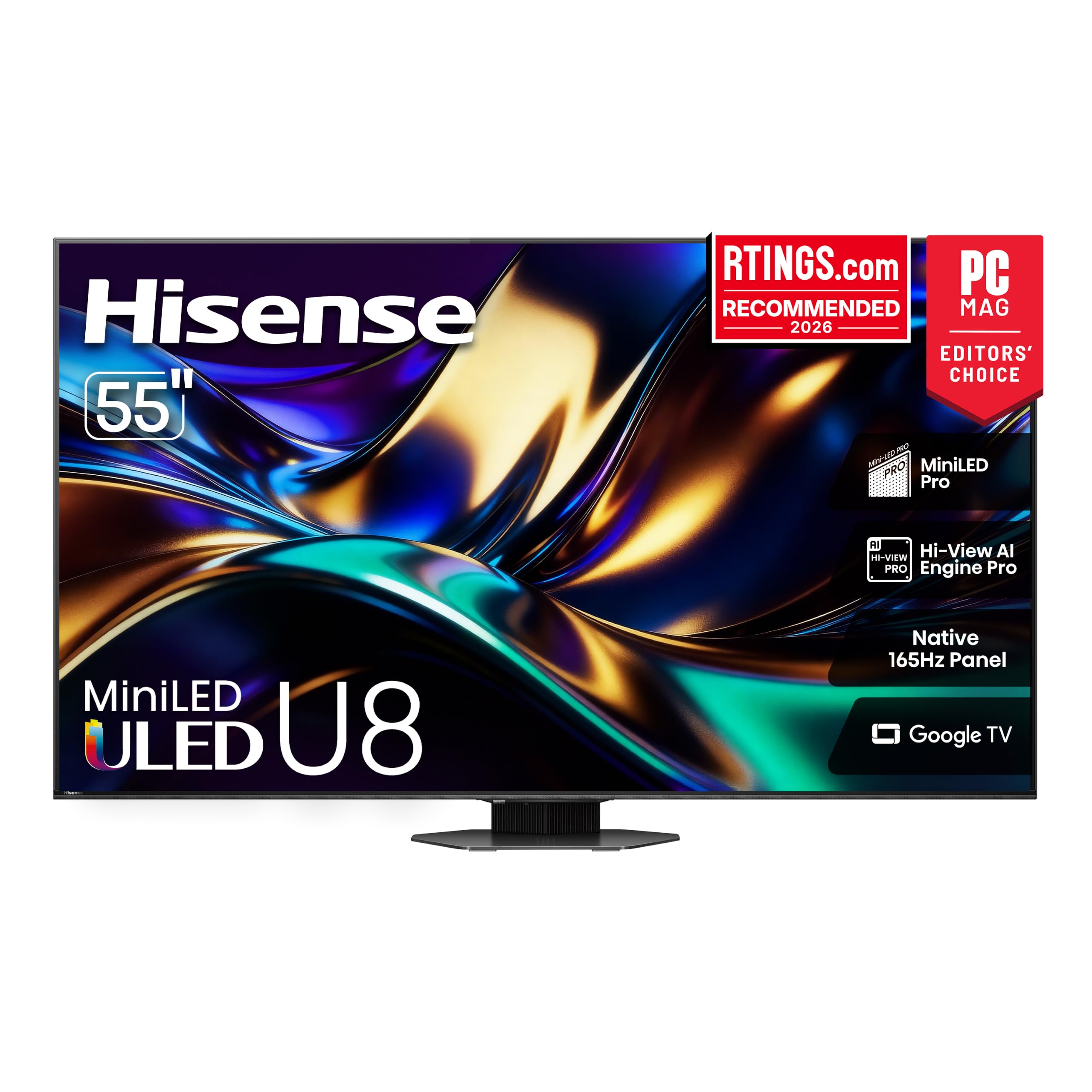
Five thousand nits and over five thousand dimming zones — this one is built to overpower a bright room.
The specifications here are the most aggressive in the group: up to 5000 nits peak brightness across up to 5600 local dimming zones. Read in plain terms, thousands of tiny LEDs each light or dim in small clusters, so a floodlit stadium looks brilliant while the shadows beside the pitch stay black instead of turning muddy grey. Full Array Local Dimming Pro does the work, and Hisense’s upscaling engine handles the rest.
For gaming, the panel is natively 165Hz with a variable refresh range from 48Hz to 165Hz, and Game Booster 288 pushes further with AMD FreeSync Premium Pro and Auto Low Latency Mode cutting tearing and controller lag. A Game Bar lets you tune settings live from the remote. Sound is a genuine 4.1.2 channel array with Dolby Atmos, including a built-in subwoofer and two up-firing speakers, so dialogue and crowd noise both land where they should without an external bar. QLED colour here is Pantone Validated, a third-party check on how faithfully shades reproduce.
Picture quality is the part that wins people over, and the phrase that keeps coming through is quiet disbelief at how good the blacks are for the tier. Anti-Reflection Pro bakes a coating into the liquid crystal layer to keep glare down, and setup is straightforward. The caveat: a minority of sets stop working over time, so run a full week of viewing in the return window and keep the paperwork tidy. That is a real caveat, but the panel itself delivers.
What makes it the flagship of this group
- Up to 5000 nits peak brightness and up to 5600 local dimming zones gives the deepest contrast in this line-up.
- Native 165Hz with a 48Hz to 165Hz VRR range and FreeSync Premium Pro for serious console gaming.
- 4.1.2 channel Dolby Atmos audio with a real subwoofer and up-firing speakers.
- Pantone Validated QLED colour and Anti-Reflection Pro handling glare.
The reality check
- A minority of units fail eventually, so the return window is your friend.
- This is the most capable set here, and you are paying for brightness and zones the smaller screens cannot reach.
When this is the answer: the room is bright, the console is fast, and you want the panel to be the best picture in the house.
When the money is better spent elsewhere: a smaller dim room and a mostly-film diet would be perfectly served by a cheaper set.
Know the Specs
Local dimming zones
Local dimming zones are groups of backlights that can brighten or darken independently of their neighbours. More zones means finer control, so a small bright moon in a dark sky stops leaking a grey halo around it. This is the number that separates a Mini-LED set from a plain LED one, and it is why a set with thousands of zones handles a night scene better than one with a single strip of light. The top picks here range from a few hundred up to several thousand zones.
Peak brightness in nits
A nit is a unit of screen brightness, and peak brightness describes the brightest highlight the panel can hit. It matters because HDR content is authored with bright specular highlights — a car headlight, a floodlight, a reflection on water — and a brighter panel renders them with real punch. It also affects how well the picture survives daylight in a sunlit room. Higher is not always better in a dark room, where a very bright panel can be tiring at full tilt.
HDMI eARC
eARC is the audio-return channel on an HDMI port, and it is the simplest way to send sound from the TV out to a soundbar or receiver. Instead of juggling an optical cable and a separate power feed, one HDMI cable carries the audio. If you plan to add a soundbar — which almostevery set this size benefits from — confirm the port is there before you buy. On the sets above, the Philips 7985, the TCL T7 and the TOSHIBA all list eARC support.
Variable refresh rate (VRR)
VRR is a handshake between a console or PC and the television that matches the screen’s refresh to the frame rate the game is producing. Without it, a mismatch causes tearing — a visible horizontal seam across moving images. With it, the motion stays smooth even when the frame rate dips. The gaming-focused picks here pair VRR with ALLM, which is auto low-latency mode, a setting that switches the TV into its fastest response mode the moment a console powers on.
HDR formats explained
HDR means high dynamic range, and the format names — Dolby Vision, HDR10+, HDR10, HLG — are different ways of telling the screen how bright and how colourful each scene should be. Dolby Vision and HDR10+ adjust scene by scene, which suits films with mixed lighting. HDR10 is a single fixed setting for the whole film, and HLG is the version broadcasters use for live sport. A set that supports all four will read whatever your app or broadcaster sends.
Common Questions
Does anyone actually make a 53 inch TV?
Will a 55 inch TV fit where I planned a 53 inch one?
Is Mini-LED worth it over a standard LED panel?
What refresh rate do I need for a games console?
Do I need a soundbar with these televisions?
What is the difference between QLED and Mini-LED?
How long should a television at this size last?
Can I wall mount these sets?
Is a 50 inch set too small for a main living room?
Which smart platform is easiest to live with?
The Bottom Line
For most people shopping for the best 53 inch TV, the answer is the Roku 55-Inch Plus Series. It puts Mini-LED contrast (many tiny backlights for deeper blacks), QLED colour, Dolby Atmos with a real subwoofer and the simplest smart interface in this group into one package. It is the pick that needs the fewest add-ons: no soundbar, no streaming stick.
If the sun is the problem, the Hisense 55″ U7 answers it with its anti-reflection screen and 165Hz panel (the screen refreshes 165 times a second). Its brighter sibling, the Hisense 55″ U8, goes further with up to 5000 nits (a brightness measure) and up to 5600 dimming zones (individually lit patches that deepen blacks). For a console-first setup, the Hisense U8 and the Samsung QN70F both run to 4K 144Hz and beyond. And if the television has to look like furniture when it is off, The Frame is the only set here built for that job.
The top-rated pick here is also among the most affordable, so pay more only for brightness, gaming speed or a design statement. Start with the Roku and move up only for a feature you can name.
How we choose
We do not accept paid placement. Every pick is matched to a real buyer and a real use-case; we do not hands-on test units.
Sources
Specifications: manufacturer listings and product documentation. Review insights: verified customer reviews, as of November 2026. Pricing: not shown on this page (it changes often); check the current price via the retailer link.
As an Amazon Associate, Tactical Gear Guy earns from qualifying purchases. This does not affect which products we feature.