Specs are compiled from manufacturer listings and verified buyer reviews and can change over time — please confirm the key details on the product page before buying.
An XLR cable is the least glamorous thing in your signal chain, and that is exactly why it matters. A cheap one hums, crackles, and drops your mic mid-set. The short version: buy a cable built around shielded, oxygen-free copper conductors and locking 3-pin connectors, then match the length and pack count to how far your mic actually sits from the mixer. Below are nine proven picks, sorted by what each does best.
This guide is built by comparing the manufacturers’ published specifications and the patterns across verified customer reviews, so you get each pick’s real strengths and trade-offs instead of marketing spin.
One honest note before we start: this list uses flexible, human-like matching for XLR male to XLR female connectors (the standard 3-pin plugs that carry mic signals). So not every pick is the exact model number you searched — the nearest same-type cable does the same job.
Top Picks
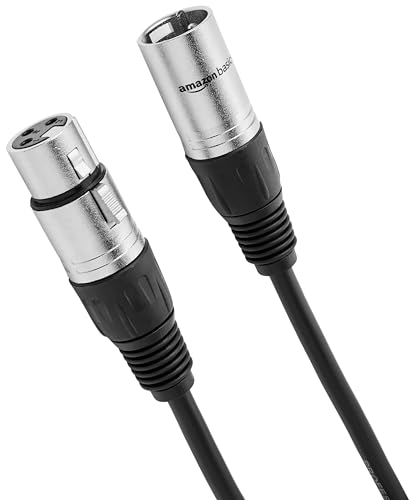


How To Choose The Best XLR to XLR Microphone Cable
You are not really shopping for a cable — you are shopping for a clean signal from the capsule to the console. Every spec below is just a way of predicting whether that signal survives the trip.
Length decides more than you think
Measure the actual distance from your mic stand to your mixer before you buy anything. A ten-foot run covers a tight desktop studio, while a 50-foot run lets a singer walk the stage without dragging the mic stand behind them. Buying too short forces a second order.
Connector quality is where cheap cables fail
The 3-pin connector (the round metal plug with three prongs that carries the balanced signal) is the part that takes abuse. Look for a metal housing and a locking mechanism that clicks in and does not drift loose. Nickel-plated pins keep the contact corrosion-free over time.
Shielding and conductor metal
A balanced cable already cancels noise better than an unbalanced one, but the shielding layer is what keeps radio interference and mains hum out. Oxygen-free copper (OFC) conductors move the tiny voltage from your mic with less resistance, which is why so many picks here list them.
Pack counts for rack and patch work
If you are wiring a rack, a mixer, or several mics at once, a multi-pack saves you from buying singles one at a time. Color-coded connectors are worth hunting for here, because tracing a cable at the back of a patch bay is faster when the ends tell you who they are.
Side-by-Side Comparison
| Model | Best For | Length | Pack Count | Conductor / Shield | Amazon |
|---|---|---|---|---|---|
| Amazon Basics XLR Microphone Cable★ Best Overall | Long stage and studio runs | 50 feet | 1 | All-copper, spiral shield | Amazon |
| Monoprice Starquad XLRNoise Fighter | Noise rejection in hostile rooms | 6 feet | 1 | 4-core starquad, 24AWG | Amazon |
| EBXYA 3ft XLR 4-PackRack Ready | Rack and patch bay wiring | 3 feet | 4 | 24AWG OFC, double shield | Amazon |
| Elebase XLR 2-Pack | Karaoke and street performance | 3 meters / 10 feet | 2 | OFC, high-density braid | Amazon |
| Aqdocvf Premium XLR 2-Pack | Two long runs at once | 25 feet | 2 | OFC, balanced design | Amazon |
| Hosa HXX-010 | Studio monitors and interfaces | 10 feet | 1 | 24AWG, REAN connectors | Amazon |
| NUOSIYA XLR 2-Pack | DMX lighting plus audio runs | 20 feet | 2 | OFC, copper braided shield | Amazon |
| D’Addario Classic Series XLR | Live gigging and mic stands | 25 feet / 7.62 meters | 1 | 24AWG, two-layer shield | Amazon |
| Pig Hog XLR 25 Foot | Tour-grade stage abuse | 25 feet | 2 | Heavy-gauge wire | Amazon |
Detailed Reviews
1. Amazon Basics XLR Microphone Cable, 50 Foot
Our pick — 4.5+★ from 44,000+ verified ratings; the strongest balance of quality and price.
A 50-foot run for the price of a patch cable, and it still kills the hum.
Fifty feet of cable is the number that wins this spot. That is 50 feet rather than the 3-foot 4-pack below, which means a singer can walk the room, a speaker cab can sit across the stage, and nobody has to relocate the mixer. For a home studio built around one mic and one interface, that slack alone changes how you set up.
The guts are sensible for the job: all-copper conductors wrapped in an inner copper spiral shield, which is the layer that keeps radio interference and mains buzz out of your vocal. The 3-pin connectors use a zinc alloy body with nickel plating and a metal housing, so the plug feels solid rather than hollow. A flexible 6.0mm PVC jacket handles the coiling without kinking, and the whole thing weighs 1.6 pounds.
What wins people over is the quiet. Owners consistently describe clean, static-free transmission, and the sheer length comes up again and again as the reason they bought it — enough cable to move around while singing, secure in the jack, versatile enough for one home studio or a small PA. The recurring gripe is durability at the jacket and the occasional loose connection over years of heavy use, which is a fair trade on a cable at this tier. It is the crowd favorite at 4.5+ stars across 44,000+ ratings, and the budget 4-pack below has 600+ ratings — but this one holds the longer reach and the near-identical score.
What earns the top spot
- 50 feet of usable reach so you can move around a stage or room
- All-copper conductors with inner spiral shielding for a noise-free signal
- Zinc alloy 3-pin connectors with nickel plating and a metal housing
- Flexible 6.0mm PVC jacket that coils and stores without fuss
Where it asks for care
- Long-term jacket and connection wear shows up under heavy gigging
- Only one cable per order — no color coding for multi-mic racks
Buy this for: anyone running one mic a long way from the board who wants a clean signal without overthinking it.
Think twice if: you are wiring four devices into one rack and want color-coded ends in the box.
2. Monoprice Starquad XLR Male to Female Cable, 6 Feet
Four cores twisted tight, built for the room that fights back.
Most XLR cables run two cores. This one runs four, twisted tightly and rotating over a short length the way the pairs inside an Ethernet cable do. That extra core count is the whole point — it measurably improves rejection of electromagnetic interference compared with a standard two-core balanced mic cable, so it earns its keep next to lighting rigs, amps, and power runs.
Six feet is a desktop or short-stand length, so this is the pick for a mic that already sits close to the interface. Gold contacts on the connectors keep the connection stable over repeated plugging, and the 24AWG wire sits in the middle of what you want for a balanced mic line. Quality is what gets called out most here, followed by value, and the build draws no complaints in the reviews.
The honest catch: the noise picture splits both ways. Plenty of owners get a dead-quiet line, while others have run into static noise, so test it in your own chain quickly after it lands. A lifetime warranty on the cable softens that risk considerably. Best for someone chasing a stubborn hum rather than someone who needs a long run.
The starquad case: four twisted cores reject interference better than a regular two-core balanced cable, so a noisy room or a rack full of gear is exactly where this cable pays off.
The split on noise: results vary — some chains end up dead silent and some pick up static, so buy it early enough to swap if yours hums.
Reach for this if: a mystery buzz has been following your mic around and you want the shielding knocked up a level.
Look elsewhere if: your mic needs to be more than a few feet from the interface.
3. EBXYA 3ft XLR Cables 4-Pack
Four short cables, four colored ends, zero guesswork at the patch bay.
Each cable in this 4-pack wears a different colored connector, and that small detail is the reason it exists. When you are staring into the back of a rack with a dozen cables running into a dozen jacks, a color at the end tells you which channel you are holding before you trace it hand over hand. Owners call out the color coding more than anything else about this set.
Inside, the conductors are 24AWG oxygen-free copper with double shielding — a foil layer plus copper braid — which is a serious amount of noise protection for short patch runs. The connectors are self-locking with a heavy-duty zinc alloy shell and nickel-plated pins, so each one clicks in and stays put. These are 3-foot cables, meant for tight rack linkage and not for stage runs, which is why the price per cable lands where it does.
Signal quality and value both show up as the things that keep buyers happy, and the four-pack gives you four cables at a per-cable cost well below buying singles. If one thing deserves a mention, it is that 3 feet is genuinely short — measure your rack gaps before you commit. For a mixer-to-interface chain or a DMX daisy chain, the length is exactly right.
Why patch panels love it
- Color-coded connectors make channel tracing instant in a dark rack
- 24AWG oxygen-free copper with foil plus braided double shielding
- Self-locking zinc alloy connectors with nickel-plated pins
Before you click buy
- 3 feet is short — no room to stretch across a stage or floor
- Built for rack and patch duty, not for long signal runs
Made for: the home studio or live rack that needs four tidy, identifiable connections in a hurry.
Not the one if: you are running a single mic across a room and need distance instead of quantity.
4. Elebase XLR to XLR Mic Cable 2-Pack, 10FT

A nylon braided pair that shrugs off the karaoke night and the street gig.
Two cables of 3 meters — about ten feet each — is a natural setup for anyone who owns two mics or wants one spare. The jacket is nylon braided rather than plain PVC, a soft but tough wrap that resists the scrapes and tangles that come from being coiled and tossed into a bag. For a street performer or a karaoke host who packs up every single time, that outer layer is doing real work.
The conductor is oxygen-free copper, shielded under multiple layers of high-density braided material to hold back noise. The connectors are 3-pin male-to-female with a metal body and a non-slip mechanism, so each plug goes in with a sure grip and resists slipping out mid-song. The cable is rated for indoor and outdoor use, which fits the street-and-stage routine this pair is clearly aimed at.
What people report is simply that they work, and that the quality outpaces what the tier suggests. Functionality and value both draw steady praise, and the 12-month warranty covers the first year of hard use. One thing to plan for: at 3 meters each, these are long enough for a small stage but not for a big room, so check your run before ordering a pair of them.
Built for the road bag: the nylon braid and non-slip metal connectors are the details that survive repeated coiling, packing, and unpacking.
The length math: two 3-meter runs suit two mics on a small stage — a single long run across a hall needs a different pick.
It suits: the two-mic host or performer who needs durable twins that travel well.
Ask yourself first: whether ten feet of reach is enough where you actually perform.
5. Aqdocvf Premium XLR Cable, 25ft 2-Pack
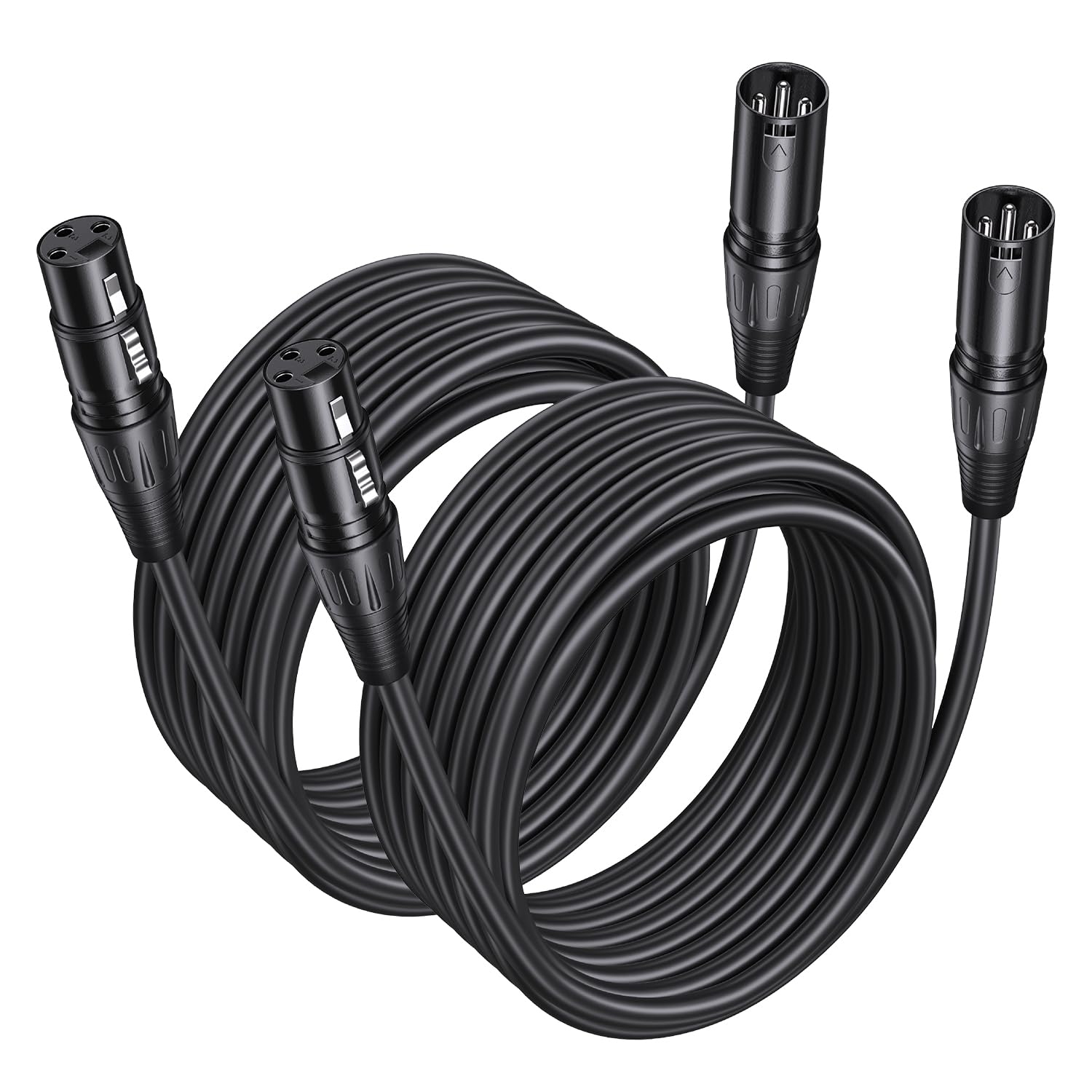
Two 25-foot runs in one bag, enough to wire a whole corner of the stage.
You get two 25-foot cables here, and that pairing is the reason to pick it over the Amazon Basics 50-footer. Where that single long cable reaches one mic a long way, this gives you two microphones with serious slack at the same time — a singer and a guitarist, or a main and a backup, without buying twice. It also jumps to a 2-pack where most single cables sit at one, which makes it the practical choice for a duo.
The conductors are oxygen-free copper in a balanced design, wrapped in a soft PVC jacket that keeps interference low and coils easily. The connectors are 3-pin male-to-female with a self-locking design that clicks into place, so setup is quick and the plug stays seated. The maker rates the build through over 20,000 bend cycles and 10,000 plug cycles — a claim that matters for cables that live in a gig bag and come out three nights a week.
Owners describe these as well-made and reliable, working cleanly from wireless mic setups into mixers to desktop studios, and the value of getting two long cables in one order comes through clearly. An occasional unit is reported with a loose fit at the connector, worth checking at first plug-in. Compatibility stretches to mixers, preamps, patch bays, and stage lighting, so the pair pulls double duty if you also run DMX.
The case for the pair
- Two 25-foot cables cover two performers at once
- Oxygen-free copper conductors in a balanced design
- Self-locking 3-pin connectors click in and stay seated
- Maker-rated for 20,000 bend cycles and 10,000 plug cycles
The honest caveats
- Occasional reports of a loose connector fit out of the bag
- 25 feet is more cable than a tight desktop setup needs
Pick it for: a two-mic act that wants matching long cables without ordering twice.
Pass if: you only ever run one microphone and would rather not store the spare.
6. Hosa HXX-010 Pro Balanced Interconnect, 10 Feet
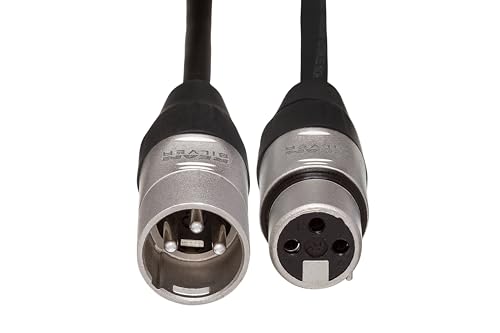
The quiet ten-footer that keeps studio monitors free of hum.
This is a monitor cable as much as a mic cable, and it shows. The 3-pin connectors are REAN XLR3F to XLR3M (a brand of plug that audio engineers know on sight), and the 24AWG balanced wire (a wire gauge that carries signal with less interference and hum) is built to keep your audio clean. Ten feet is the balance for a pair of nearfield monitors on a desk or a mic placed just off the interface.
Owners run these into JBL studio monitors and report a noise-free line, which is about the highest compliment a short interconnect can get. The cable is built for studio and live environments alike, and the price sits at the reasonable end for something using branded connectors. It is a straight, round 24AWG cable — nothing exotic, just correctly made.
If you are deciding between this and the Monoprice starquad, the split is simple: the starquad fights interference harder in a hostile room, while this one is the safer everyday bet for a clean desktop and interfaces. For a home studio where the cable never moves, the difference is small and the Hosa quietly does its job year after year.
what separates it: the REAN connectors and 24AWG balanced build give you a branded, studio-grade plug without a boutique markup.
Where it stops: ten feet fixes it to nearfield or short-stand duty — a stage run needs more length.
Best for: the desk-bound studio wiring monitors or a close mic into an audio interface.
Skip if: you need a cable that crosses a stage or a larger room.
7. NUOSIYA XLR Cable 20 Ft 2-Pack
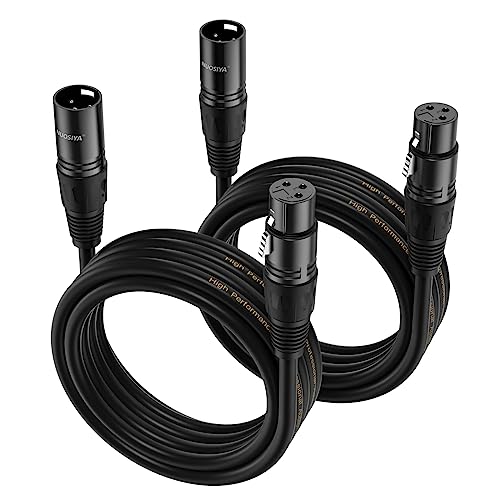
One cable that carries your vocal and your lighting data without strobing.
Most mic cables are one-trick. This pair also handles DMX, the 3-pin protocol stage lighting rigs use to send commands down the same kind of cable. The maker builds it to carry data and audio cleanly, which means no strobing, flickering, or dropped signal when it is driving lights. If your setup includes a light bar and a mic on the same stage, having one cable type that does both simplifies your bag.
You get two 20-foot cables here — a middle length that reaches a mic stand across a small stage without the excess of a 25-footer. Inside is oxygen-free copper with polyethylene insulation and a copper braided shield for noise and hum cancellation, plus what the maker describes as improved high-frequency response. The connectors use a double spring-style strain relief to stop the cable pulling out, and metal housings with grip treads for a secure plug.
Buyers report these as well-made and functional, and consider them worth the money. The PVC braided jacket is built to resist both high and low temperatures, which is useful if the cables sit in a van between gigs. The catch to weigh is simple: if you never touch lighting, the DMX versatility is a bonus you will not use, and the Amazon Basics 50-footer still reaches farther for a single long run.
Two jobs in one cable
- Carries both audio and DMX lighting data without signal loss
- Oxygen-free copper with copper braided shielding against hum
- Double spring-style strain relief at the connectors
- Temperature-resistant PVC braided jacket for travel
Worth knowing
- DMX versatility is wasted on a pure audio setup
- 20 feet is mid-length — not the reach of a 25 or 50-footer
This one is for: the small stage running lights and a vocal off the same cable drawer.
Your alternative: a plain audio-only cable if you never touch DMX.
8. D’Addario Classic Series XLR Cable, 25 Feet

Twenty-five feet of shielded, molded-plug cable built to curl around a stand.
Two layers of shielding is the headline here. That extra layer is there to reject noise for quiet operation, and it matters most on a live stage where lights, monitors, and amps all want to bleed into your line. The 24AWG wire sits inside a Classic Series build using the maker’s In=Out design, which pairs low capacitance with solid construction to keep the signal transparent over the length of the cable.
The 3-pin connectors are molded rather than assembled, which gives the plug a protective, strain-relieving shell that resists the flex damage that kills cheaper ends. Nickel plating keeps the contacts clean, and the 25-foot length gives a vocalist room to work a stand without dragging the mixer along. Owners describe the cable as standing up well to live playing and staying flexible without feeling flimsy, and it curls neatly around a microphone stand between sets.
If you perform rather than record, this is the length-and-toughness combination that lets the cable live in a bag and get used twice a week.
The live edge: two shield layers and molded strain-relieved plugs mean the noise stays out and the ends stay on after repeated gigging.
The tier to weigh: it costs more than the value cables here, and that premium is the extra shielding and molded construction rather than a longer reach.
Who it fits: the working performer who needs 25 feet of quiet, durable cable that survives the gig bag.
Who should look on: desk-bound recordists paying for a second shield they will never stress.
9. Pig Hog XLR 25 Foot 2-Pack

Thick, heavy-gauge twins that treat a stage like a wrestling mat.
Everything here is built around surviving abuse. Two 25-foot cables per order are wound with heavy-gauge wire and a thick outer build, the kind that shrugs off being stepped on, coiled tight, and thrown in a van. On a tour that means fewer cables die mid-run, and two per pack means one can fail without ending the night. This is the pick at the top of the tier for a reason: you are paying for the beef.
Sound-wise, owners mention no hissing or crackling, and the cables work extremely well night after night. Build quality and durability come through as the reasons people keep coming back, and the value is that these last where thinner cables give out. The 3-pin male-to-female connectors are standard and lock in fine, and the round black jacket stays manageable on the coil.
The trade is straightforward: these are heavy, and a thick heavy-gauge cable takes up more room in a bag than a slim ten-footer. If your rig never leaves the desk, the extra girth is weight you do not need. For a band that gigs, the durability is the whole point, and the pair gives you a spare built into the same order.
Built for the road
- Heavy-gauge wire and thick build shrug off stage abuse
- Two 25-foot cables per order, so a failure does not end the set
- Clean sound with no hissing or crackling reported
The weight penalty
- Thick and heavy — more bulk in the gig bag
- The top of the tier: you are paying for durability, not for more cable
The band-room answer: two tough 25-foot runs for a gigging group that keeps breaking thin cables.
Not your cable if: it lives on a desk and the extra girth is just dead weight.
Know the Specs
Balanced 3-Pin XLR
A 3-pin XLR is a round connector with three prongs: two carry the signal and one is a ground. The balanced design sends the signal on two conductors with opposite polarity, so noise picked up along the way cancels at the destination. That is why a balanced XLR rejects hum far better than a single-conductor cable. Every pick here uses male-to-female 3-pin XLR.
Oxygen-Free Copper And Shielding
Oxygen-free copper (OFC) is copper refined to remove the oxygen that can degrade conductivity over time. In a mic cable it means the tiny voltage from your capsule reaches the mixer with less resistance. The shielding layer — foil, braid, or both — is the barrier that keeps radio interference and mains buzz out of that signal.
AWG Gauge
AWG (American Wire Gauge) is a number that runs the other way you might expect: a lower number means thicker wire. A 24AWG cable is a common balanced mic gauge, thick enough for the job without being stiff. Heavier-gauge wire adds durability and abuse tolerance, which is why tour-grade picks feel thicker in the hand.
Length And Pack Count
Length is the spec that decides whether a cable even works for your setup: match it to the distance from mic to mixer. Pack count is about how many you need at once — one for a single mic, a 2-pack for two performers, a 4-pack for a rack. Buying a longer cable than you need just adds coil to store.
Common Questions
Will an XLR cable work with my USB microphone?
Does a longer XLR cable degrade the sound?
What is the difference between a starquad and a regular XLR cable?
Can I use these cables for DMX stage lighting?
How do I stop my XLR cable from humming?
What length XLR cable should I buy for a home studio?
Are molded plugs better than assembled ones?
Can I connect a mixer to a speaker with an XLR cable?
Will a 4-pack of short XLR cables work for a stage setup?
The Bottom Line
For most people shopping a xlr to xlr microphone cable, the winner is the Amazon Basics 50 Foot, because 50 feet of clean, all-copper signal covers a mic anywhere in the room. If you are wiring a rack, grab the EBXYA 3ft 4-Pack with its color-coded ends. And for a gigging band that keeps breaking thin cables, the heavy-gauge Pig Hog 25 Foot 2-Pack is the cable to reach for. The Amazon Basics is the one to trust on the strength of its reach and near-universal owner satisfaction — it is the cable most people should put in the cart first.
How we choose
We do not accept paid placement. Every pick is matched to a real buyer and a real use-case; we do not hands-on test units.
Sources
Specifications: manufacturer listings and product documentation. Review insights: verified customer reviews. Pricing: not shown on this page (it changes often); check the current price via the retailer link.
As an Amazon Associate, Tactical Gear Guy earns from qualifying purchases. This does not affect which products we feature.