Specs are compiled from manufacturer listings and verified buyer reviews and can change over time — please confirm the key details on the product page before buying.
If you cannot reach your toes, your hips will not open, and your wrists ache in every plank, the fix is not more willpower — it is two blocks, a strap, and something firm under your knees. Yoga props exist so beginners can hold a pose properly on day one instead of forcing a shape their body is not ready for. The picks below cover the three things that matter most: a block that stays put when you lean on it, a strap long enough to bridge the gap between hand and foot, and a cushion that makes floor sitting bearable for longer than five minutes.
This guide is built by comparing the manufacturers’ published specifications and the patterns across verified customer reviews, so you get each pick’s real strengths and trade-offs instead of marketing spin.
You will see cork, foam, and full kits side by side, with the honest limits of each spelled out. By the end you will know exactly which setup matches your body and your practice. Here are the props that actually make a beginner’s first months easier, gathered in one yoga props for beginners shortlist you can trust.
Top Picks


How To Choose Yoga Props for Beginners
Start with what your body cannot do yet, not with what looks good in a photo. Tight hamstrings, stiff hips, sore wrists, and knees that complain on a hard floor each point to a different prop. Buying all four at once is fine, but understanding which one solves which problem keeps you from wasting money on gear you never touch.
Block material decides whether you stay balanced
A cork block is dense and heavy, so it plants itself and does not shift when you press down. A foam block is light and travels well, but it gives under load. If you have shaky balance in standing poses, cork rewards you with steadiness. If you carry props to a studio every week, foam saves your shoulders.
Block height changes your reach
A 3-inch block brings the floor closer by a little. A 4-inch block closes a bigger gap for very tight hips or short arms. Taller is not automatically better — in some seated poses a thick block props you too high and throws off your spine. Many beginners end up wanting one of each height eventually.
A strap is the cheapest flexibility tool you can buy
A strap (a long woven or cotton band with a loop) lets you hold a stretch your hands cannot reach. Loop it around your foot in a seated forward fold and you can pull gently instead of straining. Cotton straps grip better against skin; the wider the strap, the less it digs into your arch.
Side-by-Side Comparison
| Model | Best For | Material | Block Size | Kit Contents | Amazon |
|---|---|---|---|---|---|
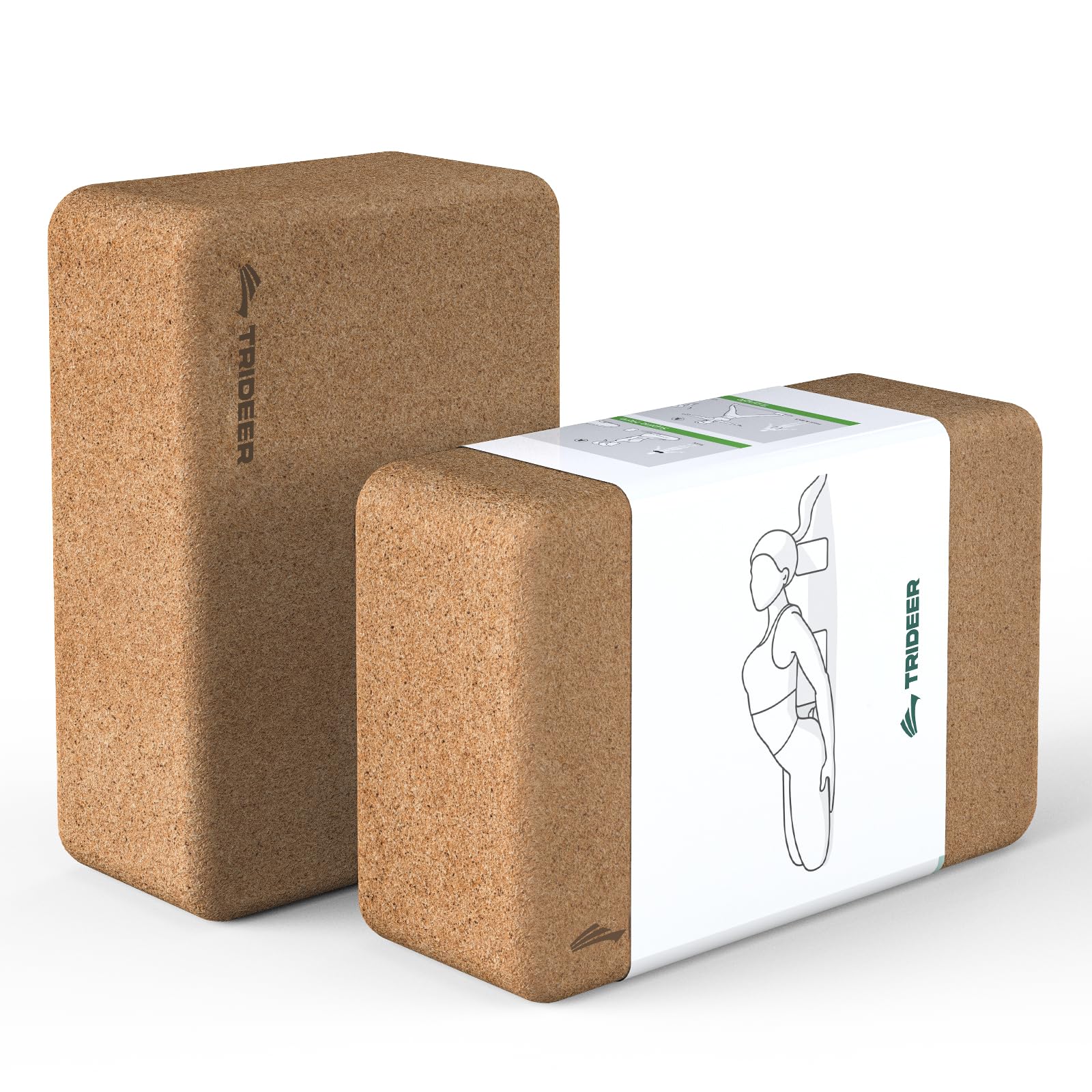
| Trideer Cork Yoga Blocks 2 Pack★ Best Overall | Steady support under bodyweight | Cork | 9″ x 6″ x 3″ each | 2 blocks + exercise guide | Amazon |
| Pete’s Choice Strap + Block KitBudget Starter | Lowest-cost full starter set | EVA foam, TPE, cotton | — | 2 blocks + 2 straps + eBook | Amazon |
| TSYPAIRS Cork Blocks, Tree DesignFirmest Cork | Firm double-compressed cork | Cork | 9″ x 6″ x 3″ each | 2 blocks | Amazon |
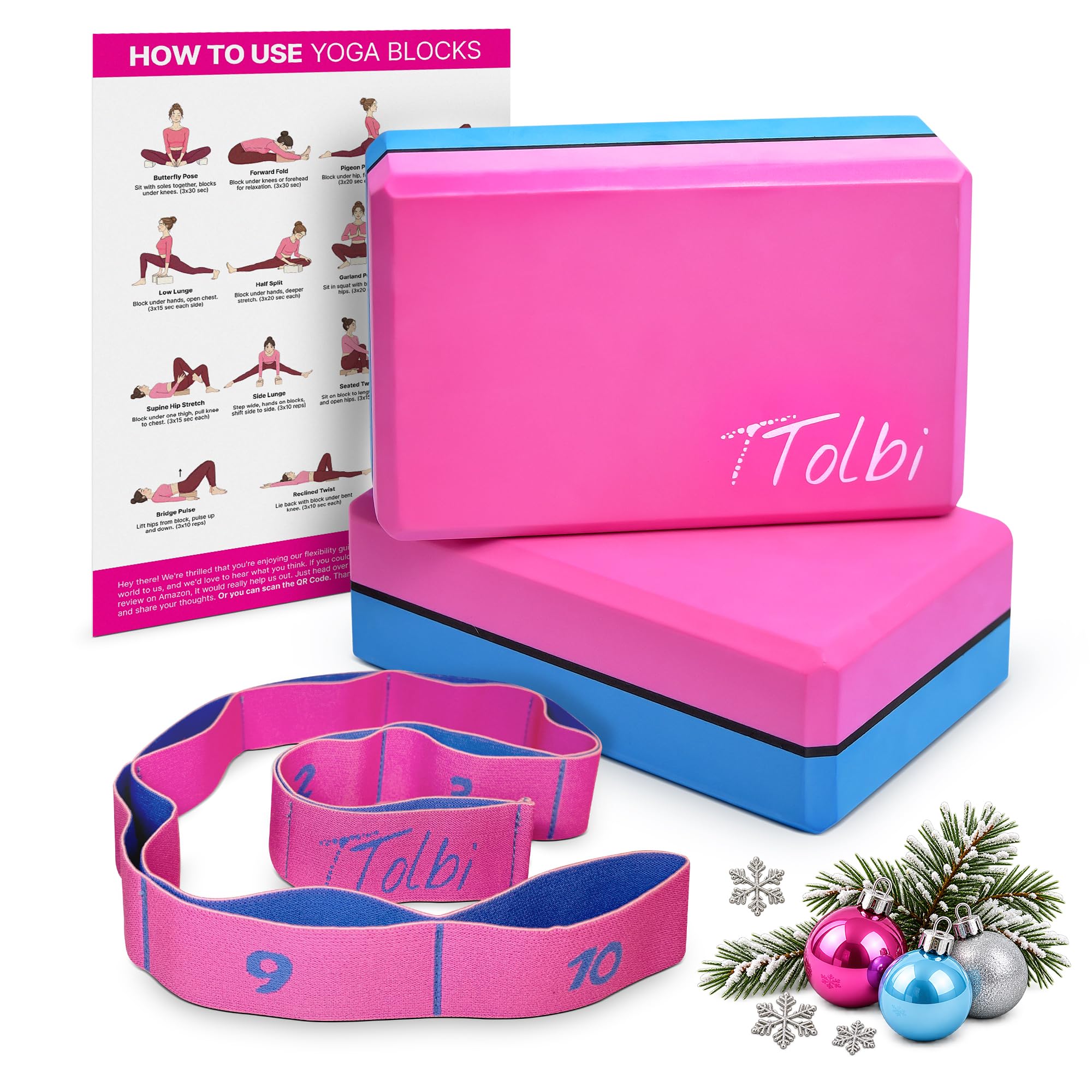
| TTolbi Foam Blocks with Strap | Travel and cushioning | EVA foam | 9″ x 6″ x 3″ each | 2 blocks + stretch band + guide | Amazon |
| Deep-Zen Wrist-Friendly Set | Sensitive wrists and knees | DenseFlex EVA foam | 9″ x 6″ x 4″ each | 2 blocks + 2 knee pads + strap | Amazon |
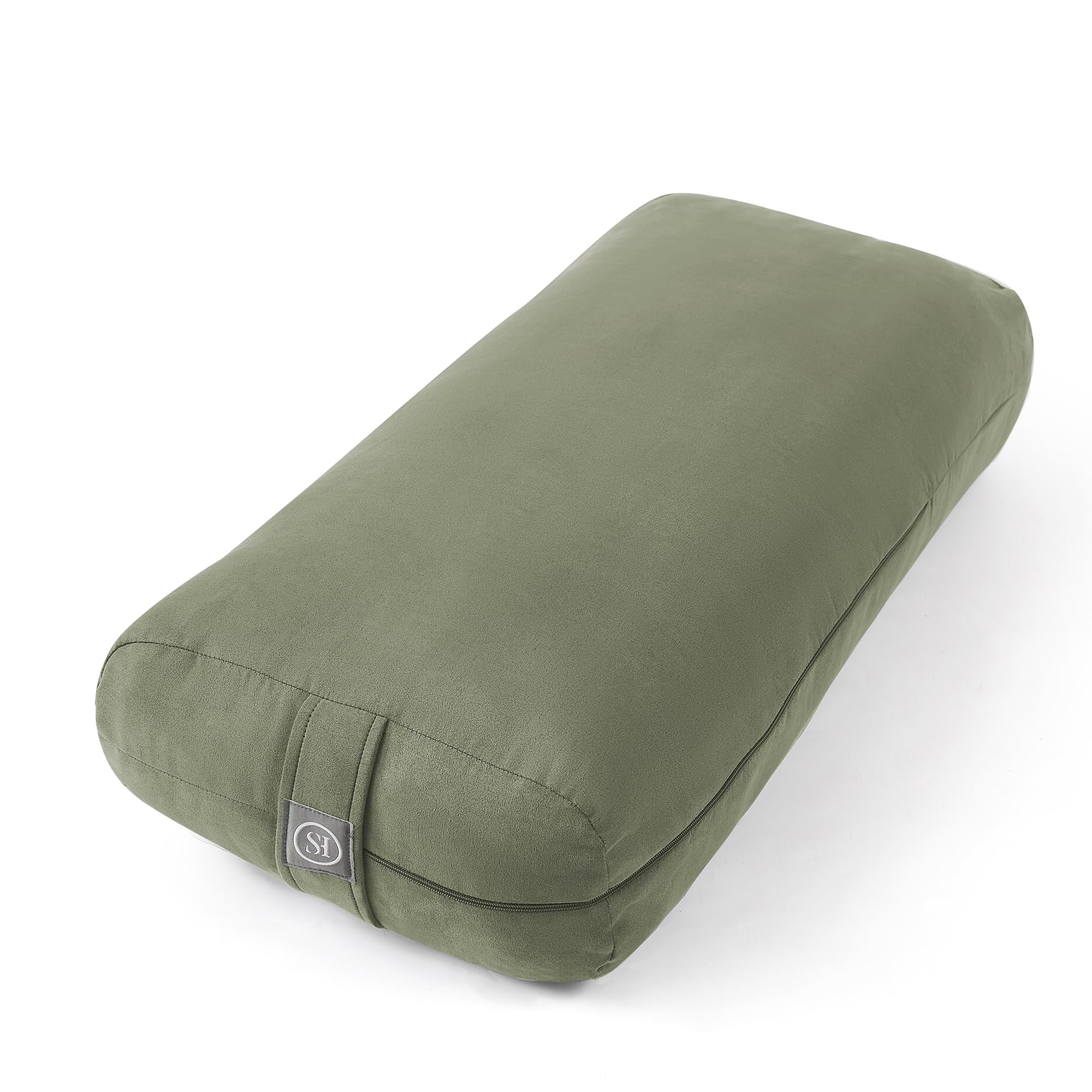
| Sweet Home Collection Bolster | Restorative poses and meditation | Cotton, buckwheat fill | — | 1 bolster | Amazon |
| Yes4All Yoga Bolster | Long-session back and hip support | Foam, suede cover | — | 1 bolster + dust bag | Amazon |
| Pete’s Choice Yoga Wheel Kit | Backbends and spine mobility | — | — | Wheel + 2 blocks + strap + guide | Amazon |
| BalanceFrom 7-Piece Yoga Set | Everything for one home setup | Foam | 9″ x 6″ x 4″ each | Mat + 2 blocks + strap + 2 towels + knee pad | Amazon |
Detailed Reviews
1. Cork Yoga Blocks 2 Pack by Trideer
Our pick — 4.5+★ from 650+ verified ratings; the strongest balance of quality and price.
Heavy, planted, and genuinely non-slip — the block that refuses to slide out from under you.
Beginners lean hard on a block and expect it to hold. These are made from natural cork, and the density is the whole point: three times as hard as their foam counterparts, according to the maker, so they do not distort under bodyweight. That means when you press your palm down in Triangle or Half Moon, the block stays exactly where you put it. The textures surface and contoured corners give your fingers something to grip.
This is the crowd favorite of the bunch — 4.5+ stars across 600+ owners — and the reason is simple. What wins people over is the sturdiness. The blocks hold a full adult’s weight without flexing, and the weight itself (the pair runs 1.59 kg) keeps them from skating across a hardwood floor. Cork also warms to the touch and stays grippy under sweaty hands, which foam rarely manages.
You get two blocks at 9″ x 6″ x 3″ each, plus a visual exercise guide that walks through muscle engagement for beginners. The honest catch is size: a handful of buyers find the dimensions not quite what they pictured, so check the 3-inch height against the poses you plan to do. If your hips are very tight, you may want the 4-inch option below instead.
dense cork grip
- Dense enough that a full bodyweight press does not deform the block
- Cork surface stays grippy when your hands get damp
- The pair weighs 1.59 kg, so it stays planted instead of sliding
- Comes with an illustrated guide aimed at beginners
two-block limit
- The 3-inch height is the shallower option — tight hips may want taller
- Heavier than foam, so it is not the pick for carrying to class daily
daily home use: you want blocks that stay put during balance work and do not squish under your palms.
needing softer foam: you need props that pack flat into a tote for a studio commute — cork is dense and the pair carries real heft.
2. Pete’s Choice Stretching Straps and Yoga Blocks Beginner Kit
Four pieces and a guide for a genuine starter budget — the least you can spend and still be fully equipped.
Here is the practical math on this kit: two straps instead of one. The whole four-piece set weighs just 0.71 kg, which is light enough to toss in a bag — and it is the lightest full kit on this list by a wide margin.
The blocks are firm EVA foam with cotton straps, and the quality is what people talk about most here — the blocks hold their shape and the straps do not fray at the loop. You also get a small eBook exercise guide, which helps if you have genuinely never done a pose before and do not know where to put your feet.
Set your expectations honestly: foam gives a little under heavy load, so if you press down hard in a standing balance the block may compress. For seated stretches, hamstring lengthening, and shoulder openers — the poses most beginners start with — it holds fine. The lifetime support promise also means a damaged kit gets replaced rather than refunded.
beginner kit bundle: Two straps, two blocks, a guide, and a featherweight 0.71 kg package — you are paying for completeness, not material density.
strap feels basic: Foam compresses under a hard press, so this is the pick for stretch-and-hold work rather than heavy weight-bearing balance poses.
first-time stretchers: a total beginner who wants strap and block together without buying pieces separately.
advanced flexibility work: your practice is balance-heavy and you need a block that will not give when you lean on it.
3. TSYPAIRS Cork Yoga Blocks 2 Pack, Tree Design
The densest pair here at 1.77 kg — a cork block built for people who press hard.
If the Trideer pair feels substantial, this set steps it up. At 1.77 kg for the two blocks, it is the heaviest pair on this list — heavier than the Pete’s Choice kit’s 0.71 kg by a clear margin. That extra mass comes from double-compressed, high-density cork, which the maker is upfront about: these run firmer and heavier than standard cork blocks. For a beginner who plants a palm and wants zero give, that is exactly the right trade.
What earns it a place here is the durability. It is the second most-discussed strength of this block, and a quick squeeze tells you why — it does not squish the way a foam block does, so it keeps its shape through months of daily use. The laser-printed tree design on the surface is a nice touch, and buyers single out the look too. Round edges keep it comfortable to grip, and the cork wipes clean with a dry cloth.
The honest note is firmness. Some people find it harder than they expected, and if you want a soft landing under a sensitive knee, a foam block suits better. Treat the firmness as the point rather than a flaw — you buy this one for the support, not the cushion.
grip-focused practice: a firm, heavy cork pair for steady standing poses and deeper stretches.
wanting thick padding: if you want a soft, forgiving surface under knees and elbows — buy foam instead.
4. TTolbi Yoga Blocks 2 Pack with Strap and Guide
Featherweight foam at 180 g a block — the pair that disappears into a gym bag.
Most blocks are carried, not admired. At 180 g apiece, this pair is the easiest to haul to a studio, a dance class, or a friend’s living room. The trade versus the cork pair above is obvious — the TTolbi set is light where the Trideer pair is dense, and that lightness is the whole reason to own it.
Foam softness is the second useful detail. Under a knee or a hip in a floor pose, the EVA foam cushions rather than digs in, and several buyers report it is not too hard for delicate areas — that is the foam doing its job. The blocks measure 9″ x 6″ x 3″ each and come with a non-slip surface and a stretch band for warm-ups.
What you give up is load-bearing rigidity. A foam block can compress under a full-body press, so if you are using blocks to support weight in a deep standing pose, cork will feel steadier. For stretching, dance practice, and gentle support, the foam holds up well, and the color options happen to be a selling point too.
strap plus guide: dancers and home stretchers who value portability and a soft surface over maximum firmness.
guided home sessions: you need props that travel light and cushion knees and hips.
solo advanced users: you need a block that will not compress under a hard standing press.
5. Deep-Zen Wrist-Friendly Yoga Blocks with Strap and Knee Pads

Blocks with a carved-out cutout so your wrists stop taking the whole load.
Wrist pressure is a quiet reason many beginners quit. These blocks cut a notch into the surface where your wrist sits, so the load moves off the joint and into the block instead. Two hand positions let you rotate the block and shift your grip when one angle gets uncomfortable. It is the single most thoughtful design on this list for a very common problem.
You get five pieces: two wrist-friendly blocks at 9″ x 6″ x 4″ each, two cushioned knee pads, and one stretching strap. The 4-inch height is taller than the 3-inch blocks elsewhere here, which means a little extra lift in seated poses — useful for tight hips, and worth checking against your own flexibility.
The wrist support — the thing people talk about most on this set — is matched by comfort on knees, and the DenseFlex EVA foam gives firm support with a soft-touch feel. Because they are foam, they will compress a bit under a heavy press, so keep them for supported poses rather than heavy weight-bearing.
wrist-easing shape
- Wrist cutouts plus two grip positions relieve the joint
- 4-inch height gives extra lift for stiff hips and short reach
- Comes with two knee pads and a strap for a complete kit
- DenseFlex EVA foam holds shape with a soft feel
bulkier footprint
- Foam compresses under a very hard standing load
- The 4-inch height can feel too high in low seated poses
sensitive wrists: anyone whose wrists or knees complain on a hard floor and wants the support on both.
tight storage space: you mostly do heavy balance work and need a rigid, non-compressing block.
6. Sweet Home Collection Meditation Bolster with Buckwheat Fill
Filled with buckwheat hulls to shape itself around your spine in long seated poses.
A bolster is the prop that makes a long meditation something you can actually sit through. At 25″ x 12″ x 5″, this one is wide enough to support your whole back in a reclined pose and long enough to straddle in Corpse or supported bridge. Buckwheat hulls shift to follow your body’s shape instead of fighting it, which is what restorative styles ask for.
The cotton cover comes off for washing, and a side handle makes it easy to move between floor and couch. Buyers here are split on two things worth knowing. Some find it extremely firm and several mention it is not made of cotton as advertised. If you want a sink-in-soft pillow, this is not it — it is a firm support, not a plush cushion.
Check the size against your space too, since opinions on the dimensions vary. For small apartments and dorm rooms, the size is manageable and easy to store. Treat it as a firm, moldable prop rather than a soft pillow and it does its job well.
calm seated meditation: you want firm, moldable back support for restorative poses and quiet sitting.
traveling light: you want a soft plush pillow to sink into — this one is firm and, by some accounts, firmer than expected.
7. Yes4All Yoga Bolster for Restorative Yoga and Meditation

A 24.8-inch rectangular bolster whose three-layer core holds your lower back without sagging.
Where the buckwheat bolster above molds, this one holds. The core is built in three layers of sponge — a firm yielding surface that keeps its shape under your lower back, spine, and hips. In a supported fish pose or a restorative twist, that steadiness is what lets you stay put instead of adjusting every thirty seconds. At 24.8″ x 9.9″ x 5.5″ it runs long and sits well under a reclining torso.
The details around the core are where the quality shows. A hidden zipper keeps the removable suede cover clean-looking, and the cover comes off for washing. A carry handle and a dust bag make it portable for studio trips, and the foam surface doubles as a back pillow on the sofa. The emerald cover color earns its own share of compliments.
Firmness is the honest caveat. This sits on the firm end, which is what a restorative bolster should be, but anyone hoping for a soft cloud will want a pillow instead. A few owners also note it is on the heavier side to carry to class, though the handle helps.
restorative support: firm, even support under the spine and hips for longer restorative sessions, with a washable suede cover that stays looking tidy.
large to store: a block pair and strap from earlier on this list and you have a complete restorative setup.
deep relaxation poses: you want a firm, long bolster for restorative and passive poses.
active flow classes: you prefer a soft, sink-in feel or need the lightest bolster to carry around.
8. Pete’s Choice Yoga Wheel Kit for Beginners

The rolling prop that opens a stiff upper back in a way no block can.
A yoga wheel is a padded circular prop you roll along your spine to open the chest and back. It does what two blocks cannot: its smooth, curved surface lets you lie back over the whole upper back instead of one spot. If your shoulders round forward from desk hours, the wheel’s curve reaches that upper-back tightness.
The kit pairs the wheel with two firm blocks, a premium strap, and a beginner exercise guide, so it is a full starter set rather than a single gadget. The build holds up — sturdiness is a standout here, and the wheel takes bodyweight without flexing. Owners mention it helps deepen backbends and build strength and stamina through the practice.
What it does not do is replace a block for standing balance or seated reach work. The wheel is a niche tool best used deliberately for spine mobility. Treat it as its own practice and it earns its place in the rotation.
learning backbends: you want to open a stiff back and chest, and getting blocks and a strap in the same box helps.
Consider a block-only kit instead if: you have no interest in backbends and only need support for standing and seated poses.
9. BalanceFrom 7-Piece Yoga Set

One box with a 1-inch mat, two blocks, a strap, two towels, and a knee pad.
If you are outfitting a whole practice from scratch, this bundle saves you buying each piece separately. The 71″ x 24″ x 1″ mat is the headline — a full inch of foam cushions joints in a way thin mats do not. The two blocks are 9″ x 6″ x 4″ each, the taller height that helps stiff hips reach the floor. You also get a stretch strap, a mat towel, a hand towel, and a knee pad at 24″ x 10″ x 0.63″.
What wins people here is thickness — the mat’s cushioning is the thing buyers talk about most, and it is a real comfort upgrade on a hard floor. The double-sided anti-tear surface grips on any flooring, and the moisture-proof top cleans with soap and water. The microfiber towels soak up sweat for hot sessions.
The catch is that everything is foam and hand-wash only, so the blocks compress under a heavy press and the mat needs a careful clean. But for a single purchase that covers mat, blocks, strap, and towels, it saves you a lot of separate shopping.
new home yogis: a first-time setup where you want mat, blocks, strap, and towels in one purchase.
buying pieces separately: someone who only needs blocks and wants a rigid cork pair — the foam here prioritizes cushioning.
Know the Specs
Block material: cork versus foam
Cork is dense and heavy, so it stays planted under a press and resists denting over time. Foam is light and soft, so it travels well and cushions knees, but it compresses under bodyweight. Pick cork for balance and firmness, foam for portability and comfort.
Block height and your reach
A 3-inch block brings the floor closer by a little; a 4-inch block closes a bigger gap. Taller is not always better — in low seated poses a thick block can raise you too high. Beginners often end up wanting one of each height.
Strap length and grip
A yoga strap is a long band with a loop that lets you hold a stretch your hands cannot reach yet. Cotton grips better against skin and a wider strap spreads the pull across your arch instead of digging in.
Bolster fill and firmness
Buckwheat hull bolsters mold to your spine; foam bolsters hold their shape. Both are firm by design — a bolster is support, not a soft pillow. Removable covers make cleaning far easier, so check for one before buying.
Common Questions
Do I really need yoga blocks and a strap as a beginner?
Should I choose cork or foam blocks?
What block height should a tight-hipped beginner start with?
Can yoga blocks help with wrist pain during poses?
Is a bolster the same as a yoga block?
How do I clean cork and foam yoga blocks?
Does a yoga wheel replace blocks and a strap?
How long do yoga props generally last?
Do deeper mats matter more than blocks for knee comfort?
Can I use these yoga props for Pilates too?
The Bottom Line
For most beginners, the yoga props for beginners winner is the Trideer Cork Yoga Blocks because dense cork stays planted under bodyweight and holds its shape for years of practice. If wrists and knees are your main complaint, reach for the Deep-Zen Wrist-Friendly Set with its cutout blocks and knee pads. And if you want the whole practice in one box, the BalanceFrom 7-Piece Set has you on the mat from day one.
How we choose
We do not accept paid placement. Every pick is matched to a real buyer and a real use-case; we do not hands-on test units.
Sources
Specifications: manufacturer listings and product documentation. Review insights: verified customer reviews, as of November 2026. Pricing: not shown on this page (it changes often); check the current price via the retailer link.
As an Amazon Associate, Tactical Gear Guy earns from qualifying purchases. This does not affect which products we feature.