Specs are compiled from manufacturer listings and verified buyer reviews and can change over time — please confirm the key details on the product page before buying.
An XS mountain bike is not a small version of an adult bike — it is a bike built around a shorter reach, a lower standover height (the clearance between the ground and the frame’s top tube) and a frame small enough that you are not over-stretched on the climbs. If you are roughly 4’9″ to 5’4″, the right pick here is the one whose frame actually fits you, not the one with the longest spec sheet. This guide covers four real XS-frame mountain bikes and tells you plainly which one suits which rider.
This guide is built by comparing the manufacturers’ published specifications and the patterns across verified customer reviews, so you get each pick’s real strengths and trade-offs instead of marketing spin.
You will see how each bike’s frame size maps to a rider height, what the drivetrain and brake choices mean in mud and on descents, and where each build gives something up to hit its cost tier. The crowd favorite here holds 4.5+ stars across 25+ ratings, and it earns that on build quality rather than badge appeal — all four picks are weighed the same way in this xs mountain bike comparison.
Top Picks

How To Choose The Best XS Mountain Bike
An extra small frame is the whole reason you are reading this. Everything else — gearing, brakes, tires, frame material — is tuned around getting the fit right first. A perfectly specced bike in a frame that is too long will hurt your shoulders on every climb and feel vague through corners.
Start with the seat tube and standover figure
An XS mountain bike frame usually runs a seat tube in the 13- to 15-inch range. The 15-inch frame on this list is listed for riders from 4’9″ to 5’4″, so a shorter rider sits toward the bottom of that window and a taller one toward the top. That figure is the one to check against your own height before you look at a single component.
Decide if you want a hardtail or full suspension
A hardtail (suspension in the front fork only) is simpler, cheaper to maintain and climbs efficiently on smooth-to-choppy trail. A full-suspension frame adds a rear shock that keeps the back wheel planted through roots and rock gardens. The trade-off is more moving parts, more servicing and more weight to push uphill.
Match your drivetrain to the climbs you actually ride
A 21-speed setup with a front and rear derailleur gives you a wide spread of gears and a lot of overlap in the middle. A 1×12 or 2×11 setup with a single wide-range cassette gives cleaner shifting and fewer dropped chains, at the cost of one chainring up front. If your local rides are mostly fire road and gentle singletrack, any of them work.
Check the brake type before you buy
Mechanical disc brakes pull a cable to squeeze the pads and are simple to adjust yourself. Hydraulic disc brakes push fluid through a hose and give stronger, more consistent stopping with less hand effort. On wet, muddy descents the hydraulic sets demand noticeably less from your fingers.
Side-by-Side Comparison
| Model | Best For | Frame Material | Suspension | Speeds | Amazon |
|---|---|---|---|---|---|
| RHT★ Best Overall | All-day trail comfort with parts you recognize | Aluminum | Hardtail — Suntour XCT, 100mm travel | 22 | Amazon |
| TRIFOX MK2 26 Inch Aluminum Mountain Bike | Short riders who want the lowest entry into trail riding | Aluminum | Hardtail — front fork shock absorption | 21 | Amazon |
| Canyon Exceed CF 5 | Cross-country speed and racing pace | Carbon Fiber | Hardtail — RockShox Recon RL Remote, 100mm travel | — | Amazon |
| SAVADECK Titan 612 | Rough descents and aggressive trail riding | Carbon Fiber | Full suspension — dual-link with DNM air shock | 12 | Amazon |
Detailed Reviews
1. RHT
Our pick — 4.0+★ from 50+ verified ratings; the strongest balance of quality and price.
The trail bike that spends its money on the parts your hands and feet actually touch.
The RHT is built around a lightweight aluminum hardtail frame, which means suspension lives in the front fork only — a Suntour XCT unit with 100mm of travel. That 100mm is the cushion that absorbs roots and potholes so the front wheel stays planted and you keep steering instead of bracing. The cockpit is where this bike earns its keep: an alloy handlebar and stem, WTB Trail II grips and a WTB Volt saddle, all fitted as standard rather than left for you to buy later.
Gearing is the RHT’s loudest claim. It runs a Shimano SLX 2×11 shifter with a Shimano SLX 11-speed index, giving you 22 speeds through an 11×42 cassette and a Neco alloy three-piece crank. Stopping comes from dual hydraulic disc brakes, which use fluid pressure instead of a cable, so you get strong, precise braking with less hand effort on long, steep descents.
What wins buyers over is the component quality — the SLX drivetrain and the WTB touchpoints read as a serious build rather than a box of no-name parts. The honest catch is setup: the derailleur commonly needs adjustment from the start, so budget an hour with a cable tension check or a shop visit before your first real ride. Value is the other split opinion — plenty of riders call the build a steal, while others weigh the same money against a lighter carbon frame and come away less convinced. Neither reading is wrong; they are just two different ideas of what the same spend should buy.
What holds up on the trail
- Shimano SLX 2×11 drivetrain with 22 speeds and an 11×42 cassette — a small, usable step between gears on steep climbs
- Dual hydraulic disc brakes give strong, precise stopping with less finger strain than a cable brake
- WTB Trail II grips and a WTB Volt saddle fitted as standard, so long rides start comfortable
- Suntour XCT fork with 100mm travel keeps the front wheel planted over bumps and roots
Where the setup bites
- The rear derailleur usually wants adjusting before the first ride — cable tension and limit screws
- No kickstand in the box, so plan where the bike leans at the trailhead
- Riders comparing it against carbon frames question the value at this tier
Reach for this if: you want a hardtail with recognizable Shimano SLX shifting, hydraulic brakes and comfortable WTB contact points already fitted.
Look elsewhere if: you would rather not touch a derailleur yourself — this one asks for a tuning session first.
2. TRIFOX MK2 26 Inch Aluminum Mountain Bike

The frame size stated on the box is the whole story here — 15 inches, built for 4’9″ to 5’4″.
If you have been shopping XS mountain bikes by wheel size and getting nowhere, start here instead. The MK2 uses a 15-inch aviation-grade aluminum alloy frame that the maker lists for riders from 4’9″ to 5’4″, which is the clearest fit statement of any bike on this list. Cables run fully inside the frame, so the lines stay clean and you are not snagging a housing on brush. The 26 x 1.95-inch all-terrain tires are narrower than the 2.4-inch rubber on the SAVADECK Titan 612, which means less rolling drag on pavement and gravel paths, and less float when the ground turns soft.
Gearing is a Shimano 21-speed system with a front and rear derailleur, so you get a wide spread and plenty of gear overlap for mixed terrain. Braking is mechanical dual disc — a cable pulls the pads rather than fluid — which is easy to service yourself and still gives strong emergency stopping in wet or dry conditions. The front fork uses thicker materials with dual shock absorption to soak up road bumps. Assembly is listed at 85% pre-completed, with tools and pedals in the box and a claimed build time within 20 minutes.
Build quality is the thing that carries this bike — it feels sturdier than its tier suggests, and the brakes are singled out as working properly straight away. The recurring gripe is adjustability: shifting is smooth for many riders, but the handlebar height does not adjust, so you either fit the cockpit as shipped or you swap the stem. That is a fit question, not a fault. Pick it when the 15-inch frame is the reason you are buying, and accept the fixed bar height as part of the package.
Fit-first value: a 15-inch frame listed for 4’9″ to 5’4″ riders, 21 Shimano gears, mechanical disc brakes and 26 x 1.95-inch tires — the shortest clear path into trail riding for a smaller rider.
The fixed-bar caveat: handlebar height cannot be raised or lowered, so cockpit comfort depends on the stem and bars you run.
Suits you when: the 15-inch frame is the deciding factor and you want a simple, serviceable setup you can assemble yourself in an afternoon.
Not for you when: you need an adjustable cockpit for a dialled-in reach and rise.
3. Canyon Exceed CF 5
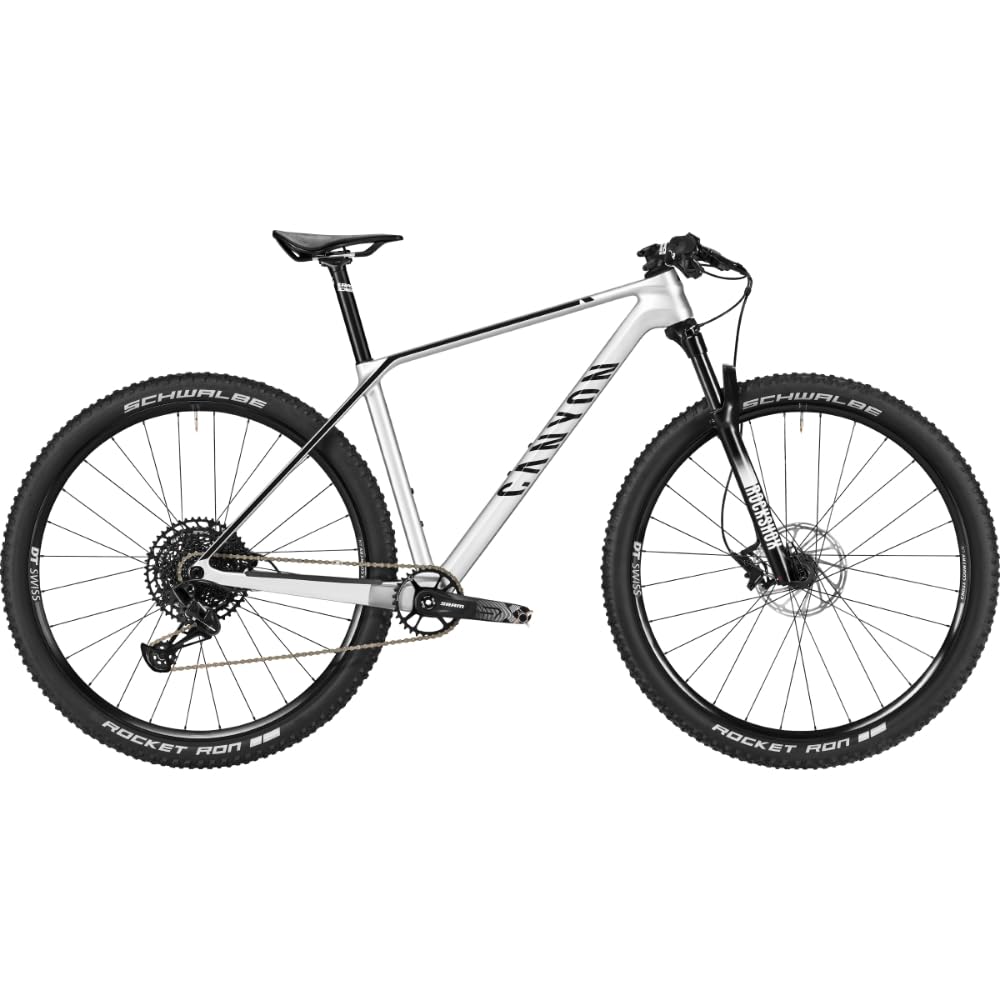
A cross-country hardtail tuned for acceleration, with a carbon frame and a fork you lock out from the bar.
The Exceed CF 5 is the pick for the rider whose trail day is measured in lap times rather than scenery. Its premium carbon frame is described as stiff, strong and ultra-light, which in plain terms means the frame stops flexing when you stamp on the pedals — power goes to the rear wheel instead of into the frame. The geometry is built for cross-country courses: quick steering, a compact cockpit and a ride position that rewards a rider who likes to stay forward and drive the bike.
Suspension is 100mm of front travel through a RockShox Recon RL Remote fork, with the remote lockout letting you stiffen the fork from the handlebar for smooth climbs or sprint sections. Hydraulic braking comes from SRAM Level T brakes — the same fluid-driven design as the RHT, so you get strong, consistent stopping without a cable to stretch. Drivetrain is SRAM SX Eagle with a cassette, giving a wide gear ratio spread for grinding up climbs and spinning out on descents. Wheels are tubeless-ready, so you can drop the inner tubes and run lower pressure for more grip.
Here is the trade-off you should weigh plainly: a race-bred carbon hardtail (a stiff, lightweight frame with no rear shock) is less forgiving than an aluminum frame on chunky, slow-speed trail, and the tuned compliance (flex built into the frame to absorb vibration) is aimed at all-day comfort on course, not at soaking up rock gardens. This is the least-reviewed bike of the four, so you are buying on the spec sheet and the frame material more than on a body of owner feedback. If your riding is fire road, XC loop (cross-country trail) and the occasional race, that suits you fine.
Built to go fast: carbon frame for maximum power transfer, 100mm RockShox Recon RL Remote fork with bar-mounted lockout, SRAM Level T hydraulic brakes and tubeless-ready wheels.
Know before you commit: this is a focused race hardtail with the thinnest owner feedback of the group, so be confident in the frame size before you order.
Buy it if: you ride XC loops and want carbon stiffness, a remote lockout and SRAM hydraulic braking in one race-oriented package.
skip it if: you want plush rear suspension for slow, rocky descents — that is not what this frame is for.
4. SAVADECK Titan 612 Carbon Fiber Soft Tail Mountain Bike
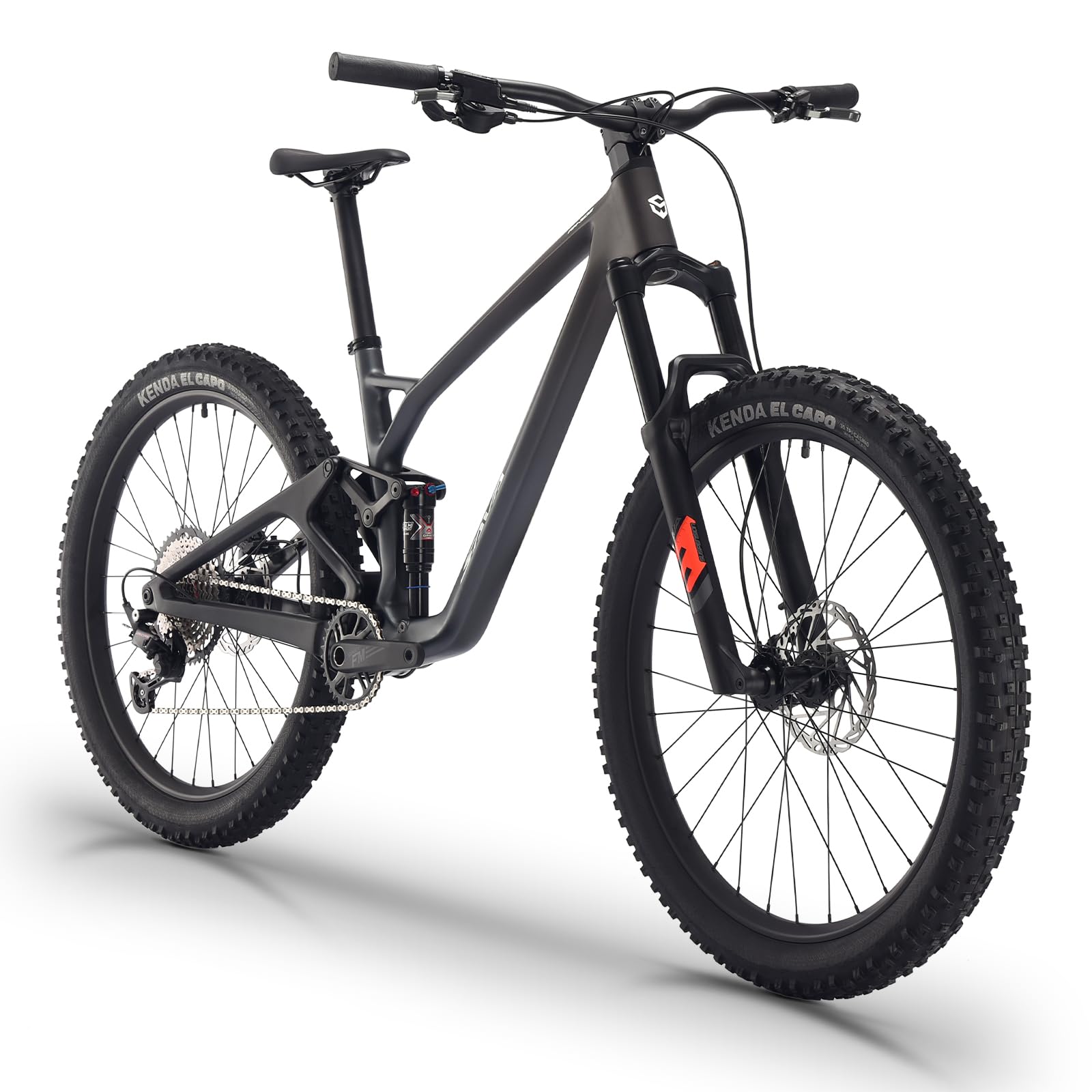
The only full-suspension bike of the four, aimed squarely at rocky descents and root-covered climbs.
Where the other three bikes put suspension in the fork and stop there, the Titan 612 carries a rear shock too. The carbon fiber frame uses a dual-link suspension system with a reinforced rear triangle, and cables run internally to keep them out of mud and debris. The shock is a DNM air unit with a three-stage lockout, so you can firm the back end for climbing efficiency and soften it again when the trail points down. A thru-axle shoulder-controlled hydraulic system holds wheel alignment and rigidity under load. Rebound adjustment lets you tune how quickly the shock returns after a hit.
Gearing is a Shimano DEORE M6100 12-speed groupset — eleven fewer gears than the RHT’s 22, but with the wide range and clean single-chainring shifting that modern trail riders prefer. Stopping power steps up too: four-piston hydraulic disc brakes push a pair of opposed pistons into oversized pads, which spreads the heat across more pad area on long, repeated braking. Tires are 2.4-inch Continental all-terrain rubber with multidirectional tread, which is 0.45 inches wider than the 1.95-inch tires on the TRIFOX MK2 — more float in mud and gravel, more drag on tarmac. The frame also accepts a swap to 2.6-inch tires if you want even more stability.
This is the bike to choose when your rides are technical rather than fast, and you would rather have the rear wheel tracking the ground than a lighter frame under you. The trade-off is the obvious one for any full-suspension build: more pivots, a shock to maintain and extra weight to haul uphill. It rewards a rider who spends the day on rough, unpaved trail and wants control over the terrain rather than a race-ready hardtail.
The suspension case: carbon full-suspension frame with a dual-link system, DNM air shock with three-stage lockout, Shimano DEORE M6100 12-speed shifting and four-piston hydraulic brakes.
The honest cost of it: a rear shock and extra pivots mean more maintenance and more weight on the climb than a hardtail.
This one earns its place: on rocky descents and root-filled climbs where rear suspension keeps the wheel down and the four-piston brakes keep you in control.
The single caveat: more moving parts to service than any hardtail here, so plan on shock and pivot upkeep.
Know the Specs
Frame size and standover height
Frame size is measured at the seat tube, and an XS mountain bike frame typically sits around 13 to 15 inches. The 15-inch frame on this list is stated for riders from 4’9″ to 5’4″, so treat that range as your first filter. Standover height — the clearance between the top tube and your body when you stand flat-footed over the bike — decides how confident you feel when you have to dab a foot on a technical section. A frame that is too long will pull you forward onto your hands and make the steering feel slow and disconnected.
Drivetrain gearing and speed count
A speed count tells you how many gear combinations the drivetrain offers, not how hard it climbs. A 2×11 setup with 22 speeds gives closely spaced steps, which suits riders who want to hold an exact cadence. A single-ring 12-speed gives a clean chain line and fewer dropped chains, but the jumps between gears are wider. What matters for a short-legged rider on a steep climb is the largest cassette cog, because that is the gear that lets you spin rather than strain.
Mechanical versus hydraulic disc brakes
Mechanical disc brakes pull a cable to squeeze the pads. They are simple to adjust at home and easy to replace. Hydraulic disc brakes push fluid down a hose and self-adjust as pads wear, which means strong, consistent stopping with less effort from your hands. On wet and muddy descents the difference is noticeable — a hydraulic set asks less of your fingers over a long braking section.
Suspension travel and tire width
Travel is the distance a fork or shock compresses, measured in millimeters — 100mm of front travel is a common cross-country figure. More travel absorbs bigger hits but can feel vague on smooth climbs. Tire width changes float and grip: a 2.4-inch tire spreads over mud and gravel, while a 1.95-inch tire rolls faster on pavement and hardpack. Match both to the surface you ride most, not to a spec sheet you want to win on paper.
Common Questions
What rider height does an XS mountain bike actually fit?
Is a full-suspension bike better than a hardtail for a smaller rider?
How long does it take to assemble a new XS mountain bike from the start?
Do hydraulic disc brakes need more maintenance than mechanical ones?
What tire width should I run on a 26-inch XS frame?
Is 21 speeds better than 12 speeds on a mountain bike?
Will a 15-inch frame fit a rider over 5’4″?
Do these bikes come with a kickstand or pedals?
Can I upgrade the tires on a carbon XS mountain bike frame?
What is the difference between a race hardtail and a trail full-suspension bike?
The Bottom Line
For most riders shopping for an xs mountain bike, the RHT is the pick because it puts the money into Shimano SLX shifting (a 12-speed groupset with crisp, reliable gear changes), hydraulic disc brakes (fluid-powered brakes that stop with less hand effort) and WTB contact points (the saddle, grips and tires your body touches) — the parts that decide how a trail ride actually feels. If your priority is the clearest fit statement of the group, the TRIFOX MK2 spells out a 15-inch frame for riders from 4’9″ to 5’4″ and backs it with 21 speeds and serviceable mechanical brakes (cable-operated brakes that are easy to adjust at home). Want carbon stiffness and a remote lockout (a handlebar switch that firms up the fork for climbing) for cross-country pace and the Canyon Exceed CF 5 is built for that. And if your trails are rocky and root-covered, the SAVADECK Titan 612 is the one to reach for, with a rear shock (suspension that absorbs bumps at the back wheel) and four-piston brakes (brakes with four hydraulic pistons for stronger stopping) to match.
How we choose
We do not accept paid placement. Every pick is matched to a real buyer and a real use-case; we do not hands-on test units.
Sources
Specifications: manufacturer listings and product documentation. Review insights: verified customer reviews, as of November 2026. Pricing: not shown on this page (it changes often); check the current price via the retailer link.
As an Amazon Associate, Tactical Gear Guy earns from qualifying purchases. This does not affect which products we feature.