Specs are compiled from manufacturer listings and verified buyer reviews and can change over time — please confirm the key details on the product page before buying.
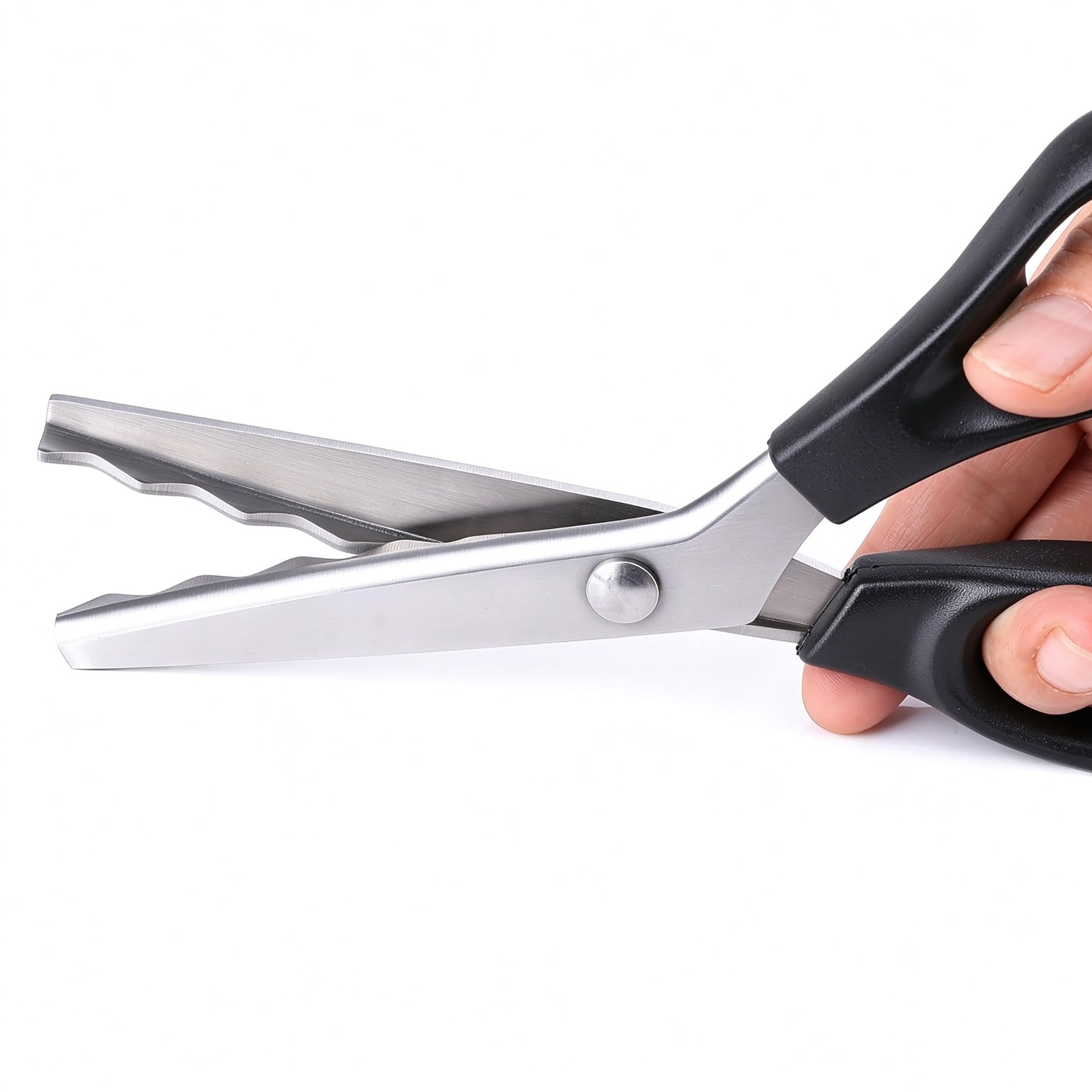
If you sew, you already know the drill: you finish a seam, turn the garment inside out, and find half the raw edge shedding loose threads across your lap. A pair of zig zag scissors — also called pinking shears — cuts that raw edge into a saw-tooth pattern that stops most woven fabric from ravelling further, and skips the overlocker entirely for simple projects. This guide covers which pairs actually cut cleanly on the first pass, which ones stay sharp, and which ones fight your hand.
This guide is built by comparing the manufacturers’ published specifications and the patterns across verified customer reviews, so you get each pick’s real strengths and trade-offs instead of marketing spin.
The picks below are ordered so you can compare jaw length, tooth spacing and blade steel side by side before you commit to a pair of zig zag scissors.
Top Picks


How To Choose The Best Zig Zag Scissors
Pinking shears all look similar in a photo, but the differences that matter show up the moment you cut fabric. Before you pick a pair, know the four things that separate a joy-to-use shear from one that snags, blunts, or wears your hand out.
Blade length and tooth spacing
Long seams and thick fabrics move faster with a 9-inch shear (a long cutting tool) because each stroke covers more fabric. Shorter shears are easier to steer around curves and tight corners. Tooth spacing matters too: a 5mm interval (the gap between teeth) on a 9-inch blade cuts a fine saw-tooth edge that suits lightweight cottons, so seams stay neat. Wider scallop or wavy patterns read as decorative and are better for craft edges than for seam finishing.
Blade steel: stainless vs carbon
Stainless steel blades resist rust and hold a working edge with minimal fuss, which suits most home sewists. Carbon steel takes a keener edge and is often used in professional tailoring shears, but it needs drying and oiling after use to prevent rust spots. If you cut paper, craft foam, or synthetic fabrics, stainless is the safer long-term bet.
Handle shape and weight
Pinking shears are heavier than standard fabric shears because the serrated blade needs force to cut cleanly. A soft, cushioned grip like a TPR or rubber handle spreads that pressure and reduces fatigue. An ambidextrous handle works for left- and right-handed users; a contoured handle fits one hand better but locks you into that orientation. Heavier shears cut thick material with less effort, but they tire your wrist faster on long sessions.
What you cut, and what you should not
Pinking shears excel on woven fabrics — cotton, linen, wool, silk blends — where a saw-tooth cut interrupts the weave and stops fraying. They do not suit non-woven fabrics like knit jersey or sweater knit, because the serrated blade can snag the loops and damage the edge. For paper crafts and decorative edges, a scalloped or wavy pattern adds a nice finish that a straight cut cannot.
Side-by-Side Comparison
| Model | Best For | Blade Length / Size | Blade Material | Handle | Amazon |
|---|---|---|---|---|---|
| Prym Professional Pinking Shears 9″★ Best Overall | All-round home sewing | 9.05″L x 3.54″W | Edelstahl stainless | Plastic | Amazon |
| Pinking Shears for Fabric Paper Cutting (7mm Scalloped)Best Value | Budget starter pair | 9.2″L x 3.15″W | Stainless Steel | ABS plastic | Amazon |
| Hui Tong Strong & Sharpe (Wavy 18mm)Craft Edge Pick | Value scallop craft edges | 9″L x 3.5″W | Stainless Steel | Plastic | Amazon |
| SINGER ProSeries 9″ Pinking Shears | Thick fabric and quilting | 9″ (5mm teeth) | Stainless Steel | TPR contoured | Amazon |
| Fiskars 8″ Orange-Handled Pinking Shears | Hands of varying sizes | 8″ | Stainless Steel | Plastic ergonomic | Amazon |
| Kai 8″ N5350 Pinking Shears | Long cutting sessions | 8″L x 8″W | Stainless Steel | Rubber / steel | Amazon |
| 3 Claveles Zig Scissors 22 cm | Hot-forged pro tailoring | 22 cm (8.5″) | Carbon Steel | Enamelled alloy steel | Amazon |
| Fiskars 8″ Softgrip Pinking Scissors | Decorative craft edges | 9.5″ long | Stainless Steel | Stainless steel | Amazon |
| Gingher Pinking Shears 7 1/2″ | Precision single-layer work | 8.25″L x 3.5″W | Stainless Steel | Alloy steel | Amazon |
Detailed Reviews
1. Prym Professional Pinking Shears 9″
Our pick — 4.5+★ from 950+ verified ratings; the strongest balance of quality and price.
The everyday shear that makes neatening a raw seam edge feel like a finishing touch rather than a chore.
Here is the number that sets the tone: a 3.54-inch handle width (how far the grip spreads across your palm), the broadest in this group. That extra width spreads pressure across more of your hand. It is also the widest gap in the lineup — the Jocaluyia scallop pair measures 3.15 inches across, so the Prym gives you noticeably more surface to squeeze against. On a long run of curtain hems, that difference shows up as less cramping by the end.
The 9.05-inch overall length gives you a long cutting stroke, which matters on thick fabric and long seams. You slice through a full seam allowance in fewer passes. The serrated edge cuts a saw-tooth pattern straight into the seam allowance, so woven edges need no separate neatening pass. The soft plastic handle is shaped to keep the fabric flat against the table so it does not lift or slip mid-cut.
Blade steel is Edelstahl — the German word for stainless steel — which resists rust and holds an edge with minimal upkeep. The plastic handle is ambidextrous, so it works whether you cut right- or left-handed. The matte finish keeps the purple body from looking slick in your sewing tin. This is the pick the crowd has stress-tested the longest — 4.5+ stars across 900+ ratings — and that is the strongest track record in this whole lineup.
Where it pulls ahead
- Widest grip in the group at 3.54 inches, spreading pressure across more of your hand
- Longest overall body at 9.05 inches for faster cutting on thick seams
- Edelstahl stainless blades resist rust with minimal care
- Soft handle keeps fabric from lifting or slipping mid-cut
What to weigh first
- Plastic handle is not the cushioned rubber grip some hands prefer for marathon sessions
- Premium-tier pricing puts it at the top of the range
Best for: Anyone who wants one reliable pair for everyday seam finishing and decorative fabric edges, with the widest grip and longest body in this lineup.
Look elsewhere if: You want a shorter, lighter shear for tight curves, or you prefer the cushioning of a rubber handle over plastic.
2. Pinking Shears 7mm Scalloped
The budget shear that actually cuts through stacked layers instead of skidding across them.
Cutting performance is the thing buyers praise most on this pair, and the headline spec explains why: a hardened stainless steel blade that the makers say holds its shape without deforming. In practice, that translates into clean cuts through multiple layers of fabric — the saw-tooth edge leaves the zigzag pattern cleanly without dragging threads along for the ride. Through three stacked layers of material, the blade stays on its line.
The adjustable screw is the feature worth calling out. You can tighten it for soft fabrics where you want the blades to bite and hold, then loosen it for paper crafts where you want less resistance. That one adjustment lets a single pair do both jobs. The ABS handle is contoured to reduce hand fatigue on long sessions, and the rounded blade tips keep from snagging fabric or nicking fingers.
At 9.2 inches long and 3.15 inches wide, it is the longest shear in this round-up. The Hui Tong runs 9 inches, so this pair edges ahead on overall reach. It weighs less than you would expect for a heavy-duty shear, which keeps long-term use comfortable. One honest catch: it does not have the cushioned rubber grip of a premium shear, so marathon cutting sessions may still wear on your hand.
The standout: Adjustable screw lets you dial in tension depending on whether you are cutting soft fabric or paper craft.
What to keep in mind: ABS handle is functional but not cushioned; long sessions may still tire the hand.
Reach for this if: You want a starter pinking shear that cuts multiple layers cleanly and adjusts to both fabric and paper work without stretching the budget.
Think twice if: You cut for hours at a stretch and want a rubber-grip handle under your palm.
3. Hui Tong Strong & Sharpe Pinking Shears (Wavy 18mm)
One shear that claims to handle everything from denim to silk, with a wavy 18mm pattern for decorative edges.
The 18mm wavy pattern is the spec that matters here. That is the distance between the waves on the blade, and it is wider than the fine 5mm teeth on the Singer ProSeries. A wider wave cuts a more open, scalloped edge that reads as decorative. It is ideal for craft edges and fleece throws, where a visible wavy finish adds character. For garment seam finishing on lightweight cotton, the narrower tooth pattern would blend in better.
The high-carbon stainless blades are rated to resist rust and hold an edge three times longer than standard shears, though that figure comes from the maker rather than independent testing. What the reviews back up is cutting performance: this pair powers through fabric edge work without leaving loose threads. The precision serrated blade leaves a smooth, finished edge and reduces bulk. Tailors and sewists pick it up for scallop and wavy work on craft projects.
Sharpness is where the feedback splits both ways, so know what you are getting into. Some find the edge plenty sharp; others find it needs more bite than expected. If you work with very fine fabrics where a razor edge matters, that split is worth weighing. For fleece, felt and decorative trims, it performs well and represents solid value. The ambidextrous handle works for any orientation, and the 3.5-inch blade length gives a shorter, more controlled cutting stroke than the 9-inch Prym.
Best use case: Decorative craft edges, fleece throws, and scallop work where a visible 18mm wavy pattern is the goal.
The honest caveat: Sharpness feedback is mixed, so delicate fabrics may need a keener blade.
Matches well with: Crafters who want a wavy 18mm decorative edge on fleece and felt, and who value cutting performance over razor precision.
Better to pass if: Your main job is finishing delicate lightweight cotton seams where a finer tooth spacing would blend in better.
4. SINGER ProSeries 9″ Pinking Shears

Engineered for crisp 5mm teeth that stop fraying on a wide range of fabrics, with a contoured grip that keeps pressure off your palm.
Teeth spaced at 5mm intervals is the detail that earns this pair its spot. That spacing produces a uniform, fine saw-tooth edge on a wide range of fabric types. Quilters and dressmakers get the same clean pattern every time, which makes the finished edge look intentional. The high-grade stainless steel blades are built to take frequent use, and the brushed finish keeps them looking sharp in the tin.
Functionality is the thing buyers talk about most here, with cutting performance right behind, and the spec sheet backs it up: the zig-zag blade pattern cuts through thick fabric and quilting layers. The TPR handle — that is a rubbery thermoplastic elastomer — is contoured for a balanced grip. The contoured TPR shape spreads pressure across the palm instead of digging into it on long cutting runs.
One quirk to know: this is not a pair for non-woven fabrics like knit jersey or sweater knit. The 5mm teeth can snag those loops and damage the fabric. Stick to cotton, crisp wovens and paper crafts. Weight comes in at 5.76 ounces, a middle-of-the-road heft that is heavy enough to cut cleanly but manageable to hold. Ease of use is the one place feedback splits — some find the pair hard to open and close at first.
What earns its place
- 5mm teeth produce a uniform, fine saw-tooth edge across a wide range of fabrics
- TPR contoured handle keeps the grip balanced through long cutting sessions
- Zig-zag blade pattern cuts cleanly through thick fabric and quilting layers
- Weight at 5.76 ounces is heavy enough to cut cleanly without tiring the wrist
Tune in to this
- Not designed for non-woven fabrics like knit jersey or sweater knit, which the teeth can snag
- Some hands find the pair difficult to open and close at first
Suits you best for: Thick fabric, quilting layers and paper crafts where uniform 5mm teeth deliver a clean, even pinked edge.
Not the one for: Knit jersey or sweater knit work, or hands that need a shear to open and close with minimal effort.
5. Fiskars 8″ Orange-Handled Pinking Shears
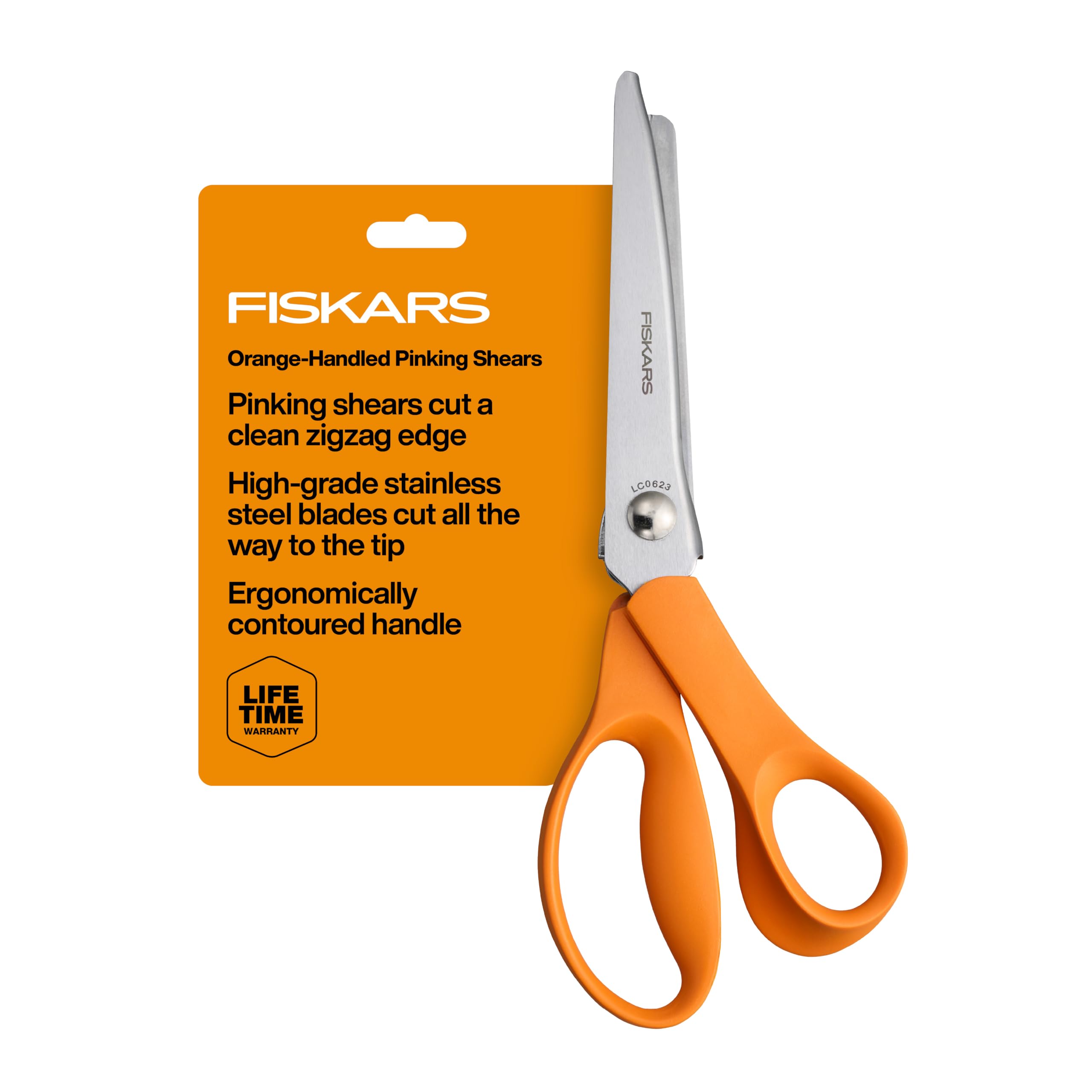
The eight-inch shear that fits hands of all sizes, with a lifetime warranty backing the steel.
Quality is what wins people over here, and the spec explains it: high-grade stainless steel blades with a precision-ground edge, designed to keep sharp while cutting fabric, quilting, and craft projects. The zigzag blade cuts crisp pinked edges that interrupt the weave and slow unraveling on cotton and other wovens.
The ergonomic handle is built to fit hands of varying sizes, which is rare in a category where most shears assume one grip. An extended lower blade supports the fabric through each cut, so you adjust less and keep your line. The clean, accurate edge shows up on alterations and craft work alike. And the lifetime warranty means if the blade fails, you are covered — a confidence boost that fewer pinking shears offer.
The honest catch is cutting performance. Some fabrics move through cleanly, especially cotton; others feel harder to push through, and usability feedback leans negative on that point. If you cut thick or heavy material regularly, this may not be the smoothest choice. For standard cottons and craft edges, it does the job. At 8 inches, it is shorter than the 9-inch Prym and the 9-inch Singer, so it steers better but covers less distance per stroke.
Where it shines: A handle designed for hands of all sizes, backed by a lifetime warranty and a precision-ground stainless zigzag blade.
Watch for: Cutting performance splits by fabric — some materials feel harder to push through.
Go for this when: Your hands vary in size, you value a lifetime warranty, and you cut standard cottons and craft edges.
Keep looking if: You regularly work thick or heavy material that needs a smoother cut.
6. Kai 8″ Pinking Shears – N5350

At 3.2 ounces, this is the lightest shear in the group — and the one that tires your hand least on long sessions.
The weight is the number that changes how you work: 3.2 ounces, versus 5.76 ounces on the Singer ProSeries. That difference shows up over a long afternoon of cutting. The stainless steel blades slice through multiple layers of fabric cleanly, reducing fraying and wear on the edge, and the saw-tooth pattern shortens the frayed threads well enough to protect the fabric edge.
Quality is the thing buyers rave about most here, and the sharp blades deliver the smooth cutting performance they point to. The rubber-and-stainless handle is shaped to sit comfortably in the hand and cut strain on long sessions. The rubber-and-stainless steel handle adds grip without bulk. It works well for quilting, dressmaking, hemming, patchwork and DIY crafts — a broad sewing and crafting tool rather than a single-purpose pair.
Ease of use is where feedback splits. Some hands find it easy to open and close; others find it stiff. The handle design also receives mixed notes — one of the few areas this shear does not win. If you have limited grip strength, try to open and close it before committing. The ambidextrous build means it works for either hand, and the brushed finish keeps the steel looking clean.
Standout spec: Just 3.2 ounces — the lightest shear here, so long sessions wear on your hand least.
Honest limit: The handle design and ease of opening split feedback; limited grip strength may find it stiff.
Worth choosing for: Quilters and patchworkers who cut for hours and want a 3.2-ounce shear that keeps hand strain low.
Pick a different pair if: You have limited grip strength and need a shear that opens and closes with little force.
7. 3 Claveles Zig Scissors, Carbon Steel, 22 cm (8.5″)
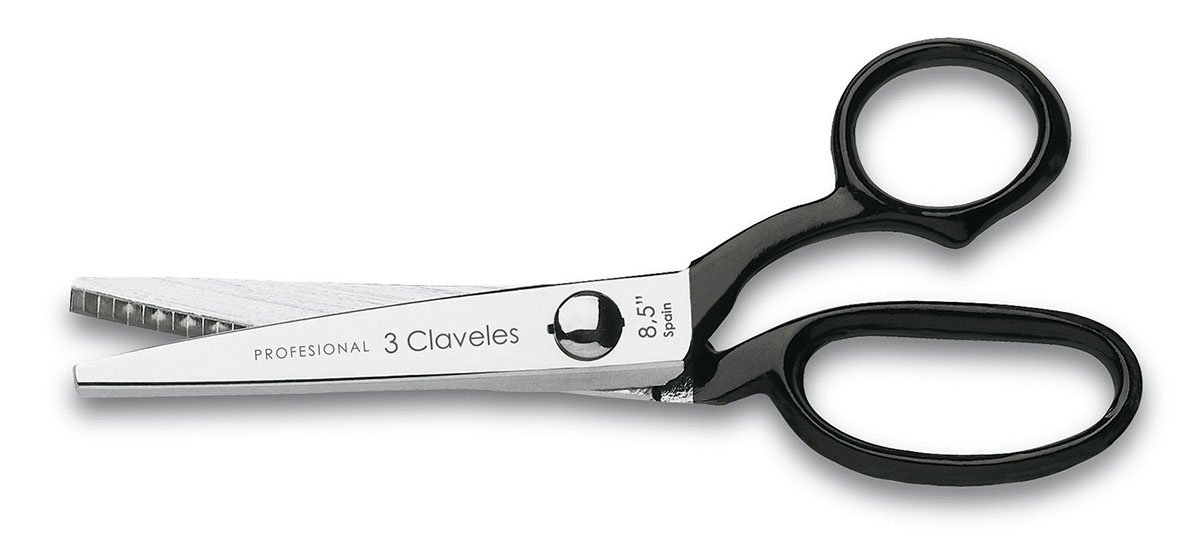
A hot-forged carbon steel pair with an enamelled handle, built for tailors who want a traditional zig-zag shear.
Hot-forged construction (steel shaped under heat and pressure instead of cut from a sheet) is the phrase to notice. That is the traditional way professional shears are made, so you get a sturdy shear built to take daily fabric cutting. The carbon steel blade takes a keener edge than stainless, which is why pro tailors favor it — and why you need to dry and oil it after use to keep rust off.
The 22 cm length (about 8.5 inches) sits between the 8-inch Kai and the 9-inch Prym, giving a middle reach that handles long seams without becoming unwieldy. The zig-zag edge is designed for cutting fabrics with a decorative or fray-stopping finish. The enamelled handle adds a durable, easy-to-clean surface that resists wear. The ambidextrous build works for either hand.
The catch with carbon steel is care. Unlike the stainless pairs in this lineup — the Fiskars, the Kai, the Singer — carbon steel will show rust spots if you leave it damp on the cutting table. Dry it after each session and give it a light oil. For the tailor who already keeps a rag and a tin of oil nearby, that is routine. For the occasional crafter, a stainless pair simplifies the routine.
The traditionalist’s angle: Hot-forged carbon steel and an enamelled handle — the construction pro tailors expect.
The care trade-off: Carbon steel needs drying and oiling after each session to prevent rust.
Fits the tailor who: Wants a forged carbon steel shear and does not mind a quick dry-and-oil after each cutting session.
Skip the fuss if: You prefer the zero-maintenance convenience of stainless steel.
8. Fiskars 8″ Softgrip Pinking Scissors

Precision-ground stainless blades paired with a cushioned Softgrip handle for decorative craft edges.
Quality is the standout here, and it starts with the steel: precision-ground, hardened stainless steel that holds a sharp, long-lasting edge. The blades slice through multiple thicknesses of material without struggling, and they keep cutting cleanly over repeated use. The pattern edge is even and decorative, which is exactly what you want on craft and sewing materials.
The Softgrip handle is the comfort story. The cushioned Softgrip handle absorbs squeeze pressure, so a long batch of craft trim leaves your palm less sore. At 4.8 ounces, the pair is light enough for extended work but not so light that it feels flimsy. The 9.5-inch overall length gives a comfortable reach at the table, and the ambidextrous build works for either hand.
The honest catch is stiffness. The pair is stiff enough that some hands find it hard to open and close, and stiffness is the most discussed negative here. If you have limited grip strength, that is worth knowing up front. For strong hands and frequent crafters, the cushioned grip and precision edge make the stiffness a minor trade-off.
Why crafters reach for it
- Precision-ground, hardened stainless blades hold a sharp, long-lasting edge
- Softgrip cushioned handle reduces hand fatigue on long sessions
- Blades slice through multiple thicknesses without struggling
- At 4.8 ounces, light enough for extended work without feeling flimsy
Before you commit
- Stiffness is the most-discussed negative; some hands find it hard to open and close
- Best suited to strong hands or shorter craft sessions rather than marathon cutting
Strong match if: You want a cushioned Softgrip handle and a precision-ground edge for decorative craft trim.
Rethink it if: You have limited grip strength and need a pair that opens and closes with little effort.
9. Gingher Pinking Shears 7 1/2″

A 7 1/2-inch precision shear with hand-tuned blades, made for single-layer seam finishing.
The maker is explicit about how this pair wants to be used: cut one layer of material at a time to maintain the original, hand-tuned setting of the blades. That is a different working style from the multi-layer pairs in this lineup. If your projects call for careful, controlled seam finishing where each edge gets individual attention, that is exactly the discipline this shear rewards.
Quality is the thing buyers praise most, and the plated stainless steel blades back it up. They produce a ravel-resistant zigzag cut on seams — the core pinking job — and a distinctive edge for craft work. The maker also recommends clearing lint from the blades frequently to keep them effective. That is a small maintenance habit, but it matters for keeping the hand-tuned edge performing as intended. The alloy steel handle is ambidextrous, and the 3.5-inch blade width gives a compact footprint for tight corners.
Cutting performance splits both ways in the feedback, so know what you are getting. Some find the pair cuts well; others report it does not cut at all, which may point to a unit that arrived out of adjustment. It is also the smallest shear here at 7 1/2 inches, shorter than the 8.25-inch body and shorter than the 9-inch Prym. For precision work on lightweight fabrics, that compact size is an advantage. For heavy-duty multi-layer cutting, the longer and heavier pairs serve better.
Built for precision: Hand-tuned plated stainless blades and a compact body for single-layer seam finishing.
The honest caveat: Cutting performance splits in feedback, and the maker specifies one layer at a time.
Belongs in the hands of: Precision sewists who finish seams one layer at a time and value a hand-tuned, compact blade.
Not for you if: You want to cut multiple layers at speed or prefer a lower-maintenance stainless shear.
Know the Specs
Blade length and tooth spacing
Blade length sets how much fabric you cover per squeeze. A 9-inch shear covers long seams in fewer strokes; a 7 1/2-inch pair steers better around curves. Tooth spacing — the gap between each saw-tooth point — controls the edge pattern. Fine 5mm teeth suit lightweight cottons and garment seams. Wider 18mm wavy patterns read as decorative and are better for craft edges and fleece.
Blade steel and care
Stainless steel resists rust and holds a working edge with minimal upkeep, which suits most home sewists. Carbon steel takes a keener edge and is the traditional choice for pro tailoring shears, but it needs drying and oiling after use to keep rust off. Whichever you pick, clear lint from the blades frequently — packed lint blunts the effective cut and can throw off a hand-tuned blade setting.
Common Questions
What is the difference between pinking shears and zig zag scissors?
Do zig zag scissors stop fabric from fraying completely?
Can I use pinking shears on knit fabric like jersey?
How often should I sharpen pinking shears?
Is carbon steel better than stainless for pinking shears?
What size pinking shears should I buy for garment sewing?
Can left-handed people use these pinking shears?
Why do my pinking shears snag or chew the fabric?
Do pinking shears need oiling?
Can I cut paper with fabric pinking shears?
The Bottom Line
For most sewists, the zig zag scissors winner is the Prym Professional Pinking Shears 9″ because it pairs a 3.54-inch grip — the widest here — with a 9.05-inch body that cuts long seams fast, and it holds the strongest track record in the lineup at 4.5+ stars across 900+ ratings. If you want decorative craft edges and value for money, reach for the Hui Tong Strong & Sharpe with its 18mm wavy pattern. And for thick fabric and quilting layers, the SINGER ProSeries 9″ delivers uniform 5mm teeth with a contoured TPR grip (a rubbery handle that fits your hand). One honest nudge: the Prym costs more than the budget picks, but the extra spending buys that wider grip and longer body for everyday use.
How we choose
We do not accept paid placement. Every pick is matched to a real buyer and a real use-case; we do not hands-on test units.
Sources
Specifications: manufacturer listings and product documentation. Review insights: verified customer reviews, as of November 2026. Pricing: not shown on this page (it changes often); check the current price via the retailer link.
As an Amazon Associate, Tactical Gear Guy earns from qualifying purchases. This does not affect which products we feature.