Specs are compiled from manufacturer listings and verified buyer reviews and can change over time — please confirm the key details on the product page before buying.
Four millimeters is the thickness where a yoga mat stops being a cushion and starts being a tool. Thin enough that you feel the floor under your hands in plank, thick enough that your knees survive a long kneeling sequence — that is the whole promise of a 4mm mat. The catch is that almost every brand claims 4mm and then differs wildly on grip, surface texture, and how the thing behaves once you start sweating. That difference is what this guide sorts out for you.
This guide is built by comparing the manufacturers’ published specifications and the patterns across verified customer reviews, so you get each pick’s real strengths and trade-offs instead of marketing spin.
One note before you scroll: this list uses flexible matching for the 4mm thickness, so a couple of picks sit at 4.2mm or list 4mm as a selectable option rather than landing on exactly 4.00mm. Each one serves the same purpose under your hands and knees. Below you will find the honest breakdown of each pick, starting with the 4mm yoga mats that gets the fundamentals right.
Top Picks


How To Choose A 4mm Yoga Mat
The number that matters here is not the thickness — it is what the top surface does when your palms get damp. Most people buy a mat, love it for three weeks, then discover during their first hot class that the surface has turned into a slip-and-slide. Sorting that out before you buy is the entire game.
Surface material decides your grip, not the pattern
A printed design tells you nothing about traction. What matters is whether the top layer is polyurethane (an open, slightly tacky surface that grips harder as it gets wet), PVC (a closed plastic surface that is sticky when dry and slick when damp), or a microfiber suede (which is genuinely slippery until sweat activates it). If you practice hot yoga or you sweat heavily, an open or suede surface is the difference between holding a pose and sliding out of it.
Closed-cell versus open-cell changes your maintenance routine
A closed-cell mat — the kind made from rubber or vinyl foam — keeps sweat and moisture sitting on top, so a wipe-down with a damp cloth genuinely cleans it. An open-cell surface drinks moisture in, which feels grippier but demands more careful drying. Neither is wrong. You just need to know which routine you are signing up for before you commit.
Weight and width decide whether you actually carry it
A 0.5 kg mat rolls up and disappears into a tote bag; a 2.5 kg mat is a proper studio mat that lives on the floor at home. On width, 24 inches is the standard and fine for most bodies, while 26 inches gives you extra room to land a wide stance without your hands drifting off the edge. Be honest about whether you travel with the mat or not.
Break-in and odor are real, and temporary
Natural rubber and PVC both off-gas when new. Air a fresh mat out flat for a few days before your first class and most of that smell disappears. If you are sensitive to smells, this is worth planning around rather than being surprised by.
Side-by-Side Comparison
| Model | Best For | Thickness | Size (L x W) | Weight | Amazon |
|---|---|---|---|---|---|
| Liforme Special Yoga Mat★ Best Overall | Grip-obsessed hot yoga | 4.2mm | — | 2.5 kg | Amazon |
| Gaiam Yoga Mat Classic PrintBest Value | Everyday home practice | 4mm | 68″ x 24″ | — | Amazon |
| adidas Yoga Mat | Carrying to class | 4mm | 69.29″ x 24.02″ | 0.5 kg | Amazon |
| WeGym Yoga Mat | Sweaty sessions | 4mm | 70.87″ x 26″ | 2.54 kg | Amazon |
| Manduka eKOLite Yoga Mat | Long-term studio use | 4mm | 71″ x 24″ | 5.2 lbs | Amazon |
| Hello Fit Bulk Yoga Mats (10 Pack) | Studios and classrooms | 4mm | 68″ x 24″ | 11.32 kg | Amazon |
Detailed Reviews
1. Liforme Yoga Mat
Our pick — 4.5+★ from 600+ verified ratings; the strongest balance of quality and price.
An eco-polyurethane top surface that stays grippy when your hands are sweaty-wet, per the listing.
This is the pick for anyone whose practice involves sweat — hot classes, long flows, a home session in a warm room. Understand what Liforme is actually selling you here: a top surface the brand calls “GripForMe”, made from an eco-polyurethane compound, which the listing describes as staying grippy even when “sweaty-wet”. That single behavior is the entire reason this mat holds the top spot.
The alignment markers are the second real feature, not decoration. Printed guide lines on the mat give your hands and feet a reference point so your stance lands in the same place every session. The mat is listed as PVC free and built from non-toxic materials, and Liforme includes a yoga bag with it. The comfort side is where the crowd is loudest — that is the quality that wins people over most on this mat, with grip right behind it.
Honest sizing: this one measures 4.2mm, not exactly 4mm — the comparison table shows it running slightly thicker than the Gaiam’s 4mm. That extra fraction of a millimeter is part of why it feels cushiony under kneeling poses, and it is also the source of the one recurring split in opinion. The thickness draws mixed feelings, with some finding it substantial and others wanting it thinner for better balance in standing poses. At 2.5 kg with hand-wash-only care, it is a stay-at-home studio mat, not one you toss in a gym bag.
Where The Liforme Earns Its Keep
- Grip holds through sweat — the listing states it stays grippy when “sweaty-wet”
- Printed alignment markers keep your stance consistent session to session
- PVC free, eco-polyurethane and rubber build
- 4.2mm surface runs slightly thicker than the Gaiam’s 4mm for kneeling comfort
- Free yoga bag included for storage
What To Weigh First
- 2.5 kg makes it a home mat — not something you carry to a studio daily
- Hand wash only, so no machine cleaning
- Sold in a single orange colorway
Buy it for hot yoga: if your hands get damp mid-flow and your current mat betrays you, the eco-polyurethane surface is the upgrade you are paying for.
Think twice if you commute with it: 2.5 kg on your shoulder every morning is a different experience than rolling it out in your living room.
2. Gaiam Yoga Mat Classic Print, 4mm Non-Slip Mat
A 68 x 24 inch PVC mat with a textured non-slip top that holds its place on bare floors.
For a first mat, or a second one for the living room, the Gaiam Classic Print does the unglamorous work well. It measures 68 inches long by 24 inches wide at 4mm thick — noticeably shorter than the Manduka’s 71 inches, so if you are tall, check that math against your own height before committing. The textured top surface is what Gaiam calls a “sticky non-slip” texture, and on bare floors it holds its place.
The material is PVC, and Gaiam explicitly lists it as 6P free — meaning no DEHP, DBP, BBP, DINP, DIDP or DNOP. Those are the plasticizers that have drawn scrutiny in older vinyl products. The brand also tells you to unroll and air it out for 2-3 days before first use because a harmless odor may be present. Do that, and the new-mat smell fades.
Where it splits opinion is on how sticky the surface really is — grip draws mixed feedback, with some finding it holds the floor well and others finding it slick. Durability is the other divided point, with reports of it holding up well sitting alongside reports of surface peeling. Given how widely this mat is used, that reads as normal wear variance rather than a flawed design. The printed colorway is the thing most people fall for first — it earns consistent praise for its calming gray tone.
The honest read: this is a dependable everyday mat at an entry-level tier, and it earns its popularity on the print and the floor-holding texture rather than on wet-grip performance.
The trade-off to accept: budget PVC and airing-out is part of ownership. Plan for a few days flat in the spare room before your first session.
Reach for this if: you want a good-looking mat for home practice, stretching and floor work, and you are not running hot classes.
Look elsewhere if: you sweat hard or you practice in a heated room — a wet PVC surface is not where this mat shines.
3. adidas Yoga Mat

At 0.5 kg, the lightest mat here — light enough to carry to class in a tote bag.
Here is the number that decides it: 0.5 kg. Compare that to the WeGym’s 2.54 kg and you understand immediately that these two mats are built for completely different lives. The adidas is the one you carry to a class after work, stuff in a suitcase, or roll out on a hotel room floor. It unrolls to 69.29 inches by 24.02 inches at 4mm, so the footprint is nearly the same as the Gaiam — you are not giving up length to save that weight.
The foam is 95% EVA and 5% TPE, a medium-density blend the listing describes as balancing cushioning against stability. The surface and base are both subtly textured, which is what gives it traction on different floor types — that texture is doing the work, not a coating. adidas also states the mat is built with 50% reused materials, which is the eco claim worth knowing about.
One thing to set expectations on: this listing does not carry a review history yet, so you are buying on the published spec rather than on a track record. For a lightweight travel mat, that is a fair trade — you know exactly what the foam is and exactly how much it weighs. Just do not expect a plush surface; medium-density foam at 4mm gives you support and floor feel, not a cloud.
Specs that travel well: 0.5 kg, 4mm, 69.29 x 24.02 inches, 95% EVA and 5% TPE foam, textured on both faces.
Worth knowing: no review history on this listing yet, so the spec sheet is your evidence — read it carefully against how you actually practice.
The case for it: a genuinely portable 4mm mat from a name you recognize, built from 50% reused materials.
The caveat: medium-density EVA at 4mm is a firm, functional ride — if you want deep cushioning under your knees, this is not that mat.
4. WeGym Yoga Mat, Non-Slip Workout Mat with Carrying Strap

A microfiber suede top that the listing says becomes grippier as you sweat.
Two numbers separate the WeGym from everything else here. The first is 26 inches of width against the Gaiam’s 24 inches — that extra room matters when you step into Warrior II and your front foot has somewhere to land. The second is 71 x 26 inches overall, matching the Manduka’s 71-inch length but adding width the Manduka does not have. If your mat has ever felt cramped, this is the fix.
The surface is a soft microfiber suede, and the listing makes a specific claim: it becomes grippier as you sweat. That is a real material behavior, and it means the mat rewards a warm, working practice rather than a cold one. Underneath, a natural rubber base holds the floor while you shift your weight between poses. The 4mm profile adds cushioning under your knees during kneeling sequences.
Owners consistently report almost no slippage during use — traction is one of the things this mat gets praised for, alongside its quality and the look of the jungle graffiti pattern. It is easy to clean and easy on the knees, per owner feedback. The real cost of all that grip is weight: at 2.54 kg it is the heaviest practical mat here short of the ten-pack. It stays where you put it and it does not want to be carried up a hill.
Why It Sticks
- Microfiber suede surface grips harder as you sweat
- 26 inches wide versus the Gaiam’s 24 inches — real room for wide stances
- Natural rubber base holds the floor through weight shifts
- Carrying strap included for studio trips
- Buyers report almost no slippage during use
What It Costs You
- 2.54 kg — heavier than the adidas by a wide margin
- Suede surfaces want careful drying, not a hot machine wash
- Hand wash only per the care instructions
Made for: hot yoga, mat Pilates and long stretching sessions where you break a sweat and need the surface to hold you.
skip it if: you commute on foot with your mat every day — 2.54 kg gets noticed.
5. Manduka eKOLite Yoga Mat 71″
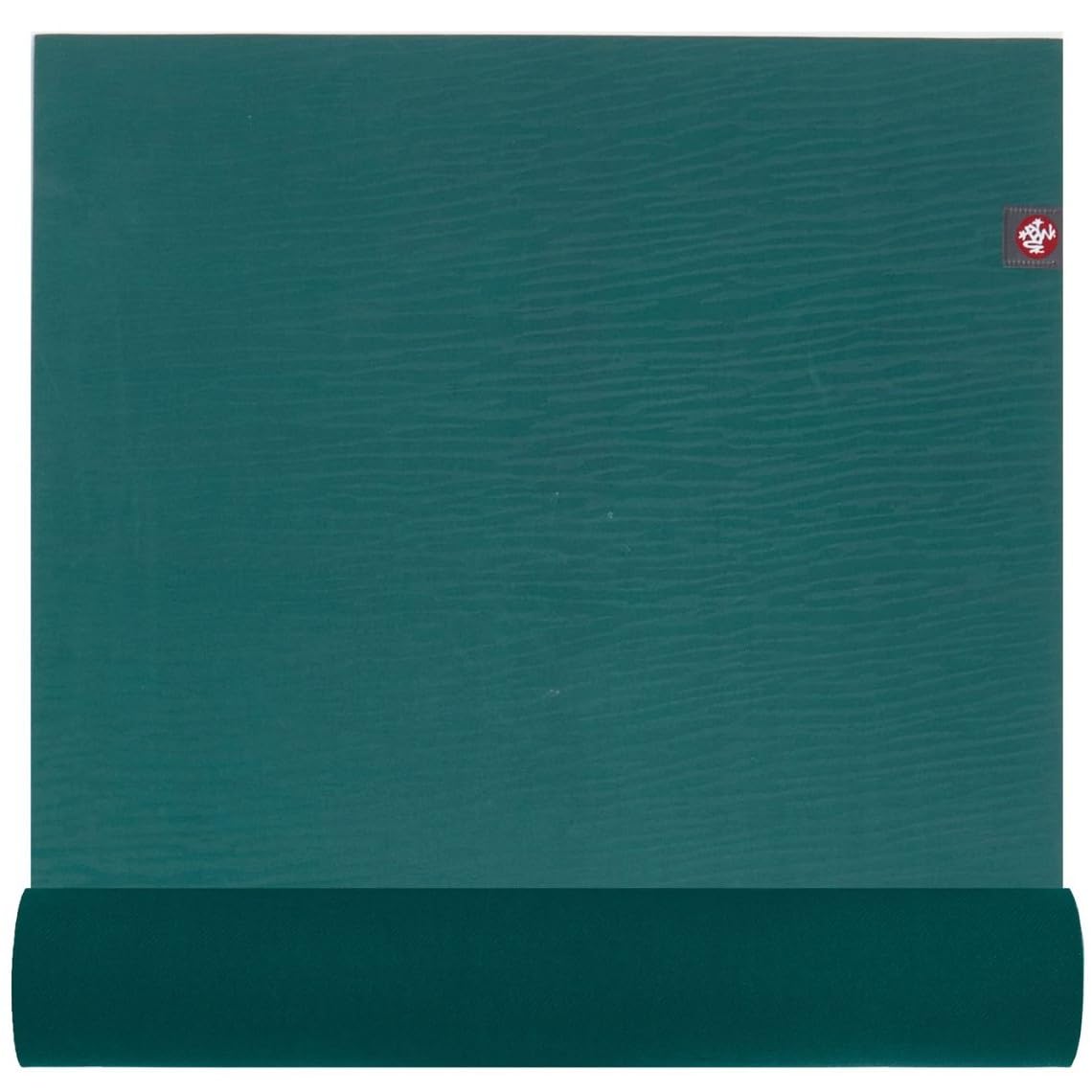
100% natural tree rubber with a rippled catch-grip texture and a closed-cell surface.
This is the pick for a single mat you plan to keep and maintain for years. The build is 100% natural tree rubber, 4mm thick, in a 71 x 24 inch footprint that runs three inches longer than the Gaiam’s 68. It weighs 5.2 lbs, which is heavy enough to stay put on the floor and light enough to roll up for a class. The surface texture is what Manduka calls a Rippled Catch-Grip Design — ridges that give your hands and feet something to catch against.
Where the eKOLite earns its reputation is the material itself. It is 99% latex-free with a closed-cell design, which is what keeps moisture and buildup on the surface instead of inside the mat. That is why Manduka’s care instructions are so specific: spray the brand’s Natural Rubber Mat Restore, let it sit five minutes, then wipe dry. No soaking, no sun exposure, no soap, no garden hose, no vacuum, no washing machine. Follow that and the mat stays clean; ignore it and you will shorten its life.
The split in owner experience is worth naming. Grip is the mixed variable — plenty of people report it does not slide at all, while others find it loses effectiveness once sweaty. Durability divides the same way, with some mats going three years and others peeling after months of light use. What is not in doubt is the material quality, which is the aspect this mat is praised for most, and the colorway. Expect a natural rubber smell out of the roll and air it out before class.
Pick this if: you want natural rubber, a closed-cell surface and a mat you maintain deliberately rather than abuse.
Know before you buy: sweaty hands may find the surface less locked-in than the Liforme’s polyurethane — and the care rules are strict.
6. Bulk Yoga Mats, 10 Pack, 4mm Thick, 68x24in

Ten individually wrapped 4mm mats at 68 x 24 inches, sized for a studio or classroom stock order.
Nobody buys this for their living room. Ten individual 4mm mats at 68 x 24 inches arrive wrapped separately, which is exactly what you want if you are stocking a class, a school program, or a studio where students borrow a mat. The whole bundle weighs 11.32 kg, so plan the storage spot before it shows up.
The construction is a closed-cell vinyl foam, and that matters for a shared mat. Liquids cannot soak in, so a wipe-down with a 50/50 water-and-vinegar mix followed by air drying is genuinely enough. The surface is lightly textured and firm, giving a stable, balanced footing when you change or hold poses. These mats are produced without latex, lead, heavy metals, and 6P phthalates — a sensible spec for a school or a studio that hands mats to different people all day.
The honest limitation is longevity under heavy use. Durability is the mixed note here, with reports surfacing that the fabric tears too easily under rough handling. For a loaner mat in a classroom that is a fair trade; for a daily personal practice you would want something more substantial. As a studio’s first stock order, the math works out to a per-mat cost no single premium mat comes close to.
Built for the studio floor: 10 mats, 4mm thick, 68 x 24 inches, closed-cell vinyl, latex and 6P phthalate free.
Who this is not for: a solo practitioner who wants one mat to last a decade — the fabric is the weak point under rough daily handling.
The right buyer: studio owners, teachers and program coordinators who need ten mats on the floor by Monday.
The honest limit: treat them gently and they clean up easily — rough handling is where the fabric gives out.
Know the Specs
4mm Thickness — What It Actually Does
Thickness is measured in millimeters through the mat, and 4mm is the thickness where you still feel the floor through the surface. That matters for balance: in a standing pose, a thinner mat lets your foot read the ground so you can correct your own wobble. A thicker mat softens the floor and blurs that feedback. Four millimeters also gives enough padding to protect your knees in a kneeling sequence, which is the reason it is the most common thickness for a general practice mat. Go thicker and you gain knee comfort but lose stability; go thinner and the reverse. The Liforme sits at 4.2mm, and the Gaiam, adidas, WeGym, Manduka and the Hello Fit ten-pack all list 4mm.
Closed-Cell vs Open-Cell Surfaces
Closed-cell means the surface is sealed, so sweat and moisture stay on top of the mat rather than soaking in. That is why a closed-cell mat like the Manduka eKOLite can be wiped clean and stays hygienic longer. Open-cell surfaces — polyurethane on the Liforme, microfiber suede on the WeGym — absorb a little moisture and, in return, grip harder as they get damp. Neither is better in the abstract. Closed-cell suits a dry practice and simple cleanup; open-cell suits hot yoga where the surface needs to hold you when you are wet. Match the surface to how you actually practice, not to what sounds more advanced.
Material — Rubber, PVC, EVA and TPE
Natural rubber is dense, grips a bare floor well, and is the material behind the Manduka and the WeGym’s base. PVC is the classic vinyl mat material — the Gaiam is PVC and lists itself as 6P free, meaning without six specific plasticizers. EVA and TPE are foam blends, and the adidas uses 95% EVA plus 5% TPE for a medium-density feel at very low weight. Heavier materials tend to hold the floor better; lighter foams tend to travel better. The Hello Fit bulk mats use a 6P free vinyl that wipes clean, which is what you want on a mat shared between people.
Grip — Top Surface and Base Are Two Jobs
A mat has to grip two things at once: your hands and feet on top, and the floor underneath. The base is usually handled with rubber or a textured underside, which keeps the mat from sliding across hardwood. The top surface is where the variables live — a textured PVC, a rippled catch-grip design like the Manduka’s, a sweat-activated suede like the WeGym’s, or the eco-polyurethane on the Liforme. When one of those fails, it usually fails wet. If you sweat, weight your decision toward a surface that is designed for moisture, not one that is merely sticky when dry.
Common Questions
Will a 4mm mat be thick enough for my knees during kneeling poses?
Why does a 4mm mat slide on my hardwood floor?
Is a 4mm mat suitable for hot yoga?
How do I clean a natural rubber yoga mat?
How long does a new mat smell like rubber or plastic?
Does mat width really matter for taller practitioners?
What is the difference between PVC and natural rubber mats?
Can I machine wash a 4mm yoga mat?
Are the 10-pack bulk mats good enough for a studio?
Does a lighter mat mean less cushioning?
The Bottom Line
For most people shopping for the 4mm yoga mats category, the Liforme Special Yoga Mat is the one to take — the eco-polyurethane surface stays grippy when it is wet, and the printed alignment markers make your practice repeatable. It is the priciest mat on the list, and it is the one that solves the single problem that ruins sessions. If you want that same sweat-activated behavior with more width under you, the WeGym gives you 26 inches and a suede face at 2.54 kg. And for a studio or classroom that needs ten mats on the floor, the Hello Fit bulk pack is the practical buy — just expect to replace them sooner than a single premium mat. The one honest nudge: if you are still deciding between the Liforme and the Manduka, ask whether you sweat. That answer picks your mat for you.
How we choose
We do not accept paid placement. Every pick is matched to a real buyer and a real use-case; we do not hands-on test units.
Sources
Specifications: manufacturer listings and product documentation. Review insights: verified customer reviews, as of November 2026. Pricing: not shown on this page (it changes often); check the current price via the retailer link.
As an Amazon Associate, Tactical Gear Guy earns from qualifying purchases. This does not affect which products we feature.