Specs are compiled from manufacturer listings and verified buyer reviews and can change over time — please confirm the key details on the product page before buying.
Your Xbox Series S can push past 60 frames per second in plenty of games, but a standard office screen simply cannot show them — so you end up paying for speed the display throws away. This list only includes panels that run at 120Hz or higher (a screen that redraws the image 120 or more times a second), which is the refresh rate the Series S is built to feed. One quick note before you read on: this roundup uses flexible, human-like matching rather than an exact model-for-model search, so a few picks are the nearest same-type screen rather than the exact unit you typed in. They all serve the same job — smooth, low-lag console play — and each one is flagged for exactly what it does best.
This guide is built by comparing the manufacturers’ published specifications and the patterns across verified customer reviews, so you get each pick’s real strengths and trade-offs instead of marketing spin.
Refresh rate, panel type, and response time decide whether your console play feels crisp or muddy. Below, each pick is matched to the player it suits, so you can find the best Xbox Series S monitor for your desk and your games without guessing.
Top Picks
How To Choose The Best Xbox Series S Monitor
The Series S is a 1440p-capable console that can output high frame rates, so the screen you pair it with should keep pace rather than bottleneck it. Start with refresh rate, then weigh panel type and resolution against how close you sit and what you play.
Refresh rate comes first
A 120Hz panel redraws the picture 120 times a second, which is what makes fast camera pans look fluid instead of choppy. Anything at 165Hz, 180Hz, or 240Hz gives you headroom above the console’s own output, so the panel never becomes the limit. A plain 60Hz office screen is the one thing to skip here.
Panel type: VA vs IPS vs Mini-LED
A VA panel tends to deliver deeper blacks thanks to a higher contrast ratio — the difference between the brightest white and darkest black. An IPS panel usually holds its colors better as you move off-center, which matters if you game from an angle or share the screen. Mini-LED backlighting adds many small dimming zones for darker blacks and brighter highlights, but it costs more.
Resolution and response time
1080p is easier to drive and cheaper, while 1440p shows more detail on a 27-inch screen. Response time, measured in milliseconds, is how fast a pixel changes color — a lower number means less ghosting (a faint trailing smear behind moving objects). Adaptive Sync (FreeSync or G-Sync) lets the panel match the console’s frame rate to stop tearing.
Side-by-Side Comparison
| Model | Best For | Refresh Rate | Resolution | Panel | Amazon |
|---|---|---|---|---|---|
| Samsung 27″ Odyssey G5 (G51F)★ Best Overall | All-round console play | 180Hz | 2560 x 1440 | VA | Amazon |
| ASUS TUF VG27AQL5ATop Value | High refresh QHD | 210Hz (OC) | 2560 x 1440 | Fast IPS | Amazon |
| Dell 24 Plus (S2425HSM)Most Adjustable | Comfort and adjustability | 144Hz | 1920 x 1080 | LCD | Amazon |
| ASUS TUF Gaming 24″ (VG249QE5A) | Budget-friendly compact desk | 144Hz (OC to 146Hz) | 1920 x 1080 | IPS | Amazon |
| Amazon Basics 27″ Gaming Monitor | Value 27-inch pick | 165Hz | 1920 x 1080 | IPS | Amazon |
| Samsung 27″ S3 (S32GF) | Slim everyday display | 120Hz | 1920 x 1080 | IPS | Amazon |
| Acer Nitro XV272U W2bmiiprx | Fast QHD value | 240Hz (DP) / 144Hz (HDMI) | 2560 x 1440 | IPS | Amazon |
| AOC C27G4ZH Curved | High-refresh curved immersion | 280Hz | 1920 x 1080 | LCD (LED) | Amazon |
| LG 27GS75Q-B Ultragear | QHD color and speed | 180Hz (O/C 200Hz) | 2560 x 1440 | IPS | Amazon |
| Alienware AW2725DM | HDR QHD with console mode | 180Hz | 2560 x 1440 | Fast IPS | Amazon |
| AOC Q27G3XMN Mini-LED | Deep-black HDR drama | 180Hz (OC via DP1.4) | 2560 x 1440 | VA (Mini-LED) | Amazon |
Detailed Reviews
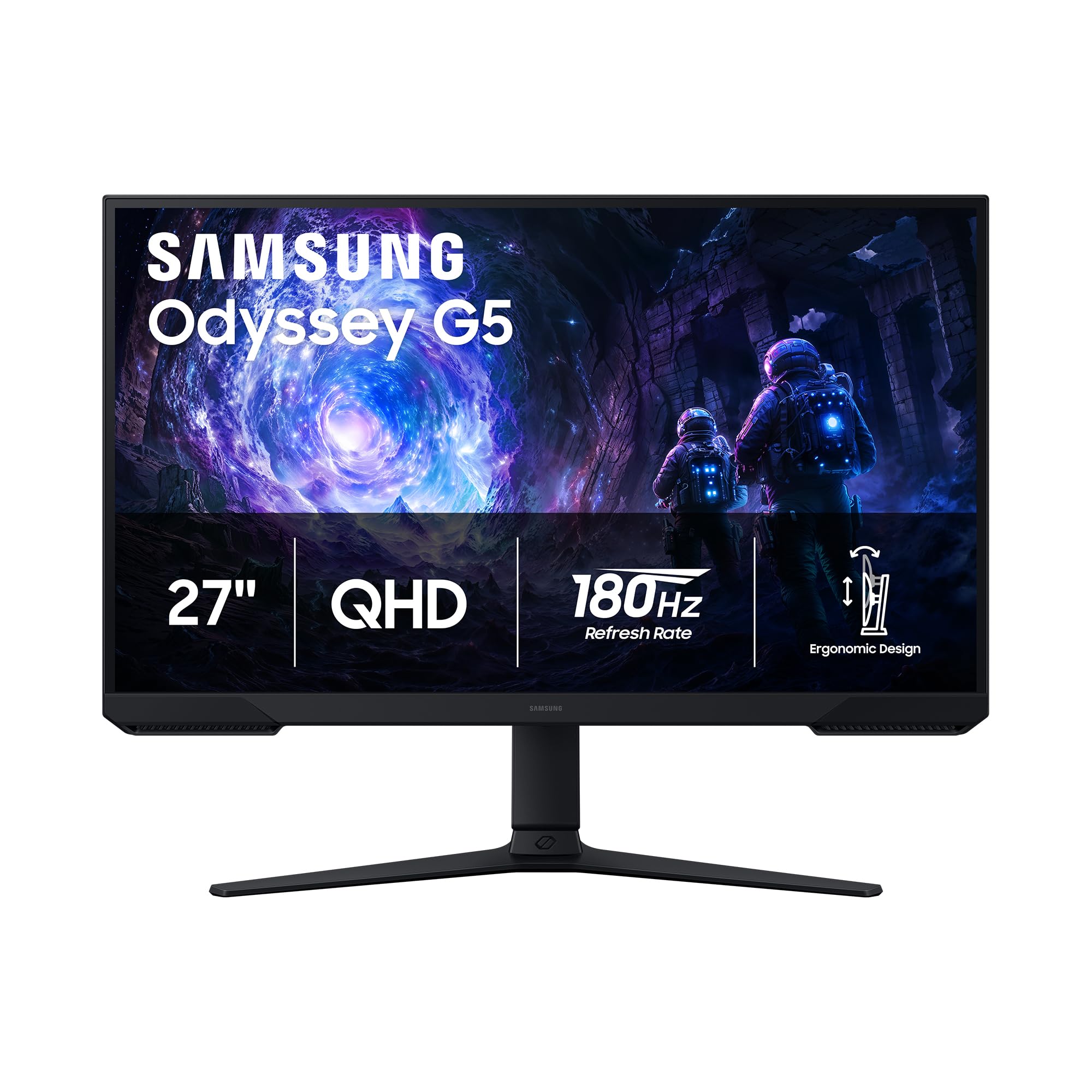
1. Samsung 27″ Odyssey G5 (G51F) Series QHD Gaming Monitor
Our pick — 4.5+★ from 800+ verified ratings; the strongest balance of quality and price.
A 180Hz QHD panel that gives the Series S room to run at full tilt.
If you want one screen that handles everything the Series S can throw at it, this 27-inch Samsung is the strongest all-rounder here. Its 180Hz refresh rate — 180 image updates every second — sits well above the console’s own output, so fast pans stay fluid and you are never waiting on the panel. The 1ms response time keeps motion crisp with minimal ghosting, which is exactly what quick turns in a shooter demand.
You get sharper detail on distant objects because the QHD resolution (2560 x 1440 pixels) is a clear step above 1080p. Samsung states it carries 1.7 times the pixel density of Full HD. Compared directly, it out-resolves the ASUS TUF 24-inch at 2560 x 1440 pixels versus 1920 x 1080. Dark scenes look deeper and punchier too: its 3000:1 contrast ratio stands against that same monitor’s 1000:1 — a genuine 3.0x gap. FreeSync (AMD’s adaptive-sync tech that matches the panel’s refresh to the console’s frame rate) cuts tearing and stutter, so fast action stays smooth. HDR10 adds brighter highlights.
What wins people over is the sheer versatility — this is a display buyers describe as a great gaming screen that also handles everyday use without fuss. The honest catch is brightness: the panel is rated at 300 cd/㎡, and while plenty of owners find it vivid, some color and brightness opinions run mixed, so a sunlit room may want more headroom. The stand tilts, pivots, and adjusts for height, which helps you line the screen up with your seating.
Why It Leads The Pack
- 180Hz refresh rate keeps fast motion smooth for the Series S
- 2560 x 1440 QHD resolution with 1.7x the pixel density of Full HD
- 3000:1 contrast ratio for deeper blacks than a 1000:1 panel
- FreeSync and HDR10 reduce tearing and lift highlights
Where It Gives Ground
- 300 cd/㎡ brightness leaves some room to wish for in a sunlit setup
- Color and brightness get mixed reactions, so calibrate to taste
Go for it if: you want the best balance of speed, sharpness, and contrast for console play in one screen.
Pause if: your room is very bright and you need maximum brightness headroom.
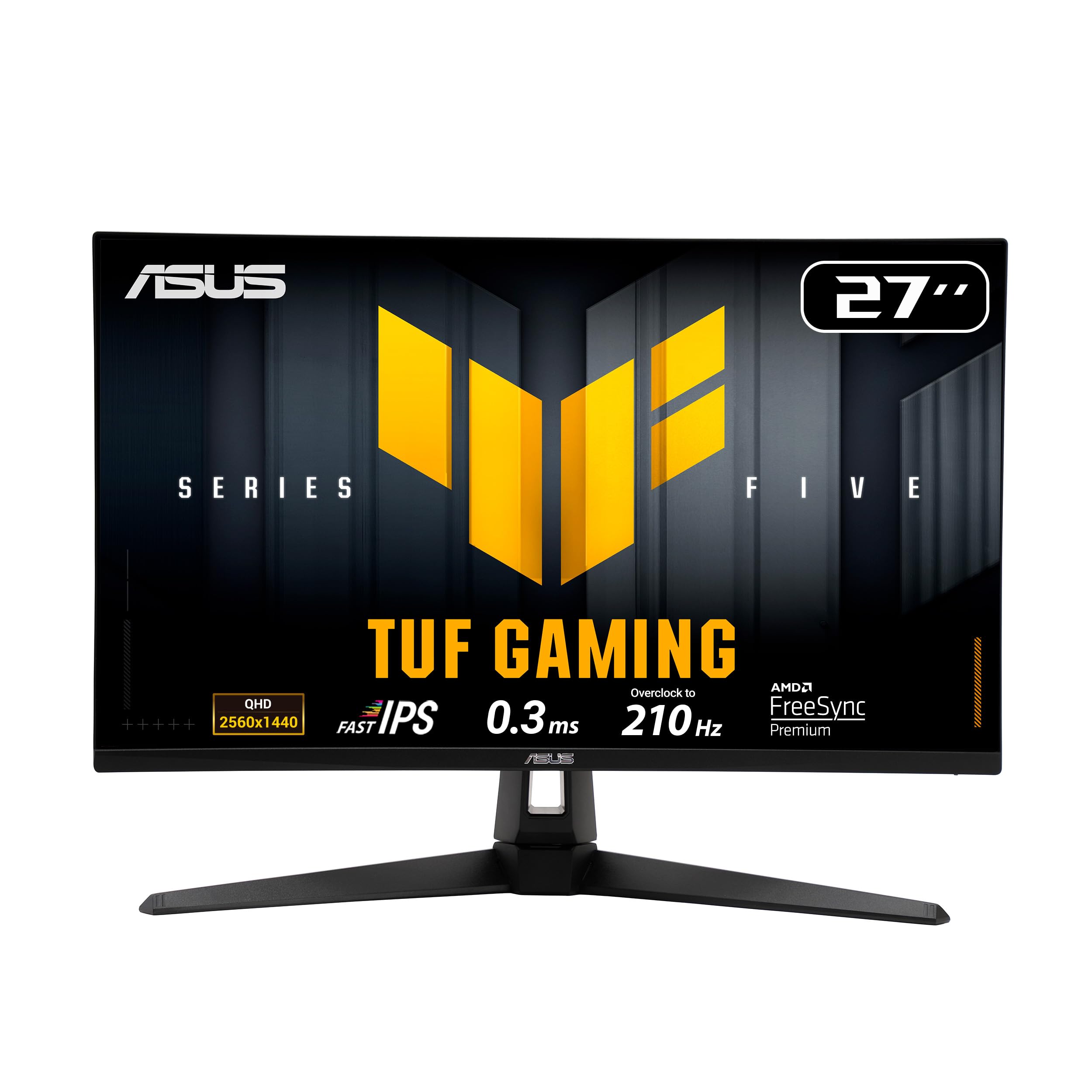
2. ASUS TUF Gaming VG27AQL5A 27 Inch 1440p 210Hz G-SYNC Monitor
A 210Hz QHD screen that pushes frame rates higher than most consoles can even feed.
This 27-inch TUF leans hard into speed without charging top-tier money for it. The QHD resolution (2560 x 1440) matches the Samsung Odyssey G5 above, but the refresh climbs to 210Hz overclocked — more headroom than the console will ever ask for. Its 0.3ms GTG response time (gray-to-gray, how quickly a pixel shifts color) is among the quickest on this list, which means less smear behind moving targets.
The Fast IPS panel keeps colors solid when you view off-angle, and FreeSync Premium handles variable refresh rate by default to keep team fights tear-free. A height-adjustable stand lets you set the screen at eye level for long sessions, and DisplayWidget Center (ASUS’s settings app) lets you tweak options with a mouse instead of fiddly buttons. There’s also a cooled 3-month Adobe Creative Cloud subscription included in the box.
Panel quality is the consensus winner here — the display itself is what people trust — while image quality draws mixed notes, with some units arriving with dead pixels, so it’s worth a quick check on arrival. Brightness is rated at 1199.1 lm. If smooth high-refresh QHD for less is your aim, this earns its spot.
Speed at a fair price: 210Hz, a 0.3ms GTG response, and QHD resolution together cover competitive console play and everyday desktop work.
Check on arrival: a few buyers find dead pixels, so power it on and inspect the panel within the return window.
Best matched to: the player who wants maximum refresh and sharp QHD without paying premium-tier money.
Think twice if: you insist on a spotless panel from the start without checking first.
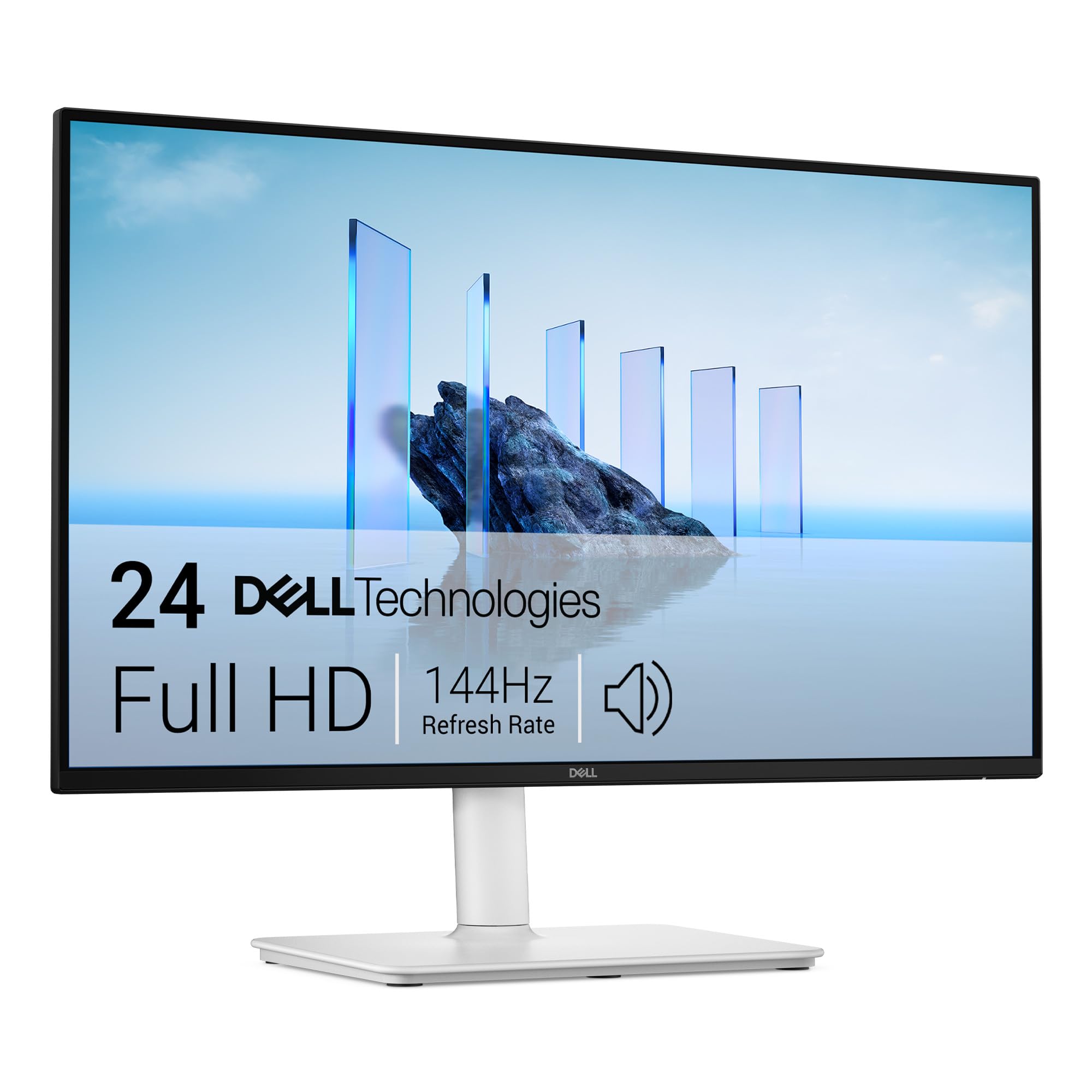
3. Dell 24 Plus Monitor – S2425HSM 23.8-inch FHD 144Hz
The comfort-first pick, with a stand that lets you set the perfect viewing angle.
If long sessions leave your neck craned, this Dell is built to fix that. It offers full height, tilt, pivot, and swivel adjustability, so you can raise or angle the 23.8-inch screen to meet your eyes rather than the other way around. The 144Hz refresh rate handles smooth console action, and a 1500:1 contrast ratio gives it more depth than a 1000:1 panel would.
Audio is handled by two integrated 3W speakers that Dell says cover a wider spread of frequencies, so you get usable sound without a separate speaker set on your desk. It also carries a 4-star TÜV certification for reduced blue light and flicker, a comfort plus for late-night sessions. Adjustability is what buyers rave about — the height and tilt range is a recurring favorite.
At 1920 x 1080, it trades the sharper QHD detail of the Samsung and ASUS picks for easier driving and a softer load on the console. Its 99% color gamut and crisp text keep documents and spreadsheets sharp. Pick it when your seating and posture matter as much as raw speed.
What Stands Out
- Height, tilt, pivot, and swivel adjustments for real comfort
- 1500:1 contrast ratio for solid depth
- Two built-in 3W speakers
- TÜV-certified reduced blue light and flicker
The Trade-Off
- 1080p resolution trails the sharper QHD options on this list
The pick for ergonomics fans: anyone whose desk setup depends on getting the screen exactly where their eyes want it.
Skip if: you specifically want QHD sharpness over 1080p.
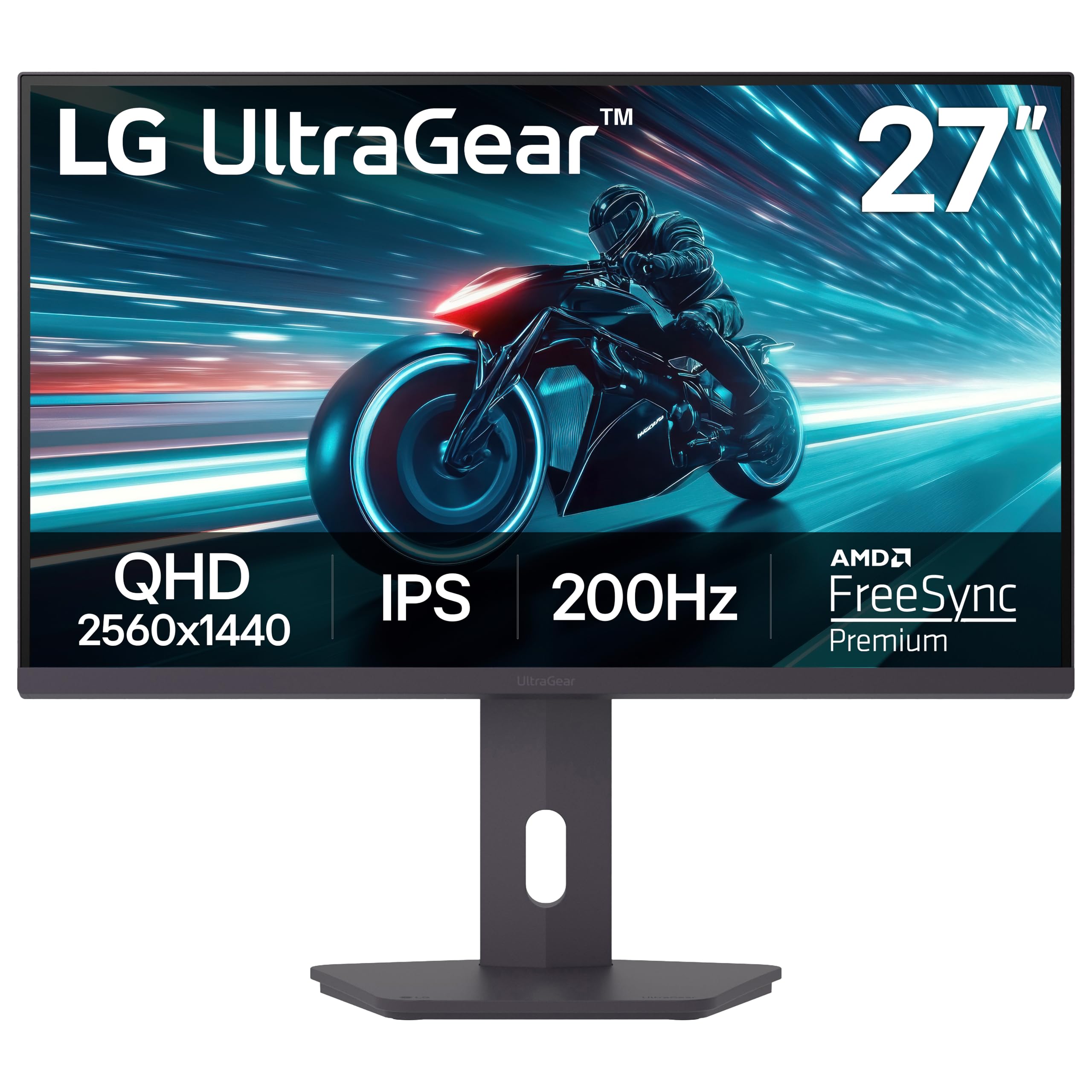
4. LG 27GS75Q-B 27-inch Ultragear QHD 180Hz Gaming Monitor
A QHD Ultragear tuned for vivid color and console-friendly smoothness.
Where this 27-inch LG pulls ahead is color. It covers up to 99% sRGB (a common color space), and that combined with HDR10 makes games visually pop on its QHD (2560 x 1440) screen. The 180Hz refresh rate climbs to 200Hz overclocked, so the Series S gets plenty of headroom, while a 1ms motion response keeps action crisp. It carries both NVIDIA G-SYNC Compatible and AMD FreeSync validation, so you are covered whichever sync route you lean on.
The three-side virtually borderless design looks clean on a battlestation, and the stand adjusts for height, tilt, and pivot. Gamer-centric tools like a Black Stabilizer that lifts dark-scene detail and an on-screen FPS counter give you useful feedback mid-match. The vivid screen and vibrant colors are exactly what people single out, and adjustability with 360-degree rotation draws steady praise.
The one thing to weigh: at a 1000:1 contrast ratio it does not reach the deeper blacks of the VA-based Samsung. If rich color on QHD is your priority over inky blacks, this is a strong fit.
Color-forward choice: 99% sRGB and HDR10 on a 2560 x 1440 panel make it a looker for both games and desktop work.
Contrast caveat: the 1000:1 ratio sits below VA panels, so dark scenes are less inky than a deep-black display would give.
Worth it for: anyone who wants a sharp, colorful QHD screen that also flexes into everyday use.
Look elsewhere if: you measure a monitor largely by how black its blacks get.
5. Alienware 27 Gaming Monitor AW2725DM WQHD 180Hz

A QHD Fast IPS with a dedicated console mode built for long Xbox sessions.
This Alienware is aimed squarely at gamers who split time between a console and a desktop. Its 180Hz refresh rate pairs with a 1ms gray-to-gray response to keep motion fluid, and a dedicated console mode tunes the screen for set-top boxes like the Series S. Color coverage reaches DCI-P3 95%, and VESA DisplayHDR 400 certification adds a brightness punch that a plain SDR panel cannot match.
For marathon nights, a hardware-based low blue light solution cuts eye strain while holding onto color — a smarter comfort approach than a filter that washes everything out. The stand covers height, pivot, swivel, and tilt, and the box includes both a DisplayPort 1.4 and an HDMI cable plus a USB Type-A to Type-B cable, so you can wire it up right away. Buyers report it working smoothly across systems, Xbox consoles among them.
Quality is the thing buyers trust most here, and crisp, vibrant images back that up. The brightness story runs mixed, with some IPS glow (a faint corner lightening) mentioned — normal for the panel type, and easy to overlook in most scenes.
Built For Console Nights
- Dedicated console mode for Xbox play
- 180Hz and 1ms gray-to-gray response
- DCI-P3 95% color with DisplayHDR 400
- Hardware low blue light that keeps colors intact
Good To Weigh
- Some IPS glow noted in the corners
Made for: the gamer who wants a console-specific mode and HDR-ready QHD in one package.
Weigh against: a deep-black VA panel if inky blacks matter more to you than wide color and HDR brightness.
6. AOC 27 Inch QHD 180Hz Mini-LED HDR1000 Q27G3XMN
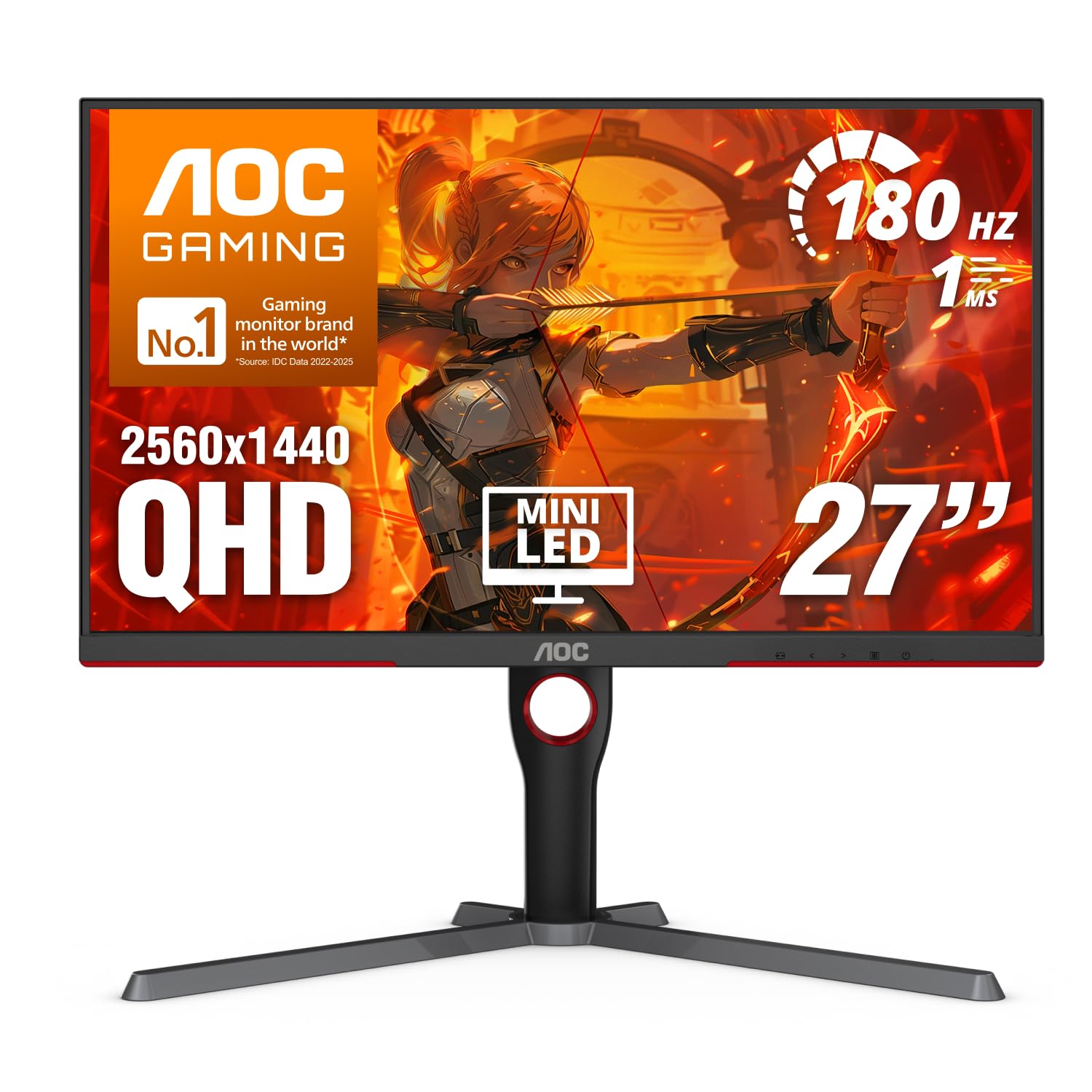
336 dimming zones turn dark scenes into true blacks the Series S can exploit.
This AOC is the HDR showpiece of the group. Its VA panel uses Mini-LED backlighting with 336 individual dimming zones, so blacks go genuinely dark and bright highlights leap off the screen. VESA DisplayHDR 1000 certification and a 134% sRGB gamut give it a contrast range that a standard edge-lit screen simply cannot reproduce. The QHD (2560 x 1440) resolution keeps detail sharp, and the 180Hz overclocked refresh via DisplayPort plus a 1ms GTG response keep fast motion clean.
Image quality is the headline — superior contrast depth with true blacks and whites is what people notice first, and the brightness usefully lifts murky dark scenes. The monitor even works across consoles, listing Xbox, PS5, and Switch as compatible. Adaptive-Sync keeps competitive play tear-free.
Where it asks patience is adjustability, which gets mixed reactions, and a few buyers mention ghosting and pixel-quality quirks. For a Mini-LED HDR screen at this level, though, the trade is fair — deep blacks come with a little tuning.
The HDR standout: 336 dimming zones and DisplayHDR 1000 deliver contrast an edge-lit IPS cannot touch.
Tune it in: adjustability draws mixed feedback and some note ghosting, so spend a little time dialing in settings.
Suits: the player chasing dramatic HDR contrast and true blacks in single-player worlds.
Not for: someone who wants a fuss-free stand with generous adjustment from the start.
7. AOC 27″ Curved Gaming Monitor FHD 280Hz C27G4ZH
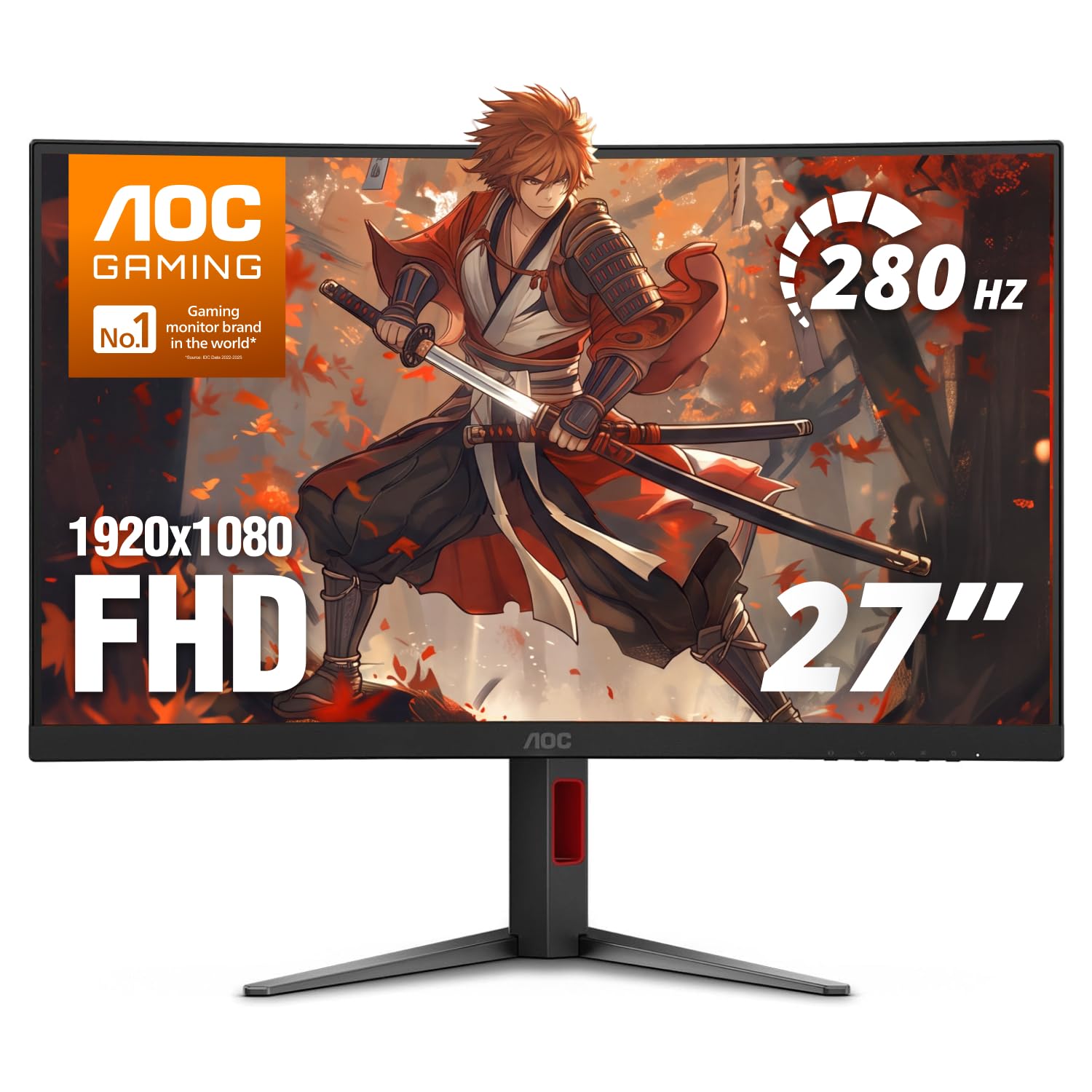
A 280Hz curved panel for players who want the screen to wrap around them.
No other screen here spins as fast as this AOC’s 280Hz refresh, and with a 0.3ms MPRT response (motion-picture response time) it renders fast pans with almost no smear. The 1500R curvature bows the 27-inch panel gently toward you, which pulls you into the action in a way a flat screen does not. HDR readiness and a 3000:1 contrast ratio add depth, while Flicker-Free tech and Adaptive Sync keep long sessions comfortable and tear-free.
The stand tilts, swivels, and adjusts for height, with VESA mounting if you hang it. Build quality is the aspect that earns the most confidence — this feels solid, and it looks sharp when games run. Expect smooth, clear images across FHD (1920 x 1080) play.
The honest wrinkle is long-term reliability, which draws mixed feedback, with a few units reportedly failing. Treat that as a reason to buy with a warranty in mind rather than a reason to walk away — the vast majority of owners are happy with how it performs. And if 1080p detail is enough for you, the speed here is the main draw.
Speed And Curve
- 280Hz refresh with a 0.3ms MPRT response
- 1500R curve for wrap-around immersion
- 3000:1 contrast ratio
- Flicker-Free and Adaptive Sync
Keep In Mind
- Long-term reliability gets mixed feedback
- 1080p resolution, not the sharper QHD some rivals offer
Built for: competitive players who prize raw refresh speed and a curved, rich view.
Consider instead: a QHD pick if pixel sharpness matters more than the highest possible frame rate.
8. Acer Nitro 27in QHD 2560×1440 IPS 240Hz XV272U W2bmiiprx

QHD sharpness and up to 240Hz on DisplayPort for a very approachable price.
Few screens pack this much speed and resolution for the money. On DisplayPort this Acer hits a 240Hz refresh, and it drops to 144Hz over HDMI — so if you connect the Series S by HDMI, plan around that 144Hz ceiling. The QHD (2560 x 1440) IPS panel keeps colors steady off-angle, and the 1ms gray-to-gray response can dip to 0.5ms, giving crisp motion. Two 2W speakers cover basic audio.
The ergonomic stand tilts from -5° to 15°, swivels a full 360°, pivots plus or minus 90°, and adjusts height over 4.7 inches, so you can set it up just how you like. Picture quality is exactly what impresses buyers — 240Hz at 2K resolution is the combo people point to — and the 400 brightness figure gives it pop. Ports include one DisplayPort 1.4 and two HDMI 2.0, with both a DP and an HDMI cable in the box.
The caveat is light bleed, which several owners notice; mild bleed in a dark room is the trade for this panel. Weigh that against the excellent speed-to-price ratio and it still makes a compelling case.
Speed per dollar: 240Hz on DisplayPort with QHD detail is a lot of monitor for the outlay.
HDMI reality: the Series S-typical HDMI link tops out at 144Hz, so only the DisplayPort route gets the full speed.
Ideal for: someone who wants QHD and very high refresh without a premium price tag.
Be aware: over HDMI the refresh hangs at 144Hz, and some panels show mild light bleed.
9. ASUS TUF Gaming 24” (23.8” viewable) 1080P Monitor VG249QE5A
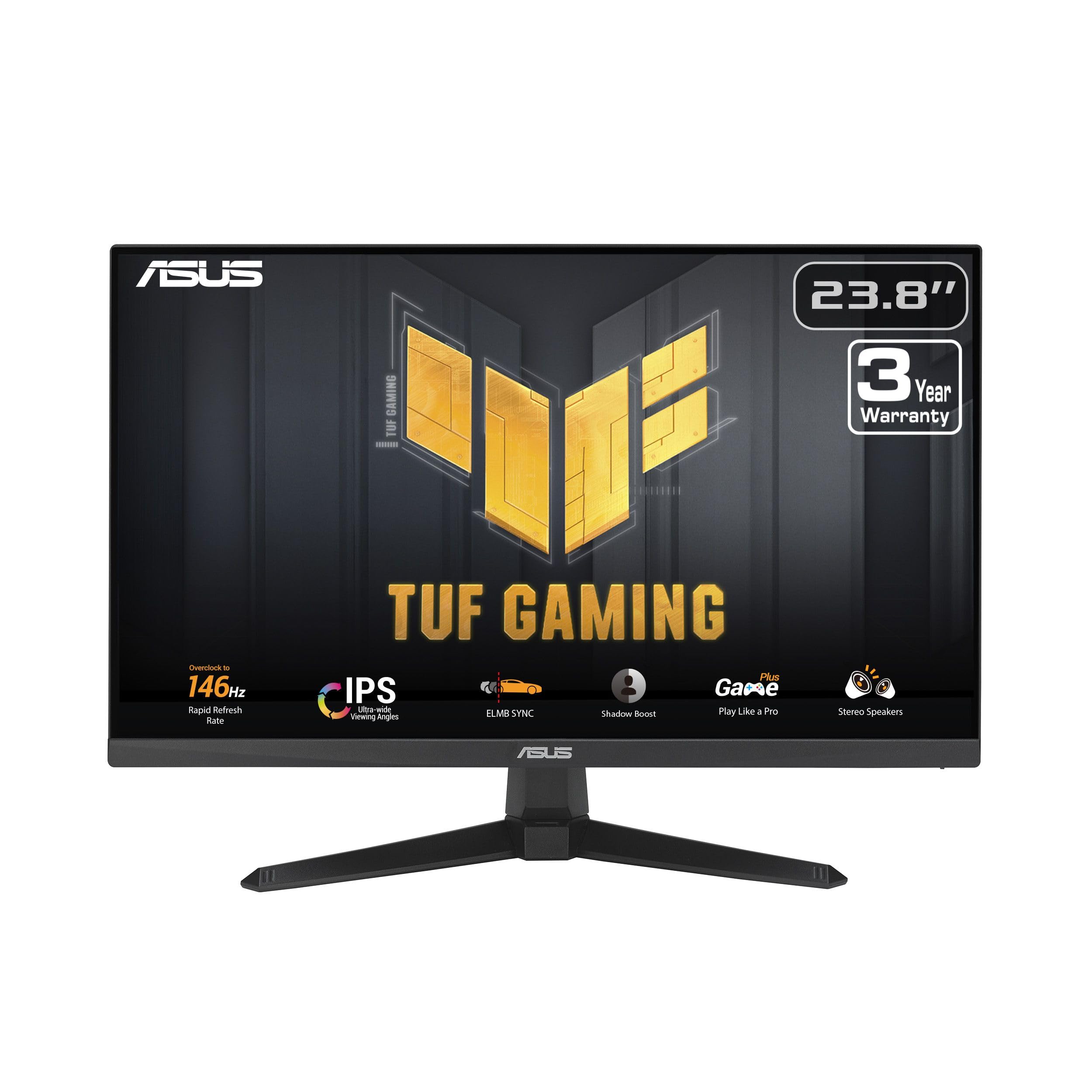
A compact 23.8-inch screen that fits tight desks without giving up speed.
For a smaller setup, this ASUS gives you a 23.8-inch Full HD (1920 x 1080) IPS panel at a 146Hz overclocked refresh — comfortably above the console’s needs while taking up less desk space than a 27-inch. ELMB Sync lets motion-blur reduction and variable refresh run at the same time, wiping out ghosting and tearing even at high frame rates. A 1ms response keeps the action tight, and Shadow Boost brightens dark corners without blowing out the bright parts.
A 125% color gamut keeps colors vivid, and built-in speakers mean you have audio from day one. DisplayWidget Center lets you adjust settings with a mouse rather than reaching for buttons. Graphically the screen reads sharp, and it covers gaming, streaming, and laptop duty well. The box includes an HDMI cable, power cord, quick start guide, and warranty card.
Two honest notes: adjustability is limited, so mounting or shimming may be needed to hit the right height, and performance gets mixed reactions, with some citing responsiveness quirks. For a compact, budget-friendly, high-refresh screen, it earns its place. Do note it is 1080p, so it trails the QHD picks for detail.
Compact And Quick
- 146Hz overclocked refresh on a 23.8-inch IPS panel
- ELMB Sync removes ghosting and tearing together
- Built-in speakers and DisplayWidget Center
Limits To Know
- Limited stand adjustability
- Performance draws mixed reactions
A fit for: tight desks and smaller spaces where a 27-inch panel would overwhelm.
Look elsewhere if: you need generous height and tilt adjustment built into the stand.
10. Amazon Basics 27 inch Gaming Monitor FHD 165Hz
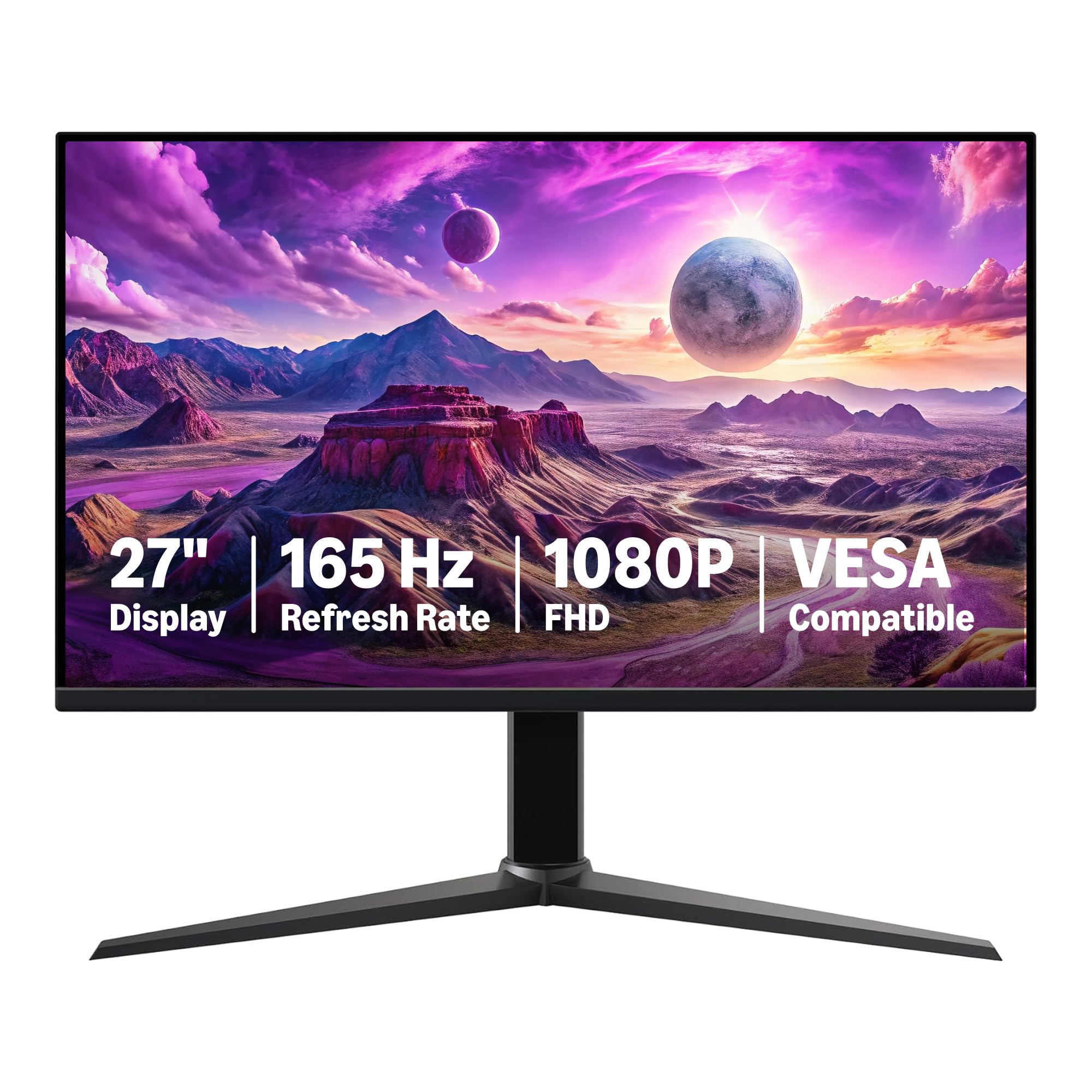
A big-screen 27-inch with a 165Hz refresh that undercuts the name brands.
This is the straightforward budget route to a large, fast screen. The 27-inch IPS panel runs at 165Hz with a 1ms response, giving the Series S plenty of smoothness while you get more screen real estate than a compact 24-inch. Adaptive Sync keeps the picture tear-free, and VESA compatibility lets you mount it on an arm or wall bracket. Just remember to remove the protective film from the panel before use.
Getting the full 165Hz means using a DisplayPort 1.4 or HDMI 2.0 cable and setting the maximum refresh in your device’s display settings — worth doing before you judge it. The base quality is what buyers value most; the stand feels planted, and the 165Hz refresh and clear picture win steady approval. Built-in speakers cover everyday audio, and setup is quick.
The trade is build, which some find less sturdy than pricier screens, so it is best treated as a great-value desk companion rather than a rugged workhorse. At 1920 x 1080 it also trails QHD detail. Still, for the size and refresh, it’s a sensible starting point.
Big screen, small outlay: 27 inches at 165Hz and 1ms is a lot of screen to drive the Series S for an entry-level spend.
Set it up right: you only reach 165Hz with a DisplayPort 1.4 or HDMI 2.0 cable and the correct display setting.
The sensible start: a first proper gaming monitor where size and refresh matter more than premium materials.
Step up if: you demand sturdier construction or sharper QHD resolution.
11. Samsung 27″ S3 (S32GF) Series FHD High Resolution Monitor

A slim, budget-friendly 120Hz screen that doubles as a tidy work display.
If your Series S shares a desk with schoolwork or spreadsheets, this Samsung makes a neat all-rounder. Its 120Hz refresh — half the 180Hz of the Odyssey G5 above, but still above a plain office panel — cuts lag and motion blur in fast moments. The IPS panel keeps colors bright across the whole screen, even when you shift your viewing angle, and the super-slim design with ultra-thin bezels looks clean anywhere.
Game Picture Mode auto-adjusts a scene to fill the screen, and color and contrast can be tweaked per genre for clearer visibility. Reduced blue light and flicker-free tech keep long sessions easier on the eyes. Picture quality is what earns the most praise here, with crisp images and easy setup across the board.
The catch is brightness adjustment, which draws mixed reactions — some find they cannot tweak it to taste, and the panel is rated at 250 cd/㎡, the dimmest on this list. That makes it a better fit for a controlled-light room than a sun-drenched one. For everyday work plus casual console play, it’s a tidy, value-minded pick at 1920 x 1080.
Slim All-Rounder
- 120Hz refresh for smoother games and video
- IPS colors hold up across viewing angles
- Super-slim design with ultra-thin bezels
- Flicker-free and reduced blue light
Where It Cedes
- 250 cd/㎡ brightness is the lowest here
- Brightness adjustment draws mixed feedback
Fits: a shared desk where the screen must handle games, videos, and everyday tasks in a controlled-light room.
Not the pick if: you game in a bright space or want the highest refresh rate available.
Know the Specs
Refresh Rate (Hz)
Refresh rate is how many times per second the screen redraws its image, written in hertz (Hz). A 120Hz panel updates 120 times a second, so camera pans and fast turns look fluid rather than stepped. Higher figures like 180Hz or 240Hz give the Series S more headroom, but only if you connect with a cable and port that support it. Refresh rate is the one spec that most directly controls how smooth console play feels.
Response Time (ms)
Response time, in milliseconds (ms), is how quickly a pixel changes from one color to the next. A lower number like 1ms means less ghosting — a faint trailing smear behind fast-moving objects. Measured as GTG (gray-to-gray) or MPRT (motion-picture response time), these figures help you compare panels for fast action. It works alongside refresh rate: high refresh keeps motion smooth, low response keeps it sharp.
Panel Type
VA panels tend to offer higher contrast ratios for deeper blacks. IPS panels usually hold colors better off-angle and suit shared or angled viewing. Mini-LED backlighting adds many small dimming zones for darker blacks and brighter highlights, at a higher cost. None is universally better — pick the trait you value most, whether that is contrast, color, or HDR drama.
Adaptive Sync & Resolution
Adaptive Sync (FreeSync or G-Sync) matches the panel’s refresh to the console’s frame rate, cutting tearing and stutter. Resolution in pixels — 1920 x 1080 (1080p) versus 2560 x 1440 (1440p) — sets how much detail you see. Higher resolution looks sharper but is harder to drive fast, so it is a balance between crispness and frame rate.
Common Questions
Does the Xbox Series S actually benefit from a 120Hz or higher monitor?
Should I pick 1080p or 1440p for a Series S?
Do I need a special cable to get the full refresh rate?
Is a curved monitor better for console gaming?
Will a G-SYNC or FreeSync monitor work with the Xbox Series S?
How much does brightness matter on a gaming monitor?
Is Mini-LED worth it over a standard IPS panel?
What screen size is best for a desk with the Series S?
Do I need an adjustable stand, or can I wall-mount the monitor?
Will a 1440p monitor look sharper than 1080p on a 27-inch screen?
Can I use these monitors for work as well as console gaming?
The Bottom Line
For most people, the best Xbox Series S monitor is the Samsung 27″ Odyssey G5. It covers fast console action and sharp detail in one screen with a 180Hz refresh, a 2560 x 1440 QHD panel, and a 3000:1 contrast ratio. It also holds 4.5+ stars across 800+ ratings, the highest score here. Want the highest refresh for the money? The ASUS TUF VG27AQL5A pushes 210Hz on QHD. On a compact desk, the ASUS TUF VG249QE5A fits where a 27-inch will not. For deep, dramatic blacks and HDR contrast, reach for the AOC Q27G3XMN with its 336 dimming zones.
Sort out your room’s light and your desk space first, then let refresh rate and panel type decide the rest. The Samsung leads because it balances all three, but any QHD pick here will make the Series S look and feel far better than a plain office screen.
How we choose
We do not accept paid placement. Every pick is matched to a real buyer and a real use-case; we do not hands-on test units.
Sources
Specifications: manufacturer listings and product documentation. Review insights: verified customer reviews, as of November 2026. Pricing: not shown on this page (it changes often); check the current price via the retailer link.
As an Amazon Associate, Tactical Gear Guy earns from qualifying purchases. This does not affect which products we feature.