Specs are compiled from manufacturer listings and verified buyer reviews and can change over time — please confirm the key details on the product page before buying.
If your current Xbox pad has started steering your character on its own, you already know the problem this whole list exists to solve. A drifting thumbstick steers your character off a ledge mid-firefight. TMR controllers (TMR stands for tunnel magnetoresistance — a magnetic stick sensor that reads position without the physical wear that causes drift) are the fix, and the picks below are the ones actually worth your money on Xbox Series X|S and Xbox One. The short answer: the GameSir G7 Pro is the one most people should buy, because it pairs those magnetic sticks with a wireless dongle, Hall Effect triggers and a charging dock that tops the battery up on contact.
This guide is built by comparing the manufacturers’ published specifications and the patterns across verified customer reviews, so you get each pick’s real strengths and trade-offs instead of marketing spin.
Every controller here has TMR sticks confirmed for Xbox, so the real decision is about trigger feel, button layout and how you like to connect. Read on for the picks that fit your console, your connection and your genre.
Top Picks
How To Choose The Best Xbox TMR Controller
Start with the stick, because that is the whole point of this category. TMR sticks use a magnetic sensor to read stick position, so there is no wiper rubbing on a resistive track and nothing to wear into a drift zone. Once you have confirmed the pad really uses TMR, the rest is fit: dongle versus cable, analog versus clicky triggers, and how many paddles your fingers can reach without leaving the sticks.
Confirm the Xbox link before anything else
A TMR pad that talks to PC but stumbles on console is useless to you if your Series X is the main screen. Xbox-certified wireless connects through a dedicated dongle instead of Bluetooth, which is why several picks here ship a receiver that plugs straight into the console. Wired USB-C is the lowest-risk route, and some pads only use the cable for console play. Check which route the box actually supports for your machine.
Trigger feel changes how shooters and racers play
Hall Effect analog triggers read a full sweep, so a racing game knows exactly how hard you are braking. Micro-switch triggers instead click at a hair-trigger stop, so a shooter registers the shot the instant your finger moves. Some controllers give you both at the flip of a switch. If you play shooters almost exclusively, buy the clicky trigger outright instead of paying extra for an analog switch you never flip.
Polling rate is a PC number, mostly
A 1000Hz polling rate means the controller reports its position to the game 1000 times a second. That matters on a competitive PC shooter. On console it is largely dictated by the platform, so treat the number as a bonus rather than the headline. Note that on several pads here the 1000Hz figure is explicitly a PC-mode figure, not a console one.
Battery, dock and cables
Wired pads never ask you to think about charge. Wireless pads do, and the difference between a good and annoying one is usually the dock. A drop-in charging station that starts charging the moment you set the pad down means you never hunt for a cable mid-session. A Play-and-Charge cable works fine too, so long as you do not mind plugging in.
Side-by-Side Comparison
| Model | Best For | Stick Type | Connection | Extra Buttons | Amazon |
|---|---|---|---|---|---|
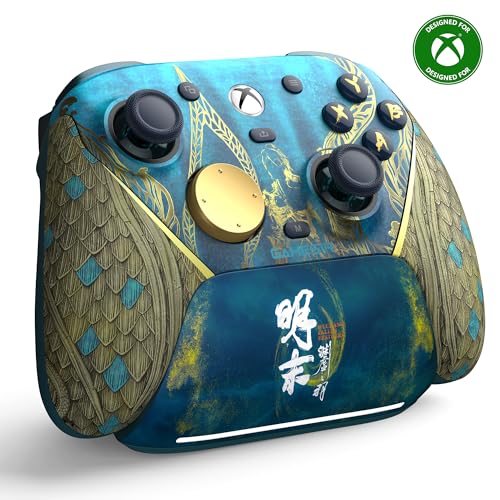
| GameSir G7 Pro Wuchang Edition★ Best Overall | All-round wireless pick | Mag-Res TMR | 2.4G dongle / Bluetooth 5.3 / USB-C | 12 total | Amazon |
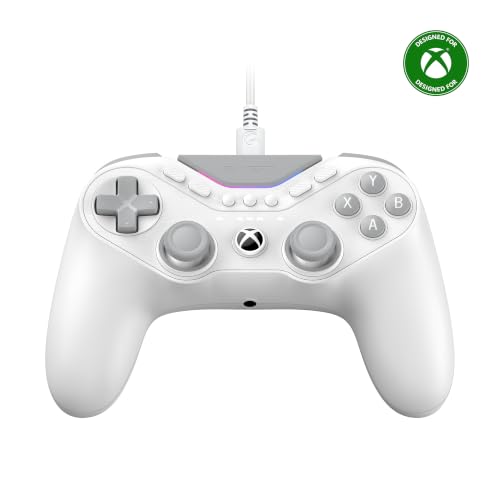
| GameSir Tarantula Pro WiredCompetitive Pick | Competitive PC play | Mag-Res TMR | USB-C wired | 14 total, 9 remappable | Amazon |
| Turtle Beach Rematch | Minecraft fans | TMR thumbsticks | USB transmitter / BLE / USB-C | 14 total, 2 back | Amazon |
| 8BitDo Ultimate 3 | Tuning stick tension | Force Ring TMR | 2.4G via dock | — | Amazon |
| SCUF Valor Wired | Paddle-heavy play | Endurance TMR | USB-C wired | 24 total, 4 paddles | Amazon |
| ASUS ROG Raikiri II | PC and Xbox crossover | Anti-Drift TMR | 2.4GHz RF / Bluetooth / USB-C | 10 total, 4 rear | Amazon |
| SCUF Valor Pro Wireless | Deep customization | Endurance TMR | Wireless / Bluetooth / USB-C | 24 total, 4 paddles | Amazon |
Detailed Reviews
1. GameSir G7 Pro Wireless Gaming Controller
Our pick — 4.0+★ from 750+ verified ratings; the strongest balance of quality and price.
The full kit — magnetic sticks, a charging dock and no cable required.
GameSir calls this the first wireless Xbox controller they have built, and the G7 Pro makes that step count. The 2.4G wireless link is the company’s own low-lag radio, not Bluetooth, so your console sees a steady connection instead of the occasional hitch. One press wakes the console up, so you are not hunting for a sync button with the pad in your lap. Bluetooth 5.3 handles Android, and a USB-C cable covers anything the radio cannot reach.
The Mag-Res TMR sticks are the reason this pick sits first. GameSir describes them as blending the precision and low power draw of a standard stick with the durability of a Hall Effect design, and the payoff is a more stable polling rate with anti-drift behaviour baked in. The triggers are Hall Effect too, so they read a full analog sweep with no wearing contact — handy for braking in racing games. Hold the M plus LT or RT and you flip into Hair Trigger Mode, which turns those same triggers into a short, fast pull for shooters. That one-pad switch covers racing and shooters without a second controller.
The smart charging station is the quiet win. Drop the controller on it and it starts charging right away, so the pad is topped up every time you set it down. A 1200mAh battery keeps it going between those top-ups, and buyers report it can play for over 10 hours without recharging. There is even a storage slot in the station for the wireless receiver, which solves the lost-dongle problem for good.
Where it pulls ahead
- TMR sticks plus Hall Effect triggers together, so drift and trigger wear are covered in one pad.
- The dock charges on contact and stores the receiver, so nothing goes missing.
- 2.4G wireless for Xbox plus Bluetooth 5.3 for Android, switched with a single mode button.
- Hair Trigger Mode flips the triggers from analog sweep to a short pull without a second controller.
The honest catches
- It is the middle-tier choice here, so the paddle count sits below the SCUF pads rather than matching them.
- Nine remappable buttons are not on the menu — the deeper macro setups live on the wired Tarantula Pro.
Go for this if: you want one wireless pad that covers drift, trigger feel and charging in a single tidy setup for your Xbox.
Then think twice if: you live inside a macro-heavy shooter and want every finger on a swappable input — the wired GameSir below gives you nine remappable buttons instead.
2. GameSir Tarantula Pro Wired Controller for Xbox/PC/Steam
Nine remappable buttons and a 1000Hz PC link, no battery to worry about.
For a desk-bound competitive player, wired is not a downgrade — it is one less variable to think about. The Tarantula Pro runs on a USB-C cable across Xbox Series X|S, Xbox One, Windows 10/11 and Steam, and on PC it pushes a 1000Hz polling rate so your stick and button presses land faster. That is the figure to care about if you play shooters on a monitor and want your input to arrive the instant you commit to it.
The same Mag-Res TMR sticks sit under your thumbs, so the anti-drift and durability story carries over from the G7 Pro. Where this pad earns its place is the input count: nine remappable buttons let you rebuild the layout around your own hands instead of retraining them around the stock one. The dual-mode trigger stops are the sharper trick. Flip between Hall Effect analog triggers for a linear sweep and clicky micro-switch triggers for an instant response, which suits racing and shooters without a second controller.
Feedback on this one is genuinely split, and it is worth knowing before you buy. The build and the ergonomic shape win the most praise, and the mouse-click buttons have their fans. The counterpoint is spacing — the buttons sit close together, and a few buyers find that cramped over a long session. Add the fact that this pad carries a bigger footprint than the G7 Pro, and it is a pad for people who are happy to adjust. Expect to spend a week letting your hands learn the layout instead of assuming it feels native on day one.
Why the layout wins: Nine remappable buttons plus a four-motor rumble setup (one in each grip and each trigger) give you real control over how the pad behaves in your hands.
What to know: The button spacing is the recurring note — if you have larger hands or like wide, spread-out inputs, this one asks for an adjustment period.
Reach for this if: you sit at a PC or Xbox with a cable and want every input under your own fingers.
Look elsewhere if: you play from the couch and a trailing cable would drive you mad — the wireless G7 Pro above is the fit.
3. Turtle Beach Rematch Wireless RGB Gaming Controller

The one that lights up your shelf and still brings TMR sticks to the party.
The Rematch is the only official Minecraft-built pad on this list, and it leans into that hard. Customizable RGB lighting runs through the iconic blocky design, so the controller is a display piece as much as a tool. It is officially licensed by both XBOX and Mojang, which means the console recognises it as a proper Xbox controller rather than a workaround.
Under the paint job the hardware is no joke. Ultra-sensitive TMR thumbsticks give you the same drift-resistant magnetic sensing as the rest of this list, and the Hall Effect hair triggers carry three separate trigger stops — three levels of pull length, so you can set how far your finger travels before the shot fires. Two mappable quick-action buttons sit on the back, and a 3.5mm jack with patented on-board audio controls lets you adjust volume without leaving the game. Weighing 8.48 ounces, it is the lightest pick here, against 9.6 ounces for the GameSir G7 Pro.
Connection is a USB transmitter for Xbox and Windows 10/11 PCs, with Bluetooth LE covering compatible Android and streaming devices. A built-in rechargeable battery keeps the lights on, and the 10ft USB-C play-and-charge cable means you can keep playing while it tops up. It carries 14 buttons. In a Minecraft household, the licensed blocky shell is the one that gets grabbed first.
The real draw: TMR sticks and three-way trigger stops in the lightest shell on the list, wrapped in an officially licensed Minecraft design.
Set expectations: This is a stylistic centrepiece first — if you want pageantry-free competitive hardware, a plainer pad will serve you better.
Best for: the Minecraft household that wants a real TMR controller with the lights on.
Skip the fuss if: you want a sober, understated pad — the RGB is the whole personality here.
4. 8BitDo Ultimate 3 Wireless Controller (Mossy Lagoon)

A stick you can retune by hand — light for speed, tight for control.
Most controllers lock in their stick tension at the factory. The Ultimate 3 hands you the Force Ring instead — a dial you turn to fine-tune joystick resistance. Spin it loose and the stick flicks faster for quick turns; wind it tight and the same stick gives you finer, more controlled aim. Underneath sits TMR joystick technology, so you get that higher sensitivity and long-term durability with the tension dial as a bonus layer on top. The refined grip mold and wider grip angle are built for long sessions where your hands do not want to cramp.
Connecting is neatly handled by the integrated wireless charging dock. The 2.4G adapter lives inside it, the dock plugs into your Xbox or PC over USB, and keeping the controller there both charges it and extends the wireless signal to cut lag. Lift the pad and it auto-reconnects, so you are back in the game without a pairing dance. The dock uses magnetic alignment with zero contact points, which keeps the connection more reliable than a pin-based cradle. On the trigger front, Hall-effect impulse triggers with two trigger-stop levels let you adapt to shooters, racers and action titles without menu diving, and on PC it supports 1000Hz.
This is the pick for the player who wants to feel stick resistance change under the thumb. The review pages paint a picture of solid build and a comfortable, ergonomic shape where the buttons stay out of your way, and the adjustability has genuine fans. Battery life and long-term reliability get muddier feedback, so treat the dock habit as part of the deal — keep it parked there and you never run dry mid-session. It is also the only pad here that lets you change stick feel without buying a second controller.
What makes it different
- Force Ring lets you dial stick resistance from light and fast to tight and precise.
- The dock charges on contact and relays the 2.4G signal for a steadier wireless link.
- Two trigger-stop levels switch the Hall-effect triggers to suit the game.
Where it asks for patience
- Battery life and long-haul reliability are the softer spots in owner feedback, so keep it docked.
- The tuning dial rewards a little experimentation — expect a session or two to find your setting.
Pick this for: someone who wants to feel the stick change under their thumb and dial in their own resistance.
Leave it for: anyone who never touches settings and just wants the pad to work — the Force Ring would go unused.
5. SCUF VALOR Wired TMR Xbox Controller (Light Gray)

Four rear paddles and instant triggers, built for hands that never leave the sticks.
The Valor is a wired pc-and-console pad aimed squarely at players who want their thumbs to stay put. Four embedded rear paddles can be configured up to 16 functions, so jump, crouch and reload move down to your fingers while your thumbs never leave the TMR sticks. Instant Triggers cut the trigger pull short and shave milliseconds off your reaction, which is the difference between getting the shot off and eating it. The Endurance TMR thumbsticks bring the drift resistance, keeping the sensor durable against the wear and jitter that kills a normal stick over time.
SCUF has been at this for 13 years, and the comfort detail shows in the wraparound bumpers — more surface area to grab, so movement registers faster. An audio control system lets you change volume on the fly without opening a menu, and a switch on the body flips between up to three saved remapping profiles. It connects over USB-C to Xbox Series X|S, Xbox One and PC. The faceplate and thumbsticks swap out, so the Light Gray shell is a starting point rather than a fixed look.
Here is the honest side of the ledger. Owner feedback on quality is genuinely divided, and reliability is the recurring worry — one reported case involved the pad refusing to switch back on. This is a specialised tool, and it rewards people who lean on the paddles every round. If your play is casual and the back buttons would sit idle, you are paying for capability you will not use. Buy it for the paddle layout, not as a simple console replacement.
Where it earns its keep: Four paddles mapped to 16 functions and instant triggers — a real edge for players who want every input under a finger.
The honest counterweight: Reliability is the soft spot in the feedback, so buy this with the paddle use-case in mind rather than as a do-everything pad.
For the paddle player: someone who has built muscle memory around rear buttons and wants TMR sticks underneath.
Not for the casual pad-swapper: if you will not use four paddles, a simpler TMR pad is the smarter spend.
6. ASUS ROG Raikiri II Xbox Wireless Gaming Controller

One pad that hops between your gaming PC and your Xbox without complaint.
The Raikiri II is built for the player who owns both a PC and a console and refuses to buy two pads. Tri-mode connectivity covers low-latency 2.4GHz RF, Bluetooth and wired USB-C, and it is certified for Xbox over USB-C and 2.4GHz RF — so your Series X|S gets a proper connection, not a Bluetooth workaround. ROG SpeedNova wireless tech backs up the 2.4GHz link, and there is a 1000Hz polling rate in both PC wired and 2.4GHz wireless modes for low-latency play on a monitor.
The Anti-Drift TMR joysticks are the headline spec, and ASUS pitches them as more accurate than Hall Effect sticks while drawing less power, with drift resistance as the payoff. Dual-mode triggers let you switch between micro-switch triggers with a short travel and TMR sensor triggers with a full sweep, so you can pick the click or the analog pull to suit the game. The D-Pad, ABXY buttons, rear buttons and bumpers all use micro-switches for instant, tactile actuation, and four programmable rear buttons give your fingers extra work. It lands at 9.6 ounces, the same weight as the GameSir G7 Pro up the list.
ASUS also bundles a real accessory set: a portable protective case that charges the controller while it sits inside, a charging stand and two detachable joystick caps. The build quality is where feedback splits — some find it well-made, others describe it as flimsy, and connection dropouts are the repeated gripe, with owners describing constant connecting and disconnecting. That is the thing to weigh. Buy it for the dual-mode trigger and the PC-to-Xbox flexibility, and keep your return window handy in case your unit is one of the fussy ones.
Why it earns a slot
- Certified Xbox play over 2.4GHz RF and USB-C, plus Bluetooth for other devices.
- Dual-mode triggers flip between a short micro-switch click and a full TMR sweep.
- The case charges the pad while stored, and two detachable stick caps come in the box.
The sticking point
- Connection dropouts show up repeatedly in feedback, so test your wireless link early.
- Build feel is debated — some find it solid, others light and flimsy in the hand.
Buy it when: you want one TMR pad certified for both your PC and your Xbox, and you value trigger choice over paddle count.
Pass if: you need a rock-solid wireless link above all else — the wired GameSir is the safer bet there.
7. SCUF VALOR PRO Wireless Performance Xbox Controller (Smoke)

The Valor formula with the cable cut — paddles, TMR sticks and swappable looks.
The Valor Pro takes the wired Valor’s idea and sets it free. Four rear paddles put jump and reload under your fingers while your thumbs stay on the Endurance TMR thumbsticks, and the instant triggers shave milliseconds off your reaction by cutting the trigger pull short. On PC you can switch on a 1k Hz polling rate for fast input registration. Wireless, Bluetooth and wired all sit in the connection menu, so you pick the route that suits the room you are in.
The customisation is where it stands out. Swappable faceplates and thumbsticks mean the Smoke shell is your first look, not your only one, and a wide range of colours lets you blend the pad into your setup. The audio control system changes volume on the fly, and a switch flips between up to three saved remapping profiles so you can swap layouts mid-session. The performance grip is built for non-slip comfort, with the wraparound bumpers giving more surface area for faster movements. It is the heaviest pad on this list at 0.36 kg.
Be clear-eyed about the trade-off. The ergonomics get warm praise and the feel in the hand is smooth and responsive, but connectivity is the recurring issue — owners describe random disconnections, and a few note trouble pairing to iOS devices. That makes it a pad for someone who enjoys tuning and swapping the look and will put up with occasional wireless fuss. If you want a no-drama link every session, the wired Valor or the GameSir G7 Pro above is the calmer route.
The case for it: Four paddles, TMR sticks and three remap profiles in a shell you can reskin yourself — the most customisable pad here.
The catch to size: Wireless is the weak link, with random disconnections showing up in feedback — a wired alternative is steadier if that matters to you.
Made for: the tinkerer who wants paddles, profiles and a controller that matches the desk it sits on.
Think hard if: a flaky wireless connection would ruin your night — the wired SCUF above is the steadier sibling.
Know the Specs
TMR sticks vs Hall Effect vs standard sticks
Standard potentiometer sticks use a physical wiper on a resistive track, and that track wears down until the pad reads movement you did not make — that is drift. TMR (tunnel magnetoresistance) sticks read position with a magnetic sensor instead, so there is no wiper to wear out. Hall Effect sticks work on a similar magnetic principle, and some makers pitch TMR as more accurate or more power-efficient. For you, the point is the same: less chance of a stick that wanders after months of use.
Polling rate in Hz
Polling rate is how often the controller reports its position to the game each second. A 1000Hz rate means 1000 reports a second, which cuts the gap between your input and the screen. On PC this is a real advantage in a competitive shooter. On console, expect the platform to set the pace, so treat a high number as a PC-mode bonus rather than a guarantee for your Xbox.
Hall Effect vs micro-switch triggers
Hall Effect analog triggers read the full range of your pull, so a racing game can tell a light brake from a hard one. Micro-switch triggers click at a set point, which fires faster but loses the in-between. Pads with dual-mode or trigger stops let you pick — short travel for shooters, full sweep for racers — without swapping controllers.
Rear paddles and remap profiles
Paddles sit on the back of the controller so your thumbs never leave the sticks. The more paddles and remap profiles a pad carries, the more ways you can rebuild the layout around your hands. If you never map jump to a back paddle, four paddles are dead weight, so buy two or none rather than the busiest layout on the shelf.
Common Questions
Will a TMR Xbox controller actually stop stick drift?
Do these controllers work on Xbox Series X and Xbox One?
Is 1000Hz polling worth it on console?
What is the difference between the SCUF Valor wired and the Valor Pro wireless?
Can I adjust how tight the thumbsticks feel?
Do these pads need a dongle to work with Xbox?
Are the triggers on a TMR controller analog or clicky?
How long does the battery last on a wireless TMR controller?
Can I remap the back paddles and buttons?
Do I have to use Bluetooth on Android with these controllers?
The Bottom Line
The strongest all-round pick for most people is the GameSir G7 Pro, because it pairs Mag-Res TMR sticks and Hall Effect triggers with a wireless Xbox link and a dock that charges the moment you set the pad down — the drift fix plus everyday convenience in one box. If you play at a desk and want every input remappable, the GameSir Tarantula Pro gives you nine remappable buttons and a cable that never runs out. And for the player who wants to feel the stick change under their thumb, the 8BitDo Ultimate 3 with its Force Ring is the one to reach for, so long as you keep it parked on its dock.
How we choose
We do not accept paid placement. Every pick is matched to a real buyer and a real use-case; we do not hands-on test units.
Sources
Specifications: manufacturer listings and product documentation. Review insights: verified customer reviews, as of July 2026. Pricing: not shown on this page (it changes often); check the current price via the retailer link.
As an Amazon Associate, Tactical Gear Guy earns from qualifying purchases. This does not affect which products we feature.