Specs are compiled from manufacturer listings and verified buyer reviews and can change over time — please confirm the key details on the product page before buying.
The hardest part of buying wool hunting clothes is that wool itself is not one thing. Merino fiber measured in microns behaves nothing like the coarse wool your grandfather wore, and a base layer built for a November sit in a treestand is a different garment from the one you want for a September stalk in the heat. Match the weight and fiber to your hunt and you stay warm on stand. Get it wrong and you either soak your base on the walk in or chill once you stop moving.
This guide is built by comparing the manufacturers’ published specifications and the patterns across verified customer reviews, so you get each pick’s real strengths and trade-offs instead of marketing spin.
Everything below is wool or a wool blend, sorted by the job it actually does in the field. From 400g heavyweight sets to featherweight camo crews, here is the honest shortlist of wool hunting clothes.
Top Picks

How To Choose The Best Wool Hunting Clothes
Hunting puts wool through a cycle no other sport does. You walk in carrying weight and you sweat. Then you sit motionless for hours while the temperature drops. The garment has to dump heat on the move and hold it when you stop. Every spec below feeds into that balance.
Fiber diameter comes before everything
Merino fiber is measured in microns — a micron being one thousandth of a millimeter, so a smaller number means a finer, softer fiber. The heavyweight MERIWOOL shirt uses superfine 18.5-micron material, which is fine enough to wear directly against skin without the prickle people associate with wool. Coarse wool worn as a base layer will itch the moment you start to sweat, and no amount of washing fixes that.
Fabric weight sets the temperature it works in
Weight is listed in g/m² (grams per square meter) or simply as lightweight, midweight, and heavyweight. A lightweight layer handles mild mornings and hard hiking. A 400g heavyweight is built for genuine cold and low activity, which describes a treestand. Owning a mix of both beats owning two of the same — you swap the base layer and keep the rest of your system.
Base, mid, and outer are not interchangeable
A base layer sits against skin and moves moisture. A mid layer adds warmth and traps air. Wind and rain protection belongs on the outside, and wool alone does not stop wind. Choose your wool pieces for the base and mid slots, then let a shell do the rest. Pieces like the Minus33 vest with yoked shoulder seams are cut for pack straps and sit in that mid slot.
Side-by-Side Comparison
| Model | Best For | Garment Type | Wool Content | Fabric Weight | Amazon |
|---|---|---|---|---|---|
| Minus33 Merino Wool Bottoms★ Best Overall | Cold-weather leg layer for stand hunting | Base layer pants | 100% Merino Wool | Lightweight | Amazon |
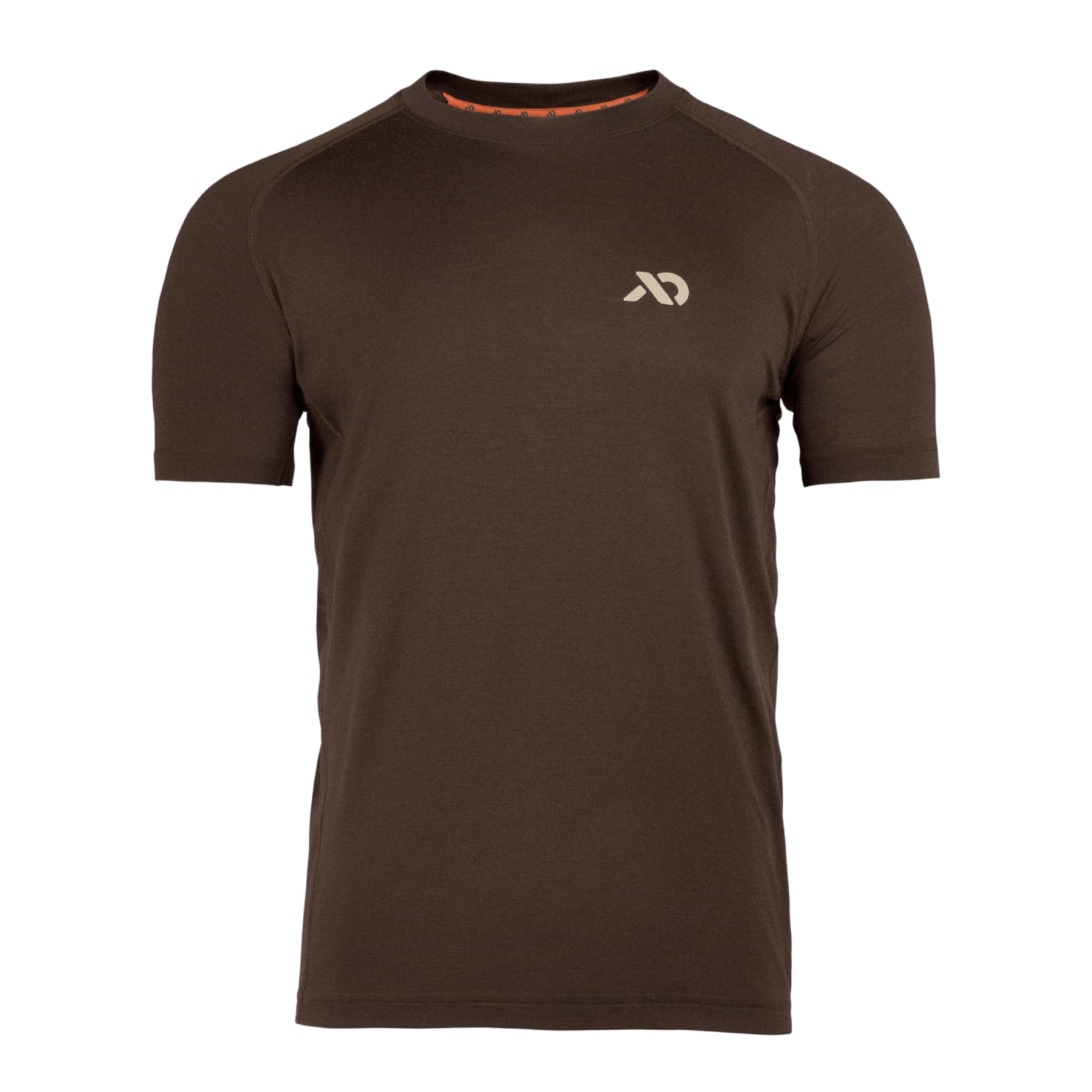
| First Lite Wick Short Sleeve CrewEarly Season Pick | Early-season and warm-weather stalks | Short sleeve base layer | Merino wool | Lightweight | Amazon |
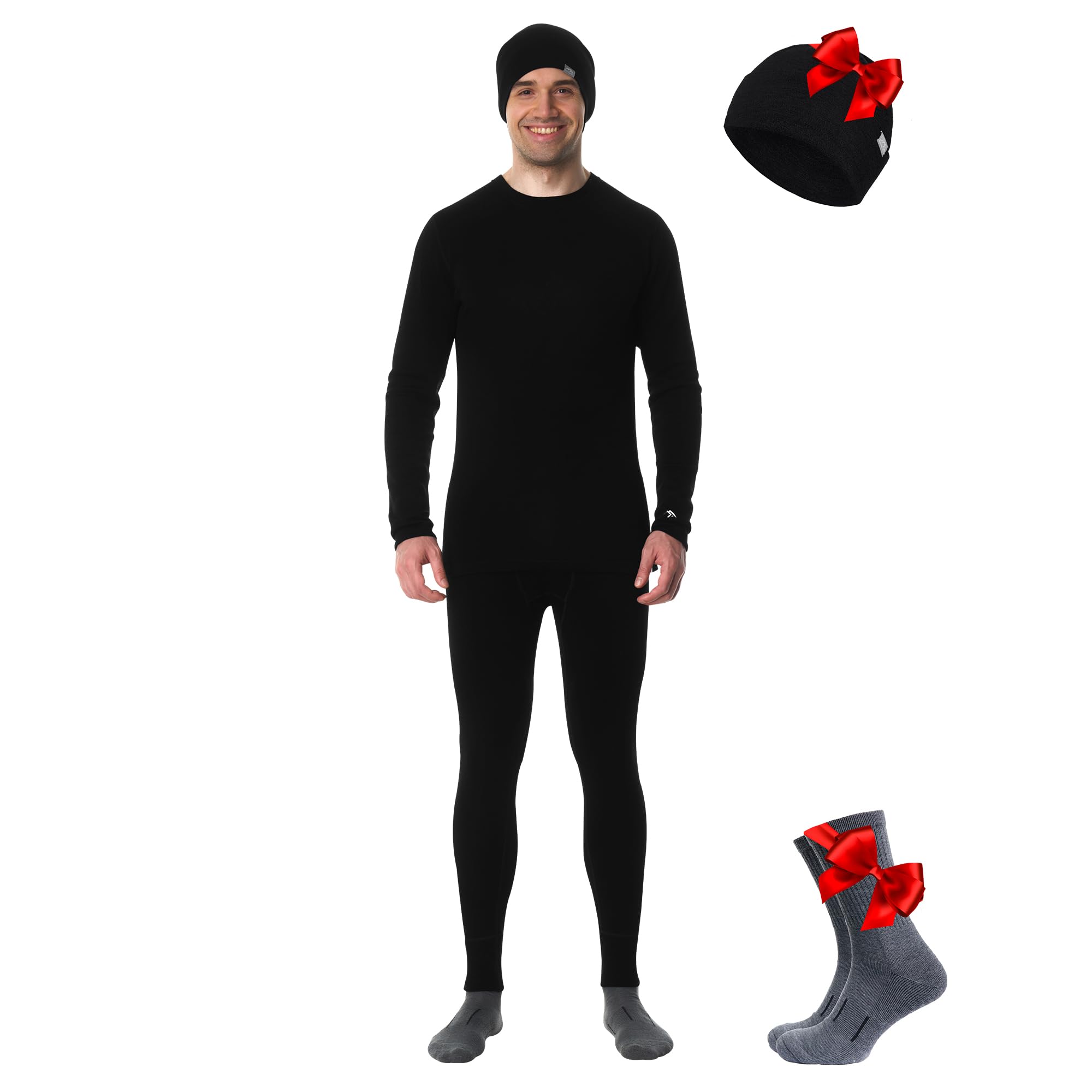
| Merino.tech Base Layer Set (Top, Bottom, Beanie)Best Set Value | One-box starter set across seasons | Top, bottom, and beanie | 100% Merino Wool | Midweight | Amazon |
| MERIWOOL Heavyweight 400g Thermal Shirt | Deep-cold sits when you barely move | Long sleeve base layer | 100% Merino Wool | 400g heavyweight | Amazon |
| MERIWOOL Heavyweight 400g Thermal Pants | Matching heavyweight leg coverage | Base layer pants | 100% Merino Wool | 400g heavyweight | Amazon |
| Merino.tech Heavyweight Base Layer Set | Full heavyweight top-and-bottom setup | Long underwear top and bottom | 100% Merino Wool | Heavyweight | Amazon |
| First Lite Kiln Hoody | Layering under a beanie and shell | Hooded midweight top | Merino wool | Midweight | Amazon |
| Minus33 Expedition Heavyweight Vest | Core warmth without a full jacket | Mid/outer vest | 100% Merino Wool | 380 g/m² Ponte De Roma | Amazon |
Detailed Reviews
1. Minus33 Merino Wool Bottoms
Our pick — 4.5+★ from 950+ verified ratings; the strongest balance of quality and price.
The quiet hero of a cold sit is the layer nobody sees, and these bottoms carry the biggest review base in this lineup.
Legs go cold first when you stop moving, and that is exactly where this pair earns its keep. They are built from 100% Merino Wool at a lightweight weight, which is the version you can wear under regular trousers without feeling like you are in ski gear. On stand, that thin extra layer is the difference between sitting still for a third hour and packing up early.
What wins people over is the build — quality is the single biggest thing the reviews keep returning to, with reports of bags that hold up season after season. Warmth runs a close second, and the consensus is that these get you genuinely warm without the bulk of a synthetic thermal. Anyone who has pulled off clammy polyester long johns at the truck knows why that matters.
Merino handles sweat differently from cotton and polyester. Minus33 states the merino absorbs up to 30% of its weight in moisture without feeling clammy and keeps insulating when damp. For a hunter walking uphill to a blind and then going still, that is the whole point. Itch-free is the other half of the story — merino’s fine fibers bend instead of pricking, so they work directly against skin.
What Stands Out On Stand
- 100% Merino Wool in a lightweight build you can wear under regular hunting trousers
- Warmth without bulk, which keeps you mobile on the walk in
- Itch-free against skin, so it works as a true first layer
- Flat lock seams and a tagless build cut down on pressure points under a pack waist belt
- UPF 25 on lightweight layers per the maker, useful on sunny early-season days
The Honest Trade-Offs
- Value is the one mixed note in the reviews — plenty find them worth it, and a fair number find them steep for a single pair of bottoms
- Lightweight means mild-to-cool days; deep cold calls for a heavier layer
The crowd numbers back the pick: these sit at 4.5+ stars across hundreds of owners, the strongest combination of score and volume in this set. If your budget only covers one upgrade this season, start with your legs.
Reach for this if: you sit stands in cool-to-cold weather and want a leg layer thin enough to wear under everyday hunting pants.
Step up instead if: your hunts happen well below freezing — the 400g heavyweight pants further down are the tool for that job.
2. First Lite Wick Short Sleeve Crew
Short sleeves and camo merino, built for the sweaty September walk that ruins most early-season layers.
September archery seasons punish heavy clothing. You hike in before first light, you are soaked before you reach the tree, and then you sit in wet cotton for three hours. A light merino crew solves that: it moves moisture off skin, and unlike cotton it keeps some warmth even when damp. The short sleeve cut covers your vest and pack straps, which is where heat actually builds.
Camo patterning in a merino base layer is more useful than it sounds. You often shed an outer layer on the walk in and end up sitting in just your base. A camo crew means you are still broken up visually when that happens.
The specs listed here are thin on paper — the maker focuses on the fabric story rather than numbers. That said, this is the highest-scored pick in the whole group at 4.8, and the fabric is rated UPF 50+, which matters on exposed early-season ridge glassing. If you want a synthetic-busting hot-weather layer that does not stink after a two-day hunt, this is it.
The case in one line: light, cool, and quiet for warm-weather hunting — a first-layer answer to the early season instead of an October solution applied too soon.
Worth thinking about: short sleeves leave your forearms exposed to thorn and sun, so plan a light long-sleeve for cover-heavy ground.
Best fit: archery and early rifle hunters who walk hard in warm weather and want camo that does not stink or cling.
Look elsewhere if: your season opens in real cold — this is a warm-weather layer, and heavier wool below suits frost.
3. Merino.tech Merino Wool Base Layer Set
Top, bottom, and a beanie in one box — the simplest way to switch an entire hunting wardrobe over to merino.
If you have never owned merino, buying a full set is the smart entry point. You get a long sleeve top, a matching bottom, and a beanie, all in 100% Merino Wool at a midweight, which is the versatile weight that handles fall hunting from cool mornings to cool evenings. The beanie alone earns its place on a frosty morning glassing a ridge.
The comfort story here is concrete. The maker builds this to be itch-free and wrinkle resistant, calls it washer and dryer safe, and rates it UPF 50+ for sun protection. For multi-day hunts the no-stink property is the real payoff — the same set works day after day without a wash, which is not something you can say about polyester thermals.
The one recurring gripe is fabric weight. A fair number find it thinner than expected for a midweight, and if you expect a plush, heavy layer you will be disappointed. Sized true, though, and at 4.5 with steady praise for quality and warmth, this is a sensible all-season foundation rather than a deep-winter armor set.
Why hunters pick the set: three wool pieces in one purchase removes the guesswork of matching a top to a bottom, and midweight covers the broadest slice of the season.
Set your expectation: thinner than some expect — treat it as a midweight layer, not a heavy one, and pair it with a shell for cold sits.
The smart buy: first-time merino buyers who want top, bottom, and head covered without piecing a system together.
Not for you if: you already own a merino wardrobe and want a single heavyweight addition instead.
4. MERIWOOL Merino Wool Heavyweight 400g Thermal Shirt

Four hundred grams of merino in a single shirt — this is the layer for the sit where the thermometer barely moves.
Where the lightweight options handle a cool morning, a 400g heavyweight is built for the day the temperature stays put and you do not. That weight number is the whole reason to buy it. Extra fabric thickness means more trapped air, and trapped air is what keeps a motionless hunter warm when blood flow drops.
The fiber spec matters just as much. MERIWOOL spins this from superfine 18.5-micron merino, which puts a genuinely warm heavyweight against bare skin without the scratch. It works as a base layer or a mid layer, and the maker notes it is polished enough to wear alone around the lodge. Odor resistance is built in, so a five-day hunt does not turn into a laundry problem.
This is the second half of the heavyweight equation, and it pairs with the matching 400g pants below to form a full deep-cold system. The honest notes are fit and long-term durability — both come back mixed, so try your size carefully and expect the fabric to show wear with hard use. At 4.7 with warmth and quality as the two things mentioned most, the core job is clearly being done right.
The heavyweight argument: 400g merino gives you the most insulation per layer in this lineup short of doubling up, and 18.5-micron fiber keeps it wearable.
Fit note: sizing and durability are the two spots reviewers split on — order your true size and treat it as a dedicated cold-weather piece, not an everyday shirt.
Pick it for: late-season stand hunting and any hunt where you sit more than you walk.
Think twice if: you run hot on the hike in — the midweight set above vents better on the move.
5. MERIWOOL Merino Wool Heavyweight 400g Thermal Pants

The set-and-forget bottom that turns a cold stand into a comfortable one.
Pair these with the 400g shirt above and your whole lower half stops being the weak point. Same heavyweight 400g merino, same job: hold warmth against skin when you are not generating any. Hunters describe the insulation in concrete terms — the equivalent of a layer of neoprene — which tells you it is doing real work rather than just adding a liner.
The material gets singled out as some of the best merino going, and the softness is note because heavyweight wool has a reputation for being scratchy. That reputation does not hold up here. Sized generously, they suit layers under bibs and heavier trousers without binding at the knee.
Where this one asks for patience is durability and thickness — both mixed notes. The soft heavyweight fabric is comfortable but is not armor, and heavy brush and long seasons will leave a mark. Value also splits opinion. If you hunt cold weather hard, though, a dedicated leg layer that insulates when damp is money well spent, and it edges the lightweight bottoms above on raw warmth for the deepest days.
What sells it: heavyweight merino insulation for the lower body, with a generous cut that layers under hunting trousers without bunching.
Where it asks for care: the soft heavyweight fabric will not shrug off hard brush forever, and the price splits opinion — this is a dedicated cold-weather purchase.
Worth it for: hunters who spend real time on stand below freezing and want legs that match their heavyweight top.
Skip the upgrade to: this one if your seasons stay mild — the lightweight Minus33 bottoms are a better all-rounder.
6. Merino.tech Merino Wool Base Layer Men Set Heavyweight
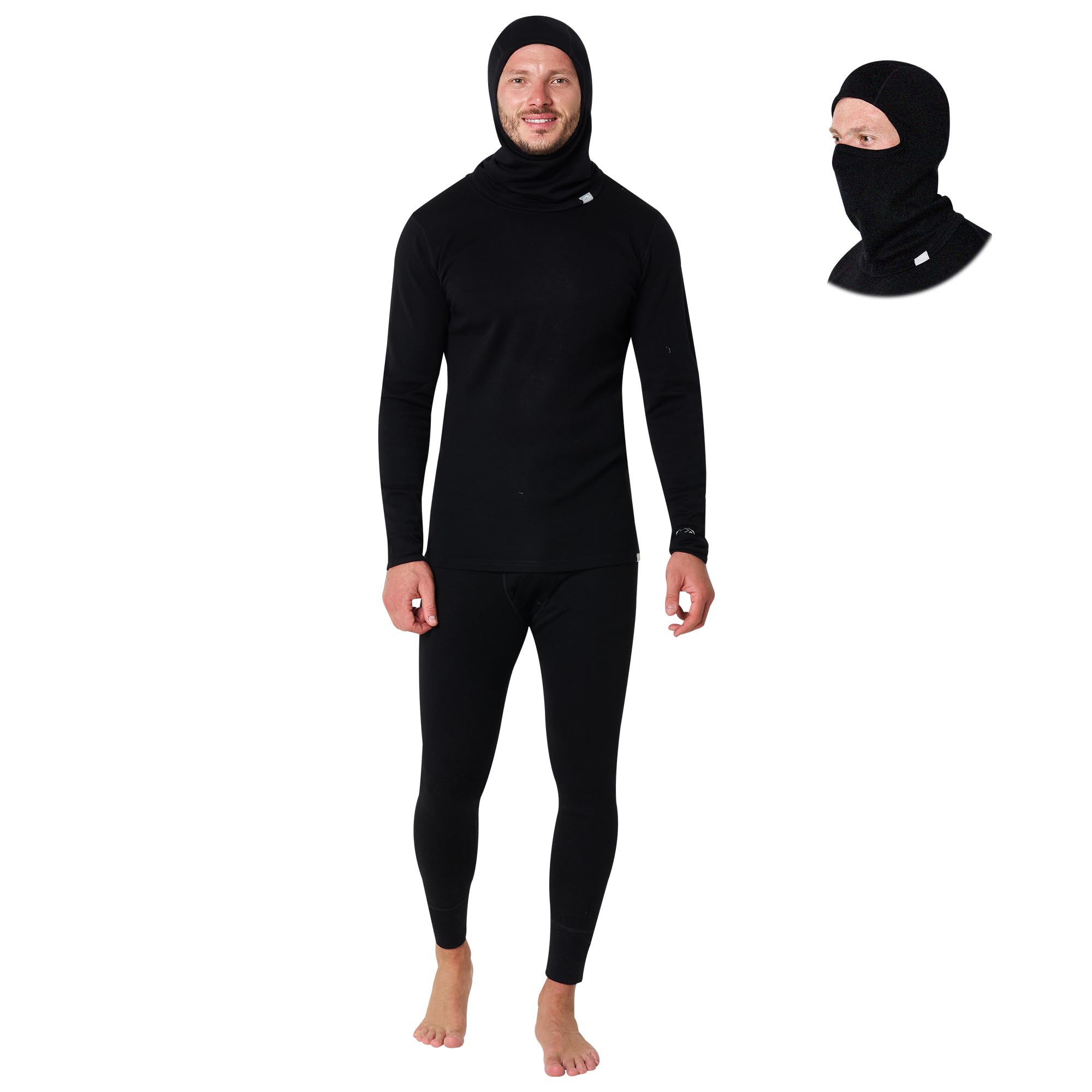
The heavyweight top-and-bottom combo that covers late season in a single order.
Here is the version of the Merino.tech set for actual cold. The top and bottom are both 100% Merino Wool, built as a heavyweight long underwear set, and the maker calls it a fit for hunting, fishing, and skiing. UPF 50+ covers the sunny side of the equation. For a hunter assembling a cold-weather base from scratch, one order and you are done.
Buyers report it holding warmth well through genuinely cold stretches, and the layer-without-bulk build means it slides under insulated bibs without trapping you into one position. Washer safe, though hand washing and air drying will keep it going longer per the maker. Itch-free, and the merino handles multi-day wear without the stink.
This one is newer to the market than the rest of the list, so the review base is thinner and long-term durability is still unproven. Warmth is the theme in what owners do report, and the set as a package is the simplest cold-weather foundation here. If you want a heavier full long-john set and do not want to buy top and bottom separately, this delivers it.
Straight read: heavyweight 100% merino top and bottom as a matched pair, which is the cleanest way to kit out for late season in one shot.
Fair caution: it is a newer product, so there is less history to go on than the established picks — buy it as a cold-weather foundation and rotate it, do not abuse it.
Made for: beginners building a cold-weather base who want top and bottom in one decision.
Hold off if: you already run the 400g MERIWOOL pieces — this would duplicate coverage you own.
7. First Lite Kiln Hoody

A hooded midweight merino that slides under a beanie and doubles as your only layer on the walk in.
Hoods get overlooked until the wind starts working on the back of your neck. This Kiln Hoody is midweight merino in camo, and it lives in the middle of your system — warm enough to hunt in alone when you are moving, thin enough to layer under a shell when you stop. The fit gets consistent praise as dialed-in, and owners note it is thin enough to wear comfortably under a beanie.
Merino’s adapting quality is what makes a hoody like this worth owning. It responds to temperature swings, so the same piece works walking in and sitting still, with an adjustment period that most synthetics lack. Comfort is a recurring theme, and it packs light enough to live in a daypack until needed.
The ongoing theme in the reviews is value — some find it well worth it, a fair number find it overpriced for what it is. Durability is also a mixed note, so treat the soft midweight fabric with some care around brush and zippers. At 4.7 with quality at the top of the conversation, this is a piece hunters reach for constantly if the price sits right with them.
The hoody advantage: midweight camo merino with a hood that protects your neck without a separate gaiter, and a fit that layers without bulk.
The cost question: value and durability both split opinion — the fabric is lighter than the price suggests, so buy it for the layering and hood rather than as heavy armor.
Your move if: you want one midweight camo hoody that handles the walk in and layers under a shell on stand.
Better fit elsewhere: budget-minded hunters who want pure warmth over a hood should look at the heavier plain base layers on this list.
8. Minus33 Expedition Heavyweight Merino Wool Vest
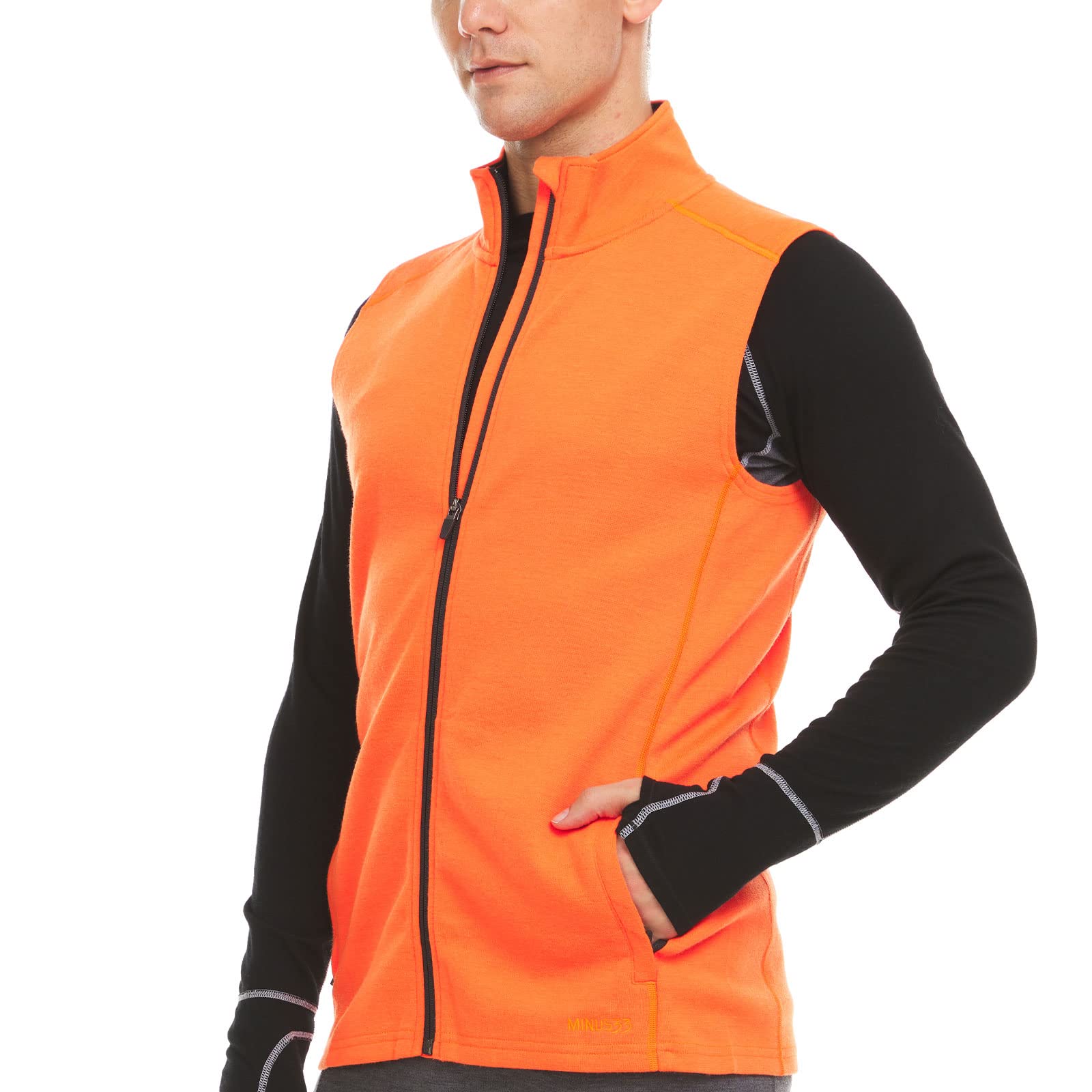
Keep the core warm and the arms free — the vest built for the day it is not quite jacket weather.
The vest slot is where a hunter’s core warmth gets solved without adding a full jacket. This one is a heavyweight 380 g/m² Ponte De Roma knit — Ponte being a double-knit technique that binds two fabric layers together, which is why it holds shape and drapes cleanly. Minus33 rates it for 0°F to 30°F on high-activity days and 30°F to 0°F on low-activity days. Read that second range carefully: this is a piece built for cold and stillness.
The details are cut for hunters. Yoked shoulder seams let a pack strap sit without digging in, and a semi-auto locking zipper holds the front where you set it. It layers as a mid or outer piece, carries UPF 50+, and the 21-micron 100% Merino Wool regulating story applies here just as it does across the Minus33 line.
Fit and fabric thickness are the two spots that split opinion — some find it runs big, and expectations of how heavy the fabric should feel vary. Treat it as a crossover mid-layer rather than a heavy jacket. At 4.5 with quality the most-discussed trait, it is a solid, purpose-built core layer for the hunter who already has the base covered.
Where it shines: core-only warmth with pack-friendly shoulder seams and a zipper that stays put, in a knit designed for crossover from field to town.
Order with care: the fit runs big for some buyers, and the fabric thickness splits opinion — size down if you are between sizes.
Ideal for: hunters who already have a base layer and want core warmth without a full jacket on moderate cold days.
Not the one if: you need arm coverage — this is a vest, and sleeves come from a base layer or shell.
Know the Specs
Micron Count (Fiber Diameter)
A micron is one thousandth of a millimeter, and it measures how fine each wool fiber is. Merino runs much finer than standard wool, which is why it sits against skin without the itch. The MERIWOOL shirt here uses superfine 18.5-micron fiber, and the Minus33 vest uses 21-micron — both fine enough to wear as a true base layer. Lower micron generally means softer next to skin, but heavier garments often use slightly coarser fiber for durability.
Fabric Weight and Temperature Range
Weight is given in g/m² (grams per square meter) or named as lightweight, midweight, and heavyweight. That number sets the temperature the piece works in. A lightweight like the Minus33 bottoms handles cool mornings. A 400g heavyweight like the MERIWOOL shirt and pants is built for genuine cold and low activity. Match weight to how much you will move, not just to the thermometer — the coldest sit needs the heaviest layer, while the walk in usually wants lighter.
Common Questions
Will merino wool hunting clothes make me itch?
What temperature range does heavyweight 400g merino handle?
Does wool keep you warm when it gets wet?
How long can you wear merino before it smells?
Should I buy a set or separate top and bottom?
Is merino wool worth it over synthetic base layers for hunting?
How should I layer wool for a cold-weather hunt?
Can I machine wash and dry merino hunting clothes?
What is Ponte De Roma fabric on the Minus33 vest?
How do I choose between lightweight and heavyweight merino?
The Bottom Line
For most hunters, the strongest start to a wool system is the Minus33 merino bottoms — a lightweight leg layer that scores 4.5+ with the biggest review base behind it. If you hunt cold and sit still, step up to the MERIWOOL 400g shirt and its matching 400g pants for the deepest days. For the sweaty early-season walk in, the First Lite Wick crew tops the group on score at 4.5+ and keeps you cool and quiet. And if you just want one order to convert your whole base layer, the Merino.tech set covers top, bottom, and beanie to get you into wool this season.
How we choose
We do not accept paid placement. Every pick is matched to a real buyer and a real use-case; we do not hands-on test units.
Sources
Specifications: manufacturer listings and product documentation. Review insights: verified customer reviews, as of November 2026. Pricing: not shown on this page (it changes often); check the current price via the retailer link.
As an Amazon Associate, Tactical Gear Guy earns from qualifying purchases. This does not affect which products we feature.