Specs are compiled from manufacturer listings and verified buyer reviews and can change over time — please confirm the key details on the product page before buying.
Here is the short answer: the best youth baseball backpack bag for most families is the KAVIGOR, a 30-liter pack that swallows a helmet, glove, cleats, and four bats without turning into a muddy mess. Below, every pick keeps dirty cleats in their own sealed compartment and slings the whole load onto a kid’s back. What you want to know first is which bag fits which age and amount of gear. That is what this page settles.
This guide is built by comparing the manufacturers’ published specifications and the patterns across verified customer reviews, so you get each pick’s real strengths and trade-offs instead of marketing spin.
You get the details that matter: capacity in liters (how much gear fits inside), bat slots (sleeves that hold bats), shoe compartments, and dugout hooks (clips that hang the bag on a fence). Use those specs to match a bag to your player’s age and gear load. Then you see the picks that hold up through a full youth baseball backpack bag season.
Top Picks


How To Choose The Best Youth Baseball Backpack Bag
Most parents buy the bag that looks biggest and then watch a small player struggle to drag it to the car. The right backpack for a young ballplayer is one they can carry, open, and organize on their own. That means matching three things: the player’s age and size, the amount of gear they actually haul, and how the bag holds up to mud, cleats, and a dugout fence.
Match the capacity to the player, not the parent
Capacity is measured in liters — the internal room inside the bag. A young T-ball or rec player usually needs enough space for a helmet, glove, a bat, and a water bottle. Older travel-ball players carry more: cleats, a face mask, multiple gloves, and two bats. A too-large bag gets heavy and awkward for a small kid. A too-small bag bursts at the seams by midseason.
Insist on a real shoe compartment
Cleats are the dirtiest thing in the bag. A dedicated shoe compartment is a separate zippered section that keeps muddy shoes away from a clean jersey and helmet. Without one, field dirt ends up ground into everything else by June. Look for an external shoe section you can open without unpacking the whole bag.
Check the fence hook and the straps
A fence hook is a metal or plastic hook that lets the bag hang on the dugout chain-link fence, off the wet ground. It keeps the bag dry and keeps gear within reach between innings. Then look at the straps: padded back panels and shoulder straps make a loaded bag far easier to carry, especially on a smaller kid walking to the field.
Side-by-Side Comparison
| Model | Best For | Capacity | Compartments | Dimensions | Amazon |
|---|---|---|---|---|---|
| KAVIGOR Youth Baseball Bag★ Best Overall | Best overall for most families | 30 liters | 4 | 17.5″L x 12″W x 9″H | Amazon |
| DAREKUKU Youth Baseball BackpackWeather-Ready Pick | Rain and mud protection | 18 liters | 2 | 12.5″L x 6.5″W x 18″H | Amazon |
| Easton MOXIE BackpackSharpest Look | Standout style and easy carry | — | 5 | — | Amazon |
| Goloni Softball Bag | Big load, budget-friendly | 30 liters | 6 | 13.4″L x 7.6″W x 18.5″H | Amazon |
| Easton Dugout Youth Backpack | First bag for a young player | — | 2 | 16″L | Amazon |
| VIGEGARI Baseball Bag | Maximum storage room | 42 liters | 5 | 13″L x 10″W x 20″H | Amazon |
| GOTECH Softball Bag | Multi-sport utility | 29 liters | 3 | 21″L x 14″W x 9″H | Amazon |
| wpole Sports Baseball Bat Bag | Ventilated cleat storage | — | 3 | 13″L x 7.87″W x 19.29″H | Amazon |
| Rawlings R400 Backpack | Young starter players | — | — | 12″L x 7.5″W x 16″H | Amazon |
Detailed Reviews
1. KAVIGOR Youth Baseball Bag
Our pick — 4.5+★ from 800+ verified ratings; the strongest balance of quality and price.
The pack that swallows a full set of gear and still hangs off a fence hook.
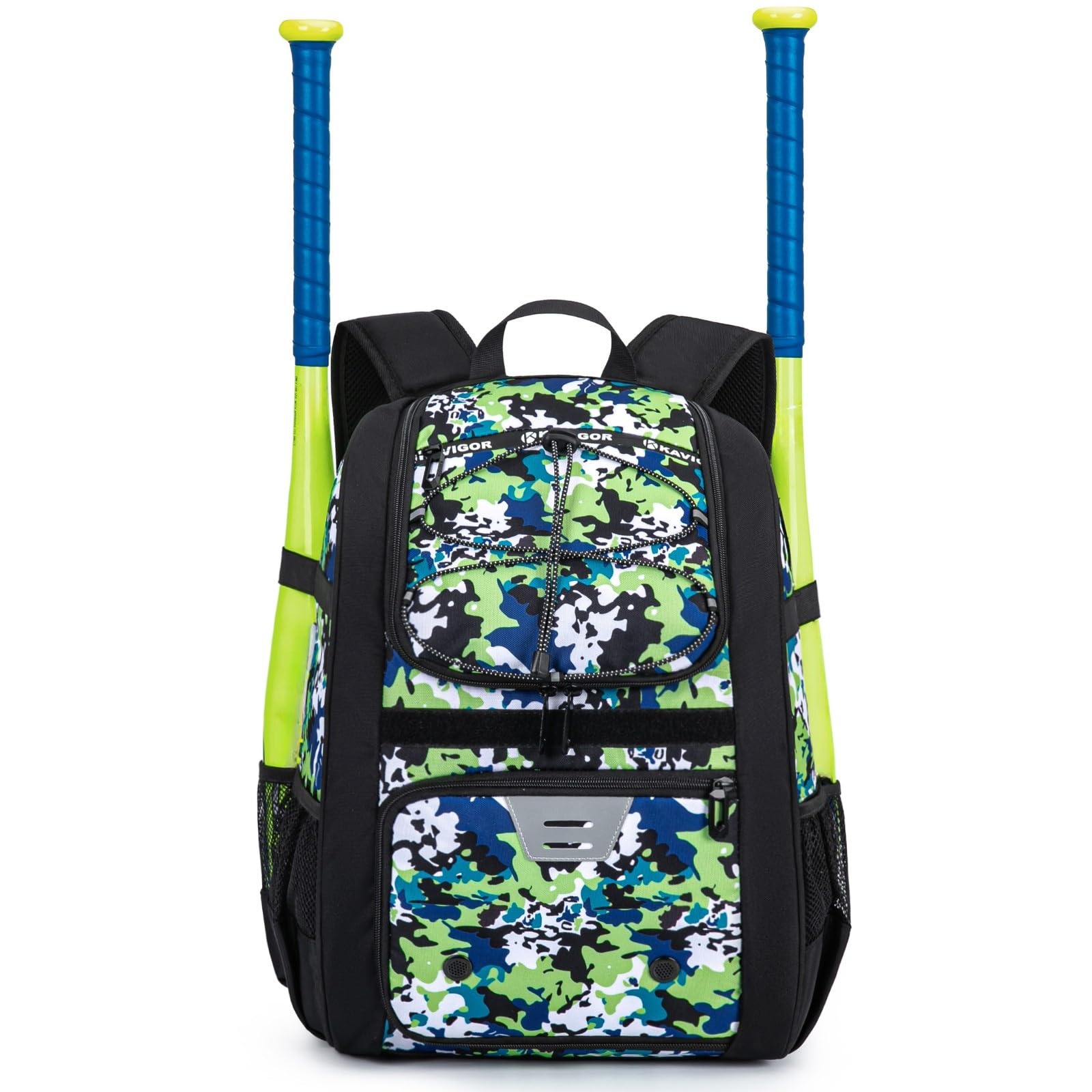
Thirty liters of room is the number that defines this bag. That is enough internal space for a helmet, glove, face guard, shoes, clothing, and sunglasses all at once, according to KAVIGOR. The 17.5 by 12 by 9-inch body is sized so a young player can still lift it. For a family shopping one bag that carries a T-ball kid now and a rec player later, this is the safest place to start.
Where it pulls ahead of the smaller picks below is raw organization. The bag runs four separate compartments, including an independent shoe section that keeps dirty cleats away from clean clothes. Up to four bats or bottles load on the outside, and the side bottle pocket is built to hold a 1000ml bottle. That is a real win on a hot Saturday — a full-size water bottle rides upright instead of leaking into the helmet.
The materials hold up to the abuse. KAVIGOR builds the shell from tear-resistant 600D Oxford fabric — a tight, heavy-weave polyester that shrugs off snags — with cotton padding behind it. The custom zippers are the part that usually fails first on a cheap bag, and this line is built around them. Owners echo that confidence: durability and size are the two things praised most, and the value and colorways get steady love too.
What earns its first-place spot
- 30 liters fits a helmet, glove, shoes, clothes, and four bats in one bag
- Independent shoe compartment keeps field dirt off clean gear
- Tear-resistant 600D Oxford shell with reinforced zippers
- 1000ml side bottle pocket so water rides upright
Where it asks a little of you
- A 30-liter load gets heavy for the smallest players to shoulder
- The camo green color runs bold — check that it suits your team
Go with it: the parent who wants one bag to cover T-ball, rec, and travel seasons without replacing it.
Look elsewhere: if your player is very small and needs a featherweight first bag.
2. DAREKUKU Youth Baseball Backpack
Built to laugh off a rainy game-day walk from the parking lot.
The coating is the story here. DAREKUKU wraps this pack in 600D Oxford cloth with a PVC coating — a rubberized layer that turns away rain and mud — so a wet field doesn’t soak through to the helmet. At 18 liters it runs smaller than the KAVIGOR’s 30-liter body, and it uses just two compartments. That makes it a tighter, simpler pack for a younger player who doesn’t haul the whole dugout.
Two side sleeves swallow up to four bats or bottles, and the main pocket takes a helmet and glove. The clever bit is the integrated J-style fence hook: it clips the bag to the dugout chain-link so it never sits in the mud. The back panel gets ventilated mesh for summer heat, and the shoulder straps adjust to fit either a young player or an adult.
Two things to know before you commit. The zippers draw mixed feedback — a few note they feel stiff on arrival, so break them in gently. And the 18-liter body asks you to pack deliberately; it will not swallow a face mask plus several gloves the way a 42-liter pack does. For a rec or T-ball player who travels light, neither is a problem.
Best for rain days: the PVC coating and fence hook keep gear dry and off the mud, which is exactly what you want on a fall or spring season.
The modest catch: 18 liters and two compartments keep it lean — fine for a young starter, tight for a travel-ball player with a full load.
Reach for this: the family whose season means wet grass, dugout fences, and an 8-year-old carrying their own gear.
Pass if: your player hauls a face mask, two gloves, and extra clothes every game.
3. Easton MOXIE Backpack Equipment Bag
Five compartments and a printed shell that stand out in a dugout of plain black bags.
You get a large interior pocket for the main gear, an adjustable external gear pouch, a valuables pocket, and two side sleeves for bats or bottles. For a player who likes things sorted — batting gloves in one spot, phone and wallet in another — that layout is the draw.
The look carries real weight here. Each MOXIE colorway gets a sublimated graphic — a printed design that’s dyed into the fabric rather than slapped on — so the bag reads as a deliberate style choice, not a generic sack. Compact size plus the backpack straps make it easy at the field or on the way to practice.
The trade-off is honest and unsurprising. Easton doesn’t publish a capacity figure for this one, so buy it for its organization and looks rather than a specific load size. The size draws mixed feedback, with some players wanting more room and others finding it just right. Durability and overall quality are the parts praised most, so treat the size question as a fit issue, not a build one.
Why it earns its place: five compartments plus an adjustable external gear pouch give your player a home for every small item, and the printed shell beats a plain black bag on the field.
Worth knowing: fit is the divider here — some players find the compact body roomy enough, others want more.
Pick it for: the style-conscious rec or travel player who likes organized pockets and a bag that pops.
Better elsewhere: if you need guaranteed cubic room for a full face-mask-and-multiple-gloves load.
4. Goloni Softball Bag
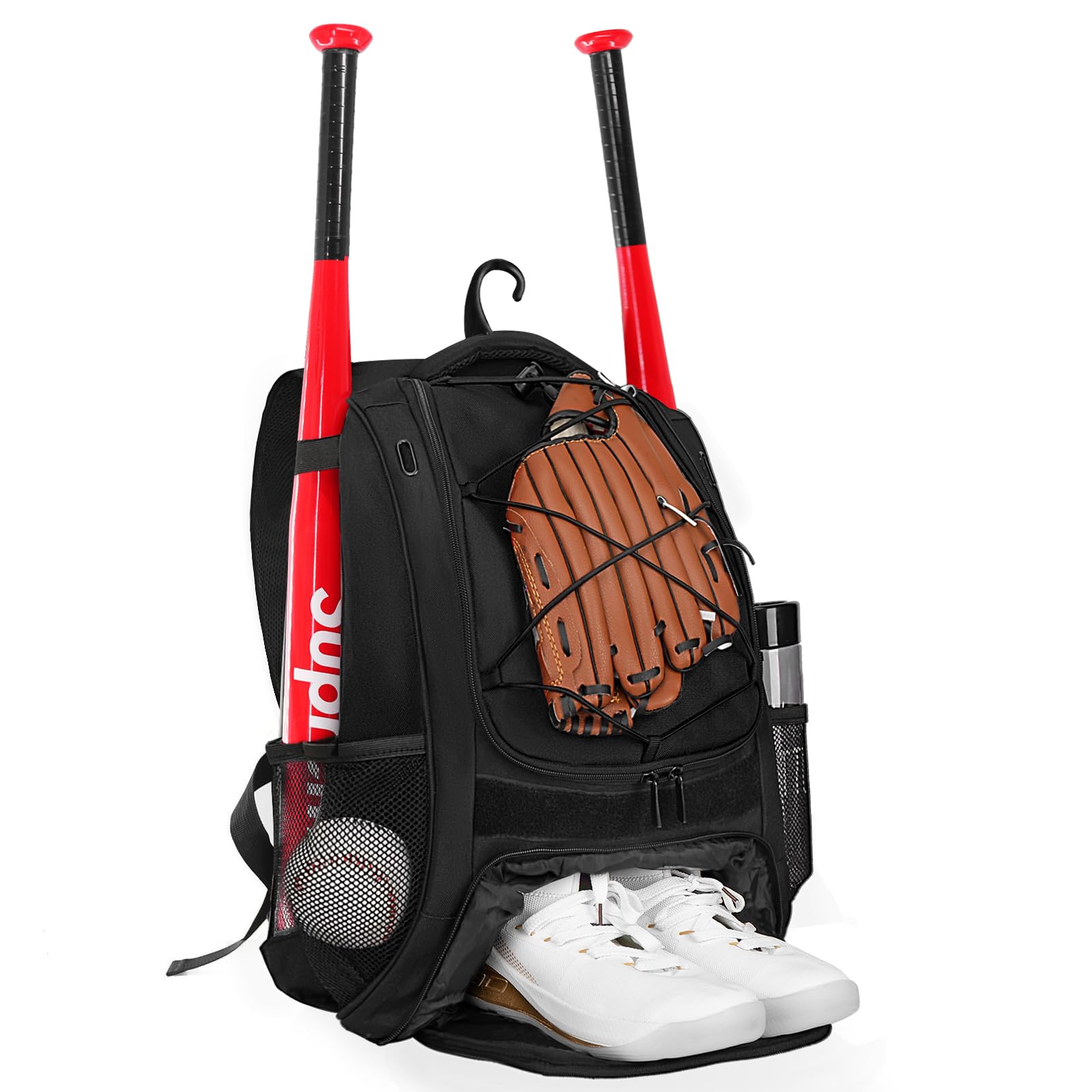
Six separate compartments and 30 liters of room at a budget-friendly price.
Compartment count is where the Goloni separates itself. It runs six compartments against the KAVIGOR’s four and the DAREKUKU’s two. The layout is genuinely thought out: a front shoe compartment, two side bat holders, and two mesh bottle holders on top of a high-capacity main section. A high-elastic band across the front panel grips a baseball glove so it isn’t loose in the bag.
The 30-liter body matches the KAVIGOR on capacity, and the 17.7 by 13.4 by 8.7-inch frame is built to suit both a youth player and an adult. High-density 600D Oxford keeps it going through several seasons. Goloni lists it as multipurpose, so it can double as a soccer, basketball, volleyball, or handball bag once baseball ends. Durability and value are the two qualities praised most, and players note it holds up across seasons of use.
Two small notes. The fence hook draws a few complaints for how it clips, so open and close it with care. Fit also divides feedback — some players find the size just right, others want a roomier body. Neither issue touches the compartment layout people actually buy it for.
The layout that wins: six compartments, two bat holders, two bottle pockets, and a front glove band keep everything in its spot.
Minor compromise: the fence hook wants a gentle hand, and the body size suits some players better than others.
Your move: grab this if you want maximum compartments and a full 30 liters for the youth-to-adult range.
Think twice: if a rock-solid fence hook is your top priority for dugout use.
5. Easton Dugout Youth Backpack Equipment Bag

A simple, padded starter bag for the kid stepping onto a field for the first time.
This is a two-compartment pack, and that simplicity is the point. The main compartment holds a helmet, a ball glove, and more, while a large front personal pocket takes accessories. Two mesh side pockets grip bats or water bottles. For a kid who just needs to get gear to the park and home again, that covers the basics without overwhelming them.
Comfort gets real attention here. Easton pads the back and shoulder straps with air mesh — a breathable, cushioned layer — so a loaded pack sits easier on small shoulders. A fence hook and custom metal zipper pulls round it out, so the bag hangs in the dugout instead of sitting in the dirt. It is spot-on for a first bag, and it holds everything a young rec player needs.
Size is the real question here. Buyers report the body feels roomy enough for a young player, while other families find it runs small. If this is a first bag for a kid who will outgrow it in a couple of seasons anyway, that tradeoff is easy to live with.
The case for it: padded air-mesh straps and a low-fuss two-compartment layout suit a brand-new young player carrying only the essentials.
The reality check: size is the divider — good for smaller players, cramped for a pre-teen with a fuller load.
Suits: the parent outfitting a T-ball or first-year rec player who needs a simple, comfortable, padded starter bag.
Not aimed at: older players loading a face mask and multiple gloves.
6. VIGEGARI Baseball Bag

Forty-two liters makes this the biggest hold-it-all here — and the height you pay for it.
Capacity is the whole reason this bag exists. At 42 liters it outpaces the KAVIGOR and Goloni’s 30-liter bodies by a wide margin, so a player can load bats, a helmet, batting gloves, shoes, and a catching glove with room left over. The 20 by 13 by 10-inch frame is aimed squarely at boys 8-12 and older softball players who haul serious gear. Ripstop polyester — a weave with grid reinforcement to stop small tears from spreading — plus a ventilated padded back panel keep it tough and cool.
The shoe compartment sits external, so mud and dirt from cleats stay away from the rest of the gear. A batting helmet rides in the spacious top section, and the design is unisex enough to work as a gift. Owners load three gloves, two bats, a helmet, and cleats with space to spare — and one family even fit gear for two softball teams in a single bag. Durability through travel-ball seasons is the other recurring win.
Here’s the trade-off. All that room comes at 20 inches of height, which makes it a big pack for a small seven-year-old to carry fully loaded. The zippers draw a few mixed notes, so don’t overstuff past the seams. The capacity is the sell; the size is the catch.
Why big-load families love it
- 42 liters of room holds multiple gloves, bats, helmet, and cleats
- External shoe compartment keeps cleats away from clean gear
- Ventilated padded back panel fights sweat on summer days
- Ripstop polyester resists tearing through a travel season
What to weigh before buying
- A full 42-liter load is heavy for small players
- Zippers prefer a light pack, not an overstuffed one
Best fit: the 8-12 travel or softball player who genuinely needs the biggest capacity here.
Steer clear: if your kid is small and will carry the bag without help.
7. GOTECH Softball Bag

A 29-liter pack with a hidden bottom net that also corrals a soccer ball or basketball.
The clever detail sets this apart from the baseball-only picks. A zippered pocket at the bottom hides a net that can hold a batting helmet, and the same net works for a basketball, soccer, rugby, or volleyball. If your kid plays two sports in the same season, that one feature saves you buying a second bag. The 21 by 14 by 9-inch frame carries 29 liters, with a front zip pocket, a separate shoe compartment, two side bat pockets, and two mesh bottle pockets.
Carrying comfort is handled with an easy-grab top handle and adjustable shoulder straps, plus a padded breathable back. An integrated fence hook hangs it in the dugout, and a front bungee cord gives a quick spot to stash a hat or glove. Sturdy 600D Oxford plus polyester and durable zippers are built for practice, tournaments, and night games.
One real caution: GOTECH labels this “not intended for use by children 12 and under.” That’s a genuine limit, so treat it as a youth-adult bag rather than a first bag for a young kid. Strap durability draws mixed feedback too, so load it sensibly and it should fare well.
The standout: a hidden bottom net that holds a helmet and also a basketball or soccer ball makes it the most versatile pack here.
The fine print: not labeled for kids 12 and under, and the straps want a sensible load.
Choose it for: a multi-sport player 13 and up who wants one bag for baseball and whatever else is in season.
Choose differently: if you’re outfitting a player 12 or under.
8. wpole Sports Baseball Bat Bag

Two air holes in the shoe bay mean wet cleats dry out before the next practice.
Ventilation is where this bag earns its niche. The separate shoe compartment runs two air holes that let damp cleats breathe, so they dry out for the next game instead of festering in a sealed pocket. When you don’t need to carry shoes, that compartment folds flat to free up room for the rest of the gear. The main compartment holds a helmet with a face mask, batting gloves, a fielding glove, and cleats, and the 19.29 by 12.99 by 7.48-inch frame keeps the whole thing manageable.
A J-style fence hook hangs the bag on the dugout fence within easy reach. Extra pockets take keys, a phone, and a wallet, so small gear isn’t rattling loose. The polyester build is designed to be breathable and durable across the season.
Bat security is the one split note. Some players report the bats stay put, while others struggle to keep them fully secured. That’s a fit issue worth a quick look at how you prefer to load bat sleeves. Most of the praise here centers on the pockets and organization.
Where it shines: two air holes and a fold-flat shoe bay keep wet cleats drying and add flexible room when you skip shoes.
A detail to check: bat security is a variable — some players find their bats ride secure, others want firmer retention.
Grab it if: your player’s cleats come home wet and you want a dedicated, ventilated shoe bay that folds away.
Consider other picks: if you need the firmest possible bat retention.
9. Rawlings R400 Backpack

A name-brand starter pack with a smart shelf that opens your gear up at game time.
The gametime shelf is the feature that earns a look here. The large main compartment converts into a shelf so your player can see and grab gear without unpacking the whole bag on the bench. Bat sleeves on both sides carry two bats total, and a padded handle makes it comfortable to tote. The 16 by 12 by 7.5-inch frame stays compact for young players.
It’s built for the start of a ballplaying life — a great first bag that holds everything needed for softball and works through regular use. A tarpaulin bottom means the part that touches wet ground is easy to wipe clean and holds up over time.
The size is the honest catch. Fit divides feedback — some find it a perfect starter fit, others mention it feels small for players 13 and up. For a young starter, that compact fit is exactly right. For a teen carrying a full tournament load, size up to the KAVIGOR or VIGEGARI.
The draw: a main compartment that folds into a shelf and two side bat sleeves make game-day access simple for a young starter.
The limit: the compact body suits young players but runs small for teens 13 and up with a full load.
Right for you: a first bag for a young player who wants name-brand help getting gear out fast at game time.
Size up: if your player is a teen hauling a full tournament set.
Know the Specs
Capacity in liters
Liters measure the internal room inside the bag. A 42-liter pack like the VIGEGARI holds noticeably more than an 18-liter pack like the DAREKUKU. Bigger isn’t always better — a small player hauling a full 42-liter bag tires faster than one carrying a lean pack sized to their gear.
Shoe compartment
This is a separate zippered section, usually on the front or bottom, that keeps muddy cleats away from a helmet and clean clothes. Some shoe bays breathe through air holes and some fold flat when empty, so a wet-cleat player gets extra drying room and extra space when shoes stay home.
Common Questions
Will a youth baseball backpack fit a helmet and cleats at the same time?
How many bats can these youth baseball bags hold?
What does a fence hook do on a baseball backpack?
Is a bigger bag always better for a young player?
How do I stop muddy cleats from ruining a clean jersey?
Is the GOTECH softball bag safe for a young child?
Do these bags work as a multi-sport bag too?
Which material lasts longest for a youth baseball backpack?
Can these bags fit an adult as well as a youth player?
What’s the difference between the Easton MOXIE and the Easton Dugout?
The Bottom Line
The winner for most families is the KAVIGOR Youth Baseball Bag because its 30 liters, four compartments, and a separate shoe section cover a whole season without changing bags. If rain and mud are your worry, the PVC-coated DAREKUKU keeps gear dry with a fence hook to match. And if your player needs genuinely maximum room, the 42-liter VIGEGARI is the one to reach for. Whichever you choose, match the liter capacity to your player’s age and gear load.
How we choose
We do not accept paid placement. Every pick is matched to a real buyer and a real use-case; we do not hands-on test units.
Sources
Specifications: manufacturer listings and product documentation. Review insights: verified customer reviews, as of November 2026. Pricing: not shown on this page (it changes often); check the current price via the retailer link.
As an Amazon Associate, Tactical Gear Guy earns from qualifying purchases. This does not affect which products we feature.