Specs are compiled from manufacturer listings and verified buyer reviews and can change over time — please confirm the key details on the product page before buying.
Your stove is throwing off plenty of heat, but most of it is drifting straight up the flue and out of the house. A blower motor is the part that grabs the warm air from the stove body and pushes it out into the room where you actually sit. The tricky bit is that these are replacement parts, not universal gadgets — the wrong motor will not line up with your mounting holes, and the right one changes how much heat reaches your chair. Below are nine blower motors and kits that fit real stoves, with the airflow numbers, motor speeds, and thermostat behavior spelled out so you can match one to your unit before you buy.
This guide is built by comparing the manufacturers’ published specifications and the patterns across verified customer reviews, so you get each pick’s real strengths and trade-offs instead of marketing spin.
Replacement blowers come in a handful of shapes, and matching your stove model is the whole game. This breakdown covers fit lists, CFM ratings, variable-speed controls, and thermal switches so you can pick the right wood stove blower motor the first time.
Top Picks


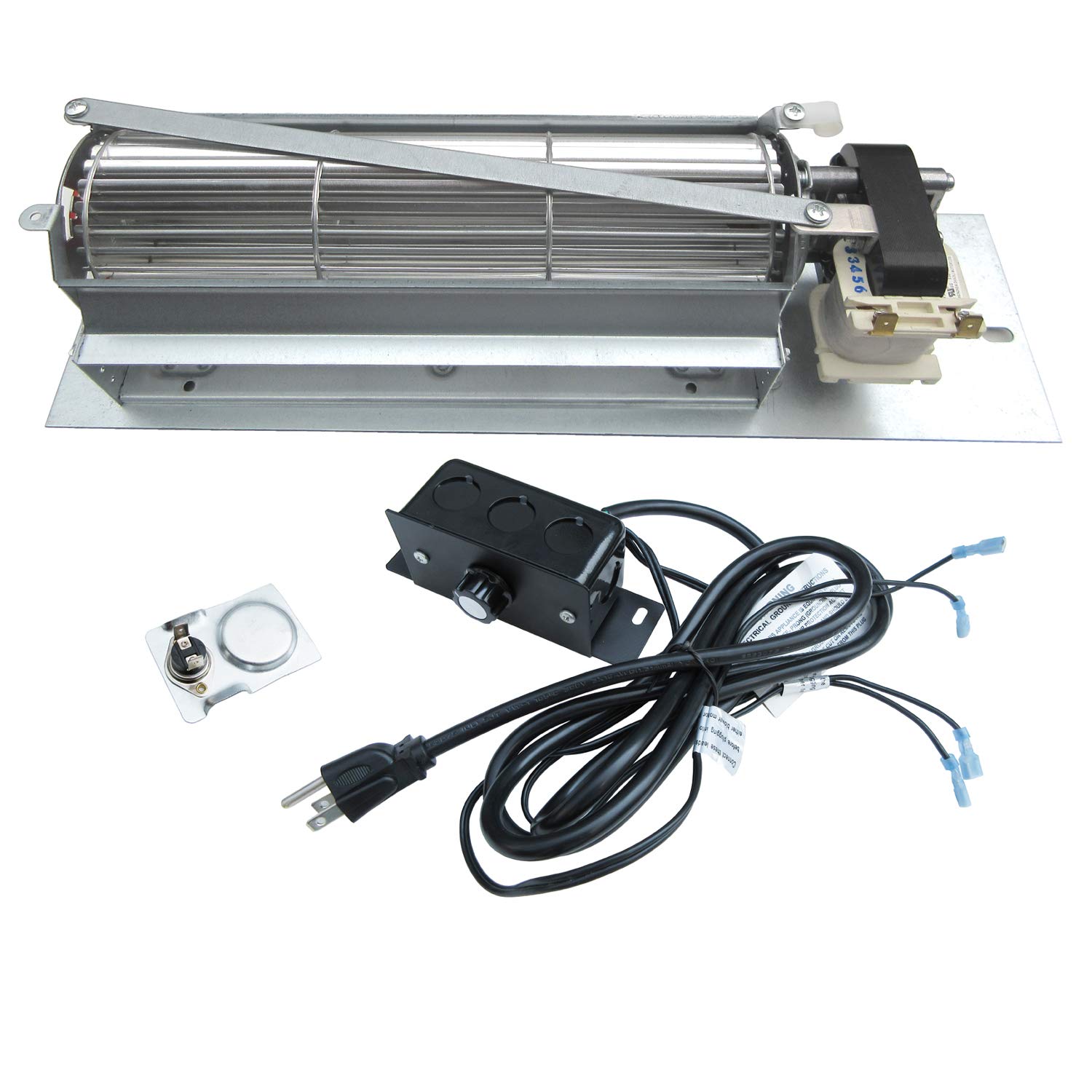
How To Choose The Best Wood Stove Blower Motor
Most people buy the wrong blower because they shop by stove brand instead of by part number and mounting pattern. A blower only has to do three things: fit the opening, move enough air, and survive the heat. Get those three right and the rest is detail.
Match the cross-reference number before anything else
Every one of these motors is sold by a cross-reference part number, like 80472A, S31105, or 910-157/P. That number is the real product identity. Pull your stove’s manual or the old blower itself and confirm the number matches. Several picks here share the same 910-157/P reference, which means they are built to the same footprint — so once you know that number fits, you can compare them on motor speed and included controls instead of fit.
Airflow is measured in CFM, and more is not automatically better
CFM stands for cubic feet per minute — the volume of air the fan moves each minute. The picks here range from 80 cfm on the low setting of a two-speed motor up to 130 cfm. A bigger stove in a big open room benefits from the higher number. A tight insert in a small den can feel drafty with too much airflow, which is exactly why a variable-speed knob matters more than a big CFM figure.
Thermostatic control decides when the fan runs
A magnetic thermostat (a heat sensor that sticks to the stove body) turns the blower on once the stove is actually hot and off when it cools. That means the fan is not blowing cold air across the room at startup and is not running all night after the fire dies. Some models here are manual-only, so you flip the switch yourself. Neither is wrong — thermostatic is more hands-off, manual gives you full control of the moment it starts.
Side-by-Side Comparison
| Model | Best For | Airflow (CFM) | Motor Speed (RPM) | Thermostat | Amazon |
|---|---|---|---|---|---|
| US Stove 80472A Convection Blower★ Best Overall | American Harvest, King and Ashley owners | — | — | — | Amazon |
| Hongso S31105 Speed Variable BlowerMost Popular | GHP, Monessen and Majestic stoves | 86 cfm | — | No (manual knob) | Amazon |
| DN115 FK24 Replacement Blower KitTop Airflow | Monessen, Vermont Castings and Temco units | 130 cfm | 3000 | Yes (magnetic) | Amazon |
| PBAR-2427 Pleasant Hearth Blower Kit | Pleasant Hearth vent-free stoves | — | 3200 | No (manual knob) | Amazon |
| QuadraFire 812-4900 Convection Blower | Quadra-Fire and Heatilator stoves | — | — | — | Amazon |
| 910-157/P Regency Blower Motor | Regency, Osburn and Nordica inserts | 80/135 cfm | 2800 | No | Amazon |
| Adviace Regency HI300 Convection Blower | Regency Hampton and Classic inserts | 80/135 cfm | 2800 | No | Amazon |
| Criditpid 910-157/P Blower Fan Kit | Buyers who want the controls included | — | 2600 | Yes (magnetic) | Amazon |
| Adviace 910-157/P Fireplace Fan Kit | Full kit with automatic on/off | 80/135 cfm | 2600 | Yes (thermal switch) | Amazon |
Detailed Reviews
1. Us Stove 80472A Blower Fan
Our pick — 4.5+★ from 100+ verified ratings; the strongest balance of quality and price.
The drop-in fix for American Harvest, King and Ashley owners whose worn convection blower has slowed down.
Here is the situation this motor solves: your stove still burns fine, but the convection blower has slowed to a groan or stopped entirely, and the room no longer warms up the way it used to. This is a direct replacement for US Stove part 80472A, the convection room-air blower that sits on American Harvest 6037, 6039 and 6041 units, King KP130 and 5502M units, and US Stove 5500, 5500M and 5500XL stoves. If your model is on that list, the 80472A bolts straight in — no adapting, no guessing.
The build itself is metal with sealed bearings, which is the part that matters in a stove. Bearings are the small rotating elements the motor shaft spins on, and sealed ones keep ash and grit out, so the motor runs smoother and quieter than a worn original that has been rattling for a few seasons. Owners keep coming back to how solid the metal housing feels and how quietly the sealed bearings run, backing it up at 4.5+ stars across 100+ ratings.
One honest note on the buying process: this is a model-specific part, and the maker is blunt about it — confirm your stove model matches 80472A before you order. The listing does not publish an airflow figure or a motor speed, so if you are chasing a specific CFM number you will want to look at the DN115 kit below instead. But for the American Harvest, King and Ashley owners this was built for, the missing CFM figure does not change how the blower performs in daily use.
Where it pays off
- Direct cross-reference to US Stove 80472A — a true like-for-like swap
- Sealed bearing design runs smoother and quieter than a worn original fan
- Metal construction suited to the heat inside a stove body
- Restores the warm air distribution a failing blower takes away
Worth knowing first
- Only fits the listed American Harvest, King and US Stove models
- No published CFM or RPM figures to compare against other picks
- Model confirmation is on you before ordering
Go for this if: your stove is one of the American Harvest, King or Ashley models named on the cross-reference list.
Check twice: the model number on your stove’s data plate — this part does not adapt to other units.
2. Hongso S31105 Blower Fan
Compact where it counts — 5.25 inches tall against a 9.5-inch overall length.
The number to start with on the S31105 is the height: 5.25 inches, with a 9.5-inch total length including the guard and a 3.75-inch depth. Compare that to the DN115 kit at 3.25 inches tall and 14.9 inches long, and you can see the trade-off plainly — the Hongso is taller but far shorter front to back, which suits a stove opening that has room above the fan but not much depth. Four mounting holes sit 8 inches apart left to right and 4 3/4 inches apart top to bottom, so measure your old bracket before you commit.
Airflow comes in at 86 cfm on an AC 120V, 60Hz supply, and the speed is set by a rotary knob on the unit itself. That knob is manual and there is no thermostat, so you decide when it starts and how hard it blows. Owners love the variable-speed flexibility — it lets you dial the fan down to a whisper or push it up when the fire is roaring. What buyers talk about most is how well the whole thing performs once installed, and it pairs that with solid heat distribution through a cottage or cabin room. It sits at 4.0+ stars across 250+ ratings, the largest owner base among the blowers here.
Where the feedback splits is noise and airflow. Some units run very quietly; others get louder with use, and a few find the airflow minimal rather than room-filling. If you are expecting a strong forced-air push from a small fan, set expectations accordingly — 86 cfm is a gentle circulation figure, not a hurricane. Fit is also model-specific: it is designed around GHP Group, Monessen and Majestic (MHSC) stoves, Majestic Dutchwest Windsor units, and CFM US Century plate steel freestanding stoves, with a long list of compatible model numbers worth checking line by line.
The cottage case: for a GHP or Monessen stove where you want to hold down the fan speed and keep the room evenly warm, this is the most proven blower on the list. The 86 cfm figure is honest about what a compact fan does.
The honest catch: no thermostat means you switch it on and off yourself, and the variable-speed knob is a manual control — one owner did report trouble with speed control, so treat the knob gently.
Right for: GHP, Monessen, Majestic and CFM plate steel stove owners who want a manual-speed blower with a compact footprint.
Hard pass if: you want the fan to start and stop on its own with stove temperature — there is no thermostat here.
3. DN115 FK24 Replacement Fireplace Blower Fan Kit
A 130 cfm motor that runs at 3000 RPM and knows when to switch itself on.
If you want the most air movement for the size, this is the one. The FK24 moves 130 cfm — against the Hongso’s 86 cfm, that is the biggest airflow gap in this lineup, and it comes from a motor spinning at 3000 RPM. The body measures 14.9 inches long, 4.15 inches wide and 3.25 inches tall, so it sits low and wide under a firebox rather than standing tall. The low 3.25-inch height is the mirror image of the Hongso’s 5.25-inch profile — if your insert has a shallow slot but plenty of width, this shape wins.
The control setup is what separates this from the manual-speed picks. A magnetic thermostat activates the blower at 120°F and shuts it off at 90°F, so it waits for the stove to actually heat up before pushing air, then stops once the fire cools. There is a rheostat for variable speed, so you set the ceiling and the thermostat handles the rest. The motor and rheostat both carry UL approval, the insulation is Class H rated to 392°F, and it draws 35 watts on a standard 3-prong cord that runs 75 inches.
Owners consistently flag the value here — 130 cfm and a magnetic thermostat for a modest outlay, and that combination is what comes up most in the feedback. The recurring caveat is noise: some installations are remarkably quiet, others carry a little fan hum. That is normal for a 130 cfm blower pushing real volume. It is built for a long list of Majestic, Vermont Castings and Temco model numbers, so read the compatibility list closely — it is extensive but specific.
Why it stands out: the thermostat is the feature that makes a blower feel automatic. It handles startup and shutdown so you are not running back and forth to a switch.
Weigh this: 130 cfm and 3000 RPM mean the fan can be audible in a quiet room. If silence at all costs is the goal, the lower-speed picks are calmer.
Pick it for: Majestic, Vermont Castings or Temco inserts where you want the fan to manage itself on stove temperature.
Think twice if: your stove model is not on the published compatibility list — this kit is built to a specific set of units.
4. PBAR-2427 Speed Variable Fireplace Blower Fan Kit

Finally, the one built specifically around Pleasant Hearth vent-free stoves.
Start with the speed. The PBAR-2427 runs at 3200 RPM, the highest motor speed named on this list, and it does it on 110 to 120 VAC at 60 cycles with a 3-prong cord that reaches 71 inches. The body is 9.75 inches long, 3.62 inches wide and 5.25 inches tall — a footprint close to the Hongso’s, so if that shape fit your opening, this one likely will too. The knob goes from LOW up to HIGH as you rotate it clockwise, and it is manually controlled with no thermostat involved.
What you get in the box is what makes this a kit rather than a bare motor: the blower fan, the power cord, a gasket, screws, and installation instructions. The blower is a reciprocating type, meaning it pulls heat radiating from the rear of the stove and directs it toward the front at a low velocity, which is gentler than a hard blast and better for spreading warmth evenly than concentrating it in one line.
Compatibility is the tightest of any pick here, and you should read it as a feature, not a limitation. It is compatible with GHP Group vent-free stoves VFS-PH20DT, VFS-PH30DT, VFS2-PH20DT, VFS2-PH30DT, VFS2-L20DT and VFS2-L30DT, and with Pleasant Hearth vent-less models. The maker explicitly notes it should not be installed in units from other manufacturers, so if you own a different brand, this is not your part.
The upside
- 3200 RPM motor — the fastest speed spec on this list
- Complete kit with gasket, screws and instructions included
- Manual variable knob lets you tune airflow to the room
- Built and approved only for its own brand, which keeps fit certain
The flip side
- No thermostat, so startup and shutdown are on you
- Pleasant Hearth and GHP Group vent-free models only
- Reciprocating design moves air at low velocity rather than a hard push
Best fit: Pleasant Hearth and GHP vent-free stove owners who want a complete bolt-on kit with everything in the box.
Not for you if: your stove carries any other brand name — the maker rules out cross-brand installation.
5. Quadrafire Stove Fan Room Air Blower 812-4900

The one Quadra-Fire owners keep coming back to winter after winter.
There is a reason this blower has a devoted following: reliability is the thing owners bring up most, followed by build quality, and the story that keeps surfacing is the same — it goes in, it fits, and it keeps working through a full heating season without drama. At 4.0+ stars across 200+ ratings with a clear lead on the reliability front, this is a replacement part that people stop thinking about, which for a stove blower is the highest compliment available. It is a Quadra-Fire distribution and convection blower built for several Quadra-Fire and Heatilator pellet, gas and wood stove models.
The electrical spec is where you should look before ordering: 115V AC, 60Hz, and.27 /.84 amps, with thermal protection built in. That thermal protection is a safety feature worth understanding — if the motor gets too hot, it shuts itself down rather than burning up. Easy installation and correct fit both come up strongly in owner experience, so if you are on a compatible model this is close to a certainty as a swap.
The caveat is noise, honestly stated. Some units are super quiet, others develop a loud noise over time, and a smaller group reports durability that fell short. That is a real mixed signal on a motor that otherwise earns praise for reliability, so treat it as a fit-dependent variable rather than a pattern. At 5.5 pounds it is one of the heavier blowers here, an indicator of a substantial metal build rather than a flimsy one.
The owner consensus: installation is straightforward and fit is spot-on when you have the right model, and value for money rounds it out. Buyers come back to this because it fits the listed Quadra-Fire and Heatilator models and keeps running through a full heating season.
The honest risk: noise can drift over the life of the motor, and a few units have not lasted as long as expected — so keep it in a spot where you can hear it and swap it if it starts to change.
Go here if: you own a Quadra-Fire or Heatilator stove and want the proven replacement that installs cleanly.
Second-guess it if: the sound level of your blower matters a great deal — this one has a mixed record on quiet operation.
6. 910-157/P Fireplace Blower Motor for Regency Wood Stove

Two speeds from one motor — 80 cfm for quiet nights, 135 for a cold morning.
The wire is the control here, and that is unusual enough to be worth explaining. On the 910-157/P, the black wire runs the motor at high speed and the red wire runs it at low — 135 cfm versus 80 cfm off the same 2800 RPM motor. You are not turning a knob; you are choosing a wiring connection. That gives you a fixed choice of two airflow levels rather than a slider, and it draws 53 watts at 115 volts while doing it.
The build is where this pick earns its keep in a stove. The bearings are 100% sealed ball bearings rather than the cheaper sleeve type — a real distinction, because sealed ball bearings are less affected by heat and run more quietly over their full life, and they need no added maintenance. It also ships with rubber mounting feet to cut vibration. The dimensions run 14 1/2 by 4 1/16 by 4 inches, with a 3.25-inch gap between the flanges and a 1 by 4 3/4-inch air discharge on each side.
Now the part you need to hear clearly. Noise is the most-mentioned topic on this motor, and it is not a positive one — several owners describe a high-pitched whine. Buyers praise the 80/135 cfm airflow, but the high-pitched whine is a known characteristic of this specific unit. It crosses over to Regency, Osburn, Nordica, Valley Comfort, Pacific, Rotom and Fasco parts, covering the Warmhearth Z2510L, Waterford E61, T25, Osburn FD006-1600 and Pacific Energy-Esteem 5053-947 among others. It sits at 4.0+ stars across 80+ ratings.
The honest verdict: a well-built ball-bearing motor with a genuine two-speed design, marred by a pitch problem that not every owner can live with. If you can choose a different 910-157/P variant, look at the Adviace kit below — if you want the 910-157/P footprint from this exact maker, know about the whine going in.
Right for: Regency, Osburn, Nordica or Pacific owners who want sealed ball bearings and a full 135 cfm high setting.
skip it if: a high-pitched whine would drive you up the wall — the same part number is available from other makers on this list.
7. Regency 910-157/P Blower

Same 910-157/P numbers on paper, but a steadier record on quiet running.
If the 910-157/P reference is the right fit for your insert, here is the version with the calmer feedback profile. The motor numbers match the field — a 2800 RPM AC shaded pole motor, 80/135 cfm across low and high, 115 volts at 60Hz, 53 watts, 0.92 amps, and Class H insulation rated to 392°F. The 3.25-inch flange distance and 13 by 4.25 by 4.5-inch body are the same measurements to look for, so if one fits, this should too.
What is different is how carefully the kit is put together. You get 3 bare wire leads, 23 inches long, plus 6 rubber mounting feet — one for each corner and two extra, and those feet do real work on noise and vibration. The blade material is composite and the frame is aluminum. Where the buyer feedback lands is the part worth highlighting: quality is the top note, and functionality follows. At 4.0+ stars across 50+ ratings, it holds the highest rating of any 910-157/P blower in this lineup.
The gripes are honest and small. Noise is a mixed bag — some find it tolerable on the low setting, others notice it. The unit carries a stated noise level of 78 db, so treat the low setting as your everyday mode. It fits a long list of Regency models including Alterra, Classic, Energy, F Series, Hampton, Horizon, Panorama, Ultimate and Warmhearth, plus Nordica, Osburn, Pacific Energy and Valley Comfort.
Why it climbs higher
- Top-rated of the 910-157/P blowers here at 4.0+ stars
- Six rubber mounting feet for vibration control
- Genuine two-speed range at 80/135 cfm
- Class H insulation rated to 392°F
What to weigh
- No thermostat — manual on and off
- 78 db noise spec means low setting is the quiet mode
- Fits the listed Regency and cross-compatible models specifically
Take this one: if you want a Regency HI300 or Classic insert blower that installs easily and runs quieter than the average 910-157/P.
Look elsewhere if: you need automatic temperature control — this blower wants a manual switch.
8. Criditpid 910-157/P Fireplace Blower Fan Kit
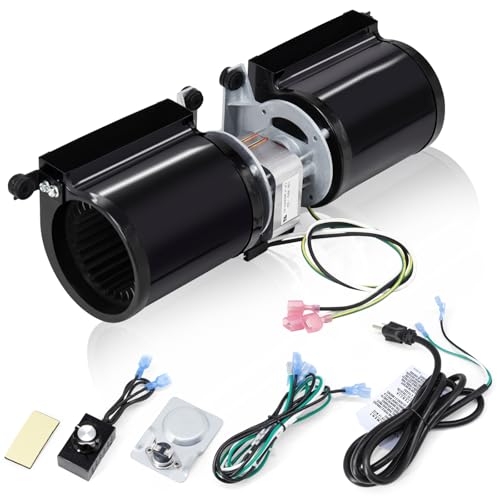
The 910-157/P swap with the wiring and thermostat already in the box.
Most 910-157/P motors are sold as a bare unit. This one is sold as a system, and that is the whole case for it: the ball-bearing blower fan unit, a magnetically mounted thermostat, a rheostat variable speed control, a 3-prong power cord, a wired harness and installation instructions all arrive together. If your stove currently has no blower at all and you are wiring one in from scratch, that bundle saves you shopping for each piece separately.
The motor specs run a 2600 RPM AC shaded pole at CCW rotation with sealed ball bearings, Class H insulation rated to 392°F, 53 watts and 1.25 amps on 60Hz. The thermostat closes at 120° and opens at 90°, so the fan starts as the stove warms and stops as it cools. The body measures 13 by 4.25 by 4.5 inches with a 3.25-inch flange distance, matching the other 910-157/P units here. Rubber mounting feet handle vibration, and the whole kit weighs 5.9 pounds.
Two things you should know before the box arrives. First, the maker is upfront that installation is tricky and that you will need to remove the bottom louver of the fireplace insert to reach the blower — budget the time and a second set of hands. Second, the feedback is genuinely mixed on two fronts: performance draws both praise and concerns, and noise draws both fairly quiet and very noisy descriptions. That is not unusual in this part family, but at 4.0+ stars across 70+ ratings it is a pick you buy for the completeness of the kit rather than a flawless reputation.
The real draw: one order gets you every piece of the puzzle, thermostat and rheostat included, so a stove that never had a blower can gain one without separate sourcing.
The blunt truth: two mixed signals — performance and noise — sit on a 4.0+ rating, so go in expecting a mid-pack motor bundled with excellent convenience.
For you if: you are converting a Regency or compatible insert from no blower to full thermostatic control in one purchase.
Reconsider if: you already have the controls and thermostat wired in — a bare motor does the same job for less fuss.
9. Fireplace Fan Kit for Regency Wood & Gas Stove, 910-157/P

Set the speed once and let the stove’s own heat decide when the fan runs.
This kit handles the one thing a bare motor cannot: turning itself on and off. A magnetic thermostat sticks to the stove body, and the thermal switch closes at roughly 120°F to start the blower and opens at roughly 90°F to stop it, with a stated tolerance of plus or minus 5°F. You set the fan speed with the rheostat knob once, and the stove temperature does the rest. It is the most hands-off arrangement in this lineup, and it suits a wood stove that you load once and leave to burn down.
The motor itself is a 2600 RPM ball-bearing unit with 80/135 cfm airflow, 115 volts at 60Hz, and 1.25 amps. It ships with a 3-prong cord and rubber mounting feet to keep vibration down. The body measures 14 1/2 by 4 3/4 by 4 1/16 inches, with a 3.25-inch gap between the flanges — note this differs from the 13-inch body of the Criditpid kit above, so match it against your opening rather than assuming all 910-157/P units are identical. The airflow figure does match, and the wiring layout means the same low/high blower behavior.
Where this one falls down is durability of the record, not the machine. Feedback is mixed on noise, with some units quiet and others carrying a high-pitched sound, and the star average sits at 4.0+ across 80+ ratings. Installation is where it earns back ground — buyers report it goes in easily and fits well, and the heat distribution it produces is a real benefit worth knowing about. It covers the full Regency range plus Nordica, Osburn, Pacific Energy and Valley Comfort, so read the compatibility list before you commit.
What seals it: the thermal switch removes the daily chore of switching a blower on and off, and the fit and heat distribution are both well received.
Don’t oversell it: mixed noise reports and a modest 4.0+ average mean you are buying convenience, not a guarantee of silence.
Choose this if: you want a Regency insert blower that runs on its own schedule, tied to stove temperature.
Pass on it if: a high-pitched fan motor would bother you more than remembering to flip a switch.
Know the Specs
Airflow in CFM
CFM stands for cubic feet per minute — the volume of air the fan moves each minute. The blowers here range from 80 cfm on low speed up to 130 cfm. Higher numbers move more warm air but can feel drafty in a tight room, which is why a variable-speed control is often more useful than a big headline figure. If your stove sits in an open-plan space, lean toward the higher number; a small den is usually happier with the low setting.
Motor RPM and Bearings
RPM is revolutions per minute — how fast the motor shaft spins. The motors here range from 2600 to 3200 RPM. Speed and airflow are related but not identical, because blade size and housing shape both play a role. Bearings are the parts the shaft rides on: sealed ball bearings are less prone to heat damage and run quieter over their life than cheaper sleeve bearings, and they need no added oiling.
Thermostat and Thermal Switch
A thermostat on a blower is a heat sensor that decides when to run the fan. A magnetic one sticks to the stove body; a thermal switch does the same electrical job. The kits here typically close at around 120°F to start and open at around 90°F to stop. That means the fan waits for real heat before it spins and shuts off once the fire dies, rather than blowing cold air across the room.
Insulation Class and Heat Tolerance
Insulation class is a rating for how much heat the motor’s internal wiring can take. Class H is rated to 392°F, which is the rating shared by several of these motors. That matters because a blower sits against or inside a stove body that heats up fast — a motor rated for cooler conditions would have a shorter working life in that spot.
Common Questions
How do I find which blower motor fits my stove?
Do I need a blower with a thermostat or can I use a manual switch?
What CFM do I need for a wood stove blower?
Will a 910-157/P blower fit my Regency insert?
Are sealed ball bearings really worth paying for?
How noisy is a wood stove blower likely to be?
Can I install a fireplace blower myself?
What does Class H insulation mean on a blower motor?
Do these blowers work on gas fireplaces or only wood stoves?
Why does my old blower slow down instead of failing outright?
The Bottom Line
The wood stove blower motor that wins for most people is the US Stove 80472A Convection Blower, because it is a true cross-referenced replacement with sealed bearings and a metal build, and for American Harvest, King and Ashley owners there is nothing to adapt or guess. It carries the strongest owner backing of any pick here at 4.5+ stars across 100+ ratings.
If you want the most airflow and automatic thermostat control in one package, the DN115 FK24 Kit pushes 130 cfm at 3000 RPM and handles its own startup and shutdown. Regency and Osburn owners should go straight to the Adviace 910-157/P Convection Blower — it tops the 910-157/P family on rating and gives you two speeds at 80/135 cfm.
And if your stove is a Pleasant Hearth or GHP vent-free model, the PBAR-2427 Kit is the only one built specifically for that brand, with the highest motor speed on this list at 3200 RPM and every install part in the box.
One last thing worth saying plainly: check your model number against the compatibility list before you click buy. Every blower here is a good part for the right stove — the wrong one for yours is simply wasted money.
How we choose
We do not accept paid placement. Every pick is matched to a real buyer and a real use-case; we do not hands-on test units.
Sources
Specifications: manufacturer listings and product documentation. Review insights: verified customer reviews, as of November 2026. Pricing: not shown on this page (it changes often); check the current price via the retailer link.
As an Amazon Associate, Tactical Gear Guy earns from qualifying purchases. This does not affect which products we feature.