Specs are compiled from manufacturer listings and verified buyer reviews and can change over time — please confirm the key details on the product page before buying.
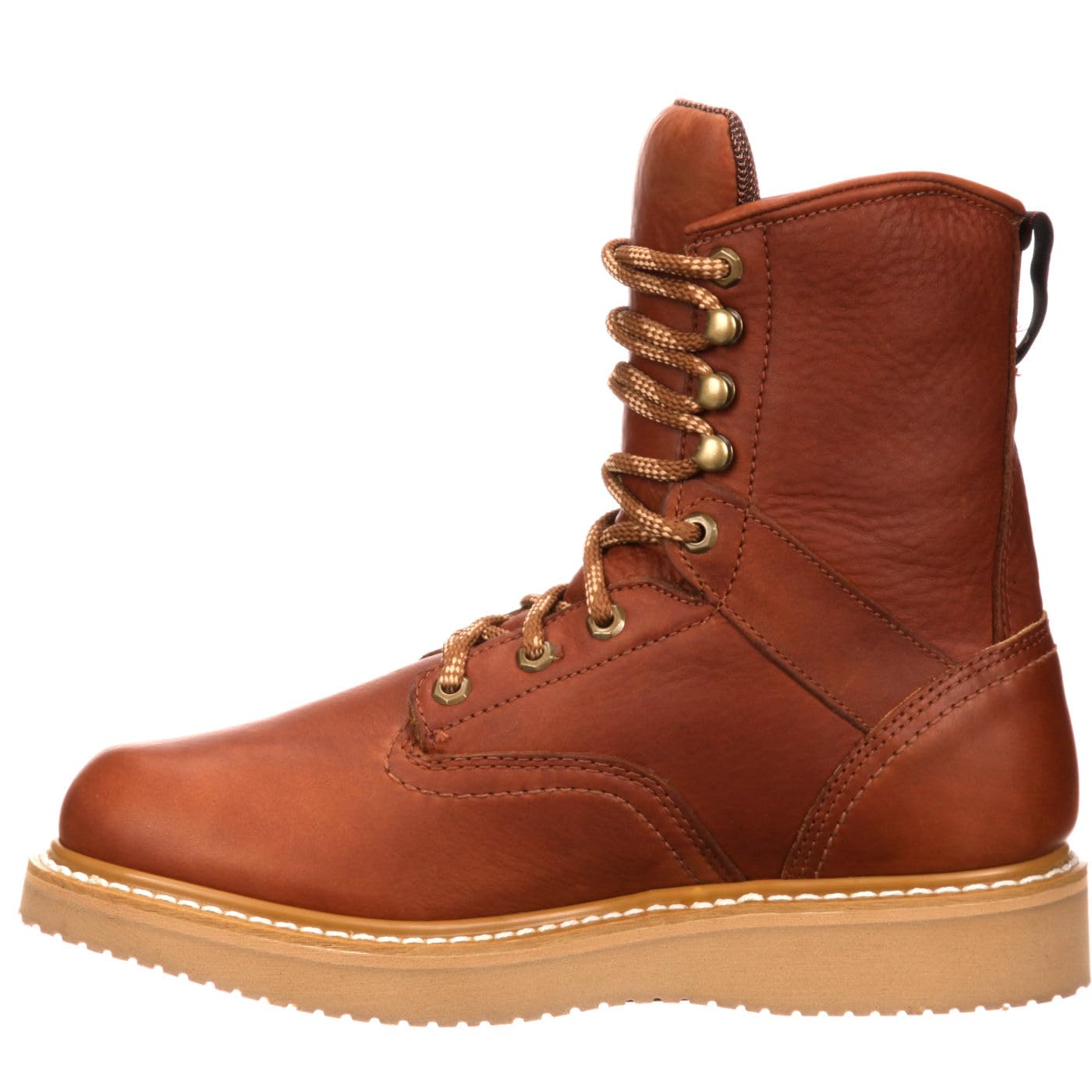
If your arches ache by lunchtime and your boots fold like cardboard across the middle, the shank is the reason. A steel shank is a flat strip of steel buried between the insole and the outsole, and it stops the boot from flexing where your foot needs a rigid platform. The picks below all use a real steel shank, not a plastic or fiberglass substitute. The crowd favorite is the Georgia Boot Wedge, sitting at 4.5+ stars across 800+ ratings — a wedge sole that stays flat and stable through a long shift.
This guide is built by comparing the manufacturers’ published specifications and the patterns across verified customer reviews, so you get each pick’s real strengths and trade-offs instead of marketing spin.
You will see how leather uppers, rubber shells, toe caps, and shank styles split into clear jobs. Read on for the work boots with steel shank that actually hold their shape under load.
Top Picks
How To Choose The Best Work Boots with Steel Shank
The shank is the part nobody sees and everybody feels. It runs down the middle of the sole, and its job is to stop the boot from sagging under your arch when you stand on a ladder rung all day. Steel does that job; plastic and fiberglass eventually soften and let the boot curl.
Match the upper to your ground
Leather uppers breathe and mold to your foot over time, which suits dry job sites, warehouses, and general construction. Full rubber shells shrug off mud, manure, and washdown, so they suit farms, fisheries, and wet pours. The Georgia Homeland uses full-grain waterproof leather with a 900-denier CORDURA panel for tear resistance. The Hunthor and TIDEWE boots use rubber shells you can hose off at the end of a shift.
Decide how much toe protection you need
A steel toe protects against impact and crush hazards, and it is the standard choice on most heavy sites. A composite toe cap does a similar protective job from a non-metal material. The Carolina CA8528 pairs a composite toe cap with a triple-rib steel shank, so you get the shank rigidity without a steel cap. Weight is the trade-off either way: the Carolina logger boots list at 3 pounds, while the Georgia Homeland lists at 4.5 pounds.
Check the sole for the surfaces you walk
A wedge sole is flat from heel to toe, which puts more rubber on the ground and suits concrete and shop floors. A rubber lug outsole has deep teeth for mud, gravel, and uneven terrain. If you split your time between a warehouse floor and a muddy yard, pick the sole that matches the worse surface, because that is where you will slip.
Side-by-Side Comparison
| Model | Best For | Upper Material | Toe Type | Listed Weight | Amazon |
|---|---|---|---|---|---|
| Georgia Boot Men’s Wedge Work Boots★ Best Overall | Flat-floor shifts | SPR leather | — | 4.5 pounds | Amazon |
| Hunthor Steel Toe Rubber Work BootsBudget Champion | Wet and muddy sites | Rubber | Steel toe | 4.41 pounds | Amazon |
| TIDEWE Rubber Work Boots with Steel Toe & ShankAll-Weather Pick | All-weather farm and fishery work | Rubber and neoprene | Steel toe | — | Amazon |
| Carolina 821 Elm 8″ Unlined Logger Boots | Warm-weather climbing and logging | Leather, unlined | — | 3 pounds | Amazon |
Detailed Reviews
1. Georgia Boot Men’s Wedge Work Boots
Our pick — 4.5+★ from 800+ verified ratings; the strongest balance of quality and price.
The flat wedge sole that keeps a steel shank planted under your arch all shift.
This is the pick for anyone who spends the day on concrete, shop tile, or a warehouse floor and wants their arch held up without a heel to catch on things. The SPR leather upper is the headline material — the maker says it is roughly 3 times as strong as traditional leather and resists abrasions 2.5 times as well. In plain terms, that means a boot that shrugs off scrapes against pallets and machinery instead of scuffing through at the toe box.
Goodyear welt construction is the second thing that earns this boot its spot. That is a stitched seam joining the upper to the sole rather than glue alone, and it lets the boot flex without splitting where the two meet. Underneath sits a poly wedge ultra outsole that resists oils and chemicals and is non-marking, so you are not leaving black streaks across a clean floor. A steel shank runs down the middle for stability.
Wearers consistently praise the build quality, reporting treads that hold up and boots that outlast cheaper pairs. There is no break-in period to speak of, and the ankle support holds up through long days. The honest catch is the fit: it runs narrow for some wearers, so if you are between widths, size for the roomier option.
What earns it top spot
- SPR leather rated roughly 3 times as strong as traditional leather, by the maker’s own measure
- Goodyear welt construction keeps the upper and sole joined under flex
- Poly wedge outsole resists oils and chemicals and leaves no marks
- Steel shank adds stability under the arch
- No real break-in period reported
Where it asks you to adjust
- Fit runs narrow for some wearers
- The flat wedge sole is not built to bite into mud the way a lug outsole does
Reach for this if: you work flat floors and want a boot that holds its shape without a break-in phase.
Look elsewhere if: you need deep lug traction for mud or gravel every day.
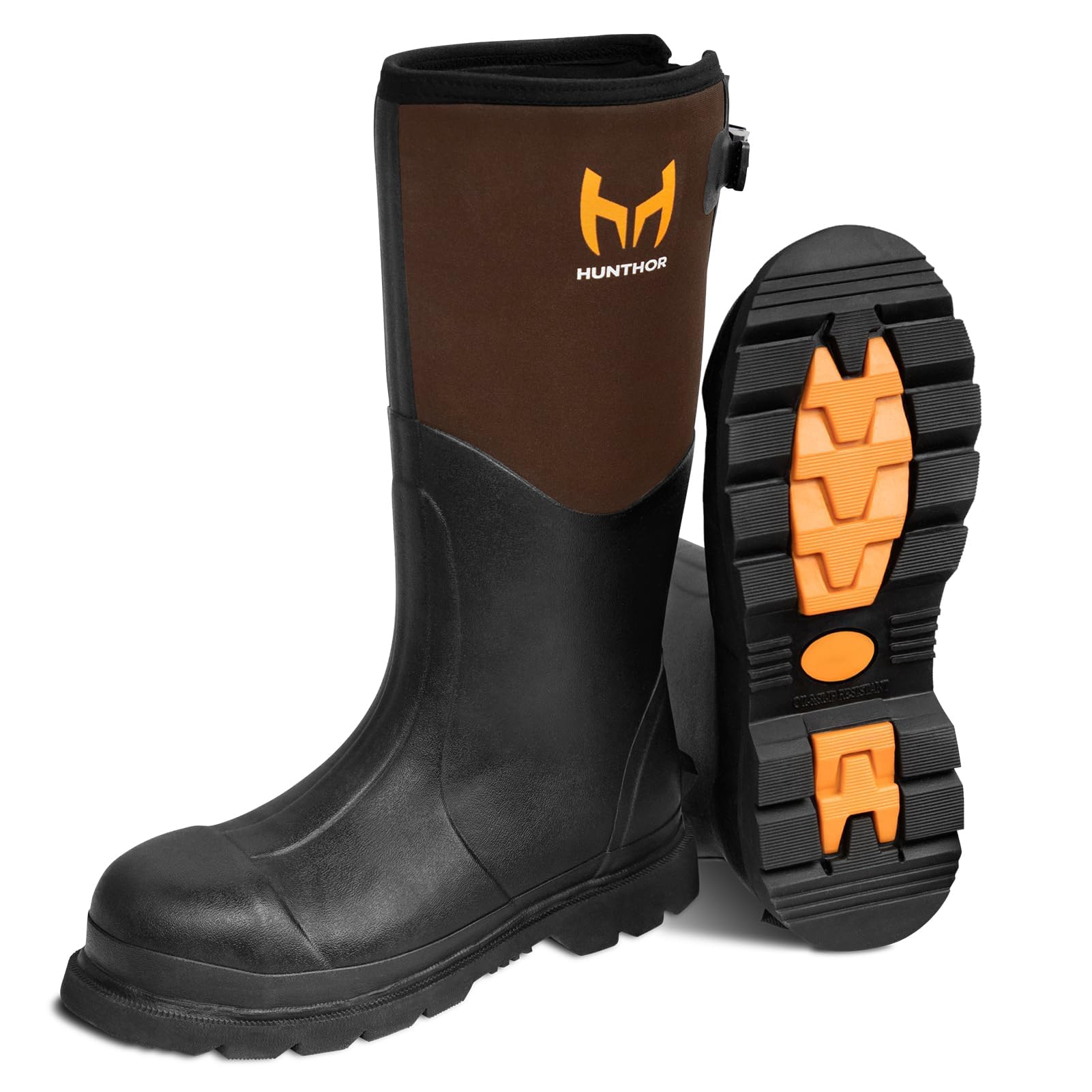
2. Hunthor Steel Toe Rubber Work Boots
A hosedown rubber shell that does not care what you step in.
If your boots end the day caked in mud, muck, or wash-down spray, a rubber shell is the sensible answer, and this is the entry-level way into one with a steel shank and steel toe intact. The outer is rubber with an anti-slip outsole and an easy-clean finish, so you can spray it down and be done. A back gusset design lets the shaft fit different calf sizes rather than forcing one fixed opening on every wearer.
Comfort gets real attention here — a supportive insole is meant to carry you through long construction shifts, and there is a back kick tab so you can pull them off without wrestling. It is a tall boot: the package measures 16.54 inches long, compared with the Georgia Wedge at 5 inches, so expect a full shaft rather than an ankle cut. That height is what keeps splash and mud off your legs.
The trade-off worth knowing: the durability picture is not unanimous, with some wearers reporting cracks developing in the material over time. Weight is also a split opinion, and at 4.41 pounds listed it sits close to the 4.5-pound Georgia Homeland — so do not expect a featherweight. Buy this as a wet-work pair you rotate, not as your only boot for a decade.
Wet-work value: rubber shell, steel toe, steel shank, and a washable finish at the entry level — the practical pick for farm, fishery, or muddy site work.
Rotate, don’t rely: cracking is reported by some, so treat this as a boot you cycle with a second pair rather than sole daily wear for years.
Best suited to: wet, messy jobs where you want to hose the boot clean in seconds.
One caveat: some rubber units develop cracks over time, so plan on rotation.
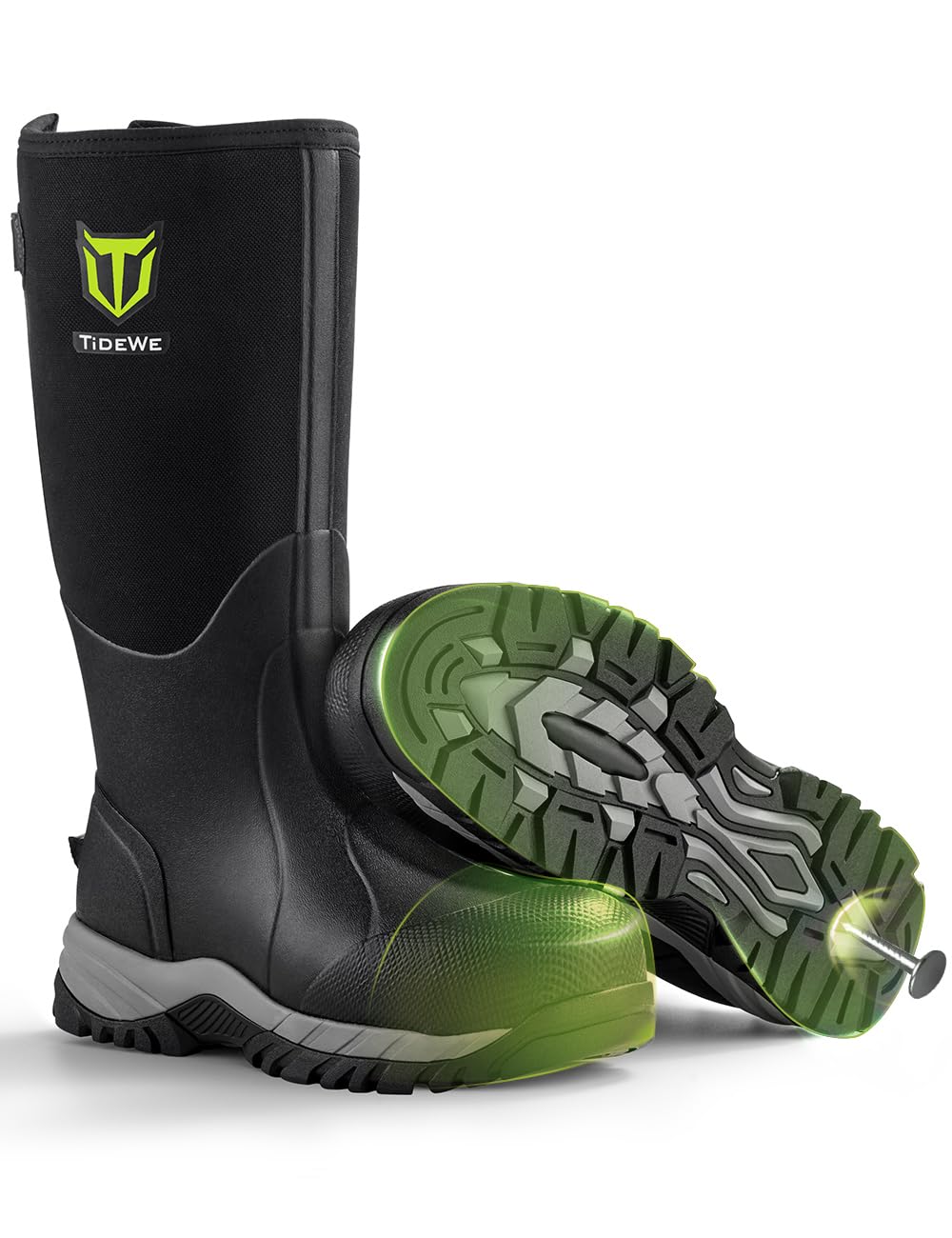
3. TIDEWE Rubber Work Boots Steel Toe
Puncture protection and warmth in one rubber boot built for cold, wet ground.
The number that sets this boot apart is the 6mm neoprene layer built into the shell, which adds warmth when the temperature drops while the breathable inner lining keeps air moving when it climbs. That combination is why it works from a chilly morning pour through to a warm afternoon without your feet cooking. The shaft measures 10 inches around, and the whole thing is a pull-on with a kick tab for fast on and off.
Underfoot, a steel shank sits between the insole and the outsole, and the maker says it gives both protection and enough comfort to wear through a full workday. A puncture-resistant layer adds secondary protection under the sole, and the steel toe is rated to withstand impact from falling or rolling objects. The rubber outsole has deep tread for uneven workplace terrain, and the whole boot is made from 100% waterproof rubber and neoprene.
Size this one carefully — the maker’s own guidance is to measure your foot and pick a size roughly 0.16 inches longer than your actual measurement. That is a real step most buyers skip, and it matters on a stiff rubber pull-on. Get it right and the 6mm neoprene shell keeps feet dry and warm without pinching across the instep.
Why it handles bad weather
- 6mm neoprene adds warmth as temperatures drop
- Breathable inner lining for warmer days
- Steel shank plus puncture-resistant underfoot layer
- 100% waterproof rubber and neoprene build
- Deep-tread outsole for uneven ground
What to plan around
- Sizing needs a real foot measurement — the maker asks for about 0.16 inches of extra length
- Stiff rubber pull-on takes a few wears to feel familiar
The right call for: cold, wet sites where you want warmth and hosedown cleanup in the same boot.
Measure first: buy only after checking your foot length against the size chart.
4. Georgia Boot Men’s Homeland Steel Toe Waterproof Work Boots
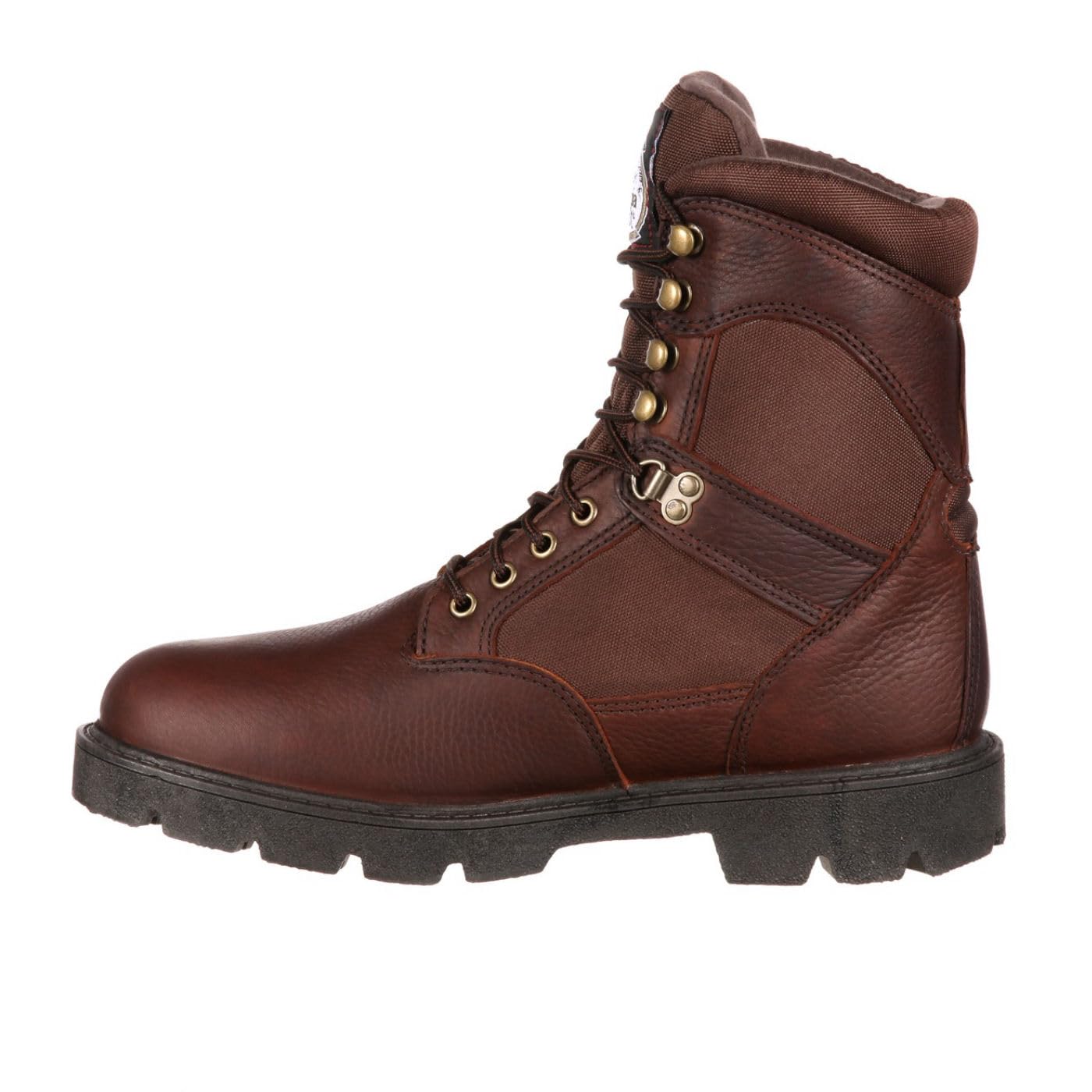
The lace-up workhorse with a jumper guard where the scuffs land.
General construction crews who want a traditional lace-up will recognize this shape immediately. The full-grain leather is soft and durable, and a jumper guard sits over the high-wear area to fend off the scuffs and abrasions that collect through a normal workday. Underfoot there is a steel shank for stability, an oil-resistant bumper, and a traction-ready outsole.
Comfort hardware continues up the boot: a cushioned insole, a fatigue-defying EVA midsole, and moisture-wicking linings. EVA is a lightweight foam that absorbs shock, so it is the layer that makes standing on a hard floor less punishing by the end of a shift. The ankle-high cut gives support without the tall shaft of a logger boot.
Reviewers praise the full-grain leather, the shape that holds up over time, and the price for what you get. Comfort is where opinions split, and fit runs narrow for some wearers who find it snug at first. If you have wider feet, size up or try a pair in person before ordering.
What the crew gets
- Jumper guard protects the toe-scuff zone
- EVA midsole absorbs shock on hard floors
- Steel shank adds stability under load
- Moisture-wicking lining manages sweat
- Oil-resistant bumper on the outsole edge
What to watch
- Fit runs narrow for some wearers
- Padding is thinner than some want
Made for: lace-up loyalists doing general construction who want a proven leather boot.
Try before buying: wider feet should size up or test in person.
5. Carolina 821 & CA825 Elm 8″ Unlined Logger Boots for Men

An unlined leather logger that breathes when the job heats up.
Late summer and early fall are where this boot earns its keep. The unlined construction lets air move through the leather instead of trapping it behind a liner, which keeps feet cooler on long shifts in warm weather. At 8 inches tall it is a full logger cut, and the listed weight is 3 pounds — lighter than the 4.5-pound Georgia boots in this group.
The shank is a triple-bar steel design, which means three steel bars rather than one strip run under the arch. That structure helps the boot keep its shape under pressure and gives real support on improve surfaces. A slip-resistant rubber lug outsole bites into slick and uneven ground, and a Pillow Cushion footbed with memory foam works to reduce foot fatigue over a long day. The boot is also ASTM-rated for electrical hazard protection.
Comfort is what carries it — the cushioning is serious enough that wearers notice less strain in their back, legs, and feet. Appearance earns praise too, and the brown leather looks right on any site. Two honest notes: fit runs narrow for some, and durability has split opinions, with a share of long-term reports saying the boot does not make it a full year.
Built for heat: unlined leather and a triple-bar steel shank make this the warm-weather climber’s boot in the lineup.
Know the bet: durability is not guaranteed across the board, so think of it as a boot you inspect regularly rather than one you retire on a calendar.
Pick this one if: you log, climb, or work in summer heat and want breathability plus arch support.
Size with care: narrow fits are a common note, so check the size chart before ordering.
6. Carolina Men’s 8″ Unlined Steel Toe Work Boots
shank

Waterproof leather and a triple-rib shank for wet utility work.
Linemen and utility crews working wet, uneven ground get the most from this one. The waterproof construction keeps feet dry when rain rolls in on top of a hot summer day, and the steel toe cap guards against impact and compression. A breathable lining lets moisture escape so the boot does not turn into a sauna during a long shift.
The shank is a triple-rib steel design — three raised ribs running under the arch that stiffen the midfoot and add durability. On rough terrain that translates to less fatigue, because your arch is not fighting the boot for support. The slip-resistant rubber lug outsole keeps footing steady on varied ground, and the boot carries electrical hazard protection for industrial and utility settings. A memory foam footbed rounds out the comfort side.
The listed weight is 3 pounds, matching the other Carolina loggers in this lineup, and that keeps it lighter on the ladder than the 4.5-pound Georgia choices. Reviewers consistently praise the build, the fit, and the memory foam footbed. The split opinion lands on water resistance and warmth — some find it waterproof and warm in winter, others say water gets through. Seam care on a leather boot matters here, so give it conditioner and check the seams.
Utility-grade: waterproof build, triple-rib steel shank, and EH protection make this the wet-weather lineman’s boot in the group.
The seam caveat: water resistance opinions divide, so maintain the leather and seams rather than assuming a lifetime seal.
Go here for: utility, lineman, and industrial work in wet weather with uneven footing.
Keep it conditioned: leather water resistance fades without upkeep.
Know the Specs
What a steel shank actually does
A steel shank is a flat steel strip that sits between the insole and the outsole, running under the arch. Its job is to keep the boot from folding when you push off a ladder rung or plant your foot on an uneven surface. Boots with only a leather or composite board in that spot tend to sag over time and leave the arch unsupported. The Carolina boots here use a triple-bar or triple-rib steel shank, which means several raised steel ribs rather than one flat strip, adding stiffness across the midfoot.
Toe caps: steel versus composite
A steel toe is a metal cap that protects against impact and crush hazards. A composite toe cap does a similar protective job from a non-metal material, which is the pick when a site or a metal detector requires a non-metal boot. Weight is the practical difference to think about, though the listed figures here land close together — the Carolina logger boots list at 3 pounds, and the Georgia leather boots list at 4.5 pounds. Whichever you pick, the shank and the toe are two separate protections, so check both.
Leather uppers versus rubber shells
Leather breathes and molds to your foot, and a full-grain waterproof leather with a CORDURA panel resists tears and scuffs. Rubber shells shrug off mud, manure, and washdown and clean up in seconds. Choose leather for dry ground and general construction, rubber for farm, fishery, and wet pours. The TIDEWE adds a 6mm neoprene layer inside the rubber for warmth, a feature leather boots rarely carry in the same way.
Outsole patterns and what they grip
A wedge sole runs flat from heel to toe, putting more rubber down for concrete and shop floors and staying non-marking. A rubber lug outsole has deep teeth that bite into mud, gravel, and uneven terrain. If your day mixes a smooth floor and a muddy yard, pick the sole that handles the worse surface. The Carolina loggers use oil- and slip-resistant rubber lugs, while the Georgia Wedge uses a poly wedge ultra outsole rated for oil and chemical resistance.
Common Questions
What does a steel shank actually do for my feet?
How do I know a boot has a real steel shank and not plastic?
Should I pick a steel toe or a composite toe?
How long should a steel shank work boot last?
Can I resole a Goodyear welt work boot?
Do steel shank boots run true to size?
Are rubber work boots with a steel shank as safe as leather ones?
What is the difference between a wedge sole and a lug outsole?
How should I care for the leather on a waterproof work boot?
Will a steel shank make the boot heavy?
The Bottom Line
The Georgia Boot Wedge takes the top spot for work boots with steel shank because it pairs a steel shank (a stiff bar under the arch that supports your foot) and Goodyear welt construction (stitched so the sole can be replaced) with an SPR leather upper the maker rates roughly 3 times as strong as traditional leather. The result: a boot that holds its shape with no break-in phase and resists scuffs at the toe box. If you work near live wire or heavy loads, the Georgia Homeland adds ASTM F2413 protective toe and electrical hazard protection. For wet, messy work you can hose clean, the rubber TIDEWE brings a 6mm neoprene layer (a synthetic rubber that holds warmth) for cold jobs. If you need a non-metal toe cap, reach for the Carolina CA8528. Match the outsole to the surface you walk on most, and the steel shank will handle the arch support.
How we choose
We do not accept paid placement. Every pick is matched to a real buyer and a real use-case; we do not hands-on test units.
Sources
Specifications: manufacturer listings and product documentation. Review insights: verified customer reviews, as of November 2026. Pricing: not shown on this page (it changes often); check the current price via the retailer link.
As an Amazon Associate, Tactical Gear Guy earns from qualifying purchases. This does not affect which products we feature.