Specs are compiled from manufacturer listings and verified buyer reviews and can change over time — please confirm the key details on the product page before buying.
The right youth glove is the one your player can squeeze shut with one hand. A stiff glove that won’t close turns every catch into a flinch, and a flinch turns a kid off the sport. That is why the picks below are judged first on how easily a young hand squeezes the pocket shut, then on leather quality, web type, and how much break-in they demand before game day.
This guide is built by comparing the manufacturers’ published specifications and the patterns across verified customer reviews, so you get each pick’s real strengths and trade-offs instead of marketing spin.
You will see the size-to-age math, the difference between a basket web and an H-web, and which gloves arrive ready to play versus stiff. Every pick here is a genuine youth fit, and this breakdown of the best youth baseball gloves and mitts covers infield, outfield, and catcher options.
Top Picks


How To Choose The Best Youth Baseball Gloves and Mitts
Most first-glove mistakes come from buying by brand instead of by hand size and position. A glove two inches too big swallows a small hand and makes the pocket impossible to close. Start with the two numbers that matter most: the player’s age and the glove’s inch measurement.
Match the inch size to the player’s age
For tee-ball and the earliest years, a 9-inch to 10-inch glove suits the smallest hands. As players move into coach-pitch and kid-pitch around ages 6 to 9, a 10.5-inch to 11-inch glove gives a bigger catching window without overwhelming the hand. An 11.5-inch model fits older youth players who are already fielding grounders with confidence. Bigger is not automatically better — a 12-inch pocket on a 7-year-old’s hand means dropped balls, not more catches.
Pick the web to match the position
A basket web gives a deep, forgiving pocket that helps beginners scoop and hold the ball. An H-web creates an open window so players can see the ball into the glove, which helps on fly balls and line drives. An I-web is lighter and built for infielders who need quick transfers. If your player rotates positions, an all-position glove saves you from buying twice.
Understand what break-in really means
“Ready-to-play” means the glove arrives soft enough for a young player to close without a long conditioning period. “90% factory, 10% player” means most of the work is done but the glove still shapes to the hand. A glove with a full-grain leather shell tends to hold its shape longer but may arrive stiffer. For a first glove, soft leather beats stiff leather every time.
Side-by-Side Comparison
| Model | Best For | Size | Glove Type | Web Type | Amazon |
|---|---|---|---|---|---|
| Easton Moxie Youth★ Best Overall | First-glove beginners | 10.5″ – 11″ | Infield | Basket | Amazon |
| Wilson A200 EZ CatchTee-Ball Starter | Tee-ball starters | 9″ – 10″ | All Position | H-Web | Amazon |
| Easton Havoc YouthBest Adjustable Fit | Ages 3–9 all-around | 10.5″ | Infield | I-Web | Amazon |
| Rawlings Mark of a PRO LITE | Growing athletes, camo look | 9.5″ – 11.5″ | Outfield | I-Web | Amazon |
| Mizuno Prospect PowerClose | Kids who can’t close a glove | — | Baseball | Basket | Amazon |
| Rawlings Renegade | First base and catcher | 32.5″ catcher | Catcher | 1-Piece Solid | Amazon |
| Mizuno Prospect Select | Serious travel-ball infielders | — | Infield | H-Web | Amazon |
| 44 PRO Rise Youth | Ages 8–12 serious players | 11.5″ | Infield & Outfield | H-Web | Amazon |
Detailed Reviews
1. Easton Moxie Youth Baseball Glove
Our pick — 4.5+★ from 450+ verified ratings; the strongest balance of quality and price.
A first glove soft enough to squeeze on day one, with a pocket that absorbs the sting
The Moxie solves the single biggest reason young players quit catching: the ball hurts. Easton’s Zero Shock sting reduction technology (padding built into the palm that softens the impact of a hard-thrown ball) means a catch lands as a thump instead of a yelp. That padding sits behind an all-leather shell that arrives soft, so a young player with small hands can close the pocket without a long conditioning process.
The 10.5-inch basket web is sized for ages 6 through 9, which is exactly the stretch where players graduate from tee-ball to real pitches. A basket web builds a deep, forgiving pocket that helps beginners scoop and hold the ball instead of letting it roll out. Padded finger linings add another layer of protection on the digits, and the leather lining keeps the inside comfortable through a full practice.
What wins people over is the build quality — it is the most-discussed strength of this glove and it clearly holds up season after season in the fielding reports. Colors draw real affection too, which matters more than adults admit when a kid has to want to wear the thing. Sized against the Wilson A200 below at 9 inches to 10 inches, the Easton’s 10.5-inch to 11-inch fit gives a bigger catching window for players at the upper end of that age band. Box it up as the safest first purchase in this group.
What earns its keep
- Zero Shock palm padding kills the sting on hard catches, so beginners stop flinching
- All-leather shell is soft and easy to squeeze with little break-in required
- 10.5-inch basket web fits the 6-to-9 age band at any position
- Padded finger linings protect small hands on cold-morning practices
Where it asks a little
- The leather is soft for comfort, so a hard-throwing travel-ball player may want a stiffer shell
- Right-hand throw only in this listing, so a left-handed player needs a different model
Buy it for: the beginner or second-year player who needs a glove they can close on their own without a break-in project.
Hold off if: your player is already throwing hard in travel ball and wants a stiffer, more premium leather.
2. Wilson A200 Youth T-Ball & Baseball Glove + Mitt
The 9-inch tee-ball mitt built to keep its shape, not flatten out by mid-season
Rolled Dual Welting is the detail that separates the A200 from cheaper tee-ball gloves. Wilson builds that reinforcement into the liner instead of sitting it on the surface, so the pocket structure resists flattening and stays consistent catch after catch. For a small player still learning to track the ball, a pocket that keeps its shape is the difference between a glove that works in April and one that still works in July.
The H-web creates a clear window to the ball, which helps kids see the catch coming and build confidence tracking every hop. Wilson calls this an all-position pattern, so a player can move from infield to outfield or the mound without switching gear. The strap is a genuinely useful addition — it keeps the ball settled inside the pocket on impact, and it is one of the praised features in the reviews. The 9-inch size sits at the small end of the youth range and is best for tee-ball and the earliest coach-pitch years.
Here is the honest catch: size feedback splits cleanly. Some families find the 9-inch model spot-on for a young beginner, while others say it runs too small and the age guidance feels off. That is a fit question, not a quality problem — the leather and build hold up. If your player is on the taller side for their age or already turning 8, size up. Rawlings sizes its Players Series at 11.5 inches, a notably larger option in the same entry tier.
Shape that survives the season: Rolled Dual Welting in the liner is the real story — a pocket that resists flattening is worth more to a 6-year-old than any cosmetic detail. Pro Stock Leather shell, H-web window, and a ball-retaining strap round it out.
Fit is the decision: treat the 9-inch size as a tee-ball-first pick. Confirm your player’s age and hand size before ordering, because the size feedback genuinely splits.
Reach for it when: you want a first tee-ball mitt with pro-level shape retention and a strap that keeps the ball put.
Size up instead if: your player is already past tee-ball or on the bigger side for their age — 9 inches will feel tight.
3. Easton Havoc Youth Baseball Glove
The wrist strap that tightens as your player grows, so one glove lasts longer
Kids grow out of gloves almost as fast as they outgrow cleats. The Havoc fights back with an adjustable velcro wrist closure that cinches down for a smaller hand and loosens as it grows, which is the practical answer for a family buying one glove per season. A super-soft leather lining keeps the inside comfortable during long practices, and the soft leather palm holds up to regular use.
It is aimed at ages 3 to 9, a wide band that covers late tee-ball through the early kid-pitch years. Right-hand throwers wear it on the left hand, and the PVC paint-splatter back gives it a look kids actually want. Fit feedback is strong here, with room for growth being the note that comes up most.
Buyers keep coming back to one thing: how the glove flexes. Some players say it feels softer right from the start. Others say it feels a little stiff at first, which is normal for a leather glove. Neither is a defect — it usually depends on hand strength and how often the player uses it. Quality is what the reviews praise most by a wide margin, so the build is the safer bet in this tier.
Room-to-grow fit: the adjustable velcro wrist is the standout, giving a snug fit now and slack later so the glove ages with your player instead of getting outgrown in one season.
The flex question: some young players find it soft right away, some find it a touch stiff initially. Give it a few practices and it settles.
Pick this if: you want an infield glove with a wrist strap that tightens for small hands and loosens as they grow.
Think twice if: your player needs a big catching window — 10.5 inches is a compact infield pattern.
4. Rawlings Mark of a PRO LITE T-Ball & Youth Baseball Glove

A hunting-camo leather glove for the kid who wants to be noticed at the plate
The camo print is the hook, but the full-grain leather shell is the reason it earns a spot. Rawlings builds this with leather meant to hold up over seasons, and it arrives with a broken-in feel instead of demanding a long conditioning project. The Pro-I web secures catches and supports quick transitions, which helps an all-around player move between positions without fumbling the transfer.
The Youth Pro Taper wrist design gives a snug fit for young players, though it takes a little getting used to if your player is between sizes. Sizes run from 9.5 inches to 11.5 inches, so you can match the glove to your player’s age and skill level — 10.5 inches is the size listed here, a solid middle ground for growing athletes. It is available for both right and left hand throwers, which is not a given across this category.
Built for outfield play, the 10.5-inch I-Web pattern gives a lighter glove with quick hands. It is worth knowing the wrist taper runs snug, so if your player sits between sizes, err toward the larger one. The full-grain leather is the real selling point once the camo novelty wears off.
Worth grabbing for: an outfielder who wants a distinctive look and a genuine full-grain leather shell that feels broken-in from day one.
Consider the size up if: your player is between wrist sizes — the Youth Pro Taper runs snug.
5. Mizuno Prospect PowerClose Youth Baseball Glove
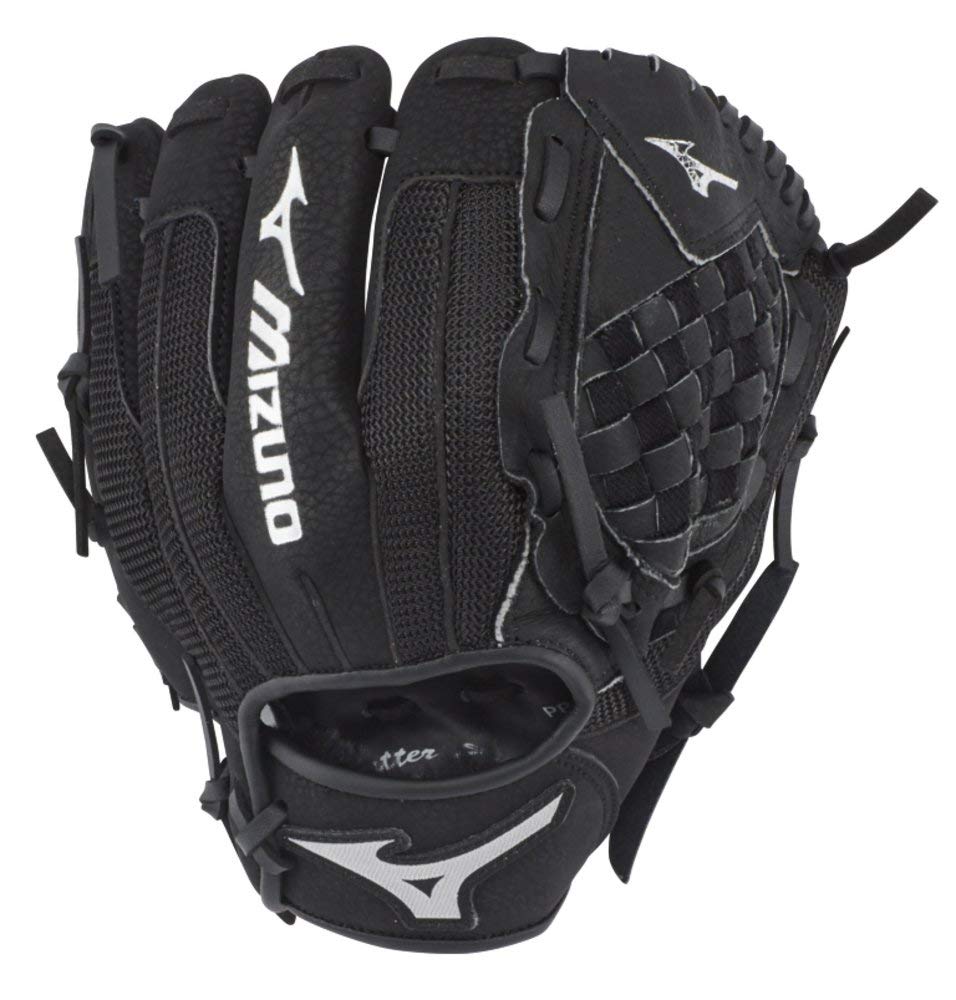
Built around one goal: a young player who can finally snap the glove shut
Mizuno’s PowerClose line exists because so many young players can’t close a standard glove. The V-Flex Notch and the Less 2 Lacing design — which removes the last two lace loops on the web — open up flexibility right along the closing axis. Add the easy-to-close feedback owners consistently report and you have a glove engineered for the kid whose hand strength is still catching up to their enthusiasm.
The full-grain pigskin leather gives durability, while the ButterSoft PU palm liner adds feel and comfort inside. Mizuno’s MZO lining works to disperse perspiration away from the skin, which keeps the glove from getting slick and uncomfortable in summer heat. An air mesh back adds flexibility and breathability, and the basket web builds a deep, forgiving pocket for beginners learning to scoop. It is a genuine first-glove pick for tee-ball and coach-pitch players.
Catching confidence is what the reviews center on — kids stop missing and dropping nearly everything once the glove closes easily. It is worth knowing the PowerClose focus on flexibility means it is not the stiffest leather in this lineup. That flexibility is the point, not a flaw, but a player moving into harder competition may eventually want more structure. For the kid who can’t close their current glove, the V-Flex Notch is the fix.
The closing advantage: the V-Flex Notch and Less 2 Lacing are purpose-built to make squeezing easy, and ease of closing is the praise that shows up most in owner feedback. Full-grain pigskin, ButterSoft palm liner, MZO sweat-dispersing lining, and an air mesh back round it out.
Not the stiffest leather: flexibility is the design goal here, so a hard-throwing older player may outgrow the soft feel sooner than the size.
Reach for it if: your player has the hand strength of a younger kid and needs a glove that closes almost on its own.
Pass it by if: your player is already a strong, hard-throwing fielder who wants more rigid structure in the pocket.
6. Rawlings Renegade Youth Catcher’s Mitt

A real leather catcher’s mitt sized for young hands, not a scaled-down afterthought
Catching is the position where a cheap glove hurts most, and the Renegade is the one serious specialty mitt in this lineup. The leather shell palm offers a pro feel with shape retention that holds up through the season, while cushioned palm and index finger pads add comfort against the impact of repeated catches. This is a 32.5-inch catcher’s mitt built on a one-piece solid web, so it gives a stable, closed pocket that holds a pitched ball securely.
Rawlings builds this with a 90% factory, 10% player break-in, meaning most of the conditioning is done before it ships. The mitt fits both big and small hands, which makes it flexible across a range of youth players, and it earns strong marks on value and leather quality in the fielding reports. Quality is the most-discussed strength here, and it stands out as one of the few dedicated catcher’s mitts in the youth tier that uses genuine leather.
Fit and durability are the two areas where feedback splits. Some families find it durable, while others note laces wearing through over time — a known watch-point on any mitt taking repeated pitching. Fitting both big and small hands also means it will feel roomier to a smaller player. If your player catches regularly, check the lacing and re-tie promptly. For value in a leather catcher’s mitt, this one is hard to argue with.
Why it earns the catcher’s slot
- Genuine leather shell palm with shape retention for a stable, secure pocket
- Cushioned palm and index finger pads soften the impact of repeated pitches
- 90% factory break-in means it arrives nearly game-ready
- 32.5-inch catcher’s pattern on a one-piece solid web for a closed, reliable pocket
What to keep an eye on
- Laces are the part to watch — some mitts wear through them over time, so re-tie promptly
- Fits big and small hands, which means a smaller player may find it roomy
- Specialty catcher’s mitt only — not a swap-in for infield or outfield play
Made for: the youth player whose position is behind the plate and needs a real leather catcher’s mitt that works from the start.
Not the one for: a player who rotates through infield or outfield — this is a single-purpose catcher’s tool.
7. Mizuno Prospect Select Youth Infield Glove

The step-up glove for a young infielder who has outgrown beginner leather
This is where a youth glove starts to feel like a serious piece of equipment. Mizuno builds the Prospect Select with a full-grain leather shell for durability that holds its shape through travel-ball schedules. The HiLo Lacing — an alternating lace pattern — keeps the integrity of a fully-laced web while giving more flexibility, so an infielder gets both a stable pocket and room to squeeze. That is the balance a developing player needs as they start turning double plays.
The H-web pattern is an infield classic, giving an open window to the ball and quick transfers. Mizuno’s ButterSoft PU palm liner adds feel and comfort, and the MZO lining disperses sweat away from the skin so the glove stays comfortable through a long tournament day. The listing describes these as professional patterns created for the best players in the world — a design lineage, not a claim that this glove is for adults. It is sized and built for youth players ready for the next level.
The break-in is listed as soft, which means it should not demand a long conditioning period. The catch is that premium full-grain leather still rewards a little shaping to your player’s hand, so plan on a few practices before game day. This is the right pick for a young infielder playing real competition, not a tee-ball first-timer. If your player rotates to outfield often, the 44 PRO Rise below covers both positions.
Where the upgrade shows: full-grain leather and HiLo Lacing deliver shape that lasts plus a flexible web — a genuine step up for a player with a set position. ButterSoft PU liner and MZO sweat-dispersing lining keep it comfortable in long tournament days.
Break-in still needed: soft is the listing, but full-grain leather still wants a few practices of shaping to fit your player’s hand.
Choose it for: a committed young infielder who plays real competition and has outgrown soft beginner leather.
Look past it if: you need one glove for a rotating player — this is an infield-first pattern.
8. 44 PRO Rise Youth Baseball Glove, 11.5″ H-Web
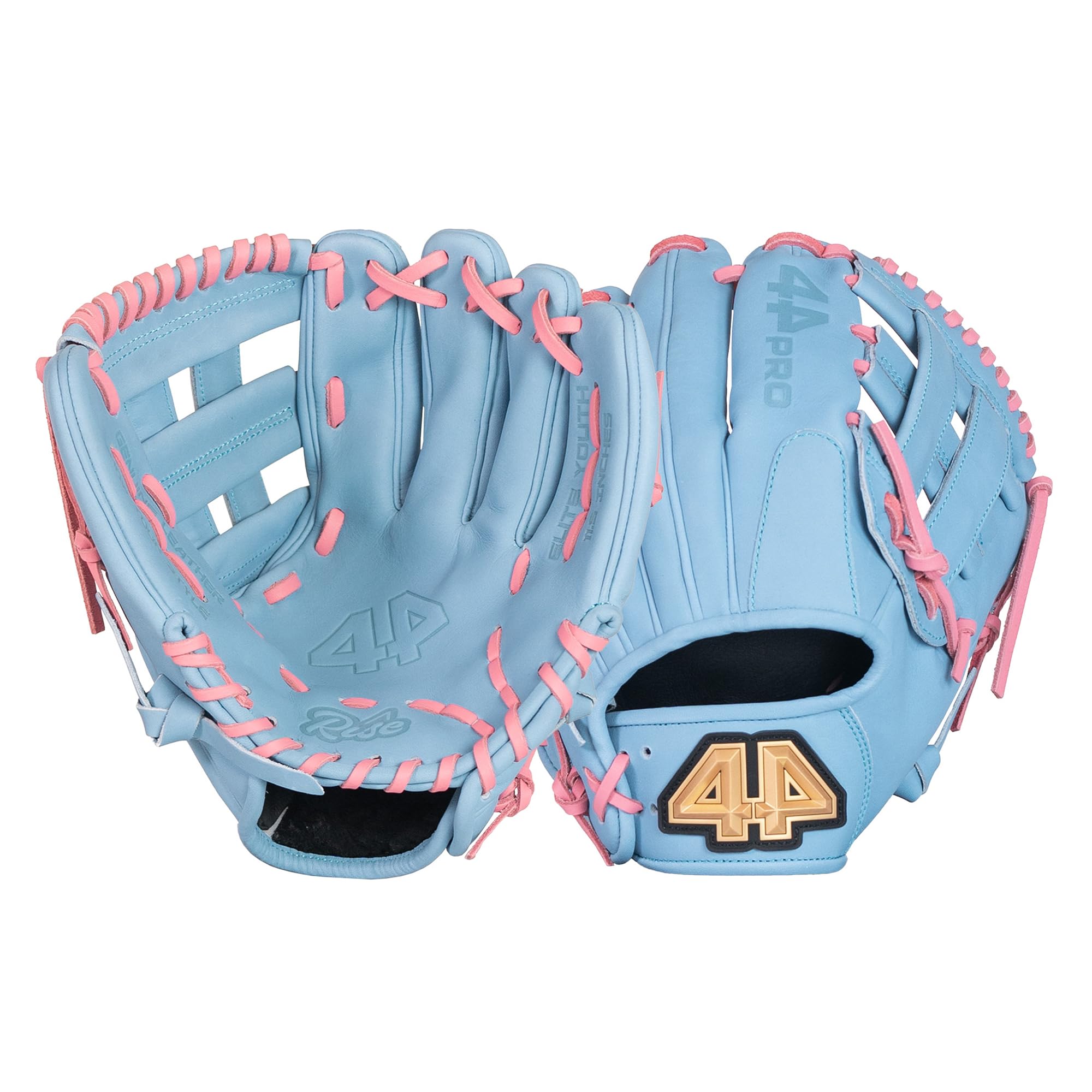
Pro-level steerhide leather in a narrow-fit 11.5-inch shell for serious 8-to-12 year olds
The Rise is the top of this lineup, and the leather explains why. It is crafted from Steer Series US Steerhide leather, which brings both durability and softness plus a quicker break-in period than you would expect from pro-grade material. The 11.5-inch H-web is aimed at players aged 8 to 12, and the narrow fit with an ultra-light build helps a young player get their hand aligned properly for better fielding form. For a kid playing real innings, that alignment matters.
You get a balance of control and reach from a medium pocket depth (the size of the catching area). 44 PRO built the pattern for both infield and outfield play, so one glove covers grounders up the middle and fly balls to the gap. Reinforced stitching and premium laces hold the shape through intense practices, and construction quality is the strength owners mention most in feedback. Compared with the Mizuno Prospect PowerClose above, this glove asks for more break-in work but delivers a stiffer, more durable steerhide shell that a competitive player will appreciate deeper into the season.
Here is the honest side: the break-in experience genuinely varies. Some players find it easy to shape, while others find it wants more patience before it feels fully game-ready. A brand-new steerhide glove always needs some work, so plan on a few sessions of catch. For a serious 8-to-12-year-old who plays multiple positions, this is the one to grow with.
Pro leather, youth fit: US Steerhide leather, reinforced stitching, and premium laces mean this one is built to last, while the narrow fit and medium pocket give an 8-to-12-year-old real control. Infield and outfield coverage in one glove is a genuine plus for rotating players.
Break-in varies: some players shape it quickly, others need patience. Steerhide always wants a few catch sessions before it feels right.
Worth the step up for: a serious 8-to-12-year-old playing multiple positions who wants pro-grade steerhide that lasts beyond a season.
Stick with a softer option if: you want a glove that is game-ready the day it arrives with no break-in sessions.
Know the Specs
Glove Size In Inches
The inch number tells you how big the pocket and shell are. A 9-inch or 10-inch glove suits the smallest tee-ball hands, while a 10.5-inch to 11-inch model fits the 6-to-9 range. An 11.5-inch glove is for older youth players fielding grounders with confidence. A glove that is too big on a small hand makes the pocket impossible to close.
Web Type And Position
A basket web builds a deep, forgiving pocket that helps beginners scoop and hold the ball. An H-web gives an open window so players can track the ball. An I-web is lighter and built for quick infield transfers. An all-position glove saves you from buying separate gloves as a player moves around the diamond.
Break-In Level
“Ready-to-play” means the glove arrives soft enough to close without a long conditioning period. “90% factory, 10% player” means most of the work is done but the glove still shapes to the hand. Full-grain and steerhide leather tends to arrive stiffer but holds its shape longer. A first glove should lean soft.
Sting Reduction And Palm Padding
Padding built into the palm softens the impact of a hard-thrown ball, which matters most for young players still learning to catch. Palm pads and index finger pads reduce the sting on repeated catches. For a catcher taking pitch after pitch, cushioned padding is worth prioritizing.
Common Questions
What size youth baseball glove should I buy for my child?
What does “right hand throw” mean on a glove listing?
Do youth baseball gloves need to be broken in before playing?
Is a basket web or H-web better for a beginner?
Can my child use a catcher’s mitt at other positions?
What is sting reduction technology on a youth glove?
How do I know if a youth glove is too big for my child?
Is full-grain leather worth it for a youth player?
How should I care for a youth leather baseball glove?
What age is a youth baseball glove designed for?
The Bottom Line
For most families, the youth baseball gloves and mitts winner is the Easton Moxie because its Zero Shock palm padding and soft all-leather shell let a young player close the glove and stop flinching on the catch. If your player needs a glove that closes almost on its own, the Mizuno Prospect PowerClose is purpose-built for that. And for the player behind the plate, the Rawlings Renegade is the one to reach for. The Easton Moxie backs that up with 4.5+ stars across 400+ owners, a strong signal for a glove this easy on a beginner’s hands.
How we choose
We do not accept paid placement. Every pick is matched to a real buyer and a real use-case; we do not hands-on test units.
Sources
Specifications: manufacturer listings and product documentation. Review insights: verified customer reviews, as of November 2026. Pricing: not shown on this page (it changes often); check the current price via the retailer link.
As an Amazon Associate, Tactical Gear Guy earns from qualifying purchases. This does not affect which products we feature.