Specs are compiled from manufacturer listings and verified buyer reviews and can change over time — please confirm the key details on the product page before buying.
If your feet ache by mid-afternoon and your toes feel pinned inside your shoes, the fix is usually a flatter sole and a roomier front end. Zero drop barefoot shoes put your heel and toes at the same height off the ground and let your toes splay out naturally. The picks below cover trail boots, gym trainers, road runners, and everyday walkers, so you can match the shoe to how you actually move.
This guide is built by comparing the manufacturers’ published specifications and the patterns across verified customer reviews, so you get each pick’s real strengths and trade-offs instead of marketing spin.
A true barefoot shoe should feel flat underfoot and loose around the toes, not tight and lifted at the heel. Here is what separates a genuine pair from a marketing label, and which ones hold up on long days. The right pair of zero drop barefoot shoes should let your toes spread wide and your heel sit level with the ground.
Top Picks


How To Choose The Best Zero Drop Barefoot Shoes
The single check that saves you a return: set the shoe on a flat table and compare heel height to toe height. If the heel sits higher than the front, it is not zero drop, no matter what the listing says. Everything else — upper material, tread, insole — comes second to that flat platform.
Check the platform before anything else
Zero drop means the heel and forefoot sit at the same distance from the ground, so the shoe does not tip you forward or back. That flat stance is what lets your ankle and calf work through their full range instead of being propped up. If you are coming from a cushioned trainer, expect your calves to feel the change for the first week or two.
Judge the toe box by feel, not by the label
A generous toe box lets your big toe and pinkie toe spread without pressing the sides. Press your thumb across the widest part of the front — if the material gives easily and your toes can wiggle sideways, it is doing its job. Several picks here earn their best feedback on exactly this point, and a couple run narrower than the wording suggests.
Match the sole thickness to your terrain
A thin sole lets you feel the ground, which is the whole point of a barefoot shoe on grass, trail, or gym floor. The trade-off is less protection from sharp rocks and hard pavement. For road running and long standing shifts, lean toward the pairs with a little more midsole foam; for lifting and trail work, favor the flatter, firmer builds.
Side-by-Side Comparison
| Model | Best For | Drop | Toe Box | Build | Amazon |
|---|---|---|---|---|---|
| Jim Green African Ranger Boot★ Best Overall | Trail and work wear | Zero drop | Wide, roomy front | Full grain leather | Amazon |
| Xero Shoes Nexus KnitMost Versatile | Gym and everyday wear | Zero drop | Knit upper | Vegan knit | Amazon |
| Flux Adapt Graphene XTTop Performer | Cross training and lifting | Zero drop | Wide toe box | Ripstop with graphene | Amazon |
| Vivobarefoot Primus Lite 3.5 | Training and casual runs | Zero drop | Wide fit | Mesh, vegan | Amazon |
| HOBIBEAR Mid Top Boot | Winter walking and commute | Zero drop | Wide toe cap | Mid top, warm upper | Amazon |
| WHITIN S880 | Everyday walking and errands | Zero drop | Wide toe box | Mesh with EVA midsole | Amazon |
| WHITIN S885 | Road running and long walks | Zero drop | Wide toe box | Mesh with EVA foam | Amazon |
| Mens Zero Drop Gym Shoe | Gym sessions on a budget | Zero drop | Anatomical toe box | Mesh upper | Amazon |
| Hike Comforto Max | Recovery walking and travel | Zero drop | Wide toe box | Wool-knit upper | Amazon |
Detailed Reviews
1. Jim Green Men’s Barefoot African Ranger Boots
Our pick — 4.5+★ from 300+ verified ratings; the strongest balance of quality and price.
A leather work boot that bends like your own foot instead of fighting it.
The Ranger takes the zero drop idea somewhere most barefoot shoes never go: full grain leather, a work boot silhouette, and a lace-up build you can wear on a trail or a job site. Your heel and forefoot sit level, and the sole is thin enough that you read the ground under you. If you want a barefoot platform in a boot built for weather and rough terrain, this is the one that covers both.
What wins people over is the combination of that sturdy leather shell and the ground feel underneath, which owners describe as close to walking unshod. The toe area carries real room, so your big toe and pinkie toe can spread out instead of rubbing the sides. And the upper flexes and twists with your foot rather than forcing it into a fixed shape.
The honest catch: all that leather comes with break-in time. Fresh from the start the boot is stiff enough that you will want short walks first, not a full shift on day one. It is also the heaviest option here by a wide margin compared with the knit trainers below.
What earns it the top spot
- Zero drop platform with a genuinely thin sole for ground feel
- Full grain leather that survives weather and abrasion
- Roomy front end that lets toes spread without rubbing
- Flexible enough to bend and twist like your own foot
Where it asks more of you
- Leather needs a break-in period before it softens
- Heavier build than any knit shoe on this list
- No arch support, by design — you feel everything
Made for: trail walkers, outdoor workers, and anyone who wants a leather boot that moves like a moccasin.
Think twice if: you want to lace up and go the same day — this one rewards a little patience.
2. Xero Shoes Men’s Nexus Knit Zero Drop Sneaker
The one pair that walks into the gym, the office, and the coffee shop without looking out of place.
Xero’s Nexus Knit is a barefoot shoe dressed as a normal sneaker. The knit upper breathes, the whole thing stays light on your foot, and the zero drop sole gives you that flat, level stance. It is 100% vegan too, for anyone avoiding animal leather. They read as a lifestyle sneaker rather than a technical oddity, which is why they pull the most favorable comments about looks on this whole list.
On comfort, buyers report the shoe sits easy through the day, with a secure feel that holds the midfoot without pinching. The flexible knit hugs the foot instead of bagging around it. If your daily routine shifts between errands, a workout, and an evening out, this is the pair that does not need swapping.
What to watch: sizing splits opinions here. Some find the front a touch tight while others say it runs large, so measure your foot against the size chart rather than guessing from your old sneakers.
Durability asterisk: a thinner knit upper means you should keep these off coarse trail and gravel. Treated as a gym and street shoe, they hold up fine.
Pick this one if: you want a barefoot feel inside a sneaker that still looks sharp.
Look elsewhere if: you plan on rocky trails — the knit wants pavement, not scree.
3. Flux Footwear Adapt Graphene XT Cross Training Shoes
Built for the lifter who wants a flat, wide platform under a barbell and a toe box that still lets toes spread.
The Adapt Graphene XT is the crossover pick for strength work. It runs the widest toe box in this line-up against a flat, zero drop platform, so your toes can align and press evenly while you load the bar. The upper uses ripstop — a woven fabric with tiny reinforcement threads that resist tears and abrasion — plus a graphene layer. The maker says the graphene layer adds tear resistance without stiffening the ripstop.
Owners push these hard through CrossFit, powerlifting, and weightlifting and report their feet stay comfortable under load, with support they trust when the weight goes up. The fit runs true to size for most, and the grip holds through sprints, jumps, and lateral cuts. The foot protection underfoot is a real strength when you are moving fast under a bar.
Why lifters will like it
- Wide toe box that lets toes sit flat and spread during heavy sets
- Ripstop and graphene construction for tear and abrasion resistance
- Grippy sole for sprints, jumps, and side-to-side work
- True-to-size fit for most buyers
Before you order
- The maker suggests sizing up a half size for the best fit
- Spot clean only — no machine wash, no bleach
- Firmer ride than the knit trainers if you want squish underfoot
The fit: weightlifters and CrossFit regulars who want a stable, wide base under a heavy bar.
Not the pick for: long road miles — this is a training-floor shoe first.
4. Vivobarefoot Primus Lite 3.5

The closest thing to going barefoot while still wearing a shoe on your training day.
Vivobarefoot built the Primus Lite 3.5 around a single goal — getting your foot as near to the ground as a shoe allows. The mesh upper is light and breathes well, and the sole is ultra-thin with a hexagonal tread pattern for grip on loose and uneven surfaces. It is fully vegan, and the flexibility lets your foot move through its natural range on runs, training sessions, and everyday wear.
The ground feel is the headline, and buyers back it: they report the shoe grips on rocks and tree roots and stays comfortable across a range of uses. The design and flexibility earn consistent praise, and it does not feel like a compromise shoe when you wear it casually. Compared with the Xero Nexus above, the sole here is thinner and the ride firmer — you read the terrain underneath you on the Primus in a way the knit trainer softens out.
The trade-off worth knowing: durability is the split. Some owners wear them for a long stretch without issue, while others report seams giving way within a few days of hard use. If you plan on pounding these daily on rough ground, that thin build is the thing to weigh.
Fit note: the fit runs snug for running — good enough for a locked-in feel, but check the size chart if you like extra room up front.
Best match for: barefoot purists who want maximum ground contact for training and easy runs.
Reconsider if: you need a shoe that takes daily punishment on rough terrain year after year.
5. HOBIBEAR Barefoot Boots Zero-Drop Wide Width Mid Top
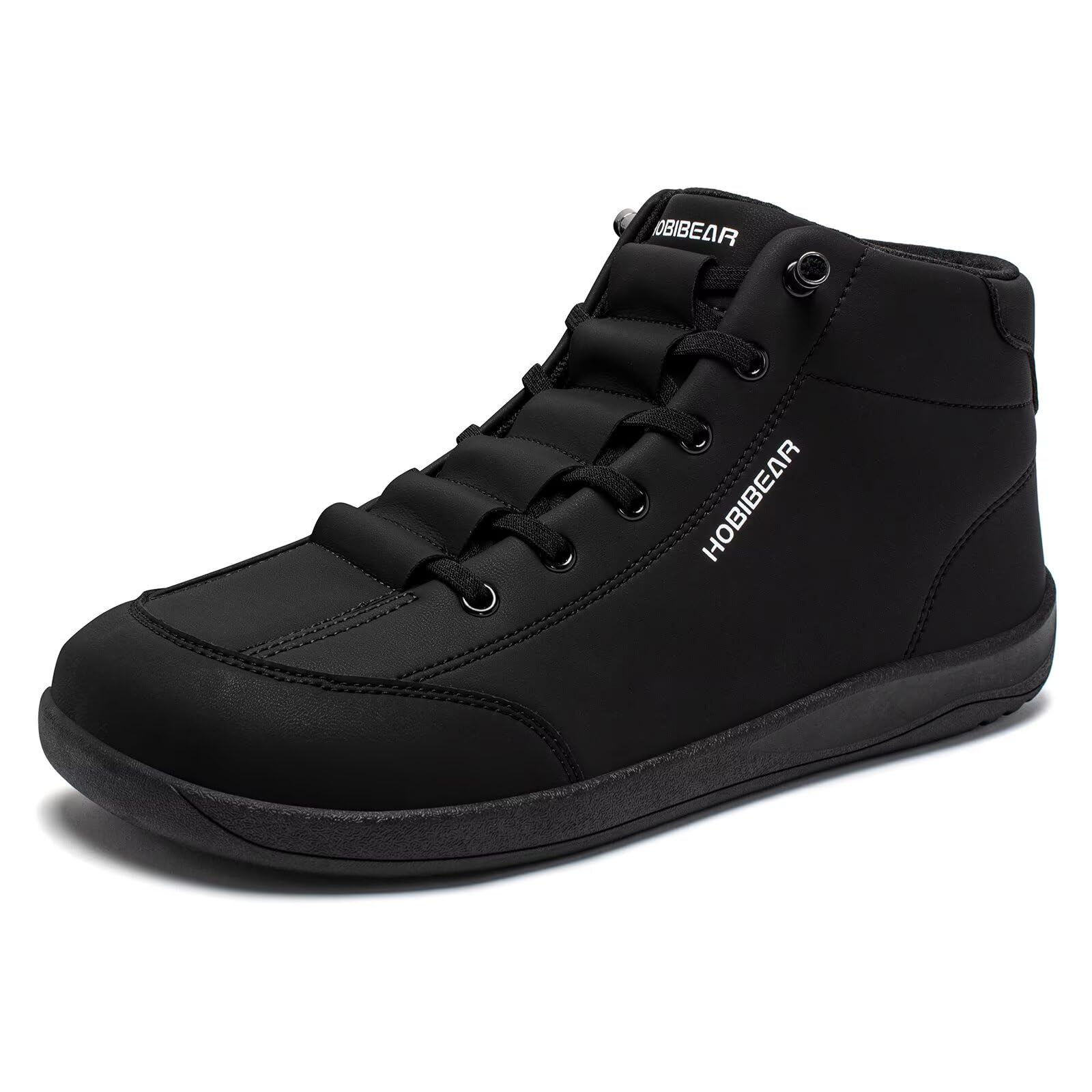
A mid-top barefoot boot for cold commutes and quick slip-on mornings.
The HOBIBEAR keeps the zero drop platform and the wide toe cap, then wraps it in a mid-top boot you can pull on and off in seconds. The wide toe cap leaves a large space up front so your toes sit naturally, and the heel stays snug so the boot does not slop around when you walk. The outsole is built to resist slipping and wear on pavement and paths.
Looks are what owners praise most — this is the most-praised style in the whole review set — with comfort right behind. Owners mention less cramping than in their old boots. They also stay warm, which makes them a genuinely usable winter walker rather than a summer-only barefoot shoe.
On fit, opinions divide: some find them exactly right, others find the sizing off, so order with care and expect to dial it in. The laces are another small point where a few want different hardware. As winter boots go, though, the warmth and the easy on-off make them hard to argue with for daily wear.
What they get right
- Zero drop with a wide toe cap for natural toe splay
- Easy slip on and off for quick morning starts
- Warm enough for winter walks and cold commutes
- Anti-slip, wear-resistant outsole for pavement and paths
Where to be careful
- Sizing splits opinion — measure your foot first
- Laces draw occasional mixed feedback
- Not a performance trainer — this is a comfort walker
Reach for these when: it is cold out and you want a barefoot boot you can kick on in a hurry.
Pass if: you need a locked-in performance fit for hard training days.
6. WHITIN Women’s Wide Toe Box Running Shoes S880

A budget-friendly women’s shoe that fits wide feet and flat feet without pinching.
For women with wider feet who keep getting squeezed into narrow running shoes, the S880 is the practical answer. The zero drop platform puts your heel and forefoot at the same height, the toe box runs wider than a traditional runner, and the EVA midsole gives a little bounce back underfoot. The mesh upper breathes, the insole pops out for cleaning or swapping, and the rubber outsole holds traction across mixed surfaces.
Comfort earns the most praise here, with the wide toe box right behind it. Owners like how they look too, enough that compliments come up. Daily wear is where they shine: errands, walking, school pickups, low-key days.
The trade-off is arch support. A minimalist zero drop shoe does not prop up your arch, and some buyers miss that support, especially on long standing days. That is the design working as intended, but it is worth knowing if you are used to a supportive insole — the removable insert means you can slide your own in, which solves it for most.
Who it fits: women with wide or flat feet who want comfort and toe room at a value price.
Keep looking if: you need built-in arch support for long shifts on your feet.
7. WHITIN Women’s Wide Toe Box Road Running Shoes S885
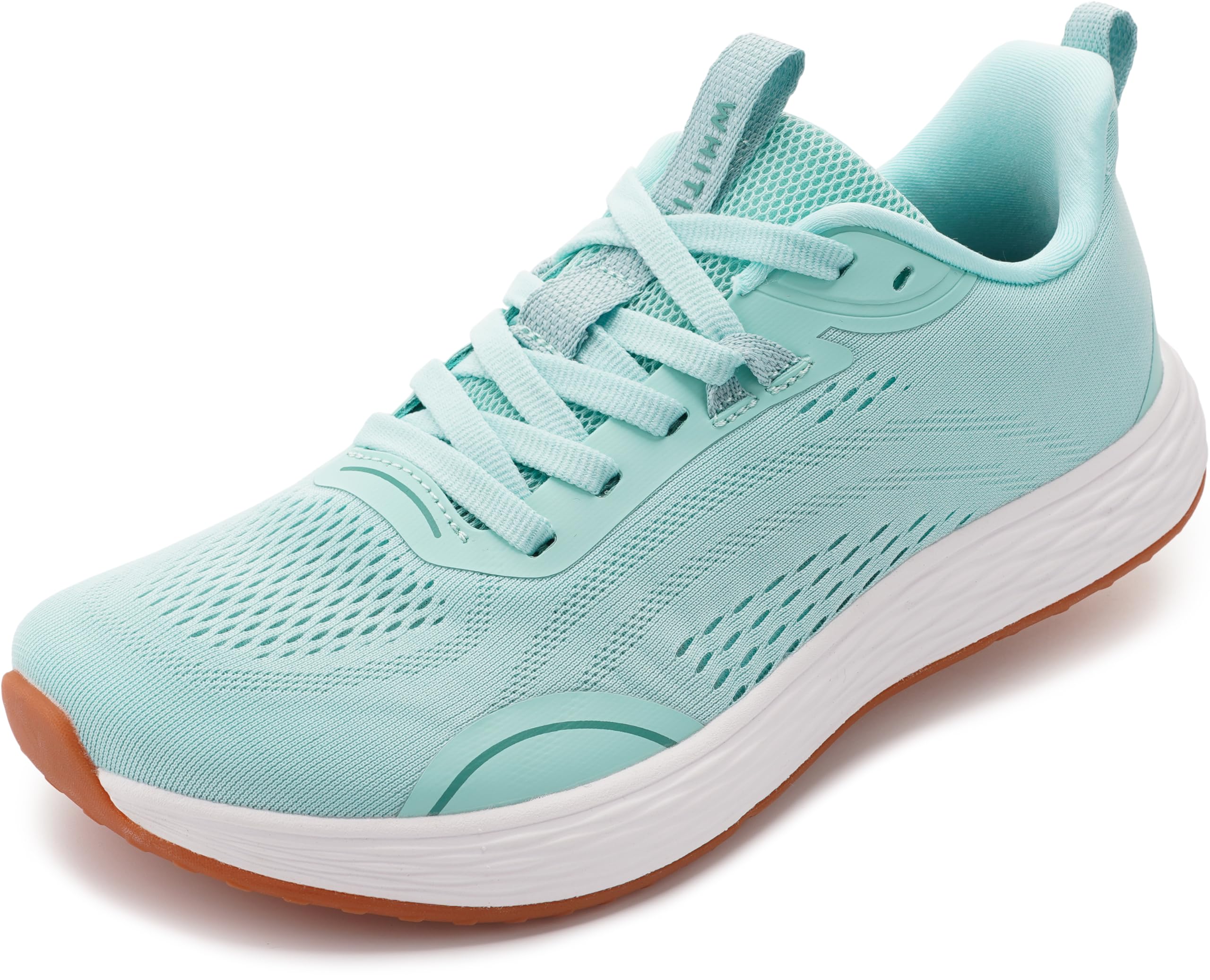
A light road runner that lets the toes breathe and keeps the heel level with the ground.
The S885 is the road-focused sibling of the S880 above, built around a breathable mesh upper that stays cool through long walks. The zero drop, non-improve heel keeps you level to mimic barefoot motion, and the EVA foam midsole and heel cushion take some of the sting out of hard pavement. The insole comes out for cleaning or swapping, and the outsole is built to hold grip across terrains.
Comfort and fit are the two things buyers bring up most, with the wide toe box close behind. The wide front end lets toes spread, and the whole shoe is light enough to forget you have on. For a value-priced road shoe, owners also flag it as good money for what you get.
The honest limitation: this is a minimal shoe with minimal support. Some buyers want more structure underfoot and find it lacking, and a few find the versatility narrower than the listing implies. If you have been running in a firm, supported trainer, this is a bigger leap than it looks.
Good for: runners and walkers who want a cheap, wide, minimal road shoe and know they need little support.
Skip if: you want cushioning and structure to carry your stride for you.
8. Men’s Zero Drop Barefoot Gym Shoes with Anatomical Toe Box
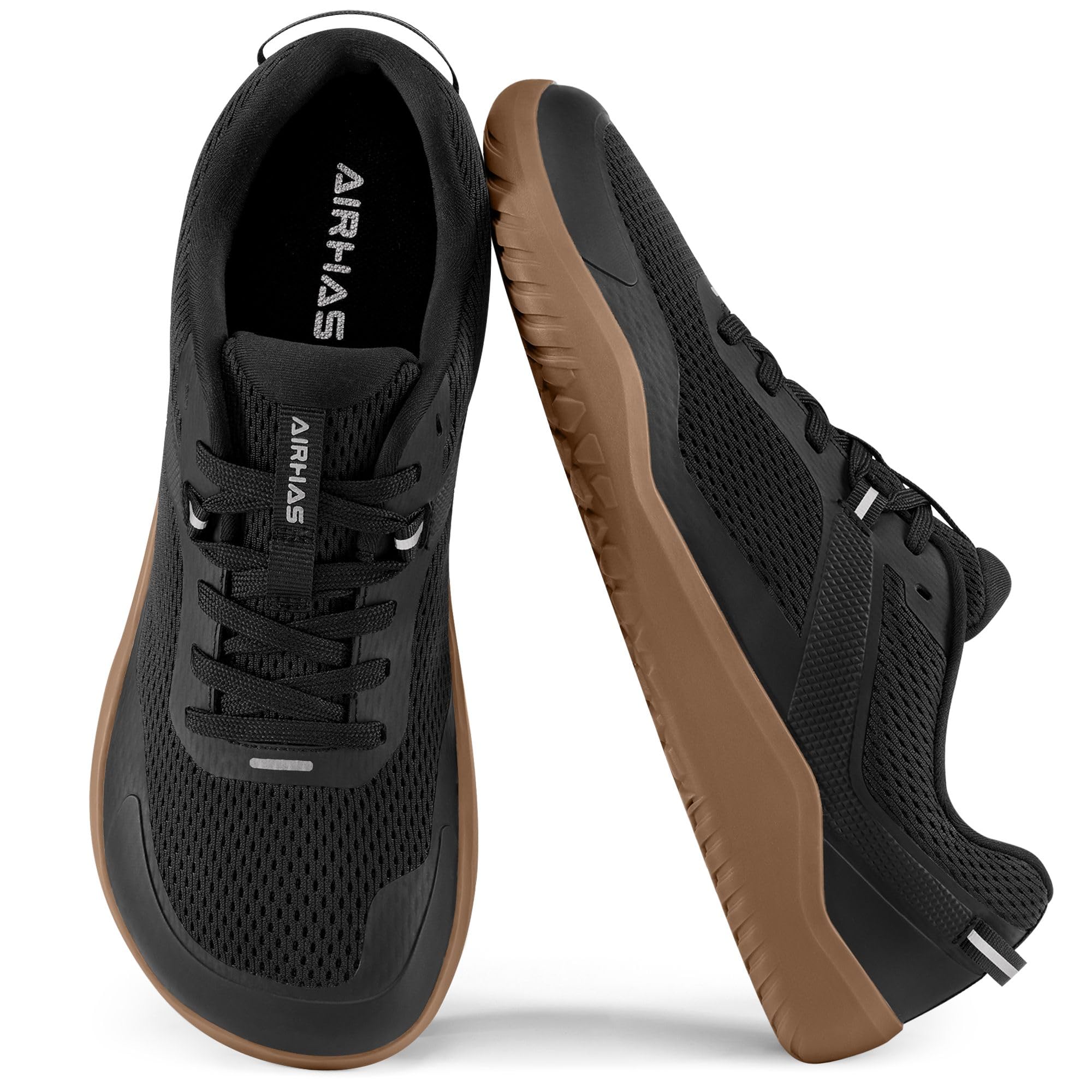
A no-frills gym shoe that gets you into a flat, wide stance without spending much.
These are the simplest way to try barefoot training. You get an anatomical toe box that lets your toes spread, a zero drop platform for posture, a breathable mesh upper, and a grippy sole for traction on the gym floor. There is nothing fussy here — it is a basic shoe that hits the core barefoot requirements.
Owners rank the build quality and value high, and the fit and looks draw positive notes too — this is a shoe people are happy with for the money. As a first pair to test whether flat, wide shoes suit your feet, it is the lowest-risk entry point in the group.
Where it falls short: the generosity of the toe box is the sticking point. Some find it wide enough, others say it is not as wide as they hoped, so if toe splay is your main reason for buying, measure carefully. There is also minimal cushioning in the heel and little arch support — that is barefoot by design, but it catches people coming from a cushioned shoe.
Suit it to: budget-minded lifters and anyone testing the barefoot waters for the first time.
Steer clear if: you want a broad, obviously roomy toe box — the width here is a matter of taste.
9. Hike Footwear Comforto Max Barefoot Shoes

A soft wool-knit slip-on built for slow days, travel, and time on your feet indoors.
The Comforto Max takes the barefoot idea in a softer direction. A wool-knit upper stretches gently over the foot and adapts as it moves, while the wide toe box lets toes spread out. The zero drop sole keeps your posture level, and the whole shoe is built for recovery walking, indoor wear, travel, and low-impact daily movement rather than for hard training.
Comfort is the clear draw — it is what owners call out most — with its light weight close behind. The stretchy upper makes it easy to slide on and live in, which suits anyone who wants a quiet, easy shoe for around the house or the airport.
Here is the one to weigh: the fit runs wide and the support is minimal. Some buyers love the toe room and the stability they feel; others find it too wide and want more structure underfoot. It is a shoe for comfort-first days, not for firm footing on uneven ground.
Made for: travel days, indoor wear, and anyone who wants a soft, stretchy barefoot shoe to live in.
Not for: athletes who want a firm, supported platform for training and uneven terrain.
Know the Specs
Zero drop (heel-to-toe offset)
Zero drop means the heel and the front of the shoe sit at the same distance from the ground, so you stand level instead of tipped forward or back. That flat stance lets your ankle, calf, and foot move through their full range. It is the single check that separates a real barefoot shoe from a cushioned trainer with a wide front end.
Wide toe box
A wide toe box gives your toes room to spread and align instead of pressing into the sides. You can test it by pressing across the front of the shoe — if the material gives and your toes can move sideways, it is doing its job. This is where a lot of the comfort in barefoot shoes comes from, and where fit disagreements tend to show up.
Stack height and ground feel
Stack height is how much material sits between your foot and the floor. A thin stack gives you strong ground feel for trail, gym, and natural walking, while a slightly thicker stack cushions hard pavement. The trade-off is protection: the thinner the sole, the more you feel every rock and root underfoot.
Upper material
The upper decides breathability, weather resistance, and how the shoe molds to your foot. Leather boots resist weather and abrasion but need break-in time. Knit and mesh uppers breathe and stretch right away but want gentler use. Pick based on where you will wear the shoe most, not on which looks most technical.
Common Questions
How do I check whether a shoe is really zero drop?
Will zero drop barefoot shoes hurt my calves at first?
Can I put my own arch support insole in these shoes?
Are barefoot shoes good for wide feet?
Can I run in zero drop shoes right away?
What is the difference between the WHITIN S880 and S885?
Do barefoot shoes last as long as regular shoes?
Which of these works best for the gym and lifting?
Will the Vivobarefoot and Flux shoes need different care?
Should I size up or down in a barefoot shoe?
The Bottom Line
The Jim Green African Ranger is the pair to start with if you want a boot that feels like barefoot underneath and can handle weather and trail — full grain leather, a level zero drop platform, and room up front for your toes. If your day is more gym floor than dirt, the Flux Adapt Graphene XT gives you a wide, flat base for lifting. And for the barefoot purist who wants maximum ground contact on training days, the Vivobarefoot Primus Lite 3.5 delivers the thinnest sole and the most direct read of the ground. Whatever you pick, start slowly and let your feet get used to being flat.
How we choose
We do not accept paid placement. Every pick is matched to a real buyer and a real use-case; we do not hands-on test units.
Sources
Specifications: manufacturer listings and product documentation. Review insights: verified customer reviews. Pricing: not shown on this page (it changes often); check the current price via the retailer link.
As an Amazon Associate, Tactical Gear Guy earns from qualifying purchases. This does not affect which products we feature.