Specs are compiled from manufacturer listings and verified buyer reviews and can change over time — please confirm the key details on the product page before buying.
If your helmet squeezes your temples by lunchtime, the problem is usually the shape, not your head. A true XL ski helmet gives you a bigger shell plus a dial that actually moves, so the fit stays comfortable from first chair to last. Below are the eight options worth your attention, sorted so you can see which one matches your head shape, your goggles, and how hard you ride.
This guide is built by comparing the manufacturers’ published specifications and the patterns across verified customer reviews, so you get each pick’s real strengths and trade-offs instead of marketing spin.
You will see how shell construction, the fit dial, and vent control change the way a helmet feels on the hill. The short answer: a dial you can turn with gloves on matters more than any logo, and that is the thread running through every one of these XL ski helmets.
Top Picks


How To Choose The Best XL Ski Helmet
You have probably bought an XL ski helmet that felt fine in the shop and turned into a vice grip by the second run. Or one that sat so high it left a strip of forehead exposed to the wind. Getting it right depends on four things: how the shell is built, how the fit dial works, how the vents are controlled, and whether your goggles sit flush against the brim.
Shell construction decides weight and warmth
An in-mold shell fuses the outer plastic directly to the foam liner, which lets the maker cut bigger vent openings and keep the overall weight down. A hard-shell helmet bonds a separate outer shell to the foam instead, which tends to feel more planted and shrugs off knocks from a lift bar or a roof rack. Neither is automatically better — in-mold runs cooler for people who overheat, and hard shell suits riders who want a beefier feel.
The fit dial is the whole game in XL sizes
A rear dial cinches the plastic cradle around the back of your skull. Look for one you can turn with gloves on, because you will adjust it on the lift more often than you expect. Some systems also let you tilt the cradle up and down, which is what keeps the helmet sitting level instead of tipping back on a longer head shape.
Vent control beats vent count
Fixed vents let air move all the time, which is great on a warm spring day and miserable on a sub-zero morning. Adjustable vents let you close things down when the chairlift wind picks up. Either way, check that the front vent lines up with your goggle frame — that is what pushes warm, moist air out of the goggles instead of letting it pool behind the lens.
How much does an XL ski helmet weigh
Weight on your head compounds over a full day. Anything around two pounds feels light on the neck; heavier shells feel secure but more tiring. If you ski bell-to-bell, that difference shows up in your shoulders by late afternoon.
Side-by-Side Comparison
| Model | Best For | Weight | Ventilation | Impact Tech | Amazon |
|---|---|---|---|---|---|
| Giro Jackson MIPS★ Best Overall | All-mountain daily driver | 2.4 pounds | Passive Aggressive auto-venting | MIPS | Amazon |
| Oakley MOD1Best Closure | Glove-on magnetic buckling | 430 g | Fixed ventilation | — | Amazon |
| Sandbox Classic 2.0Best Style | Park laps and street style | — | Patented three-vent system | ABS shell + EPS foam | Amazon |
| Giro Neo MIPS | Adjustable airflow on warm days | 2.3 pounds | Thermostat Control + Stack Vent | MIPS | Amazon |
| Smith Scout MIPS | Year-round crossover use | 2 pounds | 8 fixed vents | MIPS | Amazon |
| Giro Ratio MIPS | Skiers who want a hard shell | 2.4 pounds | Thermostat Control + Stack Vent | MIPS | Amazon |
| SMITH Level | Long days with fog-prone goggles | 2.1 pounds | 20 adjustable vents | MIPS + Zonal Koroyd | Amazon |
| POC Obex MIPS | All-mountain riders wanting dial-in airflow | 0.5 kg | Sliding adjustable vents | MIPS Evolve | Amazon |
Detailed Reviews
1. Giro Jackson MIPS Adult Snow Helmets
Our pick — 4.5+★ from 200+ verified ratings; the strongest balance of quality and price.
The all-mountain helmet that fits so evenly you forget it’s on from first chair to last.
The Jackson earns the top spot by being good at everything a big-headed skier needs without fuss. Its in-mold shell fuses a tough polycarbonate outer directly to the foam liner, a build that lets Giro cut larger vent channels — so the helmet runs cooler than a hard-shell design of the same size. At 2.4 pounds it stays planted on your neck through a full day, and the In Form 2 Fit System dials in within seconds even with gloves on.
What wins people over is the build quality, and it shows in the small stuff. The TPU injected brim shades your goggles without blocking the view, the earpads pop out when the season warms up, and the goggle retainer comes off if you prefer a clean shell. Fit is the second-strongest theme across owner feedback, and a common observation is that this helmet sits high enough to leave your goggles off your nose — a real relief if you have a longer face.
Here is the honest trade-off. The adjustability and the color both draw split opinions. Some owners love the finish, others find the delivered shade drifts from the listing photo. And the In Form 2 dial offers up to 6cm of adjustment, which is generous but not infinite — if you normally ride with a very thick beanie, sizing up still matters more than cranking the dial. Be aware the Matte Black is a limited colorway, so grab the size you need when you see it.
What carries this pick
- In-mold shell with MIPS (a low-friction layer that lets the shell shift slightly on impact)
- 2.4 pounds — light enough for bell-to-bell days without neck fatigue
- In Form 2 dial gives up to 6cm of adjustment, glove-friendly
- Vertical Tuning tilts the cradle so your goggles sit flush
- Removable earpads and goggle retainer for warmer days
What to weigh first
- Color can differ from the listing photos, per owner feedback
- Fit dial has limits — heavy beanie wearers should still size carefully
- Limited-run Matte Black may not stay in stock in every shell size
Reach for this if: you want one XL helmet that works for groomers, powder, and the odd hike without changing anything.
Look elsewhere if: you need a hard shell for lift-bar abuse or you ride solely in sub-zero temps where constant airflow is a downside.
2. Oakley MOD1 Snow Helmet
The Fidlock magnetic buckle snaps shut one-handed, even in mittens.
The MOD1 is the pick if your least favorite part of skiing is wrestling a chin strap in the cold. The Fidlock buckle (a magnetic clasp) snaps together rather than needing two hands to thread. Pair that with the BOA 360 fit system (a dial that wraps the cradle the whole way around your head for an even cinch), and you get a helmet that goes on and comes off faster than anything else on this list.
Buyers report the closure is the standout feature in owner feedback. At 430 grams the shell is light enough to forget you are wearing it. The removable liner and earpads are machine washable, which matters after a week of back-to-back days. Removing the earpads lets you run your goggle strap under the shell instead of over it — a neat trick for a clean look. Fixed top ventilation keeps air moving out without any lever to fiddle with.
The catch is the fixed venting itself. On a genuinely cold day you cannot close it down, so you feel the airflow if you want it or not. It also ships with a helmet travel bag and an Oakley decal, which tells you this is positioned as an everyday resort helmet rather than a backcountry shell. Weight is the one difference worth flagging against the Jackson: the MOD1 lists at 430 grams while the Jackson sits at 2.4 pounds. That gap is small enough that you will notice the closure long before you notice the weight.
Where it shines: a magnetic buckle that works with mittens plus a 360-degree BOA cradle is a combination that changes how quickly you get moving in the morning.
The fit note: fixed ventilation means no way to shut off airflow on a bitter day — a fair-weather pick as much as a cold one.
Best matched to: resort skiers who hate cold fingers and want the fastest buckle on the mountain.
Think twice if: you ski in deep cold and want to seal the vents shut.
3. Sandbox Unisex Classic 2.0 Snow Ski and Snowboard Helmet
The park helmet with a signature brim that reads as streetwear, not rental gear.
Sandbox is a rider-owned brand, and the Classic 2.0 shows it. The signature brim gives it a street look you can wear on the hill and in the park without feeling like you are in a rental lid. Owners mention the look is the second-most talked-about thing in owner feedback, and it is genuinely the reason to pick this one. The Morocco BOA colorway is a graphic pattern rather than a flat finish, so it stands out in a lift line full of matte black.
Underneath the styling it is a real helmet. The injection-molded ABS outer shell takes high impacts, backed by an EPS foam inner. The patented vent system runs three vents, and the comfort liner is removable and vented so it dries out between days. Padded ear covers and the goggle trip clip both come off, there are audio pockets for a drop-in headphone kit, and the fit system dials the cradle in. Sandbox also offers an Asia Fit option, which is worth knowing if standard XL shells have always pinched you at the temples.
What needs saying plainly: ABS hard shell is the heavier construction style here, and there is no MIPS layer named in this helmet’s spec sheet. If rotational-impact protection is your priority, this is not the block to pick from. What it does give you is a thick, planted feel and a shape that pairs with the brim.
Why riders pick it: the signature brim and rider-owned design turn a helmet into part of the outfit, with a real ABS shell doing the actual work.
The honest gap: no MIPS layer and a hard ABS build — a style-first choice, not the lightest or the most advanced liner here.
Suits: park riders and style-conscious skiers who want a graphic XL shell that does not look like a team-issued helmet.
Skip if: MIPS rotational protection is a non-negotiable on your list.
4. Giro Neo MIPS Ski Helmet

One low-profile Thermostat Control button opens or closes the vents mid-run.
The Neo is the helmet for the skier who runs hot on the way down and cold on the lift. Thermostat Control puts a simple, low-profile button on the outside of the shell that opens or closes the vents instantly — no stopping, no taking it off. Add the Stack Vent at the front, which lines up with your goggles to push warm air out and keep the lens clear, and you have a helmet built around managing temperature rather than just blocking wind.
Fit is the thing owners talk about most here, and it is easy to see why. The In Form dial gives up to 6cm of adjustment, and the Vertical Tuning feature tilts the cradle so you can kill the gap between your goggles and the helmet brim. The in-mold construction (a process that fuses the polycarbonate shell to the foam liner) is what makes the bigger vent channels possible. At 2.3 pounds versus the Jackson’s 2.4 pounds, a difference you will not feel but a real one on paper.
The trade-off worth knowing: the shape of the dial cradle is fixed at the rear, so if you like a very low, back-of-the-skull fit you will spend some time finding the balance. Buyers who ride with a beanie note the fit tightens quickly, so dial before you pull your goggles down. The Matte Black/Olive Fade finish is the other variable — that gradient reads differently in person than on a screen.
Why it earns a spot
- Thermostat Control vents open and close with one gloved press
- Stack Vent aligns with your goggles to keep lenses clear
- MIPS layer inside an in-mold shell
- Vertical Tuning removes gaper gap
- 2.3 pounds (the Jackson is 2.4 pounds)
Worth knowing before you buy
- Beanie wearers need to dial the cradle before pulling goggles down
- The Olive Fade finish may read differently than the photo shows
- Adjustable vents add a lever to learn — fixed-vent fans may not care for it
Pick this one if: your temperature swings all day and you want to tune airflow mid-run with one hand.
Another path if: you want a set-and-forget vent setup and never want to touch a lever.
5. SMITH Adult Unisex Scout MIPS Snow Sport Helmet

ASTM F2040 and CE EN 1077 certification let one shell cover snow, skate, and bike.
Most snow helmets stay in the closet from April to November. The Scout is certified to ASTM F2040 and CE EN 1077, which the listing describes as all-season certification — meaning the same shell is rated for the skate park, the mountain bike trail, and an electric scooter. If you want one helmet that crosses over into summer, this is the one to test.
On the snow side it carries the MIPS safety system, 8 fixed vents for steady airflow, and the AirEvac system that integrates with Smith eyewear to pull warm air away from your goggles. The self-adjusting lifestyle fit system flexes to match your head shape rather than forcing it into a shape, and the removable bombshell ear pads come off when the weather softens. Beanie-compatibility lets you add a layer on the coldest days without fighting the shell.
At 2 pounds, that lightness is what makes it pleasant for crossover use. The honest limitation: there is no dial to fine-tune the fit — the cradle flexes and self-adjusts, which suits most head shapes but gives you less room to crank down on an especially long or narrow skull. If you have always needed a dial to get comfortable, this one asks you to trust the flex instead.
One helmet, four sports: ASTM F2040 and CE EN 1077 certification plus MIPS carries it from the snow to the skate park and the bike.
The honest limit: a flex-fit cradle with no dial swap means less fine-tuning for unusual head shapes.
Worth it for: year-round riders who want one shell that handles winter snow and summer trails.
Look past it if: you depend on a dial to lock a precise fit.
6. Giro Ratio MIPS Adult Snow Helmets
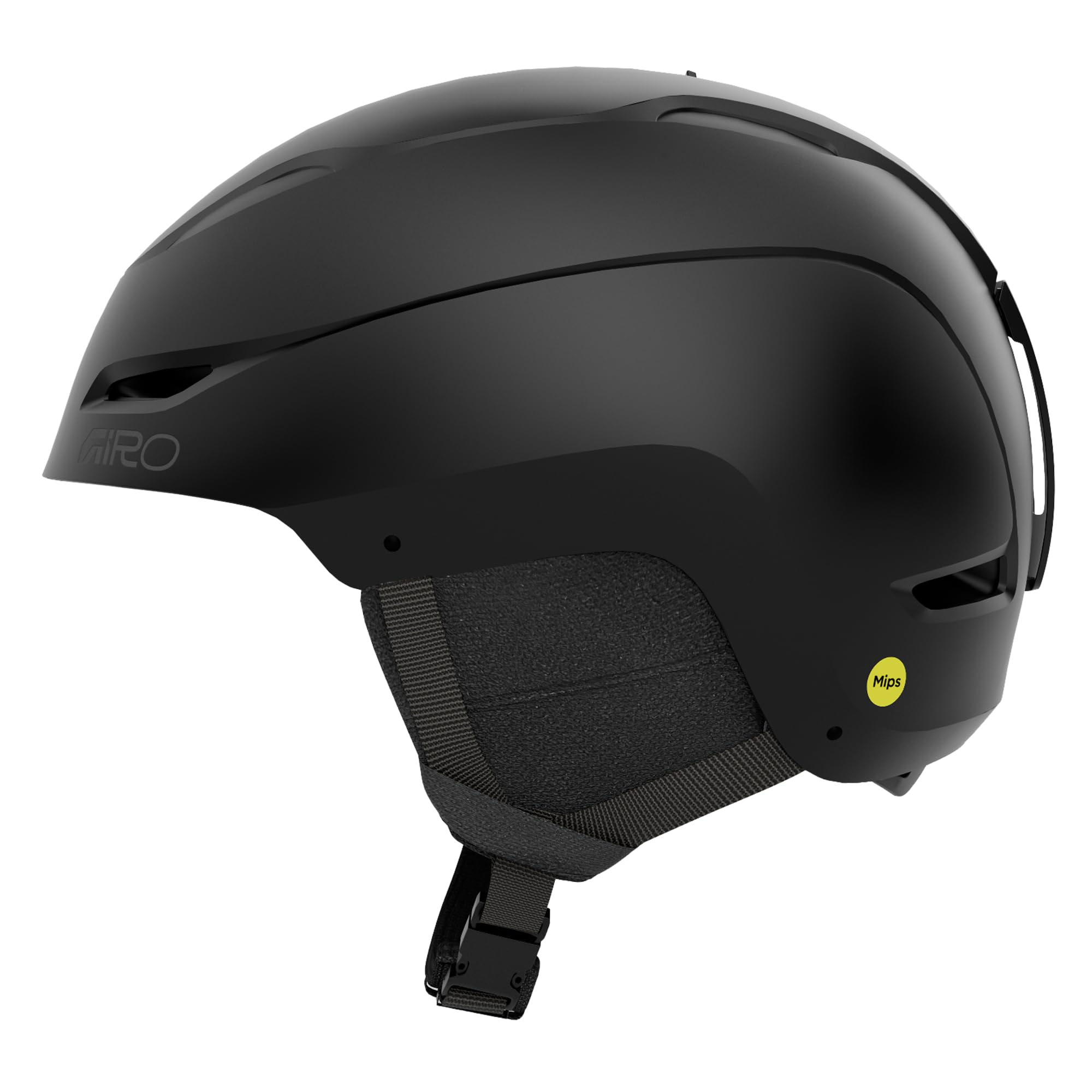
A hard shell built to shrug off lift bars and roof racks without flinching.
Where the Jackson and the Neo use in-mold construction, the Ratio goes the other way. A rugged polycarbonate outer shell is formed first and then bonded to the EPS foam liner (the impact-absorbing foam). The result feels more planted and more sturdy against the everyday knocks that a park lap or a crowded lift line delivers. If your helmets usually pick up scuffs and dings, this is the build that holds up to that kind of treatment.
Fit is where this helmet earns its keep, and it is the most-praised quality in the ratio of owner feedback. The In Form dial gives up to 6cm of adjustment and can be turned with gloves on, while Vertical Tuning lets you match the cradle to your goggles and head shape so there is no gaper gap. Thermostat Control adjustable venting sits on the outside, and the Stack Vent aligns with your goggles to keep them clear. The same MIPS layer is inside, and aftermarket audio systems are compatible.
The honest caveat is bulk. A hard-shell build runs bigger on the head, and several owners found it oddly large compared with what they expected. That is not a defect so much as a style of construction — hard shells look chunky. If you want a low-profile look, the in-mold picks will suit you better. If you want a helmet that feels built to take a hit, the deliberate bulk works in your favor.
Where it holds up
- Hard-shell polycarbonate bonded to EPS foam for a planted feel
- In Form dial with up to 6cm of adjustment, glove-friendly
- Thermostat Control venting and Stack Vent for goggle clarity
- MIPS layer inside; compatible with aftermarket audio
- Vertical Tuning cures goggle gap
What to size around
- Hard-shell build looks and feels bulkier than in-mold shells
- Heavier construction may not suit low-profile preferences
- Dial range of 6cm is generous but not limitless for very large heads
Built for: skiers who want a rugged hard-shell helmet that survives lift lines and park laps.
Better to look at: a low-profile in-mold shell if chunky helmets bother you.
7. SMITH Level Helmet for Men

Twenty vents and a lighter shell for the skier who never stops moving.
Twenty adjustable vents is a lot for one helmet, and it is the number that defines the Level. Add the AirEvac system that integrates with Smith eyewear to pull air past the goggle lens, and you have a helmet built for long, warm days when fogging is the enemy. The 2.1-pound shell is paired with a hybrid design that combines an outer polycarbonate shell with zonal Koroyd coverage — a honeycomb structure built into the liner for impact absorption.
The VaporFit Snow dial adjustment system offers 270-degree fit adjustment, so you can tighten the cradle around most of your head with one turn instead of a single rear pinch point. The shell is also rated ASTM F 2040 and CE EN 1077:2007 Class B.
Here is where you need to be careful. The fit and the comfort both draw mixed feedback, and several buyers find the shell runs smaller than the sizing guide suggests. If you are at the top of a size bracket, size up rather than hoping the dial saves you. That single point is the reason this one sits behind the top picks on this list — not a flaw in the protection, but a fit note you should plan around.
The standout: 20 adjustable vents plus AirEvac and a 2.1-pound shell make this the coolest-running helmet on the list.
The fit caution: sizing runs smaller than the guide suggests, so a top-of-bracket buyer should go up a size.
Go for this: if you run hot, ski fast, and want maximum airflow with a light shell.
Be cautious if: you are right at the edge of a size bracket — size up instead.
8. POC Obex MIPS Ski Helmet

Sliding vents and a 360-degree cradle for riders who dial in every detail.
The Obex is the helmet for the skier who opens and closes vents as the day warms and cools. Sliding vents let you regulate airflow by feel, and they also help manage the moisture that builds up around your goggles. The MIPS Evolve layer reduces rotational impact forces, and the build pairs an EPS liner with a polycarbonate shell and an ABS top shell.
The 360° fit system wraps the cradle around your whole head, and importantly it does so without needing a pad swap — you wear the helmet as delivered and adjust it from there. Removable ear pads let you strip weight when it warms up. At 0.5 kg the shell sits in the light range for this group, and the whole-helmet design philosophy puts protection, comfort, and performance in one package rather than pushing one at the expense of the others.
The honest limitation: sliding vents mean more moving parts to check and clean. And this helmet requires none of the pad-swapping gymnastics that some 360-fit systems use, but it also asks you to trust the cradle design rather than a simple rear dial. Treat the sliding vents with respect — keep them clear of snow and ice, and they will reward you with the most adaptable airflow here.
Made for: all-mountain riders who want adjustable vents and a 360-degree cradle in one premium shell.
One thing to know: sliding vents are more moving parts than a fixed-vent design and need routine care.
Know the Specs
MIPS and rotational protection
MIPS stands for Multi-Directional Impact Protection System. It is a low-friction layer inside the helmet that lets the shell slide slightly against your head on an angled impact, which is meant to reduce the rotational force that reaches your brain. Some helmets here name MIPS plainly, POC lists MIPS Evolve, and Smith’s Level uses MIPS alongside zonal Koroyd. Sandbox’s Classic 2.0 goes a different route with an ABS shell over EPS foam and names no MIPS layer — worth knowing if rotational protection is your priority.
Fit systems and adjustment range
A fit system is the plastic cradle at the back of the helmet that a dial tightens. Giro’s In Form dials offer up to 6cm of adjustment and can be turned with gloves on. Oakley uses BOA 360 to wrap the cradle fully around the head, Smith’s Level uses VaporFit Snow with 270-degree adjustment, and the Smith Scout relies on a self-adjusting flex cradle with no dial. The right range for you depends on whether you ski with a beanie underneath — a thick hat eats into the dial’s usable travel.
In-mold versus hard shell
In-mold means the outer polycarbonate is fused to the foam liner while it is formed, which opens up bigger vent channels and keeps the weight down. Hard shell means a separate rugged outer shell is bonded to the foam liner, which feels more planted and stands up to knocks. Neither is stronger in the way buyers assume — they are different approaches, and the best one for you depends on whether you value airflow and light weight or a beefier feel.
Goggle integration and the gap
The gap between your goggles and the helmet brim is what skiers call gaper gap, and it is what lets cold air in and fog form. Giro solves it with Vertical Tuning, which tilts the cradle to match different goggles and head shapes. Smith’s AirEvac and Giro’s Stack Vent do the same job from the front, aligning the helmet’s vent channel with the goggle frame to move warm, moist air out. Check your goggle size before you commit to a shell — a massive goggle on a slim helmet will never sit flush.
Common Questions
How do I know if I actually need an XL ski helmet?
Will a MIPS helmet fit differently from a plain foam helmet?
Can I wear a beanie under an XL ski helmet?
How long does a ski helmet last before I need to replace it?
Do XL ski helmets work with goggles from a different brand?
Is a hard shell or an in-mold helmet better for park riding?
What is the difference between MIPS and Koroyd?
Can I use an XL snow helmet for skateboarding or biking?
How do I stop my goggles from fogging inside my helmet?
Do headphone-compatible helmets sound good on the mountain?
The Bottom Line
The XL ski helmet that earns the top spot is the Giro Jackson MIPS — 200+ owner reviews average 4.5+ stars. It combines an in-mold shell, a glove-friendly fit dial, and removable earpads in a 2.4-pound package that handles a full day without complaint. If airflow control matters more than anything else, reach for the Giro Neo MIPS with its Thermostat Control vent button. And if you ski in and out of a beanie all season, the Smith Scout MIPS at 2 pounds is your crossover answer. Try on with your goggles and a thick hat in mind — then buy the size that gives you room.
How we choose
We do not accept paid placement. Every pick is matched to a real buyer and a real use-case; we do not hands-on test units.
Sources
Specifications: manufacturer listings and product documentation. Review insights: verified customer reviews, as of November 2026. Pricing: not shown on this page (it changes often); check the current price via the retailer link.
As an Amazon Associate, Tactical Gear Guy earns from qualifying purchases. This does not affect which products we feature.