Specs are compiled from manufacturer listings and verified buyer reviews and can change over time — please confirm the key details on the product page before buying.
If oncoming LEDs turn into a wall of white smear on your windshield, a yellow lens helps you pick out lane paint and road edges again — but only if you buy the right one. Here is the short answer: the TJUTR Night Vision Driving Glasses is the strongest all-round pick on this list, and the Polarized Fit-Over pair is the one to grab if you already wear prescription glasses. Everything below explains why, in plain terms you can use at the checkout.
This guide is built by comparing the manufacturers’ published specifications and the patterns across verified customer reviews, so you get each pick’s real strengths and trade-offs instead of marketing spin.
Yellow is not a magic filter — it trades a little brightness for contrast, so the best pair is the one whose tint lets enough light through while still cutting headlight glare. Below you get a spec-by-spec breakdown, honest fit notes, and a plain-English explanation of what actually matters when shopping for yellow driving glasses.
Top Picks
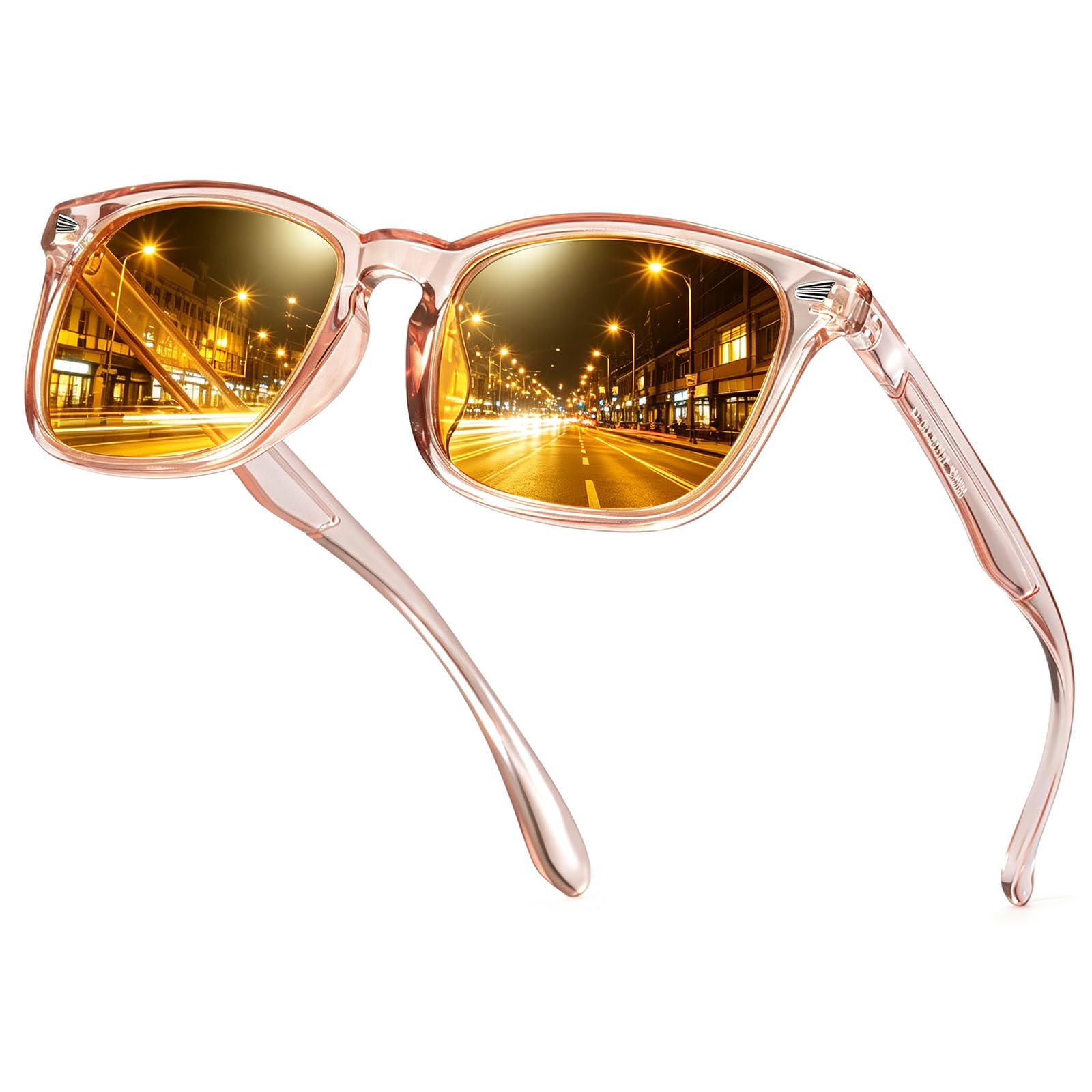
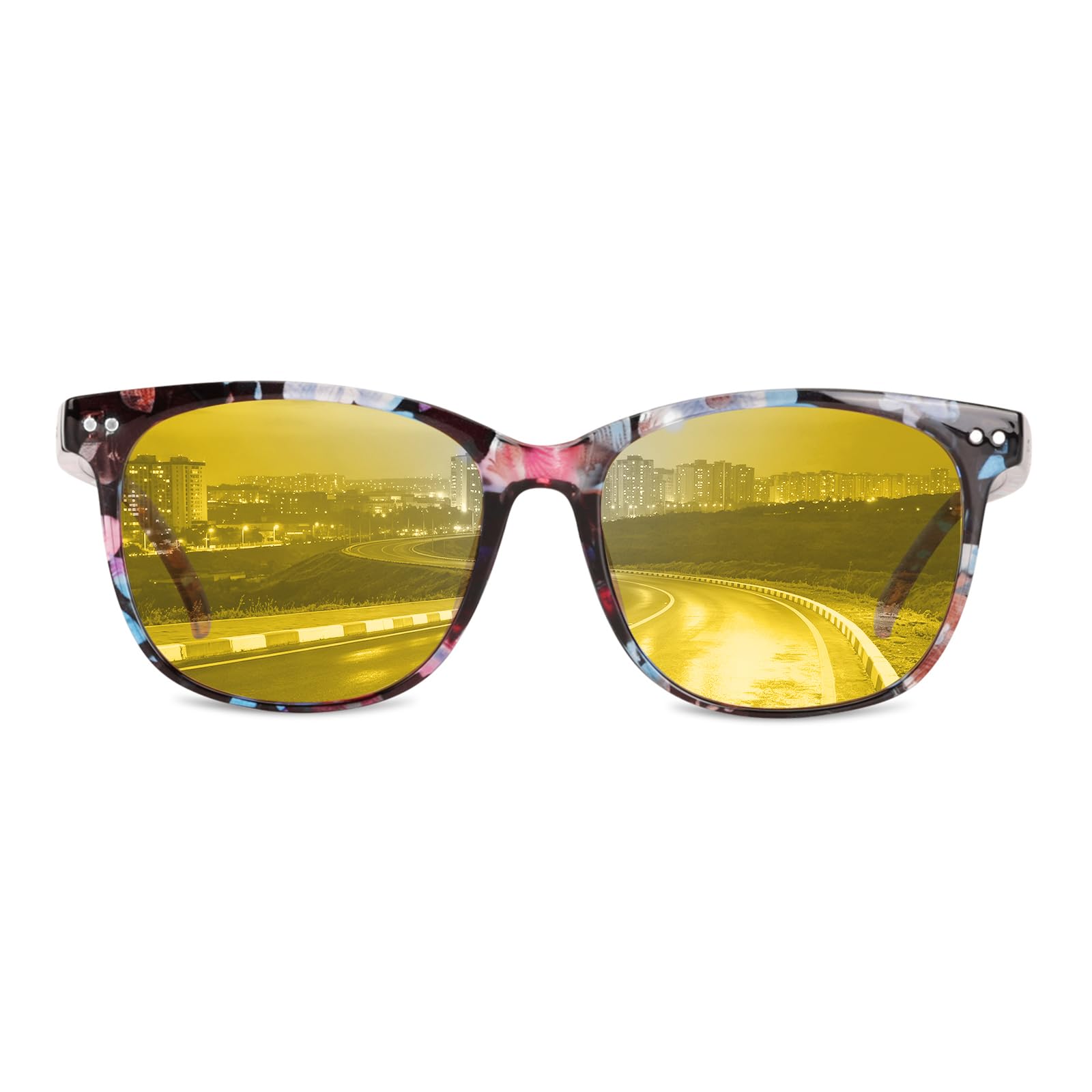
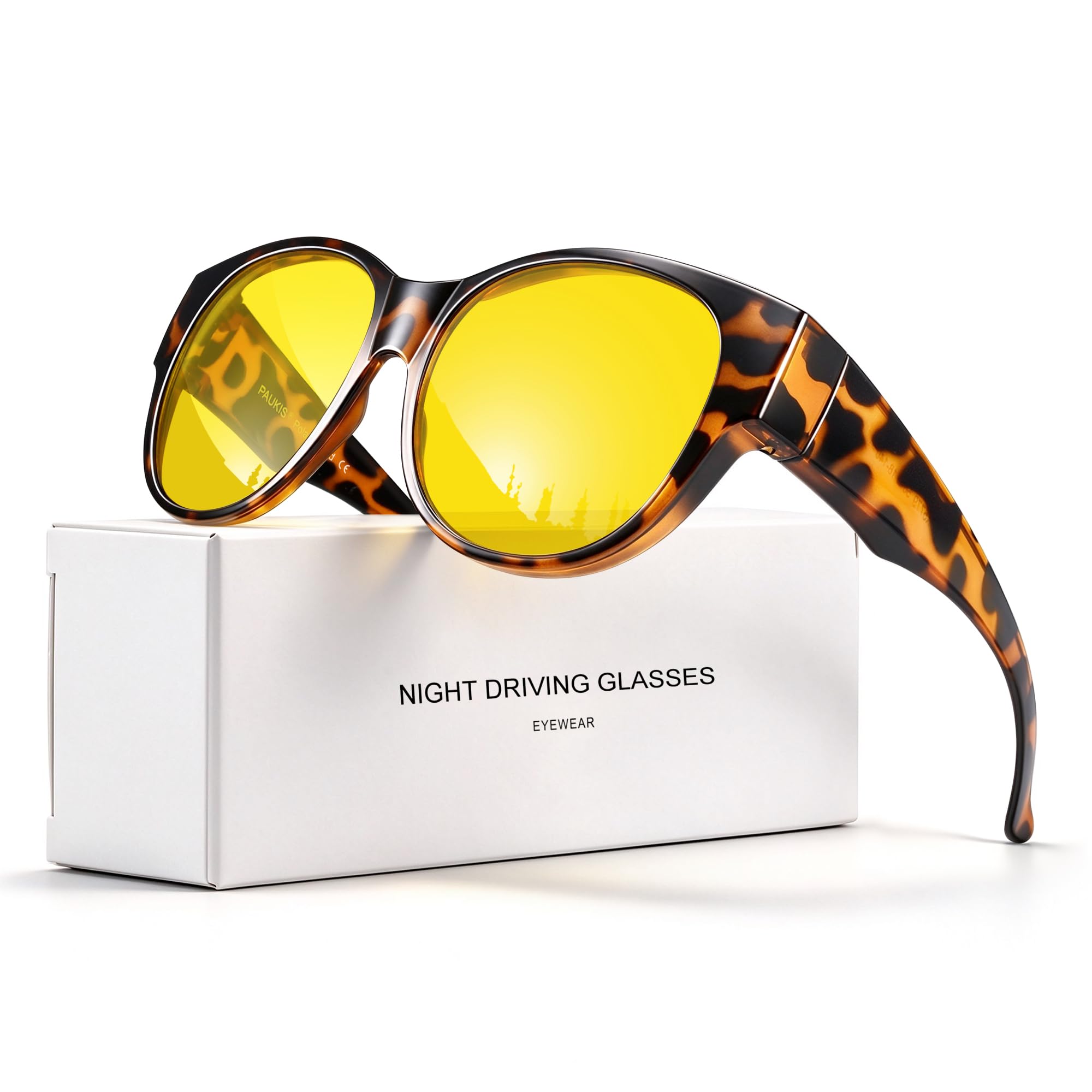
How To Choose The Best Yellow Driving Glasses
The single mistake most night drivers make is expecting a yellow lens to brighten the road like a headlamp. It should not. Amber and yellow tints work by filtering part of the blue end of the light spectrum so that the remaining scene gains contrast — the painted lane line stands out from the asphalt, and the shape of a pedestrian resolves against a dark shoulder. That contrast gain is real. Turning a dark road into daylight is not, and no lens on this list claims to.
Read the tint number before the tint color
The spec that actually decides whether a lens works at night is visible light transmittance, often shortened to VLT — the percentage of light that reaches your eye through the lens. Too low and the world goes dim; too high and the tint does nothing. One pick here lists roughly 43%–80% VLT, which is the honest middle ground for nighttime use: enough light passes through that you can still read a road exit sign, while the amber film cuts the harshest headlight wash. If a listing brags that its lenses are extremely dark, treat that as a daylight feature, not a night one.
Polarized versus plain tinted lenses
A polarized lens carries a built-in filter that blocks horizontally reflected light, which is exactly how glare bounces off wet tarmac and the hood of the car ahead. A plain tinted lens only dims the whole scene evenly. Both can help you see better after dark, but polarization is the feature that changes how smeared a set of oncoming LEDs looks. You cannot see polarization with your eyes alone, so buy from a listing that states the word polarized in the description — and check that the words “TAC lens” or “TAC material” appear too, since that is the layered plastic most polarized driving lenses are built from.
Fit-over frames and prescription glasses
If you wear eyeglasses, a fit-over frame is the difference between a usable pair and one that presses your own frames against your temples. The number to look for is frame width — one model here lists 5.74 inches, which is the kind of figure that tells you it clears a standard pair of prescription glasses rather than sitting on top of them. Soft nose pads matter too. They hold the extra layer off your nose bridge without squeezing your existing frames out of shape, and that is what keeps a forty-minute commute comfortable instead of a headache.
Frame material and the weight on your face
Two materials dominate this category: TR90, a flexible nylon-based plastic that bends instead of snapping, and polycarbonate, a tough lightweight plastic used in impact-style sport frames. Neither is a durability promise you can take to the bank, but both keep the weight low — the lightest pair here sits at 0.7 ounces according to its package listing, which is about the weight of a couple of sheets of paper. If you plan to wear the glasses for an entire road trip rather than a twenty-minute run to the shops, that weight number matters more than the color of the frame.
Side-by-Side Comparison
| Model | Best For | Lens Type | Frame Material | Fit Style | Amazon |
|---|---|---|---|---|---|
| TJUTR Night Vision Driving Glasses★ Best Overall | All-round night driving | Yellow anti-glare, ~43%–80% VLT | TR90 | Standard | Amazon |
| Night Vision Driving Glasses Polarized HD YellowBudget Glare Cutter | Budget glare cutting | Polarized yellow | Metal hinge frame | Standard | Amazon |
| Polarized Fit-Over Cat EyeBest Fit-Over | Wearing over prescription glasses | Polarized TAC yellow | TR90 | Fit-over, 5.74 in | Amazon |
| ORANZI Yellow Tinted Anti Glare | Screen time plus driving | Amber blue-light blocking | TR90 | Standard, adjustable legs | Amazon |
| Gaoye Night Driving Glasses 3 Pack | Spares for the whole car | Amber polycarbonate, UV400 | Polycarbonate | Standard, 52mm lens | Amazon |
| Polarised Anti Glare Yellow Tinted Driver Eyewear | Fog and rain driving | Polarized yellow | — | Standard | Amazon |
| OULAIQI Polarized Night Driving Glasses | Commutes and road trips | Polarized yellow | Lightweight frame | Standard | Amazon |
| LVIOE Night Vision Driving Glasses | Long drives, secure grip | Polarized TAC, UVA/UVB | Lightweight frame | Non-slip nose pads | Amazon |
| livho High Tech Blue Light Blocking | Day screens and night roads | Yellow-tinted, anti-glare coating | Polycarbonate HD lens | Standard | Amazon |
Detailed Reviews
1. TJUTR Night Vision Driving Glasses
Our pick — 4.5+★ from 550+ verified ratings; the strongest balance of quality and price.
The pair that tells you its own lamp number, then explains why it cannot work miracles.
What makes this the pick of the group is the transparency of its lens spec: a yellow lens sitting at roughly 43%–80% visible light transmittance. That number is the whole game at night. It means the lens lets a real share of light through to your eye, so road exits and pedestrians still register, while the amber film shaves the worst of the headlight wash. You get contrast, not a brightened scene.
The frame is TR90 — a flexible nylon-based plastic that gives rather than cracks — and it is built for long wear rather than a quick trip to the corner shop. Fit is the second thing this design gets right. It is cut to sit over a standard face and, by the brand’s own account, over prescription glasses too, so you are not doubling up on frames that fight each other.
The honest limit is right there in the brand copy: the lenses cannot eliminate starburst glare entirely, because a night lens has to let light through. Drive out to pitch-black country roads with no streetlights and the benefit thins out. The glasses earn their keep in towns, in rain and snow, and anywhere strong headlights and streetlamps are throwing light at your windshield. That covers most town and suburban driving, but not unlit country roads.
What the spec sheet gets right
- Yellow lens at roughly 43%–80% VLT — bright enough to keep the road legible while the amber tint lifts contrast
- TR90 frame flexes instead of cracking, so it survives being tossed in a glovebox
- Built for extended wear — long drives and daily commuting, not a two-minute squint
- Brand states plainly what the lens can and cannot do, which is rare in this category
Where it stops short
- Won’t clear a starburst halo completely — no night lens can, by the brand’s own explanation
- Benefit drops off on unlit rural roads where there is little ambient light to work with
- Yellow tint is a matter of taste — some drivers want a darker filter than this
Reach for this if: you want one pair that handles town driving, wet roads and your daily commute without guesswork about what the lens actually does.
Think twice if: most of your driving happens on unlit country roads where the brand itself says the gain fades.
2. Night Vision Driving Glasses Polarized
Polarization at the entry level, where the glare fight is won or lost.
Polarized yellow is the combination that matters here. The polarization layer blocks horizontally reflected light — the kind that comes off wet tarmac and the glossy hood of the car in front — while the yellow tint builds contrast in the low-light scene. The brand’s own framing is that the glasses reduce glare from oncoming headlights and brighten an evening drive, and glare reduction is the single trait that carries the most weight in how these are received by drivers.
Small hardware choices carry more weight than you would think in a pair this slim. It uses a non-slip nose pad to stop the frame sliding down your nose, a metal hinge for the arms, and a temple material the listing describes as high quality. None of that is exotic engineering, but a sliding frame at 60 mph on a wet road is a genuine distraction, so the pad is doing real work.
Two things to know before you commit. Some drivers find the functionality mixed — the lens helps, but does not transform the view — and the tint and value both draw split opinions, which tracks with a pair at the very entry of the range. If you want a stronger glare cut, the LVIOE below leans harder on polarization. If you just want a competent amber lens to keep in the glovebox, this does the job.
The polarization win: a genuinely polarized yellow lens at the cheapest end of this list is the reason this pick exists, and the non-slip nose pad plus metal hinge are the kind of small hardware that makes a difference on a long, wet commute.
The realistic read: split opinion on tint and value matches the price position, and while headlight glare gets softer, it does not disappear — treat it as a modest, useful cut rather than a fix.
Go here for: a no-drama amber pair you can leave in the car and forget about until a rainy night needs it.
Not your pick if: you expect a polarizing filter to erase every oncoming halo — it softens the glare, it does not delete it.
3. Polarized Night Driving Glasses Fit Over Eyeglasses
Built to slide straight over the prescription frames you already wear.
If you wear eyeglasses, this is the pair to take seriously. It is cut as a fit-over design with a 5.74-inch frame width, which is wide enough to clear most standard prescription glasses rather than perch on them. The soft nose pads do the rest of the work — they hold the outer layer off your own frames so nothing gets squeezed against your temples during a long drive.
The lens is polarized TAC, the layered plastic you want in a driving lens because it carries a filter that blocks horizontally reflected glare. That is the light bouncing off wet roads and shiny car bodies. Combined with the yellow tint, the aim is a clearer read of lane markings and road edges after dark. Full frame coverage means the lens wraps the whole eye area, so glare does not sneak in around the edge.
The frame is TR90 at 0.8 ounces, which is light enough that you stop noticing it after a few minutes, and the hinges are screwless, so there are no tiny screws to work loose and lose. Accessories are more complete than most: a polarization test card to confirm the filter works, a microfiber cloth, and a soft pouch. The trade-off is fit — for some the frame feels sturdy, for others a lens can pop out, so treat it gently when you swap it in and out of the case.
Why it earns a spot: a 5.74-inch fit-over frame with soft nose pads is the specification that solves the prescription-glasses problem this category usually ignores, and the 0.8-ounce TR90 build keeps the extra layer from weighing on your bridge.
The one you should know: lens retention is the soft point, so handle the frame gently rather than stuffing it loose into a door pocket.
Best matched to: anyone whose prescription glasses get in the way of every other pair on the list.
Look elsewhere if: you drive bare-eyed — the extra frame width is wasted on you and the fit-over bulk is not the lightest feel available.
4. ORANZI Night Driving Glasses
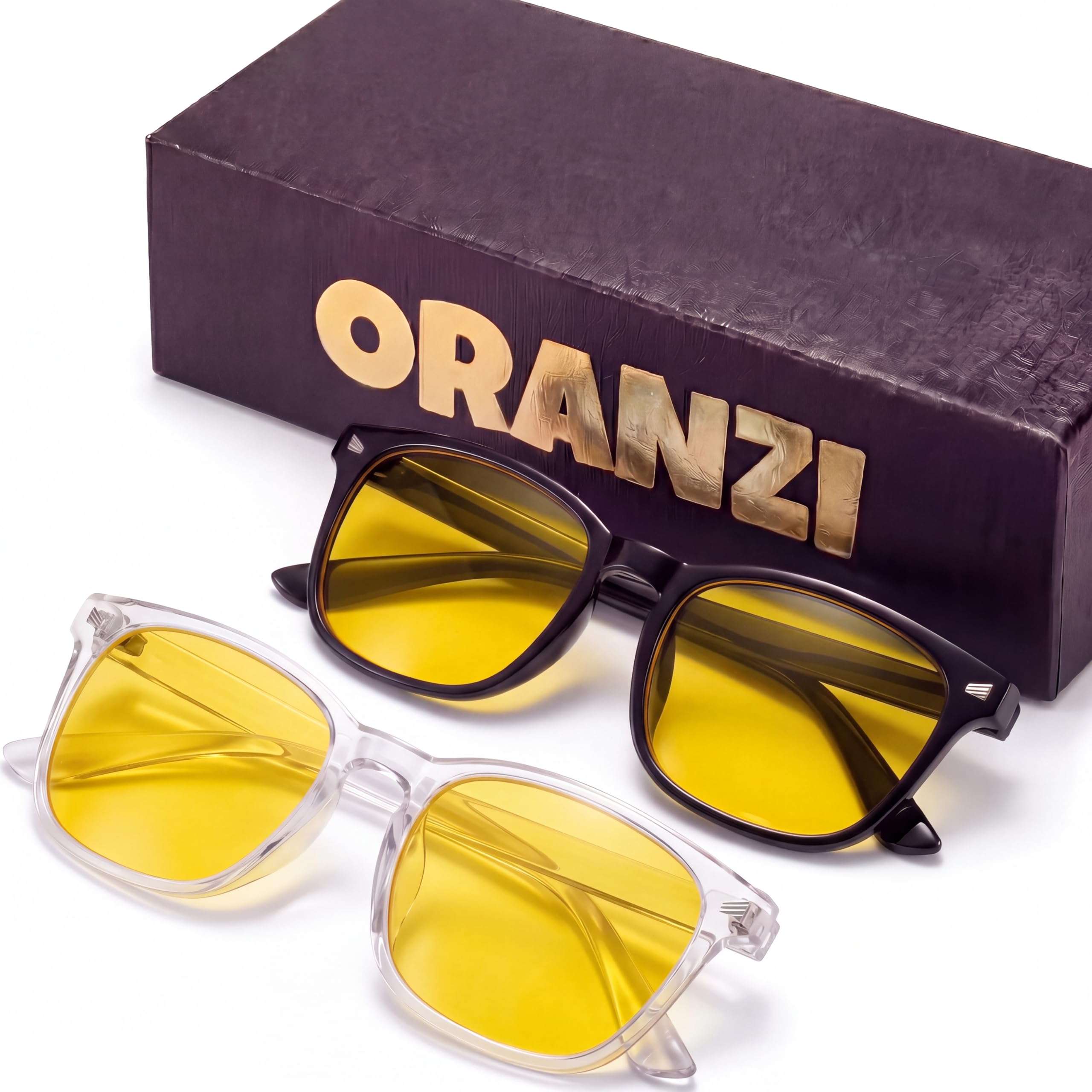
An amber pair that expects to live on your face from the desk to the dashboard.
This one is pitched as two pairs of glasses in one: an amber-tinted blue-light lens for screen time and the same frame behind the wheel at night. The frame is TR90 with adjustable mirror legs — meaning the arms can be tweaked to sit correctly on different face shapes — plus ergonomic nose pads to take pressure off your bridge. The design brief is hours of continuous wear, whether that is gaming, an office shift or a long drive.
The weight listing sits at 0.7 ounces for the package, which is about as light as it gets in this group. At that weight you keep them on through a four-hour session instead of shoving them in a drawer after twenty minutes. Blue-light blocking is the trait that draws the warmest response from screen users, and it is the reason this pair doubles so easily between a monitor and a windshield.
Two honest notes. Fit draws split opinion — some find it spot on, others find it too small — so check the frame sizing against your own head before you buy rather than after. And build quality divides too; a couple of drivers read it as cheaply made rather than light.
What makes it earn its place
- One frame that works at a screen and behind the wheel, so you stop swapping glasses
- Adjustable mirror legs let you tune the arms to your own face shape
- 0.7-ounce package weight means it disappears on your face during long sessions
- Ergonomic nose pads cut the bridge pressure that builds up over hours
The bits to weigh up
- Fit is a coin toss — too small for some face shapes, spot on for others
- Build quality reads light to some drivers, who want a heftier frame
- Amber blue-light lens is a compromise — good at a screen, softer behind the wheel
Pick it up when: you spend the evening in front of a monitor and then drive home, and you want one frame to cover both.
Leave it on the shelf if: your head runs large and you want a fit you can trust straight from the start.
5. Gaoye Night Driving Glasses for Women – 3 Pack

Three amber pairs, one for the car, one for the bag, one for whoever forgot theirs.
Three pairs in one box changes the maths of this category. Instead of one pair you guard jealously, you get a set you can leave in the glovebox, keep in the kitchen drawer, and hand to a passenger who is squinting at the oncoming traffic. The lens is a polycarbonate HD amber tint with anti-glare and anti-reflective treatment, and it carries UV400 protection — the standard that covers the whole UV spectrum rather than a slice of it.
The frame is polycarbonate, described as durable and flexible, and the package weight comes in at 3 ounces for the set. That is the heaviest listing on this list, but the figure covers three pairs rather than one, so per-pair weight is not the concern it first looks like. Lens width runs 52mm with a 140mm frame width, dimensions given in the listing so you can sanity-check the fit against your own face before the box arrives.
Two real caveats. The lenses are non-prescription, though the brand notes they can be removed and swapped for your own prescription if you are having them reglazed — worth knowing if you assumed a fit-over. And the lens tint is not everyone’s cup: clarity draws split opinion, with some finding the tint ideal and others wanting a darker filter. That is a matter of taste and eye comfort, not a defect. It is a fit question of taste and eye comfort, and at three pairs for the price of a single premium one, the odds of a pair suiting you are better than they look.
The multi-pack logic: a 52mm lens inside a 140mm frame, UV400 protection and an amber anti-reflective lens, multiplied by three, solves the “where did I leave my driving glasses” problem better than any single pair on this list.
Worth flagging: the non-prescription lens can be swapped for your prescription if you are willing to have it reglazed, so do not rule it out just because you wear glasses.
Ideal when: more than one person drives the car, or you want a spare amber pair in every bag you own.
Better to skip if: you want one carefully tuned lens and nothing else — three ordinary pairs is not the same as one excellent pair.
6. Polarised Night Driving Glasses
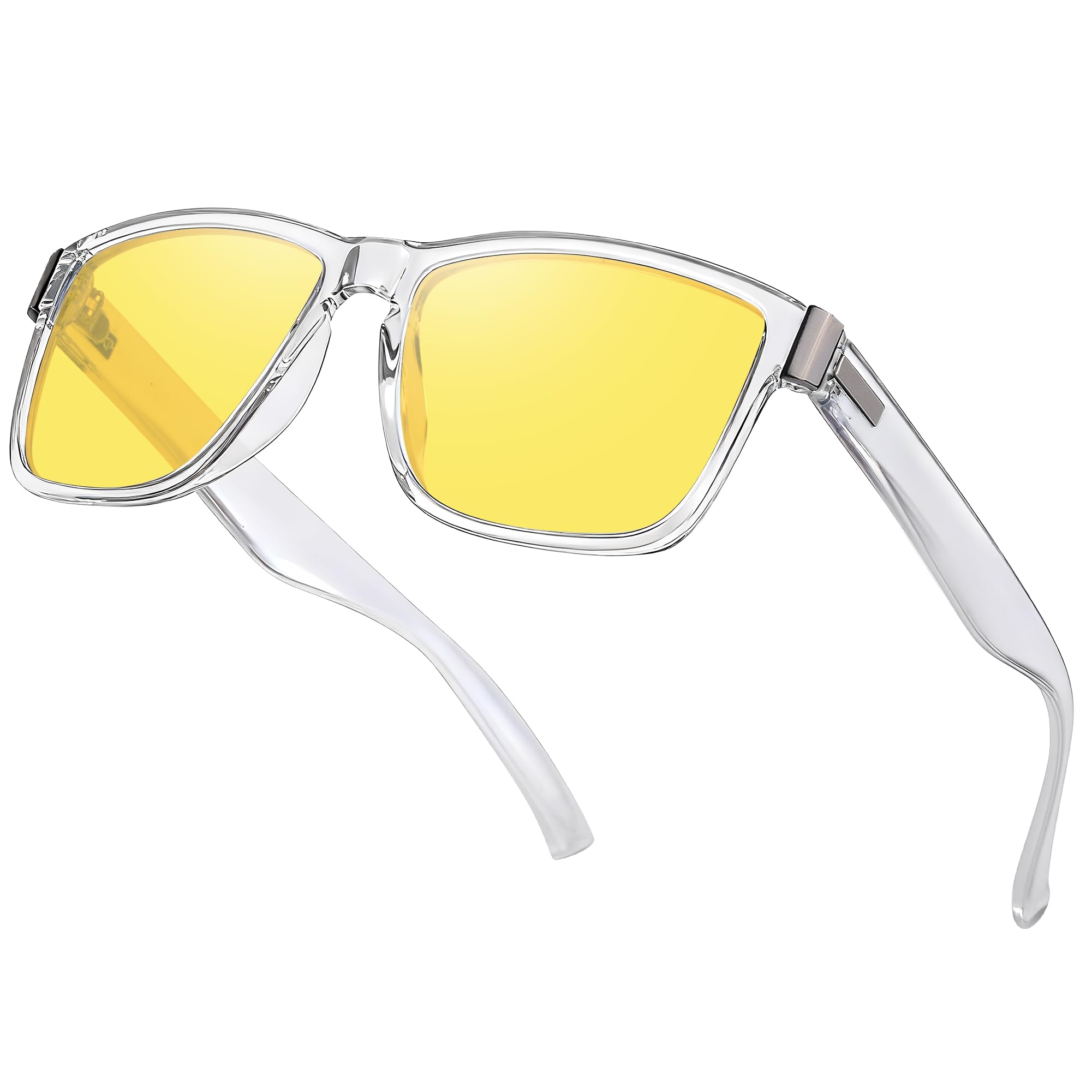
Aimed squarely at the worst conditions: blinding headlights on a wet, foggy road.
The pitch here is narrow and specific, and that is a good thing in a market full of vague claims. The polarized yellow lens is built to filter excessive glare and boost contrast so road signs, lane markings and obstacles resolve more clearly in fog or rain. That is a real scenario for a lot of drivers — the reflector-wet road and the wall of light from an oncoming SUV is exactly where a yellow polarized lens has the best shot at helping.
Polarization is the mechanism worth understanding. It blocks horizontally reflected light, which is the glare that bounces off a wet road surface and washes out the paint markings you are trying to follow. Fog and rain both throw a lot of that reflected light at you, so a polarized lens in a fog-bound commute is doing the job it was designed for rather than a generic tint.
The honest part: glare reduction draws mixed reports, with some drivers getting no clear benefit at all, and fit splits opinion too. That is worth reading as a fit note rather than a flaw — polarized yellow lenses are famously sensitive to how the frame sits relative to your eye line, and a pair that slips down will not deliver the contrast it promises. Try it on a routine commute before you trust it on a long foggy drive.
The honest trade-off: a polarized yellow lens aimed at fog and rain is the right tool for the worst nights, but the mixed reports on glare reduction mean the benefit is not guaranteed on every face.
Consider it if: your commute often runs into fog or heavy rain, and you want a lens built specifically for the reflected-light problem those conditions create.
Hold off if: you want a safe bet on the first drive — a pair with consistent fit reports will serve you more reliably.
7. OULAIQI Polarized Night Driving Glasses

A commuter lens built for the ordinary drive home, not for a rally stage.
Nothing here is exotic, which is the point. The yellow-tinted polarized lens reduces distracting glare from headlights, streetlights and reflective surfaces — the three sources that make an ordinary evening commute tiring. The frame is light, and the design brief is comfort over an extended stretch behind the wheel rather than a five-minute run down the high street.
It also handles the weather card more broadly than a pure night lens. The brand lists it as suitable for night, rain and foggy conditions, which means you are not swapping glasses the moment the clouds open. Commuting, road trips and everyday driving are the stated use cases, and that is a sensible match for the light frame — the sort of pair you forget you are wearing after a few miles.
The trade-off in a lens at this tier is that polarization and warmth are tuned for a general driving scene, not the darkest or the brightest extreme. If you want the deepest glare cut with a longer fit-over and a wider coverage, the fit-over above is the bigger commitment. If your drive is the same route at the same hour every evening, this is a straightforward everyday pair.
Made for: the driver with a fixed evening commute who wants the glare off their windscreen without fuss.
Look past it if: you want specialty performance for deep fog or a fit-over for prescription glasses.
8. LVIOE Night Vision Driving Glasses for Women Polarized
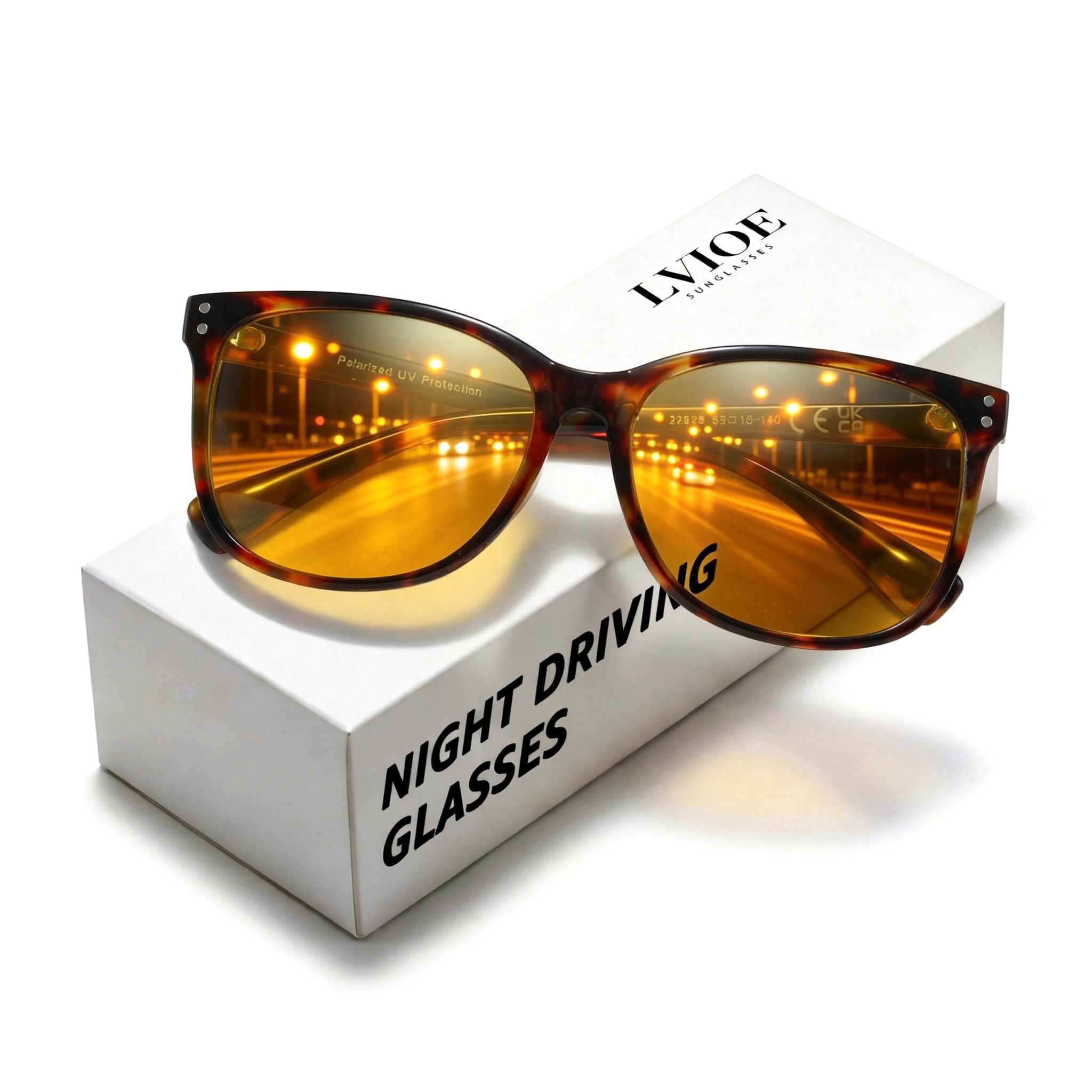
A frame you would wear on purpose, with a real polarized lens behind it.
Appearance is what this pair leads with, and it earns it — the frame reads as a genuinely considered design rather than a plain driving lens in a throwaway mount. A pair you are happy to leave on your nose is a pair that actually gets worn, and this frame sits wide enough to clear most prescription eyeglasses.
The lens specification is honest about what it does. It is a TAC lens, properly polarized, which means it blocks horizontal glare — the reflected light from wet roads and headlights — and provides UVA/UVB protection to cover you in sunlight as well as after dark. The brand lists it as usable in fog, cloud and rain too, so it earns a spot as a year-round pair rather than a night-only accessory.
Comfort is where the design holds up over a long drive: a lightweight frame paired with non-slip nose pads and grips keeps the glasses secure without pinching, and the frame is cut for most face shapes, men and women. A microfiber pouch comes in the box for storage. The one thing to weigh is the glare protection itself — the brand’s own honesty about “individual results may vary” is worth taking seriously, and the protection from glare draws mixed reports. If glare is your number-one problem, the polarized budget pair offers a more proven cut for the money; if you want a pair you will actually wear, this is the better daily companion.
The frame that gets worn: a proper TAC polarized lens with UVA/UVB coating, set in a lightweight frame with non-slip pads, is a genuinely usable daily pair rather than a specialist you leave in the glovebox.
Read the fine print: the brand itself flags that results vary, and glare protection draws mixed reports, so treat this as a style and comfort pick with a real lens behind it rather than a total fix.
Go for it when: you want a driving pair you’ll actually enjoy wearing on every journey, not just the darkest ones.
Weigh it up if: your top priority is the hardest possible glare cut — the more focused polarized picks deliver that more consistently.
9. livho High Tech Blue Light Blocking Night Driving Glasses
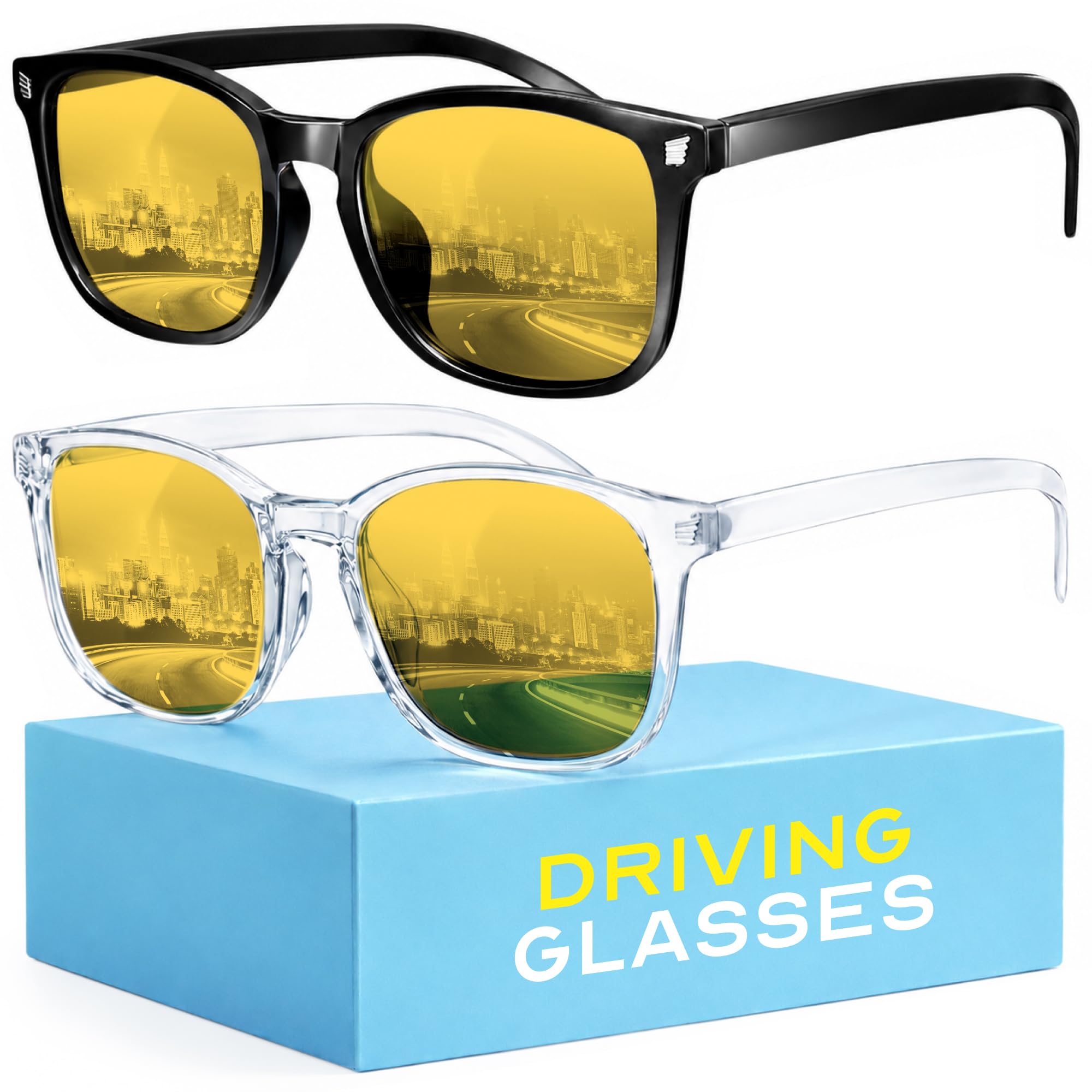
The pair that covers your desk and your dashboard without pretending they are the same job.
This is the pair that has been in more hands than anything else in this guide, and that longevity shows in how it is made. The frame is built from durable material with a light weight, cut for long-term wear across a full day — not a single evening drive. Polycarbonate HD lenses are anti-reflective, which helps cut reflections from oncoming lights.
Its yellow-tinted lens with an anti-glare coating is the driving half of the story. The coating reduces glare from headlights and streetlights while the tint improves contrast and visibility for a more comfortable nighttime drive. The UV400 protection is the other half: it blocks harmful blue rays from screens, which is why the same pair earns its keep at a monitor as much as behind the wheel.
Where you should be careful is the blue-light blocking claim itself. It draws split reports — some users find it works well, others say it does not block blue light at all. That split is worth taking seriously for a pair sold on the strength of that feature, though the wider picture still holds: it is a well-regarded frame with a comfortable, light fit, and the durability and fit both draw mixed notes. Add in a risk-free purchase offer from the brand, and the trade-off is a fuzzier claim on the blue-light front against a hugely popular build.
Where it shines
- Polycarbonate HD anti-reflective coating helps cut reflections from oncoming lights
- UV400 protection covers both screen time and the drive home
- Lightweight frame built for long-term, all-day wear
- Risk-free purchase offer from the brand takes the sting out of trying it
Worth knowing
- Blue-light blocking draws split reports — some say it works, some say it does not
- Fit and durability both draw mixed notes, so treat it as a solid all-rounder rather than a specialist
- Anti-glare coating is not a polarized lens, so glare reduction is softer than the true polarized picks
Worth it for: the driver who wants one pair covering screen and road without switching frames.
Not the pick if: your sole concern is the hardest possible night-glare cut — a dedicated polarized pair wins that contest.
Know the Specs
Visible Light Transmittance (VLT)
VLT is the share of light that reaches your eye through the lens, written as a percentage. A yellow night-driving lens sits in a middle band — one pick here lists roughly 43%–80% — because it needs to let enough light through to see the road while still cutting the harshest headlight wash. Too low a VLT and the road dims; too high and the tint does nothing. When a listing gives you this number, treat it as the single most useful honesty check in the category.
Polarized vs. Tinted
Polarized and tinted are not the same thing, and this is the spec most buyers get wrong. A tinted lens dims the whole scene evenly — like turning down a lamp. A polarized lens carries a filter that blocks horizontally reflected light, the glare bouncing off wet roads and car hoods. TAC is the layered plastic most polarized driving lenses use. If a listing says polarized but never names the lens material, that is worth a second look before you buy.
TR90 and Polycarbonate Frames
TR90 is a flexible nylon-based plastic that bends rather than snaps, and polycarbonate is a tough lightweight plastic common in sport frames. Both are chosen for one practical reason — weight on your face over a long drive. A pair at 0.7 or 0.8 ounces (roughly the weight of a couple of sheets of paper) stops announcing itself after a few minutes. When a listing tells you the frame material, it is telling you how the pair will feel at mile fifty.
Fit-Over Frames and Frame Width
If you wear prescription eyeglasses, the fit-over frame is what you need — the driving lens sits outside your own frames rather than on your face. Frame width is the number to check: a listing around 5.74 inches is wide enough to clear most standard prescription glasses. Soft nose pads are the second half of the equation, holding the extra layer off your bridge so nothing presses into your temples on a long drive.
UV400 and UVA/UVB Protection
UV400 means the lens covers the full ultraviolet range, rather than blocking a slice of it. For a yellow driving lens the protection matters because the same pair often gets worn in daylight too, on a foggy morning or a low-sun drive. Some listings name UV400, some name UVA/UVB; both are protective labels, but check the listing against the words printed on it rather than assuming — a driving lens sold for both daylight and night is where this spec gets used.
Lens Color and Contrast
Yellow and amber do different jobs than grey or brown. Grey and brown darken the whole scene; yellow and amber filter part of the blue spectrum so lane paint, road edges and pedestrians resolve against a dark background. That is contrast, and it is what yellow driving glasses actually deliver. The flip side is that a warm tint shifts the color of the scene, so some drivers prefer a subtle amber while others want a filter that is closer to true color.
Common Questions
Do yellow driving glasses actually reduce headlight glare at night?
Are yellow driving glasses legal to wear while driving at night?
Can I wear yellow night driving glasses over my prescription eyeglasses?
What is the difference between a polarized and a tinted yellow lens?
What visible light transmittance should night driving glasses have?
Will a yellow tint make it too dark to see pedestrians or road exits?
Are TR90 and polycarbonate frames strong enough for daily car use?
Do I need UV protection in a lens I only wear at night?
Is a multi-pack of yellow driving glasses worth it over one good pair?
The Bottom Line
For most drivers, the winner among these yellow driving glasses is theTJUTR Night Vision Driving Glasses because it states its own lens spec — roughly 43%–80% VLT — and pairs it with a TR90 frame built for long drives. If you already wear prescription eyeglasses, the Polarized Fit-Over Cat Eye is the one to reach for, with its 5.74-inch frame width clearing most standard pairs. And if more than one person drives the car, the Gaoye 3 Pack keeps a spare amber pair in every bag you own.
What separates a good pick from a forgettable one in this category is not the color of the lens — it is whether the listing tells you the specs that decide the job. Look for a visible light transmittance in the middle band, the word polarized paired with a TAC lens material, and a frame weight under an ounce if you plan to wear the glasses for a whole road trip. The TJUTR wins on that score because it does the one thing this market rarely does: it tells you what the lens can and cannot do, then leaves you to judge it.
How we choose
We do not accept paid placement. Every pick is matched to a real buyer and a real use-case; we do not hands-on test units.
Sources
Specifications: manufacturer listings and product documentation. Review insights: verified customer reviews, as of November 2026. Pricing: not shown on this page (it changes often); check the current price via the retailer link.
As an Amazon Associate, Tactical Gear Guy earns from qualifying purchases. This does not affect which products we feature.