Specs are compiled from manufacturer listings and verified buyer reviews and can change over time — please confirm the key details on the product page before buying.
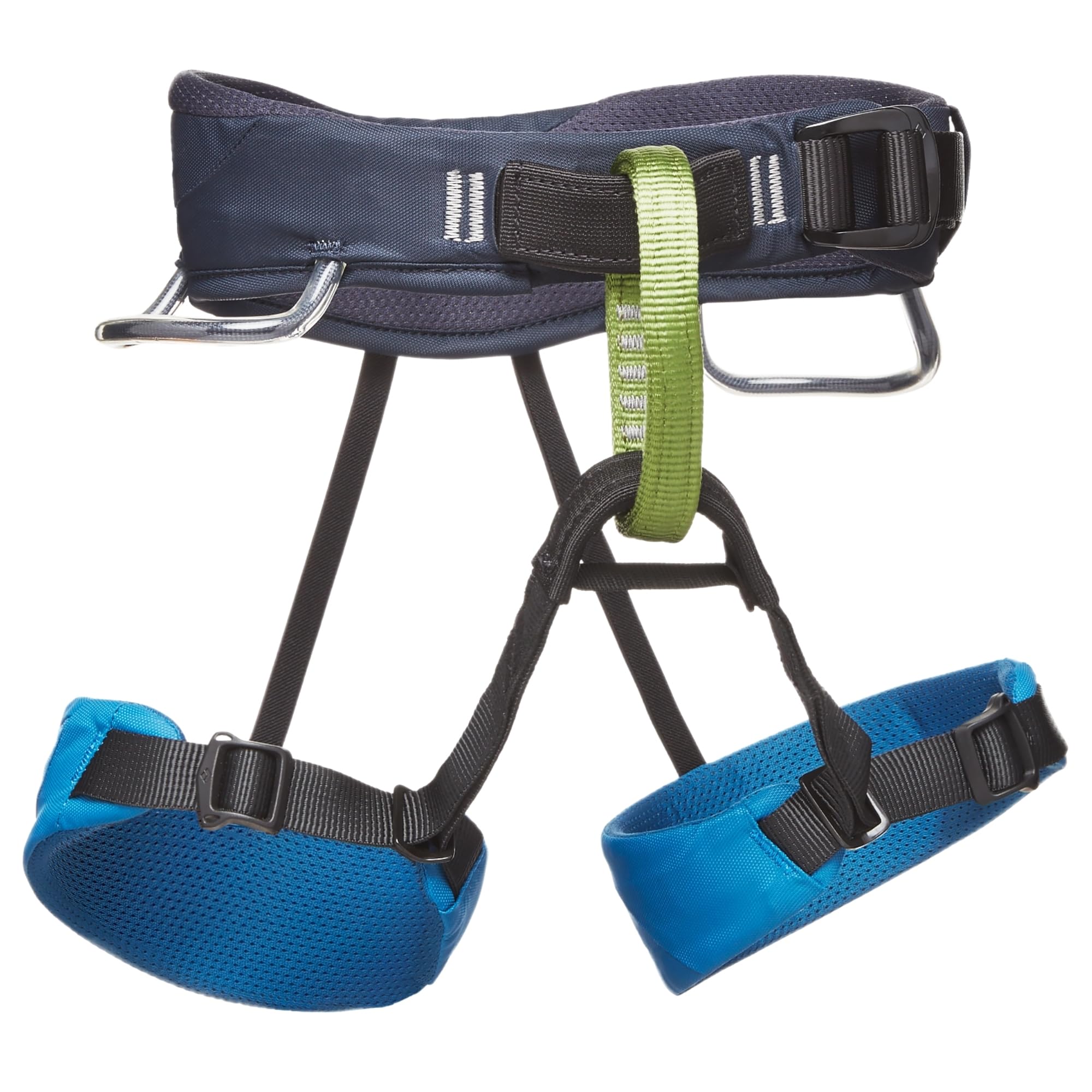
Buying a harness for a child is not the same as buying one for yourself. Small hips do not hold a standard sit harness in place, so the wrong pick slides, rides up, or leaves a kid dangling at an odd angle. The right answer for most families is an adjustable sit harness that grows with the child, and the Petzl MACCHU is the pick worth starting with. Below are five harnesses that genuinely fit children, sorted by who each one actually suits.
This guide is built by comparing the manufacturers’ published specifications and the patterns across verified customer reviews, so you get each pick’s real strengths and trade-offs instead of marketing spin.
You will see how weight limits, body style, and buckle placement change the fit for a five-year-old versus a ten-year-old, which is what really decides whether a harness gets worn without a fight. Here is the honest shortlist for the best youth climbing harness.
Top Picks

How To Choose The Best Youth Climbing Harness
The first decision is body style, not brand. A sit harness wraps the waist and each thigh, and it relies on hips wide enough to stop the belt sliding upward. A full-body harness adds shoulder straps, which keeps a smaller child upright and secure when there is nothing much for the waist belt to catch on.
Match the harness style to your child’s hips
If your child is lean and narrow through the hips, a full-body design takes the guesswork out of fit. If they already have a solid waist and thighs, a sit harness is lighter and less fussy to put on. Two picks here cross over: the MACCHU is a sit harness that accepts shoulder straps to become a full-body harness, and the OUISTITI is built as a full-body from the start for smaller kids.
Read the weight limit as a fit limit
Manufacturers publish child weight ranges because that is the number that actually predicts safe fit. A harness rated for children under 40 kg is aimed at a broad age spread, while one rated under 30 kg is aimed at the smallest climbers. Check your child’s weight before anything else, then check the adjustability range.
Look at where the buckles sit
A curious kid will fiddle with anything within reach. Buckles placed on the back of the harness keep little hands away from the adjustment points during a climb. On the front, a differently colored attachment loop makes it faster for an adult to visually check the belay connection before every route.
Side-by-Side Comparison
| Model | Best For | Harness Style | Stated Child Weight / Age | Buckle Placement | Amazon |
|---|---|---|---|---|---|
| Petzl MACCHU★ Best Overall | Growing kids, one harness for years | Adjustable sit harness (shoulder straps optional) | Under 40 kg | Front waistbelt buckles | Amazon |
| BLACK DIAMOND Kids MomentumTop Performer | All-round indoor and outdoor use | Sit harness, one size | 35–80 lbs | Waist belt adjusters | Amazon |
| Petzl OUISTITI | Smallest climbers without defined hips | Full-body harness | Under 66 lbs (30 kg) | DoubleBack buckles on the back | Amazon |
| NewDoar Full Body | Front and back attachment points | Full-body harness | 7–15 years | Adjustable leg loops | Amazon |
| HandAcc Kids Climbing Belt | Zipline and caving sessions | Full-body safety belt | — | — | Amazon |
Detailed Reviews
1. PETZL MACCHU Kids’ Rock Climbing Harness
Our pick — 4.5+★ from 900+ verified ratings; the strongest balance of quality and price.
One harness that keeps fitting as your kid shoots up and fills out
The MACCHU is a sit harness for children weighing less than 40 kg, and its defining trick is that it starts as waist-and-leg-loop gear and later accepts BODY shoulder straps to become a full-body harness. That means the same purchase works for a small, narrow-hipped beginner and then for a taller, more solid climber a few seasons later. One purchase covers both stages of a child’s growth.
What wins people over is the build. The padded waistbelt and leg loops are shaped for comfort while hanging, which matters on a top-rope session where a child spends real time off the ground. The waistbelt buckles let an adult set the tie-in points in the right spot rather than wherever the belt happens to land, and the attachment loop is deliberately a different color so the belay connection is easy to eyeball before every climb.
It also gives a kid a real climber’s setup. There are two gear loops plus an accessory loop for a chalk bag, so a child can carry their own gear instead of everything going on your harness. The honest limit: this is a sit harness first, so a very small child without much hip definition needs the shoulder straps added before it is the right call — factor that in rather than assuming it is a full-body from the start. For most families, though, this is the one harness that covers a beginner through a taller, heavier climber.
Where it earns its keep
- Rated for children under 40 kg, with adjustability that tracks their growth
- Converts to a full-body harness when you add BODY shoulder straps
- Padded waistbelt and leg loops keep long hangs comfortable
- Two gear loops and a chalk bag loop let a kid carry their own kit
- Contrasting attachment loop speeds up the adult safety check
The trade-off to know
- Shoulder straps are a separate addition, not included for the smallest kids
- Buckles sit at the front where a fidgety child can reach them
Reach for this if: you want one harness that covers a wide age spread and rides comfortably through long gym sessions.
Prepare for: adding the shoulder straps if your climber is on the small side or narrow through the hips.
2. BLACK DIAMOND Kids’ Momentum Harness
One size, 35 to 80 lbs, and built to survive a whole season of gym nights
Black Diamond sizes the Kids Momentum as a single unit that fits most children between 35 and 80 lbs, which is a span that covers a first gym class right through to a confident young climber. It is meant for both indoor walls and outdoor rock, so you are not buying a second harness when the family moves from plastic holds to real stone.
Durability is the story here. The harness has a solid, sturdy feel that holds up to the scraping and hauling a kid puts gear through, and it is the sort of build that parents decide was worth spending a little more on. Adjustability is part of the design too, giving the waist room to open up as a child grows into it.
The catch is the waist belt adjustment itself — it takes a bit of effort to dial in, so plan on doing the fitting yourself rather than handing it to a child. Sizing across that 35 to 80 lbs range also lands differently on different bodies, so try it on with the layers your child will actually climb in. Compared with the fuller range of the MACCHU, this one is more of a single fixed-size commitment rather than a harness that expands with add-on straps.
What buyers notice: the sturdiness and the durability are what stand out most, alongside a fit that works for a range of kids and a build buyers describe as worth the extra spend.
Where it pushes back: the waist belt adjuster needs real effort to move, and the mixed sizing feedback means a try-on before the first climb is smart.
Best matched to: a family that wants one tough harness covering indoor and outdoor climbing for a child inside the 35 to 80 lbs window.
Think twice if: you need a harness that keeps expanding well past that weight band or converts to a full-body setup.
3. Petzl OUISTITI Children’s Harness

A vest you slip on a preschooler in seconds, no threading required
Children weighing less than 66 lbs (30 kg) often do not have well-defined hips, and a standard sit harness has little to grip. The OUISTITI solves that by being a full-body harness from the ground up, with a semi-rigid structure that holds its shape. You slide it onto the child like a vest — no connectors to thread, no confusing strap maze at the base of the wall.
Fit is what everyone talks about, and it comes with room to grow. The DoubleBack adjustment buckles sit on the back of the harness, which keeps a child from reaching around and loosening them mid-climb — a small design choice that changes how relaxed you feel belaying. There is a reinforced ventral (front) tie-in point for standard climbing plus a dorsal (rear) attachment point for other supervised activities.
Comfort comes from closed-cell foam padding on the leg loops, waistbelt, and shoulder straps, so a hanging child is supported rather than pinched. It is a light harness at 0.41 kg, which matters when a small kid is carrying it to the car. The honest trade-off is scope: this is engineered for children under 66 lbs (30 kg), so it is a first harness rather than a long-term one, and you will be shopping again once your climber passes that mark.
Why parents trust it: the vest-style structure and rear-placed buckles mean a child is strapped correctly in seconds and cannot undo the fit while climbing.
The one caveat: the 66 lbs (30 kg) ceiling caps how long it stays in service, so it suits the youngest climbers best.
Pick this one for: a small child who needs shoulder support and a fast, fuss-free fit at the crag or the gym.
Look elsewhere when: your child is already closing in on the 66 lbs (30 kg) weight limit.
4. NewDoar Full Body Rappelling Harness

Two load-bearing rings, one on the back and one on the chest, for supervised sessions
This NewDoar full-body harness carries an alloy steel load-bearing ring on the back that spreads weight across the system, plus a chest load-bearing ring meant to stop a child inverting during a fall and keep them upright. That pairing is why it lands in caving, rappelling, zipline, and outward-bound style training as well as plain rock climbing. It is listed for ages 7 to 15.
The leg loops adjust so you can size them to the comfort level you want or to the layers your child is wearing, and the whole thing goes on and off without a struggle. At 1.8 pounds it is a substantial piece of gear, which is the price of that steel hardware. Functionality is the part buyers speak well of — it does its job for children, with four-year-olds singled out as getting on with it fine.
Here is the honest part. Fit is the most-discussed topic and the feedback splits down the middle: some call it perfect for a large five-year-old, others find it runs too large. Treat the 7-to-15 age listing as a starting guide, not a guarantee, and check the actual measurements against your child. If you want a harness that is unambiguously sized by weight, the OUISTITI above is the cleaner fit story.
What it brings to the wall
- Back alloy steel ring distributes load across the system
- Chest ring helps keep a child upright during a fall
- Adjustable leg loops handle layers and comfort preferences
- Suits rappelling, caving, zipline, and training as well as climbing
What to weigh up
- Fit feedback is genuinely split, so measure before you commit
- At 1.8 pounds it is heavier than the Petzl options here
Worth choosing for: mixed-activity days where you want both a chest and a back attachment point on one harness.
Measure first if: your child sits at the small end of the 7-to-15 age listing.
5. HandAcc Kids Climbing Belt
The low-cost way to get a child into a full-body belt for zipline and caving days
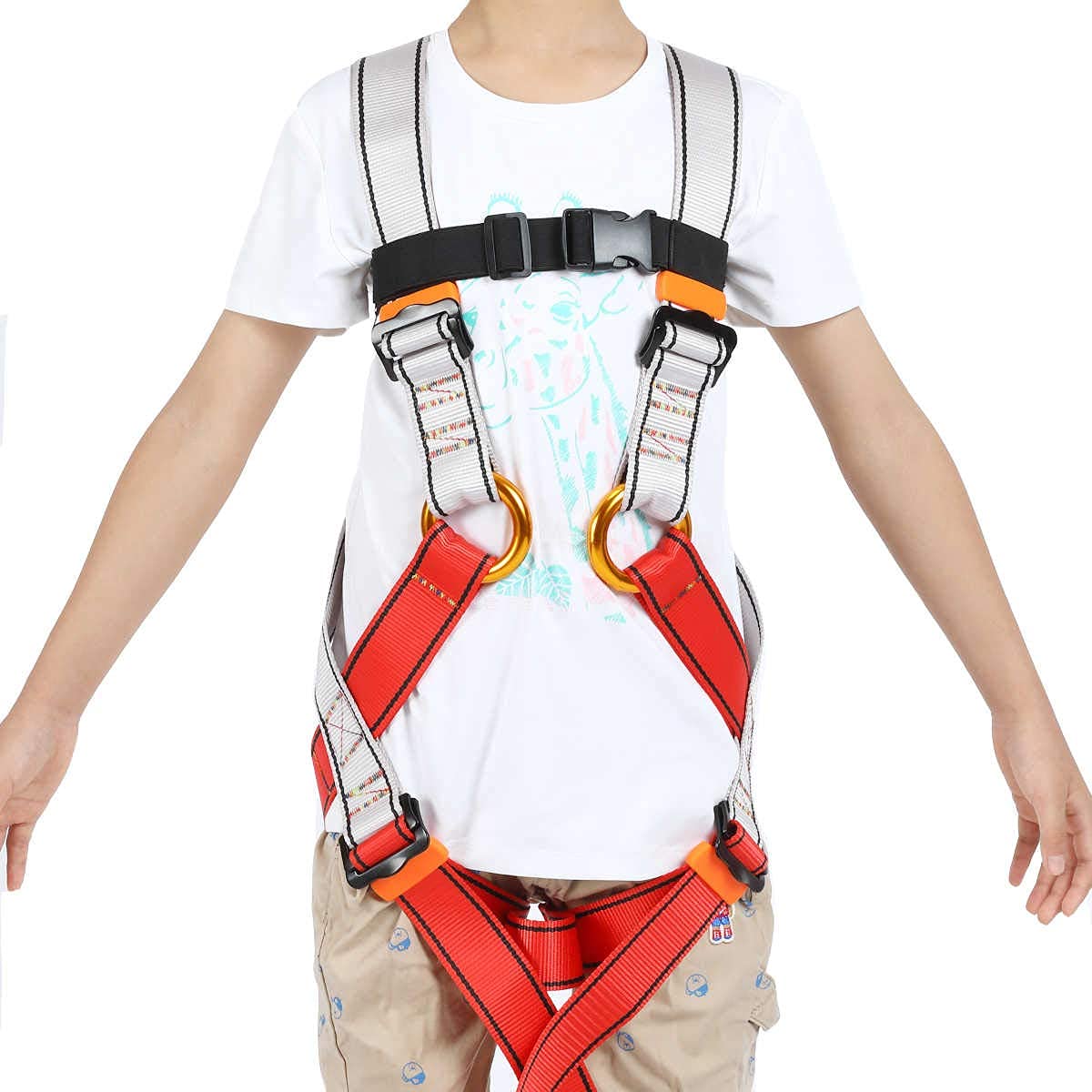
If the climbing is occasional and the goal is a full-body safety belt for a zipline course, a caving trip, or a family training day, this HandAcc belt is the entry-level route. It is built as a youth full-body belt rather than a gym sit harness, so it spreads support across the body for the supervised, straight-line activities it names. That makes it a zipline and caving belt, not a substitute for the MACCHU or the Momentum.
What it does well is get a child safely clipped in for zipline, caving, and training days. The full-body layout wraps over the shoulders, which is the reassuring shape for a kid who is nervous about height. It is the cheapest of the five, which suits a once-a-season zipline afternoon.
The limit worth understanding is that this is not a technical climbing harness. There are no published weight or age specs to check against your child, and no gear loops for a rack. If your child is heading to a climbing gym or a real crag with a rope and a belayer, spend the extra on the OUISTITI or the MACCHU instead — those are the picks built for that job.
Where it fits: supervised zipline, caving, and training sessions where a full-body safety belt is what the operator asks for.
Where it stops: no published weight or age range and no gear loops, so it is not the pick for roped climbing progress.
Good fit for: families testing the waters with zipline trips or caving before committing to climbing gear.
Step up instead if: your child is enrolled in a climbing gym or heading outdoors on a rope.
Know the Specs
Weight Rating In Kilograms
Harness makers publish a child weight ceiling because weight, not age, is what predicts whether a harness will hold a body safely. A rating of under 40 kg covers a broad spread of ages, while under 30 kg is aimed at the smallest climbers. Always put your child on a scale before you compare harnesses, since two kids of the same age can sit at very different weights.
Sit Harness Versus Full-Body
A sit harness wraps the waist and each thigh and depends on hips wide enough to keep the belt from riding up. A full-body harness adds shoulder straps, which is the safer shape for a child without defined hips. Some sit harnesses accept add-on shoulder straps, letting one purchase cover both stages as a child grows.
Buckle Placement
Where the adjusters sit changes how much a child can interfere with their own fit. Buckles on the back keep small hands away from the loosening points mid-climb. Buckles at the front are faster for an adult to set and check but easier for a fidgety kid to reach.
Gear Loops And Attachment Points
Gear loops let a child carry their own chalk bag and a bit of kit. Attachment points matter more for safety: a front tie-in point is standard for climbing, while a rear attachment point is used for other supervised activities. A contrasting color on the attachment loop makes the adult safety check quicker.
Common Questions
How do I know if my child needs a full-body harness instead of a sit harness?
Can the Petzl MACCHU really grow with my child?
What does the 66 lbs (30 kg) limit on the OUISTITI actually mean?
Why do some kids’ harnesses put the buckles on the back?
Is a full-body safety belt the same as a climbing harness?
What are the front and back rings on the NewDoar harness for?
Does the Black Diamond Kids Momentum fit both a small and a larger child?
How should a youth harness fit when it arrives?
Will a kids’ harness fit over winter layers?
The Bottom Line
For most families, the best youth climbing harness is the Petzl MACCHU because it covers a wide weight range, converts to a full-body harness with add-on shoulder straps, and carries the small details — a contrasting attachment loop, two gear loops, a chalk bag loop — that make a kid feel like a real climber. If your child is small and needs shoulder support from day one, the Petzl OUISTITI is the cleaner answer with its vest-style fit and rear-placed buckles. And for indoor-and-outdoor sessions with a child inside the 35 to 80 lbs band, the Black Diamond Kids Momentum is the rugged one to reach for. Match the harness to your child’s weight and hip shape today, and the climbing part takes care of itself.
How we choose
We do not accept paid placement. Every pick is matched to a real buyer and a real use-case; we do not hands-on test units.
Sources
Specifications: manufacturer listings and product documentation. Review insights: verified customer reviews, as of November 2026. Pricing: not shown on this page (it changes often); check the current price via the retailer link.
As an Amazon Associate, Tactical Gear Guy earns from qualifying purchases. This does not affect which products we feature.