Specs are compiled from manufacturer listings and verified buyer reviews and can change over time — please confirm the key details on the product page before buying.
You want gloves that keep your hands on the cable and off the blister list, and that means one thing above all: a real leather palm that grabs instead of slides. The picks below all clear that bar, and the Plainsman Premium Cabretta pair leads the group — supple cabretta leather with a reinforced double-layer palm and 3 rows of double stitching, built so the grip survives a full afternoon of braking and belaying.
This guide is built by comparing the manufacturers’ published specifications and the patterns across verified customer reviews, so you get each pick’s real strengths and trade-offs instead of marketing spin.
Below you’ll find nine leather-palm options split by budget, grip feel and hand protection, with the exact specs that decide which one belongs on your harness. This breakdown of the zip line gloves market sticks to published specs and owner feedback so you can pick with confidence.
Top Picks


How To Choose The Best Zip Line Gloves
The mistake most first-timers make is buying a padded cycling glove or a cheap knit work glove and expecting it to handle a steel cable. A zip line cable is unforgiving — it’s thin, hard and moving — so what saves your hands is a continuous leather palm that grips and a wrist closure that keeps the glove seated. Start there and the rest is fine-tuning.
Palm material and why leather wins on a cable
Leather resists abrasion (the slow scuffing that wears a glove thin) and it keeps its grip when your hands get warm and damp. Goatskin tends to feel softer and more precise than cowhide, which is why the climbing-style picks here use it. Cowhide is the tougher, more forgiving option for yard and construction work. Either way, look for a reinforced or double-layer palm — that patch is where the cable rides.
Cut resistance and knuckle protection
Cut levels are rated on the ANSI/ISEA 105 scale, where a higher letter means more resistance to slicing. A6 is a serious rating — it’s aimed at sharp metal, glass and rebar. Impact protection is rated separately under ANSI/ISEA 138, and TPR pads (hard rubber knuckle guards) are what absorb a knock. For a zip line you mostly need palm toughness and grip, but if your day also involves tools or debris, impact padding earns its place.
Fit and closure: keeping the glove on the rope
A glove that twists or slides off mid-ride is worse than no glove. Elastic wrists, Velcro straps and shirred cuffs all do the same job differently — Velcro lets you dial the fit, elastic keeps it simple, and a neoprene cuff sits low under a harness. Check the size chart carefully, because several picks here are reported to run small or large.
Side-by-Side Comparison
| Model | Best For | Palm Material | Cut / Impact Rating | Wrist Closure | Amazon |
|---|---|---|---|---|---|
| Plainsman Premium Cabretta (2 Pair)★ Best Overall | All-round zip line grip | Leather | — | Elastic | Amazon |
| Retro Brown Cowhide Work GlovesBudget Pick | Budget yard and cable duty | Cowhide, 1.1-1.2mm | — | — | Amazon |
| MAGID T-REX TRX814Best Protection | Sharp hazards and impacts | Goatskin | ANSI A6 / Impact Level 2 | Pull On | Amazon |
| MAGID Leather Lineman Protector | Layering over rubber gloves | Leather | — | — | Amazon |
| Intra-FIT Goatskin Climbing Gloves | Rope and rappel grip | Goatskin (65%) | — | Hook and Loop | Amazon |
| Superior Glove Endura 378GOBKL | Multi-hazard protection | Leather, ParaActiv liner | ANSI A4 / CAT 4 arc flash | Elastic | Amazon |
| Wells Lamont HydraHyde | Wet-weather grip | Grain cowhide, HydraHyde | — | Slip-On | Amazon |
| Superior Glove Endura 378GKVSB | Heavy handling with padding | Leather, unlined | Impact Level 2 | Pull On | Amazon |
| PETZL CORDEX | Serious belay and rappel | Goatskin leather | — | Velcro / neoprene | Amazon |
Detailed Reviews
1. Plainsman Premium Cabretta Leather Gloves (2 Pair) – Large
Our pick — 4.5+★ from 350+ verified ratings; the strongest balance of quality and price.
The two-pair leather set that gives your palms a reinforced double layer exactly where the cable rides.
What makes this the pick to beat is the palm build. You get two layers of leather bonded together, held with 3 rows of double stitching, on a pair that’s ready for a full day of gripping. That reinforced patch sits right where a cable or rope scuffs hardest, so it wears through slower than a single-thin-palm glove. Cabretta leather — a soft, fine-grained sheepskin leather — is the reason these feel broken-in on day one rather than requiring a week to loosen up.
The elastic wrist does the quiet work of keeping the glove seated. Unlike a pull-on glove to a bare hand, the elastic cinches around your wrist so the glove doesn’t ride up or twist when you brake. Buyers regularly describe them as soft and lightweight with good hand protection, and the durability holds up — a season of use shows minimal wear. That combination of a tough palm and a soft back is why the quality is the thing that wins people over most.
Here’s the honest part: dexterity is the one point buyers split on. The double-layer palm gives you protection at the cost of a little feel, so if you need to tie knots or work small clips with the gloves on, expect a stiffer touch than a thin single-layer glove. The other numbers that matter: the fit is small enough to stuff in a back pocket, and you get two pairs, so there’s always a dry set waiting.
Where this pick delivers
- Reinforced double-layer palms with 3 rows of double stitching where the scuff happens
- Cabretta leather is soft and flexible from the first wear, no break-in period
- Two pairs included, so a wet set never sidelines you
- Elastic wrist holds the glove in place during a fast brake
Where it asks something of you
- Dexterity is the split point — the extra palm layer cuts down fine feel
- Thin enough for a back pocket, but not a glove you’d wear for heavy tool work
- Two-pair set only comes in the size ordered, so check the chart for the right fit
Grab these if: you want one pair on and one pair spare, with a reinforced palm that handles cable scuffing and a soft feel from day one.
Think twice if: you need full-fingered dexterity for tying off knots mid-ride — the double layer trades a little feel for its protection.
2. Retro Brown Cowhide Leather Work Gloves
Thick cowhide at an entry price, light enough on the hand that you forget you’re wearing it.
At 4.23 ounces versus the MAGID T-REX at 8.32 ounces, so it’s a different animal entirely. That does make for a noticeably lighter feel while still giving you a genuine cowhide palm at 1.1-1.2mm thick. The leather is oil resistant and tear resistant, with moderate stab resistance, which covers the kind of scuffing a cable or an axe handle throws at it. A reinforced palm patch sits where you need grip most.
What buyers praise most is quality — it’s the single most-mentioned point about these gloves — and durability runs close behind. Comfort is a frequent theme: they’re described as fitting well and feeling like you’re barely wearing a glove at all. For yard work, camping and general outdoor duty, that combination of tough leather and light weight makes them easy to keep on for hours.
The trade-off is thickness. Because it’s a work-glove cut rather than a fitted climbing cut, the fit runs to the roomier side, and the moderate stab resistance means it’s not a glove built for sharp metal. Sizing runs M, L and XL, so check the chart rather than guessing. For the price, a pair of these in your pack is an easy call alongside your main gloves.
The weight story: At 4.23 ounces versus the MAGID T-REX at 8.32 ounces, yet the cowhide still lands at 1.1-1.2mm thick. That’s a rare combination of low weight and real leather.
What to keep in mind: Moderate stab resistance is not cut resistance. If your day involves sharp edges or debris, this glove isn’t the one.
Right for you if: you want a featherweight cowhide glove for yard work, camping and casual cable duty without spending much.
Not the one if: you need ANSI-rated cut protection against sharp metal — the leather here is tough but not a cut barrier.
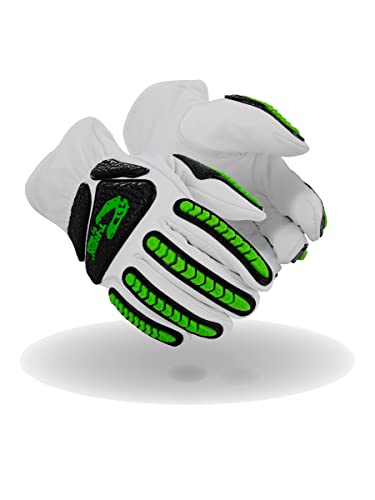
3. MAGID T-REX Cut Resistant Goatskin Impact Driver Gloves
A6 cut protection and rubber knuckle guards on one goatskin glove — the tough jobsite answer.
If your zip line day overlaps with tools, glass or metal, this is the glove that answers both hazards at once. It’s rated ANSI/ISEA 105 Cut Level A6 — a high cut rating aimed at sharp metal edges, glass and rebar — and separately ANSI/ISEA 138 Impact Level 2 for blunt knocks. The supple goatskin shell with a Gunn cut and keystone thumb keeps it flexible enough to actually grab a cable, which is not something you can say for every armored glove.
The details are what make it a workhorse. A para-aramid (a strong synthetic fiber, similar to Kevlar) knit liner is stitched in behind the leather for backup cut protection. TPR pads run from the back of the hand across the knuckles and between the thumb and index finger. It’s also rated ANSI/ISEA 105 Level 3 Abrasion, Level 3 Puncture, and ASTM F1060 Contact Heat Level 2 for heat up to 284°F — a lot of ratings on one glove.
The honest catch is durability. A meaningful number of buyers report the stitching or panels starting to separate after heavy use. Treat these as a protective layer for moderate duty rather than an indestructible glove. Weigh that against the fit and quality feedback — most owners find them well-made and comfortable, and the warmth of the lightly insulated build helps on cold days. At 8.32 ounces versus the Retro Brown cowhide at 4.23 ounces, the extra mass is what buys you the armor.
The safety math: ANSI A6 cut plus Impact Level 2 in one glove is a combo you don’t often find under the same roof. It’s a genuinely protective glove, not a padded work glove with a tough-sounding name.
Where it’ll wear first: Durability is a mixed report — some pairs hold, some separate early. For heavy daily use, plan on replacing them sooner than a plain leather glove.
The right call for: mixed-hazard workdays — cable plus glass, metal or rebar — where you need both cut and impact coverage in one glove.
Pass on it if: you want the lightest possible feel on the cable; this glove is listed at 8.32 ounces.
4. MAGID Leather Lineman Electrical Protector Work Gloves

A leather over-glove with a long gauntlet, made to slide on over a rubber liner glove.
This one is a different kind of glove, and that’s the point. It’s a leather protector designed to be worn over a rubber insulating glove — the gauntlet cuff (the long sleeve that extends past your wrist) covers the gap where your sleeve and glove meet. Buyers use it for its intended type of work, and the fit over the underlying rubber glove gets consistent praise. The leather quality holds up to the job.
For a zip line, this glove earns a spot if you want a gauntlet that protects your wrist from cable scrape, or if you already work with electrical gloves and want one leather shell to cover them. The leather takes scuffs, and the gauntlet means brush and cable drag hit leather instead of skin.
Durability is the honest weak point. The recurring report is that the leather separates or tears with heavy use, and buyers split on how fragile it feels day to day. Sized this close to the hand, it’s also not the glove to buy if you’re not using it over a liner — the fit is cut for layering. Treat it as the shell that protects the glove underneath, not as your only glove.
Why it earns a place
- Gauntlet cuff covers the wrist gap and takes cable and brush drag instead of your skin
- Fits over rubber electrical gloves as intended — that’s the whole job
- Leather quality is solid, and functionality is the second-most praised point
The real limits
- Durability is the weak spot — leather tearing is a common report under heavy use
- Cut for layering, so it’s a poor standalone fit if you’re not over-gloving
- Heavier and bulkier than a plain fitted leather glove
Pick it up when: you’re layering it over a rubber electrical glove or you want a long gauntlet to protect your wrist on the cable.
Look elsewhere when: you want a standalone glove for direct grip — this one is built as a shell, not a primary glove, and it wears faster under hard use.
5. Intra-FIT Goatskin Climbing Gloves, Rescue & Rock

Built for the rope, not the yard — padded palm, curved fingers, and a spot to clip it to your harness.
The material mix is what sets this glove apart: 65% goatskin, 25% polyester, 8% neoprene and 2% Lycra. The goatskin gives you a supple, abrasion-resistant palm, and the spandex panels let heat escape so your grip doesn’t go slick when your hands sweat. Curved fingers and a Velcro cuff mean it hugs the hand rather than hanging loose — the difference between a grip that holds and one that shifts mid-rappel.
Two details matter most for zip line use. The reinforced, padded palm takes the friction heat off a fast descent, which is exactly the wear point a hand brake puts on a glove. And the built-in carabiner hole means you can clip the pair to your harness or gear loop, so it’s always within reach when you step up to the platform. Buyers rate the material highly — it’s the most-praised point about the glove — with fit and comfort following close behind.
The friction here is real, though. The grip draws mixed feedback — some buyers find it good, others report next to none — and a recurring complaint is a black residue from the leather that stains hands. The glove also runs small, so order a size up if you’re between sizes. It stays soft and flexible, and for rope work it’s a solid pick over the long haul — just wash your hands after.
Why the rope crowd likes it: A padded palm plus curved fingers plus a carabiner hole equals a glove designed around descents, not around a tool handle. That focused design is what the material praise reflects.
The honest friction: Grip feedback is mixed, and the leather leaves a residue on hands. If you need guaranteed grab on every ride, look at a glove with a proven leather palm.
Bring these along if: you’re climbing, rappelling or running a zip line and want a padded palm plus a harness clip point to keep them handy.
Size up or look past it if: you’re between sizes — the glove runs small — or you dislike a residue on your hands after a descent.
6. Superior Glove Endura 378GOBKL Leather Work Gloves

Cut, heat, arc flash and liquid resistance stacked into one soft leather glove.
This glove is a rare multi-hazard stack. It’s rated ANSI A4 cut resistance with a full 360° ParaActiv knit liner, arc flash-rated CAT 4 with an Arc Thermal Performance Value of 41 cal/cm², ANSI/ISEA Abrasion Level 4, and Heat Level 3. If your work puts you near sharp edges, heat or live current, that’s an unusual amount of coverage in a glove that still feels like leather.
The comfort details are where it stands out against the heavier picks. Soft authentic leather, snug elastic wrists for easy on and off, and unpadded palms that give a steady grip and a better sense of feel. That unpadded palm is a deliberate choice — you trade some cushion for direct contact with a rope or cable, which is exactly the feel you want when a glove is on a hand brake.
What owners mention most is durability — no signs of wear, and a fit that accommodates fingers with a good lining-to-leather relationship. The gloves are also noted to handle high heat and keep hands warm in cold weather. It’s a heavyweight fabric build, so it feels substantial. For a zip line where you also handle tools or debris, that extra protection is welcome; for pure light cable duty, it’s more glove than you need.
What makes it different
- ANSI A4 cut plus 360° ParaActiv knit liner for full-hand slice protection
- Arc flash-rated CAT 4 with an ATPV of 41 cal/cm²
- Unpadded palm for direct feel and steady grip on a cable
- Snug elastic wrists for quick on and off
The honest trade-off
- Heavyweight build is more protection than a light cable day requires
- Unpadded palm gives less impact cushion than the padded gloves in this group
- Substantial feel compared to a thin single-layer leather glove
Worth it for: anyone whose zip line or rope work shares a jobsite with sharp edges, heat or electrical hazards who needs genuine multi-hazard coverage.
Overkill if: you’re only gliding on a recreational cable — the heavyweight build and multi-hazard ratings are more than that job calls for.
7. Wells Lamont Men’s Slip-On HydraHyde Leather Work Gloves

Treated leather that stays soft when wet — the glove that doesn’t stiffen after a rainy day.
Here’s the problem with standard leather on a wet zip line day: it soaks up water, dries stiff, and never quite returns to its original feel. HydraHyde is Wells Lamont’s specially tanned leather that’s water-resistant and breathable. The difference is the point — standard leather stiffens after it dries, while this treated leather stays soft over the life of the glove. That’s a genuinely useful property when your gloves get wet and you want to put them back on the next morning.
The build is 100% grain cowhide with puncture resistance and high abrasion resistance, plus a reinforced leather palm patch that improves grip and adds durability. The slip-on cuff keeps it simple — no straps to fiddle with at the platform, just pull it on and go. What buyers praise most is quality, with fit and comfort close behind, and the water resistance gets frequent mention on its own.
The catch: the slip-on cuff doesn’t cinch tight, so if you want a glove that hugs the wrist without movement, an elastic or Velcro closure gives you more control. Functionality feedback is also mixed — most find them great general-purpose gloves, but a few describe tighter-than-expected performance. For the outdoor, wet-weather, gardening-and-ranching kind of duty, they’re a strong, comfortable pick.
Why the wet-day crowd likes it: Water-resistant HydraHyde leather that keeps its softness and stays supple. You get grip and puncture resistance without the stiff-leather penalty after a damp morning.
Keep an eye on: The slip-on cuff is the loose fit. If you need a glove that stays cinched tight through a fast brake, look at a Velcro or elastic wrist instead.
Your glove if: your zip line days happen outdoors in damp weather and you want leather that stays soft and grippy when wet.
Better elsewhere if: you want a locked-on wrist feel — the slip-on cuff is comfortable but doesn’t cinch like a strap.
8. Superior Glove Endura 378GKVSB Work Gloves

Cushioned where it counts — padded palms and back-of-hand guards for heavy material handling.
Where the Endura 378GOBKL above gives you cut and arc protection with a bare palm, this version flips the priorities: padded palms and back-of-hand impact protection. It’s rated ANSI/ISEA Impact Level 2, so the knuckle guards absorb knocks and bumps, and the palm padding adds comfort when you’re gripping loads or a cable for long stretches. The leather is genuine and water-resistant, treated so water and liquids bead rather than soak through.
The keystone thumb design (a thumb panel shaped so it moves naturally with your hand) keeps durability up and dexterity decent, even with the padding. Abrasion resistance is ANSI/ISEA Level 4, so the palm takes a scuffing without wearing through fast. For construction, material handling, yardwork and debris removal, that stack of features is exactly what the job asks for.
The honest limits: sizing runs a little large, and construction feedback is mixed — most find them well-built, but some note stitching issues. The unlined build has no added liner to warm your hands on cold days. What customers note most is that these excel at hard labor, with knuckle protection being the second most-praised point. If you want padding and impact guards on a zip line that shares space with tools, this is the one to grab.
What it gets right
- Impact Level 2 back-of-hand guards — the thing buyers praise most after overall quality
- Padded palm adds comfort during long material-handling sessions
- Keystone thumb balances dexterity with a durable build
- Water-resistant genuine leather with ANSI/ISEA Abrasion Level 4
What to plan for
- Sizing runs a little large — check the chart before you order
- Unlined, so it’s not the warm glove on a cold platform
- Stitching feedback is mixed; a few pairs come with construction complaints
Don’t pass it up if: you want padded palms and knuckle guards for a zip line alongside tools and heavy material handling.
Better if it fits exactly: sizing is on the large side — a precise fit makes the padded shell much more comfortable.
9. PETZL CORDEX Lightweight Belay/Rappel Gloves
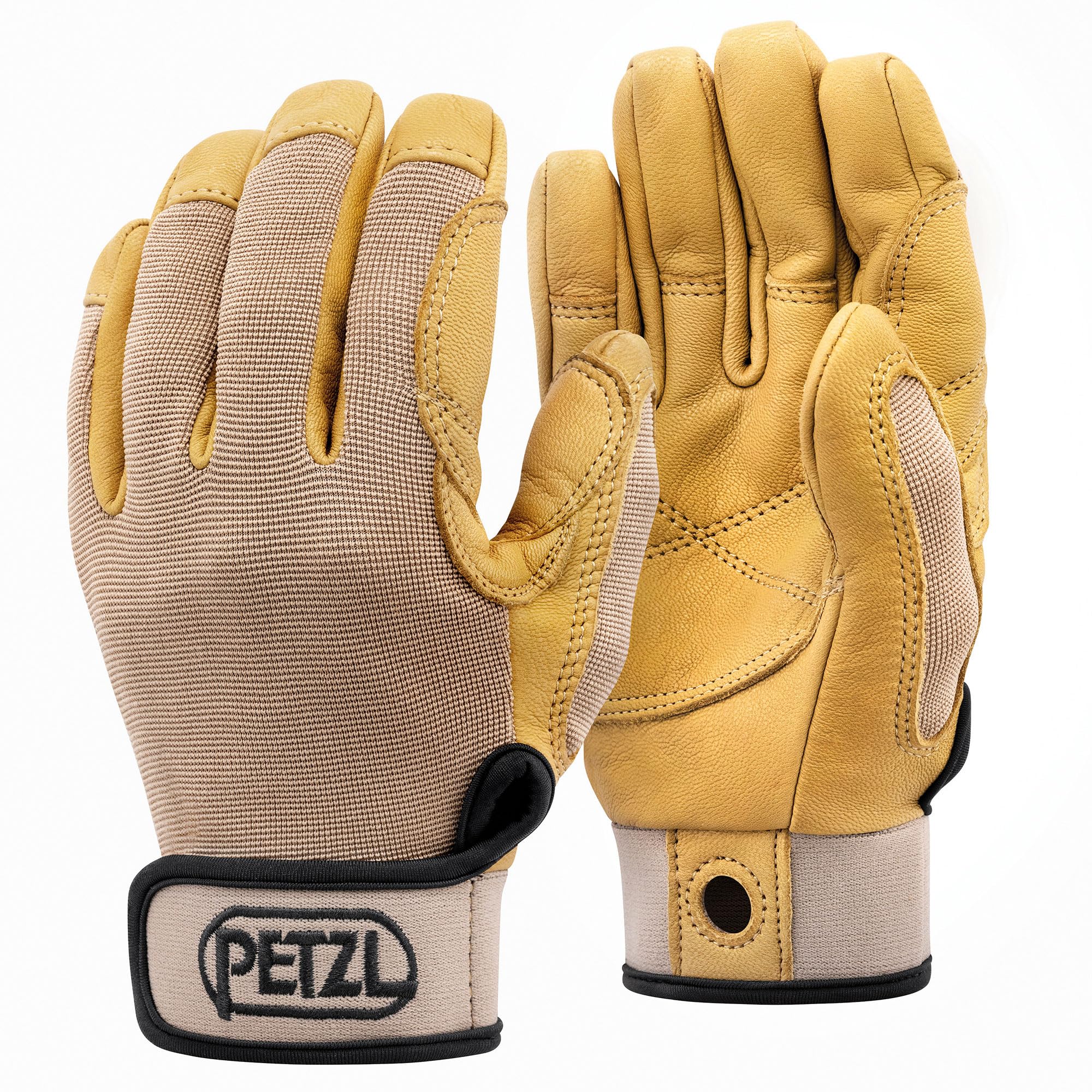
The climbing-world standard for belay and rappel — goat skin, breathable back, secure cuff.
If you want the glove that experienced rope people reach for first, this is it. The CORDEX is 100% goat skin leather on the palm, chosen for the balance of durability and dexterity — you can feel the rope and still get real abrasion resistance. Stretch nylon on the back of the hand adds breathability and a close fit, and the ergonomic cut lets you handle carabiners and gear with precision rather than fumbling with a thick palm.
The low-profile neoprene cuff with Velcro closure is the wrist detail that matters on a descent. It cinches snug and adjustable, so the glove stays put when the rope runs fast. There’s also a reinforced carabiner hole for clipping the glove to your harness when both hands are needed. What buyers praise most is quality, then fit — the build shows double stitching and layering in the stress areas, which is where a cheap glove blows out first.
The catch is cost. This is the most expensive glove in the group, and it’s built for climbing, caving and rope work rather than heavy construction. For a zip line it’s a beautiful match — dexterous, snug, excellent grip feel. For a hot cable and a coarse glove you’ll abuse, you’re paying for precision you may not need. That said, this crowd favorite holds 4.5+ stars across 800+ ratings, which says a lot about how owners rate its long-term durability.
What owners rave about: The quality and fit. Owners describe a glove that feels tailored, breathes well on hot belays, and handles gear without slipping. Dexterity and versatility both get frequent mention.
The honest cost: It’s a premium purchase for recreational cable use. A climber’s glove, not a yard glove, and it’s priced accordingly.
Pick this if: you’re serious about rappelling and belaying and want the glove the climbing crowd trusts for feel and fit on the rope.
Skip the premium if: you only zip line occasionally and won’t use the extra dexterity — a basic leather palm covers that job for far less.
Know the Specs
ANSI Cut Level and Impact Level
Cut levels run on the ANSI/ISEA 105 scale. The letter tells you how well the glove resists slicing — A6 (like the MAGID T-REX) is a high rating aimed at sharp metal and glass, while A4 (like the Superior Glove Endura 378GOBKL) is a solid mid-level. Impact protection is a separate rating under ANSI/ISEA 138, where Level 2 means the hard rubber knuckle pads absorb a meaningful knock. For a zip line, cut rating matters less than palm grip and abrasion, but if your day overlaps with tools, the higher number earns its keep.
Palm Material, Padding and Wrist Closure
Goatskin is soft and precise, which is why climbing gloves use it. Cowhide is tougher and a bit thicker, better for yard and construction work. A reinforced or double-layer palm adds wear life exactly where the cable or rope scuffs. Padding protects the palm from friction heat on a descent but reduces the sense of feel. Wrist closure is the quiet detail: elastic and Velcro cinch to your hand, while a slip-on cuff simply pulls on and stays looser. Pick the closure that matches how much the glove needs to stay put.
Common Questions
Do I really need leather gloves for a zip line?
What cut level do I need for zip lining?
Will the Goatskin Climbing Gloves from Intra-FIT run small?
Can I wear the MAGID Lineman protector gloves on their own?
Does water-resistant leather really stay soft after it gets wet?
Are padded palms better or worse for grip on a cable?
What’s the difference between the two Superior Glove Endura models?
How do I store zip line gloves between rides?
Why do some leather gloves leave a black residue on my hands?
How tight should zip line gloves fit?
The Bottom Line
For most riders the winner in zip line gloves is the Plainsman Premium Cabretta Leather Gloves (2 Pair), because the reinforced double-layer palm and 3 rows of double stitching give you the one thing that matters on a cable — a leather palm that resists scuffing from day one. If you want multi-hazard coverage for tools and sharp edges, grab the Superior Glove Endura 378GOBKL. And for pure rope work with the fit climbers respect, the PETZL CORDEX is the one to reach for — the crowd favorite at 4.5+ stars across 800+ ratings, with the goatskin dexterity that earns its premium price.
How we choose
We do not accept paid placement. Every pick is matched to a real buyer and a real use-case; we do not hands-on test units.
Sources
Specifications: manufacturer listings and product documentation. Review insights: verified customer reviews, as of November 2026. Pricing: not shown on this page (it changes often); check the current price via the retailer link.
As an Amazon Associate, Tactical Gear Guy earns from qualifying purchases. This does not affect which products we feature.