Specs are compiled from manufacturer listings and verified buyer reviews and can change over time — please confirm the key details on the product page before buying.
If your young first baseman keeps dropping the throw or feeling every catch in their palm, the problem is usually the mitt, not the kid. A true first base glove has a deep, scooped pocket (a wide, curved catch area) built to catch a throw in the dirt. A youth model shrinks that shape to fit a smaller hand. The five mitts below are the ones worth your attention, sorted by how they actually behave on a real diamond.
This guide is built by comparing the manufacturers’ published specifications and the patterns across verified customer reviews, so you get each pick’s real strengths and trade-offs instead of marketing spin.
You will see how each mitt breaks in (softens up for game use), how it fits a young hand, and where the honest limits sit. The right pick depends on hand size and break-in level. The best youth first base baseball glove here is the one your kid can close on their own from day one.
Top Picks

How To Choose A Youth First Base Glove
First base is its own position with its own tool. A scoop glove has a wider, deeper pocket than an infielder’s glove so it can trap a low throw, and it needs to close easily because the player is often stretching for a ball at full reach. For a kid, the two things that decide whether a mitt helps or hurts are how it fits the hand and how hard it is to squeeze.
Fit Beats Everything For Smaller Hands
A glove built for an adult hand swallows a young player’s fingers, and a loose mitt is a dropped ball. Look for a youth contour fit — a narrower wrist opening and lowered finger stalls — so the hand sits back in the pocket where catches actually happen. An adjustable wrist closure helps you snug it down as the hand grows through a season.
Break-In: How Much Work Is Your Job
Break-in level tells you how much of the softening is already done at the factory. A “ready-to-play” mitt is roughly shaped from the start and needs only light catch play to finish. A “stiff” mitt demands real break-in time before it feels game-ready, which is fine for a committed player but frustrating for a beginner who wants to catch today.
Leather And Lace Decide How Long It Lasts
The shell leather and the laces are where a glove either holds its shape for seasons or starts coming apart. Full-grain steerhide and decent rawhide lace are the durability backbone. Keep an eye on the web and lace area, because that is where wear shows up first on a hard-used mitt.
Side-by-Side Comparison
| Model | Best For | Glove Type | Break-In Level | Weight | Amazon |
|---|---|---|---|---|---|
| Rawlings Renegade First Base/Catcher’s Mitt★ Best Overall | All-around starter mitt | Catcher | Ready-to-Play | 16 ounces | Amazon |
| Mizuno Prospect PowerCloseTeaches The Catch | Teaching a young player to catch | Baseball | Ready-to-Play | 0.42 kg | Amazon |
| Rawlings Select PRO LITE 11.5″ | Small-handed beginners | First Base | Ready-to-Play | — | Amazon |
| Easton Ghost NX Fastpitch | Fastpitch first basemen | First Base | Ready-to-Play | 8 ounces | Amazon |
| Rawlings Heart of the Hide ContoUR Fit | Serious young players | First Base | Stiff | 2 pounds | Amazon |
Detailed Reviews
1. Rawlings Renegade Youth Baseball Glove
Our pick — 4.5+★ from 900+ verified ratings; the strongest balance of quality and price.
The do-it-all starter mitt that arrives nearly game-ready and takes the sting out of the catch.
For a family just getting a kid onto first base, this is the least fussy way in. The break-in is listed at 90% factory and 10% player, so it comes from the start close to game shape and only needs some catch play to finish. You are not spending evenings working the leather.
What wins people over is the sheer quality of the build relative to what you pay, and second to that the value. The leather shell palm gives it a pro-feel and helps it hold its shape. Rawlings also pads the palm and the index finger, so a hard throw lands softer in a young hand.
The honest catch is the lace life. Durability is the mixed note here — as buyers report, “some find it durable while others report laces breaking in less than six months.” That means a re-lace job, not a dead mitt, but it is worth knowing going in. Note the glove type is listed as catcher, so check the exact style you pick is the first base version. At 16 ounces it carries real heft — for comparison, the Easton Ghost NX below is 8 ounces — so if your player is on the small side, feel the weight first.
What earns the top spot
- 90% factory / 10% player break-in means it is nearly game-ready
- Leather shell palm holds its shape and feels pro-grade
- Cushioned palm and index finger pads soften hard throws
- Genuine value for a first baseman starting out
Where it gives you pause
- Laces have a mixed durability record — plan for a re-lace
- 16 ounces is on the heavier side for a small player
- Listing is tagged as a catcher mitt, so confirm the first base style
Grab this one if: you want a durable-feeling leather mitt that is ready almost immediately for a young first baseman.
Look elsewhere if: your player has very small hands or you want the lightest mitt on the field.
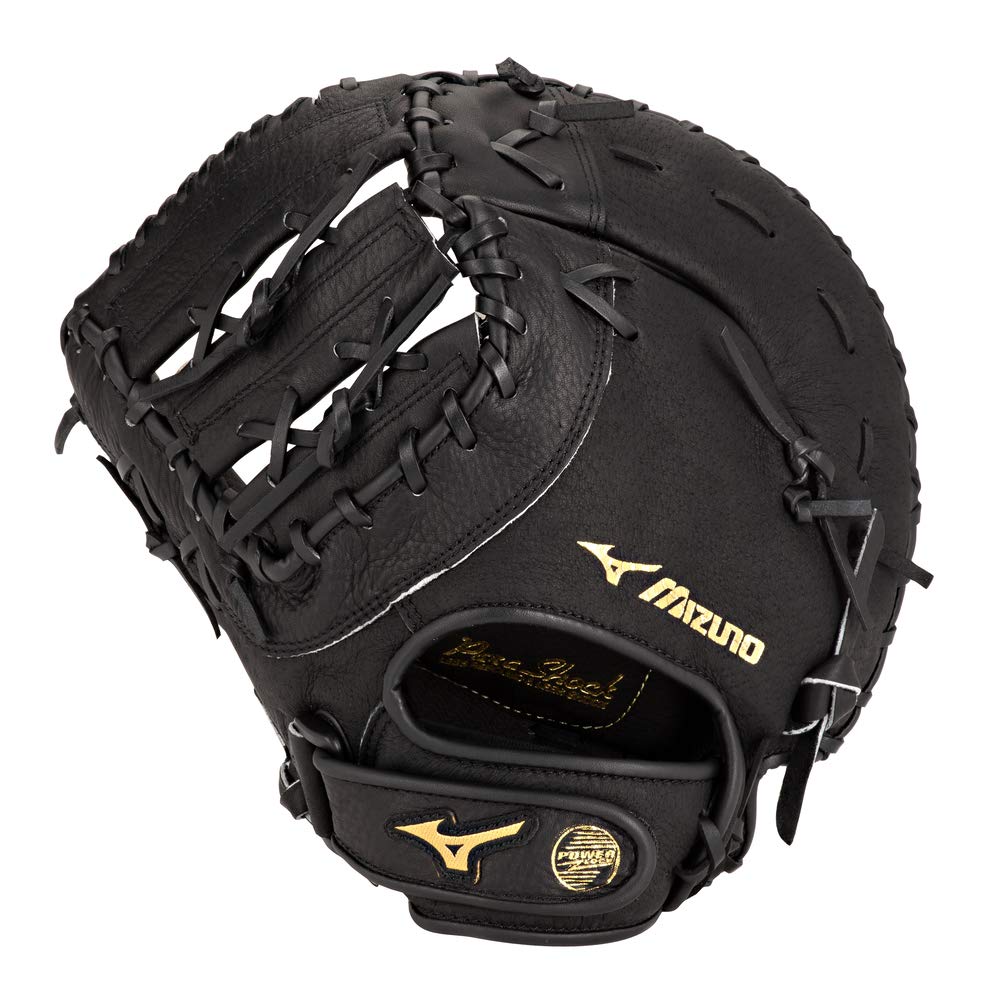
2. Mizuno Prospect PowerClose Youth Baseball Glove Series
The beginner’s mitt that closes easily so a young player can learn to catch in the pocket.
The Prospect PowerClose is built to fix that. Its patent-pending heel flex technology increases how flexibly the mitt closes, and the patented PowerClose design makes catching easier by helping the glove squeeze shut with less hand strength. For a player still learning the position, that is the difference between a catch and a drop.
It is also shaped to teach the right habit. Mizuno says it helps youth players learn to catch in the pocket — the deep spot where the ball belongs — rather than snagging it out on the fingers. The buttersoft palm liner and Parashock palm pad make the feel comfortable on contact, and the PowerLock closure lets you dial in a snug fit around the wrist.
The trade-off to know is string life. As owners mention, “some customers reporting that the string broke within three months of use” — again a repairable lace issue rather than a structural failure. Also check hand orientation carefully: this model is set up as a left hand throw, so a right-handed thrower needs the matching version. Its quality is what most appeals, alongside value for money, and it works exactly as advertised for teaching a new first baseman.
The real selling point: the heel flex and PowerClose work together so a weaker young hand can close the glove on its own — that is the whole game for a beginner at first base.
Check before you click: confirm the throw hand, because this listing is a left hand throw, and keep a spare lace handy for the eventual re-string.
Reach for it when: your young player needs a mitt that practically squeezes itself shut while they learn the position.
Skip the guesswork: verify the hand orientation on the exact style, since this one is left hand throw.
3. Rawlings Select PRO LITE Series Youth Baseball Glove
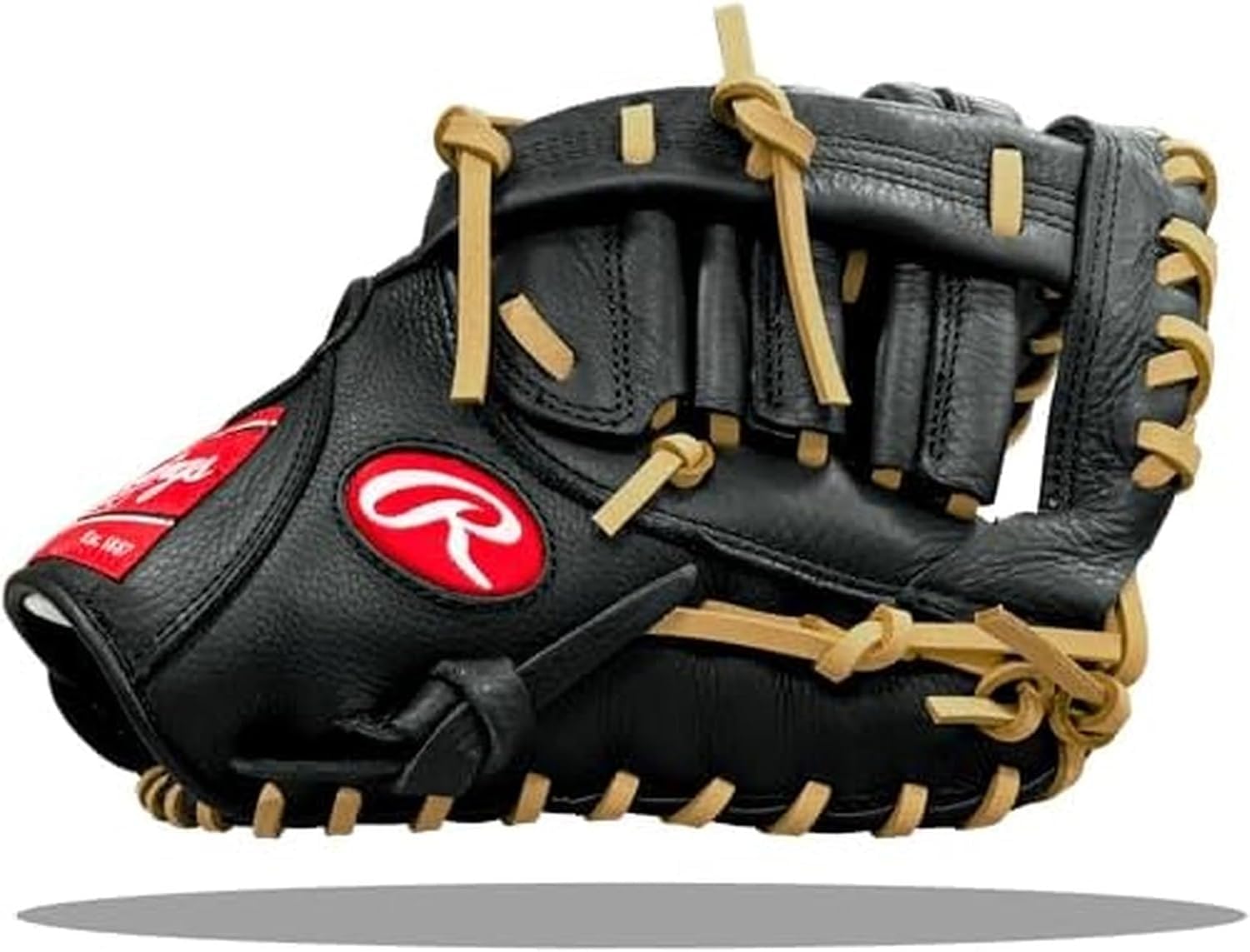
A compact 11.5-inch first base mitt shaped for a young hand that still feels steady on the ball.
This is a true first base mitt — glove type is listed as First Base — made to a compact 11.5-inch length. That shorter size puts the pocket closer to the hand, which is exactly what you want when a young fielder is still building confidence catching a throw. It uses a two-piece closed web, the classic first base setup that hides the ball and builds a solid scoop.
The fit is the headline. Rawlings builds this with a Youth Pro Taper: a smaller hand opening and lowered finger stalls so the hand sits secure instead of swimming. The lightweight design makes it easy for a young player to close and control without wrestling the leather. Break-in is 90% factory and 10% player, so it is close to game-ready right away and only needs light catch play to finish.
Quality is what stands out most here, then value — and the durability record reads clean, with buyers noting it “will last for multiple seasons.” That is a different durability story from the lace concerns noted on a couple of the other picks above. It is a newer listing with fewer ratings behind it than the Renegade, but the score it holds is every bit as strong. For a small-handed beginner, it is the cleaner fit.
Where it shines: the Youth Pro Taper fit and compact 11.5-inch build make it feel made-to-measure for a young first baseman rather than a scaled-down adult mitt.
The one caveat: it is a newer listing with a modest review history, so you are leaning on the spec and a small but solid track record.
It suits: a beginner first baseman with smaller hands who needs a snug fit and an easy close.
Think twice if: you want the longest review track record in this lineup before you buy.
4. Easton Ghost NX Fastpitch Softball Glove

The fastpitch-first first base mitt built to fit smaller hands and squeeze shut fast.
If your player is on the softball side, this one is patterned for them from the start. It is a First Base glove with fastpitch-specific patterns designed for smaller hands, pulling from Easton’s Ghost family. The single post double bar web is the classic first base look, and the shell is Diamond Pro Steer USA leather for a soft, game-ready feel that still holds its shape.
Two features do the heavy lifting for control. The Quantum Closure system is an adjustable open-back design that lets you lock in a secure, customizable fit so the mitt stays put on the hand. The Flex Notch closure makes the glove easier to squeeze, which cuts break-in time and improves control — a young first baseman gets the mitt closed faster. Add a suede microfiber lining and professional-grade silver metallic rawhide lace, and it is built for lasting comfort and a durable pocket.
Here is the sharp contrast with the other picks: at 8 ounces this mitt is far lighter than the 16-ounce Rawlings Renegade above, so a smaller player barely feels it on the hand. Durability is what stands out most — as customers note, “they appreciate its durability, noting it breaks in well after baking.” The honest caveat is the palm: padding here is the mixed note, with the fit staying good but the palm cushioning not guaranteed thick.
Why it holds its place
- Fastpitch-specific patterns sized for smaller hands
- Just 8 ounces — far lighter than the heavier Renegade
- Flex Notch closure makes it easier to squeeze shut
- Quantum Closure open-back gives a secure, adjustable fit
The fair warning
- Palm padding is a mixed report — some find it thin
- Premium leather puts it in the upper price tier
Made for: a fastpitch first baseman with small hands who wants a light, easy-closing mitt.
The single catch: if your player feels hard throws sting, the palm padding may not be enough on every catch.
5. Rawlings Heart of the Hide Youth Baseball Gloves

The serious player’s investment — full-grain steerhide leather shaped for a younger hand.
This is what a committed young first baseman graduates to. It is built on ultra-premium full-grain US steerhide leather — the Heart of the Hide material that generations of MLB players have used — which delivers durability, structure, and performance. It is a first base mitt (the listing names it a first base mitt 12.25″ glove) with a single post web, and it carries real substance at 2 pounds.
The fit engineering is the reason a youth can handle a glove this premium. ContoUR Fit gives a narrower wrist opening, lowered finger stalls, and a contoured hand shape for improved control and quicker transfers. An adjustable wrist system lets you customize the fit, while the contoured opening cuts down on glove movement so the hand stays locked in. A deer-tanned cowhide palm lining adds soft feel, and a thermo-formed wrist pad wicks moisture to keep it comfortable through a long game.
Break-in is where you need to be honest with yourself. It is listed as Stiff, and even with R2G technology doing extra factory work, this is a 35% player break-in compared to the 60% player-driven break-in on standard Heart of the Hide gloves. That is still real work, unlike the 90% factory mitts above. The payoff is a glove that is meant to hold its shape for seasons once it is broken in. It is the premium tier here, so it only makes sense for a player who is staying at first base for the long haul.
What you get for the money: full-grain US steerhide and ContoUR Fit put MLB-grade leather on a shape a young hand can actually control — a genuine step up in materials from the entry mitts in this list.
The trade you accept: a Stiff rating and a 35% player break-in mean you are doing real work before it feels game-ready.
Reserve it for: a dedicated young first baseman ready to break in premium leather and keep the glove for seasons.
Hold off if: you need something catch-ready today or your player is still deciding whether first base is their spot.
Know the Specs
Break-In Level
This tells you how much softening happens at the factory versus in your hands. A “ready-to-play” mitt — like the 90% factory, 10% player models here — arrives close to game shape and needs only light catch play. A “stiff” glove, like the Heart of the Hide, lists a 35% player break-in versus the 60% player-driven break-in of standard Heart of the Hide gloves, meaning real work from the player. For a first baseman learning the position, a 90% factory break-in usually wins.
Youth Contour Fit
A regular adult glove has a wide wrist opening and long finger stalls that leave a young hand loose inside. A youth contour fit — a narrower wrist opening, lowered finger stalls, and a contoured hand shape — seats the hand back in the pocket where it belongs. That tighter seat means better control and fewer balls popping out on the catch.
Glove Weight
Weight matters most for younger, smaller players. The Easton Ghost NX is listed at 8 ounces, while the Rawlings Renegade runs 16 ounces — a mitt twice that figure carries noticeably more heft on a small hand. A lighter mitt is easier to hold up on a stretch; a heavier one can wear a young player down over a long game.
Web Type And Closure
First base mitts often use a closed or solid-web design, like the two-piece closed web on the Select PRO LITE, which builds a sturdy scoop pocket. The closure system — from PowerClose to the Quantum open-back or an adjustable wrist system — decides how easily and securely the mitt shuts. A closure a young player can squeeze on their own is the difference between catching and dropping.
Common Questions
What is the difference between a first base mitt and a regular fielder’s glove?
How do I know which hand my child throws with before ordering?
Is a youth glove the same as an adult glove in a smaller size?
How long does it take to break in a youth first base glove?
Will a first base mitt work for fastpitch softball?
What do I do if the laces on my glove break?
Does a lighter glove actually help a young first baseman?
Is premium full-grain leather worth it for a youth player?
What size first base mitt suits a young player?
The Bottom Line
For most families, the youth first base baseball glove to start with is the Rawlings Renegade First Base/Catcher’s Mitt — it arrives nearly game-ready, pads the palm, and feels like real leather without a premium price. If your player is fastpitch with small hands, the Easton Ghost NX is the match, and at 8 ounces it is far lighter than the Renegade’s 16. And for a committed young first baseman ready to put in the break-in work, the Rawlings Heart of the Hide ContoUR Fit is the premium leather that lasts seasons. Match the fit and break-in level to your player and you will be set.
How we choose
We do not accept paid placement. Every pick is matched to a real buyer and a real use-case; we do not hands-on test units.
Sources
Specifications: manufacturer listings and product documentation. Review insights: verified customer reviews, as of November 2026. Pricing: not shown on this page (it changes often); check the current price via the retailer link.
As an Amazon Associate, Tactical Gear Guy earns from qualifying purchases. This does not affect which products we feature.