Specs are compiled from manufacturer listings and verified buyer reviews and can change over time — please confirm the key details on the product page before buying.
Hour ten of a shift is when your feet stop forgiving you, and a badly chosen pair turns into a daily problem. The pick that solves that best is the CAT Invader Hi Steel Toe, the crowd favorite at 4.5+ stars across 900+ owners — a steel-toed hiker-style boot that walks and wears like something far lighter. This guide sorts the nine strongest options by what matters on a jobsite: toe protection type, waterproofing, sole grip on wet or oily ground, and how much boot weight your legs carry all day.
This guide is built by comparing the manufacturers’ published specifications and the patterns across verified customer reviews, so you get each pick’s real strengths and trade-offs instead of marketing spin.
Below you’ll find the concrete specs that separate a boot you can live in from one you resent by lunchtime, plus the honest fit caveats on each pick. Everything here is filtered down to nine options worth your attention if you’re shopping for the best work wear boots.
Top Picks

How To Choose The Best Work Wear Boots
Most buyers start by looking at brand names. The better starting point is your floor and your finish time. A warehouse worker on hard concrete and a logger standing in a muddy pit need almost opposite boots, and the same pair rarely scores well on both. Get four things right — toe type, waterproofing, sole shape, and weight — and you avoid most returns.
Pick the toe by your hazard, not by habit
A steel toe is the classic choice: a reinforced steel cap over the toes that protects against impact and compression. It’s the safest default for heavy material handling. A composite or alloy toe does the same defensive job with less metal in the shoe, so the boot often feels lighter and slips through metal detectors more easily. Whichever you get, look for the ASTM standard named on the listing — that code is the certification telling you the toe actually met a test, not just a marketing promise.
Understand what “waterproof” is doing on your boot
A waterproof boot like the Carhartt Storm Defender or the Timberland DryShield option uses a membrane inside the leather — a thin barrier that blocks water from seeping in while letting sweat vapor escape. That’s a different animal from a rubber PVC shaft, which is a full waterproof tube up the leg. If you’re standing in puddles and chemical washdown, the PVC tall shaft wins. If you want a leather boot that handles rain and wet concrete, the membrane is the right tool.
Match the outsole to your surface
Wedge soles are slabs of cushioning under a flat tread — comfortable for standing long shifts on hard floors. Lugged rubber outsoles use deep tread blocks for grip on mud, gravel, and sloped ground. Oil and slip resistance is a separate spec worth checking on the listing, because slick concrete and oily shop floors are where most slips happen.
Weigh the boot against your day, not a number on the box
Weight multiplies with every step you take. A logger boot can run far heavier than a wedge boot, and the gap shows up in your calves by afternoon. A lighter pair is easier on long walking routes; a heavier pair often brings more structure and protection. Decide which one your shift actually demands before you commit.
Side-by-Side Comparison
| Model | Best For | Toe Type | Waterproofing | Stated Weight | Amazon |
|---|---|---|---|---|---|
| CAT Men’s Invader Hi Steel Toe★ Best Overall | All-around everyday work | Steel | — | 4.2 pounds | Amazon |
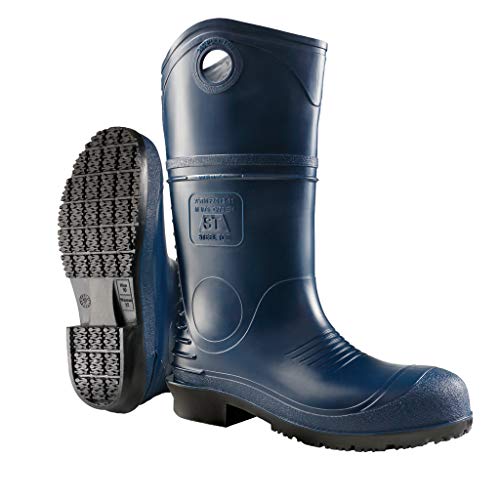
| Dunlop Durapro Steel ToeWettest-Site Pick | Wet, muddy, chemical-heavy sites | Steel | PVC waterproof tall shaft | 5 pounds | Amazon |
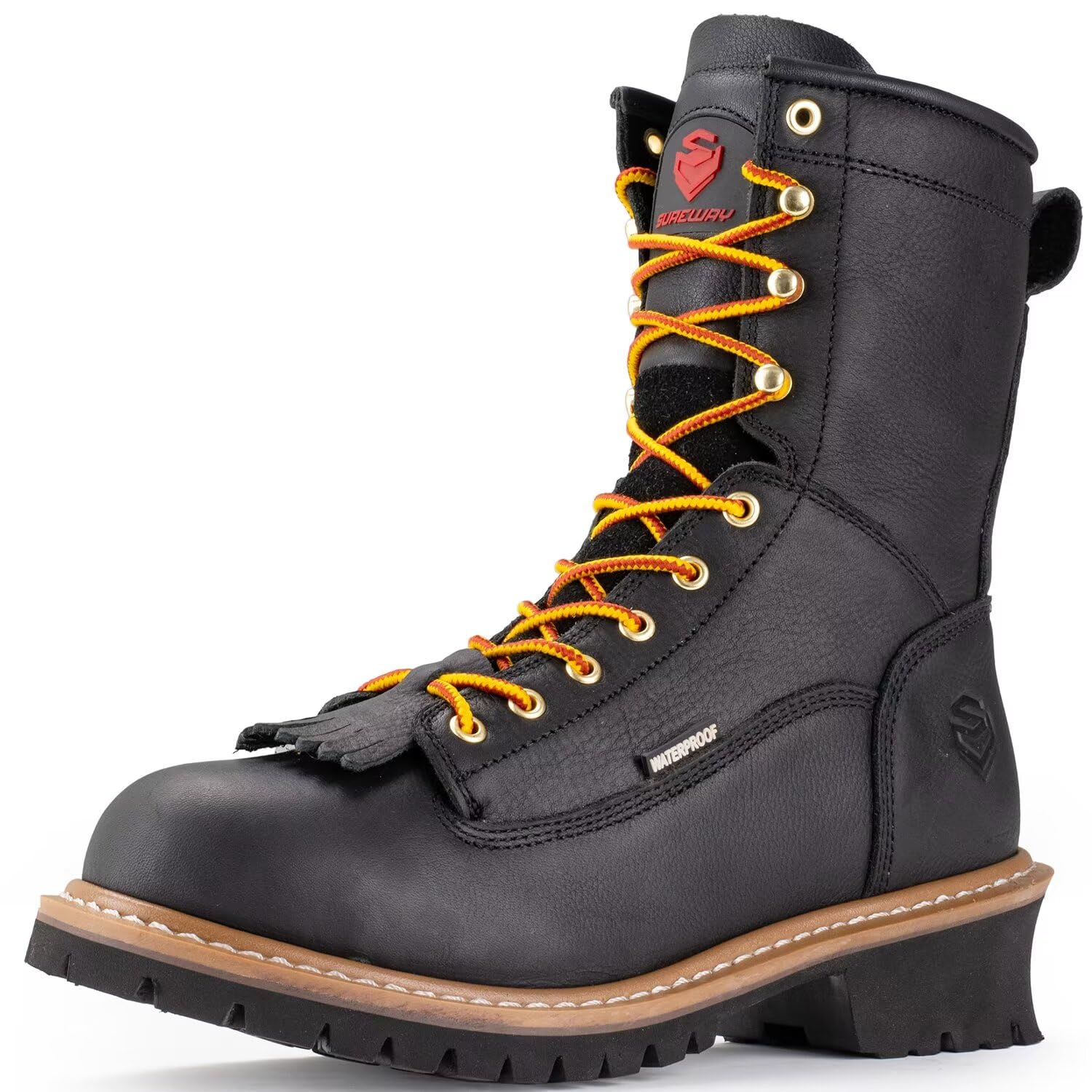
| SUREWAY 8″ LoggerClassic Logger Look | Leather logger look on a budget | Steel | Waterproof | — | Amazon |
| Carhartt Rugged Flex 6″ | Rainy sites and wet concrete | Steel (ASTM 2413 21) | Storm Defender membrane | 4.5 pounds | Amazon |
| Timberland PRO Barstow Wedge | Standing all day on hard floors | Alloy | — | 2 pounds | Amazon |
| KEEN Utility Gibson | Electrical-hazard and slip-rated sites | Carbon fiber composite | Water-resistant leather, PFAS-free DWR | — | Amazon |
| Timberland PRO Tempe Alloy | Long walking shifts, mixed weather | Alloy | Internal waterproof membrane | 4.21 pounds | Amazon |
| Ariat Rebar Lift 6″ | Kneeling and squatting work | Composite | Waterproof | 5.5 pounds | Amazon |
| Ariat Workhog | Oil and gas, harsh outdoor ground | Composite | DRYShield waterproof | 5.5 pounds | Amazon |
Detailed Reviews
1. CAT Men’s Invader Hi Steel Toe
Our pick — 4.5+★ from 950+ verified ratings; the strongest balance of quality and price.
The steel toe that wears like a hiking boot instead of a cinder block.
The Invader Hi is CAT’s chunky hiker-style build, and its 4.2-pound stated weight lands it lighter than the Dunlop logger below — that matters when you’re on your feet for a full shift rather than sitting at a desk. A steel toe caps the front for impact and compression protection, the thing that earns it a spot on most jobsites that require a safety toe at all.
What wins people over is outright build quality. The listing carries a 4.5+ rating, and owners keep circling back to how solid the boot feels day after day. Grip gets mentioned plenty too, along with a lighter-than-expected feel for a steel-toed boot. Style isn’t an afterthought here — buyers report the boot still looks fresh after heavy use, which is a real plus if your boots have to pull double duty on weekends.
The honest catch: durability and value readings are split, so this is a boot you’ll want to keep clean and rotate rather than expect to survive a decade of brutal abuse. Fit runs true to the listed sizing for most, but if your work takes you through standing water daily, you’ll want to pair this with a true waterproof model further down the list. For the everyday worker who wants a sturdy steel toe without the weight penalty, this is the one to reach for.
What earns it the top slot
- Steel toe delivers real impact and compression protection on site.
- 4.2-pound stated weight — lighter than the Dunlop at 5 pounds.
- Hiker-style silhouette that still looks sharp after months of use.
- Reported grip that holds up on normal jobsite surfaces.
Where it asks for care
- Durability reads mixed, so rotation and cleaning help it last.
- No waterproofing spec on the listing — not a soaked-site boot.
Go for this if: you want one sturdy steel-toed boot that handles everyday jobsite work without dragging your legs down.
Pass if: your shift means standing in puddles or chemical washdown all day — you need the PVC shaft on the Dunlop.
2. Dunlop Durapro Steel Toe Safety Boots
A knee-high rubber shaft that treats a wet concrete floor like a dry sidewalk.
This is the boot for the food plant, the farm, and the chemical washdown bay. The shaft rises knee high and is made of PVC — a waterproof rubber tube that keeps water and mess out well above ankle level, not just at the toe. The steel toe guards against impact and compression, and the outsole is built to resist fuel oils and workplace chemicals while holding grip on slick, oily ground.
The build earns the most praise by a landslide, and the fit follows close behind, with roomy toe space being the recurring note. Water resistance and pure functionality are the other two quiet heroes — feet come out completely dry after a shift in chemicals and ankle-deep water. Slip-on closure means no laces to deal with when your hands are covered in product, and the DuraPro insole targets the hard-floor fatigue that comes with a twelve-hour standing shift. It’s also made in the USA.
Two things to size up honestly. At 5 pounds, this is noticeably heavier than the CAT above or the 2-pound Timberland wedge, and the bulk is the trade for that tall protective shaft. Sizing reads mixed, so try before you commit if you have wide feet. And be clear on the job: this is a heavy-duty protective rubber boot, not a cushioned leather work boot for dry interior days.
The dry-feet reality: if you work in wet, muddy, or chemical-prone conditions, no leather boot on this list matches a knee-high PVC shaft for actual immersion protection — that’s a physical difference, not a marketing one.
The weight question: 5 pounds per the listing is the price of that coverage, and it’s the one spec to weigh against your shift length before you choose it over a lighter leather boot.
Reach for it when: your job puts you in standing water, mud, or chemical spray and you need feet that finish the shift dry.
Look elsewhere when: you want a leather boot for dry interior work — the height and bulk will feel like overkill.
3. SUREWAY Men’s 8″ Waterproof Steel-Toe Logger Work Boot
An eight-inch laced leather logger that shows up looking the part.
The SUREWAY boot looks like what most people picture when they hear “logger boot,” thanks to its full leather lace-up design and 8-inch height. A high-strength steel toe sits up front for injury protection, and the waterproof build is aimed at keeping you dry on wet ground. Soft leather and good support are what the comfort crowd talks about, and the construction feels solid in hand.
Comfort and quality both land in the positive column, and the value angle gets steady praise — this is a leather work boot that doesn’t ask premium money for the look. The design is the other draw; plenty of buyers wear it straight off the site and into everyday life without it feeling out of place.
Fit and durability both read as mixed, and owners mention a real split here: some say the boots fit great and last 6 months of abuse, while others report the toebox being too small and the boots coming apart after 4 weeks. That split tells you this is a boot to break in carefully, order true to your normal size, and inspect on arrival. If the toebox fits, it’s a strong-looking, comfortable logger at a value price.
The strong points
- Genuine 8-inch laced leather logger silhouette.
- High-strength steel toe for real impact protection.
- Comfort and support are the two aspects buyers praise most.
- Waterproof build aimed at wet ground.
The size-it-right caveats
- Fit reads mixed — the toebox feels small for some buyers.
- Durability splits sharply, so treat it as a value boot, not a lifetime one.
The match: you want a real leather logger boot with a steel toe and soft leather, without paying logger-boot prices.
The mismatch: you need a boot that takes years of punishing abuse without complaint — this one’s durability story is a coin flip.
4. Carhartt FF6213-M Steel Toe Work Boot
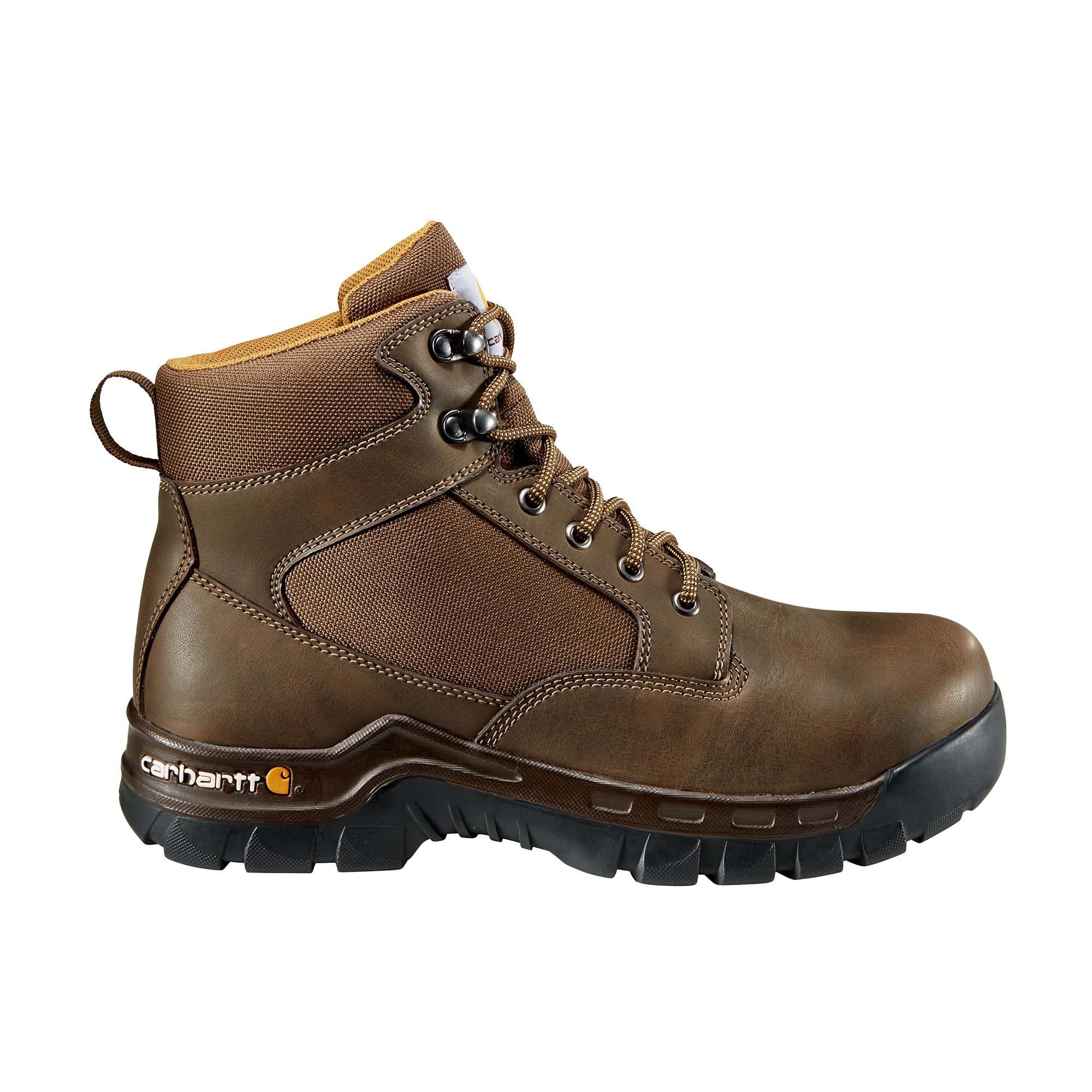
Six inches of waterproof leather with a certified steel toe and a slip-resistant sole.
The Carhartt FF6213-M is the boot you want when the forecast is grim and the site stays wet. The Storm Defender waterproof membrane is a breathable barrier inside the leather — it blocks rain and puddles while letting sweat escape, unlike a rubber shaft. The steel toe meets the ASTM 2413 21 standard, so you’ve got a certifiable safety toe, not a decorative bump. Premium brown leather and Carstrong fabric build the body, and a Rugged Flex rubber lug outsole holds grip on slick ground. The full package weighs 4.5 pounds per the listing.
What buyers consistently value is quality and protection — the two things you’re buying Carhartt for in the first place. The construction feels tough, and the boot performs admirably in wet and rainy weather, which is the whole point of the waterproof membrane. Cushioning comes from a polyurethane insole plus a PU Strobel pad and EVA filler, all working to cut the fatigue that builds through a long shift.
Where the honest note lands: comfort and fit divide opinion. Some love how it wears, others find it stiff, and a few say it runs large — so try it on with your regular socks rather than sizing blind. The boot’s 12.99 x 11.81 x 4.92-inch package is marginally bigger in the box than the Timberland Barstow’s 12 x 8 x 4 inches — nothing you’d feel on foot, but worth knowing if storage space is tight. Get the fit dialed and this is a superb wet-weather steel toe.
Waterproofing done right: the Storm Defender membrane plus a certified ASTM 2413 21 steel toe makes this the most complete rainy-day protection on the list at the mid-range mark.
The break-in fine print: a slight break-in period is normal for this leather, and the fit splits between true and a touch large — plan on a fitting rather than guessing.
Best for: outdoor and wet-weather crews who want a breathable waterproof leather boot with a certified steel toe.
Think twice if: you want an instantly flexible out-of-the-box feel — the leather here wants a few days to settle.
5. Timberland PRO Men’s Barstow Wedge Alloy ST Work Boot

A two-pound wedge boot that lets you stand a whole shift without feeling it.
Two pounds. That’s the whole story of the Barstow Wedge, and it’s why it sits near the top of this list for anyone who works indoors on hard floors. Compare it to the Dunlop at 5 pounds — a 2.5x gap — and your legs will notice the difference by hour eight. The wedge sole is a slab of cushioning under a flat tread, designed for standing comfort rather than mud-slogging grip. An alloy safety toe up front handles the impact protection the job requires.
Comfort is the clear winner by a wide margin, and the fact that owners wear these all day long without complaint is the real proof. The leather upper carries a vintage workwear look that clearly appeals; the boot earns steady praise for appearance and for value. Slip resistance on the outsole is there when you need it, and the alloy toe cuts weight while still protecting your toes.
The honest caveat: fit is the gamble. Wide-footed buyers love the room, but others find the pair runs large, so size down if you’re between sizes. Durability also splits — some report 5+ years of hard wear, while others find them falling apart earlier. For standing work and everyday wear, few boots on this list deliver comfort this light.
Why the wedge wins for standing
- 2-pound stated weight — the lightest pick on this list.
- Wedge sole built for cushion and all-day standing comfort.
- Alloy safety toe protects without a steel cap’s weight.
- Vintage leather upper that looks good on and off site.
What to plan around
- Runs large for some — size down between sizes.
- Durability reports split between years and months.
The one for you if: you stand on concrete all day and want a boot that feels practically weightless on foot.
Wrong tool if: you work in deep mud or on uneven ground — a flat wedge sole is no match for a lugged boot.
6. KEEN Utility Gibson Composite Toe Work Boots

The most heavily certified boot here — built for crews who work around live current.
If your site requires electrical-hazard protection, the Gibson’s spec sheet is the reason it’s here. The carbon fiber safety toe meets the ASTM F3445-21 and F2413-18 M I/75 C/75 ESD/SD standards — a composite cap that protects the toes without metal. Electrical hazard (EH) or electric shock resistant construction gives secondary protection if the outsole contacts a live circuit, and the slip-resistant rubber outsole meets or exceeds the ASTM F2913-19 and F1677-96 non-slip standards. Full-grain water-resistant leather and a breathable mesh liner round out the build.
Fit is where this boot wins converts. Owners describe the soft leather conforming so well it feels like part of their body, and the size runs true to expectation. The KEEN.ReGEN midsole is a lightweight, compression-resisting layer underfoot, and a removable metatomical insole adds arch support. Environmentally, the leather comes from an LWG-certified tannery and the durable water repellent is PFAS-free, so no forever chemicals are involved.
The fair caution: durability is a mixed story, with some boots wearing well and a portion reported falling apart within two months. Treat it as a high-spec boot that needs some care on hard abuse, not an indestructible tank. For electrical-hazard work and any job that demands certifiable slip resistance, few boots on this list carry as much verified certification.
The certification stack: EH protection (electrical hazard resistance), a carbon fiber toe, and a slip-resistant outsole tested to multiple ASTM standards (the safety-testing rules for protective footwear) — the deepest safety paperwork in this guide.
The durability nuance: some Gibson boots wear brilliantly and a share come apart early, so inspect the seams from day one and lean on the fit quality rather than expecting tank-like life.
Choose it for: electrical-hazard sites and jobs that need certified slip resistance plus a comfortable composite toe.
Skip it for: the roughest abuse-heavy work where absolute durability is the only thing that matters.
7. Timberland PRO Tempe Alloy Safety Toe Work Boot
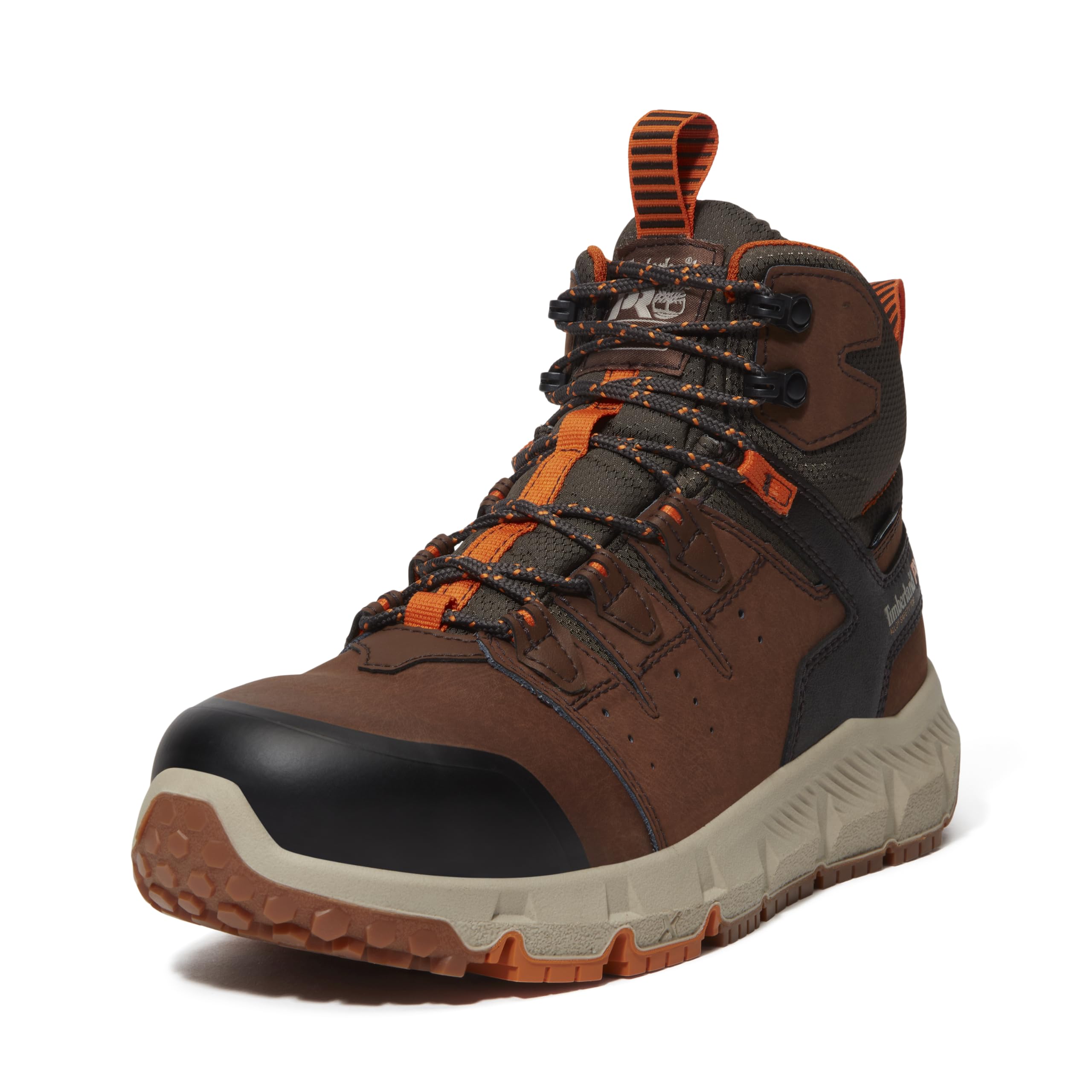
Built for the worker who covers miles of site a day and needs the cushion to match.
Comfort is the headline, and the Tempe backs it with real hardware. Timberland PRO’s 24/7 Comfort Suspension System uses a Hover Spring foam midsole — a lightweight cushioning layer that supports the arch and absorbs each step — paired with flex grooves in the outsole that let the boot bend with your stride rather than fighting it. Waterproof premium leather with abrasion-resistant overlays and an internal waterproof membrane handles wet conditions, while an asymmetrical alloy safety toe protects the front of the foot.
The other detail people love is the lightweight feel. The ReBOTL fabric lining is breathable and moisture-wicking, made with at least 50% recycled PET plastic, so your foot stays drier and the environmental footprint is a little smaller. Electrical hazard protection and a non-metallic shank — structural support without adding bulk — round out the story.
The sizing note to flag: some report they run a bit big, so try a half size down if you’re borderline. Otherwise, the boot’s durability earns consistent positives, and the comfort is the thing buyers bring up first. For long-walk shifts in unpredictable weather, this is the boot that stays with you to the end.
What owners warm to
- Comfort leads the pack, thanks to the 24/7 Comfort Suspension System and Hover Spring foam.
- Stated 4.21-pound weight and a non-metallic shank keep it light on long walks.
- Internal waterproof membrane with abrasion-resistant leather overlays.
- ReBOTL lining made with at least 50% recycled PET plastic.
What to watch
- Runs a bit big for some — size down if you’re between sizes.
- Premium-tier spend for a boot that emphasizes comfort over raw ruggedness.
Pick it when: your day involves long walking routes, changing weather, and feet that need cushion more than steel-cap brawn.
Move on when: you need a knee-high boot for standing water — this is a mid-height leather boot, not a dunk tank.
8. Ariat Men’s Rebar Lift 6″ Waterproof Composite Toe Work Boot

A composite-toe boot with enough give at the ankle to drop into a squat.
The Rebar Lift is built for people who get low to work — kneeling, squatting, climbing. A composite toe protects the front of the foot without the weight of steel, and the waterproof build handles wet outdoor conditions. The fit earns solid marks for foot support, and the overall feel is described as both lightweight and stable for long days. The ankle elastic adds real flexibility when you need to bend and crouch.
The 6-inch height is a good middle ground — enough coverage for site work without the full logger bulk. The upper carries Ariat’s styling, and the boot draws good marks for how it looks as well as how it fits. A stated weight of 5.5 pounds keeps it in the heavier half of this list, but the support and cushion are what you’re buying, and both deliver for standing and crouching work.
Here’s what a smart buyer should know: durability is the one concern, with a share of buyers reporting soles peeling apart and the boots giving way after a couple of months. That’s a real signal to inspect the sole bond early and use these on the conditions they’re designed for. Where the Rebar Lift shines is the kneeling, twisting, crouching work that most work boots do clumsily.
Where it flexes: the ankle elastic and composite toe make squatting and circling a job site more natural than the rigid leather boots around it.
The honest limit: sole separation shows up in some durability reports, so treat the Rebar Lift as a comfort-first boot and inspect the sole seam on arrival.
Reach for this if: you knee-and-squat your way through the shift and want support and flexibility over brute rigidity.
Look past it if: your top priority is decades-long sole durability on the harshest ground.
9. Ariat Men’s Workhog Waterproof Composite Toe Work Boot

A stitched-square-toe tank built for oil and gas ground that eats lesser boots.
The Workhog is designed for the harshest work on this list — harsh outdoor environments and oil and gas exploration, per Ariat’s own framing. It delivers exceptional side-to-side stability with cushioning and shock absorption where most boots wobble. DRYShield waterproof construction keeps feet dry, the Duratread outsole resists oil and slips, and the composite toe is backed by ASTM F2413 M/I/C EH and ASTM F3445 ratings. The stitched square-toe, block heel, and single welt stitch give it a heavy-duty look that matches the spec.
Comfort ranks right behind quality in what owners appreciate, and the waterproof membrane that keeps feet dry gets consistent credit too. The square-toe last gives stabilizing support on uneven ground — exactly what you want when you’re balancing on pipes or slick decking. It’s a genuine oil-and-gas workhorse with a durable feel in the hand.
The catch: the fit over the top of the foot runs tight for some buyers, so try before you buy if you have a high instep. Durability and value, like several boots here, read split — some run years, others find them not worth the premium. That’s the trade for a boot with this much stabilization and oil-resistant grip. If your ground is oil-slicked and uneven, this is a serious contender.
Built for the tough ground
- Oil and slip resistant Duratread outsole for oily decking and concrete.
- ASTM F2413 M/I/C EH composite toe for certified protection.
- Exceptional side-to-side stability with shock absorption.
- DRYShield waterproof construction keeps feet dry on wet ground.
The fitting caveats
- Tight over the top of the foot for some buyers, especially a high instep.
- Durability and value split between long life and short.
Suits you when: your work is oil and gas, uneven outdoor ground, and you want certified composite-toe protection with strong stability.
Steer clear if: you have a high instep and can’t try the boot on first — the top-of-foot fit is the one real sticking point.
Know the Specs
Safety Toe Standards (ASTM)
An ASTM code on a boot listing is your proof that the toe passed a formal impact and compression test, not just a marketing claim. Steel, alloy, and composite toes can all meet the standard; the difference is in weight and metal content. Steel is the heaviest and most familiar. Alloy and composite caps do the same defensive job with less metal — so a lot of workers find them lighter on foot and easier through metal detectors. If the listing doesn’t name a standard, don’t assume the toe is certified.
Waterproofing: Membrane vs PVC vs Water-Resistant
A waterproof membrane — Storm Defender on the Carhartt, DRYShield on the Ariat — is a breathable layer inside the leather that stops water coming in while sweat vapor escapes. A PVC shaft, like the Dunlop’s knee-high build, is a solid rubber tube that blocks water even when you’re standing in it. Water-resistant leather, like the KEEN Gibson’s, repels rain and splashes without claiming full immersion protection. Match the type to your exposure: splashes, rain, or true standing water.
Sole Shape: Wedge vs Lug
A wedge sole is a flat, cushioned slab under the whole foot — best for standing all day on hard floors and for grip that doesn’t get clogged. A lugged rubber outsole uses raised tread blocks for grip on mud, gravel, and slopes. The Timberland Barstow’s wedge is a standing-comfort tool; the Workhog’s Duratread and the Gibson’s slip-resistant outsole are traction tools. Neither is “better” — they solve different surfaces.
Weight and Shift Fatigue
Boot weight compounds with every step. On this list the spread runs from the 2-pound Timberland Barstow to the 5.5-pound Ariat Rebar Lift and Workhog. Lighter boots are easier on long walking shifts and long standing days. Heavier boots often come with more structure, a taller shaft, or a sturdier sole. Buy the weight your shift calls for, not the lightest or heaviest number on the box.
Common Questions
Do all the boots on this list have a certified safety toe?
What is the difference between the Dunlop PVC shaft and the Carhartt Storm Defender membrane?
Which work wear boot is best for standing on hard concrete all day?
Does a composite toe protect as well as a steel toe?
How long should I expect work boots to last?
Do these boots run true to size?
Which boot is best for oil and gas work sites?
Do waterproof work boots make your feet sweat?
Is a wedge sole good for a job site with mud and gravel?
What does EH mean on a work boot?
The Bottom Line
For most people shopping for work wear boots, the winner is the CAT Men’s Invader Hi Steel Toe because it pairs a steel toe with a 4.2-pound weight that walks lighter than the Dunlop, and it looks sharp long after the break-in period. If wet concrete or rain is your daily reality, grab the Carhartt Rugged Flex 6″ — its Storm Defender membrane and ASTM 2413 21 toe cover both fronts. And for standing all shift on hard floors, the Timberland PRO Barstow Wedge at a stated 2 pounds is the one to reach for.
If you’re indecisive, the CAT Invader Hi carries the strongest combination of rating and following on this list — 4.5+ stars across 900+ owners — so it’s the lowest-risk first pick if you want a sturdy steel-toe boot without overthinking the spec sheet. Match the boot to your floor and finish time, and you’ll get the most honest work out of any pick here.
How we choose
We do not accept paid placement. Every pick is matched to a real buyer and a real use-case; we do not hands-on test units.
Sources
Specifications: manufacturer listings and product documentation. Review insights: verified customer reviews, as of November 2026. Pricing: not shown on this page (it changes often); check the current price via the retailer link.
As an Amazon Associate, Tactical Gear Guy earns from qualifying purchases. This does not affect which products we feature.