Specs are compiled from manufacturer listings and verified buyer reviews and can change over time — please confirm the key details on the product page before buying.
Your 10-year-old is learning to block balls in the dirt, and the wrong set of catcher’s gear will either slide off mid-squat or swallow them whole. The short answer: buy a set sized to their age bracket, confirm the helmet and chest protector meet NOCSAE (the safety standard that governs catcher’s head and chest gear), and then check the strap system before anything else. That last part is what separates a set your kid can put on alone from one that needs a parent kneeling in the dirt before every inning.
This guide is built by comparing the manufacturers’ published specifications and the patterns across verified customer reviews, so you get each pick’s real strengths and trade-offs instead of marketing spin.
Below you’ll find nine complete sets, each matched to a real body type and budget tier, so you can stop guessing about strap counts and shin guard lengths and just get your kid suited up for the season. Every pick here is judged on fit range, protection plates, and how easy the whole thing is to manage solo, which is exactly what separates a workable youth catchers gear set 9-12.
Top Picks


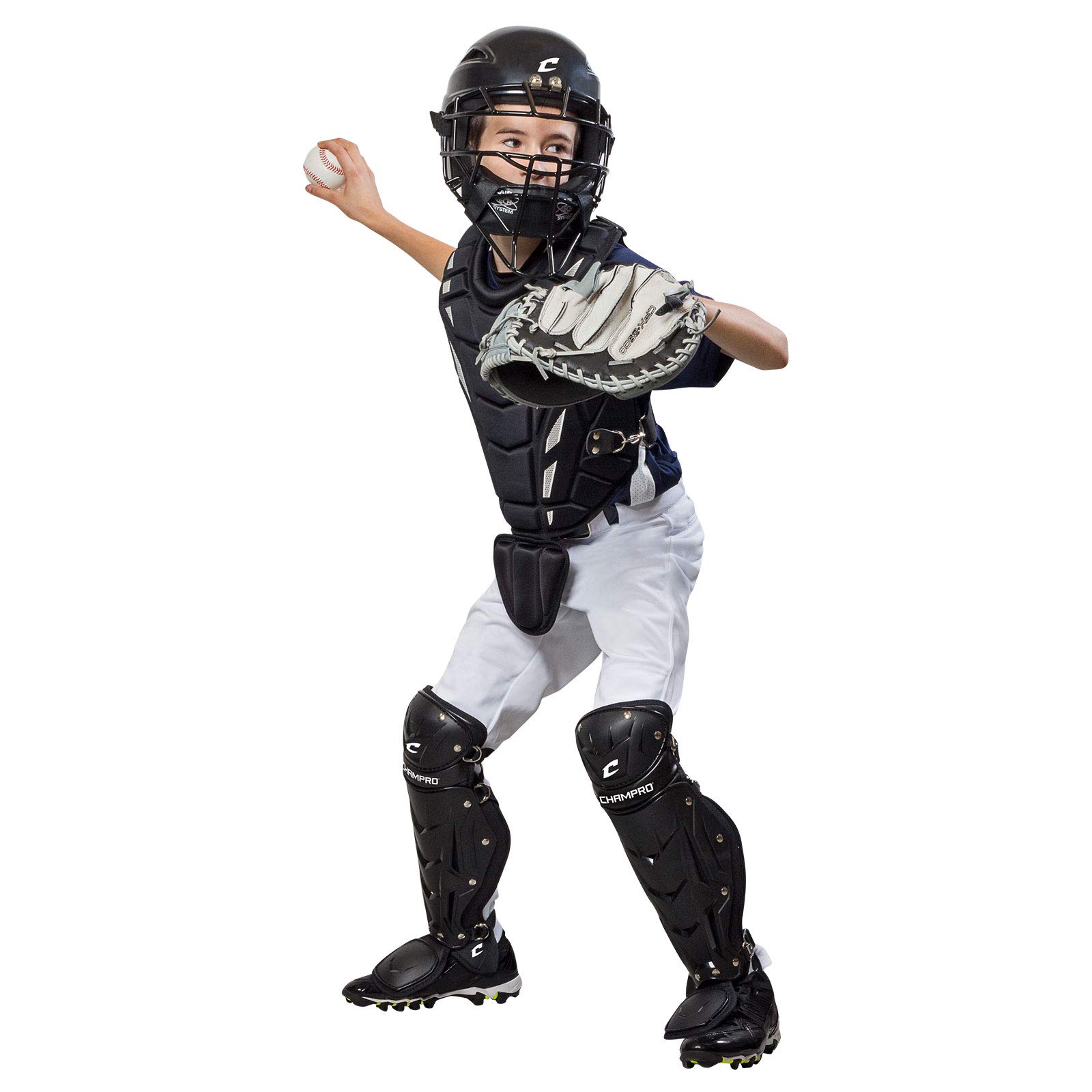
How To Choose The Best Youth Catchers Gear Set 9-12
The biggest mistake parents make is buying a set that fits in April and fights them by June. Kids in this age range grow unevenly — a lean 9-year-old and a stocky 12-year-old can wear the same labeled size and have completely different experiences. Focus on three things: the stated age bracket, the strap and harness design, and whether the set includes a throat guard.
Start with the labeled age range, not the birth certificate
Every set here carries an age bracket, and the brackets do not always line up. Some label 9-12 as one size; others split 6-9 and 9-12, and one set here spans 7-16 in a single size. If your catcher is on the tall side for their age, favor a set whose bracket runs a little higher. If they are small for their age, an adult-leaning bracket will hang off them and restrict their squat.
Sets sized for ages 9-12 typically pair a chest protector in the 13 to 15 inch range with shin guards around 13 to 14½ inches. Those numbers matter because a chest protector that is too long digs into the waist when your catcher crouches, and shin guards that are too short leave the knee exposed on a blocked pitch.
Check whether your catcher can put it on alone
A four-point harness uses four separate strap attachment points to pull the chest protector snug; a buckle-and-Velcro system uses a buckle plus hook-and-loop straps (Velcro is the hook-and-loop brand name). The difference shows up in the dugout. Four-point harnesses tend to hold their adjustment once set, while Velcro is faster on but can need re-fastening between innings.
For a 9 or 10-year-old still learning the position, the fastest system they can manage solo is usually the right call. For a travel-ball catcher who has done it a hundred times, a snugger multi-point harness pays off because it stays put through a full game.
Protection plates and the NOCSAE stamp
Look for internal polyethylene (PE) plates in the chest protector — a hard plastic shell inside the padding that spreads the force of a foul tip. NOCSAE certification is the standard that governs whether the helmet and chest protector are rated for game play, so confirm it is printed on the set you are buying. A hockey-style helmet with a steel mask and a throat guard covers the two spots a catcher’s face and neck are most exposed.
Side-by-Side Comparison
| Model | Best For | Stated Age Range | Chest Protector | Leg Guards | Amazon |
|---|---|---|---|---|---|
| All-Star Player’s Series Youth Catcher’s Kit★ Best Overall | Best overall for growing kids | Youth kit, 7-16 span | Internal PE plates, 4-point harness | Double knee design | Amazon |
| Easton JEN SCHRO The FundamentalBest for Softball | Fastpitch softball catchers | Small 12 & under / Medium 12-15 / Large 15+ | top-tier chest silhouette | Improved shell wrap, knee shape | Amazon |
| Champro Helmax Catcher’s SetBest Value | Entry-level value fit | 9-12 option | 15″ Optimus MVP | 13.5″ | Amazon |
| All-Star Top Star Series Kit | Seasoned travel-ball catchers | 9-12 option | Internal PE plates, 4-point harness | Double knee design | Amazon |
| Under Armour Converge Victory Series | All-black team colorway | Junior, ages 9-12 | 14.5″ NOCSAE | 13″ | Amazon |
| Easton Elite X 2.0 | Older intermediates | Intermediate, ages 13-15 | 16″ | 15.5″ | Amazon |
| Mizuno Samurai Boxed Set | Blocking and low-rebound control | Youth | 14″ | 14.5″ | Amazon |
Detailed Reviews
1. All-Star Player’s Series Youth Catcher’s Kit
Our pick — 4.5+★ from 600+ verified ratings; the strongest balance of quality and price.
The five-piece kit that gives a growing catcher room to grow without loosening its grip.
The All-Star Player’s Series takes the top spot because it keeps fitting after a growth spurt, not just in spring. You get five pieces in the box — chest protector, helmet, leg guards, and a throat guard — against three in the Easton Black Magic 3.0 set. That means neck protection is already there, not an add-on you have to remember.
What wins people over is the build quality, and the plain reason is the chest protector’s internal PE plates — hard plastic panels inside the padding that spread the force of a foul tip. Those plates sit inside a four-point adjustable harness, meaning four separate strap points pull the protector snug and hold it flat, so it does not shift when your catcher drops into the squat. The leg guards use a double protective knee design, two layers over the spot that takes the most direct hits when blocking.
The trade-off is weight. At 9.3 pounds versus 7.9 pounds for the All-Star Top Star kit, a smaller 9-year-old will feel it on a hot afternoon. The listing also overlaps the 7-16 span on the product page with the 7-9 label on the spec line. Measure your catcher against the 21.2 x 17.25 x 10 inch set dimensions instead of trusting the box alone. Buyers report strong results — 4.5+ stars across 600+ ratings — and the durable-out-of-the-box quality holds up over multiple seasons.
What Earns It First Place
- Five-piece kit includes a throat guard, not just helmet, chest and legs
- Internal PE plates in the chest protector spread impact force
- Four-point adjustable harness keeps the protector from sliding
- Available in Black, Navy, Royal Blue and Red to match team colors
Where It Asks More of You
- 9.3 pounds is the heaviest youth kit of the All-Star pair here
- The 7-9 spec label clashes with the 7-16 page description, so verify sizing in person
Go with this if: you want one kit that carries a catcher from their first season behind the plate into travel ball, with neck protection included.
Measure first if: your catcher is a small 9-year-old, because the extra weight and the conflicting size labels make this one worth trying on before the season starts.
2. Easton JEN SCHRO Catcher’s Equipment Box Set
Built around a fastpitch catcher’s stance instead of a baseball one, and it shows in the leg guards.
Most catcher’s kits are quietly cut for baseball, so a softball catcher ends up in gear built for a different sport. This one is not — the Easton and Jen Schro collaboration is designed around fastpitch catching. The helmet uses a streamlined ABS plastic shell (a hard, impact-resistant plastic) and dual-density foam padding (two layers of foam at different firmness) to cushion against the shell.
The leg guards are what set this set apart. The improved shell design wraps further around the shins and follows the knee shape, which matters because fastpitch catchers block and throw from their knees more often. That wrap keeps the guard in place when your catcher rotates to throw instead of twisting loose. Easton cuts the chest protector to follow the torso rather than sit flat across it, which keeps it from gapping when your catcher crouches.
Sizing runs in three brackets: Small for ages 12 and under, Medium for 12-15, and Large for 15 and up. That means a 9 or 10-year-old lands in Small, which is right for the younger end of the range but leaves nothing for a big 11-year-old who is already outgrowing the label. The one oddity in the data is the 1 x 1 x 1 inch item dimension — clearly a listing placeholder, not a real measurement — so ignore it and go by the age bracket. Quality is the consensus strength, and at 4.5+ stars across 200+ ratings it has earned it.
What stands out: NOCSAE Commotio Cordis certification tests the chest protector against the specific impact rhythm of a ball striking the chest, which standard padding tests do not cover.
Worth knowing: The Small bracket tops out at ages 12 and under, so a tall 11-year-old may already be sizing up to Medium.
The right call for: fastpitch softball catchers in the 9-12 window who need guards shaped for blocking and throwing from the knees.
Look elsewhere if: your player is a baseball catcher, since the fastpitch cut is tuned to a different set of movements.
3. Champro Helmax Catcher’s Set
The one-piece headgear that a young catcher can actually manage without a parent’s help.
Champro’s Helmax is the entry-level set done right, and the reason is the headgear. Instead of a separate mask and helmet, it uses a one-piece durable ABS shell — a single molded piece — with layered padding that self-adjusts to fit most catchers snugly. For a 9 or 10-year-old still learning to suit up, one piece they can pull on and off beats two pieces they have to buckle together.
The chest protector and leg guards follow the same one-piece logic. The Optimus MVP chest protector is compression-molded as a single piece, which absorbs impact energy and reduces how much of it reaches the player, and it adds detachable shoulder and tail extensions for extra coverage. The leg guards use a cantilever system — an internal structure that spreads the shock of a blocked pitch across the guard instead of concentrating it on the shins.
The 9-12 size here means a 15 inch chest protector and 13.5 inch shin guards, against the 13.5 inch chest and 12 inch guards on the smaller 6-9 option. Those are real measurements you can check against your catcher before ordering. The catch: this set has a much smaller footprint in reviews than the big-box sets, so you are buying on fit and value rather than on a long track record. The fit is the strength, and the framing here is a solid middle-of-the-road starter set, not a travel-ball rig.
Why Kids Can Self-Suit
- One-piece headgear with self-adjusting layered padding
- Compression-molded chest protector with detachable shoulder and tail extensions
- Cantilever leg guards spread impact across the shin instead of one point
- Clear 15″ chest and 13.5″ shin dimension for the 9-12 fit
The Trade-Off to Weigh
- Fewer buyer reviews than the flagship sets, so the track record is thinner
Fits the bill for: parents who want a complete, correctly-sized starter set without paying top-tier shapes and materials.
Think twice if: you need a long proven track record behind the purchase, since this set does not carry the review volume of the Easton or All-Star lines.
4. Easton | Black Magic 3.0 Youth Catcher Gear Set

The lighter All-Star kit for catchers who are already playing more than one game a weekend.
The Top Star series is All-Star’s step above the Player’s Series, aimed at the seasoned travel-ball catcher. It comes as a complete kit — helmet, chest protector, leg guards, and a throat guard. The design matches the Player’s Series: a four-point harness, internal PE plates in the chest, double knee leg guards, and straps that come on and off fast between innings.
What changes is the weight. This kit runs 7.9 pounds, against the 9.3 pounds of the Player’s Series, and for a 9 or 10-year-old catching a doubleheader in July that gap matters. The double protective knee design also keeps the guards light and mobile with less bulk, which is the spot that gets hit most when a catcher blocks. It comes in Black, Navy, Royal Blue, Red, and Graphite across age brackets for 7-9, 9-12, and 12-16, so you can match a team color and size it to your player in one go.
The fit is the talked-about strength here, and the harness is why — four adjustable strap points hold the chest protector tight enough that it does not ride up when your catcher moves. The honest note is the buckle and strap system takes practice. Some kids find the straps take a couple of tries to seat correctly before they can do it solo. That is a skill gap, not a defect, and it clears up after a few innings of practice in the yard. It carries a 4.5+ star rating across 200+ ratings.
Why Travel Teams Lean On It
- 7.9 pounds, lighter than the 9.3 pound Player’s Series kit
- Four-point adjustable harness holds the chest protector in place
- Five colors and three age brackets means a clean team match
- Double knee design keeps the leg guards mobile
What You’ll Need to Practice
- Strap and buckle fastening takes a young player a few tries before it is quick solo
Reach for it if: your catcher is playing travel ball through the summer and needs a lighter kit that holds snug.
Reserve a practice session: for the strap system, since young catchers need repetition before they can suit up alone.
5. Under Armour Converge Victory Youth Catcher’s Set

A fully blacked-out NOCSAE-certified junior set with real measurement numbers on the box.
The Under Armour Victory Series is for the parent who wants the safety ratings spelled out in inches. The chest protector is 14.5 inches and carries SEI certification and the NOCSAE standard; the shin guards run 13 inches; the helmet fits a 6¼ to 7 hat size. All three pieces are NOCSAE certified, so the head, chest, and legs are rated together rather than piecemeal.
It comes in a single black colorway, cut for a junior in the 9-12 bracket. That is a narrower range than the All-Star Player’s Series and its 7-16 span, so this set is best for the catcher right in the middle of the bracket. The chest protector at 14.5 inches sits between the 13½ inch Easton Black Magic 3.0 and the 15 inch Champro Helmax, which makes it a sound middle-of-the-pack fit for a 10 or 11-year-old of average build.
The catch is sizing below the helmet. Everything except the helmet runs large on some kids, so if your catcher is small for their age, expect the chest and legs to feel roomy at first. That is a growth allowance some parents will want and others will find loose. The build quality is the consensus strength, and the rating holds at 4.5+ across 150+ owners who clearly like the gear.
Numbers on the box: 13 inch shin guards, a 14.5 inch NOCSAE chest protector, and a 6¼ to 7 helmet give you concrete sizing to check.
Plan around: the sizing — everything but the helmet tends to feel big on smaller catchers, so this is a set for the middle of the 9-12 bracket.
Pick this one if: you want a certified all-black set with the measurements printed where you can check them.
Hold off if: your catcher is undersized for their age, since the chest and guards will run baggy.
6. Easton | Elite X 2.0 Baseball Catcher’s Equipment Box Set

The oversize intermediate set for the older end of the range, with the foam to match.
The Elite X 2.0 fits intermediates, ages 13-15, with a 16 inch chest protector and 15½ inch leg guards — the largest chest and leg dimensions of any set here. If your 12-year-old is already big and moving up an age group next season, this is where the sizing leads. The helmet comes in a large running 7⅛ to 7½ inches. The chest protector uses stacked memory foam for protection and rebound control, and the leg guards have a reinforced knee and thigh connection so they hold when your catcher moves in and out of the squat.
The adjustable strap on the chest protector is what keeps the whole thing secure through a full game of up-and-down. The helmet is an adjustable ABS thermoplastic shell (a moldable hard plastic) with plush padding, meeting the NOCSAE standard for all levels of play. The box comes complete with the hockey-style helmet, chest protector, and leg guards.
You do need to know the durability story honestly. Guard wear is the most-discussed concern, and the knee guard has been the reported weak point, with some buyers finding the connection works loose with heavy use. That is the trade-off for the 16-inch coverage and memory foam, and you manage it by inspecting the knee guard connection after each season. If your catcher is older, bigger, and playing a lot of games, this is a set to check carefully. Quality and fit are still the strongest notes the review pages carry.
What Earns It a Spot
- 16 inch chest protector and 15.5 inch leg guards, the largest coverage in the list
- Stacked memory foam for protection and rebound control
- Reinforced knee and thigh connection holds in the squat
- Adjustable ABS thermoplastic helmet meets NOCSAE for all levels
The Honest Trade
- Knee guard wear is the recurring concern, so check the connection each season
- Sized for ages 13-15, so it is big on a smaller 12-year-old
The size-up pick: for a big 12-year-old eyeing the next age group or a 13-15 catcher who needs full-coverage dimensions.
Inspect it regularly: watch the knee guard connection over a long season, since that is the part with a wear record.
7. Mizuno Samurai Baseball Boxed Catcher’s Gear Set

Low-rebound foam and a patented knee pad, built for the catcher who lives on the dirt.
Mizuno’s Samurai set is the pick for the catcher whose job is dropping to the dirt and keeping the ball in front of them. The chest protector uses low-rebound foam, built so the ball stays close instead of bouncing off, which cuts passed balls and wild pitches. That is a real difference from a hard-plated protector, where a foul tip can carom away; low-rebound foam deadens the bounce so your catcher can smother the ball in the dirt.
The second piece of the design is the K-Pad, a patented knee pad built for comfort and knee protection when your catcher is down in the blocking position. The leg guards use an ABS plastic shell with a triple knee cup design, three layered cups over the knee joint instead of one, which is a lot of protection at the spot that takes the most abuse. The set includes a youth helmet from 6½ to 7¼ inches, youth shin guards at 14½ inches, and a youth chest protector at 14 inches.
The honest note is in the mask padding. The durability takes mixed feedback, and the reported weak point is the pads coming off the mask, so it is worth checking that the mask padding is seated properly and reattaching it if it works loose. Everything else holds up — quality, fit, and comfort carry the set, and a 4.5+ star rating across 200+ owners backs that up.
The blocking edge: Low-rebound foam keeps the ball close in front of the plate, and the triple knee cup design stacks three layers of protection over the knee joint.
One thing to check: The mask pads are the reported wear spot, so check they are seated tight before the season starts.
The set to get: for a catcher who spends a lot of the game blocking in the dirt and needs the ball to stay put.
Give the mask a once-over: check the pads are secure, since that is the piece with a wear record.
Know the Specs
Age Bracket and Sizing
The age range on the box — 9-12, 7-9, 12-16 — tells you which body the set is cut for. Chest protector length (13 to 16 inches) and shin guard length (13 to 15½ inches) are the numbers to check. A longer protector on a small frame digs in when your catcher crouches; a shorter one on a larger frame under-covers the ribs. Match the bracket to the body, not the birth certificate.
Chest Protector Plates and Foam
Internal polyethylene (PE) plates are hard plastic panels inside the padding that spread the force of a foul tip across the chest. Low-rebound foam, which Mizuno uses, is tuned so the ball stays close instead of bouncing away — useful for a catcher whose job is smothering pitches in the dirt. Stacked memory foam, which Easton uses on the Elite X 2.0, adds rebound control on top of the foam base.
Strap Systems and Solo Suiting
A four-point harness uses four separate strap points to pull the protector snug and hold it flat; a buckle-and-Velcro system uses a buckle plus hook-and-loop straps for faster on-and-off. Four-point harnesses tend to hold their adjustment through a game, while Velcro is quicker but can need re-fastening. For a younger catcher, the fastest system they can manage alone is the one to pick.
NOCSAE and Head Protection
NOCSAE is the safety standard that governs whether a catcher’s helmet and chest protector are rated for game play. Confirm it is printed on the set. A steel mask with a centered viewport gives a clear sightline, and a throat guard covers the exposed neck. Some chest protectors also meet the NOCSAE Commotio Cordis standard, which addresses the specific impact rhythm of a ball striking the chest.
Common Questions
What age does a 9-12 catcher’s gear set actually fit?
Does my kid’s catcher’s helmet need to be NOCSAE certified?
How do I know if my catcher can put the gear on alone?
Should I buy a baseball or fastpitch softball catcher’s set?
How long should youth catcher’s gear last before it needs replacing?
What is the difference between low-rebound foam and standard padding?
Is a throat guard included on every catcher’s set?
What size chest protector should my 10-year-old wear?
Why is the All-Star S7 Axis labeled both 9-16 and 12-16?
Do I need a separate bag to carry a full catcher’s set?
The Bottom Line
For most families, the youth catchers gear set 9-12 winner is the All-Star Player’s Series Youth Catcher’s Kit. It ships five pieces including the throat guard, carries internal PE plates in the chest protector, and holds its fit through a growth spurt. If your player is a fastpitch softball catcher, grab the Easton JEN SCHRO The Fundamental for leg guards shaped around blocking and throwing from the knees. And if you want the strongest protection and ventilation in the All-Star line, the All-Star S7 Axis is the one to reach for — just confirm the 12-16 sizing fits your catcher before it ships.
How we choose
We do not accept paid placement. Every pick is matched to a real buyer and a real use-case; we do not hands-on test units.
Sources
Specifications: manufacturer listings and product documentation. Review insights: verified customer reviews, as of November 2026. Pricing: not shown on this page (it changes often); check the current price via the retailer link.
As an Amazon Associate, Tactical Gear Guy earns from qualifying purchases. This does not affect which products we feature.