Specs are compiled from manufacturer listings and verified buyer reviews and can change over time — please confirm the key details on the product page before buying.
If your knees ache halfway through a kneeling pose, the mat is usually the problem, not you. A comfortable yoga mat needs enough foam to cushion your joints, a wide enough surface that your hands do not slide off during a lunge, and a top layer that still grips when you start to sweat. Below are nine mats that get that balance right, sorted by what each one actually does well.
This guide is built by comparing the manufacturers’ published specifications and the patterns across verified customer reviews, so you get each pick’s real strengths and trade-offs instead of marketing spin.
Thickness, width and material decide whether a mat feels like a cushion or a slip hazard. Everything you need to pick the right one is below, and my full breakdown of the best comfortable yoga mats is ready for you.
Top Picks


How To Choose The Best Comfortable Yoga Mats
A mat feels comfortable only when three things work together: enough foam under your knee, enough floor covered, and a surface that still grips your hands once you warm up. Nail the first two but miss the third, and the mat still fights you.
Thickness is the number you feel first
Sitting bones and kneecaps land directly on the floor, so thickness is what stops the wince. Thinner TPE mats around 6mm to 7mm keep you connected to the ground for balance work. Extra-thick NBR foam closer to 10mm to 12mm cushions more but softens the surface, which can make standing balances feel wobbly.
Here is the part most people miss: 1/2 inch on paper and 0.39 inch on paper sound similar but feel different under a knee. Always read the exact thickness figure in the listing rather than the marketing word “extra thick.”
Width decides how freely you can move
A standard mat runs 24 inches wide. That is fine for a narrow vinyasa flow but tight for sumo squats, lateral lunges or a child’s pose with arms stretched overhead. Mats that run 32 or 36 inches wide let your hands and feet stay on the surface. The catch is that wider mats take up more floor space and roll into a longer bundle.
Grip and material, in plain terms
TPE (thermoplastic elastomer) is a rubber-like foam that tends to be lighter and less pungent. NBR (nitrile butadiene rubber) is the softer, spongier foam used in most thick cushioned mats. Both can be grippy when dry. A textured top surface matters more than the material name — that texture is what keeps your palms from sliding when sweat hits the mat.
Side-by-Side Comparison
| Model | Best For | Thickness | Size | Material | Amazon |
|---|---|---|---|---|---|
| Large Workout Mat 10mm★ Best Overall | Wide home-gym coverage | 0.39 in | 72″ x 32″ | TPE | Amazon |
| Gaiam Thick Yoga MatBest For Beginners | Beginners on hard floors | 10mm (2/5″) | 72″ x 24″ | NBR foam | Amazon |
| YOTTOY Extra ThickBest Cushioning | Kneeling and seated poses | 0.5 in | 72″ x 24″ | TPE | Amazon |
| KEEP Extra Wide 7mm | Wide mat without the bulk | 0.28 in | 72″ x 32″ | TPE | Amazon |
| KEEP Extra Thick NBR | Maximum padding and width | 0.59 in | 72″ x 32″ | NBR | Amazon |
| Amazon Basics Extra Thick | Long sessions on concrete | 1 in | 74″ x 24″ | Foam (NBR) | Amazon |
| HAPBEAR Large 72″x36″ | Max width for big movements | 0.25 in | 72″ x 36″ | TPE | Amazon |
| Tatago Extra Thick XL | Taller users needing length | 0.45 in | 84″ x 30″ | TPE | Amazon |
| Hatha Yoga Large TPE | Full room-to-roam coverage | 0.5 in | 72″ x 48″ | TPE | Amazon |
Detailed Reviews
1. Large Workout Mat 10mm 72″x32″
Our pick — 4.5+★ from 600+ verified ratings; the strongest balance of quality and price.
The wide, dense mat that keeps your hands and feet on the surface through lunges and squats.
Surface area comes first, because that is the whole point here. You get 72 inches of length and 32 inches of width — 33% wider than a typical 24-inch mat — so sumo squats, lateral lunges and press-ups happen without a hand or foot sliding off the edge. For anyone who does strength work alongside yoga, that extra width is the single biggest comfort upgrade.
Under your knees, the dual-layer TPE (a rubber-like foam that is denser than standard NBR foam) gives you 0.39 inches of cushioning. The denser build is what stops the mat feeling mushy during standing balance poses. It is waterproof and sweat-resistant, wipes down with a damp cloth, and sits flat on carpet, hardwood and gym floors. At 1.8 kg it is 42% heavier than the Gaiam Thick Yoga Mat’s 1.27 kg — that weight is the price of the extra foam and width, and it rolls into a longer bundle because of it.
Owners single out the dual-layer TPE construction above everything else, and the diamond texture on both sides supplies the multidirectional grip during high-intensity work. The diamond texture on both sides supplies the multidirectional grip during high-intensity work, and the mat arrives with a carry bag and adjustable shoulder strap so it travels to the studio or the park without drama. Reach for this one when your current mat feels cramped.
Where it earns the top spot
- 72″ x 32″ surface — 33% wider than a standard 24″ mat, so hands stay on during wide stances
- Dual-layer TPE at 0.39″ thick sits denser than NBR foam, so it cushions without going squishy
- Diamond texture on both sides for grip in every direction
- Carry bag and adjustable shoulder strap included
The honest trade-off
- At 1.8 kg it is noticeably heavier to lug than thinner mats — 42% heavier than the Gaiam Thick Yoga Mat
- Hand wash only, so no machine cleaning
Made for you if: you train at home and want one mat wide enough for strength moves and long enough for a full stretch.
Think twice if: you carry your mat to class on foot every day — the heft shows up on the walk.
2. Gaiam Thick Yoga Mat
Plush foam that turns a concrete or tile floor into somewhere you can actually kneel.
A 10mm slab of high-density NBR foam (nitrile butadiene rubber — a spongier, softer foam) is the whole reason people start here. That is 2/5 inch between your knees and a hard floor, so low-impact yoga, Pilates and stretching sessions feel far kinder on hips and joints. This foam prioritises shock absorption over firmness, which is exactly what a beginner on a concrete floor needs. If you have been kneeling on a bare floor or a thin travel mat, you will feel the difference on the first cat-cow.
The 10mm NBR slab is why this mat has become the default starter mat for so many people. The textured foam surface also holds reasonably well on most hard floors during dry workouts. It rolls up fast and the adjustable carrying strap makes the trip between rooms or to a class simple.
Two things to go in knowing. The NBR foam can arrive with an initial odor that typically fades after airing out for 24 to 48 hours — unroll it in a spare room before your first session. And the softer foam is aimed at comfort rather than firmness, so if you do a lot of standing balance work you may want something denser. skip it if you want a firm, grounded feel.
What the foam does well: 10mm of NBR gives you the plush cushioning that makes floor work on tile or concrete tolerable, and the 72″ x 24″ surface covers a standard flow.
Where it asks for patience: that initial foam smell and the softer, less planted feel under the feet are the two costs of picking comfort first.
The beginner-friendly pick: anyone easing into yoga, Pilates or stretching on a hard floor who wants cushioning above all else.
Better elsewhere: experienced practitioners who want a thin, firm mat that keeps them connected to the ground.
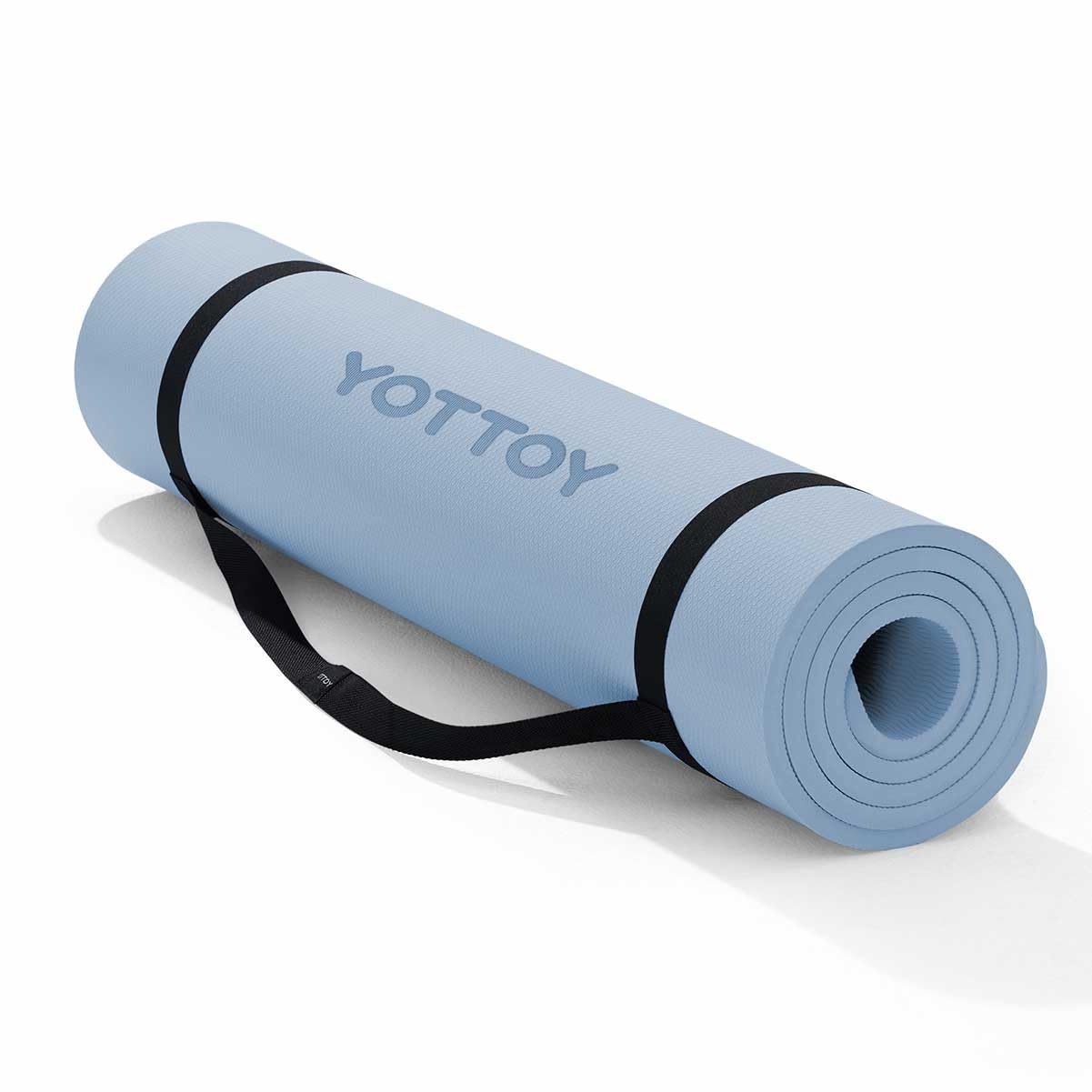
3. YOTTOY Yoga Mat 1/2 inch
Half an inch of foam built specifically for the poses where you are kneeling or sitting.
Kneeling poses are where most mats let you down, and this one attacks that directly. At 0.5 inches thick it is nearly double the cushioning of the KEEP Extra Wide 7mm at 0.28 inches, which you notice immediately in a long low lunge or a seated forward fold. The TPE foam is made in a one-piece process, which is why the mat arrives non-toxic and odorless rather than needing days of airing.
The surface is built for grip rather than looks. Granular protrusions on the top increase friction and absorb sweat, and a water-ripple texture on the back grabs the floor. The materials are SGS and TUV certified and free of heavy metals and 10 types of phthalate (a class of chemical plasticiser) — worth knowing if you spend an hour a day with your face near the mat.
There is a real weight cost to the cushioning. At 4 pounds this mat is 43% heavier than the KEEP Extra Wide 7mm at 2.8 pounds, and the mat can shift around during faster flows. Cleaning is a damp cloth with cold water and mild detergent, laid flat to dry and kept out of direct sunlight.
The case for the half-inch foam: if your practice is heavy on kneeling, seated and restorative postures, this is the cushioning that makes those poses sustainable for longer holds.
Who it will not suit: a fast vinyasa or standing balance practice wants a firmer, lighter mat that will not move under you.
Pick it for: restorative, kneeling and seated yoga where joint comfort matters more than ground feel.
Leave it for: anyone whose practice is standing balances and quick transitions on a mat they carry to class.
4. KEEP Extra Wide Yoga Mat, 7mm Thick 72″ x 32″ Exercise Mat
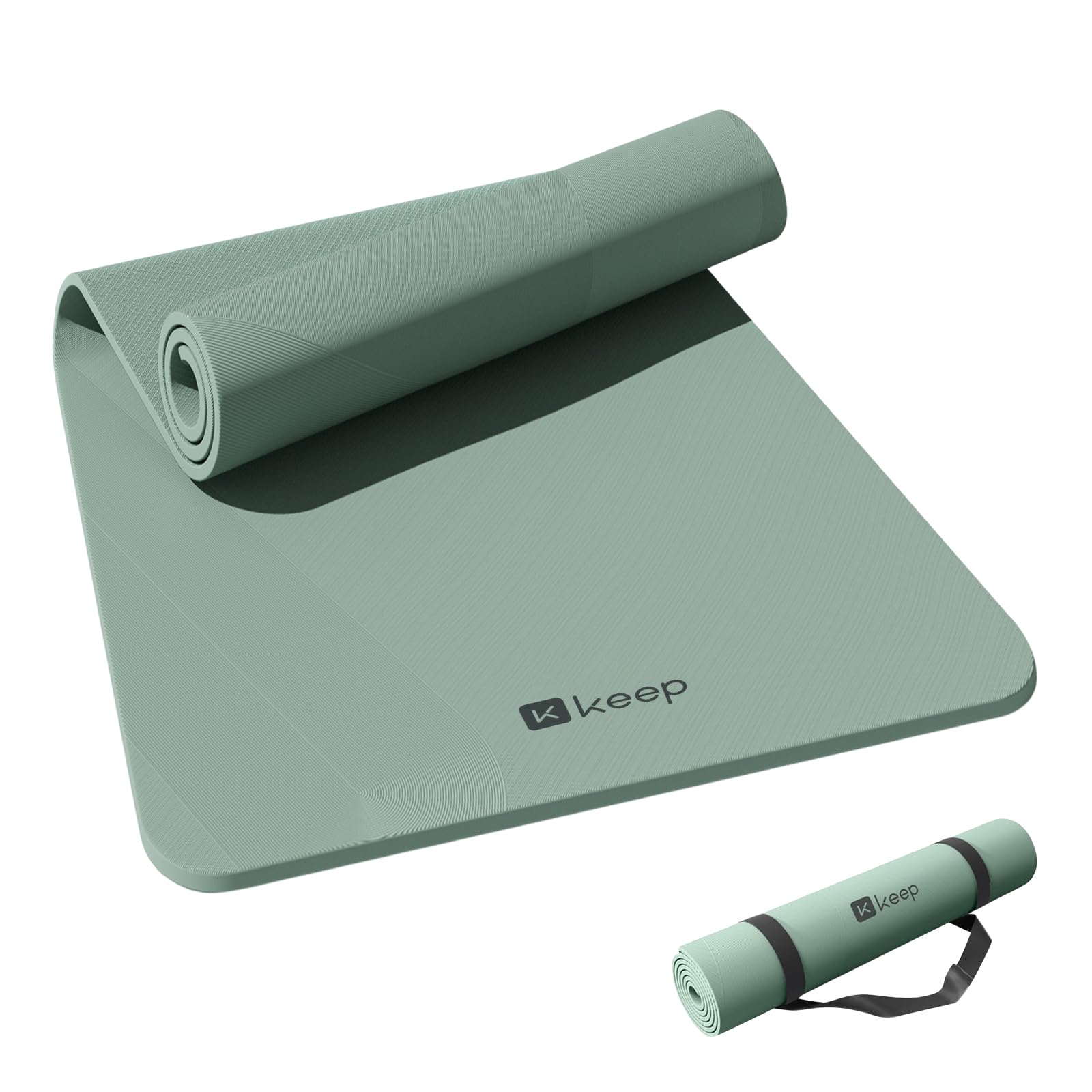
All the floor space of a wide mat without the weight penalty of a thick one.
Most wide mats make you pay in bulk. This one measures 72 inches by 32 inches — 33% wider than the 24 inches of the Gaiam Thick Yoga Mat — yet weighs only 2.8 pounds. That is 43% lighter than the YOTTOY at 4 pounds, and the gap is what makes this mat genuinely carryable to a class while still giving you room for dynamic stretches. If the width is the feature you care about, this is the leanest way to get it.
The 0.28-inch (7mm) padding is the sensible middle ground. It is thick enough to shield knees, elbows and joints during a flow, but thin enough that you still feel the floor for standing balance. Grip comes from a fingerprint-like texture on top and a full anti-slip pattern underneath, and the TPE foam is free from plasticisers and formamide, with an adjustable polyester strap included.
Reviewers keep coming back to the 32-inch width, which gives room for every pose without your hands leaving the surface. Consider the honest limit: some owners find it shifts on faster transitions, and the strap carries the mat but is basic. Let it air out before first use to clear any packaging odor.
Best balance of width and portability: a wide surface and 7mm cushioning at a carry-friendly 2.8 pounds.
One caveat: the 7mm foam means less joint cushioning than a full half-inch mat — good for balance work, less plush for long kneeling holds.
5. KEEP NBR Yoga Mat 10mm
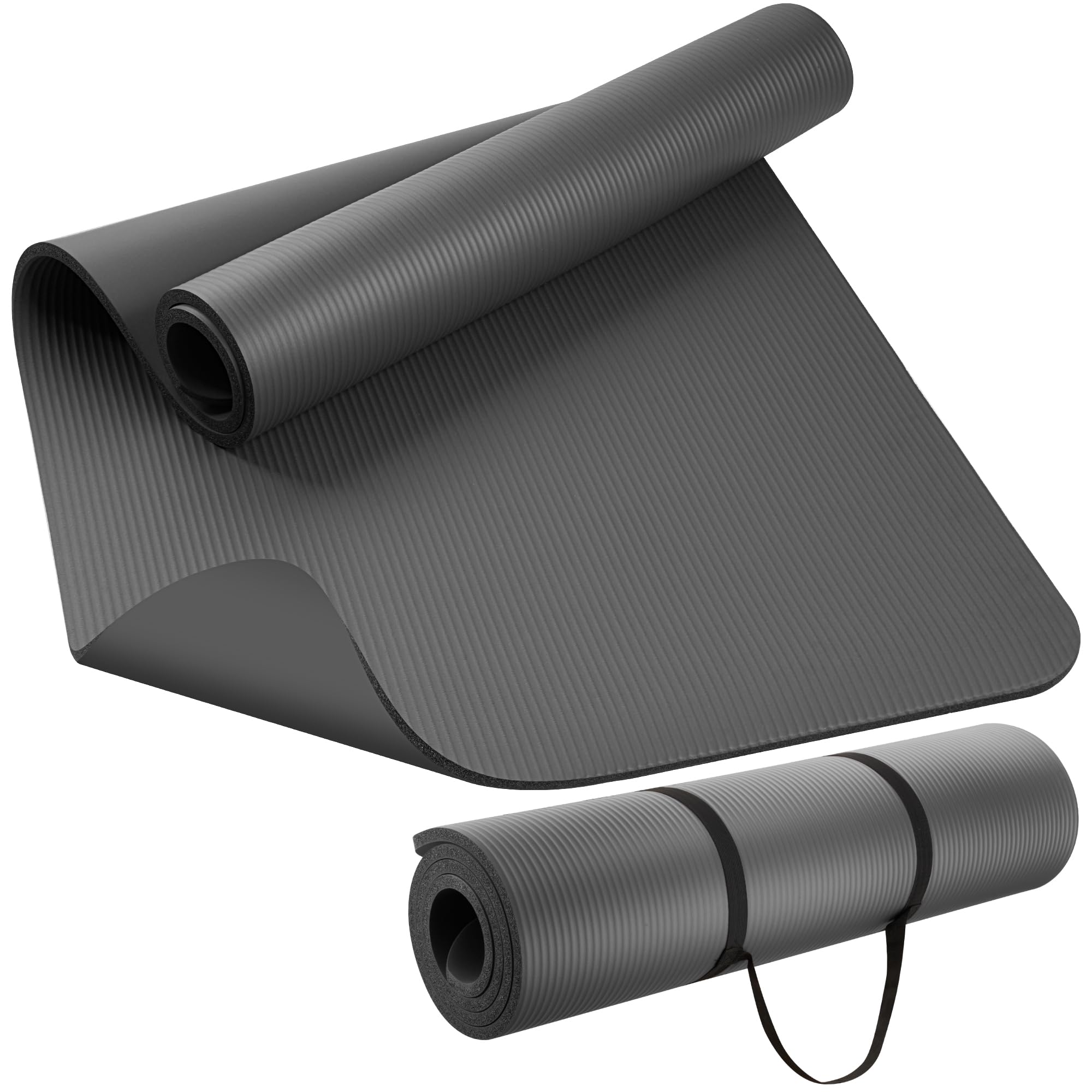
A full 0.59 inches of soft foam across a wide surface — the thickest cushioning in a wide format here.
When a hardwood floor is the real enemy, thickness is your answer. This mat lays down 0.59 inches of NBR foam across a 72-inch by 32-inch surface, which is more padding than any other wide mat on this list. NBR is the softer foam family, and the cushioning is exactly why the mat gets used for knee-heavy postures and floor work on hard surfaces.
The 72-inch by 32-inch surface is the other half of the pitch. At 32 inches wide it gives you room that a standard 24-inch mat cannot, and owners consistently point to the quality of the foam and the thickness as the two things that make it worth keeping. It handles yoga, Pilates, stretching and meditation without complaint.
Here is what nobody should be surprised by. The thickness that makes kneeling comfortable is the same softness that can make faster flows feel vague underfoot, and the surface grip is the most contested point — it holds still for some and feels slippery for others. Wipe it down by hand and you are fine.
What you are really buying: 0.59 inches of soft NBR foam across 32 inches of width — more joint padding than any other wide mat on this list.
The trade you are making: that soft foam can feel unplanted under faster movement, and grip is the most divisive thing about it.
Choose it when: hard floors and aching knees are the reason you started looking.
Look elsewhere when: you want a firm, tacky surface for a fast, sweaty flow.
6. Amazon Basics Exercise Yoga Mat

One full inch of memory foam for anyone whose floor work happens on concrete.
Nothing else here comes close on depth. At 1 inch thick across 74 inches by 24 inches, this mat is built around shock absorption first — the foam takes the hit so your joints do not. For Pilates, floor exercises and long sessions on a hard surface, that cushioning is the entire value proposition. It weighs 4.6 lbs and rolls with a carrying strap.
The materials are note if you are sensitive to what you lie on: the foam is free of phthalates, heavy metals (lead, cadmium and mercury) and latex. The textured surface is designed to stop you sliding during floor work, and the foam is formulated to hold its shape through daily use.
Two expectations to set before it arrives. Unroll it flat and let it air for 48 hours before the first session — the foam needs that time and the smell is the most common complaint. Grip is the other split opinion: firm and planted for some, slippery for others. At this depth it is a floor-work mat, not a precision balance mat.
Why people keep it
- A full inch of memory foam — the deepest cushioning on this list
- Foam free of phthalates, heavy metals and latex
- 74″ x 24″ surface with a carrying strap for transport
- High-density NBR foam meant to hold its shape through daily use
What to plan around
- Needs 48 hours of airing out before first use to clear the foam smell
- At 1 inch thick it is a floor-work surface, not a mat for standing balance
Reach for it if: you want maximum cushioning for Pilates, stretching and floor exercises on a hard floor.
Not for you if: you need a thin mat to feel the ground under a standing pose.
7. HAPBEAR Yoga Mat 72″x36″x6mm
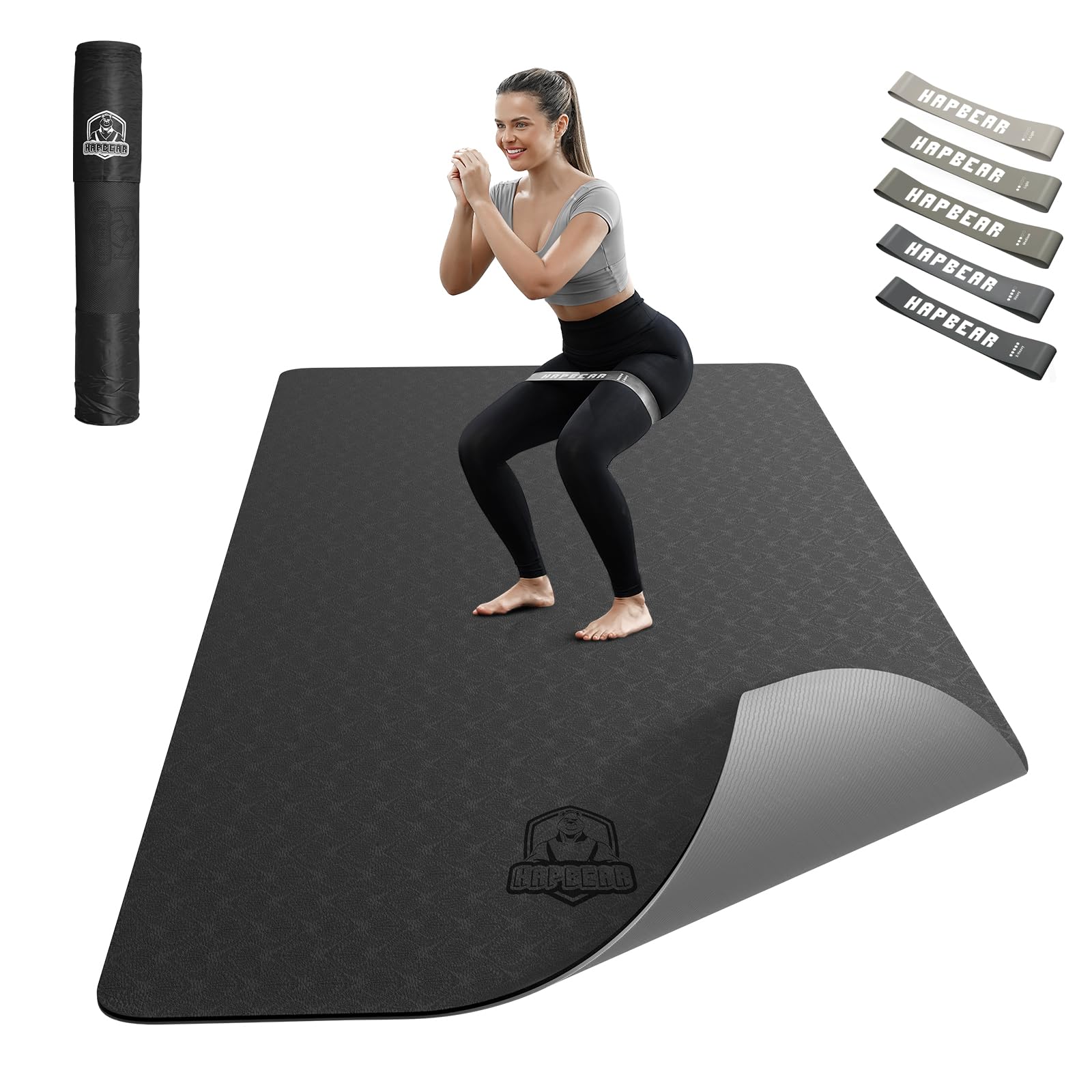
Three feet of width for anyone who has ever rolled off the edge mid-stretch.
If your complaint with every mat you have owned is that you keep running out of floor, this is the fix. At 72 inches by 36 inches it is the widest mat here — 50% wider than a standard mat, which turns a cramped stretch into an open one. Pilates roll-downs, wide-legged folds and floor workouts all stay on the surface. It weighs 1.2 kg, so despite the footprint it travels in the included carry bag without much effort.
The 6mm TPE foam is the compromise that makes the size work. It is thick enough to ease strain on knees and wrists during holds, and thin enough that the mat does not swallow your feet in a standing pose. The double-sided textured grip is designed to hold on smooth surfaces — though the maker notes it is not for use on carpet.
Owners praise the 36-inch width most, with the double-sided textured grip right behind it. The foil is thickness: at 0.25 inches some find this mat too thin for longer kneeling poses, which is where a 10mm option does better. A little initial scent is normal — give it a day or two to air.
The space advantage: a 36-inch width is the most floor coverage per mat on this list, and it still travels in the carry bag at 1.2 kg.
The cushioning trade: 6mm protects knees and wrists in short holds, but it is not a mat for long kneeling sessions.
Pick it for: big movements, wide stances and anyone who trains on a smooth floor and needs room to move.
Cross it off: if you need deep joint cushioning or plan to use the mat over carpet.
8. Tatago Extra Thick Yoga Mat Wide & XL, 84″x30″x0.45″

Seven feet of mat, so your feet stop hanging off the end in a tall stretch.
Height is the reason this mat exists. At 84 inches long by 30 inches wide, it gives long-limbed users the room a 72-inch mat cannot — anyone tall enough to overhang a standard mat gets their full body on the surface here. That 84-inch length is the single feature that separates it, and it is exactly what tall owners keep coming back to.
The 0.45-inch thickness is where the comfort comes from. That foam gives real relief under knees and joints, and owners describe the cushioning as softer than average, which suits a slower, restorative practice. It weighs 1.91 kg and carries without much fuss.
The grip is the honest variable — most find it secure, but a few find the underside does not grip the floor well, so smooth hard floors suit it better than carpet. The upside is the 0.45-inch foam, which owners describe as softer than average under knees and joints. Unroll it and let it settle before your first session.
Why tall users choose it: 84 inches of length is seven feet of surface — the longest mat here for anyone who outgrows a standard mat.
The one to watch: the underside grip varies on smooth floors, so place it on a solid surface rather than a rug.
The tall-user pick: 84 inches long and 30 inches wide with 0.45 inches of softer-than-average foam under your knees.
The skip case: if you are not tall enough to need the extra length, a shorter mat is easier to store.
9. Hatha Yoga TPE Mat 72″x48″x1/2″

A four-foot-wide slab of mat that turns your floor into a studio.
Half an inch thick and 48 inches wide is not a yoga mat so much as a floor covering — and for home practice, that is the appeal. It gives you double the width of a standard 24-inch mat, so jump rope, squats, stretching and Pilates all happen without you touching the actual floor. The TPE construction is phthalate-free and fully recyclable, and the density gives it tear resistance far beyond a soft foam.
The weight tells the story: 8.8 pounds means you unroll this at home and leave it there. Two bundling ribbons help you store it in a corner when the session ends. Both sides have the non-slip texture, and the thickness is the reason it is gentle on joints during long floor holds.
Set your expectations on durability. Some owners find the mat wears well over time, while others find it prone to tearing at stress points — likely down to how much you move around on it. Store it rolled, keep it out of prolonged direct sun, and spot clean with a damp cloth.
What you get for the floor space: 72″ x 48″ and 0.5 inches thick, with grip on both sides and TPE that is phthalate-free and recyclable.
The realistic limit: an 8.8-pound mat is a home fixture, not a class mat, and wear varies with use.
Best for home studios: anyone who wants to lay a mat down once and train on it without worrying about the floor underneath.
Wrong pick for: commuters who carry a mat back and forth — this one stays put.
Know the Specs
Thickness: what you feel under a knee
Measured in inches or millimetres, thickness is the cushion between you and a hard floor. Thin TPE mats around 0.25 to 0.28 inches keep your feet grounded for balance work and weigh less. Deeper foam from 0.39 up to 0.59 inches and beyond cushions knees, wrists and seated bones through long holds. A thicker mat rolls up bigger, so portability is the trade-off.
Width: how much room you actually get
A 24-inch mat is the standard width and works for a narrow flow. Width around 32 inches leaves room for wide stances and lateral lunges. Width of 36 to 48 inches turns the mat into a floor covering for strength and Pilates work. Wider mats also need more storage room, so measure the space you will roll it into before you buy.
TPE vs NBR: material in plain words
TPE (thermoplastic elastomer) is a rubber-like foam that tends to be lighter and less pungent. NBR (nitrile butadiene rubber) is the spongier foam behind most deep-cushion mats. Both grip when dry; the textured surface on top is what stops hands slipping once you warm up. Check the thickness figure rather than the word “extra thick.”
Grip and maintenance: what keeps your hands still
Grip comes from a textured top surface plus a bottom pattern that holds the floor. Smooth hard floors grab better than carpet, and some mats are explicitly not for carpet. Care is usually a damp cloth with cold water and mild detergent, dried flat and kept out of direct sunlight. Hand wash is the norm, so no machine cleaning.
Common Questions
How thick should a comfortable yoga mat be for knee pain?
Is a 32-inch wide yoga mat better than a standard 24-inch one?
Will an extra-thick mat make standing balance poses harder?
Can I use these mats on carpet?
Why does my new yoga mat smell, and how long does it take to fade?
How do I clean a comfortable yoga mat?
Is a wide mat too heavy to carry to class?
What is the difference between TPE and NBR foam mats?
Do I need a wider or longer mat if I am tall?
Can I use a thick yoga mat for Pilates and home workouts?
The Bottom Line
For most people the winner is the Large Workout Mat 10mm, because its 72″ x 32″ surface and denser dual-layer TPE cushioning cover both wide strength moves and long poses in one mat. If deep joint cushioning matters most, grab the KEEP Extra Thick NBR at 0.59 inches. And if you are tall enough to overhang a standard mat, the Tatago XL gives you 84 inches of length. Comfort depends on thickness, width and grip — match those three to your practice and the mat stops being something you notice.
How we choose
We do not accept paid placement. Every pick is matched to a real buyer and a real use-case; we do not hands-on test units.
Sources
Specifications: manufacturer listings and product documentation. Review insights: verified customer reviews, as of November 2026. Pricing: not shown on this page (it changes often); check the current price via the retailer link.
As an Amazon Associate, Tactical Gear Guy earns from qualifying purchases. This does not affect which products we feature.