Specs are compiled from manufacturer listings and verified buyer reviews and can change over time — please confirm the key details on the product page before buying.
Cold feet ruin a whole day faster than almost anything else. Want the short answer? The Columbia Firecamp is the pair most guys should buy first. It keeps feet warm down to around 15 degrees, stays waterproof, and passes as an everyday boot rather than expedition gear. Below are nine pairs, sorted by how much insulation they carry, how they handle slush and ice, and who each one actually suits.
This guide is built by comparing the manufacturers’ published specifications and the patterns across verified customer reviews, so you get each pick’s real strengths and trade-offs instead of marketing spin.
Insulation decides most of this, and it is measured in grams — more grams means a thicker thermal layer wrapped around your foot. A light 200-gram boot suits town wear; a heavy 1200-gram boot suits standing in snow. Once you know which you need, the shortlist shrinks fast. Here are the pairs worth your time among the best young men’s winter boots.
Top Picks


How To Choose The Best Young Men’s Winter Boots
Most people buy winter boots by look and get burned by the first deep freeze. The four things that actually decide whether your feet survive a winter are insulation weight, waterproofing method, outsole grip, and shaft height. Get those four right and the boot will handle years of winters.
Match the insulation grams to your real winter
Insulation is listed in grams, and that figure tells you how much thermal fill sits around your foot. A 200-gram boot like the XPETI SnowRider is built for active walking in normal cold. A 1200-gram boot like the Rocky Blizzard Stalker is built for sitting still in serious cold, which is why hunters and ice fishermen reach for that class. Buy heavy insulation for a mild climate and your feet will sweat, then chill.
Waterproof shell versus water-resistant upper
A rubber shell blocks water completely — slush cannot seep through it. Leather and textile uppers rely on a treatment or a sealed membrane, which works but needs more care over time. If you step in puddles or walk through road slush daily, a full rubber lower is the safer build.
Outsole grip on ice and packed snow
Lug depth and rubber softness decide whether you shuffle or stride. A multi-directional lug pattern bites in more than one direction, which matters when you turn on a slick sidewalk. Hard, worn rubber is the usual reason a boot feels sketchy in February.
Leave room for a real winter sock
Toes go numb when they are squeezed. You want roughly a thumb’s width of space at the front when you are wearing the sock you plan to use. That space lets warm air circulate, and it is the single most common sizing mistake.
Side-by-Side Comparison
| Model | Best For | Insulation | Waterproofing | Shaft / Build | Amazon |
|---|---|---|---|---|---|
| Columbia Firecamp★ Best Overall | Everyday winter wear | Low-bulk insulation (grams not listed) | Waterproof construction | Ankle-height hiking build | Amazon |
| XPETI SnowRiderBudget Performer | Budget snow walking | 200 g | Waterproof leather shell with YKK zipper | Mid-height with front zip | Amazon |
| Guide Gear Side Zip Duck BootEasiest On | Easy on-and-off | 400 g Thinsulate | 100% waterproof rubber shell | Side zip, steel shank | Amazon |
| TIDEWE Rubber Hunting Boots | Deep cold outdoors | 800 g | Waterproof rubber and neoprene | 7mm neoprene, camo | Amazon |
| ROCKY Blizzard Stalker 1200G | Standing in brutal cold | 1200 g Thinsulate Ultra | Rocky Waterproof construction | 8 inches tall, suede and textile | Amazon |
| The North Face Chilkat V | All-round winter boot | 200 g | Waterproof with non-PFC DWR | Lace-up snow boot | Amazon |
| SOREL 1964 Pac Nylon | Style plus warmth | Not listed | Seam-sealed waterproof | Vulcanized rubber shell, Sherpa cuff | Amazon |
| Helly Hansen Garibaldi V3 | Campus and city winters | Not listed | Water-resistant upper | Faux fur ankle collar | Amazon |
| KEEN Revel 4 Mid Polar | Wide feet and snowshoeing | Thermal heat shield | Waterproof and breathable | Mid height, wide toe box | Amazon |
Detailed Reviews
1. Columbia Men’s Firecamp Boots
Our pick — 4.5+★ from 950+ verified ratings; the strongest balance of quality and price.
The pair that handles a mountain trail and a downtown sidewalk without changing character.
Start with what the Columbia Firecamp is built to do: waterproof construction plus low-bulk insulation, which means the warmth comes from a thin thermal layer rather than a thick one. You get a boot that stays comfortable on a cold commute and still works if you head up a trail afterward. Plush cushioning underfoot is part of the package too.
Where this one separates itself is balance. Compared with the Rocky Blizzard Stalker and its 1200 grams of insulation, the Firecamp runs lighter and moves more naturally, so you are not clomping around town in a boot designed for sitting in a deer blind. It is the better fit for a young guy who wants one pair to cover class, work, and weekend hiking instead of three separate boots.
Fit is where you need to pay attention. These run small and they are not offered in a wide width, so if you have a broader foot or plan to wear thick wool socks, size up deliberately. Otherwise the build earns its reputation — quality is the thing owners talk about most, with comfort and warmth right behind it, and the boots hold up to real cold rather than just looking the part.
What earns the top spot
- Waterproof construction keeps slush out on wet commutes
- Low-bulk insulation keeps toes warm without a bulky feel
- Plush cushioning for long days on your feet
- Versatile enough for trail and town in the same day
Size it right
- Runs small — order a size up if you wear thick socks
- No wide width option, so broad feet need care
Reach for these if: you want one waterproof pair that handles cold commutes and weekend trails without swapping boots.
Look elsewhere if: you have a wide foot, since there is no wide width here.
2. XPETI Men’s SnowRider Insulated Waterproof Winter Snow Boots
Entry-level money, a front zip for fast exits, and a cold rating that punches above its price.
The SnowRider carries 200 grams of insulation, and XPETI rates it to -13°F/-25°C. That is a lot of cold protection for an entry-level boot. The build pairs a waterproof leather shell with distressed suede and a YKK auto-lock front zipper, so you step in and zip up instead of wrestling laces with gloves on.
Compare it directly with the Rocky Blizzard Stalker: 200 grams against 1200 grams is a six-fold insulation gap, and you will feel that difference standing still in deep cold. For walking to class or shoveling a driveway, though, 200 grams is plenty, and the boot moves far easier. The removable reflective thermal insole adds another layer of warmth underfoot.
Here is the honest catch. Fit and comfort split opinion hard, and the zipper divides people too — some find the boot narrow and hard to pull on. Treat the sizing chart as a starting point, and be ready to exchange for a half size up. Get the fit right and it is a genuinely warm snow boot at a budget-friendly number.
Cold weather for less: A waterproof shell, a -13°F/-25°C rating, and zip entry make this the smart first winter boot on a tight budget.
The fit risk: Narrow sizing and a fussy zipper are the recurring gripes, so buy from a seller with easy returns.
Best for: a first winter boot on a tight budget where zip-on convenience beats laces.
Skip if: you have a wide foot or want a boot you can pull on without thinking about it.
3. Guide Gear Men’s Side Zip Insulated Leather Duck Boots
A side zip, a rubber shell, and Ortholite foam that keeps its shape after a long season.
For anyone who hates fighting laces, the Guide Gear duck boot is the answer. A side zipper opens the whole boot, and stretchy twin side gore panels let it flex as you slide your foot in. The 400-gram Thinsulate fill sits in the middle of the insulation range — more warmth than a 200-gram boot, less bulk than the 800-gram TIDEWE or the 1200-gram Rocky.
The waterproofing is the strong part. A 100% waterproof rubber shell covers the lower boot, so puddles and slush never reach your sock. Under foot there is a steel shank for support and an Ortholite open-cell foam insole that wicks moisture and holds its shape even after long wear. Easy on and off is the second-most-praised trait after overall build quality, which tells you the zip design is doing real work for people.
The trade-off to plan for is the rubber bottom. Some buyers report cracking in the rubber shell over time, while others wear theirs for years. Store them out of direct sun and skip the radiator, and you will get the longer life out of them.
Why the zip wins: Twin side gore panels plus a full-length zipper mean you are in and out in seconds, with no laces to retie in the cold.
What to watch: Rubber-shell cracking comes up among some owners, so give them airflow and keep them off heat sources.
Pick these if: you want a true rubber-shell waterproof boot that slips on in seconds and stays comfortable all day.
Think twice if: you want a soft leather sole — the rubber lug is firm and built for wet ground, not city pavement.
4. TIDEWE Rubber Hunting Boots

Eight hundred grams of insulation wrapped in a shell that flexes instead of fighting your stride.
The TIDEWE is a hunting boot first, and that shows in how much warmth it carries. The 800-gram insulation fills the boot, and 7mm neoprene gives it a soft, flexible shell that moves with your leg rather than locking it stiff. A thick cushion foot bed and generous toe room keep the inside comfortable over a long day outdoors.
Where it earns a spot over lighter boots: this is a serious cold-weather option for sitting in a blind, walking a frozen field, or ice fishing. It is heavier and bulkier than the Columbia Firecamp, and that is the price of the extra warmth. If your winter is mostly a cold parking lot and a heated building, this is more boot than you need.
Sizing is the one thing to nail down. The fit draws warm praise overall, with room for two socks in really cold conditions, yet the sizing chart itself is called inaccurate by some buyers. Order the size you measure, and give yourself time for an exchange if it lands wrong.
Where it shines
- 800 g insulation for genuinely cold outdoor work
- 7mm neoprene flexes with your leg, unlike stiff rubber boots
- Thick foot bed and toe room for all-day comfort
- Room inside for thick socks when it gets brutal
The honest friction
- Sizing chart is called inaccurate by some owners
- Heavier and bulkier than lighter winter boots
Suits you if: your winter involves standing around in the cold for work or hunting.
Not for you if: you want something light and low-profile for city streets.
5. ROCKY Blizzard Stalker Waterproof 1200G Insulated Boot
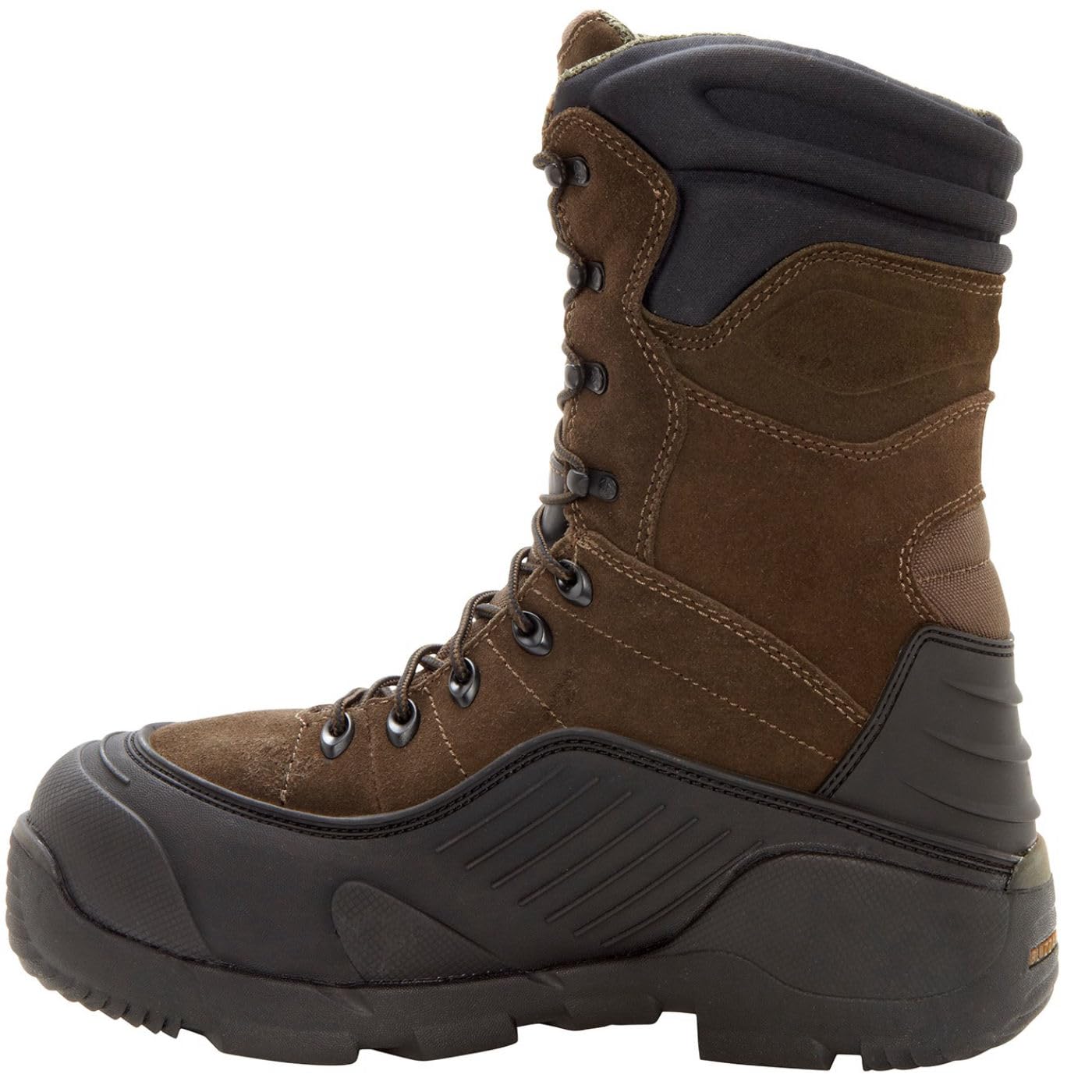
The 1200-gram heavyweight that laughs at a frozen deer stand and never asks you to move fast.
At 1200 grams of Thinsulate Ultra, the Blizzard Stalker carries more insulation than anything else on this list — six times the fill in the XPETI SnowRider’s 200 grams. That is the number that matters if you spend hours standing still in hard cold, because heat has nowhere to escape and no movement to replace it. An 8-inch shaft, split suede, and a 900 denier high-abrasion textile upper complete the build.
The outsole gets its own credit. A multi-directional Blizzard outsole is designed to bite uneven, snow-covered, or icy ground, and a TPU heel stabilizer keeps your heel planted so your ankle does not roll. Rocky Waterproof construction claims a high level of protection while still breathing, and a removable mesh PU footbed lets air move under your foot.
The catch is weight and sizing. At 5.4 pounds per pair in a size 10, they are no city commuter, and the fit runs large, so size down a half size. Stitching complaints come up among a few owners too. Buy them for what they are — a sit-still cold-weather boot — and they deliver real warmth.
The warmth case: Warmth is the thing that wins people over, backed by a 1200-gram fill that outguns every lighter boot here.
Plan for the mass: At 5.4 pounds per pair with a large-running fit, these are a stand-and-sit cold-weather boot, not an everyday pair.
Built for: the guy who stands or sits still in serious cold and wants maximum warmth first.
Wrong tool if: you need a boot for driving, walking fast, or everyday campus life.
6. THE NORTH FACE Men’s Chilkat V Lace-up Waterproof Snow Boot

Two hundred grams of premium fill in a boot that handles snow, mud, creeks, and pavement.
The Chilkat V is the boot most young guys will actually end up wearing every day. It carries 200 grams of premium insulation, which is designed for active cold-weather use rather than standing still. A waterproof build backed by a non-PFC DWR treatment — that is a water-repellent coating without the older fluorinated chemistry — sheds snow and rain off the upper.
What makes it so useful is the range. Snow, dirt, mud, creeks, and light snow all come up as places people use it without trouble. It is lighter than the TIDEWE and the Rocky, so an everyday walk to work or a hike does not feel like a workout. Construction quality earns the most praise of any trait here, and durability that lasts over a year in steady winter use is normal.
The trade-off is fit. Sizing splits opinion, so do not guess — get it right and the boot just works. At 200 grams, understand you are buying a moving-around boot, not one you plan to stand in on a frozen lake all day. For a mixed winter with snow, rain, and slush, this is the pick most guys want.
Most versatile choice: one boot for snow, rain, mud, and regular walks without any fuss.
Not the pick if: you need heavy insulation for hours of standing in serious cold.
7. SOREL Men’s 1964 Pac Nylon Waterproof Boot
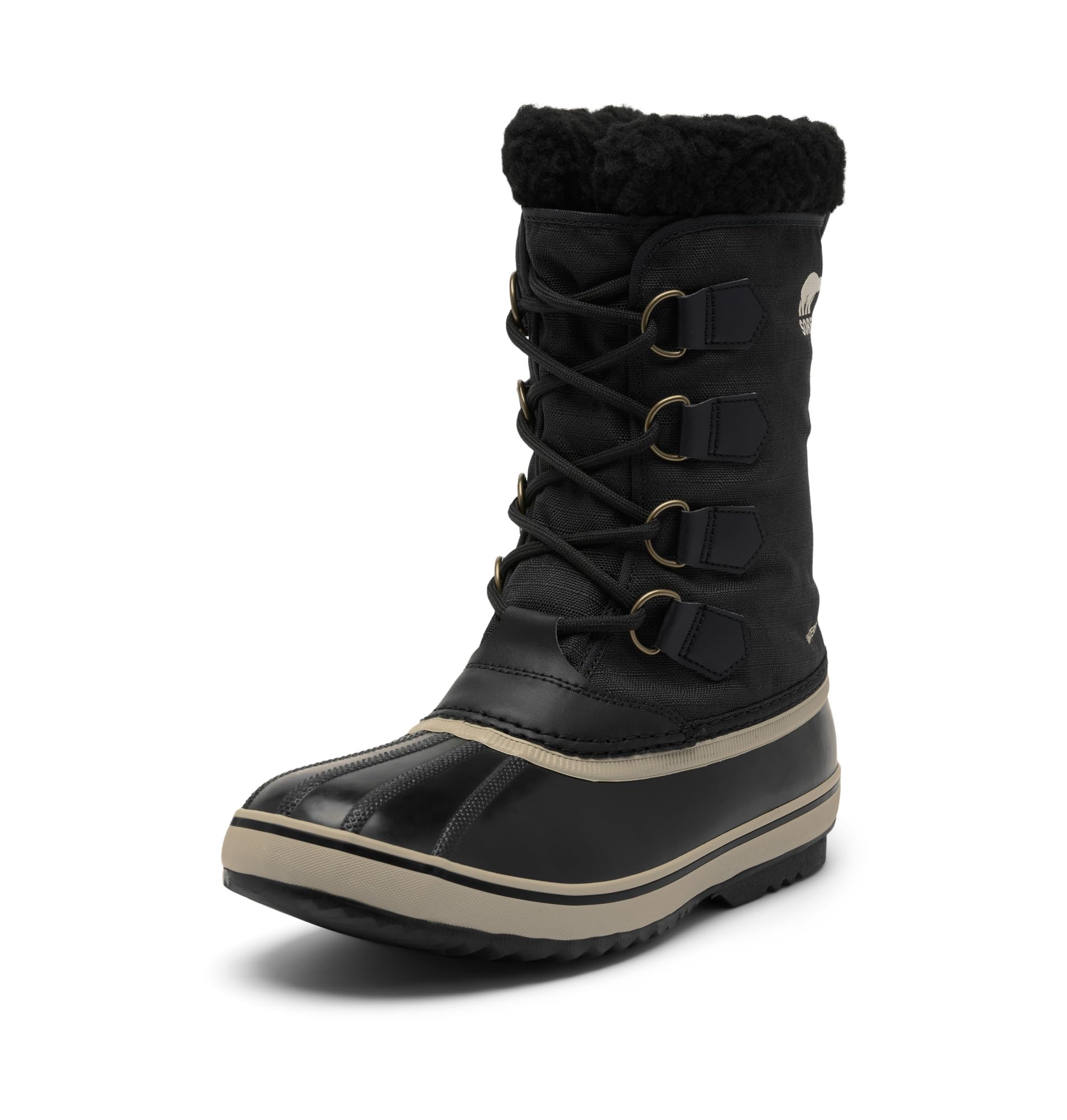
The boot that looks like a winter boot should, with a seam-sealed shell and a Sherpa collar.
SOREL’s 1964 Pac Nylon is the style-forward option on this list, and it does not cut corners on winter duty. Seam-sealed construction keeps water out at the seams, where most boots leak first, and a vulcanized rubber shell with an extra-grip sole handles slick ground. The Sherpa cuff sits high around the ankle and keeps that spot warm.
Fit is the headline. Sizing comes out right for nearly everyone, which is a big deal in a category full of width and length complaints, and the boot keeps feet warm in cold weather. It also looks like a proper winter boot — classic SOREL styling rather than a generic hiking shape.
Build quality is the mixed note. Most are happy with the construction, but a rare owner finds them cheaply made. Think of it as a fit-driven decision: if the shape suits your foot, the warmth and grip come with it.
Go here for: a classic-looking waterproof boot that fits true and handles snowy trails and icy sidewalks.
Consider alternatives if: you want the thickest insulation available, since the fill weight is not published.
8. Helly Hansen Garibaldi V3

A soft, warm-collar city boot from a brand that has been dressing cold climates since 1877.
The Garibaldi V3 is the boot you wear when style and cosiness matter as much as raw cold numbers. A faux fur collar wraps the top of the boot and keeps your ankles warm, and the inside is soft-feeling from the first wear. Helly Hansen has been building cold-weather gear since 1877, so the brand’s winter heritage is real, not a marketing badge.
Traction earns credit here: the sole bites on winter ground, and the boot holds up to harsh high-alpine winter conditions according to people who have put it to that test. It also looks the part, which matters if you are wearing the same pair to class, to a coffee shop, and out on the weekend.
The catch is the upper. It is water-resistant rather than fully waterproof, so it handles snow and light wet but is not the boot for standing in a puddle. If your winter is more urban slush than backcountry slog, the comfort and look make more sense than a heavy rubber boot.
Warmth where it counts: The fur-lined collar and soft interior keep ankles and feet comfortable, and traction holds on winter surfaces.
Where it stops: Water resistance is the mixed note — fine in snow, not built to wade.
Made for: winter on foot around town where you want warmth, softness, and good looks in one pair.
Rethink it if: you regularly walk through deep standing water or wet slush.
9. KEEN Revel 4 Mid Height Polar Insulated Waterproof
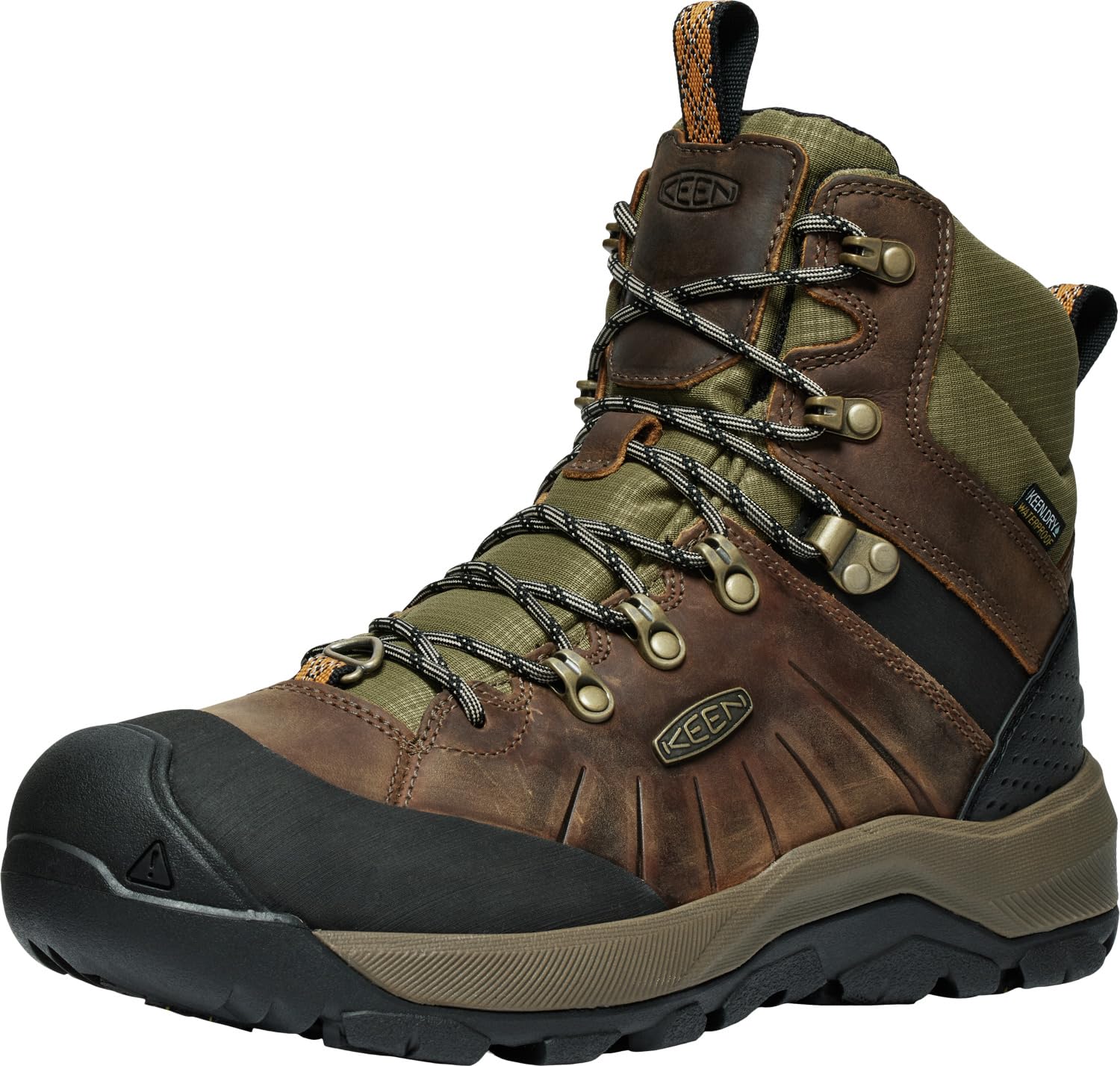
Built on KEEN’s wider last, with a toe box that swallows thick winter socks.
If most winter boots squeeze your toes, the Revel 4 Polar is the fix. It is built on KEEN’s traditional wider footwear form, so the toe box has room for thick winter socks without crushing your foot. Fit is the most-praised trait on this boot by a wide margin, and a waterproof, breathable build with a thermal heat shield inside traps warmth while letting moisture escape.
This is a working winter boot. It suits snowshoeing and hiking, and people describe a stable platform underfoot that feels reassuring on uneven ground. The water resistance keeps feet dry when you cross wet patches, and a speed lace webbing system gets the boot snug quickly.
Durability is the mixed note, and sizing splits slightly. Get your size right and the boot is comfortable over long miles. Just do not expect the same sit-still warmth as a 1200-gram boot — this one is built for movement.
Your pick if: you have a wide foot or wear thick socks and every other boot pinches your toes.
skip it if: you need heavy insulation for hours of standing still in hard cold.
Know the Specs
Insulation weight in grams
This is the weight of the thermal fill packed into the boot, and it is the clearest signal of how cold a boot can handle. A 200-gram boot is built for walking and moving around in ordinary winter cold. A 400-gram boot handles colder days. An 800-gram or 1200-gram boot is built for standing or sitting in serious cold, where there is no body movement to generate heat. Buy more grams than your winter requires and your feet will sweat, then chill once you stop moving.
Waterproof shells versus water-resistant uppers
A full rubber shell, like on the Guide Gear duck boot, blocks water completely — slush and puddles never reach your sock. A leather or textile upper with a waterproof membrane, like on the Columbia Firecamp, also keeps water out but relies on the treatment staying intact. A water-resistant upper, like on the Helly Hansen Garibaldi V3, sheds snow and light wet but is not made for standing water. Match the build to where you actually walk.
Why the outsole decides your confidence on ice
Traction comes from lug shape, lug depth, and rubber softness. A multi-directional pattern, like the one on the Rocky Blizzard Stalker, bites in several directions so you do not slide when you turn. A vulcanized shell with an extra-grip sole, like the SOREL 1964 Pac Nylon, also holds on slick terrain. Hard rubber or shallow lugs are why a boot feels sketchy on a frozen sidewalk.
Shaft height and liner construction
Shaft height is how far up the leg the boot rises. A taller shaft, like the 8-inch Rocky Blizzard Stalker, keeps snow out when you walk through drifts and holds warmth around the ankle. A shorter boot is easier to get on and off and lighter on your foot. Liners matter too — a removable thermal insole, like the one in the XPETI SnowRider, adds warmth underfoot and can be pulled out and dried after a wet day.
Common Questions
How many grams of insulation do I need for a real winter?
Are rubber-shell boots better than leather boots in slush?
Should I size up in winter boots for thick socks?
Can I wear winter boots like the North Face Chilkat V indoors?
How do I keep winter boots from leaking at the seams?
Is a wide toe box worth it in a winter boot?
What is the difference between waterproof and water-resistant boots?
How long should winter boots last with regular wear?
Do I need a steel shank in a winter boot?
Can winter boots be used for hiking in snow?
The Bottom Line
For most people, the young men’s winter boots winner is the Columbia Firecamp because it pairs waterproof construction with low-bulk insulation that works on a trail and a sidewalk alike. If you want maximum warmth for standing in serious cold, the Rocky Blizzard Stalker and its 1200 grams of Thinsulate Ultra are the pick. And if you need a wide toe box for thick socks, the KEEN Revel 4 Polar is the one to reach for.
How we choose
We do not accept paid placement. Every pick is matched to a real buyer and a real use-case; we do not hands-on test units.
Sources
Specifications: manufacturer listings and product documentation. Review insights: verified customer reviews, as of November 2026. Pricing: not shown on this page (it changes often); check the current price via the retailer link.
As an Amazon Associate, Tactical Gear Guy earns from qualifying purchases. This does not affect which products we feature.