Specs are compiled from manufacturer listings and verified buyer reviews and can change over time — please confirm the key details on the product page before buying.
You want a tire that rolls fast enough to survive a cross-country lap but still bites when the trail turns loose and off-camber. That trade-off is the whole game in XC (cross-country) rubber, and the nine tires below are the ones worth your money right now. The short answer: the Maxxis Rekon Race is the safest all-around pick for most riders, the Continental Cross King is the versatile all-rounder if you ride mixed terrain, and the Vittoria Mezcal III is the race-day choice when you want speed with real cornering confidence.
This guide is built by comparing the manufacturers’ published specifications and the patterns across verified customer reviews, so you get each pick’s real strengths and trade-offs instead of marketing spin.
First you’ll learn how tread height, compound, and casing weight change the way a tire behaves on your local loop. Then you’ll get a head-to-head comparison table plus a plain-English specs breakdown of what to plug into your XC setup. The final section names the single best XC tire pick for most riders and explains who should buy each alternative.
Top Picks
How To Choose The Best XC Bike Tires
Cross-country riding rewards a tire that gives away as little energy as possible on the climb and still holds a line in a loose corner. Three things decide that balance: tread height, rubber compound, and casing construction. Get those three right for your local trails and the tire stops costing you speed.
Tread Height Decides How Fast You Roll
A lower, tighter tread pattern rolls with less resistance because there is less rubber pushing into the dirt as the wheel turns. Maxxis builds the Rekon Race specifically with the lowest tread height in its XC line, a semi-slick design aimed at dry, fast courses. The catch is grip in deep mud or loose over hard — a low-profile tread has fewer corners to bite with. If your local loop is mostly hardpack and dust, that trade pays off. If it turns greasy, you want taller center knobs like the Ardent Race or the Tough Tom.
Rubber Compound Balances Grip And Treadwear
Compound is how the rubber is mixed, and it controls whether a tire feels glued in the corners or wears flat after a season. A dual compound uses two rubbers — a faster one in the center and a softer one on the shoulders — so you get grip where you lean and speed where you roll. A 3C triple compound goes a step further and layers the rubber to tune rolling resistance, traction, and wear separately. Softer rubber grips better but wears quicker; firmer rubber lasts longer but can feel skittish on wet roots.
Sidewall Protection And Tubeless Setup
An EXO-style sidewall is a cut and abrasion-resistant layer added to the tire’s flanks, and it matters because sidewalls are where most trail punctures happen. Tubeless-ready construction lets you run lower pressure without a tube to pinch, which gives you more contact with the ground and fewer flats. Lower pressure means better grip, but go too low and you risk burping the tire off the rim in hard corners. Start moderate, then dial down as you learn how your setup behaves.
Side-by-Side Comparison
| Model | Best For | Tire Width | Wheel Diameter | Construction | Amazon |
|---|---|---|---|---|---|
| Maxxis Rekon Race★ Best Overall | Fast dry-condition XC racing | 2.25 inches | 29 inches | Dual compound, EXO, tubeless | Amazon |
| Continental Cross KingTop Performer | Mixed-terrain all-rounder | 2.2 inches | 29 inches | PureGrip, ShieldWall, tubeless ready | Amazon |
| Maxxis IkonRace-Day Speed | Versatile premium XC | 2.2 inches | 26 inches | 3C MaxxSpeed, EXO, tubeless | Amazon |
| Vittoria Mezcal III | Race-day speed with grip | 2 inches | 29 inches | Graphene 4C, TNT casing | Amazon |
| Vittoria Terreno XC | Dry-condition XC racing | 2.1 inches | 29 inches | Graphene 2.0, 3C, TLR | Amazon |
| Panaracer Fire XC Wire | Budget trail durability | 2.1 inches | 26 inches | Wire bead, standard compound | Amazon |
| Schwalbe Tough Tom | Beginner front-tire control | — | 26 inches | K-Guard, XC tread, wire | Amazon |
Detailed Reviews
1. Maxxis Rekon Race | Dual Compound – EXO | XC Tire Tubeless
Our pick — 4.5+★ from 650+ verified ratings; the strongest balance of quality and price.
The semi-slick XC tire that turns leg work into forward motion on dry trails.
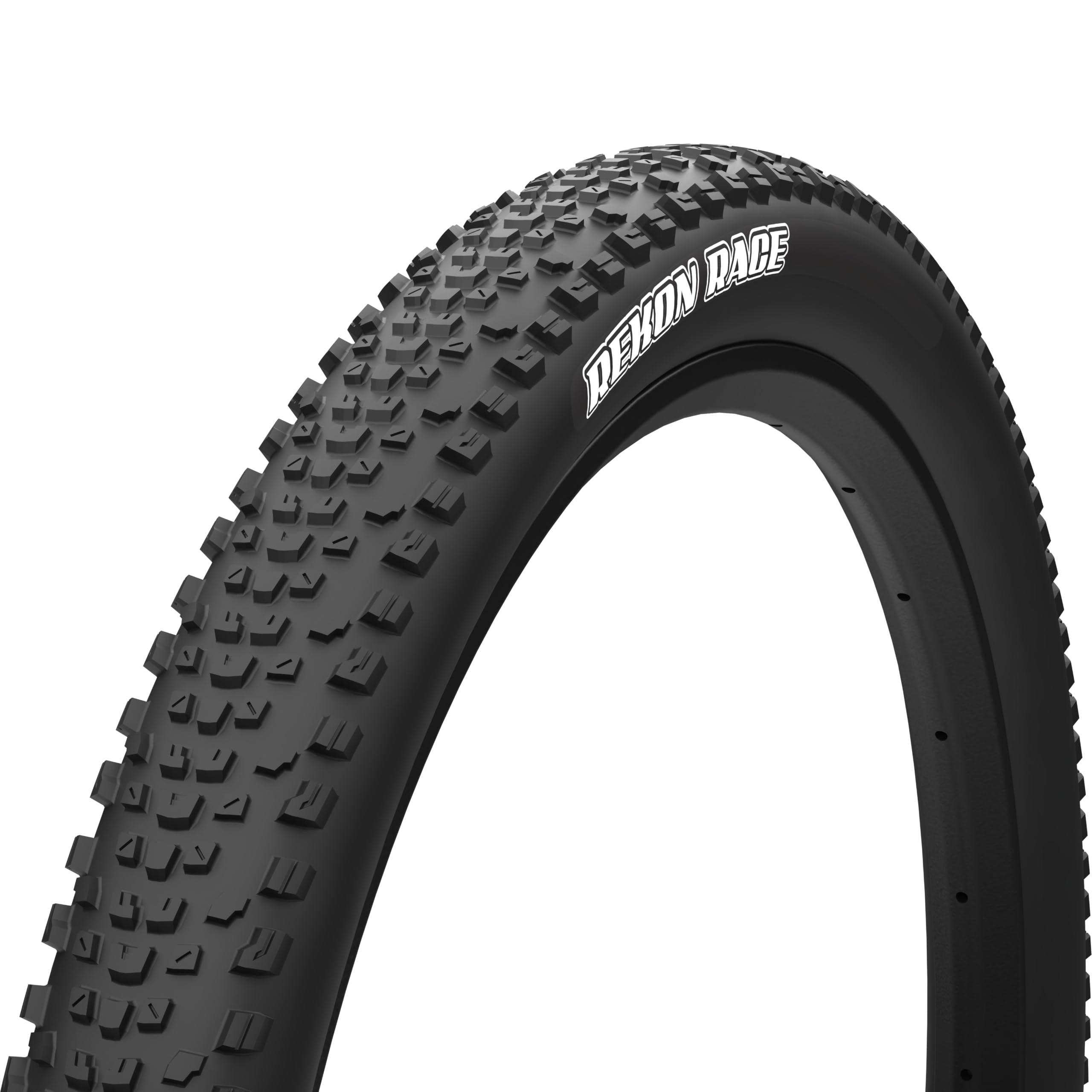
If your idea of a good cross-country ride is dry hardpack and a fast climb, the Rekon Race was built for exactly that. It uses the lowest tread height in Maxxis’s XC line — a semi-slick design the maker says is aimed at riding and racing in primarily dry conditions. That low center profile is the whole reason it rolls with so little drag, so you feel like you are climbing on a road tire instead of a knobby trail hoop. It is the tire a lot of riders reach for on a race day with a dry forecast.
The grip you do get comes from a dual compound — two different rubbers in the tread that split the difference between low rolling resistance and cornering bite. An EXO layer reinforces the sidewalls against cuts and abrasion, which is the kind of damage most likely to end a ride early. It is a 29-inch tire with a 2.25-inch width and a listed weight of 0.67 kg, and the maker rates it E25 for light-duty e-bike use up to 16.1 MPH. Bolt it onto a race bike and the low profile does what it was designed to do.
What wins people over here is simply the roll — the tire this whole category is judged against for raw speed on dirt. The recurring note is stability, which some riders find less planted than a taller-tread tire when conditions firm up or the trail gets loose. That is not a defect; it is physics, since a semi-slick has fewer knobs to dig in. If your local loop is predominantly fast and dry, you will not miss the extra bite.
The fast-and-dry case
- Lowest XC tread height in the Maxxis line — rolls with minimal resistance on hardpack.
- Dual compound balances rolling speed with real cornering grip.
- EXO sidewall layer resists the cuts and abrasion that end trail rides.
- Tubeless-ready so you can run lower pressure without a tube for more contact.
Where it asks you to compromise
- Stability of the semi-slick profile is the mixed side of the ledger; it gives up planted feel in loose or greasy conditions.
- Primarily a dry-condition tire — deep mud is not its home.
Reach for this if: you race or train on dry hardpack and want the fastest-rolling XC tire that still corners with confidence.
Picture a wet weekend: the semi-slick tread has no home there — go for a taller center knob like the Ardent Race instead.
2. Continental Cross King Mountain Bike Tire
The all-rounder that refuses to pick a favorite between climbing, cornering, and rolling.
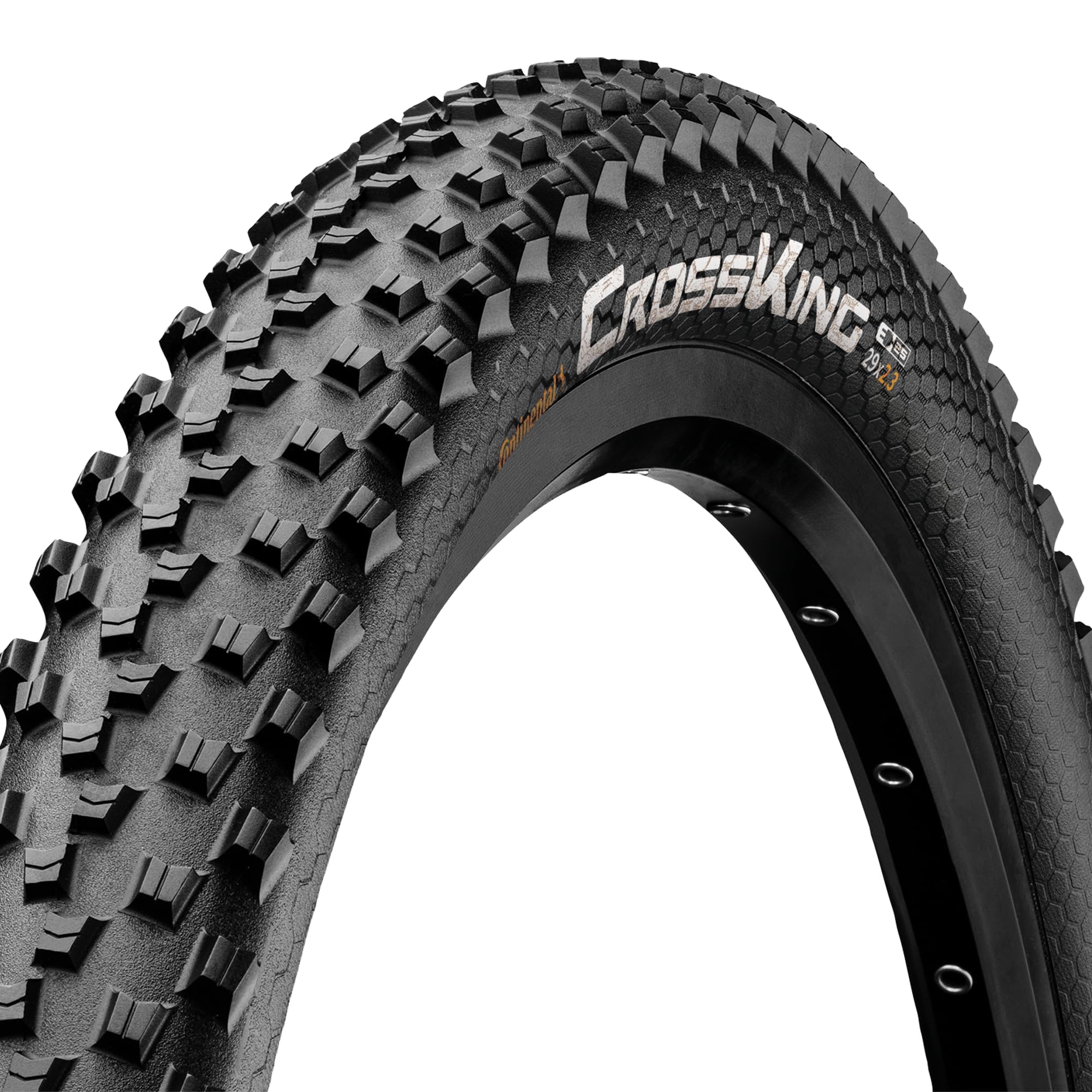
Continental calls the Cross King an all-rounder for competition and trail riding, and the tread is built to adapt to any terrain rather than specialize. It is the tire for a rider whose weekly loop mixes hardpack, roots, and loose dirt in the same afternoon and who does not want to swap rubber to match the surface. The 29×2.20 size (ETRTO 55-622) with a folding bead keeps the setup modern, and Continental lists a 26-58 PSI pressure range so you have room to tune grip versus speed.
The engineering that earns it the second slot is the ShieldWall system — a finely woven cross-fabric layer under the tread that adds puncture protection without killing the damping and flexibility that make a tire feel alive. The PureGrip rubber mix is Continental’s activated-silica compound, meant to hold its bite ride after ride. It runs tubeless ready and the maker recommends at least 30 ml of RevoSealant per tire on a first mount. There is an E25 rating for e-bikes up to 25 km/h, listed as 15.5 mph.
Owners are split between two experiences on the same tire: quality they trust and a mount that ranges from easy to very tight depending on the rim. Treat that as a fit variable rather than a flaw — bring proper levers and patience to a first tubeless install. Casing durability draws a mixed read too, with some riders content and some reporting issues over time. It is the most-reviewed tire in this lineup, and the overall tenor stays firmly positive.
What lands well: the pure versatility of the tread — a rider who wants one set of tires for trail days and race days gets it without paying a weight penalty that makes climbing feel sluggish.
The honest caveat: the mount can be tight on some rims, so budget a little extra patience the first time you seat it tubeless.
The one to buy if you ride everything: mixed terrain, changing conditions, one bike doing daily duty and weekend races.
Go in prepared: first mounting can fight you on some rims — set aside time and use proper levers.
3. Maxxis Ikon Tubeless XC Mountain Bike Tire
The broad-conditions XC tire that stays predictable when the trail keeps changing under you.
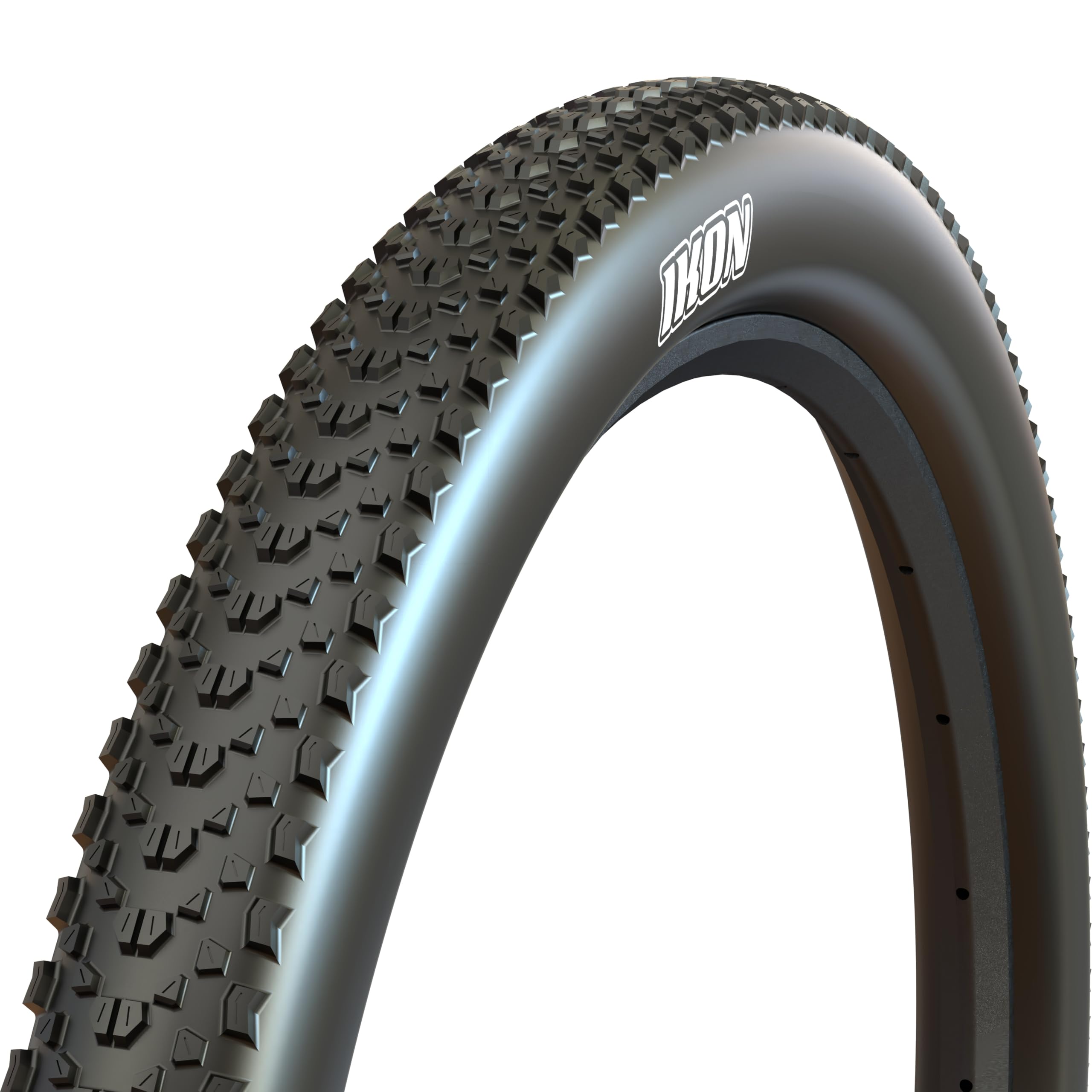
The Ikon is Maxxis’s play at a versatile cross-country tire that performs across a wide range of trail conditions — predictable handling is the whole pitch. It sits at 26×2.2 with a listed 657 g weight, and it runs tubeless ready with an EXO cut-and-abrasion layer on the sidewalls. That combination is built for a rider who wants one tire that climbs, corners, and survives rock gardens without a specialist tread for each.
The compound is the reason it earns a premium placement: 3C MaxxSpeed is Maxxis’s three-layer mix for XC, with two specially formulated rubbers in the outer layer to cut rolling resistance while optimizing treadwear and traction. So you get grip where the tire meets the dirt and low drag on the straights at the same time. For a rider chasing a station-to-station pace on a trail that never repeats itself, that balance is the point.
Grip is what wins people over — it is the trait this tire is most associated with, and buyers report it hooks up in hardpack and loose conditions alike. Reviewers mention speed on concrete, asphalt, and hardpack nearly as often, which tells you it rolls clean even on pavement connections. The mount is easy and the weight stays low. If you want a race tire that does not feel like a compromise off the race course, this is the balance.
Where it shines: the 3C triple compound — the grip is the story, with low rolling resistance right behind it, so the tire feels planted without feeling slow.
Worth knowing: this version is a 26-inch diameter, so confirm the wheel size on your frame before you commit.
Best for the all-conditions racer: a rider who wants Maxxis grip across hardpack and loose trail without buying a condition-specific tread.
Check your wheel: the 26-inch diameter means it fits 26ers — not a 29er frame.
4. Vittoria Mezcal III G2.0, XC-Trail/TNT G2.0
A race tread that stays composed in the roots and rocks as well as the hardpack.
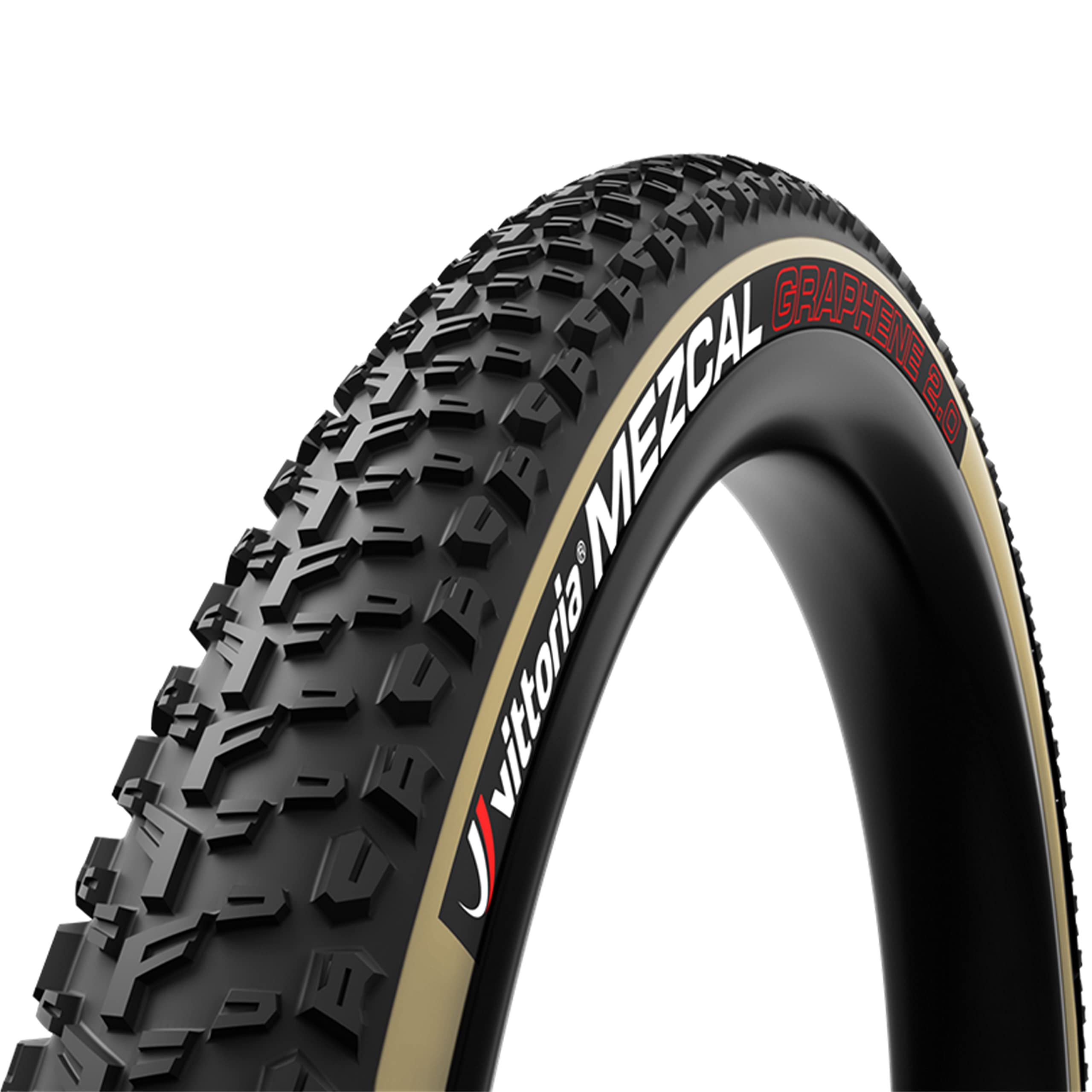
The Mezcal III is the versatile all-rounder in Vittoria’s XC line, built around a low-profile tread that is tightly spaced in the center for low rolling resistance and durability. Directional siping on each knob — small slits cut into the rubber — is designed to find traction on roots and rocks, while the defined center ridge keeps the tire rolling freely. On a 29-inch, 2-inch-wide casing, it is a tire that wants a fast line but will not panic when the terrain roughens up.
The headline engineering is the Graphene-enhanced 4C compound — four rubber formulations layered through the tread and casing — which Vittoria says aims for that hard-to-hit trio of grip, durability, and low weight. Vittoria markets it as its XCO European Champion and the official tire of USA Cycling. The TNT casing is built to run tubeless, and the combination is what you want when the goal is a fast lap that still holds together on the technical bits.
Owners describe it as smooth and fast-rolling with great grip in both wet and dry conditions, which is the versatile picture the tread was designed for. Easy installation comes up again and again, so the tubeless setup tends to cooperate. If you want a tire that feels like it was tuned for cross-country racing rather than general trail riding, this is the one that earns its premium place.
Why racers trust it
- Graphene 4C compound aims for grip, durability, and low weight in one tire.
- Low-profile, tightly spaced center tread keeps rolling resistance down.
- Directional siping on each knob bites on roots and rocks.
- Easy to install and set up tubeless.
What to weigh
- Purely an XC and race-oriented profile — it is not a tire for aggressive enduro or muddy winter riding.
- Top-tier pricing puts it among the higher-cost options in this lineup.
Buy it for race-day confidence: a cross-country racer who wants speed on the hardpack and traction in the roots.
Leave it out if: your riding is downhill and muddy — this tread is tuned for XC, not enduro.
5. Maxxis Aspen | Dual Compound – EXO | XC Race Tire

Ramped center scales and sharp brake edges tuned for dry race-course speed.
The Terreno XC is a dry-conditions race tire, and the tread is the whole argument: ramped center scales give a fast-rolling leading edge so you lose less speed to drag on the straightaways. Sharp, responsive braking and cornering edges are built in so you can scrub speed and turn in with confidence. At 29 inches and 2.1 inches wide on a tubeless-ready casing, it is a fast XC shape for a rider who knows the course will be dry and wants to get around it quickly.
The compound is Vittoria’s functionalized Graphene 2.0, and the tread uses three compounds (3C) to spread wear life and grip across the tread zones. That is the same engineering logic as the more expensive race tires above, aimed at making the tire hold its edge deep into a race rather than fading. At a listed 0.2 kg, it adds little rotating weight on the climbs.
This one is for the dedicated dry-course racer, not the all-year trail rider. Where the Mezcal III is the versatile all-rounder in this brand’s lineup, the Terreno XC is the specialist that gives up some wet-weather traction for race-day speed. If your race calendar is dry and your priority is a fast, sharp-handling tire, this is a disciplined choice.
Sharp on a dry course
- Ramped center scales roll fast on the straights.
- Sharp braking and cornering edges give the rider control on dry turns.
- Graphene 2.0 with a 3C tread is designed to hold grip and wear over a race.
- Tubeless ready casing listed at 0.2 kg.
Specialist limits
- Dry-conditions focus means it is not the tire to pick for wet or muddy races.
- This is a dedicated race profile, not an everyday trail tire.
Choose this for a dry race calendar: the ramped center and sharp edges are tuned exactly for fast, dry cross-country courses.
Look elsewhere when it rains: a dry-specialist tread gives up wet grip — the all-rounders above are the better call then.
6. Panaracer Fire XC Wire MTB Tire

The budget tire that outlasts far pricier rubber and still looks good doing it.
Panaracer’s Fire XC is the tire for a rider who wants durable trail rubber without a specialist price. It runs a standard rubber compound on a wire bead, which is heavier and less supple than a folding tubeless tire but built to take abuse. The size is 26-inch with a 2.1-inch width and a 670 g listed weight. Compare that to the Maxxis Aspen at 2.4 inches and you can see it is the narrower, more traditional trail shape.
What earns it a place is longevity — riders report these going strong through 12 years of active riding, a durability story no pure race tire matches. On light single-track the tire grips well, and climbs clean with no slippage reported. That is the classic durable trail-tire picture, and it is what a lot of riders actually want for daily miles rather than a race-day special.
Appearance is the surprise strength — the black-and-red look draws genuine praise, which is rare for a budget part. The fit is the mixed note, so check your rim and wheel size before ordering. If your priority is rubber that keeps showing up season after season without draining your wallet, this is the value play.
What earns it a spot: the durability and appearance combination — black-and-red looks the part and the tire keeps working through years of trail miles.
The honest trade: a standard compound on a wire bead is heavier and less supple than a folding race tire, and the fit needs verifying before you order.
Best for the patient trail rider: buy it if durability and value matter more to you than a low race weight.
Confirm fit first: it is a 26-inch, 2.1-inch tire, so verify your rim and wheel.
7. Schwalbe Tough Tom MTB Bike Tires
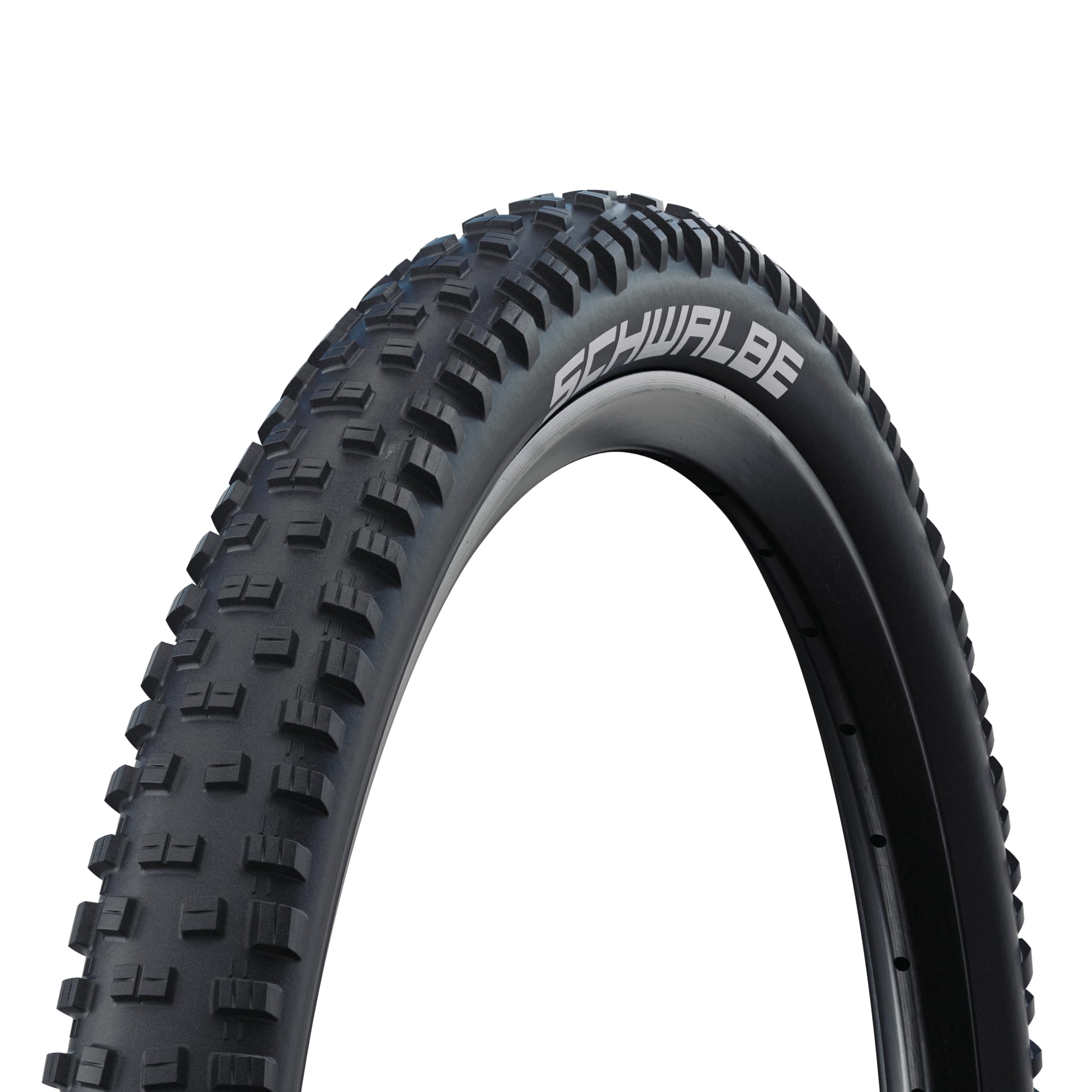
The beginner-friendly front tire that trades race weight for control and puncture protection.
Schwalbe positions the Tough Tom as a beginner mountain-bike tire, with an XC tread pattern the maker says gives optimal control on rougher trails. This version is a 26-inch diameter, and the tread is tuned to balance grip and speed for sporty riding across terrain. It is the entry point in this lineup — a tire you put on a first real mountain bike so an early ride does not end in a flat or a sketchy washout.
K-Guard is the reason it is worth a look despite the beginner label: Schwalbe’s puncture protection layer is included for increased resistance on forest paths and trails. That is a meaningful spec for a newer rider who does not want to fix a flat on the trail with limited experience. The tire is also designed to run as a front, paired with the maker’s Rapid Rob at the rear for a matched setup. Schwalbe points to a century of tire-building tradition behind the brand, which is the quality story it leans on.
The honest read is that this is a control-and-durability tire, not a race-day speed tire — you are trading some rolling efficiency for the XC tread’s grip and K-Guard’s protection. For a rider building confidence on real trails, that is the right trade. If you are chasing podium times, one of the race tires above is the better fit.
Right for a first real trail bike
- XC tread pattern tuned for control on rougher trails.
- K-Guard puncture protection for fewer flats on forest paths.
- Designed as a front tire, paired with the Rapid Rob rear.
Entry-level realities
- A control-first tread rather than a low-rolling-resistance race profile.
- This version is a 26-inch diameter, so check your wheel size before ordering.
For a newcomer’s front wheel: pick it if you want control and puncture protection to build confidence on rougher trails.
Sizing check: it is a 26-inch front tire — confirm your wheel diameter and pair it with the matching rear.
Know the Specs
Tread Height And Rolling Resistance
Tread height is how tall the knobs sit above the casing, and it is the biggest single lever on how fast a tire rolls. A lower, semi-slick profile like the Rekon Race puts less rubber in contact with the dirt, so it rolls with less drag on hardpack. Taller center knobs like the Ardent Race bite harder in loose conditions but cost you some speed. Match the tread to your local trail: dry and fast wants a low profile, wet and loose wants more bite.
Tire Width, Rim Width, And Footprint
Tire width is the nominal measurement across the casing, and it works with your rim width to set the shape of the tread. Maxxis’s Wide Trail construction, used on the Aspen, is tuned for wide rims — the maker says a 30mm internal width is ideal, with a working range of 19mm to 35mm. If your rim is narrow and you mount a wide tire, the tread can square off and lose the cornering shape it was designed for. Match width to rim and the tire behaves as intended.
Compound And Grip Versus Wear
Compound is the rubber mix, and it sets whether a tire feels glued or skittish and how fast it wears. A dual compound uses two rubbers for a balance between rolling resistance and grip. A triple compound like 3C MaxxSpeed layers a firm base with softer outer rubbers to keep the roll fast while the shoulders grip. Softer rubber buys you traction but wears quicker; firmer rubber lasts longer. The trade is real, so choose based on whether you race or ride for miles.
Sidewall Protection And Tubeless Ready
Sidewalls take the worst of the trail, so a cut-resistant layer like EXO or a woven ShieldWall shield protects you from the punctures that end rides. Tubeless-ready construction lets you run the tire without an inner tube at lower pressure, which gives you more grip and fewer pinch flats. Lower pressure means more contact with the dirt, but too low risks burping the bead in hard corners. Start moderate and tune downward as you learn your setup. Continental recommends at least 30 ml of RevoSealant per tire for a first tubeless mount.
Common Questions
What is the difference between an XC tire and a trail tire?
Can I run these tires tubeless without an inner tube?
How do I choose the right tire width for my rim?
Will a 29-inch tire fit my 26-inch mountain bike wheel?
What does EXO or K-Guard actually protect against?
How often should I replace an XC bike tire?
Is a semi-slick XC tread good for wet or muddy conditions?
Can I put an e-bike-rated tire on my regular mountain bike?
Should I run a different tire on the front versus the rear?
The Bottom Line
For most riders chasing a fast, confident dry-trail lap, the Maxxis Rekon Race is the one to buy — the lowest XC tread in the Maxxis line rolls with very little drag, and the dual compound (two rubber hardnesses in one tread) plus EXO sidewall (a cut-resistant layer) keep it credible in the corners. If your rides reach beyond pure XC, the Continental Cross King is the versatile all-rounder that handles whatever the trail throws at you. And when race day needs a tire tuned for speed and grip together, the Vittoria Mezcal III is the race-focused choice.
The honest nudge: decide on tread height and wheel diameter before you fall for the marketing. A fast semi-slick on the wrong trail, or a 29er tire on a 26-inch wheel, will feel like a letdown no matter how good the tire is. Match the tread to your terrain and confirm the wheel diameter before you buy.
How we choose
We do not accept paid placement. Every pick is matched to a real buyer and a real use-case; we do not hands-on test units.
Sources
Specifications: manufacturer listings and product documentation. Review insights: verified customer reviews, as of November 2026. Pricing: not shown on this page (it changes often); check the current price via the retailer link.
As an Amazon Associate, Tactical Gear Guy earns from qualifying purchases. This does not affect which products we feature.