Specs are compiled from manufacturer listings and verified buyer reviews and can change over time — please confirm the key details on the product page before buying.
You want steady warmth without hauling firewood every few hours, and that is exactly what a pellet appliance delivers — you pour in a bag of pellets, set a temperature, and it feeds itself. The catch most people hit is simple: hopper size. A small hopper means refilling twice a day; a large one means once. Below you will find the models that get the balance right, sorted by how much space they genuinely heat.
This guide is built by comparing the manufacturers’ published specifications and the patterns across verified customer reviews, so you get each pick’s real strengths and trade-offs instead of marketing spin.
Every pick here burns pellets as its only fuel, so you are comparing like with like on coverage, hopper size, and heat output. These are the strongest options if you are shopping for a wood pellet fireplace and want a unit that actually keeps up with your rooms.
Top Picks

How To Choose The Best Wood Pellet Fireplace
A pellet stove is a self-feeding heater: a hopper holds the fuel, an auger (a rotating screw) drops pellets into the burn pot, and a blower pushes warm air into the room. Buy the one that matches your room size first, then your refill habit. Everything else is convenience.
Start with the square footage you actually heat
Manufacturers quote a coverage range in square feet, usually under mild or normal temperature conditions. A 1,500 square foot rating suits a small home, cabin or sunroom. A 2,800 square foot rating is aimed at an open-plan house, and it assumes milder weather. Buy for the room, not the whole house, and you will not run the unit at its top setting all winter.
Match the hopper to your refill tolerance
Hopper capacity runs from small to huge across this group — one model here holds 25 lb, another holds 130 lb. A bigger hopper means fewer trips with a pellet bag. The trade is physical size and the weight of the stove itself, since a big bin means a bigger, heavier cabinet.
Check how it vents and where it can sit
Direct vent models pull combustion air from outside and exhaust straight through a wall, so they need no traditional chimney. A zero-clearance insert is built to drop into an existing fireplace opening. Decide the installation spot before you buy, because that choice narrows the shortlist fast.
Look at controls, ignition and backup
Auto ignition means the unit lights itself — no gel, no matches. A programmable thermostat lets you set a temperature and walk away. Battery backup keeps the auger and blower running during an outage, but check whether the batteries are included, because on at least one pick here they are sold separately.
Side-by-Side Comparison
| Model | Best For | Coverage | Hopper | Heat Output | Amazon |
|---|---|---|---|---|---|
| HP22 Pellet Stove★ Best Overall | Whole-house mild-climate heating | 2,800 sq. ft. | 55 lb | 41,000 BTU | Amazon |
| ComfortBilt HP40 AlpineCompact Pick | Cabins and smaller rooms | 1,500 sq. ft. | 25 lb | 26,224 BTU | Amazon |
| Cleveland Iron Works Medium PS60WWi-Fi Ready | Wi-Fi control in a mid-size home | 1,500 to 2,200 sq. ft. | 60 lb | 30,124 BTU | Amazon |
| HP42 Alpine Pellet Stove | Long unattended burns | 2,800 sq. ft. | 120 lb | 42,370 BTU | Amazon |
| Castle Serenity 41278 | Scheduled, programmable heating | 1,500 sq. ft. | 40 lb | 32,000 BTU | Amazon |
| Cleveland Iron Works Large PS130W | Big rooms, fewest refills | 2,000 to 3,000 sq. ft. | 130 lb | 29,501 BTU | Amazon |
| PelPro PP70 | Garages and mobile homes | 2,000 sq. ft. | 70 lb | 42,500 BTU | Amazon |
| Cleveland Iron Works Bayfront PSBF66W | Quiet operation with a fire view | 1,800 to 2,500 sq. ft. | 66 lb | 30,173 BTU | Amazon |
| Pellethead Freedom PS21 | Storm-prone and off-grid homes | 800 to 1,800 sq. ft. | — | 34,700 BTU | Amazon |
| HP22i Pellet Stove Insert | Dropping into an existing fireplace | 2,800 sq. ft. | 47 lb | 41,000 BTU | Amazon |
Detailed Reviews
1. HP22 Pellet Stove, 2,800 sq. ft., 55 lb. Hopper, Black
Our pick — 4.0+★ from 250+ verified ratings; the strongest balance of quality and price.
The one that heats the whole house and rarely needs a hand.
Two numbers set this ComfortBilt apart. It covers up to 2,800 square feet (under mild temperature conditions) and pushes 41,000 BTU per hour — a BTU being the standard unit of heat energy. For an open-plan home in a moderate climate, that is a unit that warms the rooms you live in without straining at its top setting. Compare it with the HP40 Alpine below, which covers 1,500 square feet: this one covers a far larger footprint on the same five power settings and programmable thermostat.
Where it pulls ahead of most of this list is endurance. The 55 lb hopper gives up to 20 hours of burn time, so a morning fill carries you through the evening. Buyers report it holding an entire house at 70 degrees, and the recurring theme across review pages is steady, uninterrupted running. What wins people over most is reliability — it is the single trait praised hardest — followed closely by raw heat output.
The honest caveat is noise. It is generally a quiet unit, but the motor can develop a high-pitched whine that a few owners find grating in a living room. If the stove sits beside your sofa rather than in a basement, listen for that. The included remote control and auto ignition mean you are not crouching to light it either.
What earns it the top slot
- 2,800 sq. ft. coverage from 41,000 BTU, with five power settings to dial the heat down
- 55 lb hopper gives up to 20 hours between fills
- EPA and CSA certified, with a bay-view window and removable ash pan
- Remote control and auto ignition built in
Where it asks for patience
- The motor can produce a high-pitched whine that some find distracting
- 273 pounds means you plan its spot before it arrives
Go for this if: you have a large open space and want one fill to last most of a day.
Think twice if: the unit will sit right beside seating — that motor whine is the one thing to weigh.
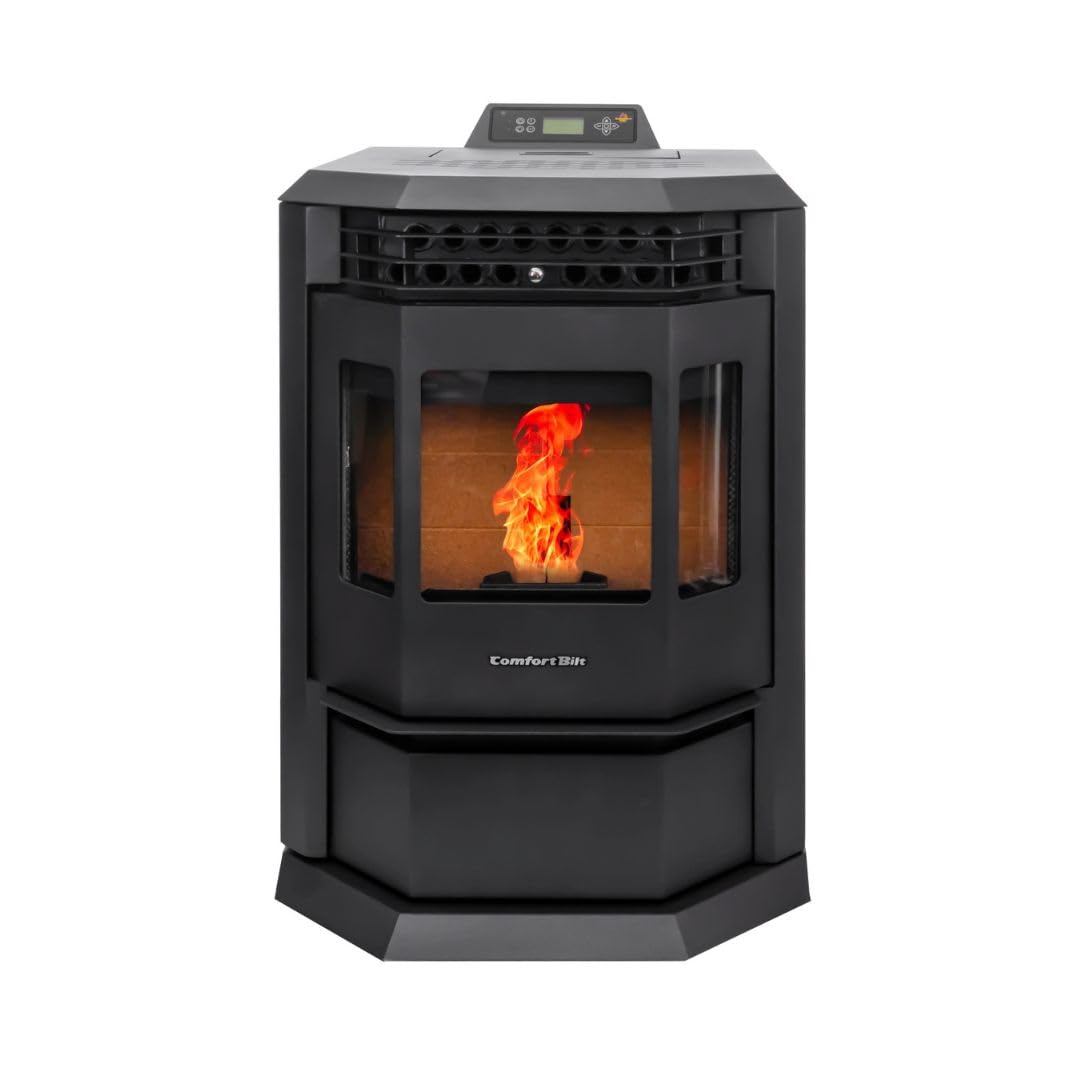
2. ComfortBilt HP40 Pellet Stove
A small-footprint heater built for cabins, sunrooms and workshops.
This is the pick for a space you heat for a few hours, not a whole house. It covers up to 1,500 square feet under normal temperature conditions and delivers 26,224 BTU per hour. Its efficiency rating is 81% — meaning most of the fuel’s energy becomes room heat rather than going up the vent. It is the most modest heater here by output, and that is the point: a small room does not need more.
The trade for that compact body is a 25 lb hopper. Against the HP22’s 55 lb bin, that is a fraction of the fuel on board, so you will refill more often on cold evenings. The Alpine footprint is genuinely small at 21 inches deep and 17 inches wide, which is what makes it fit a garage corner or sunroom wall where the bigger units will not.
Owners mention it heating a cabin or sunroom effectively on its five power settings. Five power settings, a programmable thermostat, remote control and auto ignition are all here, so operation is not stripped down despite the size. The bulk of feedback centres on heating performance — the thing you bought it for.
Best fit for: a cabin, garage or sunroom where 1,500 square feet is the real number and refilling once more per day is fine.
The trade you accept: that 25 lb hopper is the smallest on this list, so it asks more of you on the coldest nights.
Reach for it when: floor space is tight and you want an 81%-efficient heater that slips into a corner.
Look elsewhere when: your room runs past 1,500 square feet — this one is sized honestly and will not stretch.
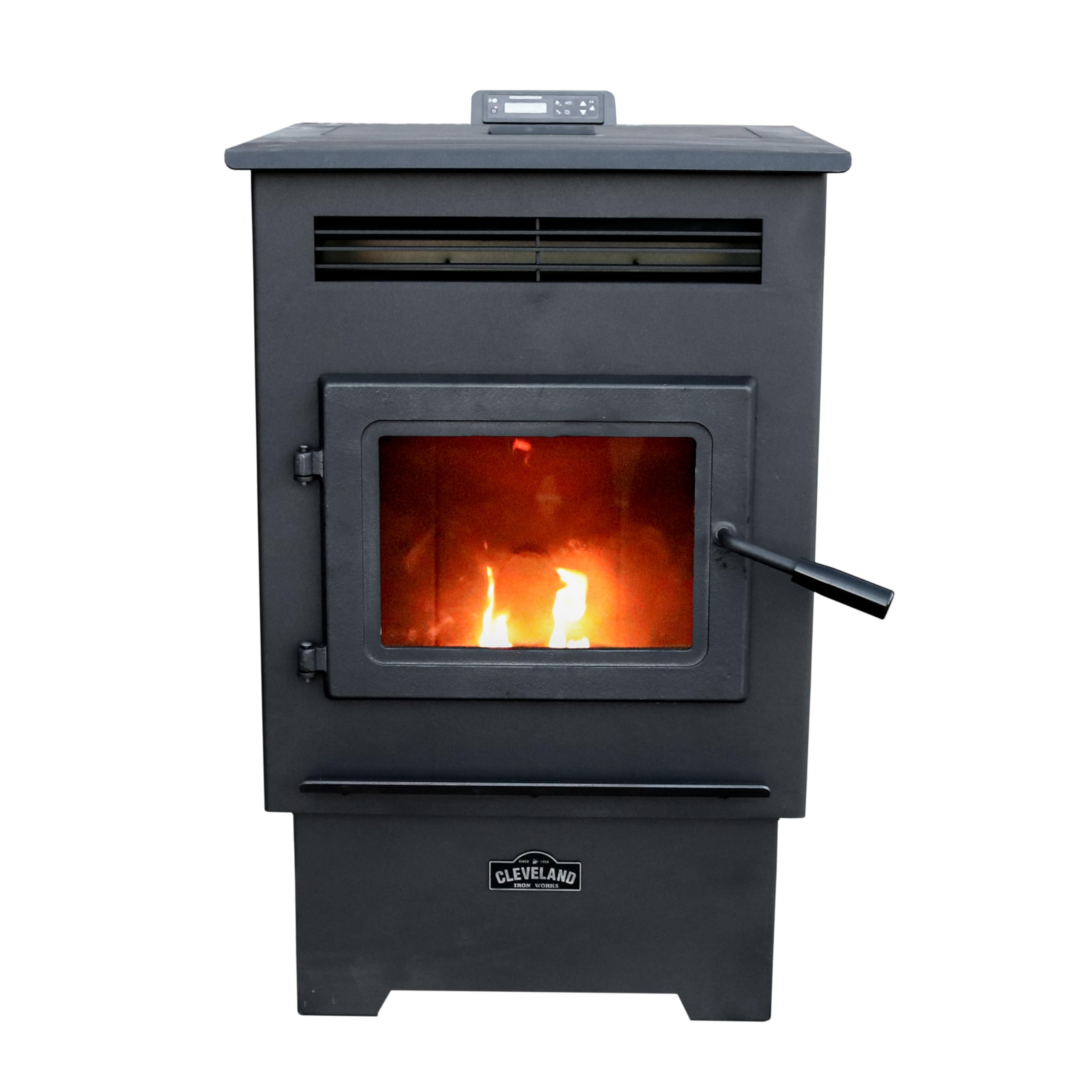
3. Cleveland Iron Works Medium Pellet Stove, 60lb Hopper
Wi-Fi control and a cast-iron body for the mid-size house.
The headline here is smart control. Built-in Wi-Fi means you can adjust the stove from your phone instead of crossing a cold floor. It heats 1,500 to 2,200 square feet and puts out 30,124 BTU per hour, which lands it squarely between the small Alpine and the big 2,800 square foot units.
The 60 lb hopper is generous for this output and sits just above the HP22’s 55 lb bin, though this stove covers less ground — different balance, same idea: fewer refills. The cast iron construction adds heft, and buyers single out build quality as a strength. A consistent temperature is the other recurring note, which is what a thermostat-driven auger is for.
What people praise most is simple functionality — it does its job without fuss, and several note it handles softwood pellets well. Setup is described as straightforward. Do not expect the bay window or marble finish of the premium picks; this is a working stove, not a showpiece.
The case for it: Wi-Fi control, a 60 lb hopper and cast iron build at a mid-size coverage of 1,500 to 2,200 square feet.
Keep in mind: it is a plain-looking workhorse — if a fire view matters to you, the bayfront model lower down is the one to look at.
Suits you if: you want to set the heat from your phone and leave a full hopper to do the rest.
Pass if: you want to watch the flames — this cabinet is about function over a window.
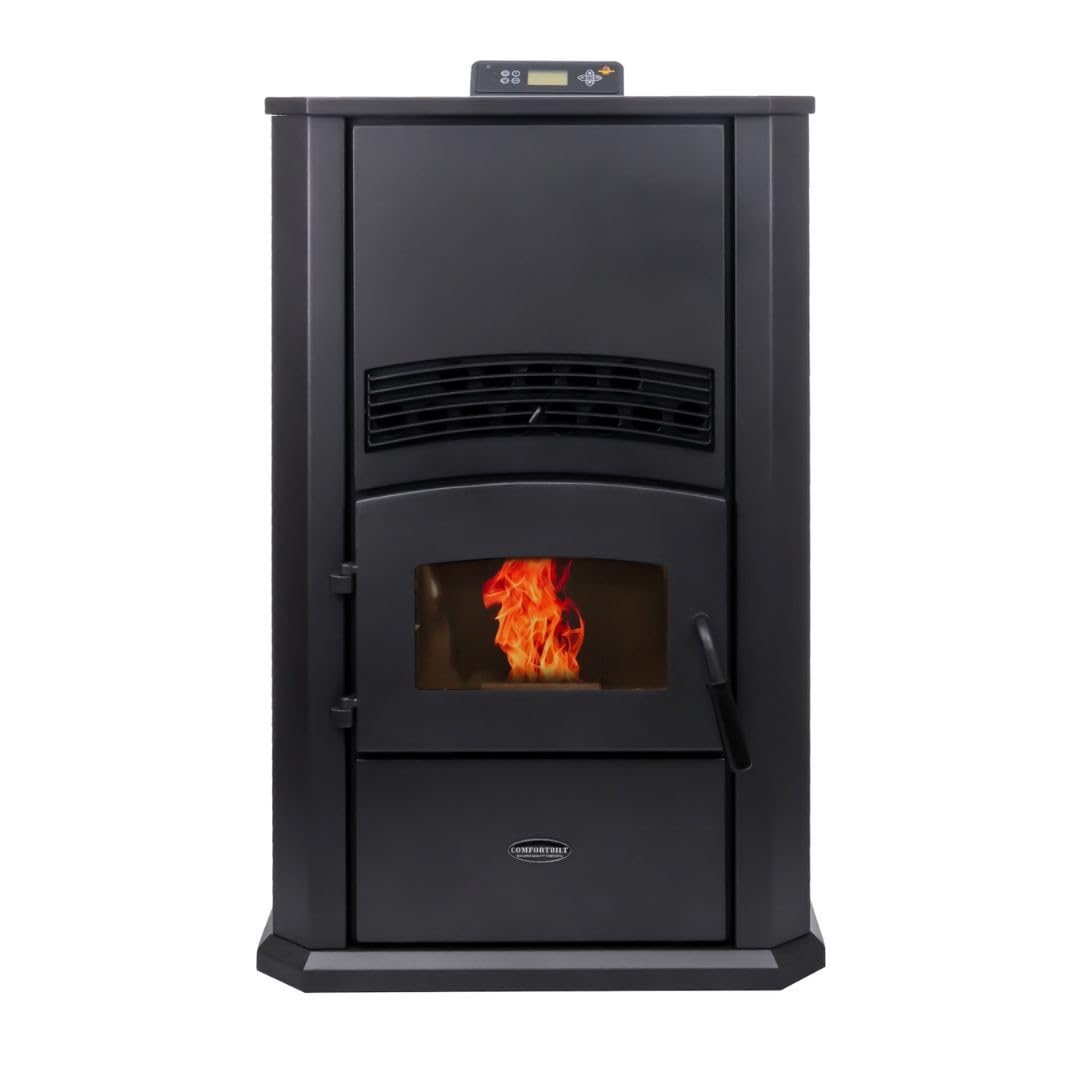
4. HP42 Pellet Stove
The big-bin bruiser that promises a full day on one fill.
On paper this is the most powerful heater here: 42,370 BTU per hour, coverage to 2,800 square feet, and an oversized 120 lb hopper good for up to 24 hours of continuous operation at 87.5% efficiency. Stack it against the HP40 Alpine’s 26,224 BTU and the gap in raw heat is obvious — this is a different class of machine meant for a large, cold house.
But the spec sheet and the lived experience pull apart. The recurring gripe from the review pages is reliability: the unit cutting out before a long burn completes is the theme, and some report it failing repeatedly within months. That is a real caution worth hearing before you commit to a 275 lb cabinet designed to run around the clock.
Where it does deliver, owners credit the generational improvements over older Alpine models, and the feature set is complete — five power settings, a programmable thermostat, remote control and auto ignition. If you get a healthy unit, the efficiency number is genuinely strong. The question is whether yours will hold up.
The strongest numbers on the list
- 42,370 BTU and 87.5% efficiency, the highest heat figure in this group
- 120 lb hopper for up to 24 hours of continuous operation
- Full control set: five power settings, thermostat, remote, auto ignition
The caution you must weigh
- Reliability is the mixed signal here — cut-outs before a full burn are the recurring theme
- 275 pounds and 30 inches square means a committed installation spot
Choose it for: the raw 42,370 BTU and a hopper that carries a full day, if you are prepared to deal with reliability.
Consider the HP22 instead if: you want similar coverage from a brand with a steadier reliability record in its own reviews.
5. Castle Serenity 41278 Pellet Stove, 1,500 sq. ft.

Four operating modes turn this into a stove that runs to a schedule.
Most pellet stoves give you a thermostat and call it a day. This one adds four modes — Manual, Thermostat, Weekly and Eco — all programmable from the included remote. Eco mode toggles the unit on and off to hold a room temperature, so you are not burning pellets to overshoot your target. It heats 1,500 square feet at 32,000 BTU, which puts it a step above the tiny Alpine but below the 2,800 square foot units.
Cleaning is a stated design goal here: no tubes, corrugations or hidden chambers. Anyone who has scraped ash out of a fiddly firebox knows why that matters. The 40 lb hopper is a sensible middle size — bigger than the Alpine’s 25 lb, smaller than the 60 lb and up bins.
Owners describe their rooms as warm and cozy, and the auto-igniter lights reliably. The one operational snag that surfaces is the auger cycling only a few times, which is worth knowing about for troubleshooting. It also runs on just 77 watts at 120 volts, a low electrical draw. Note the delivery requirement: a phone number is needed to schedule a truck appointment.
Why it stands out: four programmable modes including an Eco setting that holds temperature by cycling on and off, plus an easy-clean firebox with no hidden chambers.
The follow-up question: opinions split on whether it is cost-effective to run — if running cost is your main driver, compare the efficiency figures carefully before committing.
This one is for: the scheduler who wants Weekly and Eco modes and a firebox that is quick to clean.
Not for you if: you need to heat more than 1,500 square feet or a very cold room — 32,000 BTU has a ceiling.
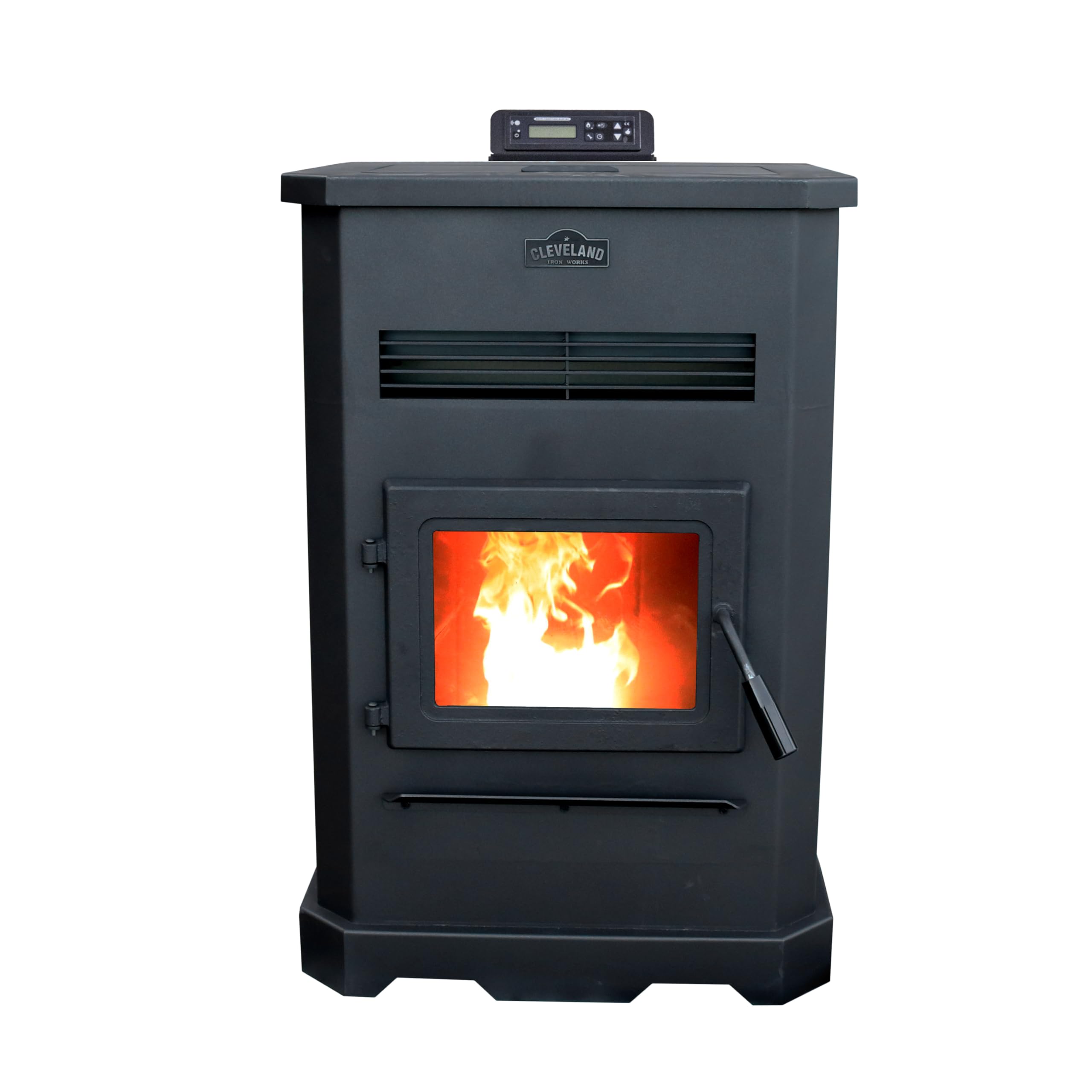
6. Cleveland Iron Works Large Pellet Stove, 130lb Hopper
Three whole bags of pellets in the bin, so refills become rare.
Hopper capacity is the whole story here. At 130 lb it dwarfs the 25 lb bin on the HP40 Alpine — a huge multiple of the fuel on board, and the sort of gap that turns twice-daily refilling into an occasional chore. Owners confirm it swallows three full bags with room to spare. It heats 2,000 to 3,000 square feet at 29,501 BTU per hour, so the coverage is big even though the output figure is modest.
That combination — large space, moderate BTU — tells you it is built to run long and steady rather than blast heat. Cast iron construction and built-in Wi-Fi round out the package, letting you adjust it remotely. What people praise most is straightforward effectiveness: it warms a 2,000 to 3,000 square foot space, and warms it quickly.
The catch is the footprint and the weight. At 209.4 pounds with a big cabinet to house that hopper, it needs a dedicated floor spot. And a huge bin only helps if you keep it fed — budget for pellet storage nearby.
The standout spec: a 130 lb hopper that holds roughly three bags, the largest fuel capacity in this group.
Where it asks more: 209.4 pounds of cast iron needs a committed spot, and that big output gap means slower, steadier heating than the BTU leaders.
Pick it if: refilling is the chore you hate most and your space runs to 3,000 square feet.
skip it if: you want fast, high-BTU blasting heat — this one is built for the long haul.
7. PelPro PP70 Pellet Stove, 70 lb Hopper, 42,500 BTU
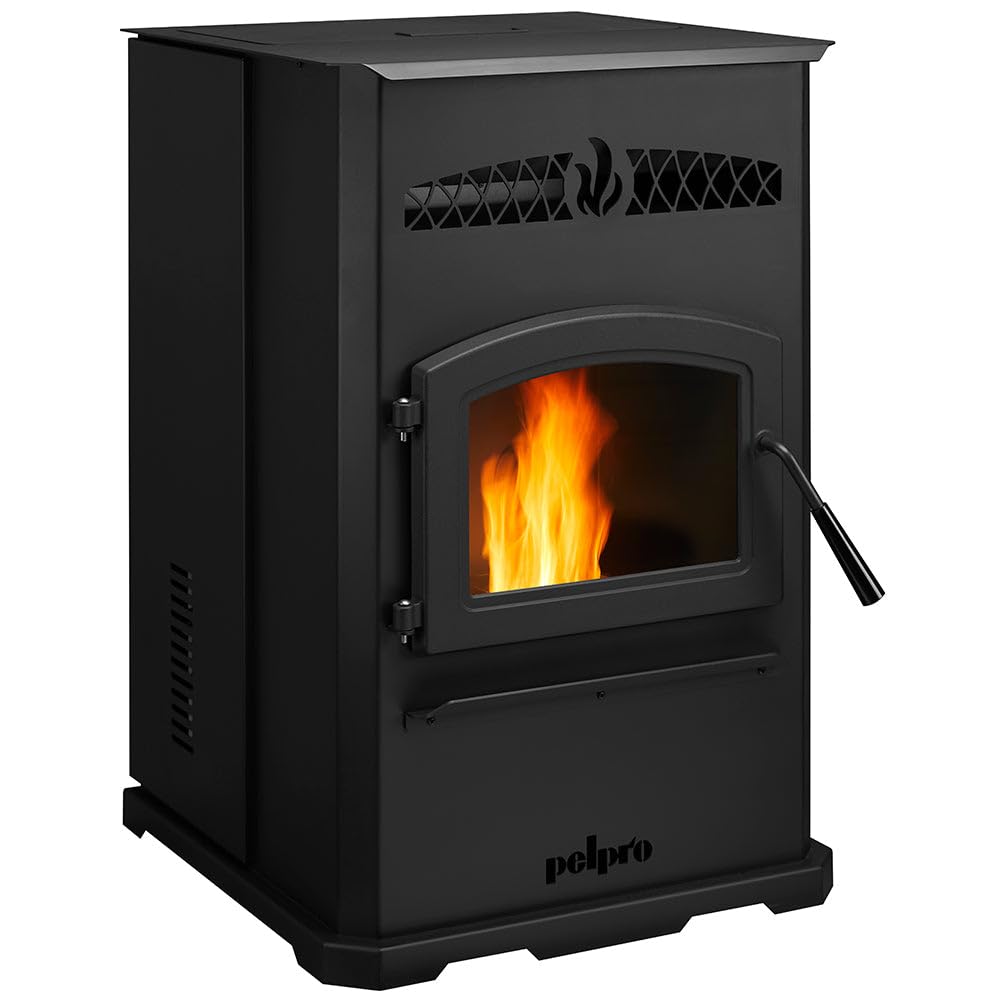
A 42,500 BTU heater with the highest efficiency rating in the group.
Here is a specific pairing worth your attention: 88.5% EPA-certified efficiency alongside 42,500 BTU per hour. Efficiency is the share of fuel energy that becomes room heat rather than exhaust, so a high number means less of your pellet bag goes to waste. Compare that to the HP40 Alpine’s 81% and the difference is real on a cold month’s running. Coverage is 2,000 square feet.
The 70 lb hopper holds up to two days of fuel by the maker’s estimate, so refills are infrequent for the output. A 300W auto-igniter lights it for you, and a dial control gives 10 variable heat settings — more granularity than the five-setting units here. A quiet variable-speed blower and built-in thermostat complete the package, and it is made in the USA.
The compact 22 inch wide by 33 inch high body suits a garage, shop, cabin or mobile home, and a fresh-air kit is included for the mobile-home case. The honest gap: this is a less-reviewed model, so the lived-in feedback trail is thinner than on the established picks.
Numbers that do the talking
- 88.5% EPA-certified efficiency, the highest figure here
- 42,500 BTU at 2,000 sq. ft. coverage
- 70 lb hopper for up to two days of fuel
- 10 variable heat settings and a 300W auto-igniter
What to keep in view
- Less review history to lean on than the long-running models
- The two-day estimate assumes low running; cold spells will shorten it
Worth it for: buyers who want the most heat per pellet bag and a fine-grained 10-setting dial.
Only if: you are comfortable with a newer model that has less owner history behind it.
8. Cleveland Iron Works Bayfront Pellet Stove, 66lb Hopper

A glass-fronted heater that makes almost no noise while it works.
If you want to watch the fire, the bayfront design is why this one exists. It heats 1,800 to 2,500 square feet at 30,173 BTU per hour, with a 66 lb hopper — bigger than the HP22’s 55 lb bin, and paired with less coverage than the 2,800 square foot units. Different trade, same principle: capacity over raw power.
The trait people value most is quietness. Owners describe it as very quiet, which is exactly what you want from a stove in a living room. The temperature control is also a highlight: it comes on automatically when the room drops to your set point. Built-in Wi-Fi lets you adjust it from your phone, and cast iron gives it a solid feel.
Installation is where opinions split. Some find it simple; others say the instructions could be better, so plan on a careful read of the manual. Cleaning is also a point of disagreement, and the flame control gets the toughest feedback — expect to spend time learning the optimal setting. Worth knowing it needs a phone number for truck delivery scheduling.
What owners love: it runs very quietly and brings itself on when the room reaches your temperature, with Wi-Fi for remote adjustment.
Where it divides opinion: installation and cleaning get mixed reviews, and flame control is the recurring frustration — expect a learning curve.
Best for: living rooms where a visible fire and near-silent operation matter more than the biggest hopper.
Reconsider if: you want a set-and-forget fire — this one rewards fiddling to find the right flame setting.
9. Pellethead Freedom PS21 Pellet Stove

The storm-ready heater that keeps running when the grid does not.
Power outages are the hidden weakness of pellet stoves: lose electricity, lose the auger and blower, and the fire dies. This Pellethead runs on two 12V batteries (sold separately) through a 24V DC system rated for over 40 hours — a genuine difference if you live somewhere storms knock out the grid. It heats 800 to 1,800 square feet at 34,700 BTU via a stacked tube heat exchanger, which spreads the warmth consistently.
Controls are above the ordinary: a built-in touchscreen, a mobile app and a remote, plus multiple operating modes. The Marble White finish and swappable side panels — you can fit standard tiles — make it the most customizable unit on this list. A 5-year limited warranty and U.S.-based support back the DIY-friendly build.
Feedback on performance is strong, and a recurring detail is fast ignition — around 4 minutes by one account — with strong heat output. The caveats: 800 to 1,800 square feet is on the smaller side, and WiFi connectivity is among the features that draw mixed comment. Remember the batteries are extra.
The defining spec: over 40 hours of runtime on a 24V battery system (batteries sold separately) — real insurance against an outage.
Don’t overlook: the coverage tops out at 1,800 square feet, and the touchscreen and app controls are only as good as your comfort with the setup.
Reach for it if: you need a heater that survives a storm-driven outage and want a firebox you can personalize with tiles.
Look past it if: you are heating a very large room — 1,800 square feet is the limit here.
10. HP22i Pellet Stove Insert
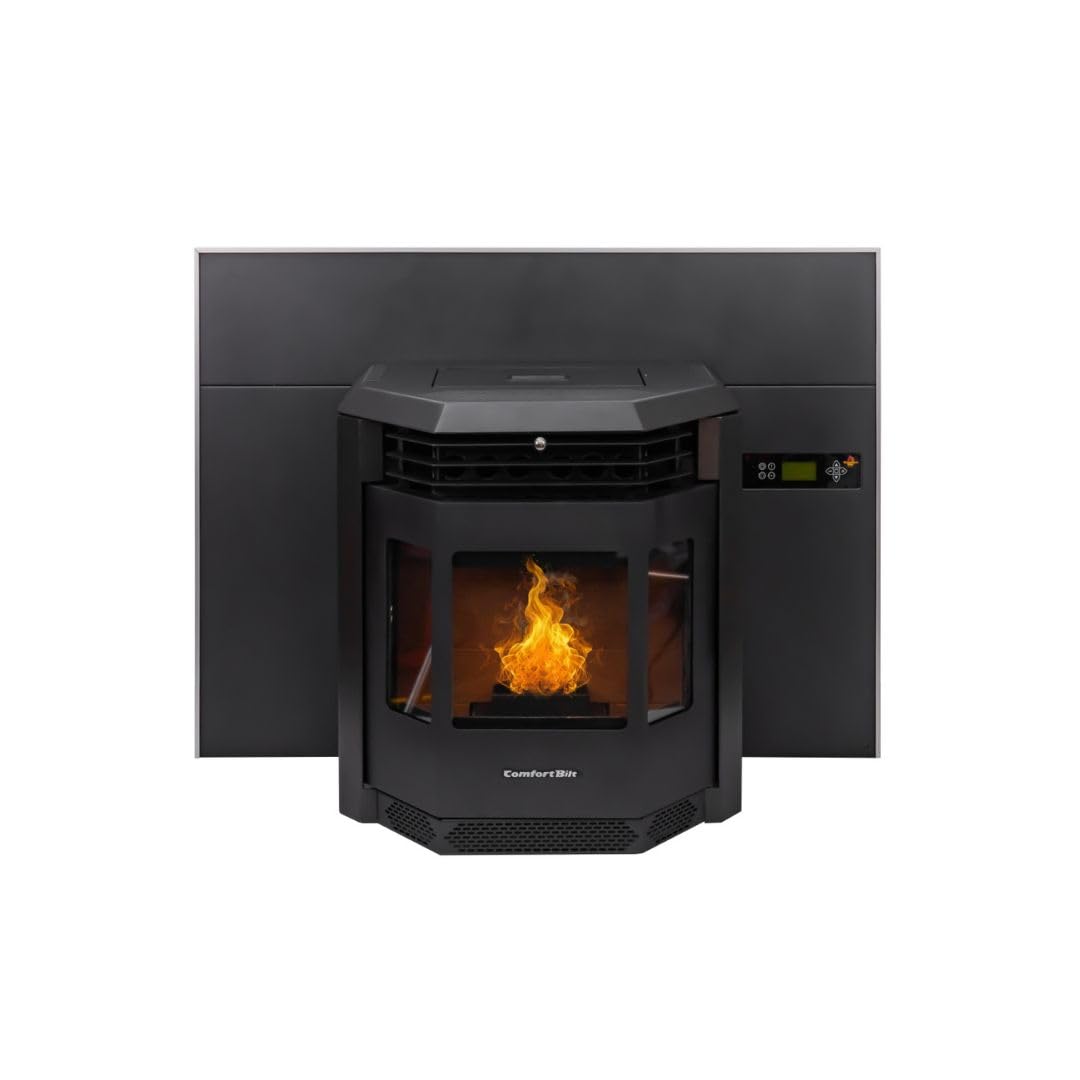
Turns an existing fireplace opening into a self-feeding heater.
This is the one to consider if you already have a fireplace and want it working again. It is a zero-clearance insert (built to drop straight into a fireplace opening), and it heats up to 2,800 square feet at 41,000 BTU per hour — matching the freestanding HP22 for output. The 47 lb hopper gives up to 18 hours of burn time, and a finishing shroud plus ash vacuum are included so the install looks clean.
Five power settings, a programmable thermostat and auto ignition make it as convenient as the freestanding models. A bay-view window keeps the fire visible, and the powerful room blower pushes heat out across the floor rather than letting it pool at the ceiling. EPA and CSA certification is in place.
What buyers like is the speed — it heats the house quickly — plus solid build quality and easy installation into an existing fireplace. Energy efficiency is a plus, and lower everyday heating bills are a common theme. The reliability picture is the mixed note: some units work away without fuss, while others shut down for minor reasons. That is the one thing to watch.
Why an insert pays off here
- Zero-clearance design fits an existing fireplace opening
- 41,000 BTU, coverage to 2,800 sq. ft., and up to 18 hours of burn time from a 47 lb hopper
- Shroud and ash vacuum included for a finished install
The one that needs watching
- Reliability splits: some run without fuss, others shut down for minor reasons
- The 47 lb hopper is smaller than the 55 lb on the freestanding HP22
Go this way if: you have a fireplace opening to fill and want 2,800 square foot coverage without a freestanding cabinet.
Think again if: you want the largest possible hopper — the freestanding HP22 holds more fuel.
Know the Specs
Hopper Capacity (pounds)
This is how much pellet fuel the bin holds. It decides how often you refill, not how hot the stove runs. A 25 lb bin means frequent trips; a 130 lb bin means rare ones. Bigger bins also mean bigger, heavier cabinets, so weigh refill tolerance against floor space.
Heat Output (BTU per hour)
A BTU is a unit of heat energy. More BTU per hour means more heat going into the room. But the number only means something alongside coverage: a lower BTU can still heat a big space if the stove runs steady, and a high BTU in a small room just means running it low.
Coverage (square feet)
This is the manufacturer’s estimate of how much floor space the unit can heat — often “under normal” or “mild” temperature conditions, which matters in a cold snap. Buy for the room you heat every day, not the whole floor plan, and you will not push the stove to its ceiling.
Efficiency (%)
Efficiency is the share of the fuel’s energy that becomes room heat rather than going up the vent. Higher is better for running cost. It appears on only some models here, so use it to compare like with like when the figures are quoted.
Common Questions
Can a pellet stove replace a wood-burning fireplace?
How often do I need to refill the hopper?
Do pellet stoves need electricity to run?
Will a pellet stove heat my whole house?
What is the difference between a pellet stove and a pellet insert?
Do I need a chimney or can it vent through a wall?
How much upkeep does cleaning involve?
Can a pellet stove run on different pellet brands or softwood pellets?
Is a bigger hopper always better?
Do these stoves come with a warranty?
The Bottom Line
For most buyers, the strongest wood pellet fireplace here is the HP22 Pellet Stove because it pairs 2,800 square foot coverage and 41,000 BTU with a 55 lb hopper good for up to 20 hours — and reliability is the trait buyers praise most. If a big room and the fewest possible refills matter more, the Cleveland Iron Works Large PS130W and its 130 lb hopper is the one. And for anyone heating a cabin, garage or sunroom where 1,500 square feet is the real number, the HP40 Alpine fits the space at 81% efficiency.
How we choose
We do not accept paid placement. Every pick is matched to a real buyer and a real use-case; we do not hands-on test units.
Sources
Specifications: manufacturer listings and product documentation. Review insights: verified customer reviews, as of November 2026. Pricing: not shown on this page (it changes often); check the current price via the retailer link.
As an Amazon Associate, Tactical Gear Guy earns from qualifying purchases. This does not affect which products we feature.