Specs are compiled from manufacturer listings and verified buyer reviews and can change over time — please confirm the key details on the product page before buying.
You want a trail shoe that grips from the first mile, with no break-in period. It should grab loose dirt on the climbs and keep your toes from slamming the front on the descents. The short answer: if you have wide feet and want a roomy toe box with zero drop, the Altra Lone Peak 8 is the safest place to put your money. It averages 4.5+ stars across 800+ ratings. Every other pick below wins on a different trail problem — mud, rocky descents, long cushioned days, or a tight budget.
This guide is built by comparing the manufacturers’ published specifications and the patterns across verified customer reviews, so you get each pick’s real strengths and trade-offs instead of marketing spin.
Trail shoes live or die on three numbers: lug depth, drop, and stack height. The list below sorts them by which of those numbers actually suits your terrain. Here is the shortlist of the best Zapatillas De Trail Running for wide feet, muddy climbs, and long cushioned days out.
Top Picks

How To Choose The Best Zapatillas De Trail Running
The mistake most first-time trail buyers make is shopping the way they shop for road shoes. On pavement, soft cushioning is everything. On dirt, cushioning is only half the story — the other half is whether the rubber underneath actually bites. A plush shoe with shallow lugs turns into a sled the moment the trail gets wet.
Start with the outsole, not the cushioning
Lugs are the raised bumps under the sole, and their depth and shape decide grip. Deep, widely spaced lugs shed mud and dig into loose dirt. Shallow, tightly packed lugs roll smoothly on hardpack and road but lose their hold on wet roots. The Altra Lone Peak 8 uses a MaxTrac outsole with TrailClaw lugs placed under the metatarsals — the bones just behind your toes — which adds bite exactly where you push off on a climb.
Decide your drop before you fall in love with a colorway
Drop is the height difference between the heel and the toe, measured in millimeters. A 0 mm shoe puts your heel and forefoot at the same height, closer to how you stand barefoot. A 4 mm or 5 mm shoe tilts you very slightly forward and asks less of your calves. Neither is better — but if you are new to low-drop shoes, give yourself a few short runs before a long one.
Match stack height to your longest day
Stack height is the total foam under your foot, in millimeters. The Topo Ultraventure 4 sits on a 35 x 30 mm platform, which gives you more foam between your foot and a sharp rock. A lower stack like the 25 mm on the Lone Peak 8 gives more ground feel but less protection on rock-strewn descents.
Check your toe splay against the upper
Trail running pushes your foot forward on every descent. If the toe box is narrow, your toes jam the front of the shoe and your toenails pay for it. A FootShape or roomy toe box lets toes spread wide, which is why so many wide-footed runners gravitate to Altra and Topo builds.
Side-by-Side Comparison
| Model | Best For | Weight | Drop | Outsole | Amazon |
|---|---|---|---|---|---|
| ALTRA Women’s Lone Peak 8★ Best Overall | Wide feet and all-day trail comfort | 10.7 oz / 303 g | 0 mm | MaxTrac with TrailClaw | Amazon |
| New Balance Fresh Foam X Garoé V2Budget Champion | Budget-friendly trail-and-road crossover | — | — | AT Tread | Amazon |
| Merrell Women’s Antora 4Most Comfortable | Everyday comfort on moderate paths | — | — | — | Amazon |
| ALTRA Men’s Experience Wild 2 | Grippy low-drop trail speed | 10.4 oz | 4 mm | MaxTrac | Amazon |
| New Balance MT10V1 Minimus Trail | Minimal, natural-feel trail running | — | — | Vibram with flex grooves | Amazon |
| Topo Athletic Women’s Ultraventure 4 | Long cushioned days on mild trails | — | 5 mm | Vibram XS Trek EVO | Amazon |
| Nike Men’s Pegasus Trail 5 | Dirt-to-road transitions | — | — | ReactX foam midsole | Amazon |
| Merrell Women’s Agility Peak 5 | Max cushion on varied terrain | less than 10.6 oz | — | — | Amazon |
| New Balance Fresh Foam X Hierro V9 | Wet, rocky, technical trails | — | — | Vibram Megagrip, 6mm lugs | Amazon |
Detailed Reviews
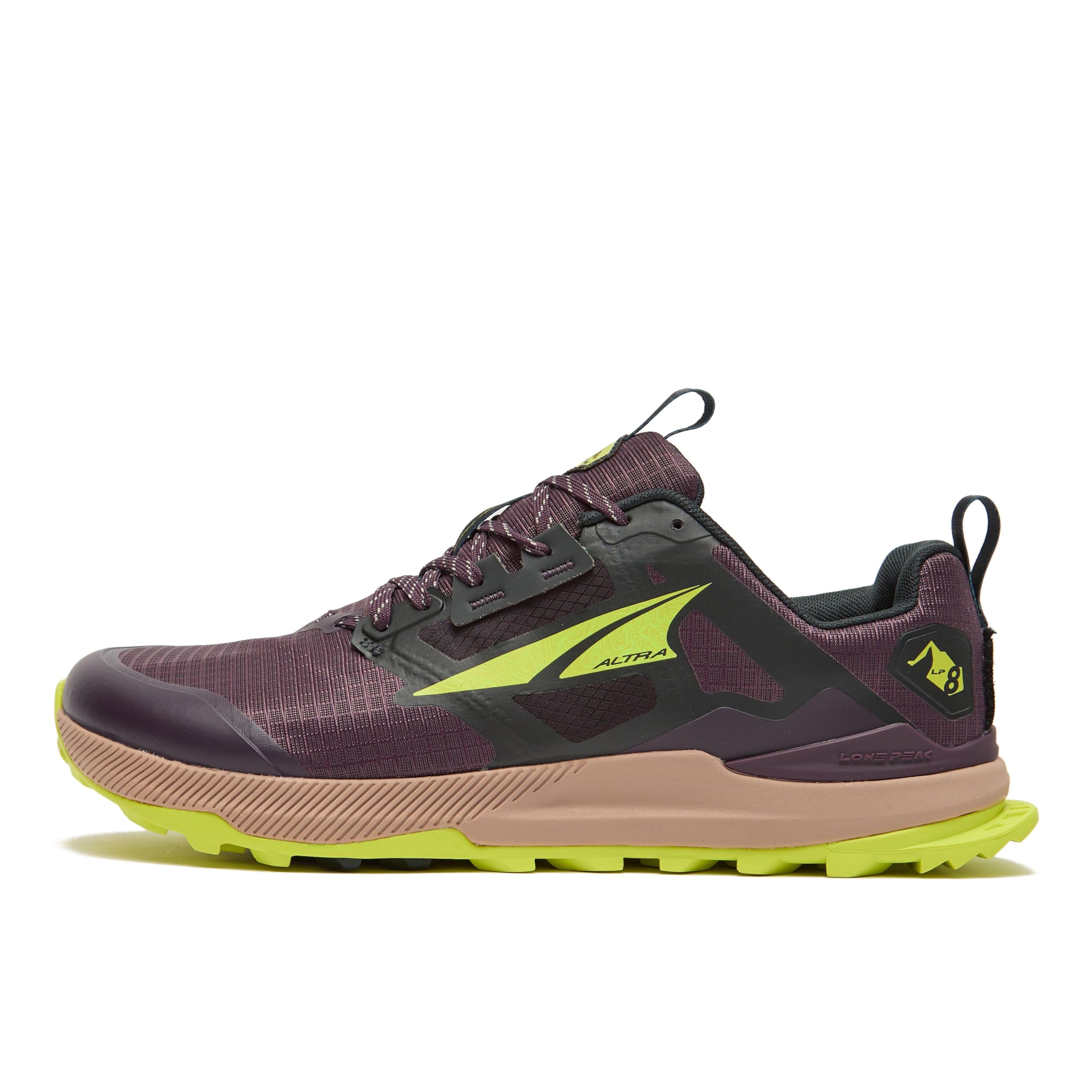
1. ALTRA Women’s Lone Peak 8 Trail Running Shoe
Our pick — 4.5+★ from 800+ verified ratings; the strongest balance of quality and price.
The wide-toe-box trail shoe that lets your toes spread and your heel sit level with the ground.
If your feet have been squeezed into narrow shoes for years, this one feels like taking your socks off. The FootShape toe box is the roomiest Altra builds, and it sits on a Balanced Cushioning platform that places your heel and forefoot at the same distance from the ground. That 0 mm drop is the whole point: you land closer to how you stand barefoot, and your stride stays your stride instead of getting forced into a heel-first pattern.
You get grip from a MaxTrac outsole, a sticky rubber compound, so your foot holds on loose dirt. TrailClaw lugs — canted bumps angled under your metatarsals (the bones behind your toes) — add traction right where you push off. The upper is a ripstop mesh, a woven fabric with a grid of reinforcing threads that resists snags on brush. The whole shoe weighs 10.7 oz / 303 g. That is heavier than the Altra Experience Wild 2 at 10.4 oz — a small gap you will not notice in the hand but might on a fast climb. What wins people over here is the build: buyers report it as among the most-praised aspects on the listing, and the toe box comes a close second.
The honest catch is cushioning. The platform is a 25 mm stack, which is deliberately on the leaner side, and it is the one trait buyers split on — some want more foam underfoot on long rocky descents. If you want a plush ride for big-mile days, look at the Hierro V9 or the Ultraventure 4 instead. If you want ground feel and toe room, this is your shoe.
What Makes It The Pick
- Roomy FootShape toe box lets toes spread on descents, so nails stop jamming the front
- 0 mm drop with Balanced Cushioning keeps heel and forefoot level for a natural stride
- MaxTrac outsole with TrailClaw lugs adds bite under the metatarsals on climbs
- No real break-in period — lace up and go
Where It Gives Ground
- 25 mm stack is leaner than cushioned rivals, so rock feel comes through
- Cushioning is the trait buyers split on most
- 10.7 oz / 303 g is on the heavier side against some low-drop rivals
Reach for this if: you have wide feet, want zero drop, and want a shoe that feels broken-in on day one.
Look elsewhere if: you need deep foam underfoot for long, rocky descents.
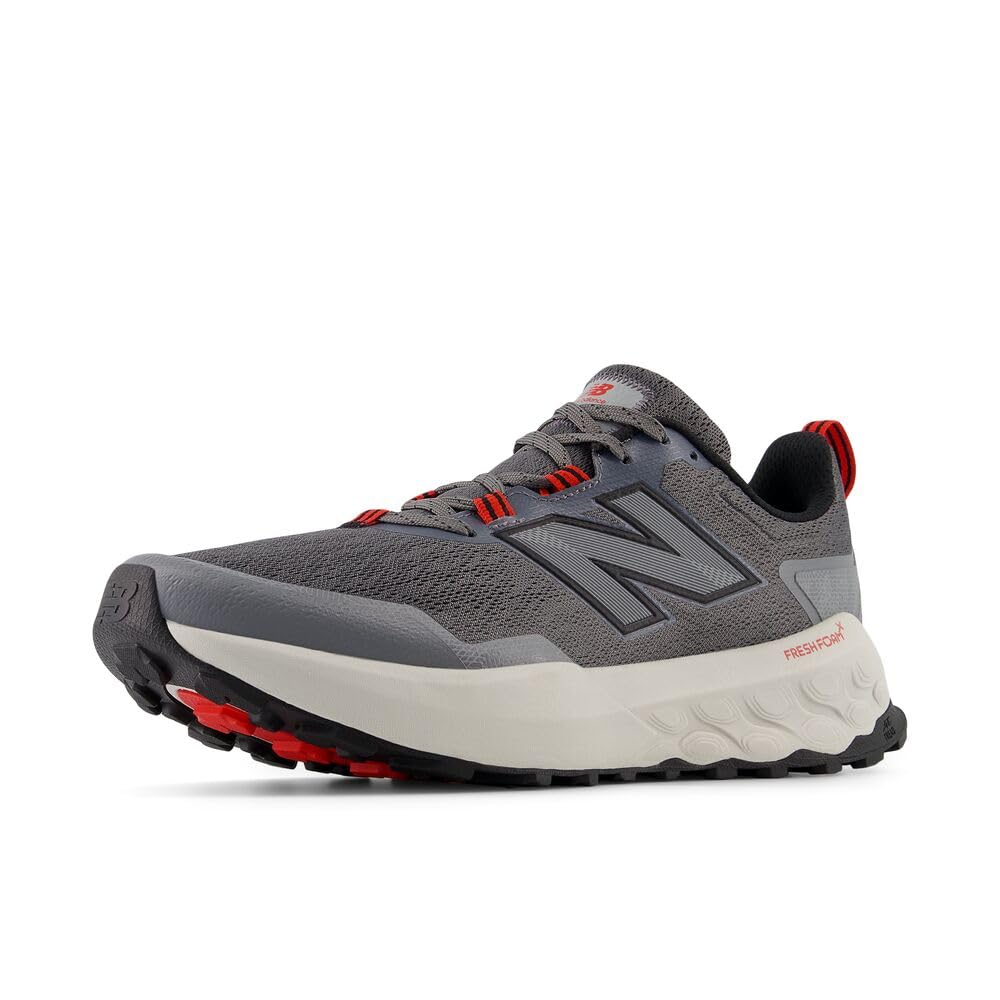
2. New Balance Men’s Fresh Foam X Garoé V2 Trail Running Shoe
A lightweight crossover that runs from dirt path to pavement without demanding you commit to one surface.
You get a soft ride from a Fresh Foam midsole, an ultra-soft foam layer under your foot, paired with an AT Tread outsole for grip on and off the road. In plain terms: it is a shoe for the runner whose trail run starts with a half mile of sidewalk. The supportive upper uses smooth overlays — bonded panels instead of stitched seams — so there is less to rub against your foot on a long day.
Build quality is the trait buyers rate highest, and appearance comes second, which tells you this is one people keep wearing off the trail too. What you need to know honestly: durability and fit both draw mixed feedback, and there are reports of the lace loops breaking after two walks. That is not the norm, but it is a real thing to watch with thin trail lacing. The cushioning also splits opinion — some love the soft ride, others find the sole too soft for technical ground.
The value read: this is the entry point to a real foam midsole and a trail-rated outsole, and it costs less than most of the list.
Terrain fit: gentle paths, fire roads, and mixed dirt-to-pavement loops suit it best — save the wet roots and steep rock for the Megagrip options further down.
Best for: the runner who splits time between pavement and mild trail and wants one shoe to do both.
Think twice if: you push into technical, wet, or rocky terrain where sole softness costs you grip.
3. Merrell Women’s Antora 4 Trail Running Shoes
Merrell’s best-selling trail shoe, rebuilt for clean looks and feet that do not ache at mile ten.
Comfort is the headline here, and the fit backs it up. Buyers describe it running true to size with plenty of toe room, so your foot sits where the shoe was designed to put it. Arch support and stability come up repeatedly, and the design avoids the bulky, over-engineered look that puts some runners off trail shoes. Plenty wear them all day, not just for a run.
The Merrell Antora 4 is not trying to be a mountain goat. It is a versatile, everyday trail companion for the woman who runs a few miles on a packed path and then goes about her day. Appearance draws steady praise too — the colorways land well.
What it nails: comfortable from the first step, true-to-size fit with toe room, and enough stability to keep you steady on uneven ground. Comfort and quality lead the praise, with fit not far behind.
What it does not chase: there is nothing in the spec data about aggressive lug depth or a race-first build. If your runs are technical or muddy, look at the Agility Peak 5 or the Hierro V9.
Buy it if: you want a comfortable, good-looking trail shoe for everyday miles and casual wear.
Pass if: your trails are wet, steep, and technical.
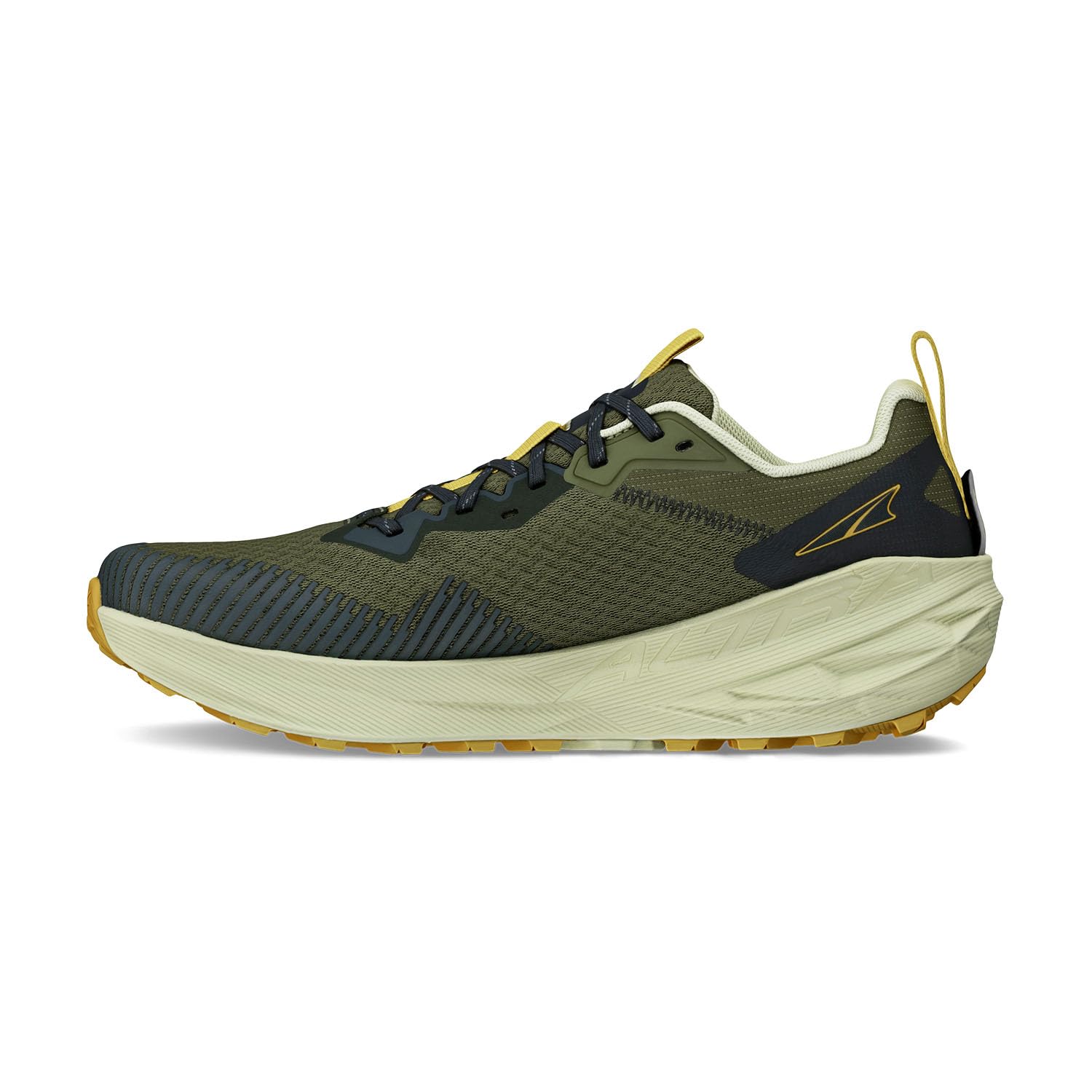
4. ALTRA Men’s Experience Wild 2 Trail Running Shoe
A 4 mm-drop trail runner that rolls you forward off the toe and keeps a wide box up front.
The Experience Wild 2 is the more athletic cousin of the Lone Peak 8. Where the Lone Peak sits at 0 mm drop, this one carries a 4 mm drop and a rocker-shaped sole — a sole that curves up at the toe to roll your foot forward. Left and right feet often differ in length, so the toe-off geometry here helps you land and push off without thinking about it. The stack is higher at 28 mm / 32 mm, so there is more foam under you than the Lone Peak’s 25 mm.
Comfort is what wins people over, with the fit close behind. The upper is updated mesh for better breathability, and a new lacing eyelet tightens the fit over the midfoot. Toe protection got a boost from a heavier TPU overlay, which is a rubbery plastic shell that shields your toes from rocks. There is also a GaiterTrap — a small anchor point so you can clip a trail gaiter on and keep debris out of the shoe.
On the honest side, this shoe asks you to know your fit. The toe box draws mixed feedback — some love the room, others find it runs small. Durability is the other split, with reports of them falling apart after three months against plenty who find them solid. And at 4.0+ stars, this is a lower-rated pick than the Lone Peak, so treat the fit carefully and measure before ordering.
The trade-off to weigh: a rocker sole with a 4 mm drop may take some getting used to if you have never run in a low-drop shoe.
Fit note: measure both feet and size to the larger — the roomy box is the upside, but the sizing is the risk.
The right buyer: an experienced trail runner who wants toe room with a forward roll off the ground.
Not for you: if you are new to low-drop shoes or want a plush, stable platform, start with the Lone Peak instead.
5. New Balance Men’s MT10V1 Minimus Trail Running Shoe

The no-frills trail shoe for people who want to feel every root and rock underfoot.
New Balance brought back the fit of the original Minimus. A Vibram outsole runs under your foot with flex grooves cut into it so the sole can bend with your stride. The upper is built to hold your forefoot steady while still letting toes splay, and the midfoot wrap keeps the whole thing from sliding around on rough ground.
Comfort and lightness are the two things buyers praise, and versatility is right behind — this is a shoe that crosses over into gym and cross-training work easily. The sizing note in the listing is worth repeating: left and right feet can differ in length or width as much as a full size, so measure both and buy for the larger foot. If you are between sizes, size up.
What you get in the hand: a lightweight, comfortable trail shoe with real Vibram rubber under it and a fit that stays put on technical ground.
What can catch you out: the fit runs small for some, and durability is mixed — this is a shoe to rotate, not wear every single day for a season.
Pick it when: you want a natural, close-to-the-ground feel and a shoe that doubles for cross-training.
Skip it when: you want deep cushioning or a durable everyday trail shoe.
6. Topo Athletic Women’s Ultraventure 4 Trail Running Shoes

A high-cushion trail runner built for long days on mild-to-moderate ground and a roomy toe box.
The Ultraventure 4 sits on a 35 x 30 mm platform with a 5 mm drop, which is a lot of foam between your foot and a sharp rock. The ZipFoam midsole is Topo’s proprietary foam, which the brand claims is springier than standard EVA and holds its rebound longer. The upper is recycled mesh with added PU print — stiffer material bonded on — over the abrasion zones, so it holds up where a branch is likely to catch it.
The outsole is Vibram XS Trek EVO, a rubber compound rated for multi-surface traction and durability, so moving from trail to road is a smoother transition than most. Toe box and traction are the two things buyers praise most, and a deep heel cup keeps the fit locked. Arch support is regularly called out as strong.
What Sounds Right About It
- 35 x 30 mm platform puts real foam under a long run
- Vibram XS Trek EVO outsole handles trail and road without a jarring change
- Roomy anatomical toe box lets toes spread on descents
- Recycled mesh upper with PU reinforcement in the abrasion zones
Where Your Money Weighs
- Durability is the one trait buyers come down hardest on, so treat the shoe well
- Some find it not worth the premium price; others say it is
- Comfort is mixed against the roomier sizes
Choose it if: your days are long and mild, not muddy and technical, and you want cushion and a roomy box.
Look elsewhere if: you need the shoe to survive abuse for multiple seasons.
7. Nike Men’s Pegasus Trail 5

The shoe you wear when the trail starts at your front door and the road stays part of the run.
Nike’s Pegasus Trail 5 runs on a ReactX foam midsole — a foam that returns energy with each step — and it is built to cross the divide between dirt and pavement. For a lot of runners, this is the practical choice: you run out the door on asphalt, hit the trail for a few miles, and come back the same way. A trail shoe with a road-friendly sole handles that loop better than a dedicated mud shoe that feels clunky on hardpack.
Owners mention the quality and comfort hold up, which is the core of what you want in a shoe you use every day. This is not the pick for a technical, wet, root-covered descent — the listing does not describe aggressive lugs or a deep grip pattern. It is the pick for the everyday trail-loop runner who does not want to think about what is underfoot.
Daily-run read: ReactX foam under your foot gives a responsive ride on mixed surfaces, and the dual-threat design means one shoe covers the road stretch and the dirt stretch.
Off-road limit: where it lacks is technical grip — save the wet roots for the Hierro V9.
Best matched to: runners whose trail starts after a road warm-up and who want one shoe for both.
Think again if: your trail is technical and wet, and grip is the priority over a smooth ride.
8. Merrell Women’s Agility Peak 5 Trail Running Shoes

Merrell’s max-cushion trail runner with a rocker that rolls you forward and a sculpted heel cup.
The Agility Peak 5 took a popular Merrell trail shoe and rebuilt it for more comfort and less weight. The rocker is increased, and the shoe comes in at less than 10.6 ounces — a real weight saving for a cushioned trail runner. The heel cup is sculpted to hold your heel in place, which cuts slipping on descents. If you run ultras, cross country, or a trail 5K, this is a shoe made for any condition and maximum cushion.
Appearance is what buyers comment on most — this one gets noticed, and it does not look like a heavy trail brick. Comfort comes next, with arch support and value right behind. Where it asks you to be careful: the fit is mixed, with some saying true to size and others saying it runs small, and durability is the other split — a few report they start falling apart. That is not a pattern across the whole shoe, but check sizing before you commit.
Where the cushion buys you comfort: max cushion and a rocker sole mean the shoe rolls through the stride instead of beating up your legs on long days.
What to plan for: size up if you are between sizes and rotate rather than wear daily to get years out of them.
A good fit for: the runner who wants maximum cushion and a lightweight build for long trail days.
Look elsewhere for: a shoe that will last through daily abuse or fit like a rock-solid true-to-size.
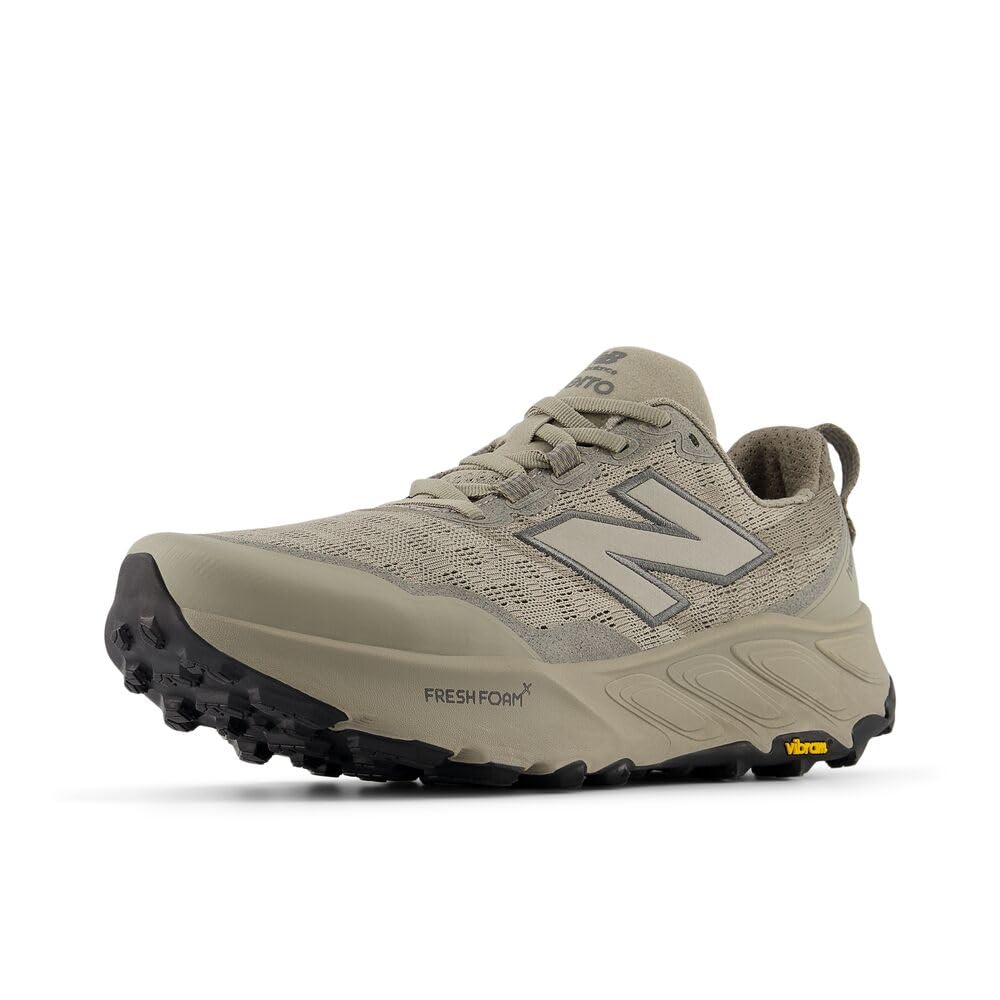
9. New Balance Men’s Fresh Foam X Hierro V9
The deep-lug trail runner built to grab wet rock and loose dirt when the path gets rough.
The Hierro V9 is the most trail-focused shoe on this list, and the specs say so. A Vibram Megagrip outsole uses a revamped tread pattern with 6mm lugs — lugs being the raised rubber bumps under the sole, and 6mm is deep enough to bite into wet and loose ground. A dual-density Fresh Foam X midsole gives you plush comfort with a more stable underfoot feel. Toe Protect technology is a reinforced front zone that shields your foot from rocks, roots, and debris, and the breathable knit upper has a gusseted tongue to keep grit out.
What buyers praise is the ride: they call these excellent for hiking and trail running, comfortable on 10-12 mile runs, and one reviewer compares the feel to walking on a trampoline. The appearance draws steady positive feedback too. The honest catch: fit is the most-discussed trait, and it splits — some find these supportive, others note they run very small and do not feel stable enough. A dual-density sole with serious lugs is not the lightest setup, so this is the pick for technical mileage, not a fast road shoe.
Why Technical Runners Like It
- 6mm lugs on a Vibram Megagrip outsole give real bite on wet and dry terrain
- Dual-density Fresh Foam X midsole combines comfort with a more stable platform
- Toe Protect front zone shields against rocks and roots on rocky descents
- Gusseted tongue keeps grit out while the knit upper breathes
What You Give Up
- Fit is split — some say true to size, others find it runs small
- Stability is also mixed for some foot shapes
- Durability draws some criticism
Take it when: your trails are wet, rocky, and technical and you need a deep-lug outsole to keep traction.
Pass when: you want a light, neutral road-to-trail shoe that feels true to size.
Know the Specs
Lug Depth and Outsole Compound
Lugs are the raised rubber bumps under the sole, and their depth decides how much bite you get. The deeper the lug, the more it digs into loose dirt and wet rock — the Hierro V9 runs 6mm lugs for just that. The rubber compound matters as much: Vibram Megagrip and Vibram XS Trek EVO are rated for wet and dry traction, while MaxTrac is a sticky compound built for grip under the metatarsals. For a muddy climb, deeper lugs win; for a smooth rail-trail, shallow lugs roll better.
Drop and Stack Height
Drop is the height gap between heel and toe in millimeters — 0 mm means level, a 4 mm or 5 mm drop tilts you slightly forward. Stack height is the total foam under your foot, in millimeters. A 25 mm stack like the Lone Peak 8 gives ground feel; a 35 x 30 mm platform like the Ultraventure 4 puts more foam between you and a sharp rock. Choose stack by your longest day, and drop by how much your calves are used to low-drop shoes.
Common Questions
What is the difference between 0 mm drop and 4 mm drop trail shoes?
Are trail running shoes okay to wear on pavement?
How do I know if I need a wide toe box?
How deep should trail shoe lugs be for muddy terrain?
Do I need to size up in trail running shoes?
What is stack height and why does it matter on the trail?
Are zero drop trail shoes better than a 4 mm or 5 mm drop?
How long does a trail running shoe last?
Will the Nike Pegasus Trail 5 work for technical trails?
Do I need a trail gaiter?
The Bottom Line
For most people looking at the best zapatillas de trail running shortlist, the winner is the Altra Lone Peak 8. It gives wide-footed runners a roomy toe box, a level 0 mm platform, and MaxTrac grip without a break-in period. If you want a technical shoe for wet, rocky trails where traction is everything, reach for the New Balance Hierro V9 and its deep 6mm lugs (the rubber teeth under the sole). And if the trail starts at your front door and the road stays part of the run, the Nike Pegasus Trail 5 handles both surfaces without compromise.
How we choose
We do not accept paid placement. Every pick is matched to a real buyer and a real use-case; we do not hands-on test units.
Sources
Specifications: manufacturer listings and product documentation. Review insights: verified customer reviews, as of November 2026. Pricing: not shown on this page (it changes often); check the current price via the retailer link.
As an Amazon Associate, Tactical Gear Guy earns from qualifying purchases. This does not affect which products we feature.