Specs are compiled from manufacturer listings and verified buyer reviews and can change over time — please confirm the key details on the product page before buying.
If you want a winter boot you can pull on without bending down, and a flat sole that lets your toes splay instead of squeezing, the short list is smaller than the marketing suggests. Most winter boots still hide a raised heel, and most slip-ons come with a stiff, narrow toe box. The three below are the ones that genuinely combine a flat, level sole with a no-lace entry and real cold-weather build.
This guide is built by comparing the manufacturers’ published specifications and the patterns across verified customer reviews, so you get each pick’s real strengths and trade-offs instead of marketing spin.
The differences that actually matter here are small: how the toe box fits, how the entry closes, and how the sole behaves on packed snow. Read the three picks and you will know which pair handles your winter. This breakdown of the zero drop slip-on winter boots for women covers every spec that decides comfort on ice.
Top Picks
How To Choose The Best Zero Drop Slip-On Winter Boots for Women
Shopping this category is mostly about filtering out boots that only look barefoot. A boot can have a wide toe box and still sit you on a raised heel, which is the exact thing a zero-drop buyer is trying to escape. Before you compare insulation or colour, lock in these four decisions.
Confirm the sole is actually flat
Zero drop means the heel and the toe sit at the same height off the ground — a 0mm difference, not a small negative one that marketing rounds down. A flat sole lets your ankle stay in a neutral position and lets your foot flex naturally. If a listing only says “barefoot feel” without naming flat or zero drop, treat it as unconfirmed and check the sole profile in the photos.
Size for the toe box, not your old boot size
A wide toe box is the whole point of this category, and it is also where most of the fit complaints come from. Buyers who order their usual winter-boot size sometimes find the volume too roomy or too snug depending on the brand’s last. Order your normal barefoot size, and expect to fine-tune with sock thickness rather than a smaller size.
Check how the slip-on entry closes
No laces does not mean one design. Some boots open with a rear pull tab and an elastic panel; others use a zip. A zip entry is fast but adds a hardware point that can rub or fail, while an elastic panel flexes but can loosen over a season. Think about which one you will actually reach for on a cold morning with gloves on.
Weigh warmth against water resistance
Insulation keeps heat in, and a water-resistant upper keeps slush out — but the two are not the same feature. A warm boot can still soak through in wet snow, and a water-resistant boot can still feel cold without insulation. Match the boot to your winter: deep dry snow asks for warmth, city slush asks for water resistance first.
Side-by-Side Comparison
| Model | Best For | Sole Drop | Entry Style | Toe Box | Amazon |
|---|---|---|---|---|---|
| Xero Shoes Women’s Mika Boots★ Best Overall | All-round winter walking | Zero drop | Slip-on | Barefoot shape | Amazon |
| HIKE Footwear Caspar Pro | Long cold-weather walks | Minimalist flat sole | Slip-on | Wide, unconstricted | Amazon |
| Hike Footwear HF Winter | Natural stride in cold | Zero drop | Slip-on | Wide toe box | Amazon |
Detailed Reviews
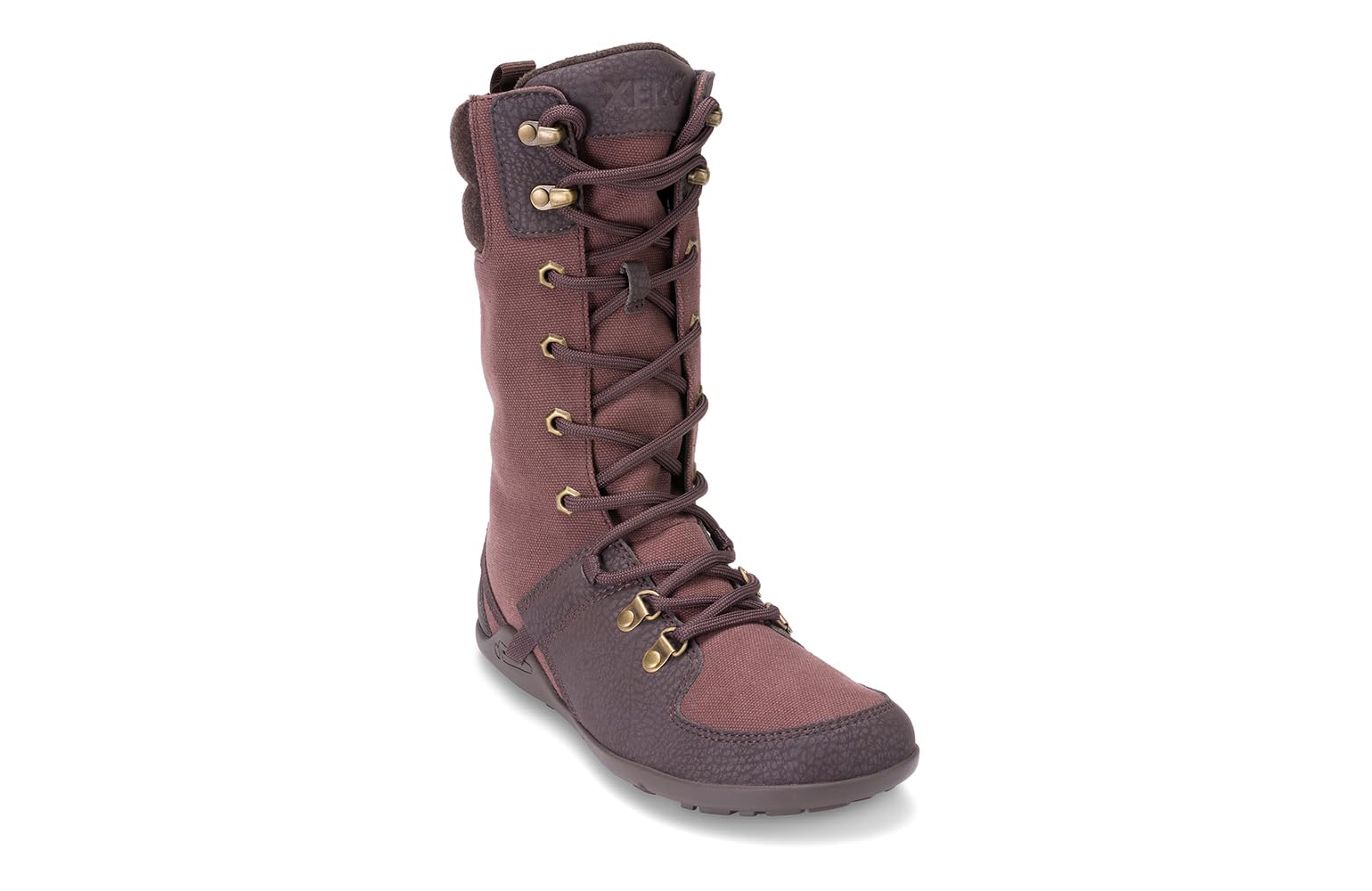
1. Xero Shoes Women’s Mika Boots
Our pick — 4.0+★ from 150+ verified ratings; the strongest balance of quality and price.
A zero drop heel that stays flat while you walk through a foot of snow.
The Mika is the pick that takes the barefoot idea and does not water it down for winter. The heel sits at zero drop, so your foot rests level from heel to toe — no lifted heel forcing your ankle forward. The upper is built as a waterproof cold-weather boot, and it slips on without laces. Comfort is the thread that runs through the whole design: the barefoot feel is what buyers describe most when they talk about why they keep wearing these.
Where this boot earns its top spot is the fit. Owners consistently point to how the foot sits inside the Mika as the reason it works — that is the number one thing they raise.
Honesty matters here: water resistance and grip draw split views. Some owners find the boot water resistant with good grip, while others report the outside getting wet and some slipping. That split is the one thing to weigh before you commit. The zip entry also draws complaints — treat it gently and it holds. If your winters are mostly deep dry snow and long walks, the Mikas deliver the barefoot feel you came for.
What Wins People Over
- Zero drop heel keeps your foot level and your ankle neutral all day
- Barefoot feel is the comfort buyers describe most about these boots
- Waterproof cold-weather build with warmth for outdoor winter activity
- Reported to handle walks through more than a foot of snow
Where It Splits Opinion
- Water resistance gets mixed feedback — some find the outside gets wet
- Grip draws split views; some report slipping on certain surfaces
- Zip entry is a point of complaint and needs gentle handling
Reach for this if: you want a true zero drop (0mm heel-to-toe) and a barefoot feel that carries you through deep snow.
Think twice if: your winters are mostly wet city slush — the mixed water-resistance feedback is the one caveat worth planning around.
2. HIKE Footwear Caspar Pro Winter Barefoot Boots

The do-everything winter barefoot boot, from the commute to a long snowy trail.
The Caspar Pro is the one that leans hardest into the minimalist idea, and it does it while staying a genuine winter boot. The sole is a non-slip minimalist design, so you feel the ground under you instead of riding on a thick platform. The upper is warm, and it slips on without the fuss of laces. HIKE builds it around a wide, unconstricted footbed — the brand’s own framing is that conventional winter shoes squeeze your feet, and this pair is meant to give them room.
What makes this the versatile pick is the range of ground it covers. Owners describe it as lightweight and easy to walk in, with buyers reporting they can walk long distances in very cold weather. The barefoot feel is the warmth and comfort angle buyers keep returning to — the boot is described as feeling like walking barefoot while still holding heat. That is a rare combination in a winter boot.
The catch is the fit expectation. Because it is roomy and unconstricted, some buyers may find they need to adjust sock thickness to get the snug feel they expect from a winter boot. If you want a boot that grips your foot firmly and gives a stiff plush platform, this is not that boot. If you want to feel the ground and cover long walks in cold weather, the Caspar Pro is the one to reach for.
The long-walk pick: a non-slip minimalist sole, a warm upper, and a wide footbed — the combination owners describe as lightweight and easy to cover distance in, even in very cold weather.
The roomy trade-off: the unconstricted fit that makes it comfortable can feel loose to someone expecting a firm winter seal; plan on adjusting socks rather than dropping a size.
Go with this for: long cold-weather walks and a barefoot feel you want to carry all day.
Pass on it if: you want a close, gripping fit — the roomy last is the honest limitation here.
3. Hike Footwear HF Winter Barefoot Boots
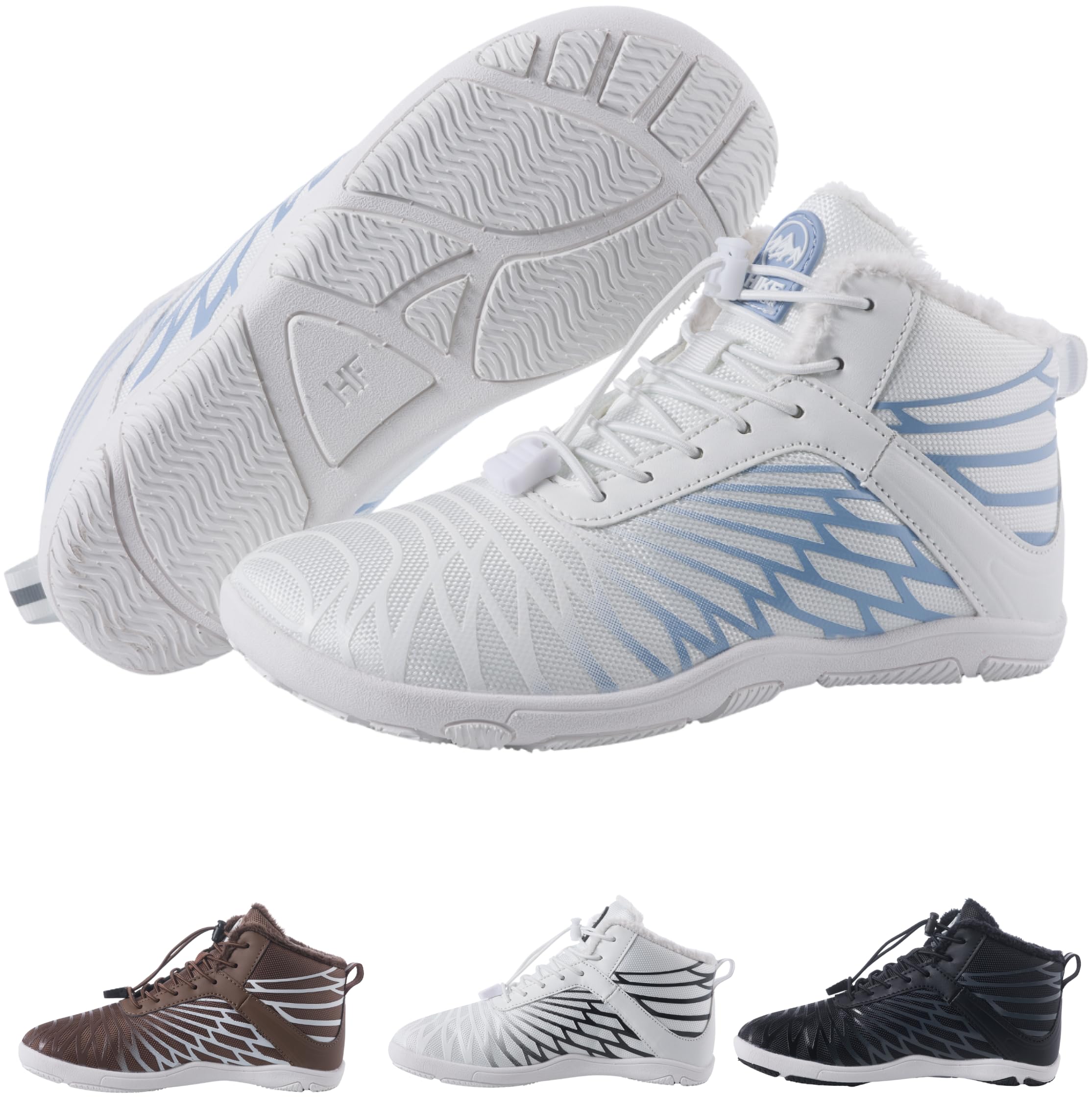
A winter evolution of a barefoot favorite, built around a wide toe box.
The HF Winter takes Hike Footwear’s best-selling barefoot shoe and rebuilds it for cold weather. It keeps the zero drop sole and the wide toe box that define the category, then adds the winter features that make it usable in snow and cold. The idea is a natural stride you can keep all winter, whether you are hiking, commuting, or just out on a cold-weather walk. No laces to tie with gloves on.
Fit is the star of the show with this boot. Owners describe it as a perfect fit, comfortable, and warm — and the fit is the aspect they raise more than anything else. The light weight follows, with buyers saying it feels like walking barefoot. Buyers also credit the natural stride with better balance.
A caveat worth knowing: the HF Winter is the newest model here, so the long-term track record is shorter than the Mika’s. That is not a flaw in the boot — it is simply a boot that has had less time on snowy sidewalks. If you want the widest toe box and a true zero drop sole in a warm slip-on, the HF Winter is a smart choice that puts fit first.
Why It Fits So Well
- Wide toe box and zero drop sole let your toes splay and your stride stay natural
- Warm build that owners describe as comfortable for cold-weather wear
- Lightweight feel that buyers compare to walking barefoot
- Buyers credit the natural stride with better balance
The Honest Limitation
- Newest model of the three, so the track record is shorter
- Zip and slip-on entry means no laces to fine-tune fit — size carefully
The fit-first standout: a wide toe box and zero drop sole that buyers report feels like walking barefoot.
Worth knowing: it is the newest boot here, so you are choosing it on the strength of its fit and warmth, not on a long service history.
Know the Specs
Zero Drop Sole
Zero drop means the heel and toe sit at the same height, so your foot rests level and your ankle stays neutral. On a winter boot this matters because a raised heel tips you forward and stiffens the stride, which is exactly what a barefoot buyer is trying to escape. A true zero drop sole flexes with your foot on packed snow instead of forcing it into one position.
Wide Toe Box
The toe box is the front section of the boot where your toes sit. A wide toe box lets your toes spread out naturally instead of being squeezed into a point, and it is the feature buyers in this category check first. It also changes how you size: you want room at the front, so order your normal barefoot size and use sock thickness to fine-tune rather than sizing down.
Slip-On Entry
Slip-on means no laces — the boot opens with a pull tab, an elastic panel, or a zip. That is what makes a no-lace boot easy to pull on with cold or gloved hands. The trade-off is that you cannot tighten the fit around your ankle the way laces allow, so the boot has to fit well from the start. Check which entry style a boot uses, because a zip adds hardware that can rub.
Winter Insulation and Water Resistance
Insulation is the material that holds heat in; water resistance is the upper’s ability to keep slush out. They are separate features and you need to weigh both for your winter. Deep dry snow asks for warmth first, while city slush asks for water resistance first. A warm boot can still soak through, and a water-resistant boot can still feel cold without insulation.
Common Questions
What does zero drop actually mean in a winter boot?
Do zero drop slip-on boots run true to size?
Are slip-on winter boots warm enough without laces?
Will a zero drop boot work for walking in deep snow?
Is a minimalist sole slippery on ice?
Can I wear thick socks with a wide toe box boot?
How do I keep winter barefoot boots water resistant?
Are zero drop boots good for foot strength?
The Bottom Line
For most buyers, the zero drop slip-on winter boots for women winner is the Xero Shoes Women’s Mika Boots because it combines a true zero drop heel, a barefoot feel, and a waterproof cold-weather build that owners mention handles more than a foot of snow. If you want the boot that covers the longest cold-weather walks, grab the HIKE Footwear Caspar Pro with its non-slip minimalist sole. And for the widest toe box and a true zero drop sole, the Hike Footwear HF Winter is the one to reach for. Whichever you pick, match the boot to your winter — warmth for deep dry snow, water resistance for city slush.
How we choose
We do not accept paid placement. Every pick is matched to a real buyer and a real use-case; we do not hands-on test units.
Sources
Specifications: manufacturer listings and product documentation. Review insights: verified customer reviews, as of November 2026. Pricing: not shown on this page (it changes often); check the current price via the retailer link.
As an Amazon Associate, Tactical Gear Guy earns from qualifying purchases. This does not affect which products we feature.