Specs are compiled from manufacturer listings and verified buyer reviews and can change over time — please confirm the key details on the product page before buying.
In a kitchen or on a wet loading dock, the outsole is what keeps you upright through a full shift. Every pick below states plainly that its outsole is slip-resistant, and each one also tells you what kind of worker it truly fits — the cook, the courier, the warehouse walker. Start with the steel-toe NINGO if you want the whole package of toe protection, puncture resistance and a non-slip sole in one boot.
This guide is built by comparing the manufacturers’ published specifications and the patterns across verified customer reviews, so you get each pick’s real strengths and trade-offs instead of marketing spin.
Wet tile, spilled oil and greasy restaurant floors are where a weak outsole shows itself. Below you will find the boots and shoes that hold their footing, plus the fit and weight details that matter before you commit to a full shift in them — a practical read on the zapatos de trabajo para hombre antideslizantes worth your money.
Top Picks


How To Choose The Best Zapatos De Trabajo Para Hombre Antideslizantes
The outsole is the first thing to check on any work shoe. Look for the words “slip-resistant” or “non-slip” written in the product description, not just in the title. Every boot here passes that first filter.
Read the sole before the looks
A slip-resistant outsole is the rubber bottom of the shoe, built with a tread pattern and compound meant to grip wet or greasy ground. Shoes for Crews uses GLADIATOR outsoles with 4HD tech on the Voyager II and TRIPGUARD on the Geo. Those names describe traction tech aimed at slick floors, and they are the reason those two cost more than the entry picks.
Decide on toe protection early
A steel toe is a metal cap over the toes that shields them from dropped loads. The NINGO boot pairs that with puncture resistance, meaning the sole resists sharp objects pushing up through it. The New Balance Cremorne takes a lighter route with a composite safety toe, which is a non-metal cap, plus Toe Protect technology. If you never drop anything on your feet, a soft-toe boot like the Voyager II keeps the weight and cost down.
Water, oil and grease are different problems
A water-resistant upper keeps splashes out but is not the same as a fully waterproof shoe. The LARNMERN boot uses a built-in waterproof isolation layer, while the Geo carries water-, oil- and grease-resistant treatments. For a dish pit or a greasy kitchen line, oil and grease resistance is the spec that keeps your footing predictable.
Weight and fit decide whether you wear them all day
Heavier boots protect more but tire your legs sooner. The Reebok Work N Cushion 4.0 is listed at 3 pounds, while the Skechers Nampa Knotly is listed at 1.4 pounds, so the two sit far apart on the scale. Leather work boots also tend to run narrow or large depending on the brand, so check the fit notes in each review before you pick a size.
Side-by-Side Comparison
| Model | Best For | Toe Type | Stated Upper / Weather Spec | Listed Weight | Amazon |
|---|---|---|---|---|---|
| NINGO Steel Toe Boots for Men★ Best Overall | Toe and puncture protection | Steel toe | — | — | Amazon |
| YINGCSM Non Slip Work BootsKitchen Ready | Kitchen and food service | — | Leather ankle boot | — | Amazon |
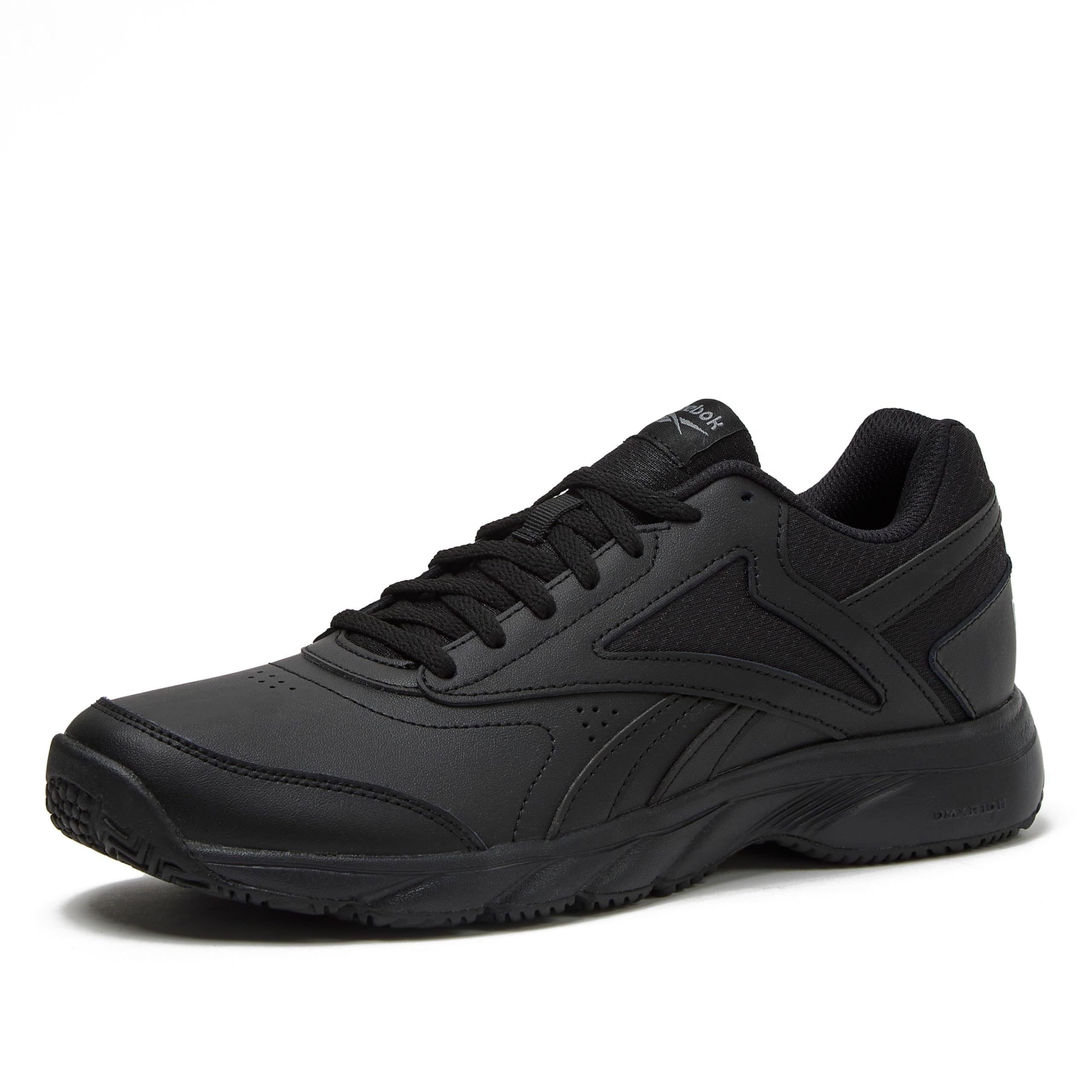
| Reebok Work N Cushion 4.0Server’s Choice | Restaurant floor comfort | — | Oil and slip resistant outsole | 3 pounds | Amazon |
| LARNMERN Men Non Slip Ankle Boots | Wet kitchens and outdoor sites | — | Waterproof isolation layer, mesh upper | — | Amazon |
| Skechers Nampa Broxtin | Easy on, easy off shifts | Soft toe | Leather upper, electrical hazard protection | 1.5 pounds | Amazon |
| Skechers Hands Free Slip Ins Nampa Knotly | Hands-free slip-on | — | Leather and synthetic upper, bungee closure | 1.4 pounds | Amazon |
| Shoes For Crews Voyager II | Rough terrain and changing weather | Soft toe | Water-resistant leather and breathable mesh | 3.59 pounds | Amazon |
| Shoes For Crews Geo | Oil and grease on hard floors | — | Water-, oil- and grease-resistant treatments | — | Amazon |
| New Balance Cremorne Composite Toe | All-day athletic feel with protection | Composite safety toe | Heat resistance, debris-free construction | 3.48 pounds | Amazon |
Detailed Reviews
1. NINGO Steel Toe Boots
Our pick — 4.5+★ from 550+ verified ratings; the strongest balance of quality and price.
Two hard jobs in one boot: a steel toe up front and a puncture-resistant sole below.
Most work shoes make you pick a side. This NINGO gives you both protections at once — a steel toe cap that shields your toes from a dropped box, plus a sole built to resist sharp objects pushing up from the floor. If you work around pallets, scrap, nails or heavy stock, that combination is the reason to start here.
What wins people over is the build itself. Buyers praise the build quality most, then the value for the price. Buyers also keep coming back to how it looks — clean enough for the job site and sharp enough that it doesn’t scream “work boot” when you stop for lunch. The materials get steady praise too, and plenty of owners wear it as a casual boot as well as a work one.
The honest catch sits in two spots: weight and comfort. Some find the boot heavy after long hours, and a few size up or down from what they expected. If you need something featherweight for a ten-hour shift on concrete, look at the Skechers slip-on lower in this list instead.
What earns its place
- Steel toe plus puncture-resistant sole covers two of the worst foot injuries in one boot
- Non-slip outsole is stated outright, not buried in the marketing copy
- Build quality is the most-praised trait in owner reviews
- Clean enough to wear off the clock, not just on site
What to know before you buy
- Weight is a common split — some find it heavy by the end of a long day
- Sizing runs differently than expected for some wearers
- Expect a break-in period before the leather softens
Reach for this if: you drop things on your feet or walk over scrap, nails or pallets and want toe plus sole protection together.
Look elsewhere if: a heavy boot drags on you — the Skechers slip-on here weighs a fraction of a full leather boot.
2. YINGCSM Non Slip Work Boots
Built for the chef who stands in the same spot for eight hours and needs the shoe to disappear.
The YINGCSM is aimed squarely at kitchen and food service work — line cooks, caterers, delivery drivers. Comfort is what the shoe is known for, and it’s the thing owners bring up most, so if you’ve been limping out of a shift on a hard floor, this is a softer landing than a stiff steel boot.
A leather ankle boot gives you a bit of ankle coverage without the bulk of a full work boot, and it reads clean enough to pass in a front-of-house role. The fit earns a nod from most wearers too, with fewer complaints than you’d expect at this level. What it does not do well is keep water out — that’s the recurring gripe, and it’s the one spec to treat as a real limit.
Slip resistance here is a split call. Some wearers trust it on wet kitchen tile, others find it less sure-footed than the price implies. Durability is also uneven — a handful report only a few months of hard use before wear shows. For the money, it’s a solid kitchen shoe; just don’t expect a bombproof boot.
Where it shines: comfort and fit on a long kitchen shift, with a leather ankle-boot look that works in front of customers.
Where it falls short: water gets through, and the slip resistance is not the surest on this list — for a truly wet dish pit, go to the LARNMERN instead.
Pick this one for: restaurant and catering shifts where all-day softness matters more than a waterproof barrier.
Not your shoe if: you stand in splash zones all day — the leather upper lets water in.
3. Reebok Work N Cushion 4.0
The waiter’s shoe: an oil-resistant outsole under a walking midsole, made for the floor between table and kitchen.
If your shift is laps of a restaurant, this is the pair designed for it. The outsole is built to resist oil and slip, the foam midsole cushions from heel to forefoot, and the INSITE Pulsion sockliner adds a springy feel underfoot. It’s a shoe you put on to keep moving, not to stand in one place.
Quality and comfort are the two things owners value most here. The DMX Ride+ midsole — a foam layer that cushions each step — keeps a long night of waiting tables from wrecking your knees. One fair warning on sizing: the fit runs inconsistent. Some find it large, some find the toe box too tight, so try before a holiday rush if you can.
Compare it to the Skechers slip-on and the difference is purpose. The Skechers gets you in and out the door fast; the Reebok cushions you through the whole shift. Its slip resistance draws mixed opinions, though, so on a genuinely greasy floor the Shoes For Crews Geo is the surer bet.
Why servers like it: the oil-resistant outsole and DMX Ride+ midsole make miles of wet tile feel less punishing.
The sizing gamble: the toe box and overall fit divide owners, so a true-to-size guess is risky.
Built for: restaurant and front-of-house workers who cover ground all shift and want a cushioned landing.
Skip if: you need the most aggressive grip on greasy floors — the Geo leads on that spec.
4. LARNMERN Non Slip Ankle Boots

The boot that turns a wet floor into a non-event, with a waterproof layer inside the shell.
The LARNMERN is the pick for a kitchen or site where water is on the ground rather than a threat. A built-in waterproof isolation layer stops liquid getting in, and the one-piece tongue design keeps splash and sand from sneaking through the gap. The mesh upper is dense enough to breathe, so your feet don’t stew over a full shift.
Underfoot, a porous cushion is made to spread your weight and keep the sole soft all day. Owners clearly rate the build — quality is the top thing they praise, followed by fit, and the non-slip outsole earns its own steady approval. That’s a strong sign for a wet-floor shoe: the grip is trusted, not just promised.
There is a real catch on water resistance, though. Some find the boot truly waterproof, others report water seeping through the bottom. The bottom is the weak point — so treat it as splash-proof and short-dunk-proof rather than built for walking through puddles. Comfort also splits, with a few finding the boot stiff at first, so give it a break-in.
The case for the LARNMERN
- Built-in waterproof isolation layer keeps liquid out of the shell
- Non-slip outsole is one of the things owners trust most about it
- One-piece tongue bars splash, sand and wind
- Breathable mesh upper helps on a hot kitchen line
The honest limits
- Water can seep through the bottom on some pairs — splash-proof, not puddle-proof
- Comfort divides owners; some find it stiff until broken in
The right boot when: the floor is wet and the splash is constant, and you want the tongue and shell to hold the mess out.
Wrong boot when: you wade through standing water — the sole is the water-resistance weak spot.
5. Skechers Men’s Nampa Broxtin Work Shoe
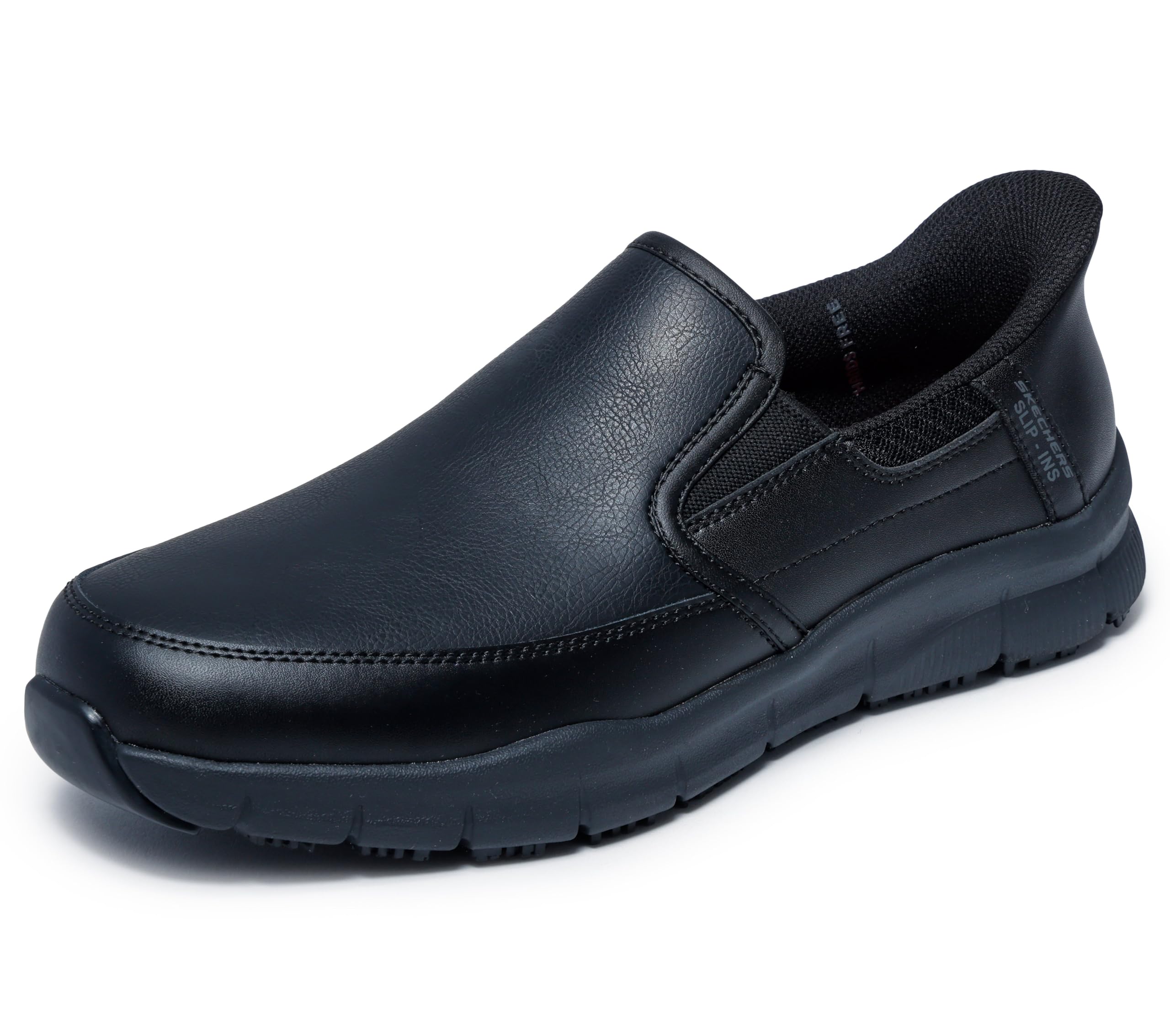
A 1.5-pound slip-on with a heel pillow, built so you can step in and go.
At 1.5 pounds, this Skechers barely registers on your foot — and that’s the point. The double-gore panels let you slide a foot in without lacing up, the Air-Cooled Memory Foam insole cushions every step, and the heel pillow holds your heel in place as you move. It also carries electrical hazard protection, a real spec for trade and site work.
The slip-resistant outsole gives you traction on the surfaces a retail or warehouse floor throws at you. Owners say it holds up well over time and looks sharp enough to wear to a formal event without a second thought. Owners wear it on the job and on weekends alike.
Where it asks for care is the sizing. Some wearers get a perfect fit, but a fair number find it a touch small or tight through the width. This is not a toe-protection shoe — no steel or composite cap here — so if you drop heavy stock on your feet, choose the NINGO instead. Its 1.5-pound weight also means this boot trades a wall of leather for something you can forget you’re wearing.
Comfort-first design: Air-Cooled Memory Foam, a heel pillow and double-gore panels make this a shoe you slide into and forget.
The sizing note: width runs tight for some, so go a half size up if you’re between sizes.
Great match for: warehouse, retail or trade work where a light shoe and quick changes matter more than a toe cap.
Look past it if: you need steel or composite toe protection — this is a soft-toe shoe.
6. Skechers Nampa Knotly

Slip in without touching a lace, thanks to a bungee closure that does the tying for you.
The number that sets this pair apart is the weight. At 1.4 pounds it is the lightest boot on this list, and it undercuts the Reebok Work N Cushion 4.0 — listed at 3 pounds — by a wide margin on the scale. If you change in and out of boots several times a day, that difference feels real.
A smooth leather and synthetic upper pairs with the bungee closure (a stretch cord that tightens without laces), and Memory Foam inside handles the cushioning. Owners describe the fit as comfortable and the look as true to the photos, and the non-slip outsole holds up on the surfaces they work on. Electrical hazard protection is in the spec sheet too.
The catch is durability — and it’s the one to weigh carefully. Some pairs start coming apart within a week, and arch support is a split opinion, with some finding it fine and others finding almost none. This is a light-duty shoe for a clean, dry role, not a boot you take to rough terrain or a wall of heavy loads.
What you feel first: 1.4 pounds and a bungee closure — no lacing, no weight, no drag.
The real question: durability. A failed pair at the one-week mark has happened, so this is a shoe for lighter wear.
Suits: fast-changing roles — warehouse, retail, food service — where a light slip-on saves minutes every shift.
Think twice if: you put hundreds of hard miles on a boot; the durability record is uneven.
7. Shoes For Crews Voyager II

A soft-toe boot for when the job leaves the building and the ground turns unpredictable.
The Voyager II is for the worker who does not stay on one surface. Its GLADIATOR slip-resistant outsoles with 4HD tech are built to grip on wet, greasy, uneven or unpredictable ground, and the water-resistant leather and breathable mesh upper turns away the weather without trapping heat.
Inside, PU comfort insoles plus padded collars and tongues cushion each step and absorb impact — the detail that matters when you’re on your feet from bell to bell. Quality and comfort are the two things that stand out most about this boot. It’s soft-toe, so you save the weight of a steel cap and get more give underfoot.
The trade-offs here are honest ones. Durability is a split verdict, with around a year of life for some and laces that come undone or wear out for others. Slip resistance and fit also divide owners, so treat it as a solid all-terrain work boot, not the surest grip in the worst grease. At 3.59 pounds it’s a substantial boot, so the trade for protection is a bit of heft.
Why it earns a spot
- GLADIATOR outsole with 4HD tech aims at wet, greasy and uneven ground
- Water-resistant leather and breathable mesh upper for changing weather
- PU insole with padded collar and tongue for all-day cushioning
- Soft toe keeps the boot lighter than a steel-cap build
Trade-offs to weigh
- Durability splits — some report a year of use, others report laces failing early
- Fit and slip resistance divide wearers
- 3.59 pounds is a real load compared with the Skechers slip-ons
For the jobsite mover: outdoor work, changing weather and uneven ground where a soft-toe boot with a water-resistant upper earns its keep.
Not the smooth-floor pick: on pure kitchen grease, the Geo is the surer sole.
8. Shoes For Crews Geo

The shoe you wear to a grease-slicked kitchen line and trust to stay put underfoot.
Of all the picks here, the Geo makes the boldest claim about hard surfaces. It pairs a proprietary slip-resistant outsole with TRIPGUARD technology and adds water-, oil- and grease-resistant treatments. That’s the combination a cook or a maintenance crew wants on a floor with spills and processing oil on it — traction where a plain rubber sole slips.
Comfort is designed in rather than hoped for. A cushioned removable insole lets you swap it for an orthotic, an Airbag heel support cushions impact, and the padded collar and tongue add softness around the ankle. Owners consistently call out the traction, with confidence on grease and wet floors being the headline. It also looks good enough for the front of house.
The caveat is scope. This is a work sneaker, so it won’t shield against a dropped load or a sharp object underfoot — no toe cap, no puncture plate. For heavyweight hazards, the NINGO is the protection-first option. The Geo’s real mission is a slick, service-facing floor, and on that job it’s hard to argue with it.
The one spec that matters: oil and grease resistance on the outsole and upper — exactly what a wet, greasy service floor demands.
The limit: sneaker construction, no toe cap, no puncture guard. It’s built for traction, not impact protection.
Made for: hospitality, healthcare, maintenance and retail floors where the surface is slick and the hours are long.
Choose another if: you need protection from falls and sharp objects — this one is a traction-first sneaker.
9. New Balance Cremorne Composite Toe
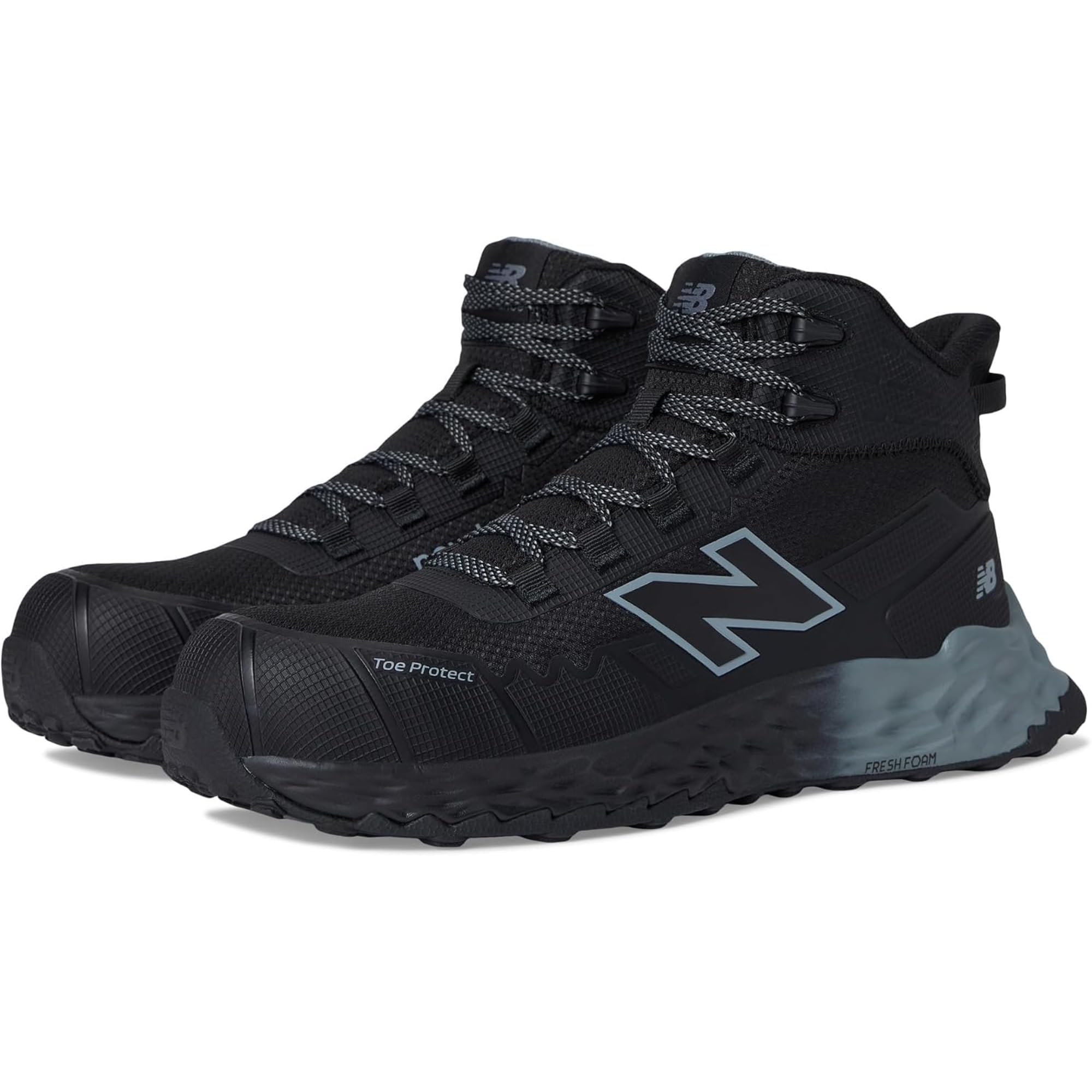
A protective work shoe that wears and moves like the running sneaker it comes from.
The Cremorne takes the athletic feel of a New Balance runner and swaps in a composite safety toe — a non-metal cap that protects your toes without the weight of steel. Toe Protect technology adds a second guard against scuffs and impact, and the slip-resistant outsole keeps grip on a wet site. Add electrical hazard resistance and heat resistance and this shoe is covering a lot of what a demanding day throws at it.
The Fresh Foam midsole is the comfort engine — a cushioned layer meant to keep you supported for a full shift, whether you’re on concrete, gravel or a factory floor. Owners back it up: comfort is what they praise most, with quality close behind, and the weight earns its own praise for how light the shoe feels. Ankle support and foot protection get consistent nods too. The wicking mesh lining and debris-free construction help keep your feet dry.
The one thing to plan for is the fit. Some find it a good fit, others say it runs narrow, so know your width before you commit. It’s also 3.48 pounds — heavier than the light Skechers slip-ons, because a composite toe and protective layers have to live somewhere. For a protective shoe you can walk all day in, that’s a fair trade.
What stands out
- Composite safety toe and Toe Protect technology guard the front of the foot
- Fresh Foam midsole brings running-shoe cushioning to a work shoe
- Electrical hazard and heat resistance are in the spec sheet
- Comfort, quality and light weight are the things owners value most
- Wicking mesh lining and debris-free construction keep feet dry
Where it asks for care
- Fit runs narrow for some wearers
- 3.48 pounds is heavier than a light slip-on, carried by the protective build
Best fit for: a worker who wants athletic cushioning plus a composite safety toe for a demanding, mixed-surface day.
Go elsewhere if: you have wide feet — the narrow cut is the recurring complaint, and the lace-up NINGO boot sizes kinder.
Know the Specs
Slip-Resistant Outsole
The sole is the rubber bottom of the shoe, and its tread and compound are what keep you upright on a wet floor. Look for the words “slip-resistant” or “non-slip” written in the product description. Shoes For Crews names its tech — GLADIATOR with 4HD on the Voyager II, TRIPGUARD on the Geo — while the YINGCSM, Skechers and NINGO simply state a slip-resistant outsole. For a kitchen or wet-floor role, confirm the outsole is stated as slip-resistant before anything else.
Toe Type and Puncture Protection
A steel toe is a metal cap over the toes, and a composite toe is a non-metal cap that does the same job with less weight. The NINGO adds puncture resistance, meaning the sole resists sharp objects pushing up. The Cremorne carries a composite safety toe with Toe Protect technology. Soft-toe boots like the Voyager II and Nampa Broxtin skip the cap to save weight — fine if you never drop loads on your feet, wrong if you do.
Water, Oil and Grease Resistance
These are three different protections. A water-resistant upper turns away splashes but is not fully waterproof. The LARNMERN uses a built-in waterproof isolation layer. The Geo goes further with water-, oil- and grease-resistant treatments, which matters most on a kitchen line where oil is on the floor. For a dish pit or a processing floor, oil and grease resistance is the spec to check first.
Weight and Listed Specs
Weight tells you how much boot you carry over a shift. On the data here, the Skechers Nampa Knotly is listed at 1.4 pounds, the Nampa Broxtin at 1.5 pounds, the Reebok Work N Cushion 4.0 at 3 pounds, the Cremorne at 3.48 pounds and the Voyager II at 3.59 pounds. Lighter shoes suit fast-moving roles; heavier boots tend to carry more protection. The listed weight and fit notes are your best guide before ordering.
Common Questions
Will a slip-resistant sole stay grippy on a greasy kitchen floor?
What is the difference between a steel toe and a composite toe?
Do these work shoes run true to size?
How long do slip-resistant work shoes usually last?
Are these shoes actually waterproof, or just water-resistant?
Can I wear these work boots off the clock as everyday shoes?
What does electrical hazard protection mean on a work shoe?
Is a lighter work shoe better for a long shift?
Will a leather ankle boot keep my feet dry in a wet kitchen?
How much should I expect to pay for reliable slip-resistant work shoes?
The Bottom Line
For most workers, the zapatos de trabajo para hombre antideslizantes winner is the NINGO Steel Toe Boot. It’s the only pick here that pairs a steel toe with a puncture-resistant sole, and the quality is the thing owners value most about it. If your floor is oil and grease, grab the Shoes For Crews Geo, whose water-, oil- and grease-resistant treatments are built for a messy kitchen line. And for a shift that starts with a slip-on and ends with no laces to tie, the Skechers Nampa Knotly is the 1.4-pound shoe to reach for.
How we choose
We do not accept paid placement. Every pick is matched to a real buyer and a real use-case; we do not hands-on test units.
Sources
Specifications: manufacturer listings and product documentation. Review insights: verified customer reviews, as of November 2026. Pricing: not shown on this page (it changes often); check the current price via the retailer link.
As an Amazon Associate, Tactical Gear Guy earns from qualifying purchases. This does not affect which products we feature.