Specs are compiled from manufacturer listings and verified buyer reviews and can change over time — please confirm the key details on the product page before buying.
Start with the pocket gimbal cameras, not a DSLR body. A small camera with a built-in stabilizer keeps your face sharp while you walk, talk, and wave your hands — and that is most of what a YouTube video needs. The list below splits cleanly into pocket gimbals, compact vlog cams, and interchangeable-lens bodies, and each review names the exact buyer it fits.
This guide is built by comparing the manufacturers’ published specifications and the patterns across verified customer reviews, so you get each pick’s real strengths and trade-offs instead of marketing spin.
Every pick below was checked for what actually matters on camera: real video resolution, stabilization, battery hours, and how the footage sounds when you speak. Here is what to know before you buy a youtube video recorder camera.
Top Picks

How To Choose The Best YouTube Video Recorder Camera
The first decision is not brand — it is shape. A pocket gimbal camera with a built-in stabilizer records smooth walking footage without any extra rig, while an interchangeable-lens body gives you shallow background blur and better low light in exchange for steadier hands or a tripod. Pick your shape first, then fill in the rest.
Stabilization: mechanical vs electronic
A 3-axis mechanical gimbal (a motorized arm that physically counter-moves the lens) keeps footage smooth even when you are walking or dancing. Electronic image stabilization, usually shortened to EIS, instead crops and shifts the frame in software to cancel shake. Mechanical generally holds up better in low light because it does not expose the sensor to motion blur while correcting.
Sensor size and where it shows
A 1-inch sensor gathers more light than a small action-cam sensor, so faces look cleaner indoors and backgrounds get softer. An APS-C or full-frame sensor goes further, but the body and lens grow too. For talking-head YouTube work, a 1-inch sensor with a wide lens covers a room comfortably.
Frame rate, bit depth, and log profiles
4K at 120fps lets you slow footage to a crawl for b-roll, while 8K30fps gives you room to crop in editing. Bit depth matters just as much: 10-bit color records far more shades than 8-bit, which is why log profiles (flat footage you color-grade later) want 10-bit or better to avoid banding.
Storage, audio, and battery planning
Check the card type the camera accepts and how many hours it records on a charge. A camera with a real mic input and a 3.5mm or mini XLR jack will out-sound any built-in stereo pair. Plan a spare battery if your shooting day runs long.
Side-by-Side Comparison
| Model | Best For | Video Resolution | Stabilization | Battery / Mount | Amazon |
|---|---|---|---|---|---|
| Insta360 Luna Pro★ Best Overall | Solo creators wanting 8K | 8K30fps (8000 pixels) | 3-axis mechanical, optical | Up to 4 hours | Amazon |
| SJCAM C400Longest Runtime | All-day outdoor shoots | 4K (3840 pixels) | 6-axis EIS + horizon correction | 7 hours | Amazon |
| Canon PowerShot V10Pocket Wide-Angle | Pocket carry and wide shots | 4K up to 30fps | Three IS modes (IS Off/On/Enhanced) | 2 hours | Amazon |
| Xtra Muse | Dance and movement footage | 4K/120fps (3840 pixels) | 3-axis gimbal | 161 minutes | Amazon |
| DJI Osmo Pocket 3 | Daily vlogs, tracking shots | 4K/120fps (3840 pixels) | 3-axis mechanical | 166 minutes | Amazon |
| Canon EOS R100 | Learning on a real lens system | 4K up to 24fps | Lens optical IS (up to 4 stops) | Canon RF mount | Amazon |
| Sony ZV-E10 | Grow-into lenses | 4K oversampled from 6K | Lens OSS (kit lens) | Sony E mount | Amazon |
| Blackmagic Pocket Cinema 4K | Cinematic color grading | 4096 x 2160 | Handheld / rig recommended | MFT mount | Amazon |
| FUJIFILM X-T30 III | Film-look color straight out | 4K capture listed | Lens OIS (kit lens) | Fujifilm X mount | Amazon |
| Nikon Z5 II | Full-frame low light and stills | 4K/60p, 12-bit N-RAW | Up to 7.5 stops IBIS | Nikon Z mount | Amazon |
| Sony a6700 | Fast autofocus and 4K120 | 4K/60p, 4K/120p | Body stabilization not listed in data | Sony E mount | Amazon |
Detailed Reviews
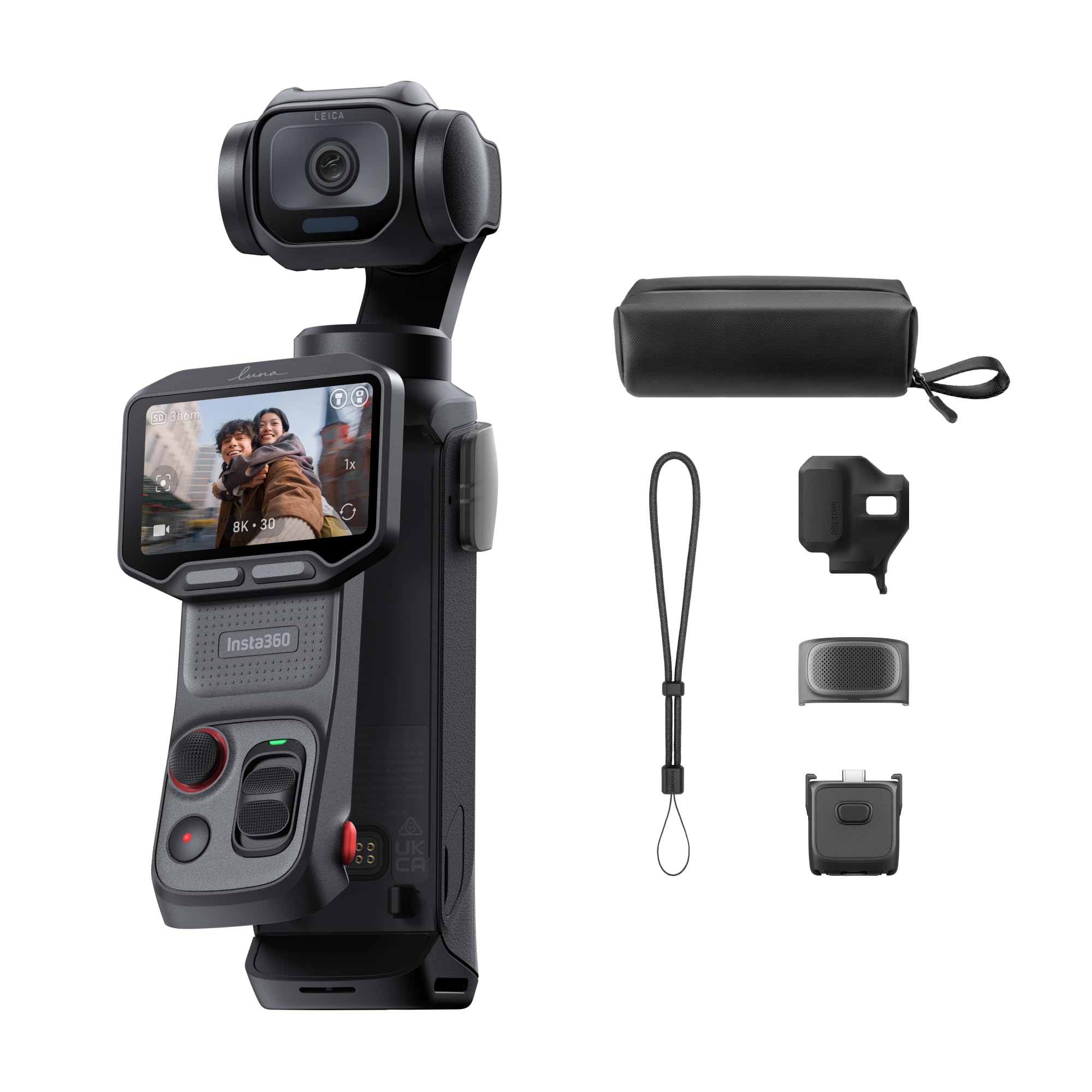
1. Insta360 Luna Pro – 8K Vlogging Camera with Leica Lens
Our pick — 4.5+★ from 200+ verified ratings; the strongest balance of quality and price.
An 8K30fps pocket camera with Leica color and a 1-inch sensor, no rig required.
For the creator who wants room to crop and grade, this is the pick. The Luna Pro shoots 8K30fps (thirty frames every second) with Dolby Vision from a 1-inch sensor — a sensor that size means cleaner faces indoors and softer backgrounds. In the raw numbers its effective video resolution reads 8000 pixels, which is more than double the 3840 pixels on the SJCAM C400. That extra room matters in editing: you can zoom into a wide shot and still hold a sharp frame.
The 3-axis mechanical stabilization is the feature that carries a walking vlog. The touchscreen detaches and remote-controls shooting from up to 20 meters away, so a solo creator can set the camera down and step into the frame alone. Battery runs up to 4 hours and fast-charges to 80% in 23 minutes, so a quick charge between takes gets you back out. It also shoots 4K30fps vertical with a twist of the screen, which lines up with how YouTube Shorts wants the frame.
Where it shines
- 8K30fps from a 1-inch sensor with Dolby Vision for rich contrast.
- Detachable 2″ OLED touchscreen controls up to 20m away for solo shooting.
- 3-axis mechanical stabilization keeps motion footage level.
- 4 hours of battery and an 80% charge in 23 minutes.
What to weigh in
- 8K files are large, so a fast Micro SD card is not optional.
- Learning log footage and color grading takes practice.
- The detachable screen adds a piece to pack and protect.
Reach for it when: you want cinematic room to crop, grade, and shoot 8K without a gimbal rig.
Hold off if: you want a camera you simply press and publish with no editing pass.
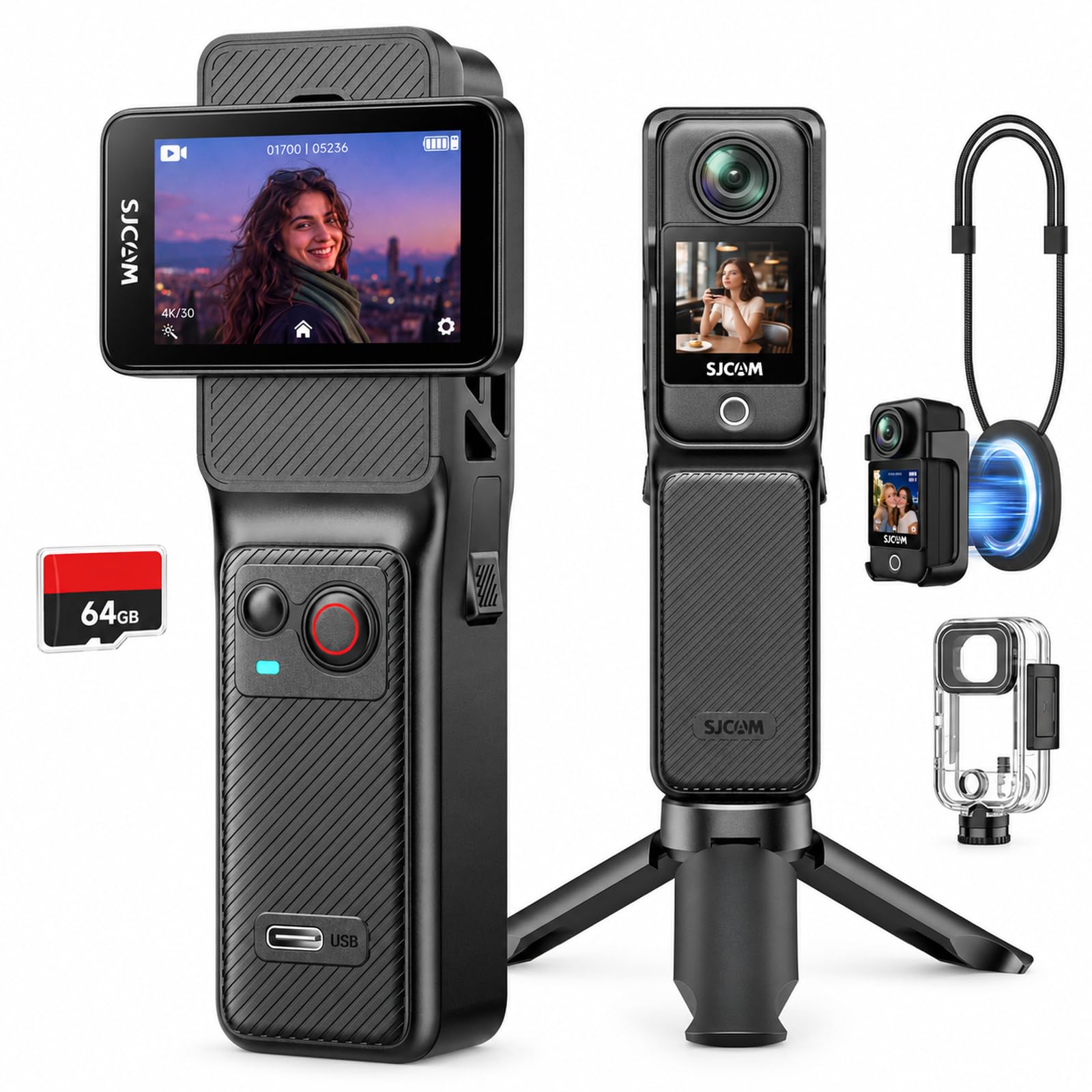
2. SJCAM C400 4K 64GB Youtube Vlogging Camera
A 7-hour battery and a 30M waterproof housing for full-day outdoor shoots.
If your day runs from sunrise to sunset, this is the camera you will want in the bag. The C400 runs for 7 hours (460 minutes) on a charge, which is far longer than the Canon PowerShot V10’s 2 hours. It captures 4K at a recorded 3840 pixels through a 154° distortion-free wide-angle lens and f/2.0 aperture, so a hiking trail or a room full of people fits in one frame. The 64GB card is included, and the box adds a waterproof housing, handlebar mount, and helmet base.
Build and value are what win people over — this camera arrives packed with accessories and leans toward adventure filming. It has 6-axis electronic image stabilization with horizon correction, and the controller detaches from the body for remote preview. It handles loop recording, slow motion, and time-lapse, and the 30M waterproof housing turns it into a body camera for surfing or mountain biking.
The honest catch is the fine print. Video and sound quality draw mixed opinions — some footage looks great and some looks flat, and reviewers split on the audio. If you want broadcast-clean files straight from the card, budget time for a color pass or plan to add an external mic.
The endurance trade-off: long hours on a battery this size often mean a smaller sensor and softer low-light footage. That is the balance here, and it is fine for daylight shoots.
The remote bonus: a detachable controller that previews live is genuinely rare in a camera in this range.
Best for: hikers, motovloggers, and surfers who need a full day of recording without a charge.
Look elsewhere if: clean audio and broadcast-ready color straight out of the camera are your top priority.
3. Canon PowerShot V10 Compact Vlogging Camera
A pocketable 4K camera with a fixed 19mm lens that fits a whole room in frame.
What wins people over most here is the size — you can slip the PowerShot V10 into a pocket and forget it is there. The fixed 19mm lens (a 35mm equivalent) keeps your background in view without the bowed edges of a fisheye. A 15.2-megapixel 1-inch back-illuminated CMOS sensor handles video and stills, and the retractable front-facing screen flips out for framing yourself while you talk.
It records 8-bit 4K video at up to 30fps and Full HD at up to 60fps, with 14 movie color filters for setting the mood. Three image stabilization modes (IS Off, IS On, and IS Enhanced) arrived in the version 1.2.0 update. Pair the built-in stand, which folds front or back, with the wide lens and you can set the camera down and shoot hands-free. A pair of stereo microphones plus a center mic that cuts background noise rounds out the audio side.
Know this limit before you buy: the 2-hour battery is the shortest on this list, and a minority of units fail early. Buyers report the problem plainly: “However, the battery life is short, and several owners mention that the camera stopped working after 4 months.” Pack a spare battery and buy where returns are easy, and the easy-to-carry size still earns its spot.
Suits you if: you shoot grab-and-go clips at home or out and want a wide frame without a tripod.
Think twice if: you need all-day recording or zero worry about a mid-shoot failure.
4. Xtra Muse Vlogging Camera with 1” CMOS & 4K/120fps

A 3-axis gimbal camera with Master Follow that keeps you center-frame while you dance.
Dancers, runners, and anyone who films themselves moving will feel at home here. The Xtra Muse records 4K at 120fps from a 1-inch CMOS sensor, so motion footage comes out smooth, and 120fps means you can slow a spin down to a crawl. A 3-axis gimbal stabilizer keeps the frame level while you jump, dance, or hike. The 2-inch touch screen switches between horizontal and vertical shooting.
You stay in frame hands-free thanks to Master Follow: set the camera on a tripod, jump or spin, and it keeps you center-frame — a real help for solo creators. True 10-bit X-Log color mode (a flat color profile you adjust in editing) captures up to one billion colors, so sunrise and sunset highlights keep their detail instead of clipping. The standard bundle includes the pocket gimbal, carrying bag, wrist strap, and a handle with a 1/4″ thread (the common tripod screw size). Battery life reads 161 minutes, so plan a mid-day top-up on longer shoots.
What earns its place
- 1-inch CMOS sensor with 4K/120fps for smooth motion and slow-mo b-roll.
- 10-bit X-Log color with up to one billion colors for grading flexibility.
- 2-inch touch screen flips between horizontal and vertical instantly.
- 161-minute battery and a bag, strap, and handle in the box.
Where to plan around
- Connectivity and battery reviews split — carry a spare for a full day.
- X-Log footage needs a color pass, not a straight upload.
The one for you if: your channel is built on dance, sport, or movement and you want 4K/120fps with a real gimbal.
The catch to accept: 161 minutes goes fast when you are filming constantly, so budget for a second charge.
5. DJI Osmo Pocket 3 Vlogging Camera
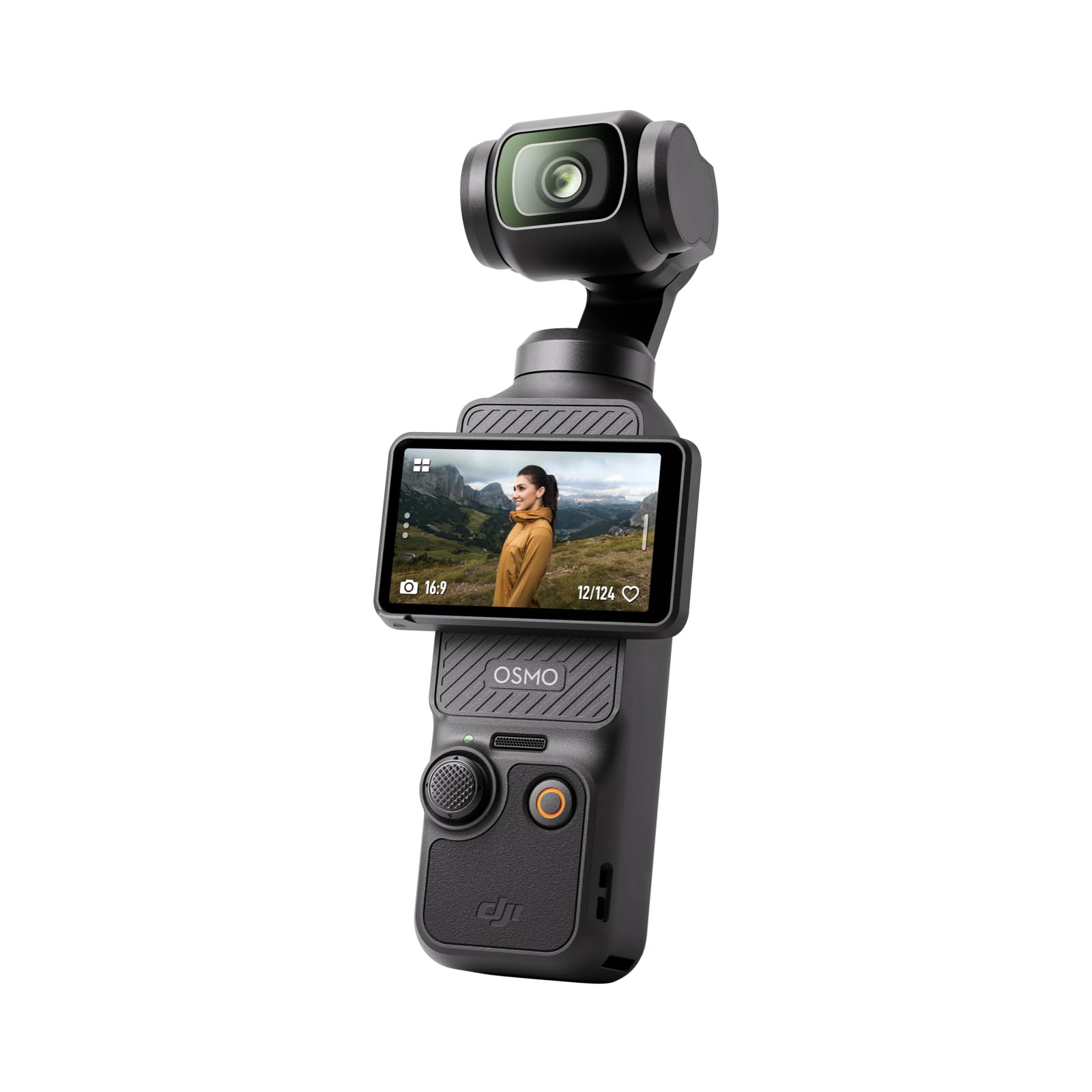
A 1-inch sensor pocket gimbal shooting 4K/120fps with ActiveTrack 6.0.
If you want a camera that has already survived a lot of real-world vlogging, this is it. The Osmo Pocket 3 uses a 1-inch CMOS sensor and records 4K at 120fps, so night scenes and sunsets come out clean. Its 3-axis mechanical stabilization keeps footage steady while you chase a pet or walk a trail. The 2-inch touch screen rotates for horizontal or vertical shooting, and the camera records 166 minutes on a charge — a few minutes longer than the Xtra Muse’s 161 minutes.
ActiveTrack 6.0 keeps your face center-frame while you move, and D-Log M plus 10-bit color records up to one billion shades for grading. Stereo recording handles the audio side, and the camera connects directly to two DJI Mic 2 or Mic Mini transmitters — a huge plus for interviews and livestreams. The box includes a protective cover, wrist strap, and a handle with a 1/4″ thread.
What owners agree on: gorgeous 4K footage that looks cinematic, a size that fits in a sweater pocket, and a clear interface that makes it easy to pick up.
The trade-off to plan for: value, reliability, and battery life all split opinions. A few hours of shooting is realistic, so a spare charge is a practical step.
Choose it if: you want a proven pocket gimbal with top-tier tracking and direct mic pairing.
The thing to know: battery life is closer to a few hours than a full day, so plan a second charge for long shoots.
6. Canon EOS R100 Mirrorless Camera RF-S18-45mm Lens Kit

A 24.1MP APS-C mirrorless kit with a stabilized 18-45mm lens at the entry price.
For the creator who wants to learn on a proper mirrorless body, the EOS R100 is the entry point. It packs a 24.1-megapixel APS-C CMOS sensor and a DIGIC 8 processor, giving you the same kind of lens-swap flexibility as the bigger bodies on this list at the friendliest tier. It is the smallest and lightest in Canon’s EOS R series, so it travels easily. The kit includes an RF-S18-45mm F4.5-6.3 IS STM lens with optical stabilization at up to 4 stops of shake correction.
Video specs read clearly: 4K at up to 24fps, Full HD at 60fps, and HD at up to 120fps for slow motion. Dual Pixel CMOS AF covers up to 143 zones with human face and eye detect, plus animal and vehicle detect, so a pet moves and the camera holds focus. Continuous shooting hits 6.5 frames per second in One-Shot AF. The rear screen does not flip forward for self-framing, which is the main reason seasoned vloggers step up. Its functionality draws mixed reports — some cameras run without a hitch while a few stop working.
Worth it for: the beginner who wants to learn on a real sensor and lens system without spending top-tier money.
Not for: solo vloggers who need a flip-forward screen for self-framing.
7. Sony ZV-E10 APS-C Mirrorless Camera with 16-50mm Lens
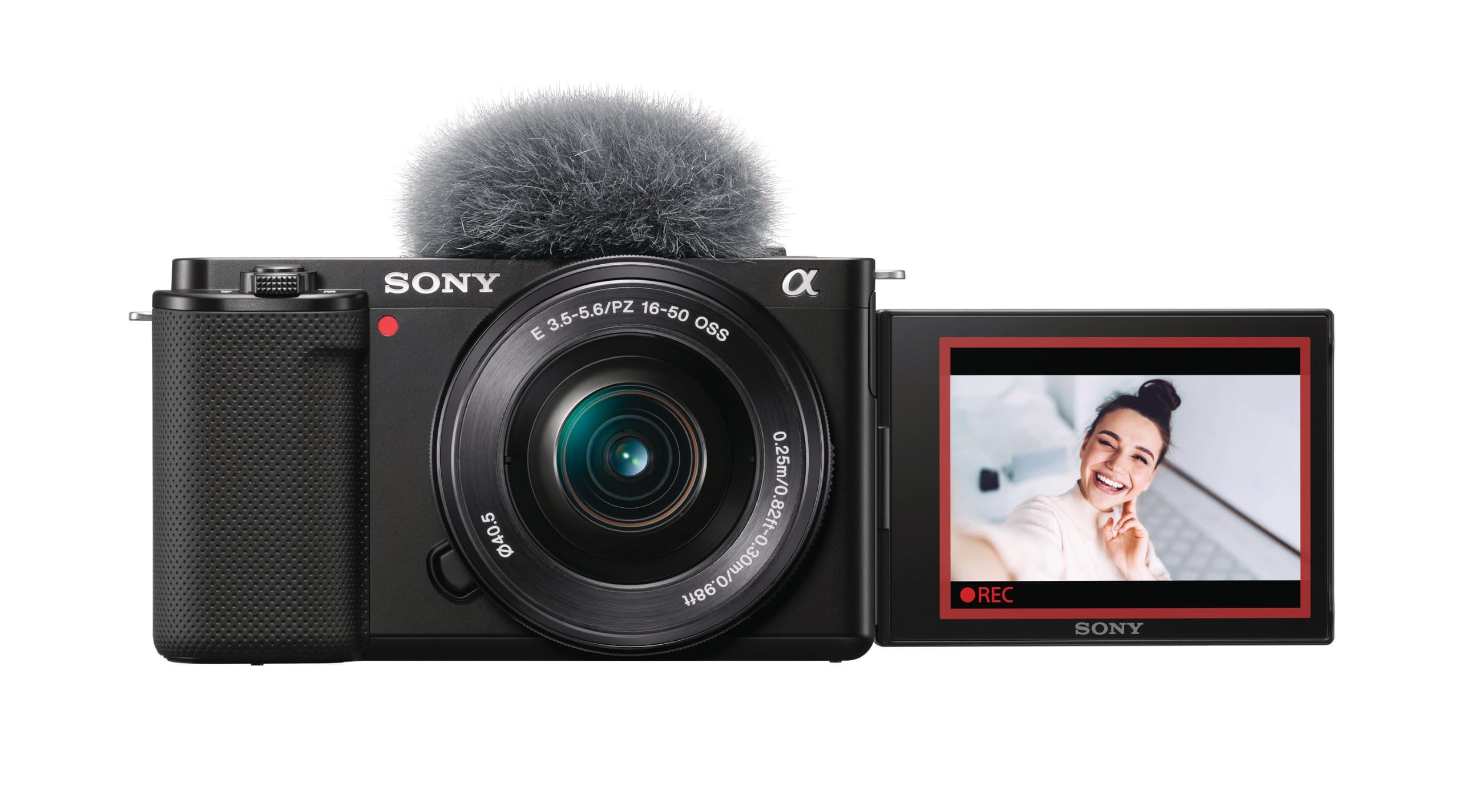
A creator-first body with a lens mount and a focus-racking trick built for product reviews.
This camera wins its spot for YouTube work — the reason is the Product Showcase Setting, which shifts focus from your face down to the object you hold up. That is the exact move a product review needs, handled by one button instead of a manual focus pull. The 24.2-megapixel APS-C Exmor CMOS sensor and BIONZ X processor give you clean footage across a range of light. Video reads 4K oversampled from 6K with full pixel readout and no pixel binning, so fine detail stays intact instead of being blended away.
The Background Defocus button toggles a soft background on and off with one press, giving your talking head a cinematic look on demand. Live streaming works over a single USB cable with no extra hardware or software. You get a lens mount, so the 16-50mm kit lens can be swapped for a fast prime whenever you want more background blur. Autofocus draws mixed reports, with most finding it solid and a few hitting trouble.
Why it reads creator-first: a focus-racking button, a defocus toggle, and one-cable streaming are the three things a talking-head channel does every week.
What to weigh: the kit lens is the starting point, not the finish — a bright prime is the upgrade that open up shallow backgrounds.
Point it at: creators who film product reviews or talk to camera and want focus assists plus lens upgrades later.
Know before: autofocus feedback splits — test in your own lighting early and keep your return window handy.
8. Blackmagic Design Pocket Cinema Camera 4K Power Bundle

A true filmmaker’s tool: 12-bit RAW, dual gain ISO, and a DaVinci Resolve license.
This one is for the creator who grades footage, not one who uploads it straight. The Pocket Cinema 4K uses a 4/3″ sensor at a native 4096 x 2160 resolution and captures 13 stops of dynamic range, so highlights and shadows both hold detail. Dual gain ISO up to 25,600 keeps grain and noise down in hard lighting. It writes in Apple ProRes up to 4K or 12-bit Blackmagic RAW, and the bundle includes a DaVinci Resolve Studio activation code.
Its 5″ LCD is large and bright enough to skip an external monitor, and the carbon fiber polycarbonate body with a multifunction handgrip puts the key controls near your thumb. Storage runs to SD/UHS-II and CFast 2.0 cards or to an external SSD over USB-C. Audio is handled by a built-in stereo mic or external mics through mini XLR or 3.5mm inputs. The bundle adds two extra LP-E6 batteries, a dual battery charger, and a SolidSignal microfiber cloth.
The catch is stabilization and pace. It has no built-in gimbal, so handheld footage needs a rig or a steady hand, and RAW footage demands a real editing workflow. If you want a camera that publishes straight from the card, this is the wrong tool — for a graded, cinematic channel, it is the right one.
Right for: filmmakers and color graders who want RAW flexibility and a large built-in monitor.
Wrong for: run-and-gun vloggers who need stabilizer and one-tap publishing built in.
9. FUJIFILM X-T30 III Mirrorless Camera with XC13-33mm Lens Kit
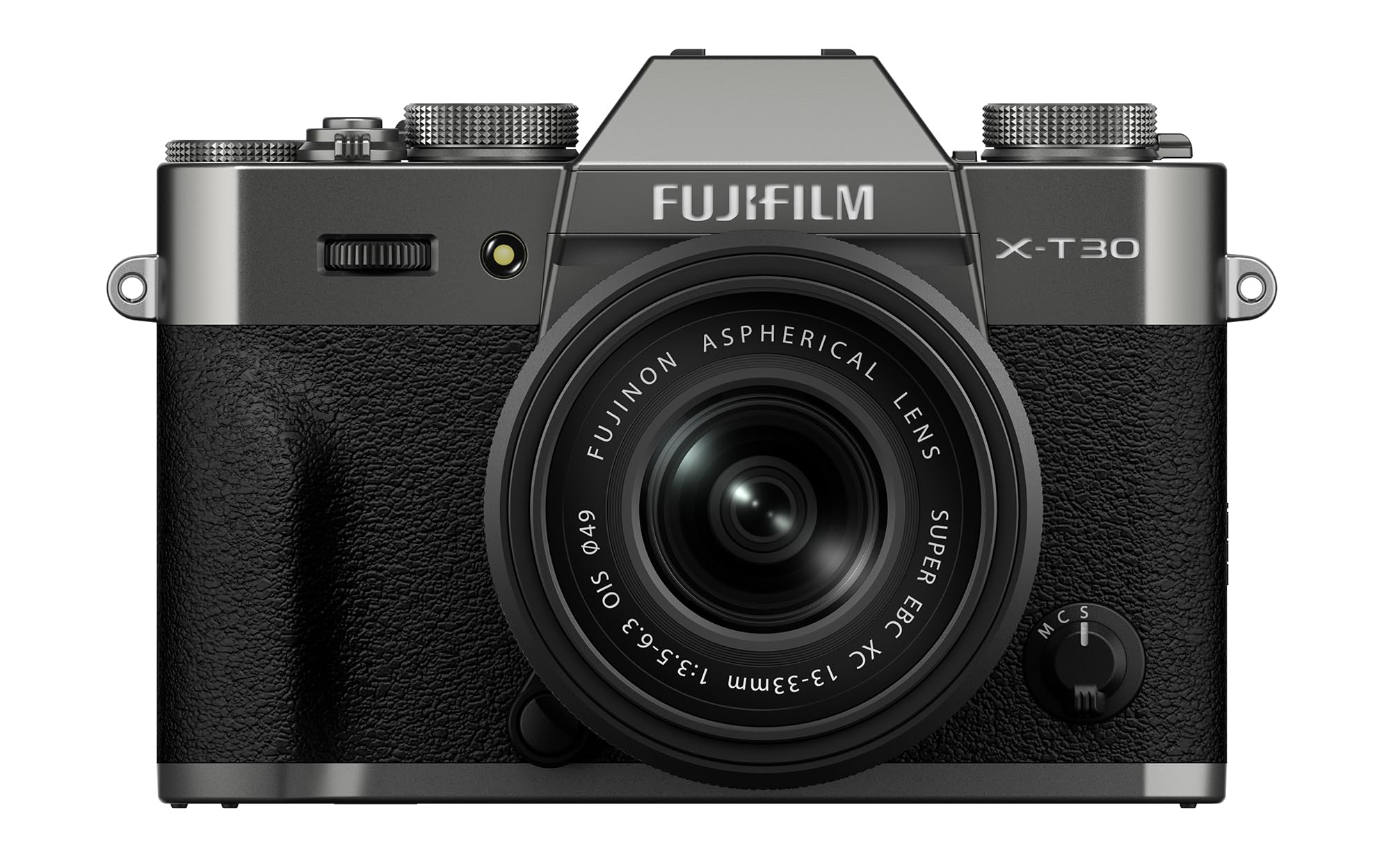
Twenty film looks built in, so your footage leaves the camera already colored.
Creators who love a filmic color look will skip the grading suite with this body. The X-T30 III puts 20 built-in Film Simulations in your hands, so you pick a look and shoot, rather than grade every clip afterward. The body is compact in the hand, and the 425 autofocus points work with AI-powered subject detection to keep the subject sharp. The kit adds a FUJINON XC13-33mmF3.5-6.3 OIS lens with optical stabilization for steadier handheld shots.
An Auto mode keeps the camera out of your way so you can stay in the moment, while the dial layout lets you take manual control when you want it. Continuous shooting reaches 20 frames per second, and it carries 14-bit depth for stills color. The timeless, compact design earns its share of attention too. One small wrinkle: ease of use splits opinions — beginners tend to love the Auto mode, while a few find the controls take some learning.
Reasons it fits
- 20 built-in Film Simulations give you a finished color look in-camera.
- AI-powered subject detection with 425 autofocus points.
- 14-bit depth and 20fps continuous shooting.
Where it needs a nudge
- Ease of use feedback is split — expect a learning curve on the dials.
The match if: you want a film-look camera that colors footage in-camera and travels light.
The one hesitation: the dials take a session or two to learn if you are new to manual controls.
10. Nikon Z5 II Full-Frame Mirrorless Stills/Video Camera
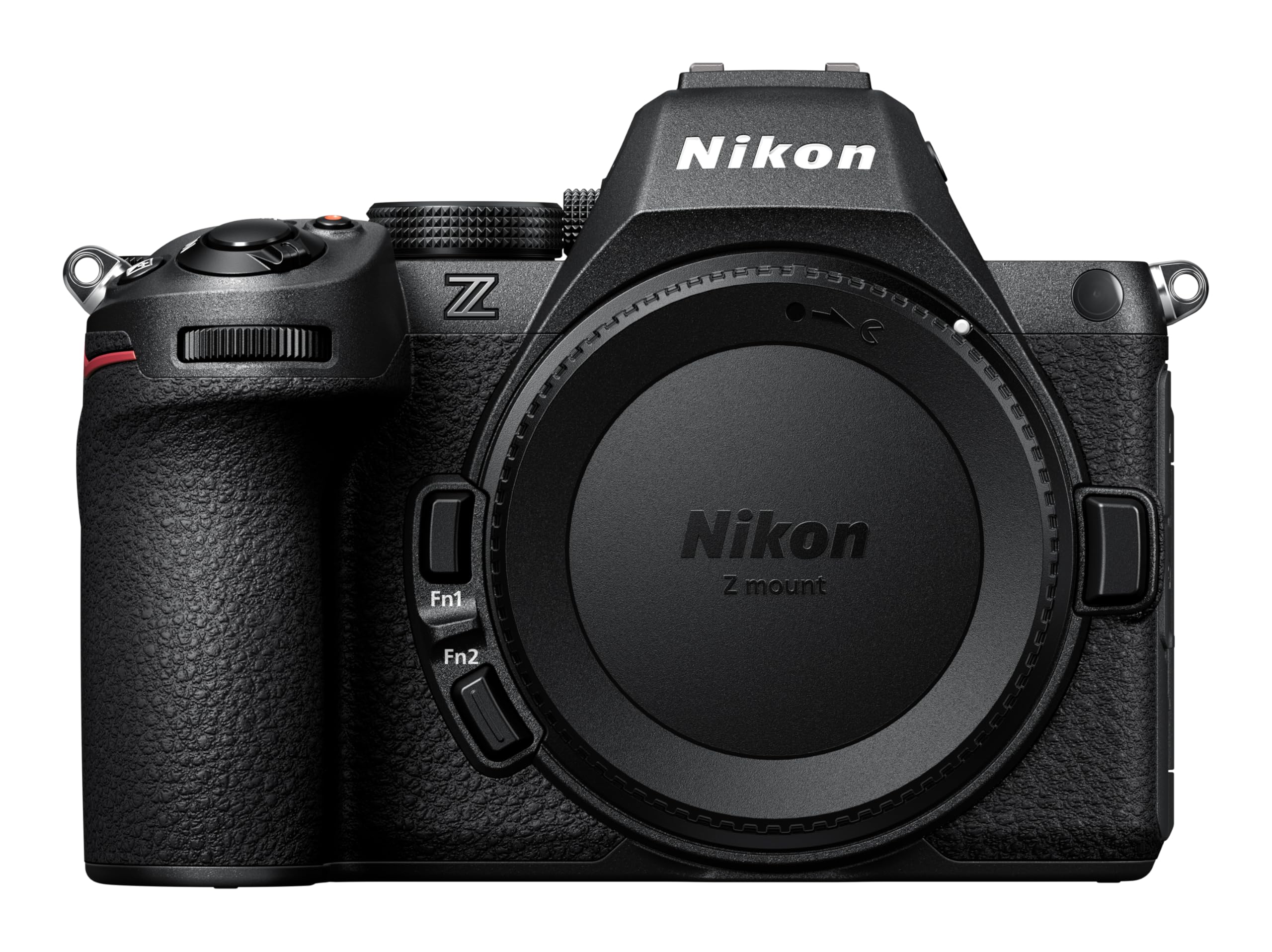
A full-frame body that focuses in near-total darkness and stabilizes up to 7.5 stops.
Low-light creators get the most here. The 24.5-megapixel BSI-CMOS FX-format sensor and EXPEED 7 engine capture high-resolution, high-speed shots up to 30fps, and autofocus detects down to -10EV — near-total darkness, when other cameras hunt. Up to 7.5 stops of built-in image stabilization means you can hand-hold shots that used to require a tripod. A 3000-nit electronic viewfinder stays visible even in harsh daylight, a real upgrade for anyone coming from a DSLR.
Video tools run to 4K/60p capture and 12-bit N-RAW recording in-camera, which suits high-quality product reviews and streaming. Automatic detection covers 9 subjects — people, birds, dogs, cats, cars, bicycles, motorcycles, trains, and airplanes. Nikon Imaging Cloud handles automatic image transfer and firmware updates, and SnapBridge lets you use your phone as a wireless remote release with live view.
Why it lands here: the combination of -10EV autofocus and 7.5 stops of stabilization is a low-light kit that rarely needs a tripod.
Plan around this: it is a full-frame body only — no lens is in the box, so add glass to your plan.
For you if: you shoot indoors, at dusk, or in dark venues and want a full-frame sensor with serious stabilization.
One more cost: the body ships without a lens, so budget for glass alongside the camera.
11. Sony Alpha a6700 Mirrorless Camera with 18-135mm Lens

The one that tracks fast-moving targets with 759 autofocus points.
For creators filming action, pets, or fast hands-on demos, the a6700 is the pick. Its 26.0-megapixel APS-C Exmor R back-illuminated sensor pairs with BIONZ XR processing, and a dedicated AI Processor drives real-time Recognition for accurate subject tracking. Autofocus covers 759 points — the most on this list — and the tracking is praised for staying locked on even when the target moves fast. Video records 4K/60p oversampled from 6K at 4:2:2 10-bit with Long GOP or All Intra formats, plus high frame rate 4K/120p for slow motion.
The 18-135mm F3.5-5.6 zoom lens in the kit covers wide shots to tight close-ups without swapping glass, which suits a one-camera YouTube setup. The catch worth hearing: battery life is the weak spot here, with several reporting charging trouble. A spare battery and charger is the practical fix. Where the a6700 leads is autofocus reach and frame rates; the Nikon Z5 II counters with full-frame low-light reach and up to 7.5 stops of stabilization that this body’s listings do not match.
The tracking advantage: 759 autofocus points plus a dedicated AI processor is the difference between a missed shot and a caught one.
What you must plan for: battery life draws negative attention, so a spare battery belongs in your bag from day one.
Best for: creators filming movement, action, or live demos who want the widest autofocus coverage and 4K/120p.
The trade to accept: battery charging has been a sticking point, so buy a second battery with the camera.
Know the Specs
Resolution, Frame Rate, and Cropping
Resolution is how many pixels make up each video frame. Higher resolution, like 8K or 4K, gives you room to crop or zoom into footage in editing and still keep the frame sharp. Frame rate is how many frames capture each second, so 120fps lets you slow footage down smoothly while 30fps is the standard talking-head cadence. Pick a camera that records at the resolution and frame rate you actually edit in — 8K files are large and slow to process.
Stabilization: Mechanical vs Electronic
A 3-axis mechanical gimbal physically counter-moves the lens to cancel shake, which holds up beautifully when you walk. Electronic image stabilization corrects shake in software by shifting the frame, and it can crop the edges slightly. For YouTube vlogging where you hold the camera out and move, mechanical stabilization tends to look smoother. Check whether the camera offers it in the body, or relies on a stabilized lens.
Sensor Size and Low Light
A larger sensor captures more light per pixel, so it handles dim rooms and night shots with less grain. A 1-inch sensor, an APS-C sensor, and a full-frame sensor all sit on that ladder, with full-frame at the top. The trade is size and lens cost — bigger sensors mean bulkier bodies and pricier glass. For a desk-based channel with decent lighting, a 1-inch or APS-C sensor is usually plenty.
Bit Depth, Log Profiles, and RAW
Bit depth is how many color shades the camera records, and 10-bit captures far more than 8-bit. Log profiles record flat footage that keeps highlights and shadows intact for color grading later, and they want 10-bit or better to avoid banding. RAW formats like Blackmagic RAW and N-RAW give you the most flexibility in post, but they eat storage and demand a real editing workflow.
Audio Inputs
Built-in mics pick up room echo and handling noise. A 3.5mm mic jack, mini XLR input, or direct pairing with a wireless transmitter like the DJI Mic 2 makes a bigger difference to YouTube quality than most video specs. Check which audio input a camera offers before you buy, because a wireless mic that pairs directly saves you a sync step in editing.
Battery, Storage, and Field Time
Battery hours decide how long you can film in one stretch. The listed range runs from 2 hours on the Canon PowerShot V10 up to 7 hours on the SJCAM C400. Storage type matters too: check whether the camera takes Micro SD, full-size SD, CFast 2.0, or external SSD over USB-C. Carry a spare battery and a spare card, and a long shoot stays predictable.
Common Questions
Do I need a gimbal camera or an interchangeable-lens mirrorless for YouTube?
Does 8K video really matter for a YouTube channel?
How many hours of battery do I need for a full day of vlogging?
What is the difference between mechanical and electronic stabilization?
Can I use a wireless microphone with a pocket vlogging camera?
Do these cameras shoot vertical video for YouTube Shorts?
Is 10-bit color worth it over 8-bit for YouTube uploads?
What does sensor size actually change in my footage?
Can I stream live with these cameras over USB?
What storage card should I buy for 4K or 8K recording?
Do I need to color grade footage from these cameras?
Which is better for YouTube: a pocket gimbal or an APS-C mirrorless?
Can a vlogging camera like this replace my phone for YouTube?
The Bottom Line
For most creators chasing the youtube video recorder camera, the winner is the Insta360 Luna Pro because its 8K30fps footage, 4-hour battery, and 3-axis mechanical stabilization give you room to crop and grade without a rig. If you film all day outdoors and need endurance, grab the SJCAM C400 with its 7-hour battery and 30M waterproof kit. And for fast autofocus on moving subjects, the Sony Alpha a6700 is the one to reach for, thanks to its 759 autofocus points and 4K/120p recording.
One last thing before you close this tab: the Luna Pro holds a 4.5+ star rating across verified buyer reviews, and that track record matters more than any spec sheet. Whichever camera you pick from this list, buy the right memory card and a spare battery on day one, and your YouTube footage will look deliberate rather than accidental.
How we choose
We do not accept paid placement. Every pick is matched to a real buyer and a real use-case; we do not hands-on test units.
Sources
Specifications: manufacturer listings and product documentation. Review insights: verified customer reviews, as of November 2026. Pricing: not shown on this page (it changes often); check the current price via the retailer link.
As an Amazon Associate, Tactical Gear Guy earns from qualifying purchases. This does not affect which products we feature.