Specs are compiled from manufacturer listings and verified buyer reviews and can change over time — please confirm the key details on the product page before buying.
Buying a cork mat is simple once you know one thing: cork gets stickier as you sweat, so the mat you want depends on how wet your practice gets and how much cushion your knees need. Below you get the shortlist that actually holds up — the one with the extra-thick cork layer, the featherweight that travels, and the wide surface for tall bodies — sorted so you can pick in minutes rather than read nine spec sheets.
This guide is built by comparing the manufacturers’ published specifications and the patterns across verified customer reviews, so you get each pick’s real strengths and trade-offs instead of marketing spin.
Most first-timers assume a cork mat is slippery the moment your hands get damp — the opposite is true. The roundup below explains the sizes, weights, and grip behavior that matter, so the choice between a lightweight traveler and a heavy studio mat becomes obvious. This breakdown of the best cork yoga mat picks focuses on which cork top keeps hands and feet from slipping once they sweat.
Top Picks


How To Choose The Best Cork Yoga Mat
The first decision is whether you sweat hard or practice dry. Cork’s natural waxy substance (suberin) makes a damp hand or foot grip harder than a dry one. If your hands never get wet, cork can feel slick until you spritz it with a little water. If you flow through hot yoga or power sessions, cork is the surface that helps you hold the pose instead of sliding out of it.
Match the thickness to your joints
Thickness in millimeters (mm) is the cushion your knees and wrists sit on. A 5 mm or 6 mm mat gives balanced support for standing poses. A 7 mm base adds more padding for kneeling and floor work, but a very thin mat puts you closer to the floor and closer to the hardness under it. For sensitive knees, choose a 7 mm base like the StrongTek over a 5 mm mat. If you want a stable footing for balance poses, a firmer mat helps.
Weigh the carry against the stability
Mat weight in pounds tells you two things at once. A light mat rolls into a slim bundle you can sling over your shoulder and carry to the studio. A heavy mat with a natural rubber base stays put on the floor and does not shift under you, but you will feel that weight on the walk to class. Commuters want light. Home practitioners can take the heavy one.
Check size for your body and your room
A standard cork mat runs 72 inches long and 24 inches wide. That suits most people for most poses. If you are tall, or you like a wide surface for stretching and floor work, a mat up to 80 inches by 26 inches, or a 36-inch-wide version, gives you more room. Just confirm it fits your floor space and your bag before you commit.
Know the base material
The cork is the top you touch, and the base is what meets the floor. A natural rubber base is dense and grippy, and it helps a heavy mat stay anchored. A TPE foam base keeps the mat light and affordable, and it rolls into a compact bundle. Rubber bases tend to feel firmer underfoot and pack more weight. TPE bases tend to feel lighter and travel easier. Rubber suits a home studio; TPE suits a commuter.
Side-by-Side Comparison
| Model | Best For | Length x Width | Thickness | Weight | Amazon |
|---|---|---|---|---|---|
| Body By Yoga Luxury Cork Mat★ Best Overall | Hot yoga and sweaty studio flows | 80″ x 26″ | 0.25″ | 9.9 lb | Amazon |
| Numat Cork Yoga MatBest for Travel | Beginners and travel | 72″ x 24″ | 6 mm | 2 lb | Amazon |
| Gaiam Cork Exercise MatBest Odor Control | Odor-free everyday practice | 68″ x 24″ | — | 0.82 kg | Amazon |
| StrongTek Cork and TPE Mat | Knee and wrist cushioning | 72″ x 24″ | 7 mm | 2.2 lb | Amazon |
| GURUS Cork Yoga Mat | Minimalist home setup | 72″ x 25″ | — | 700 g | Amazon |
| HAPBEAR Large Cork Mat | Wide-surface stretching | 72″ x 36″ | 0.24″ | 2.44 kg | Amazon |
| Ecoga Premium Cork Mat | Alignment-line guidance | 72″ x 24″ | 5 mm | 6.6 lb | Amazon |
| Yoga Design Lab Cork Mat | Hot yoga grip and design | — | — | 1.75 kg | Amazon |
| Satori Concept Cork Mat | Extra-large comfort | 80″ x 26″ | 0.24″ | 8 lb | Amazon |
Detailed Reviews
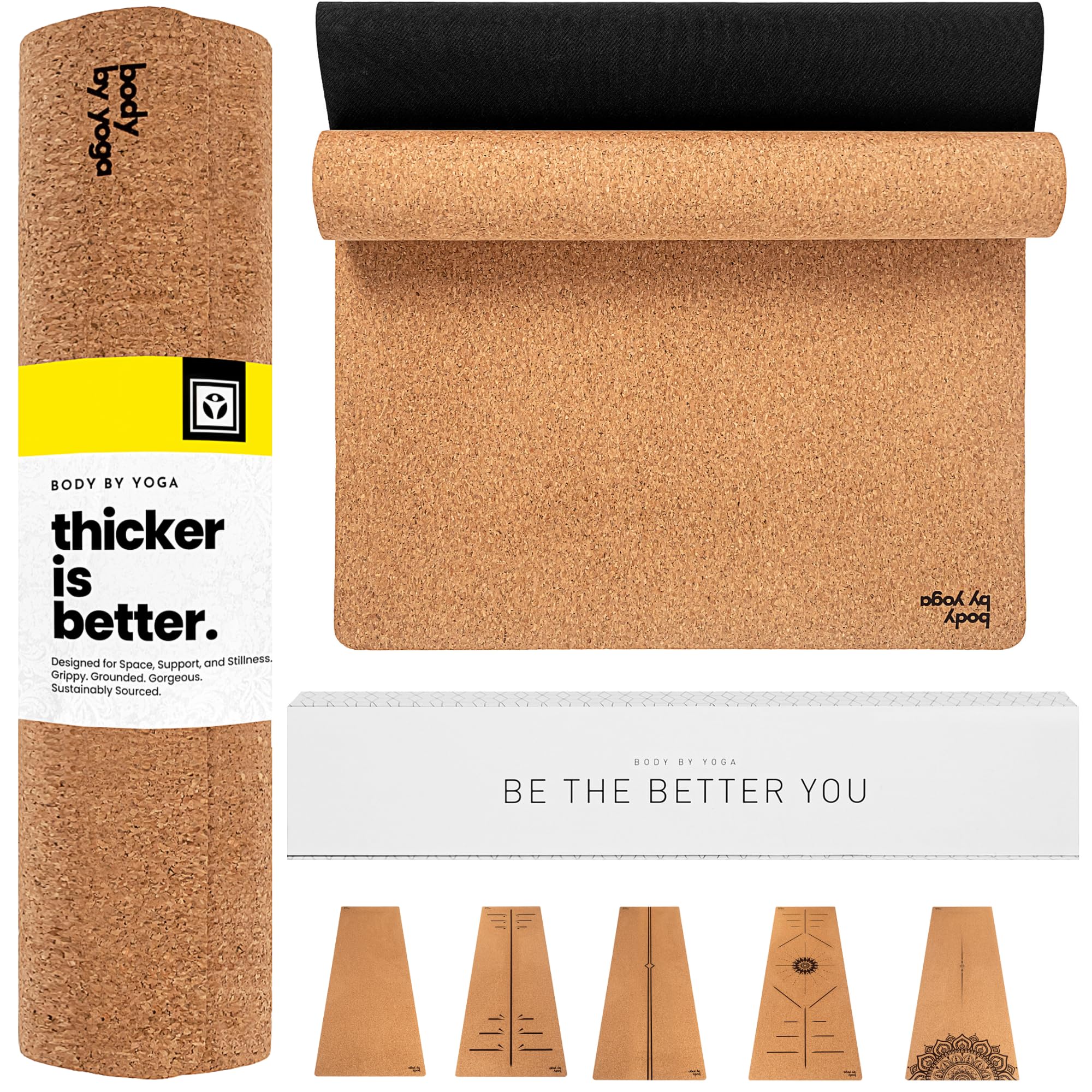
1. Body By Yoga Luxury Cork Yoga Mat
Our pick — 4.5+★ from 900+ verified ratings; the strongest balance of quality and price.
The oversized studio mat with a cork layer thick enough to feel like cork, not sandpaper.
This is the mat for the hot-yoga regular who has slipped out of one too many poses. The cork surface here is deliberately thick — the maker notes most cork mats lay on a layer as thin as sandpaper, and this one does not. You get a softer, grippier top that grabs harder as your hands dampen, which is exactly the behavior you want mid-flow.
Size is the other headline. At 80″ x 26″ it beats the Numat below on both length and width — the Numat runs 72″ x 24″, so this gives you a noticeably longer and wider floor to lunge and stretch on. Taller bodies and wide-armed flows stop feeling hemmed in. The 0.25″ thickness cushions knees and keeps standing poses stable, and the review patterns call it smooth and non-irritating against skin.
What wins people over is the build quality paired with that grip — the surface resists moisture rather than soaking sweat in, and it wipes clean with water. The catch is weight: at 9.9 pounds this is a heavy mat, heavier than the Numat’s 2 pounds by a wide margin, so it lives at home or in a studio cubby rather than in a backpack. The weight is deliberate and helps it stay planted, but you will feel it carrying it anywhere.
What earns its spot
- Extra-thick cork top that grips harder as you sweat
- 80″ x 26″ surface gives tall and wide flows room to move
- 0.25″ thickness cushions knees without going mushy for balance
- Moisture-resisting cork wipes clean with water instead of soaking in sweat
What to plan around
- 9.9 pounds is genuinely heavy to carry to class
- Hand wash only, so no tossing it in a machine
Made for: the sweaty studio yogi who wants a big, planted mat that stays put and grips harder the wetter it gets.
Think twice if: you commute to class on foot or bike — the 9.9-pound weight will be the trade-off you feel every trip.
2. Numat Cork Yoga Mat 6mm
Two pounds of cork and foam that slings over your shoulder and lands on the studio floor.
If your mat has to travel — apartment to studio, studio to car, car to a hotel room — this is the one to grab. It weighs about 2 pounds and rolls into a slim bundle, and a carry strap and bag come with it. That 2 pounds sits against the Body By Yoga’s 9.9 pounds above, so you can carry this one all day without noticing it. The top is all-natural cork over a TPE foam base, and the cork grips harder when wet, which makes it workable for hot sessions too.
The 6 mm thickness is the cushioning story. That is enough padding to keep your knees happy in kneeling poses while staying firm for standing balance. Alignment lines run across the surface to help you square up your posture, and the maker points those lines at newer yogis learning their positioning. The width runs 2 inches wider than a typical workout mat, so your arms have a little more room before they hang off the edge.
Be realistic about the footprint. This is a 72″ x 24″ mat, so it is a standard fit rather than an extra-long one — genuinely tall practitioners may find the Body By Yoga’s 80-inch length more forgiving. And the light TPE base is what makes it portable, so it does not have the heavy planted feel of a rubber-based studio mat. For a beginner or a commuter, 2 pounds and a TPE base is the right trade.
The travel case: the whole point here is that a cork-grip mat finally folds down to 2 pounds and a strap, so you stop leaving it at home because it is a pain to carry.
The honest limit: light and compact cuts both ways — a TPE base this thin is portable but not the anchored, planted feel of a heavy rubber mat.
Reach for this if: you are new to cork or you need a mat that rides in a gym bag without weighing you down.
Look elsewhere if: you want an extra-long surface or a heavy, immovable studio mat.
3. Gaiam Cork Yoga Exercise Mat
The beginner-friendly cork mat that keeps the funk out of your practice space.
Here is a mat built for the person who does not want to think about maintenance. The cork top is all-natural and sustainable, and cork moisture does not absorb odor the way a porous rubber mat can — so the mat you unroll next week does not smell like the sweat from last week. For an everyday home practice, that one trait saves you from the spray-and-scrub routine.
Grip is where you need to set expectations. Cork here gets softer and easier to grip once it is slightly damp, which makes it a smart pick for heated classes where your hands moisten naturally. Dry-handed practitioners will find it takes a spritz of water to wake the grip up. The 68″ x 24″ surface is the most compact on this list, so it is best for smaller rooms and shorter frames rather than sprawling flows.
The thing buyers talk about most is the size and how good it looks — the print design is a genuine draw if your mat lives out in the open. Comfort draws split opinions: some find it fine on a hard floor, others want more padding, and a few go the other way and find it too firm. Durability is the other mixed note, with some long-termers reporting wear. This is a solid entry-level cork mat — not the one for someone who practices daily for years and wants a tank.
Where it wins: the odor resistance is the standout — cork that refuses to hold a smell keeps a home practice fresh without extra cleaning rituals.
Where it asks a little: thin-feeling comfort and a compact footprint mean it suits lighter use and smaller spaces more than hard daily training.
Fits best: casual and beginner home practitioners who care about a fresh-smelling mat and a good-looking one.
Not the match if: you need plush joint cushioning or a long surface for tall frames.
4. StrongTek Cork and TPE Yoga Mat

The 7 mm base built for knees, wrists, and elbows that complain on a thin mat.
Seven millimeters of TPE base is the thickest cushioning in this lineup, and it shows up where it counts: kneeling poses, planks, and long floor stretches. If your knees bark on a hard floor, this is the mat that answers. The dense base stays firm enough for standing balance poses, so you get padding without wobble. The cork top grips better as your hands dampen, which keeps you steady through sweaty flows.
It stays portable despite the cushion. At 2.2 pounds with a matching carry strap, it rolls into a slim bundle and rides easily in a gym bag or suitcase. The 72″ x 24″ surface gives you full-size room for lunges and stretches, and the textured TPE backing helps keep it from bunching or curling on indoor floors. The construction is meant to resist stretching, peeling, bubbling, and edge tearing through regular use.
The cushion is the divider. Buyers who want joint support love it, and comfort and fatigue relief come up again and again. But grip and durability get split reactions — some find it grippy and long-lasting, others run into slipping and report the surface ripping after around 45 days of use. Treat this as a strong cushioned mat for knees, with the caveat that heavy daily hot-yoga use is asking more of it than careful home practice.
Why it stands out
- 7 mm base is the thickest cushioning in this roundup for knees and wrists
- 2.2 pounds with a strap keeps it genuinely portable
- Textured backing resists bunching and curling on indoor floors
- Firm enough for balance poses despite the extra padding
The fine print
- Grip draws split reactions — spritz it damp to wake the cork up
- Durability is a mixed note under hard daily use
Pick this one for: sensitive knees, wrists, and elbows that want real padding without losing standing stability.
Pass if: you put in sweaty daily hot-yoga hours and want the toughest possible cork surface.
5. GURUS Sweat Proof Durable Cork Yoga Mat

A clean, plain-faced cork mat for the yogi who wants calm, not pattern.
The draw here is restraint. This is a natural cork top over a high-density tree-rubber base, and its whole look is plain and elegant — the sort of mat that blends into a living room instead of shouting across it. That appears to be exactly why it resonates: looks come up first in the buyer feedback, followed by grip. If your mat lives out and you want it to look like a design object, this delivers.
Performance is honest rather than aggressive. The cork holds a naturally waxy surface that keeps it from soaking up moisture, and the grip tightens as it gets damp — so it handles a moderate sweat without turning into a slip hazard. It is on the lighter side, and buyers describe it as comfortable and supportive for restorative work like yin. The 72″ x 25″ surface is a touch wider than the standard 24-inch width, giving your arms a little breathing room.
The thing to weigh is long-term wear. The rubber gives good cushioning for the joints, and many mats hold up fine, but the cork-to-base bond is the known weak spot over years — a few report the cork layer peeling off. It is not a defect you should expect, but if you intend to punish one mat with daily hot sessions for a decade, this is a gentler mat. For calm, restorative practice at home, it is a lovely fit.
Understated and grippy: this is the quiet one in the lineup — a plain natural-cork face over dense rubber, with grip that firms up as your hands get damp.
What to weigh: the cork-to-rubber bond is the long-term weak point, with the occasional report of peeling — worth knowing for heavy daily use.
Best for: restorative and yin-style practice with a mat you want displayed rather than hidden.
Skip if: you need a bulletproof mat for years of daily sweaty sessions.
6. HAPBEAR Large Cork Yoga Mat

A 36-inch-wide runway for people whose arms keep leaving the mat.
Most mats stop at 24 inches wide. This one goes to 36 inches, and that matters the moment you do a wide stance or a long stretch and realize you have run out of mat. If you are broad-shouldered, or you practice in a small room where you want one generous surface for stretching and floor work, the extra width is the whole reason to pick it.
The cork has a honeycomb structure, and the maker uses that porous texture to help manage odor while absorbing moisture to keep the surface dry under your hands. The cork top strengthens its grip as you move, and the TPE base is designed to stay anchored to the floor. At 0.24 inches thick, it gives a 6 mm cushion that balances a little padding with a stable footing. A carry bag comes with it for storage.
Set your expectations on two fronts. Cushioning draws mixed reactions — some find the cork surface nice, others want more padding than it delivers. Stability is equally split: it holds firm in some routines, but on hardwood floors it can slide. If your practice room has a hard, smooth floor, plan on something under the mat or think about a heavier mat with a grippier base, like the Body By Yoga above.
The headline: 36 inches wide is the widest in this lineup, so wide stances and full-body stretches finally stay on the mat.
The honest catch: on smooth hardwood the base can shift, and the cushioning is modest rather than plush.
Grab this if: you need breathing room for wide poses, stretching, or Pilates on a single generous surface at home.
Look past it if: you practice on bare hardwood where a shifting base would bother you.
7. Ecoga Premium Cork Yoga Mat

A center line down the mat to keep your posture honest through every pose.
The feature that makes this one useful is a deliberately designed center line for body alignment. It gives you a visual guide for squaring up your stance and improving positioning, and for a lot of people that turns a vague sense of “am I straight?” into something they can actually see. Combine that with the 5 mm cushion on a natural rubber base, and you get a stable, bouncy mat that is kind to joints while gripping hard as you sweat.
The cork here is soft and, per the maker, non-flaking, and its grip climbs the wetter it gets. Spray a little water on it before you start and the waxy Suberin inside the cork works better, which is the trick for a dry-handed practitioner. The rubber base is thick and bouncy for comfort, and it is designed to stay rolled out flat without the ends curling up. A cream canvas bag and a matching strap come included.
Know the weight going in. This one lists at 6.6 pounds, which is lighter than the 9.9-pound Body By Yoga but heavy enough that you will want the included strap for the walk to class. Buyers find the grip excellent and slip-resistant; the recurring note is simply that it is heavier than expected. It is a 72″ x 24″ surface, so the tall folks still bent on extra length should look at the 80-inch picks instead.
Where it earns the price
- Center alignment line helps you square up and hold posture
- 5 mm natural-rubber base gives bouncy joint comfort that stays stable
- Grip climbs the wetter it gets — spritz it before class
- Bag and strap included, so it travels without extra cost
Where it gets real
- 6.6 pounds is heavier than buyers tend to expect
- 72″ length leaves tall frames wanting a longer surface
Made for: the alignment-focused practitioner who wants a guide line and a bouncy rubber base under their flow.
Consider another if: portability is your priority — 6.6 pounds makes this a strap-on-the-shoulder mat.
8. Yoga Design Lab Cork Yoga Mat
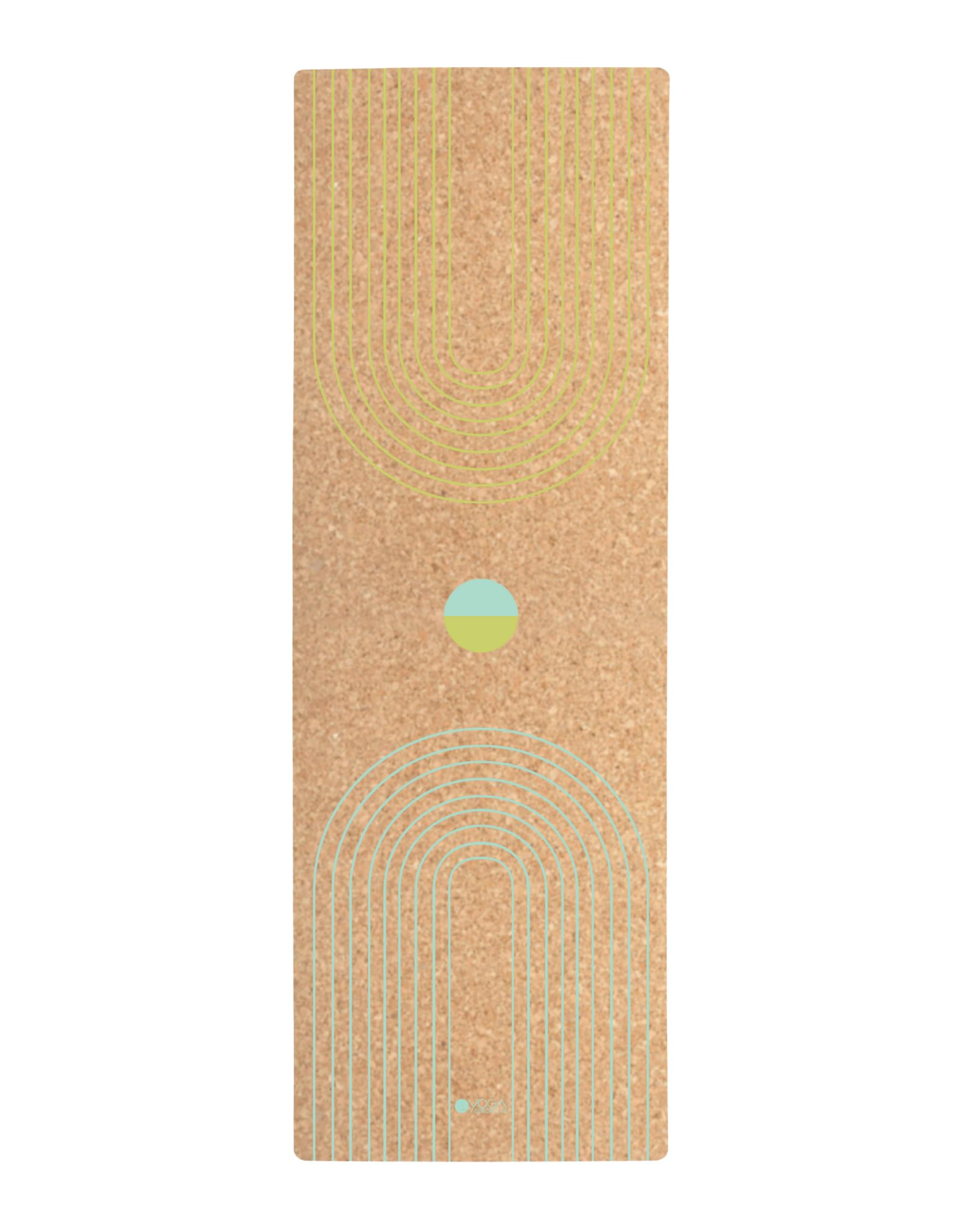
The design-forward cork mat that holds its grip when the room turns into a sauna.
If your practice is hot, power, Bikram, or Ashtanga, this is a mat built for the room that makes every other surface slippery. Buyers single out its suitability for hot yoga, and the pattern is clear: it holds grip and absorbs sweat instead of letting you slide around. That combination — grip plus sweat absorption — is the core of what you want when the room is heated and your hands are soaked.
The design is the second thing people notice. The Natural Balance finish looks studio-quality rather than gym-basic, and the mat feels like a considered piece of gear. It sits around 1.75 kg, light enough to carry with the included strap but not a flimsy travel mat. That grip-plus-design combination is what makes it the hot-yoga pick here.
The catch is the feel underfoot. The texture is mixed — some find it too smooth for hot work, and the thickness is the most-criticized trait, described as very thin. Odor reactions split too, with many reporting no unpleasant smell and others noting the opposite. This is the pick for the hot-yoga devotee who prioritizes grip and design and does not need plush cushioning for fragile knees.
Hot-room hero: grip and sweat absorption are the traits buyers praise most here, which is precisely what a heated, sweaty session demands.
Know before you buy: thickness is the weak note — this is a thin, firm mat, not a cushioned one.
Suits you if: you flow hot and want a design-forward mat that grips when the room is dripping.
Not for you if: your knees and wrists need real padding or you want a plush feel.
9. Satori Concept Cork Yoga Mat
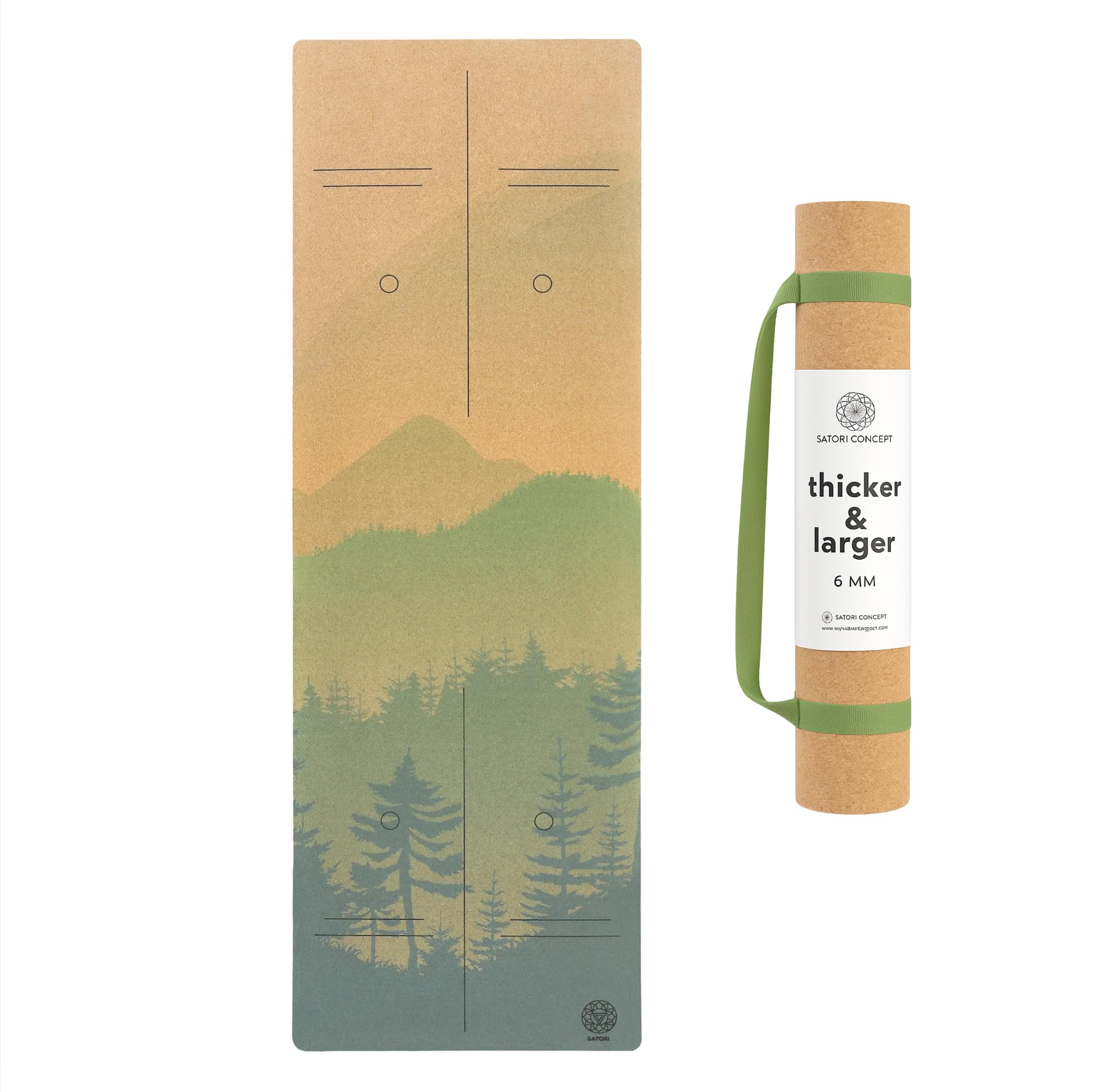
An oversized cork-and-rubber mat that feels soft underfoot and giant on the floor.
Comfort is the story with this one. The cork surface is described as soft and luxurious to the touch, sitting over a natural tree-rubber base that cushions joints without turning into mush. Buyers consistently call it comfortable, which is the most-mentioned strength, and the grip follows close behind — it does not slip, and the cork grabs harder as sweat builds. For an extra-large mat, that is a strong pairing.
Size and build make it a home base. At 80″ x 26″ it gives you the same generous footprint as the Body By Yoga, with extra width and length beyond a standard 72″ x 24″ mat. The tree-rubber base is dense enough to support standing poses and designed to hold up to frequent use, and the cork-and-rubber build skips the synthetic TPE that lighter mats use. A free strap comes with it for carrying and storage.
Weight is the honest trade. At 8 pounds it is heavier than a travel mat by a wide margin, and while some find it not too heavy, others find it a bit heavy to lug around. That weight is what gives the rubber base its planted, supportive feel, so it earns its place in a home studio rather than a gym bag. For a home studio that wants an 80″ x 26″ mat with a dense rubber base, this is the fit.
What makes it worth it
- Soft cork surface that buyers describe as luxurious underfoot
- 80″ x 26″ surface gives extra room beyond a standard mat
- Dense tree-rubber base for supportive, durable cushioning
- Free strap included for carrying and storage
What comes with it
- 8 pounds makes it a home mat, not a commuter mat
- Hand wash only, so it is a damp-cloth clean
Best suited to: home practitioners who want an oversized, plush-feeling mat that stays planted.
Think twice if: you carry your mat to a studio regularly — 8 pounds adds up on the walk.
Know the Specs
Cork surface and wet grip
The cork layer is the top you touch, and its behavior is different from rubber or foam. Cork contains a waxy natural substance, so its grip tightens when it is slightly damp. That is why a cork mat can feel slick when bone-dry and secure once your hands moisten. If you practice dry, spritz the surface with a little water before you start to wake the grip up. The thicker the cork layer, the softer and more durable the feel tends to be.
Thickness in millimeters
Thickness is the cushion between your joints and the floor. A 5 mm or 6 mm mat is a balanced everyday choice — enough padding for kneeling poses while staying firm for standing balance. A 7 mm base leans toward joint support. Very thin mats put you close to the floor, which some prefer for stability but others find unforgiving on knees and wrists. Pick the millimeter number by your knees and wrists: 7 mm for joint support, 5–6 mm for balance.
Base material: natural rubber vs TPE
The base is what meets the floor and it drives both feel and weight. Natural rubber is dense and grippy, and it helps a mat stay anchored — the trade-off is weight. TPE foam keeps a mat light and packable, and it rolls into a slim bundle, but it can feel less planted. Neither is better in the abstract; a commuter wants TPE, a home studio can take rubber.
Mat weight in pounds
Weight tells you how the mat will live. A mat around 2 pounds travels easily and rolls into a bag. A mat at 8 to 9.9 pounds is heavy enough to stay planted on the floor and cushioned underfoot, but you will feel it on your shoulder. A mat that lives at home can weigh 8–9.9 pounds; one that rides to class should stay near 2 pounds.
Common Questions
Is a cork yoga mat slippery when your hands are dry?
Do cork yoga mats really grip better when wet?
How thick should a cork yoga mat be for sensitive knees?
Can you clean a cork yoga mat with water?
How do you carry a heavy cork yoga mat to class?
Will a cork mat leave marks or slide on hardwood floors?
Is a natural rubber base better than a TPE base for a cork yoga mat?
Do cork yoga mats absorb sweat and hold odor?
What size cork yoga mat fits a tall person?
How long does a cork yoga mat last?
The Bottom Line
For most people, the cork yoga mat worth buying is the Body By Yoga Luxury Cork Yoga Mat, because its extra-thick cork and 80″ x 26″ surface give sweaty studio yogis room to move on a grippier top. If you need a mat that travels, grab the Numat Cork Yoga Mat for its 2-pound portability. And if your knees want real padding, the StrongTek Cork and TPE Yoga Mat and its 7 mm base is the one to reach for.
How we choose
We do not accept paid placement. Every pick is matched to a real buyer and a real use-case; we do not hands-on test units.
Sources
Specifications: manufacturer listings and product documentation. Review insights: verified customer reviews, as of November 2026. Pricing: not shown on this page (it changes often); check the current price via the retailer link.
As an Amazon Associate, Tactical Gear Guy earns from qualifying purchases. This does not affect which products we feature.