Specs are compiled from manufacturer listings and verified buyer reviews and can change over time — please confirm the key details on the product page before buying.
Your kid steps on the mat and the first thing you worry about is their ears, their footing, and whether the gear stays on through three periods of scrambling. For most families, the best first buy is a head guard that stays snug plus a singlet that moves with the body. Add shoes once your wrestler trains more than once a week. Below are the headgear, singlets, and shoes that hold up through a full season, in plain English so you can decide fast.
This guide is built by comparing the manufacturers’ published specifications and the patterns across verified customer reviews, so you get each pick’s real strengths and trade-offs instead of marketing spin.
Headgear and shoes are the two pieces that decide whether a kid stays comfortable through a full tournament day. Every pick below is youth-sized and chosen for what actually happens on the mat, which is why this list of youth wrestling gear sticks to pieces that stay put during live grappling.
Top Picks
How To Choose The Best Youth Wrestling Gear
A youth wrestler’s kit does three jobs: protect the ears, keep the body free to move, and grip the mat. Get those right and the rest is detail. Get them wrong and your kid is the one tugging at a head guard mid-match.
Headgear: coverage first, padding second
The ear cups are the whole point. Molded ear cups sit over the ear and spread impact across a wider area instead of pressing one spot. Look at the strap count too — a three-strap or five-point system spreads tension so the guard does not slide up during a scramble. Chin cups and chin pads matter for comfort over a long tournament day. If your wrestler is small for their age, check the youth sizing note on each listing rather than assuming one size covers everyone.
Singlets: compression fit, not a loose costume
A competition singlet should hug the body like a second skin so there is nothing for an opponent to grab. Look for a polyester and spandex blend with four-way stretch, flatlock seams that sit flat against the skin, and a non-slip thigh band that keeps the leg openings where they belong. A loose singlet is a liability on the mat and a distraction in the head.
Shoes: mat feel beats cushion
Wrestling shoes are thin on purpose. A thin, firm sole lets your wrestler feel where their weight is — that feedback is how they learn balance. Rubber outsoles with a grip pattern are what stop slips on the mat surface. Breathable mesh keeps the foot from cooking through a long practice. Sizing runs the risk area here: measure the foot and check the chart on each listing instead of guessing.
Side-by-Side Comparison
| Model | Best For | Gear Type | Key Build Detail | Adjustment | Amazon |
|---|---|---|---|---|---|
| Elite Sports Kids Headgear★ Best Overall | All-around head protection | Head guard | Triple-layer foam, PU leather | Velcro closures, chin strap | Amazon |
| adidas Youth Response Jr.Compact Pick | Small heads needing a low-profile guard | Ear guard | Injection deep-molded ear cups | 3 adjustable straps | Amazon |
| adidas Youth WizardSlim Cup Design | Teen wrestlers wanting a slim cup | Ear guard | Closed cell foam, low-profile cup | 3-strap system | Amazon |
| Exxact Sports Singlet | Match-day compression fit | Singlet | Polyester/spandex, flatlock seams | Non-slip thigh band | Amazon |
| Cliff Keen Youth Signature | Weekend tournament durability | Head guard | Polycarbonate composite shell | 4-strap adjustable fit | Amazon |
| Trymaker Headgear with Chin Cup | Older kids wanting breathability | Head guard | ABS shell, 0.5-inch foam | 5-point hook-and-loop | Amazon |
| Sisttke Kids Wrestling Shoes | Wide feet and first shoes | Shoes | Microfiber leather and mesh | Wide toe, zero drop | Amazon |
| ASICS Matflex 7 | Everyday practice shoe | Shoes | Mesh underlays, E.V.A sockliner | Lace-up | Amazon |
| ASICS Snapdown 4 | Grip and high-top support | Shoes | Stitch-down overlays, rubber outsole | Lace-up | Amazon |
Detailed Reviews
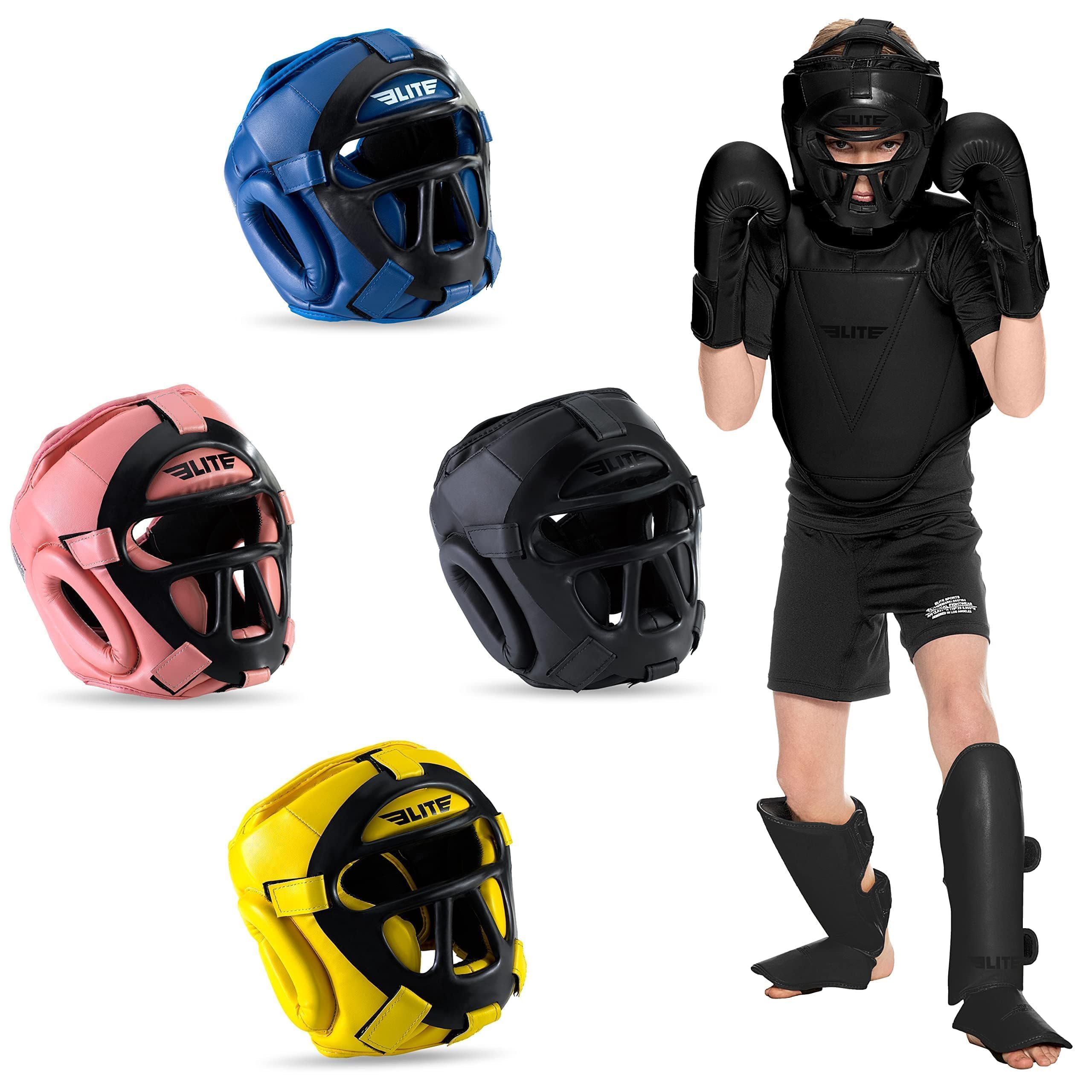
1. Elite Sports Kids Boxing Headgear
Our pick — 4.5+★ from 350+ verified ratings; the strongest balance of quality and price.
Three layers of foam and a guard your kid can strap on without help
What makes this the pick for most families is simple: it stays on. The PU leather outer — a smooth synthetic leather that wipes clean after practice — wraps triple-layer foam padding, so impact spreads across a wider area instead of one hot spot over the ear. The pre-curved shape is the quiet hero here. It hugs the head shape so the guard moves less during live grappling, which is exactly when a loose guard becomes a distraction your kid has to fight through.
Fit is where this earns its keep, and it earns it across a big age span — the listing covers ages 4 to 13 and comes in small, medium and large. The adjustable head height, head cap, chin strap and Velcro closures mean one guard grows with a kid through a couple of seasons. Velcro is a small thing that matters a lot: your child can put it on and take it off alone in a crowded gym, no parent required. The removable face shield gives a 180-degree field of view when fitted, so peripheral vision stays open even with it on, and pulling the shield leaves better ventilation for long training blocks.
Here is what the mat time actually looks like. Across parents of young wrestlers, the thing that wins people over is the fit — a snug, secure hold that survives sparring, which is the number one thing a head guard has to do. Protection runs a close second in how parents talk about it, and the thick cushioning around the whole head is the reason. Durability holds up as a recurring theme, and the low weight means a kid is not fighting the guard during a third period.
The case for it
- Triple-layer foam padding spreads impact across the whole head, not one spot
- Pre-curved design limits movement during scrambles and sparring
- Velcro closures let a kid gear up alone
- Removable face shield keeps a 180-degree view when fitted
- Covers ages 4 to 13 in three sizes
What to weigh first
- You need to match the size to your child’s age band, not their grade
- The face shield adds bulk if your wrestler only wants ear coverage
- Velcro straps need a check before every match to stay tight
Reach for this if: you want one head guard that covers practice, sparring and match day across a wide age range.
Think twice if: your wrestler is at the very top of the age band and needs the largest shell available — check the size chart against head measurement first.
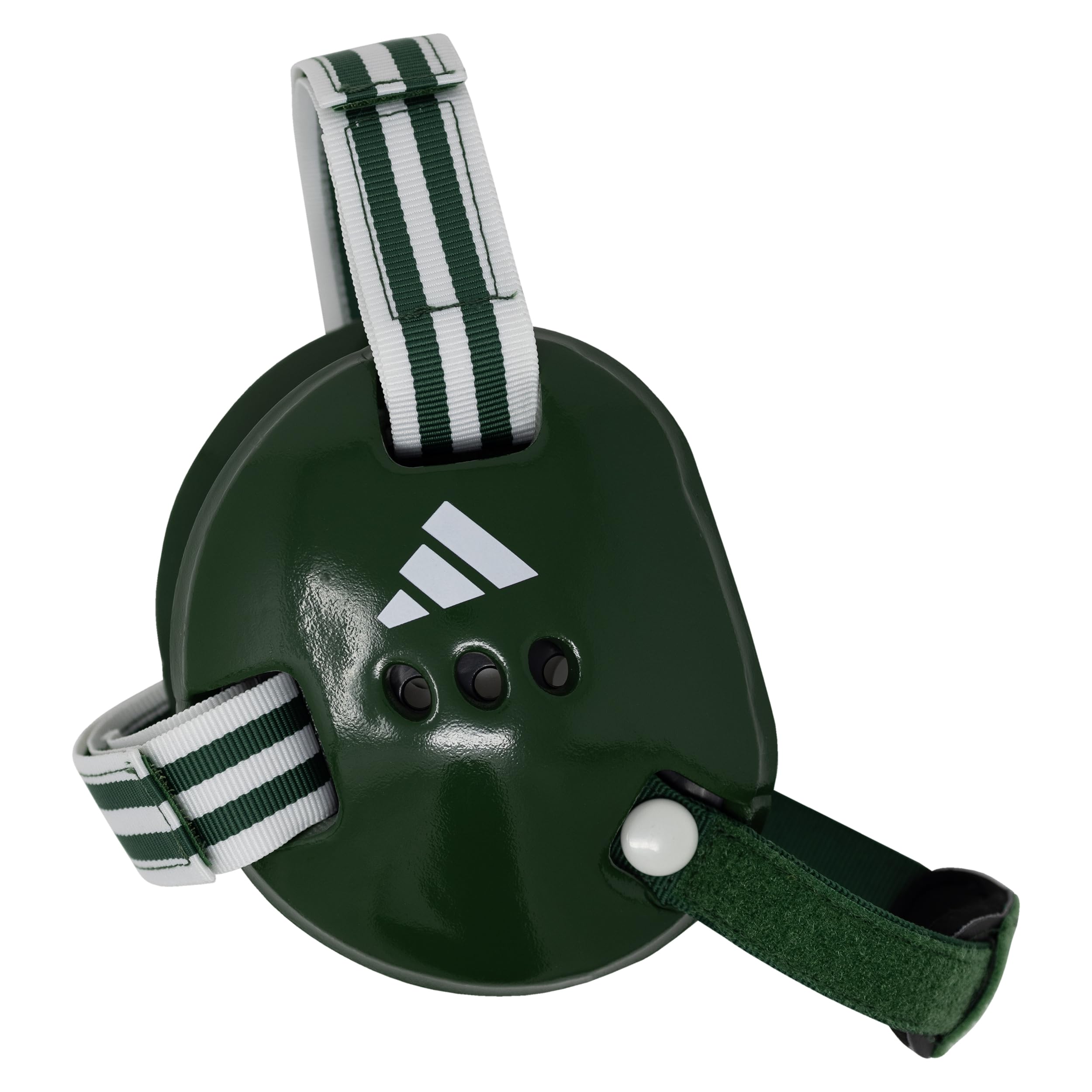
2. adidas Youth Response Jr. Wrestling Ear Guard
A small-footprint ear guard built around deep-molded cups
Some kids hate a bulky head guard and wrestle better in something minimal. The adidas Response Jr. is that guard, and it earns its spot on size: measured at 5 x 2 x 1 inches versus the Cliff Keen Youth Signature at 7 x 7 x 2.4 inches, it is the smaller, tighter unit of the two. Inside are injection deep-molded internal plastic ear cups — plastic shaped and pressed into a hard cup that holds its form over the ear — wrapped in molded foam. Three adjustable straps with a hook-and-loop closure (the Velcro-style fastening) cinch it down.
Here is the honest part, and it matters before you buy. Sizing is the mixed note on this guard. Some young wrestlers find it exactly right, and others find it runs very small — a difference that is about head size and age, not about build quality. Quality itself is what families rate highest on this piece, and the value is a recurring theme as well. Treat the size chart as a starting point and measure your child’s head circumference, especially if they are on the older end of youth.
Where it makes sense: a first-season wrestler or a kid who needs ear protection but fights anything heavy. The deep-molded cups do the core job of covering the ear, and the three-strap layout is quick to adjust between kids if you are kitting out more than one. Just budget the two minutes to fit it properly before the first practice.
Where it wins: the deep-molded cup construction is the defining detail — a hard, shaped plastic shell over the ear, wrapped in molded foam and pulled snug with three adjustable straps and a hook-and-loop closure.
The honest trade-off: this guard skews small. Some kids take it straight from the start and others need to size up, so measure the head rather than guessing.
The tightest fit wins here: a low-bulk ear guard for a young or first-season wrestler who will not tolerate a big helmet.
Measure before you commit: sizing is the recurring snag, and a guard that pinches gets taken off mid-practice.
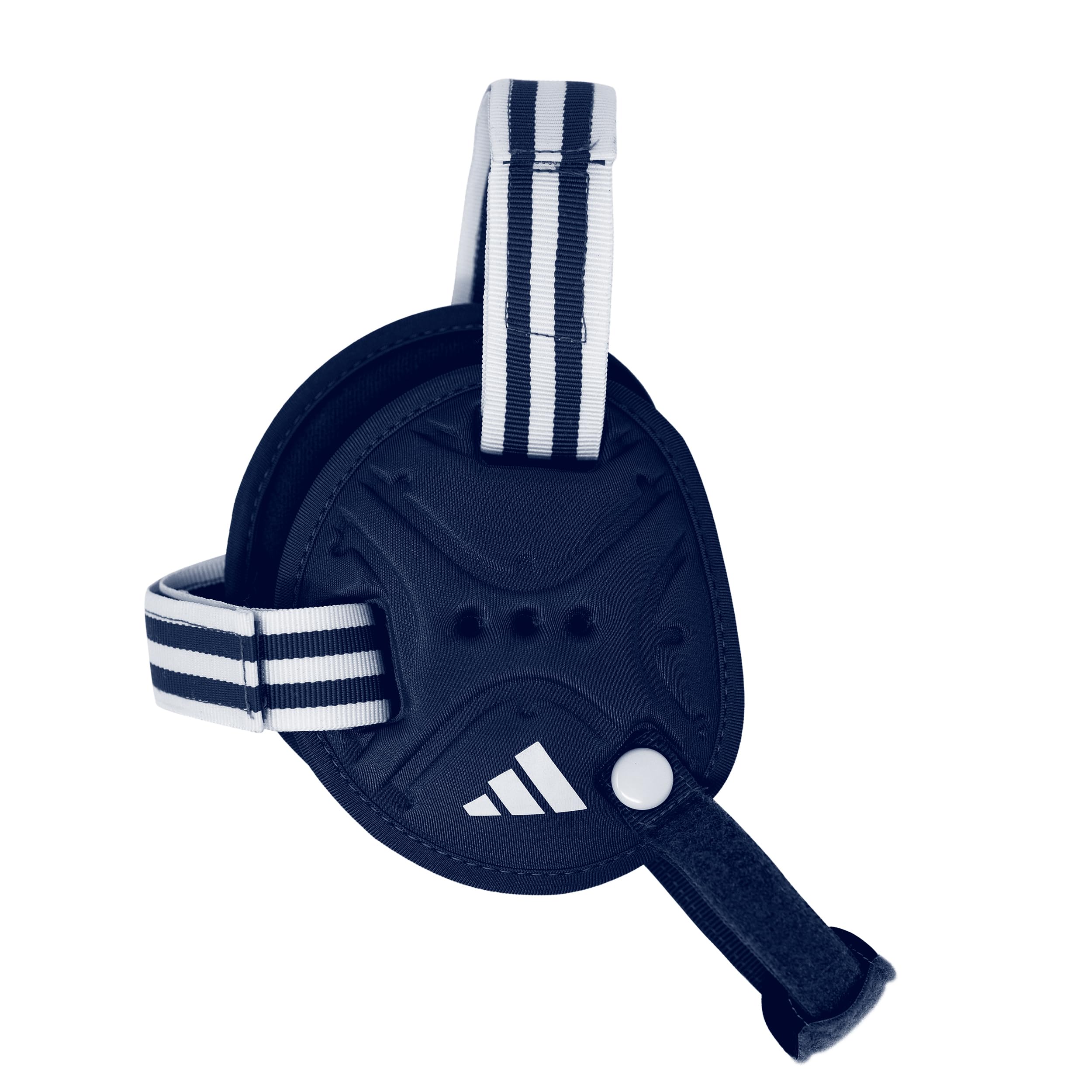
3. Adidas Youth Wizard Wrestling Ear Guard
Low-profile ear cups and a soft chin pad for teens who want less bulk
The Wizard is the teen build of the adidas ear guard line, and the low-profile internal ear cup is the detail that sells it. Closed cell foam — foam with sealed cells that holds its shape instead of soaking up sweat — means the guard does not get heavy and soggy over a long tournament. A soft chin pad sits under the jaw and takes the pressure off. The three-strap system is fully adjustable, so you are tuning the hold rather than hoping it lands right.
What the review pages settle on: quality is strong here, and comfort is the second thing wrestlers notice. The safety angle comes up too — it does the job of protecting the ear. The honest catch is that the fit is a mixed bag. Some teens wear it without fuss while others find it does not hold position through harder matches, and adjustability is a similar story. That is worth knowing if your wrestler is intense on their feet and reverses fast.
This one suits a teen past the first-season stage who wants a guard that sits close to the head without a big shell. The size is listed as one size, so there is no size chart to argue with — but that also means less room to tune the fit for a larger or smaller head. The soft chin pad is the detail most likely to matter over a full day of matches.
Why teens like it
- Low-profile ear cup keeps the silhouette tight against the head
- Closed cell foam holds its shape through a long tournament
- Soft chin pad removes pressure under the jaw
- Fully adjustable three-strap system
- among the most-reviewed guards in this lineup
Where it can let you down
- Fit and adjustability draw mixed notes — it can shift during tough matches
- One-size listing leaves less room to fine-tune for an unusual head shape
- Not the tightest hold for a fast, reversal-heavy wrestler
Best for: a teen wrestler who wants ear protection that stays low-profile and soft under the chin.
Worth a second look if: your wrestler has a head size well off the norm — the single size means the fit has to land on its own.
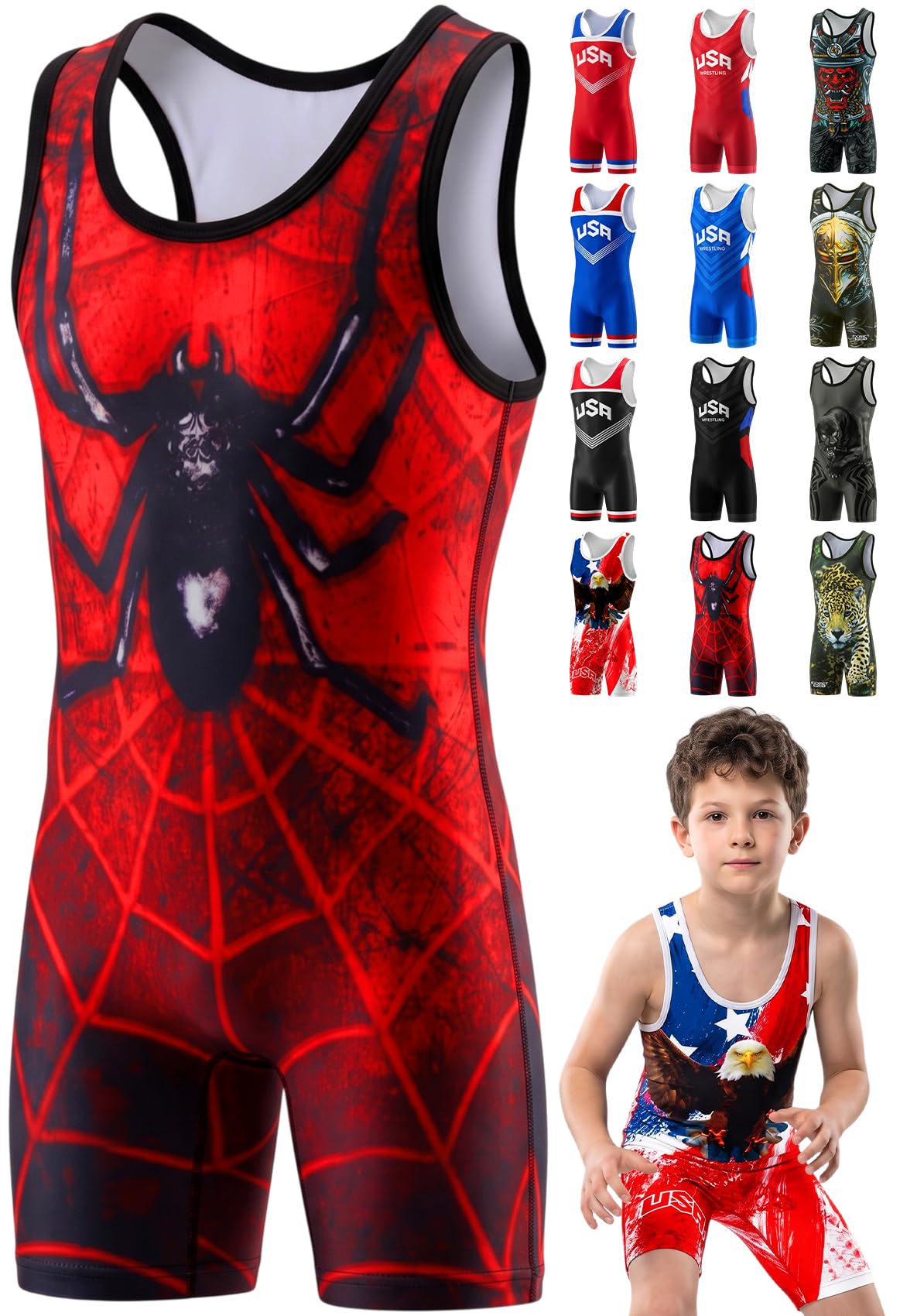
4. Exxact Sports Sublimated Adult & Youth Wrestling Singlet
The compression singlet that fits like it was sized for your kid
Singlets are the piece parents get wrong most often. The Exxact Sports Singlet earns its place with a non-slip thigh band that keeps the leg openings in place during scrambles — the small detail that separates a singlet that stays put from one that rides up. A compression fit keeps the fabric tight to the body, so there is nothing loose for an opponent to grab. The polyester and spandex blend has four-way stretch, so it moves in every direction your wrestler does. Flatlock seams (stitching that lies flat) sit against the skin instead of rubbing.
Fit is what families talk about most with this singlet, and it runs close to true to size. One parent reports it accommodates a 5’7″ 155lb wrestler perfectly — real proof the sizing is not cosmetic. Quality and the material build get steady praise, and the moisture-wicking fabric keeps a kid from cooking during intense matches. On sizing: the size chart warrants a careful read, because while many find it true to size, others note the chart itself is off. Measure and use the chart as a guide, not gospel.
One extra detail: some listings show this singlet as an Olympic costume option, so the look holds up beyond the mat. It is a competition piece first, though, and the flatlock seams and moisture-wicking build are the reasons a wrestler stays comfortable through a full day.
What sells the fit: a polyester and spandex blend with four-way stretch, flatlock seams and a non-slip thigh band — the combination that keeps a singlet tight and in place through a scramble.
The size note to know: the chart is the weak link. Some find it true to size and others find the chart inaccurate, so measure your wrestler before ordering.
Pick it if you want compression and stretch: the four-way stretch and thigh band keep this singlet from riding up during live wrestling.
Not the pick if you want to order blind: the size chart is the recurring complaint, and this is a fit-critical piece.
5. Cliff Keen Youth Signature Wrestling Headgear (Black)

The bash-proof shell that shows up for weekend-long tournaments
The Cliff Keen Youth Signature leads with its shell. Its polycarbonate composite inner shell is a hard, tough plastic composite — the kind of material that takes a knock without deforming — and the whole guard weighs in at 0.15 kg. Cliff Keen’s own description calls the polycarbonate composite shell tough as nails but light as a feather. A four-strap adjustable fit lets wrestlers of different sizes dial in a secure hold, and the youth design is built for younger athletes, so a beginner gets a proper fit without a hand-me-down feel. Compared with the adidas Response Jr. at 5 x 2 x 1 inches, the Cliff Keen sits larger at 7 x 7 x 2.4 inches — a bigger shell with more head coverage.
Where this earns its place: weekend-long youth tournaments. The smaller size relative to the larger Signature Headgear counterpart is the point — same protection level, scaled for a kid. The chin strap pad adds comfort and stability, and it works with an optional CSM chin cup sold separately. The shell design traces back to the legendary E41 shape, which is why it looks like a familiar, proven head guard.
The honest catch: ease of use is mixed. Some wrestlers find it stays in place well, while others find removing the plastic covering over the straps difficult, especially at first. Practical advice — teach your kid to loosen the straps fully before pulling the guard off, and the removal fight goes away. Comfort, durability and ear protection all hold up in what families report.
The construction sell
- Polycarbonate composite shell stands up to a hard season
- Four-strap fit dials in across head sizes
- Chin strap pad adds comfort; CSM chin cup fits as an optional add
- 0.15 kg build stays light for a kid, even at tournaments
- Scaled youth version of a long-running shell design
The strap reality
- The plastic over the straps is tricky to remove until your kid learns the trick
- Larger shell than a low-profile guard like the adidas Response Jr.
- CSM chin cup is optional and sold separately
Built for the long weekend: a sturdy shell that shrugs off tournament use and stays light at 0.15 kg
Give the straps a practice run: the guard fights a bit when it comes off until your wrestler learns to loosen first
6. Trymaker Wrestling Headgear with Chin Cup

Extra ear vents and a silicone chin cup for wrestlers who want to hear their coach
Three details separate this guard. First, ventilation — there are more holes around the ear area, which is where heat builds up worst under a guard, and better airflow also means your wrestler hears the coach clearly from the corner. Second, the chin cup. A soft silicone chin cup takes pressure off the chin and neck instead of a plain strap digging in. Third, the adjustment: a 5-point hook-and-loop system means five places to tune, so you can land a secure, stable fit and adjust per movement.
The protection comes from a dual-layer build — an ABS outer shell (a tough, scratch-resistant plastic) over 0.5-inch thick shock-absorbing foam. Absorbing shock is the whole job, and the thickness here is where the ear protection comes from. The foam sits directly against the ear and spreads the force over a wider area.
Honest durability note: the ABS shell is scratch-resistant, but durability is a mixed report here — some wrestlers get a full season out of it and others see it break after one use. Treat that as a fit and luck story rather than the norm. The chin strap also gets mixed feedback. What the review pages praise most is straightforward: quality of build, then a fit that accommodates older kids fine, then protection covering the ear well. It is set up for ages 10 and up, so it fits a teen wrestler better than a small kid.
The design details that help: a 5-point hook-and-loop adjustment system, a scratch-resistant ABS outer shell and 0.5-inch thick shock-absorbing foam, plus more ventilation holes around the ears for airflow and sound.
The honest durability question: the shell is tough, but not every unit survives the season — and the chin strap is a mixed note. Worth knowing if your wrestler is rough on their gear.
The ventilation pick: a guard with extra ear airflow and a silicone chin cup that eases pressure on the chin and neck
skip it if: your wrestler is very hard on gear and you want the toughest shell for the very first season — this builds for age 10 and up and durability varies per unit
7. Sisttke Kids Wrestling Shoes Boys Girls Youth Boxing Shoes

A first wrestling shoe built with room for wider feet
If your kid has wide feet, most wrestling shoes are a squeeze. The Sisttke Kids Wrestling Shoes earn their spot because the toe cap is widened from the start, so a wide foot has room instead of needing a break-in that hurts. Microfiber leather and mesh panels keep air moving for training and matches. The thin, firm sole is the feedback piece — less cushion means your wrestler feels where their weight is on the mat, which is how balance gets better.
The sole is rubber, which gives the traction and flexibility needed to change direction on the mat. A zero-drop build — heel and forefoot sit level, no raised heel — is the spec families rarely think to check on a wrestling shoe. This is straight from the product description: a zero drop and wide width toe, which may not suit every sport, so this is a wrestling and boxing shoe first.
Fit is the standout. Families say it runs true to size and works well for wide feet, which is a rare stretch of praise in youth footwear. Quality is the most-praised trait by a clear margin. One parent’s review, paraphrased, says they perform as well as more expensive brands — a useful note if you are kitting out a first-season wrestler. Sizing is normal standard, so check the chart and measure the foot.
Why parents pick it
- Toe cap widened for a wide foot
- Zero-drop sole keeps the foot level for mat feel
- Microfiber leather and mesh stay breathable
- Rubber sole delivers traction and flexibility
- True-to-size fit
The limits to know
- Zero drop and wide toe are not ideal for every sport
- Do not machine wash — wipe down and air dry
- It is a wrestling and boxing shoe first, so do not bank on it for court sports
Fit-first footwear: the wide toe and true-to-size fit make this the safest first wrestling shoe for a wide foot.
Avoid for: a kid who wants cushion underfoot — this sole is deliberately thin and firm for mat feedback.
8. ASICS Kid’s Matflex 7 Grade School Wrestling Shoes

Breathable mesh and a cushioned sockliner for a full season of practice
The Matflex 7 is the practice-shoe build. It pairs breathable mesh underlays — the open-weave panels that let air move through the shoe — with supportive overlays that stiffen the structure so the foot does not roll during sudden direction changes. Underfoot, an E.V.A. sockliner is a foam insole that cushions each step. That foam is what you feel when your kid lands after a takedown.
Quality is what families rate highest on this shoe, and comfort comes next in how they talk about it. The breathable mesh does its job in a hot gym. The fit is the piece to watch — some kids wear it exactly right and others need a half size or a different width. Durability draws mixed notes, so treat this as a practice shoe that may not be the one you put on for every tournament.
Compared with the Sisttke, this one leads on cushion — the E.V.A. sockliner under the foot is a real comfort add the Sisttke’s thin sole does not offer. Choose it if your wrestler practices multiple times a week and wants a shoe that feels good on, and choose the Sisttke if wide-foot room is the priority.
Where the ASICS leads: breathable mesh underlays, supportive overlays and an E.V.A. sockliner that cushions underfoot — a practice-shoe combination built for comfort over long sessions.
The fit caveat: sizing draws mixed notes, so confirm the size against the chart before ordering.
Practice-day comfort: a breathable, cushioned shoe that feels good on a foot through a full week of practices.
Look elsewhere if: you want the toughest shoe for the long haul — durability is the mixed note on this build.
9. ASICS Kid’s Snapdown 4 Grade School Wrestling Shoes

High-top support and a circular tread built to hold the mat
The Snapdown 4 leads with grip. A durable synthetic rubber outsole with a unique circular pattern is the reason — the circular tread bites across the mat so quick cuts and fast escapes do not slide. The high-top structure wraps the ankle, and stitch-down overlays mean the upper is stitched to the sole rather than just glued, which is stronger. Breathable mesh underlays run alongside the overlays, so the ventilation sits in the shoe’s frame.
Wrapped lateral and medial structure is the second support detail. That means the shoe locks the foot on both sides, so it moves as one unit with the foot instead of letting it shift inside. Lace-up closure — a full lace system that holds a custom fit. Quality is what families rate highest here, and colour and comfort follow. Durability holds up in reports, with a full season the described expectation for the circular rubber outsole.
Here is what to check first: fit is the split. Some wrestlers find it sized correctly and easy to put on, others find it runs small and tough to get on. Trust the size chart and measure the foot. Compared with the Matflex 7 above, this one’s outsole is more visibly traction-focused — circular pattern versus mesh-and-overlay emphasis — so if your wrestler is the quick-cut type, go with the Snapdown.
Why it grips
- Circular rubber outsole pattern is built for traction on the mat
- High-top design wraps the ankle
- Stitch-down overlays reinforce the upper-to-sole bound
- Breathable mesh underlays keep air moving
- Lateral and medial structure locks the foot in
What to check first
- Fit runs split — some find it small and hard to put on
- If you need wide-foot room, this shoe does not guarantee it
- Getting the foot in takes a moment with the high-top build
Traction first: a high-top shoe with circular tread built for cutting and quick footwork on the mat
Check the sizing twice: this shoe runs split on size and fit, so measure the foot before you order
Know the Specs
Headgear shell and foam
The shell is the hard layer that takes the knock — polycarbonate composite, ABS or molded plastic. The foam underneath is where shock spreads. Thicker foam spreads impact over a wider area, which matters over the ear. Closed cell foam holds its shape rather than soaking up sweat, so a guard does not get heavy and soggy over a long day. Ventilation holes help airflow and can let a wrestler hear their coach from the corner.
Shoe sole and drop
A wrestling shoe’s sole is thin and firm on purpose. Less cushion lets the foot feel the mat, which is how balance and weight control develop. Zero drop means heel and forefoot sit level — no raised heel — so the foot stays flat and stable for wrestling and boxing. The outsole grip pattern is what stops the foot sliding. Rubber outsole grip and thin firm soles are the two features to weigh against cushion if your wrestler practices often.
Singlet fit and stretch
A competition singlet is a compression garment — it should hug the body. Polyester and spandex with four-way stretch is the build that moves in every direction. Flatlock seams sit flat against the skin instead of a raised seam that rubs. A non-slip thigh band keeps the leg openings in place during scrambles. A loose singlet gives an opponent something to grab.
Adjustment systems
More adjustment points mean more room to dial in the fit. Straps and chin cups spread the tension so a guard does not slide up during a scramble. Hook-and-loop closures let a kid put the guard on and off alone, which matters in a crowded gym. A chin cup or pad under the jaw takes pressure off, and 5-point systems give you more places to tune than three-strap designs.
Common Questions
What does headgear actually protect in youth wrestling?
How do I size youth headgear for a growing kid?
Do wrestling shoes run true to size?
Should my child wear a singlet under a wrestling uniform?
How long should youth wrestling gear last?
Is a chin cup better than a plain strap?
Do wrestling shoes have to be thin-soled?
How should I clean wrestling shoes and singlets?
Can one head guard work for both practice and matches?
Is the adidas Wizard or Response Jr. better for a small kid?
The Bottom Line
For most families shopping youth wrestling gear, the Elite Sports Kids Headgear is the pick because it covers ages 4 to 13 in one design that stays on during live grappling, backed by triple-layer foam padding. If you want a bigger shell with more head coverage, the Cliff Keen Youth Signature brings a polycarbonate composite shell and a four-strap fit that survives tournament weekends. For the mat itself, the Exxact Sports Singlet gives a compression fit with a non-slip thigh band. And when wide feet are the deciding factor, the Sisttke Kids Wrestling Shoes widened the toe cap from the start so a wide foot has room.
Start with headgear and shoes — those two pieces are what a season actually rides on — and add a singlet once size is settled. Measure every piece before you order and check the fit notes above; in this category, fit is what decides whether the gear gets used.
How we choose
We do not accept paid placement. Every pick is matched to a real buyer and a real use-case; we do not hands-on test units.
Sources
Specifications: manufacturer listings and product documentation. Review insights: verified customer reviews, as of November 2026. Pricing: not shown on this page (it changes often); check the current price via the retailer link.
As an Amazon Associate, Tactical Gear Guy earns from qualifying purchases. This does not affect which products we feature.