Specs are compiled from manufacturer listings and verified buyer reviews and can change over time — please confirm the key details on the product page before buying.
A work rain jacket only earns its place if you finish the shift as dry as you started it. That means sealed seams instead of a spray-on coating, a hood that stays put in wind, and fabric that survives scaffolding, truck beds, and loading docks. Below are nine jackets that hold up on the job, sorted by what each does best.
This guide is built by comparing the manufacturers’ published specifications and the patterns across verified customer reviews, so you get each pick’s real strengths and trade-offs instead of marketing spin.
Each pick below lists where it shines and where it falls short. Here is the honest rundown of the best work rain jackets for wet days on the job.
Top Picks


How To Choose The Best Work Rain Jackets
A work rain jacket has a harder job than a weekend shell. It has to shed rain for a full shift, survive snags on scaffolding and truck beds, and often keep you visible to traffic at the same time. Match the jacket’s build to the conditions you actually work in.
Waterproof versus water-resistant
Water-resistant means the fabric shrugs off a light drizzle before it eventually soaks through. Waterproof means the shell is built to keep rain out entirely, usually through a coating plus sealed seams. For a job that keeps you outside for hours, you want waterproof and seam-sealed, because every unsealed stitch hole is a place water finds.
Visibility classes you will see on the label
Many work jackets carry a hi-vis class rating, which tells you how much reflective and fluorescent material the garment has and where it sits. A higher class generally means more visible coverage, which matters on roadside crews and night shifts. Check that the rating matches what your site requires before you buy.
Breathability and the sweat trap
A jacket that keeps rain out but traps your body heat will leave you damp from the inside. Look for vented backs, eyelets, or a breathable membrane so moisture can escape. On a long shift, that airflow is the difference between comfortable and clammy.
Insulation versus a pure shell
An insulated jacket keeps you warm on cold, wet days without extra layers underneath. A pure shell is lighter and lets you add or remove fleece as the temperature swings. If you work in a freezer or through winter, insulation earns its weight; in mild rain, a shell layers better.
Side-by-Side Comparison
| Model | Best For | Waterproofing | Visibility Rating | Insulation | Amazon |
|---|---|---|---|---|---|
| Carhartt Monterey Jacket★ Best Overall | Day-to-day wet weather work | Waterproof, fully seam-sealed | — | Uninsulated shell | Amazon |
| Portwest UH443 Hi-VisBest Visibility | Roadside and high-traffic sites | PVC-coated 190T polyester | Hi-vis with reflective tape | Uninsulated | Amazon |
| TICONN Hi Vis BomberBest Cold-Weather Value | Cold-weather outdoor work | Waterproof bomber shell | ANSI Class 3 | Fleece-lined | Amazon |
| toolant Waterproof Safety Jacket | Winter construction and farm work | 3000mm rating, PU coating | Type R Class 3 ANSI | 180g insulation | Amazon |
| EI Sonador Classic Long Rain Coat | Full-length coverage in steady rain | Water-resistant with hood | — | Uninsulated | Amazon |
| Ergodyne GloWear 8365 | Road, rail, and survey crews | Waterproof, breathable shell | Type R Class 3 | Uninsulated | Amazon |
| Helly Hansen Impertech Guide Coat | Wet marine and field work | Impertech, MicroWeld seams | — | Uninsulated | Amazon |
| Carhartt Shoreline Jacket | Heavy-duty storm work | Storm Defender, waterproof | — | Loose fit for layering | Amazon |
| Viking Journeyman FR Jacket | Freezer and flame-risk sites | Waterproof, windproof, FR | Reflective chest straps | Insulated to -30C/-22F | Amazon |
Detailed Reviews
1. Carhartt Men’s Monterey Jacket
Our pick — 4.5+★ from 750+ verified ratings; the strongest balance of quality and price.
The everyday shell that seals out rain without turning your shift into a sauna.
Here is the jacket to reach for when you just need the rain to stop reaching you. It is waterproof and fully seam-sealed — meaning every stitch line is taped so water cannot sneak through the needle holes — with waterproof zippers and an adjustable hood to cover the gaps. That build is why it holds the top spot: it works for a warehouse hand, an electrician, or any trade that moves between indoors and out.
What wins people over is the overall build quality, which draws by far the most praise on the review pages. Water resistance is the second-biggest talking point — the shell keeps rain out in real storms and blocks wind too. It also packs down into a pocket when the sun breaks through, so it lives in a truck cab without taking up space. The looser cut leaves room in the chest and arms for a sweatshirt underneath when the temperature drops.
The catch is sizing. Fit gets strong marks overall, but sizing runs mixed for some buyers, so check the size chart against a jacket you already own rather than guessing. It is also an uninsulated shell, so below freezing you will want a mid-layer working with it. At 4.5+ stars across 700+ ratings, this is the crowd favorite for good reason.
What Works in the Rain
- Fully seam-sealed shell with waterproof zippers that block rain at the seams
- Packs into its own pocket, so it stores small in a truck or locker
- Adjustable hood, cuffs, and hem let you seal the fit against wind
- Room in the chest and arms for layering a sweatshirt
What to Watch
- Sizing feedback is mixed, so confirm your size before ordering
- No insulation, so it needs a mid-layer in freezing weather
Go for this if: you want one reliable waterproof shell that travels light and handles mixed wet weather.
Look elsewhere if: you need built-in warmth for sub-zero shifts — this is a pure shell.
2. Portwest UH443 Hi-Vis Contrast Rain Jacket
Built for the roadside, where being seen matters as much as staying dry.
If your job puts you near moving traffic, this is the pick. The bright hi-vis fabric and reflective tape — strips that bounce light back to a driver — improve recognition at a distance, and the contrast panels help you stand out in low light. The bright hi-vis fabric and reflective tape improve recognition at a distance, which is why it suits construction, logistics, or highway sites.
The waterproofing comes from a PVC-coated 190T polyester shell with a water-repellent finish that keeps the fabric cleaner for longer. For airflow, a vented back yoke and eyelets let heat escape so you are not stewing on a long shift. Big front pockets hold tools, and the pack-away hood flips out fast when the weather turns.
Worth knowing: rain protection is mixed for some buyers. Some stay bone dry, while others told of soaking through in light steady rain — so if you are out in a persistent downpour for hours, weigh that against a seam-sealed shell like the Carhartt Monterey above. Sizing is also mixed, which makes the fit chart worth a close look.
Where it shines: visibility and fit are the parts buyers rate highest, and it accommodates bigger frames with room to move.
Fair caveat: it is the lightest-duty waterproofing on this list, so treat it as a strong light-to-moderate rain jacket rather than a monsoon shell.
Reach for this if: your shift puts you beside traffic and compliance visibility is non-negotiable.
Think twice if: you work long hours in heavy, steady rain.
3. TICONN Hi Vis Safety Bomber Jacket
A fleece-lined bomber that keeps the chill off while the rain bounces away.
For cold, wet mornings where a thin shell leaves you shivering, this bomber brings warmth into the mix. The fleece lining sits inside a waterproof shell rated ANSI Class 3 for high visibility — meaning more reflective coverage for low-light work. The stowable hood, mic strap, retractable hem, and windproof zipper with snap closure all aim at keeping the weather on the outside.
Fit is the aspect buyers praise most, and value for money follows close behind. It fits well for a wide range of workers, from shoveling snow on the street to outdoor site work. Visibility ranks high as well, so it does its safety job at dusk and dawn.
One real trade-off: sizing runs both ways depending on the buyer, with some finding it huge and others saying it runs small. Order carefully and read the chart. And unlike the pure-shell Carhartt Monterey at number one, this one commits to warmth — great in the cold, but warmer-bodied workers may find it much at milder temperatures.
The winning formula: fleece warmth plus a waterproof, hi-vis shell in one jacket.
Watch the fit: sizing swings between buyers, so measure first.
Good match for: cold-climate outdoor work where you want warmth and visibility together.
Not the pick for: warm-weather rain, where the fleece lining will run hot.
4. toolant 100% Waterproof Safety Jacket
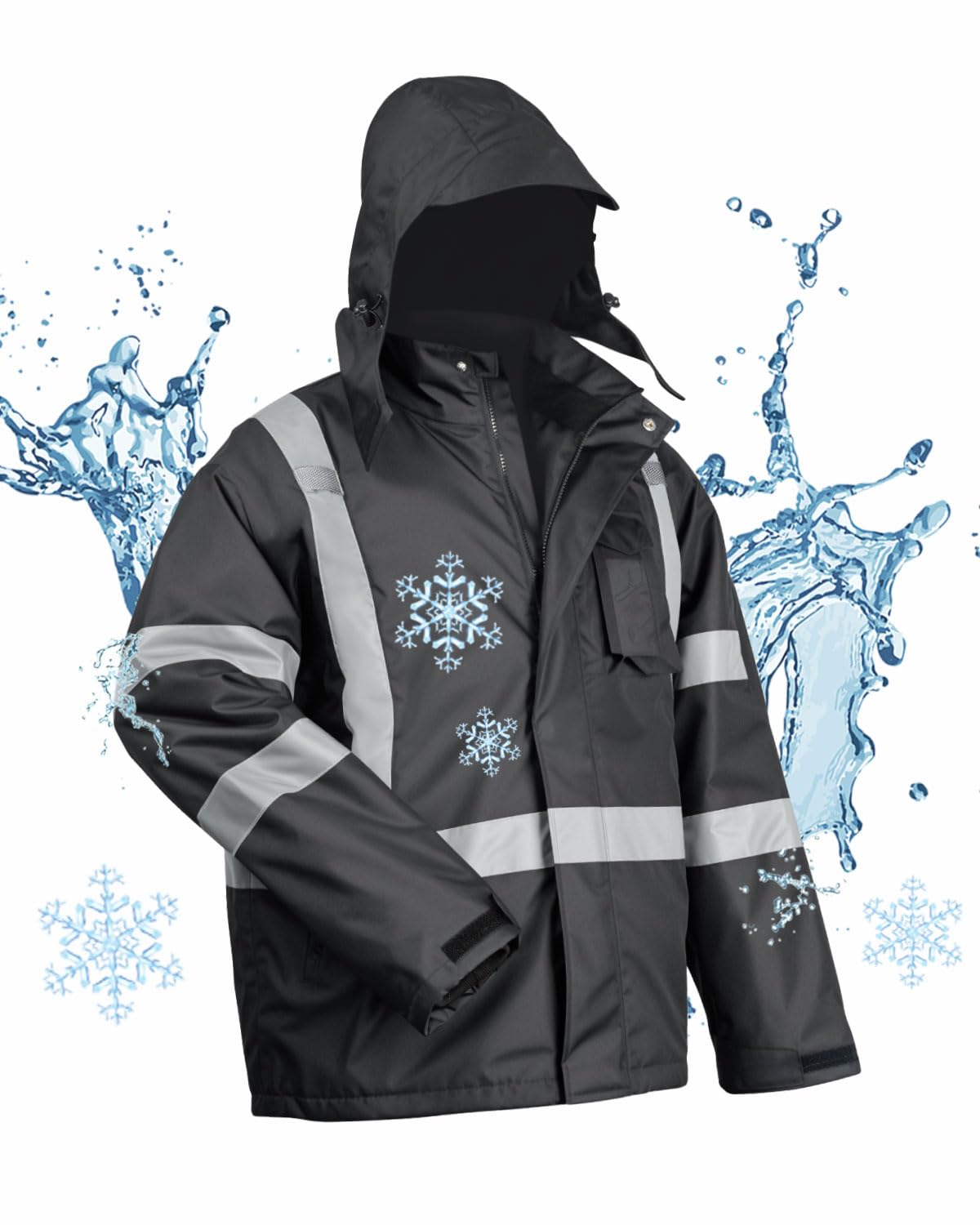
Winter workhorse with a 3000mm waterproof wall and warmth that moves with you.
For freezer shifts, farm work, and heavy-equipment jobs in the cold, this jacket does two things at once. A 3000mm waterproof rating — a measure of how much water pressure the fabric resists — combined with a PU coating keeps rain and slush out. Inside, 180g insulation holds warmth without the bulk, so you can still move and reach.
Type R Class 3 ANSI certification covers reflective strips the maker says hold up after repeated washes, and a rigid hood brim keeps rain off your face. Pockets are plentiful: exterior pockets, interior pockets, radio mic tabs, and adjustable velcro cuffs with ribbing to seal the wrists.
The honest weak point is the zipper. Zipper quality draws negative feedback, with some buyers reporting it broke — so treat it gently rather than yanking it in the cold. Otherwise quality and warmth are what buyers praise most, and it earns solid value marks for the price.
Why it earns its spot: insulated winter warmth and true waterproofing at once, with reflective strips that stay bright.
The one caution: the zipper is the part to baby — ease it, do not force it.
Pick it for: winter construction, freezer, or farm work where cold and wet hit together.
Pass if: you only need a light rain shell in mild weather.
5. EI Sonador Classic Long Rain Coat

When the rain wins by soaking your thighs, this long coat keeps going lower.
Most jackets stop at the waist, leaving your upper legs to take the runoff. This one reaches below the knees, so the wet that usually creeps up your trousers gets blocked too. It is well-constructed and water-resistant, with a hooded design and a loose fit that lets you stuff layers underneath. The 2.2-pound weight is light enough to keep on through a shift.
Quality is the aspect buyers praise most, and durability and construction follow close behind. Length draws steady praise as well — the full-length cut is the whole reason people pick this one over a standard waist jacket. It does exactly what a long raincoat is meant to do.
Here is the thing the maker is upfront about: clothes underneath can still feel damp, not because the coat leaks but because a long coat breathes less and traps body heat and condensation. Wear a moisture-wicking base layer to keep that in check. This is a coverage play, not a breathability play.
Why It Covers More
- Reaches below the knees to shield upper legs from runoff
- Loose fit leaves room to layer clothing underneath
- Hooded, water-resistant shell at a light 2.2 pounds
The Trade-off
- Long coats breathe less, so condensation can make under-layers feel damp
- It is water-resistant rather than a fully sealed technical shell
Best chosen for: drivers, supervisors, and anyone standing in steady rain who wants leg coverage.
Skip if: you are moving hard all shift and need maximum airflow.
6. Ergodyne GloWear 8365 Hi-Vis Rain Jacket

The rain shell survey and rail crews reach for when the weather turns nasty.
This one carries a Type R, Class 3 rating with 3M Scotchlite reflective material on the chest and arms — the kind of reflective that returns light to a driver’s eyes at night. It pairs that visibility with a waterproof, breathable polyester shell. The breathable build lets moisture escape so you stay cooler on the move, which is why it suits road construction, utilities, emergency response, airline, railway, and survey crews.
The inset hood tucks away when the weather clears, and the shell fits well over a regular coat for colder days. Water resistance draws the most positive feedback, with buyers noting the waterproof material on the inside keeps them dry. Durability and value hold up too, and it cleans up easily.
One sizing note: several find it runs bigger than stated. If you are between sizes or want a trimmer fit, size down. Beyond that, this is the work-crew staple for good reason.
The real draw: crew-grade reflectivity plus a breathable waterproof shell.
Small catch: the cut runs generous, so a trimmer fit means ordering down.
It fits: rail, road, utility, and survey crews who need breathable hi-vis rain cover.
Not for you if: you want a slim, tailored fit — this one cuts roomy.
7. Helly Hansen Impertech Guide Coat

A knee-length stretch shell that flexes with you on the wettest jobs.
Built from knit polyester with a stretch polyurethane coating, this coat moves as you bend, reach, and climb instead of fighting you. MicroWeld seam construction seals the stitching to prevent leaks, and the back cape is ventilated for airflow so you stay drier on the move. A hood tucks into the collar when it clears, and side zippers give you quick access to inner layers.
It extends to the knees, which keeps your upper legs dry — the same kind of full-length coverage the EI Sonador offers, but in a heavier-duty build meant for marine and field work. Hook-and-loop cuff fasteners dial in a custom fit, and the generous cut layers over work clothes without binding.
Fair warning on bulk: it is a heavier-duty coat, so it carries more weight and stiffness than a packable shell. If you want something you can wad into a pocket, look to the Carhartt Monterey instead. For standing in relentless wet weather, this is the sturdier choice.
What stands out: MicroWeld seams and a ventilated back cape combine sealed waterproofing with real airflow.
Weigh this: it is a heavier, less packable coat than a light shell.
Made for: marine, dock, and wet-field work that demands a sealed, flexible shell.
Look elsewhere if: you need something featherweight to stash in a bag.
8. Carhartt Men’s Shoreline Jacket

The tough storm shell for long outdoor job-site days that just won’t quit.
Carhartt’s Storm Defender membrane is the headline here: it is waterproof and breathable, so it keeps rain out while moving sweat away so you are not wet from the inside. Cut with a loose fit, it layers cleanly over a sweatshirt when the temperature dips. Quality is the aspect buyers praise most by a wide margin, and it earns its reputation as a heavy-duty garment for real outdoor jobs.
Water resistance and durability both hold strong, and the fit accommodates real working bodies — including a moderate midsection — without feeling tight. For storm-heavy shifts this is the jacket that shrugs off weather that would drench a thinner shell.
The honest limit is warmth. Some buyers report it keeps them warm, while others feel the inner layer transfers cold from outside to skin — so it performs best as a shell over proper layers rather than a standalone insulator. Weight also draws mixed notes. Add a fleece underneath and it handles serious cold.
Storm-Ready Strengths
- Waterproof, breathable Storm Defender membrane keeps rain out and sweat moving
- Loose fit layers over a sweatshirt with room to spare
- Heavy-duty build that handles rugged outdoor work
Before You Buy
- Warmth is debated — it works best with a mid-layer rather than alone
- Weight feedback is split, so it is not the lightest pick
Choose it when: you face hard storms and want a durable shell you can layer under.
Consider another pick if: you expect a jacket to keep you warm with nothing underneath.
9. Viking Journeyman Insulated FR Jacket

Fire-rated, insulated, and rated down to minus 30C — built for the harshest sites.
This is the jacket for freezer workers, boat crews, and anyone on a site where flame risk and cold collide. The FR-treated 300 denier trilobal ripstop polyester with PU backing and front and back vents resists abrasion and punctures while letting air through. The fabric is self-extinguishing and tested against momentary contact with open flame.
It is rated down to -30C/-22F. Reflective chest straps and contrasting tape keep you seen, while the insulated Stormblaster hood, fleece-lined collar, and storm flap add warmth and wind block.
Two things to size up honestly. Fit is mixed — some find it great, others say it runs big. And durability plus zipper feedback is split, with some reporting it rips easily and zipper complaints surfacing. Treat the zipper and fabric with care on snag-heavy sites. For the temperature range and FR rating, though, it has few equals.
Where It Delivers
- Flame-retardant, self-extinguishing build tested for momentary flame contact
- Rated for cold down to -30C/-22F with insulated hood and fleece collar
- Reflective chest straps and contrasting tape for visibility
- Denier ripstop fabric resists abrasion and punctures
Know Before Ordering
- Fit is mixed, with some buyers finding it runs big
- Zipper and durability get split feedback, so handle it with care
The right call for: freezer, marine, and industrial sites that demand FR protection and deep-cold warmth.
Overkill if: you work mild-weather rain and have no flame-risk requirement.
Know the Specs
Waterproof Ratings and Coatings
A waterproof rating like 3000mm tells you how much water pressure the fabric can resist before moisture pushes through — a simple way to compare shells. A PVC or PU coating adds a water-blocking layer on top of the fabric. The most important detail is the seams: if they are not sealed or welded, rain finds the needle holes. Look for “seam-sealed” or “MicroWeld” wording when you want genuine waterproofing rather than a spray-on finish.
Hi-Vis Classes and Reflective Tape
Hi-vis class ratings (like ANSI Class 3 or Type R Class 3) describe how much fluorescent and reflective material a jacket carries and where it sits, so you can match the garment to your site’s requirement. Reflective tape returns light to a driver’s eyes at night or in low light, which is the whole point on a roadside or rail job. Higher classes generally mean more visible coverage — verify the rating against what your workplace demands.
Insulation and the Cold-Rating Game
Insulation is measured in grams, and a figure like 180g tells you how much warmth the jacket packs without adding bulk. A cold rating like -30C/-22F tells you the temperature range the maker claims the jacket handles. Insulated jackets are great for freezer and winter work but run hot in mild weather. A pure shell plus your own layers gives you more flexibility when temperatures swing through a shift.
Breathability and Venting
A breathable membrane or vented back lets body heat and moisture escape, so you are not soaked from sweat inside a waterproof shell. Vented back yokes, eyelets, and back capes all serve this purpose. On long shifts, breathability matters as much as waterproofing — a jacket that traps moisture leaves you as wet as one that lets rain in. Match the venting to how hard you are moving on the job.
Common Questions
What is the difference between a waterproof jacket and a water-resistant work jacket?
Will a hi-vis work rain jacket meet my site’s safety requirement?
Should I buy an insulated rain jacket or a shell I layer under?
How do I size a work rain jacket for layering?
Why do my clothes feel wet inside a rain jacket even when it is not leaking?
What does a 3000mm waterproof rating actually mean?
Are these jackets breathable enough for hard physical work?
Do I need a flame-retardant work jacket for freezer or industrial sites?
How long will a work rain jacket’s waterproofing last?
Which work rain jacket keeps my legs dry in heavy rain?
The Bottom Line
For most people, the work rain jackets winner is the Carhartt Monterey Jacket because it pairs a fully seam-sealed waterproof shell with a packable, layer-friendly build that handles day-to-day wet weather. If staying visible beside traffic is your priority, grab the Portwest UH443 Hi-Vis for its reflective tape. And for cold, flame-risk sites, the Viking Journeyman FR Jacket is the one to reach for, rated to -30C/-22F with a self-extinguishing build.
How we choose
We do not accept paid placement. Every pick is matched to a real buyer and a real use-case; we do not hands-on test units.
Sources
Specifications: manufacturer listings and product documentation. Review insights: verified customer reviews, as of November 2026. Pricing: not shown on this page (it changes often); check the current price via the retailer link.
As an Amazon Associate, Tactical Gear Guy earns from qualifying purchases. This does not affect which products we feature.