Specs are compiled from manufacturer listings and verified buyer reviews and can change over time — please confirm the key details on the product page before buying.
Your hands slip first, then the whole pose falls apart. A mat that feels tacky in a cool studio can turn slick the moment your hands get wet, and that is where most hot yoga sessions go wrong. Every mat below is built to hold grip once sweat starts. Some use a cork surface that gets tackier as you sweat. Others use engineered PU (polyurethane, a synthetic top layer) or rubber top layers made for high-heat classes. Which one suits you depends on thickness, weight, and footprint.
This guide is built by comparing the manufacturers’ published specifications and the patterns across verified customer reviews, so you get each pick’s real strengths and trade-offs instead of marketing spin.
Start with the surface material, because that decides wet grip more than anything else. A cork top grabs harder as it gets damp, while PU and rubber layers are engineered to stay tacky through a sweaty flow. Thickness then decides how much your knees and wrists are cushioned — a 2mm travel mat feels the floor, a 9mm one softens it. Below, you will find the right hot yoga mat for the way you actually practice.
Top Picks


How To Choose The Best Hot Yoga Mat
In a heated room, every mat claim gets tested by your own hands. Grip when wet matters more than grip when dry, so shop the surface material first and everything else second.
Wet grip is the only grip that counts
Look for a top layer built for moisture — cork that gets tackier as it dampens, or a PU and rubber surface engineered to hold through sweat. A dry-grip-only mat goes slick by the second standing sequence. Check whether the maker describes the grip as working wet, since that is the whole point in a heated class.
Thickness trades cushion for stability
A thicker mat, measured in millimeters, cushions knees and wrists on hard floors. Too much foam can make balance poses feel wobbly, because you sink instead of pressing into the ground. Travel-thin mats around 2mm feel the floor and suit strong standing work, while cushioned mats in the 4mm to 9mm range are easier on joints.
Size and weight decide whether you use it
Extra-long mats, measured in inches in the specs, give taller bodies room for a full stretch. Extra-wide mats let a wide stance breathe. But weight in pounds decides whether it leaves the house: a heavy mat stays home, a lighter one goes to the studio.
Side-by-Side Comparison
| Model | Best For | Surface Material | Thickness | Weight | Amazon |
|---|---|---|---|---|---|
| Liforme Special Yoga Mat★ Best Overall | Alignment-led practice with premium grip | Rubber with GripForMe | 4.2 mm | 2.5 kg | Amazon |
| Gaiam Performance TPEBudget Champion | Budget-friendly daily flows | Thermoplastic Elastomers (TPE) | 6 mm | 2 pounds | Amazon |
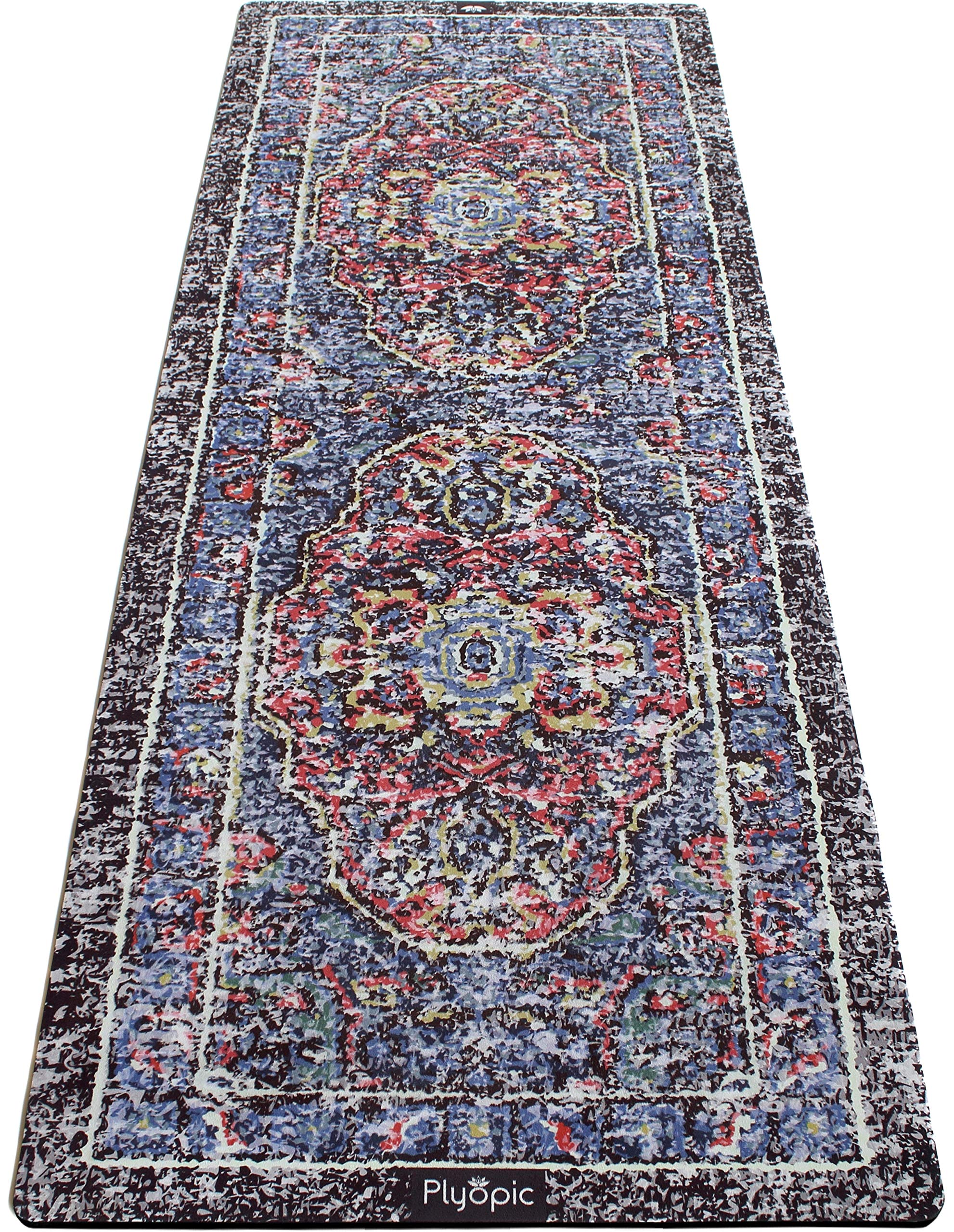
| Plyopic All In OneBest for Hot Yoga | Sweat-grip mat and towel in one | Natural rubber | 3.5 mm | 5.1 pounds | Amazon |
| Body By Yoga Luxury Cork | Cork grip that improves with sweat | Cork and natural rubber | 0.17 in | 5.9 pounds | Amazon |
| Plyopic Ultra Grip PRO | Extreme wet grip with alignment map | Natural Tree Rubber + Eco-PU | 0.17 in | 2.4 kg | Amazon |
| Satori Concept Cork | Extra-large cork surface for tall practice | Cork and rubber | 0.24 in | 8 pounds | Amazon |
| Tatago Hot Yoga Mat | Tall and broad bodies in hot classes | Tree rubber with PU top | 0.2 in | 8 pounds | Amazon |
| Sensu Large Yoga Mat | Home studio space with deep cushion | 16P-ECO with anti-tear mesh | 9 mm | 4.5 kg | Amazon |
| Liforme Travel Yoga Mat | Packing light for hot classes on the go | Eco-polyurethane and rubber | 0.08 in | 1.6 kg | Amazon |
Detailed Reviews
1. Liforme Special Yoga Mat
Our pick — 4.5+★ from 600+ verified ratings; the strongest balance of quality and price.
The mat that holds its ground when the room hits full sweat.
Liforme built this mat around one claim: the GripForMe surface stays grippy when it is sweaty-wet. For a hot class, that is the whole game. The mat runs 4.2mm thick on a rubber base, which gives you a cushion layer you can feel under your knees without sinking into it during a balance pose. It is 2.5 kg, so it is a mat you unroll at home or carry in its free bag with intent rather than one you toss in a tote.
The alignment markers are the quiet second act. Printed guides line up hands and feet, so you can check symmetry at a glance instead of guessing. What wins people over most clearly is comfort, followed by grip — the two things a sweaty practice punishes hardest. The body-friendly materials are PVC free, made from an engineered eco-polyurethane and rubber, and the mat wipes and hand washes only, so treat cleaning as a deliberate routine.
A fair caveat: thickness is the one point of disagreement, with some calling it nicely padded and others finding it on the thinner side. If you want a deep, plush feel under your knees, this is not that mat — it is a firm, connected one. For a practice where alignment and wet grip matter more than cushion, it earns its place at the top.
What earns it first place
- Surface designed to stay grippy when sweaty-wet — the whole point in a heated room.
- Printed alignment markers guide hand and foot placement through every flow.
- 4.2mm of firm cushioning on a rubber base that presses back instead of sinking.
- PVC-free eco-polyurethane and rubber build with a free yoga bag included.
Where it asks something of you
- At 2.5 kg it is a committed carry, not a throw-in-the-bag mat.
- Thickness divides opinion — firm rather than plush under the knees.
- Hand wash only, so upkeep is a scheduled job, not a quick wipe.
Reach for this if: you want a firm, alignment-led mat whose grip survives a full hot class.
Look elsewhere if: you want deep pillow-soft cushioning under your knees.
2. Gaiam Performance TPE Yoga Mat
Two textures, two grips, one mat that wipes clean after the sweat dries.
Flip this mat and you get a different surface. The top has a raised texture that locks hands and feet in place during sweaty sessions, while the reverse offers a smoother, denser feel for stability work. That matters because the grip is the fiddly part here — it holds for some practices and less for others, so the two-sided design gives you a second chance before you blame the mat. At 6mm it is the thickest mat on this list by a wide margin, which translates to genuine knee and wrist comfort on hard floors.
The material is Thermoplastic Elastomers, or TPE — a flexible plastic-and-rubber hybrid that stays firm without bottoming out. The closed-cell surface is the practical win: sweat and moisture cannot seep in, so the mat wipes with a damp cloth and does not take on odors the way open-cell foam does. At 2 pounds, it is the lightest carry in the lineup — compare that to the 5.9-pound cork mat — so it travels easily.
Here is the honest catch: the mat releases a harmless odor when first unwrapped, and Gaiam’s own care notes say to air it out for 2-3 days before use. Durability also splits, with some saying it holds up and others finding it scratches. Treat those as fit notes rather than faults — this is an entry-level mat that rewards gentle handling. For a first hot class or a backup mat, it does the job well.
The value read: a dual-texture TPE mat with closed-cell wipe-clean construction is a smart place to start if you are new to heated practice and not yet sure what thickness you like.
Before you commit: plan for the air-out period and keep it out of the sun, since prolonged exposure can make the material brittle.
Suits you if: you want a light, wipe-clean starter mat with a grippy raised top for sweaty sessions.
skip it if: you need plush, long-lasting cushioning and cannot handle a short airing-out period.
3. Plyopic All In One Yoga Mat
Built for the sweaty side of the room, where sticky mats give up.
Plyopic makes a blunt pitch: sticky mats were designed for people who do not sweat, and this mat is for everyone else. The 3.5mm rubber base grips the floor firmly while the top layer handles moist hands and hot-yoga sweats, so you hold poses instead of sliding through transitions. It is a dense base rather than a spongy one — that is what keeps you stable in standing work. Thin, yes, and that thinness is the design: ground contact over sinking.
The dimensions mark a real difference from a standard mat. It measures 71″L x 25.5″W x 0.14″Th, against the 72″L x 24″W cork mat above, and its width gives a wide stance more room. At 5.1 pounds it sits in the middle of the carry range. Materials are SGS certified, the surface is described as soft against the skin, and the limited-edition designs are the kind people get comments on.
What the review pages settle on: quality leads the praise by a distance, grip comes a close second, and suitability for hot yoga gets its own drumbeat. Texture gets consistent praise too — smooth through vinyasa, not grabby or rough. Thickness is the mixed note, with some finding it plenty padded for knees and elbows and others wanting more. If you want plush, look to the cork picks; if you want a grippy, low-profile mat that handles sweat, this is the fit.
Who it beats: any thin mat that only grips dry — this one keeps its hold through moist, heated practice.
Who it does not suit: anyone who needs plush cushioning under knees and elbows, since this mat is deliberate about staying thin.
4. Body By Yoga Luxury Cork Yoga Mat
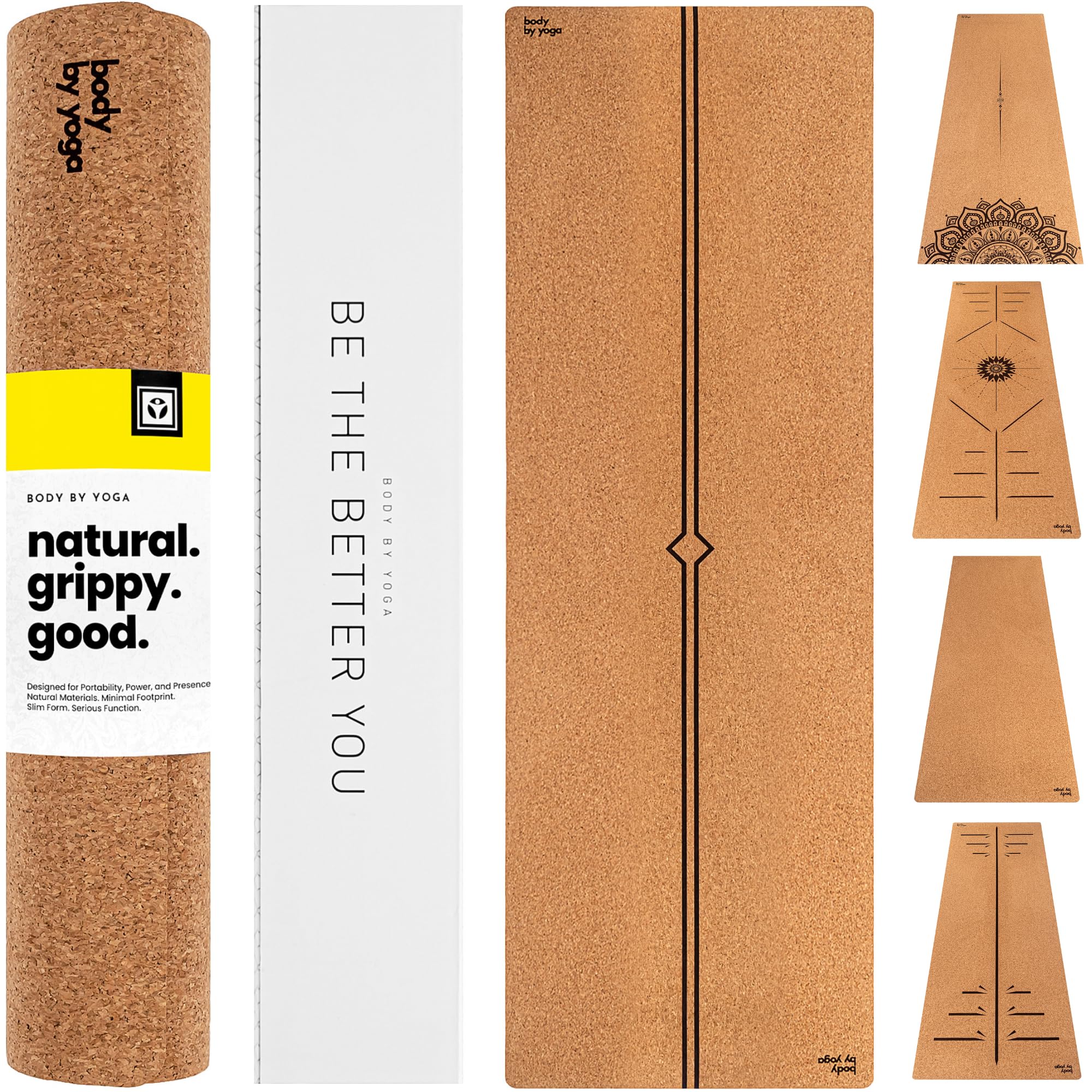
Cork that gets tackier the sweatier your hands become.
Cork behaves opposite to foam. The natural cork grain on this mat becomes more grippy with moisture, so the sweat that ruins a foam mat actually helps you here. That is the reason it works for hot yoga. The cork layer is described as thicker grain rather than condensed particles, and the natural rubber base helps the mat unroll flat and stay put so you are not adjusting mid-flow. At 0.17 inches thick and 72″L x 24″W, it is a balanced surface — cushioning that supports without the unstable sink of a soft foam mat.
Weight is where the honest conversation starts. At 5.9 pounds versus the 2-pound Gaiam TPE mat, it is a real difference if you carry it to a studio several times a week. The trade-off buys durability: cork resists moisture buildup and wipes with water, and the low-odor water-based adhesive avoids the harsh solvent glues found in cheaper builds. Quality is the trait praised most by owners, with grip right behind it, plus steady notes on thickness, value, and size.
Select styles include subtle alignment lines to guide positioning, which suits anyone building consistency. The one repeated gripe is the weight — heavier than many expect, so treat it as a mat that lives where you practice rather than one you haul around town. For a home hot-yoga setup or a committed studio regular, it is a strong, eco-minded pick.
Why cork wins here
- Cork surface grips harder as you sweat — the opposite of a foam mat.
- Natural rubber base lays flat and holds the floor.
- Wipes clean with water; low-odor water-based adhesive build.
- Quality and grip are the two traits owners praise most.
The weight you carry
- At 5.9 pounds versus the 2-pound Gaiam mat.
- Owners flag it as heavier than expected — best kept where you practice.
The confident call: a cork mat that turns sweat into traction, ideal for a home hot-yoga space.
The single caveat: that grip and durability come with real heft — if you carry your mat to class, plan for the load.
5. Plyopic Ultra Grip PRO Yoga Mat
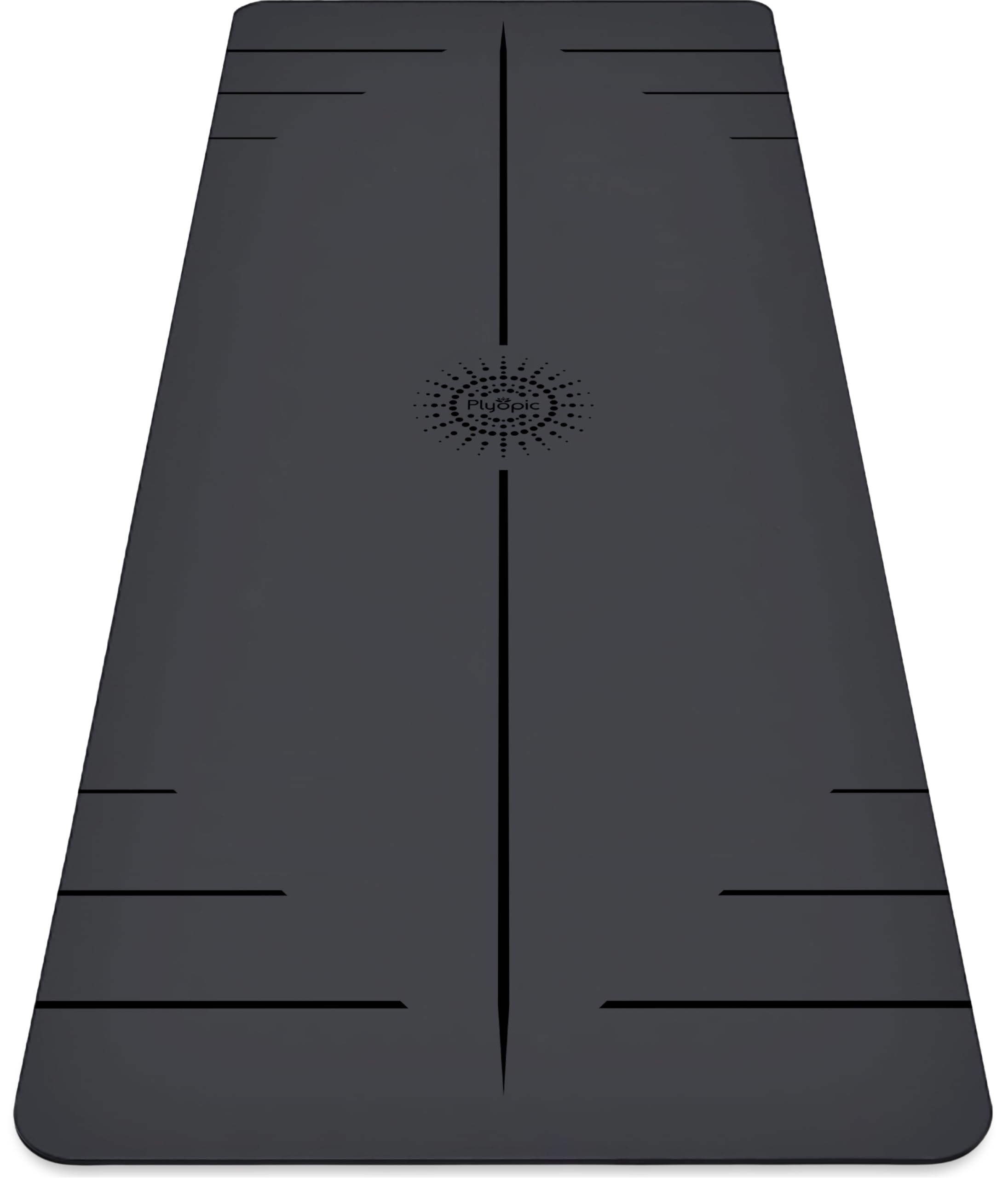
Extreme wet grip wrapped around a printed map for your hands and feet.
This is Plyopic’s answer to the sweatiest classes. The UltraGrip surface is built to keep hands and feet planted through dry flows, sweaty sessions, and hot yoga alike, holding firm as moisture builds. The PoseMap system, evolved from years of alignment-mat design, gives clear reference points for hands, feet, and center across thousands of poses — less clutter, more guidance. Beneath it, a dense natural rubber base with an integrated fiber layer cushions knees and wrists and keeps the mat stable through each pose.
At 72″L x 26″W, it gives a wide stance real room, and the mat is vegan-friendly and PVC-free. It is 2.4 kg, lighter than the 5.9-pound cork mat, so it travels with more ease. Quality leads what people praise most, grip follows close behind, and value and stability round it out. The maker’s own note is that thousands of yogis have chosen it — that is a claim, not a stat, so weigh it against the specs above.
The mixed notes are worth naming. Odor from the start gets the most disagreement, cushioning splits between soft and not-great, and durability draws a few doubts. None of these are deal-breakers if you want extreme wet grip and alignment help in one mat — but if you expect a plush, deeply cushioned feel, this is a firmer option. A carry strap is included, so transport is handled.
Where it earns its place: extreme grip and a full PoseMap alignment guide make it a strong fix for anyone who loses hand position in a hot flow.
What to know going in: cushioning is firm rather than plush, and some notice odor when new — give it a day or two to settle.
Pick this for: a wide 72″ x 26″ mat with extreme wet grip and built-in alignment reference points.
Leave it if: you want a soft, deeply cushioned mat and are sensitive to new-mat odor.
6. Satori Concept Cork Yoga Mat
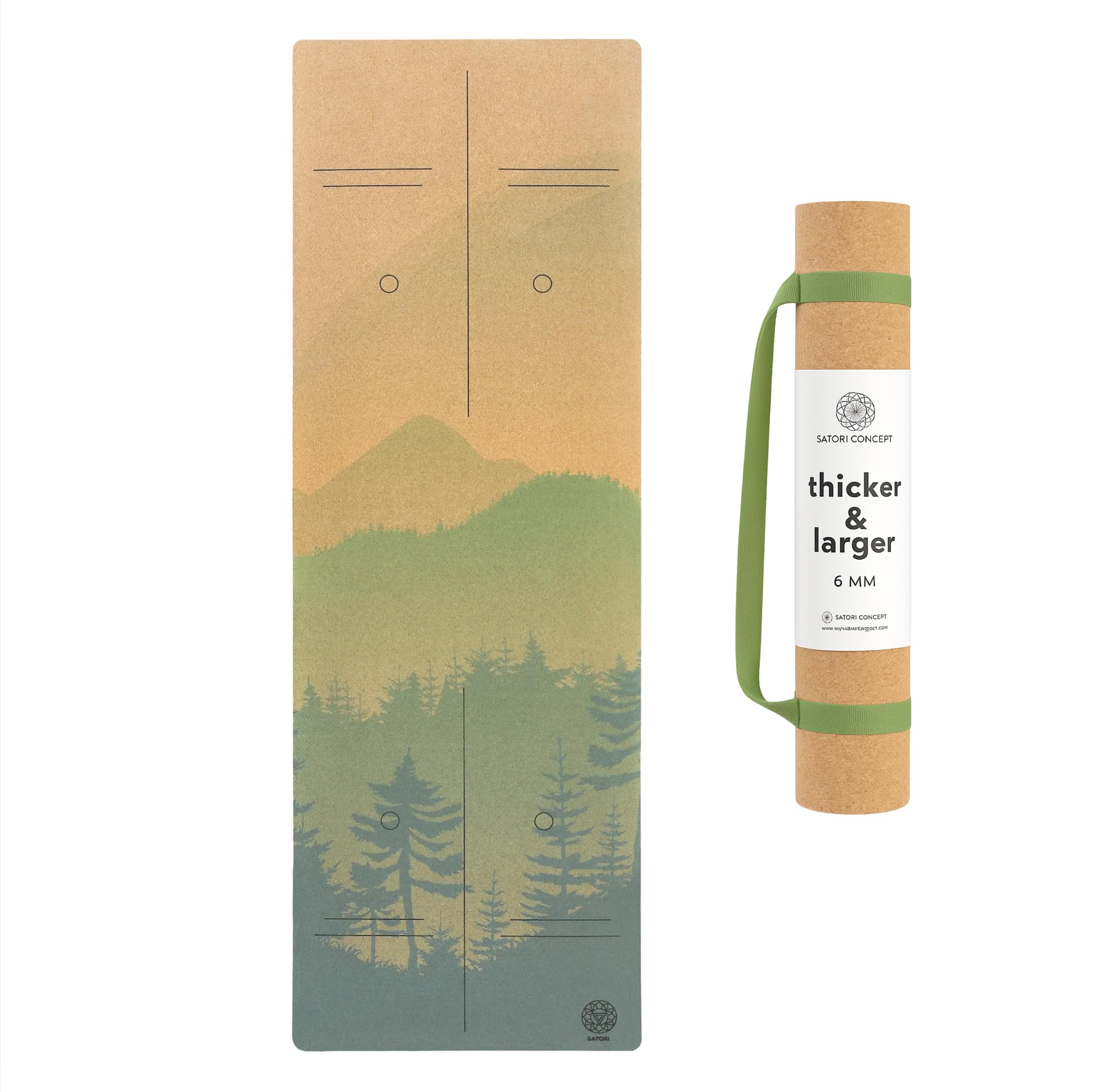
An 80-inch cork mat that gives tall bodies room to actually stretch out.
Most mats stop at 72 inches. This one runs a full 80″L x 26″W x 0.24″Th, which gives a tall practitioner or a wide stance the freedom to move without a hand or heel slipping off the edge. At 0.24 inches thick it is the thickest cork option here, and the natural tree rubber base gives it the firm, stable foundation that thick mats often lose. The cork surface grips harder as you sweat, so heated sessions are its natural habitat rather than a stress test.
Materials are natural cork and tree rubber, free from the chemical smell that plagues some synthetics, and the mat is packaged in recyclable materials with a free carrying strap. Rubber is a heavier build — the spec puts it at 8 pounds — so this is a mat with a home base. It is worth being specific about weight: comfort and grip are the traits praised most, but it splits opinion between those who find it not too heavy and those who find it a bit heavy. That is an honest fork in the road for the traveler.
The cork-over-rubber construction earns steady praise for durability and thickness, and the surface feels luxurious underfoot. A natural-cork mat also needs hand washing only, so plan on a care routine. For anyone who wants a generous, supportive cork surface in a dedicated practice space, this is a fine fit.
Made for: taller practitioners and wide stances who want a spacious 80-inch cork surface at home.
Not for: the class commuter — 8 pounds and hand-wash care make it a stay-put mat.
7. Tatago Hot Yoga Mat
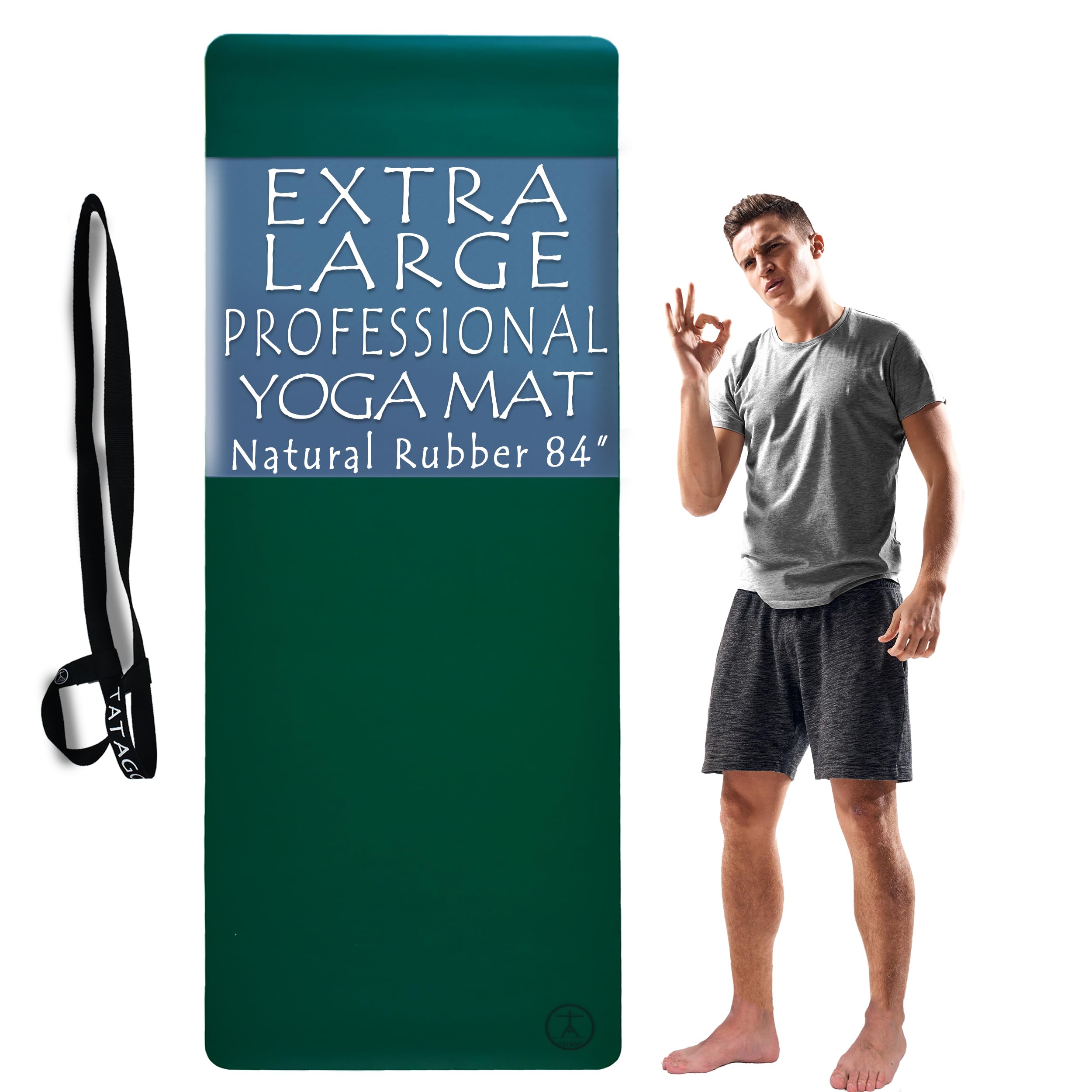
The supersized option for anyone whose hands keep landing off the mat.
At 84″L x 30″W x 0.2″Th, this is the widest and longest mat in this lineup. If you have ever had to shuffle backward two steps to fit a pose, this is the fix — the extra width and length give tall and broad bodies room to work without hanging off the edge. The top is a PU leather layer that absorbs moisture and keeps a secure grip, while the high-grade tree rubber base gives a non-slip foundation that stays put when you sweat. Dense, firm padding supports joints without the unsafe sponginess of a soft foam mat.
Grip earns frequent praise here for staying planted during sweaty sessions, and the extra-long, extra-wide size draws steady positive notes — especially from taller practitioners. Quality is the most-praised trait overall. A yoga strap is included for both carrying and stretching, so the haul to class is handled. It is 8 pounds, so it is a substantial mat: set expectations for a committed carry rather than a light roll.
Cushioning draws solid praise for knees and joints, but thickness splits — some love it while a few wish it were thicker. That is the honest fine print on a mat built for size. If you want a deeper sink, look at the 9mm Sensu below instead.
Why the XL sizing sells it
- 84″ x 30″ gives tall and broad bodies room to stretch out fully.
- PU leather top absorbs moisture for a secure hot-yoga grip.
- High-grade tree rubber base holds the floor when you sweat.
- Includes a yoga strap for carrying and stretching.
What the size costs
- At 8 pounds it is a heavy mat to carry to class.
- Thickness splits opinion — a few wish for more cushion.
Best match for: tall or broad practitioners who want the widest 30-inch surface and stable wet grip.
Think twice if: you want deep plush cushioning or a mat that travels without weight.
8. Sensu Large Yoga Mat

A 6-by-4-foot cushion that turns a hard floor into a workout room.
Sensu’s mat is 6′ x 4′, which is a footprint closer to a small studio floor than a standard mat. That size is the point: it transforms any hard area into a dedicated practice space, and it is wide enough to cover a 6’1″ frame. The 9mm of dense cushioning gives knees, elbows, and joints real protection while staying stable during grounding and low-impact work.
The build is a 16P-ECO material with an anti-tear mesh layer, described as odorless and free of harmful phthalates. Four sticky grips come included for optional extra hold, a waterproof carry bag handles transport, and a large microfiber towel is in the box. Quality is praised most by owners, with size right behind it — the extra room is exactly why people choose it. Comfort, grip, and thickness follow in a tight cluster. At 4.5 kg it is a home mat, not a studio-commute mat.
Cushioning is the trait that carries the day for knees and body, making it a strong pick if you practice on a hard floor at home. The trade-off is straightforward: a mat this large and thick is best left in place rather than rolled into a bag for class every day.
The everyday outcome: that 9mm cushion turns a hard living-room or garage floor into a comfortable practice area with four sticky grips holding it down.
Straight trade: the size and 4.5 kg weight make this a set-up-and-leave mat rather than a daily carry.
Choose this for: a spacious home practice area with deep 9mm cushioning to protect knees and joints.
Choose otherwise if: you need a mat that packs into a bag for studio classes.
9. Liforme Travel Yoga Mat

Same warrior-like grip as the flagship, rolled thin enough to travel.
This is Liforme’s travel cut of the same GripForMe material — the surface designed to hold through sweaty practice — folded into a mat just 0.08 inches thick. At 72.83″L x 26.77″W, it still gives full-length coverage, and at 1.6 kg it carries with far less effort than the 2.5 kg flagship above. The AlignForMe alignment system prints markers to guide hand and foot placement, and the eco-polyurethane and rubber build is PVC-free with a free yoga bag.
Owners prize its packability — it is easy to carry everywhere and suits travel well. Quality is the most-praised trait, with grip a close second, and weight and portability draw steady positive notes. The alignment graphics get specific praise for helping with hand and foot placement. It is a mat you can take on a trip and trust in a hot class without the weight penalty.
The trade-offs are real. Thickness is the loudest negative, with some finding it too thin for comfort, and value splits between those who say it lasts a long time and those who feel it is overpriced for the build. If you want deep cushioning, this is not the mat. If you want a packable hot-yoga mat with top-tier grip and alignment guides, it is a serious contender.
The travel case: a packable 1.6 kg mat with the same GripForMe surface as Liforme’s flagship — for hot classes away from home.
The honest limit: at 0.08 inches it is thin underfoot, and value for money splits opinion — pack it if portability is the goal, not cushion.
Know the Specs
Surface Material and Wet Grip
The top layer decides whether you stay planted in a heated room. Cork is a natural material that gets more grippy as it absorbs moisture, so sweat works in your favor. PU layers and rubber blends are engineered to hold through moisture too, just in a synthetic way. TPE is a flexible plastic-and-rubber hybrid — light and wipe-clean, with grip that varies more by practice. When a maker describes the surface as grippy when wet, that is the trait to hunt for.
Thickness in Millimeters
Thickness is measured in millimeters and decides cushion versus ground feel. A travel mat around 2mm keeps you close to the floor and is easy to fold into a bag, but offers little under the knees. Mats in the 4mm to 6mm range balance support and stability for most flows. The thickest options reach 9mm, which cushions joints heavily on hard floors but is best kept in one place. Match thickness to where you practice and how much cushion your knees want.
Common Questions
Why does my mat get slick in a hot class but feel fine when dry?
Is a cork yoga mat really better for hot yoga than a foam mat?
How thick should my hot yoga mat be?
Will an extra-long or extra-wide mat help if I am tall?
How do I clean a hot yoga mat that collects sweat?
Do all hot yoga mats smell when they are new?
Can I use a travel mat for a hot class?
Are alignment lines on a yoga mat worth having?
How much does mat weight matter for carrying to class?
What is the difference between a PU top and a rubber top on a hot yoga mat?
The Bottom Line
For most people, the hot yoga mat winner is the Liforme Special Yoga Mat because its GripForMe surface is designed to stay grippy when sweaty-wet, and the alignment markers help you line up poses. If you want a cork surface that gets tackier with sweat, the Body By Yoga Luxury Cork Mat is the one to reach for. And if you practice at home on a hard floor, the Sensu Large Yoga Mat with its 9mm cushion turns any room into a comfortable space.
The deciding question is simple: will you carry it, or leave it in place? A light, packable mat like the 1.6 kg Liforme Travel suits the studio commute and travel. A heavy cork or extra-large mat suits a dedicated home space where grip and cushion matter more than portability. Match the mat to your practice and you will reach for it every session.
How we choose
We do not accept paid placement. Every pick is matched to a real buyer and a real use-case; we do not hands-on test units.
Sources
Specifications: manufacturer listings and product documentation. Review insights: verified customer reviews, as of November 2026. Pricing: not shown on this page (it changes often); check the current price via the retailer link.
As an Amazon Associate, Tactical Gear Guy earns from qualifying purchases. This does not affect which products we feature.