Specs are compiled from manufacturer listings and verified buyer reviews and can change over time — please confirm the key details on the product page before buying.
Cold feet end a shift early, and the wrong insulation weight makes it worse — too little and your toes go numb by mid-morning, too much and your socks come out damp from sweat. The boots worth buying sit in the middle: real thermal lining, a waterproof barrier that survives slush and mud, and a sole that grips ice instead of sliding across it. This guide covers the insulation grades that actually matter, from a 200-gram Thinsulate boot that works indoors and out to an 8 mm neoprene model rated for subfreezing temperatures.
This guide is built by comparing the manufacturers’ published specifications and the patterns across verified customer reviews, so you get each pick’s real strengths and trade-offs instead of marketing spin.
You will see the same three numbers on every boot here: insulation weight, waterproof construction, and toe protection. Knowing which one you can trade away is the whole buying decision, and this breakdown of the work boots with insulation makes that choice simple.
Top Picks

How To Choose The Best Work Boots with Insulation
Insulated work boots are a heat-retention tool first and a safety tool second. Get the insulation weight wrong and the boot fights you all day — either your toes ache from cold or your socks soak through from trapped sweat. Get it right and you forget you are wearing them until the shift ends.
Match the insulation grams to your actual work temperature
The gram number on an insulated boot (like 200 grams or 1200 grams of 3M Thinsulate) measures how much thermal fill sits between your foot and the outside air. A 200-gram boot handles late fall, cold warehouses, and wet-but-not-freezing days. A 600-gram boot suits winter jobs that mix standing still with moving around. A 1200-gram boot is built for deep cold and long hours outdoors. Buying heavier insulation than you need is the most common mistake — your feet overheat, sweat, and then chill.
Waterproofing is separate from warmth
A warm boot that leaks is a cold boot in twenty minutes. Look for a named waterproof construction — a GORE-TEX membrane, a rubber shell, or a seam-sealed leather upper — rather than a vague “water resistant” claim. Rubber and neoprene boots stop water completely, which is why they win in flooded barns and slush. Leather boots need their membrane plus a sealed tongue and welt to keep snow from creeping down the shaft.
Toe protection and sole tread decide your safety margin
A steel toe, composite toe, or hard-plastic toe cap keeps crushed toes off the injury report — a steel toe is rated to take a set impact load, often up to 75 pounds of compression on a work boot spec sheet. Underfoot, the shank (a stiff plate inside the sole) supports your arch on ladders and uneven ground. On ice, a multi-directional lug outsole or a molded rubber tread beats a flat sole every time.
Side-by-Side Comparison
| Model | Best For | Insulation | Shaft Height | Toe / Safety | Amazon |
|---|---|---|---|---|---|
| Georgia Boot Low Heel Logger GORE-TEX★ Best Overall | Cold-site work with breathable waterproofing | 200 g Thinsulate | — | Steel shank, no safety toe listed | Amazon |
| Trudave Rubber Boots with Steel ShankBest for Wet Sites | Wet, muddy, flooded job sites | 5 mm neoprene | — | Hard plastic protective toe | Amazon |
| ROCKY Blizzard Stalker Steel Toe 1200GDeepest Cold | Deep-cold outdoor shifts | 1200 g 3M Thinsulate Ultra | 9 in | Steel toe, 75 lb impact rating | Amazon |
| ROCKY Sport Utility 600G | All-day comfort with moderate cold | 600 g 3M Thinsulate Ultra | 8 in | Composite safety toe | Amazon |
| MUCK Arctic Pro | Subfreezing work and hunting | 8 mm neoprene, 2 mm thermal foam | 17 in | Steel toe, ASTM F2413-11 M I/75 C/75 EH | Amazon |
| Georgia Boot Homeland Waterproof Insulated | Everyday cold-weather comfort | Insulated lining | 8 in | — | Amazon |
| Timberland PRO Direct Attach 6 Inch | Warehouse and mixed indoor-outdoor work | 200 g insulation | 6 in | Steel safety toe, electrical hazard | Amazon |
| Wolverine I-90 Durashocks 6″ | Long shifts on hard floors | Insulated | 6 in | — | Amazon |
| Dunlop Explorer with Vibram Sole | Hazardous and chemical-exposed cold sites | Purofort cold-rated insulation | — | Steel toe and steel midsole | Amazon |
Detailed Reviews
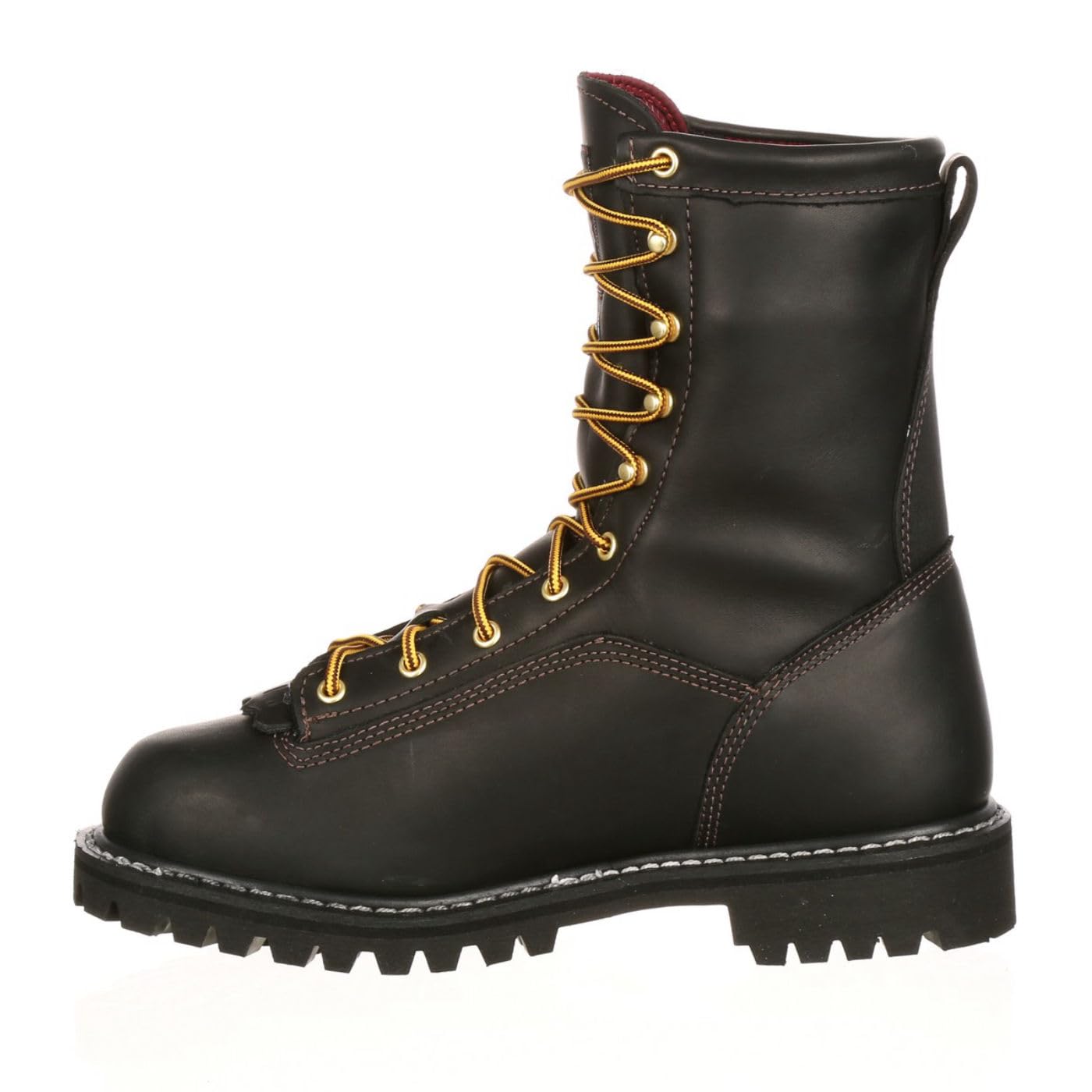
1. Georgia Boot Logger GORE-TEX Work Boots
Our pick — 4.5+★ from 750+ verified ratings; the strongest balance of quality and price.
Black full-grain leather and a breathable GORE-TEX barrier that keeps slush out without cooking your feet.
The Georgia Boot Low Heel Logger is the boot to pick when your cold-weather work is wet but not brutal. Inside sits 200 grams of 3M Thinsulate insulation — a moderate fill that warms your toes on a frosty morning without turning the boot into a sauna by lunch. The GORE-TEX waterproof membrane is the bigger story here. The GORE-TEX membrane blocks rain, puddles, and wet snow while venting sweat vapor, so the leather stays dry inside and out.
Build quality is where this one earns its place at the top. Georgia uses Goodyear welt construction, which stitches the upper to the sole instead of just gluing it — a stitching method that resists the sole peeling away under hard use. The eyelets and stud hooks are set into steel washers, so laces do not tear the hardware loose mid-shift. Under your arch sits a steel shank for support on ladders and concrete, and a Vibram lug rubber outsole resists abrasion, heat, chemicals, and oil.
What wins people over is the overall build — the construction and long-wearing soles set the bar for the rest of this list. The catch is the fit. This logger runs narrow, and the lace-to-toe design takes a little patience to cinch snugly, so try your true size first and budget a break-in window rather than expecting an instant fit. It also comes in around 4.5 pounds per pair versus the ROCKY Blizzard Stalker’s 6.1 pounds, and the 200 grams of Thinsulate versus that boot’s 1200-gram fill — a clear signal this is a moderate-cold boot, not a deep-winter one.
What holds up under the boot
- GORE-TEX waterproofing blocks water while staying breathable
- Goodyear welt construction resists sole separation
- Steel-washered eyelets survive hard daily lacing
- Vibram lug outsole resists oil, heat, chemicals, and abrasion
Where it fights back
- Narrow fit takes the right size to feel right
- Lace-to-toe lacing needs patience to snug down
- 200 g insulation is not enough for deep-freeze shifts
Reach for these if: you work in wet cold — rainy sites, wet snow, cold warehouses — and want a leather boot that breathes.
Think twice if: you spend hours in subfreezing air, where the moderate 200-gram fill will not carry you.
2. Trudave Rubber Boots
A pull-on rubber boot that treats flooded barns and mud like a normal Tuesday.
If your job means standing water, mud, or snow that comes up past the ankle, a rubber boot beats leather every time. The Trudave uses 5 mm neoprene — a rubber-foam shell that insulates by trapping body heat the way a wetsuit does.
The anti-slip outsole holds wet ground where a flat work sole slides, so you keep steady footing on slick surfaces. A hard plastic protective toe cap covers your toes against kicks and drops. The pull tabs are a small design that makes a real difference when you are geared up and need the boots on fast, and the breathable fabric lining helps keep moisture from pooling inside.
Quality and value drive the feedback on these — the boot feels like more than its price tag suggests, and the neoprene fit has a following. Two honest notes. The sizing runs bigger than average, so some buyers size down, and the durability reports are mixed — a few mention ripping within a month of hard use. Treat them as wet-work boots rather than a years-long investment, and keep the fit snug so the rubber does not flex against the same crease all day.
Where the value lands: Full rubber waterproofing, a protective toe cap, and 5 mm neoprene warmth make this a strong pick for farmers, hunters, and anyone working in standing water.
The honest limit: Mixed durability reports mean you should not count on the rubber shell lasting years — it is the trade-off for the price.
If water is the problem: slip these on and stop worrying about wet feet all day.
If you need a decade of leather: look at a welted boot instead — rubber shells wear differently.
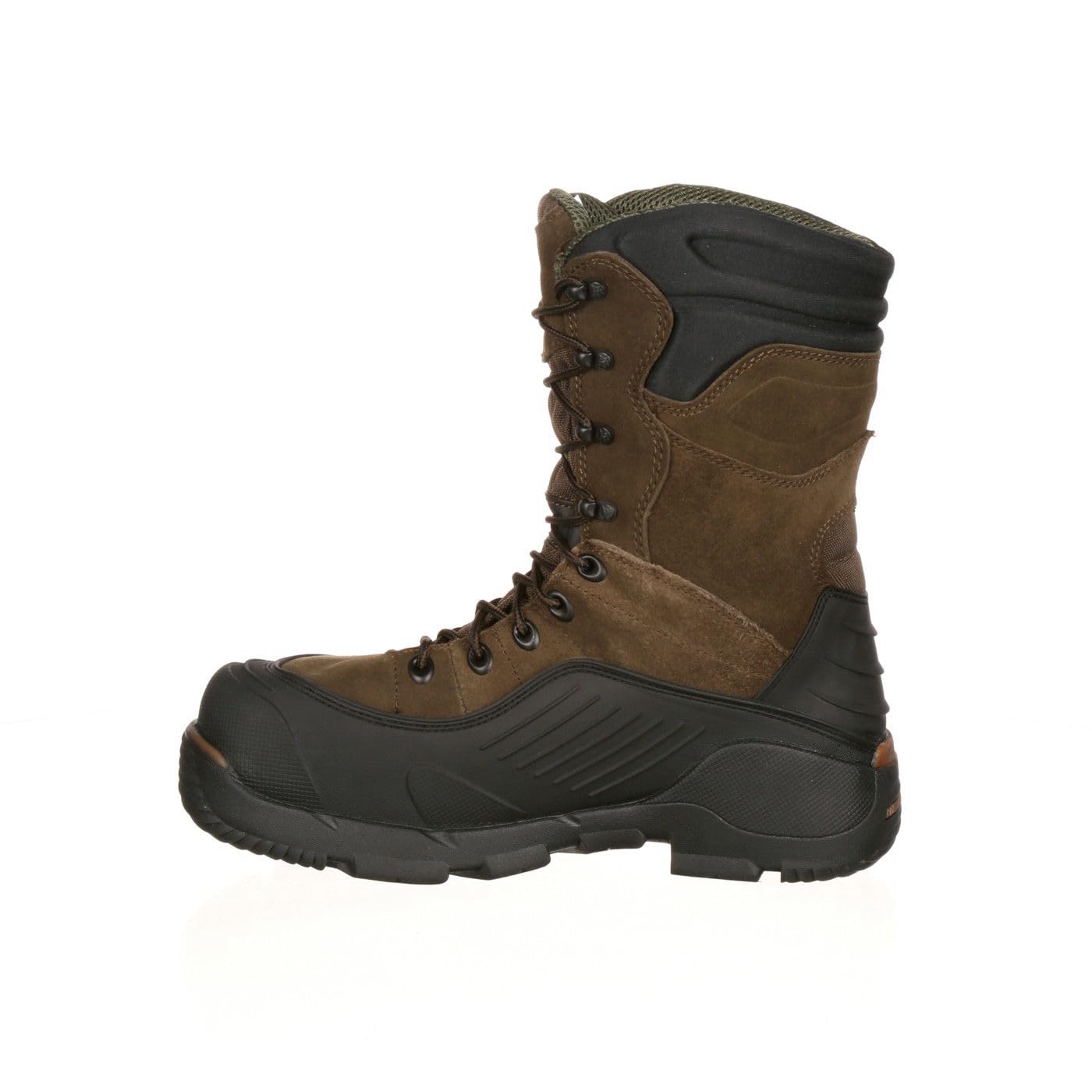
3. ROCKY Blizzard Stalker Work Boot
The 1200-gram heavyweight built for the days your breath freezes before it clears your face.
Here is the number that defines this boot: 1200 grams of 3M Thinsulate Ultra insulation. That is 1200 grams versus the 200-gram fill in the Georgia Logger above — the biggest insulation gap on this list, and the reason these boots keep feet warm when the temperature drops hard. If your job puts you outside in deep cold for hours, this is the fill weight that carries you.
Warmth is what these boots are known for, and the construction backs it up with Rocky Waterproof construction to seal water out. The steel toe carries a 75-pound impact and compression rating, so dropped tools and shifting loads stay off your toes. The nine-inch upper blends split suede with 900 Denier high-abrasion fabric — a tough, tightly woven cloth that shrugs off scrapes. An extended tongue buffers snow and debris from getting down into the boot, and the multi-directional BlizzardStalker outsole grips snow-covered terrain.
The trade-offs are real and worth naming. All that insulation plus a steel toe and suede upper comes to 6.1 pounds per pair — noticeably heavier than the 4.5-pound Georgia Logger. Several buyers find them oversized, so try them on before committing. Durability gets mixed reports, with some lasting and others falling apart. Size up your patience for bulk, not your order.
Why the cold crowd reaches for it
- 1200 g Thinsulate delivers heat retention in real cold
- Steel toe rated to 75 lb impact and compression
- Extended tongue helps block snow from dropping in
What you give up
- 6.1 pounds a pair is heavy over a long shift
- Fit tends to run oversized — try before you buy
- Mixed durability means checking the seams
Built for: the coldest jobs on your calendar — winter construction, snow crews, outdoor utility work.
Not for: heated indoor work, where 1200 grams of fill will leave your feet soaked from sweat.
4. ROCKY Sport Utility 600G Insulated Waterproof Boot

A middleweight 600-gram boot that splits the difference between warm and wearable all day.
600 grams of 3M Thinsulate Ultra is the sensible middle ground for cold-weather work. It gives more warmth than a 200-gram boot and less bulk than a 1200-gram one, so you can move around, climb, and kneel without dragging a heavy pair of leather cinder blocks. Full-grain leather forms the upper, a composite safety toe guards the front, and the Sport Utility outsole is built for traction and stable footing.
Fit is what these boots get praised for most — the last (the molded shape the boot is built on) suits a wide range of feet, which takes the guesswork out of ordering. The composite toe also means the boot shields your toes without adding the extra weight of steel, so it moves more easily than a steel-toe model. Water resistance holds up in wet snow and rain, and the insulation keeps feet warm without overheating on a moving shift.
The honest note here is weight. Heaviness comes up in the feedback, and the 600-gram fill plus leather and a composite toe is not a light boot. If your day is mostly standing still in the cold, that is not a problem. If you are on your feet moving for ten hours, go in expecting a break-in period and a substantial boot. Sizing runs mixed too, so confirm your size before committing.
The sensible middle: 600 g Thinsulate, a composite toe, and full-grain leather give you a warm, protected boot that is not a deep-freeze specialist.
Size the fit, not the fill: wait for a true fit rather than sizing up — these boots run wide already.
Pick this boot for: fall-to-spring work that swings between cold and mild, with plenty of walking.
Look past it if: you need maximum warmth in a deep cold snap or a featherweight boot.
5. MUCK unisex-adult Arctic Pro
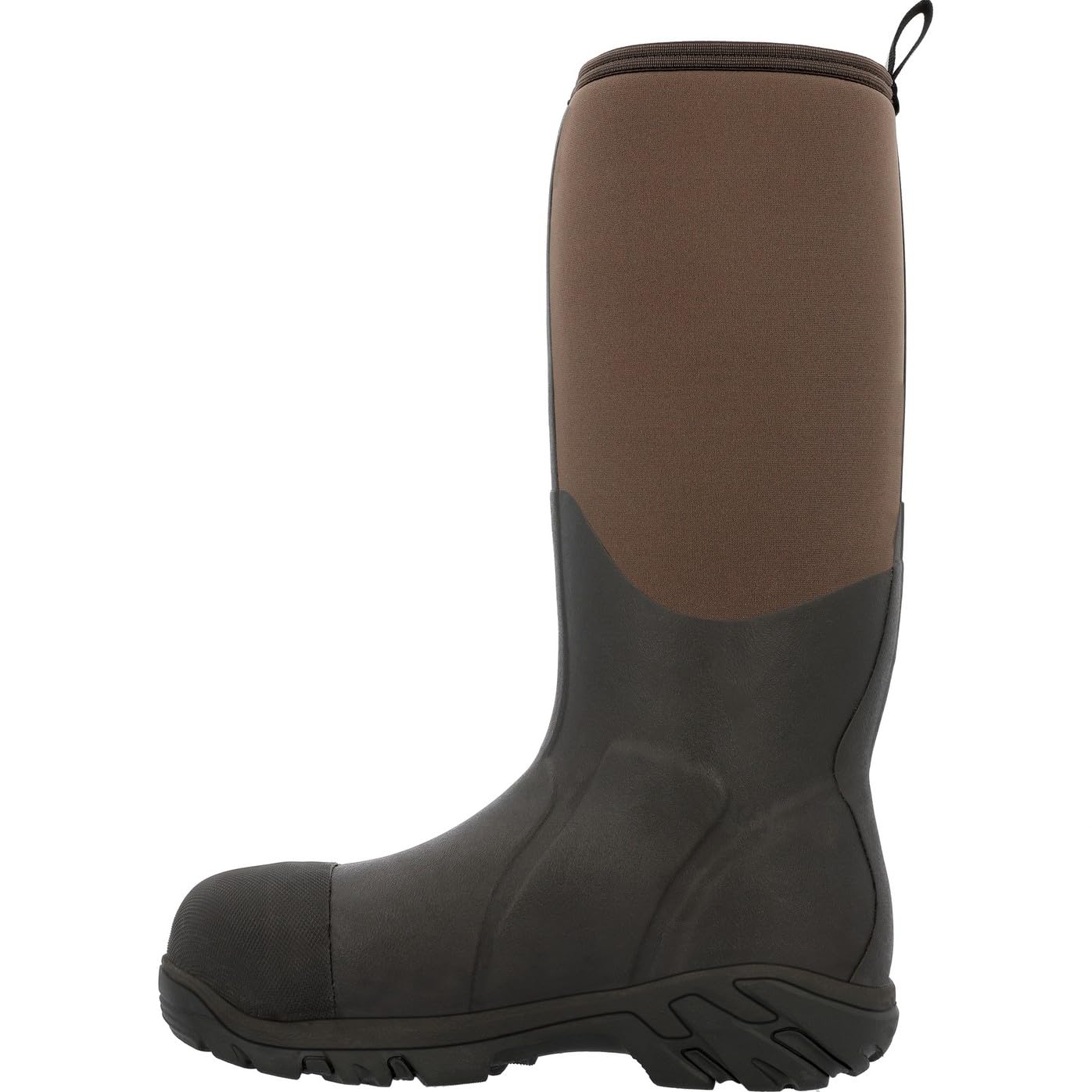
A pull-on boot rated down to -60 °F, with eight millimeters of neoprene between you and the ground.
The Arctic Pro plays a different game than the leather work boots on this list. It is built from 8 mm neoprene — a thick rubber-foam shell that insulates by trapping body heat — and the manufacturer rates its comfort range from -60 °F/-50 °C to 30 °F/-1 °C. That is a sizeable step up from the 5 mm neoprene on the Trudave, so this boot is meant for genuine subfreezing work, not a chilly rainy day.
Under the foot sits 2 mm of thermal foam, and a warm fleece lining wraps the foot. A Stretch-fit Comfort Topline cinches the calf to seal warmth in and keep cold and debris out. The boot is 100% waterproof with a steel toe that protects against impacts from above, and it meets ASTM F2413-11 M I/75 C/75 EH — a safety standard covering impact, compression, and electrical hazard protection. The Bob-Tracker molded outsole bites into ice and snow. It stands 17 inches tall, which covers the calf and blocks deep snow.
The fit is where the honest conversation starts. This boot runs tight around the calves, so a wide calf will fight the topline. Durability and value draw mixed reports too — some find the build solid and worth it, others see wear sooner than expected. What the boot gets right is warmth and quality, and the neoprene shell resists blisters and chafing by adjusting to your foot shape.
The case for the Arctic Pro
- 8 mm neoprene insulates in subfreezing cold
- Comfort rated -60 °F/-50 °C to 30 °F/-1 °C
- Steel toe meets ASTM F2413-11 M I/75 C/75 EH
- 17-inch shaft covers the calf and seals out snow
Where it pinches
- Tight around the calves — snug for wide legs
- Durability and value draw mixed reports
- Pull-on design offers no lacing adjustment
Your move if: you work or hunt in genuine deep cold and want a boot you can pull on over a thick sock.
Steer clear if: you have wide calves or need a locked-in lace fit.
6. Georgia Boot Men’s Homeland Waterproof Insulated Work Boots
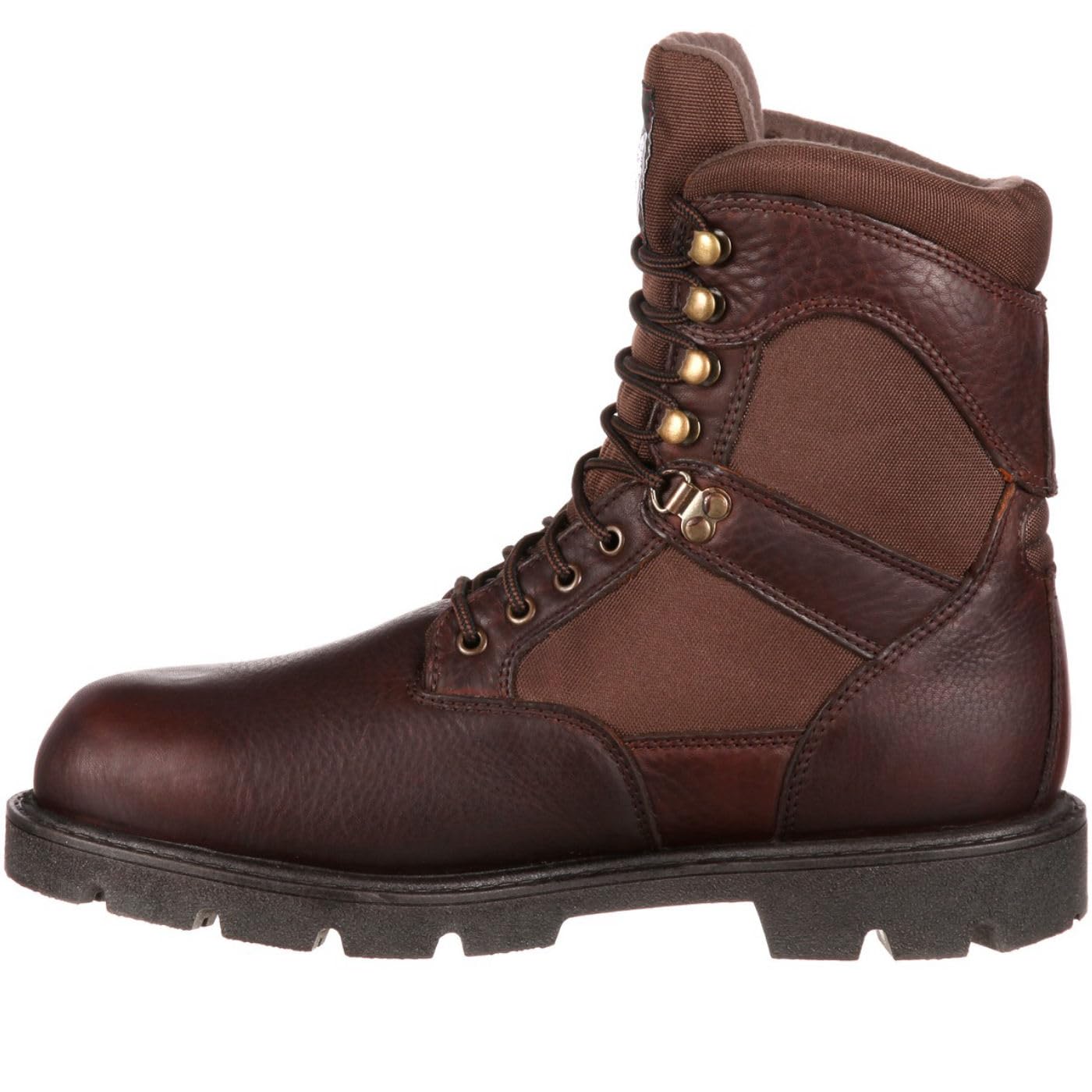
An eight-inch waterproof insulated boot aimed at comfort first and cold second.
Georgia’s Homeland boot sits in the comfortable middle of the insulated category. The eight-inch shaft gives you ankle support and blocks snow and mud from creeping in over the top. The boot is waterproof and insulated, so it keeps feet warm in winter. And it is built around comfort — the Homeland collection is Georgia’s technology-driven comfort line.
The outsole grip is what sets this boot apart on site. On wet Georgia clay and muddy slurry the outsole digs in, which is the test most work boots actually face. Paired with a waterproof upper, it means you can walk a muddy site and stay dry from both directions. The lighter build relative to the heavy leather boots makes it easy to wear for a long shift without dragging your feet.
This is the boot for someone who wants an easy-going insulated work boot rather than a specialist deep-cold machine. It does not name a gram weight, so if you know you need a 1200-gram fill, go with the Blizzard Stalker above. If you want warmth, comfort, and a solid grip for mixed cool-weather work, this one fits the day-to-day.
What it does well: eight inches of protection, waterproof warmth, and a grip that handles wet clay and mud.
Check before you order: the listing does not publish an insulation gram figure, so confirm it fits your depth of cold.
Good everyday choice for: mixed cool-weather work where comfort and traction matter more than extreme cold ratings.
Not the pick for: deep-freeze sites that need a stated high-gram insulation.
7. Timberland PRO Direct Attach 6 Inch
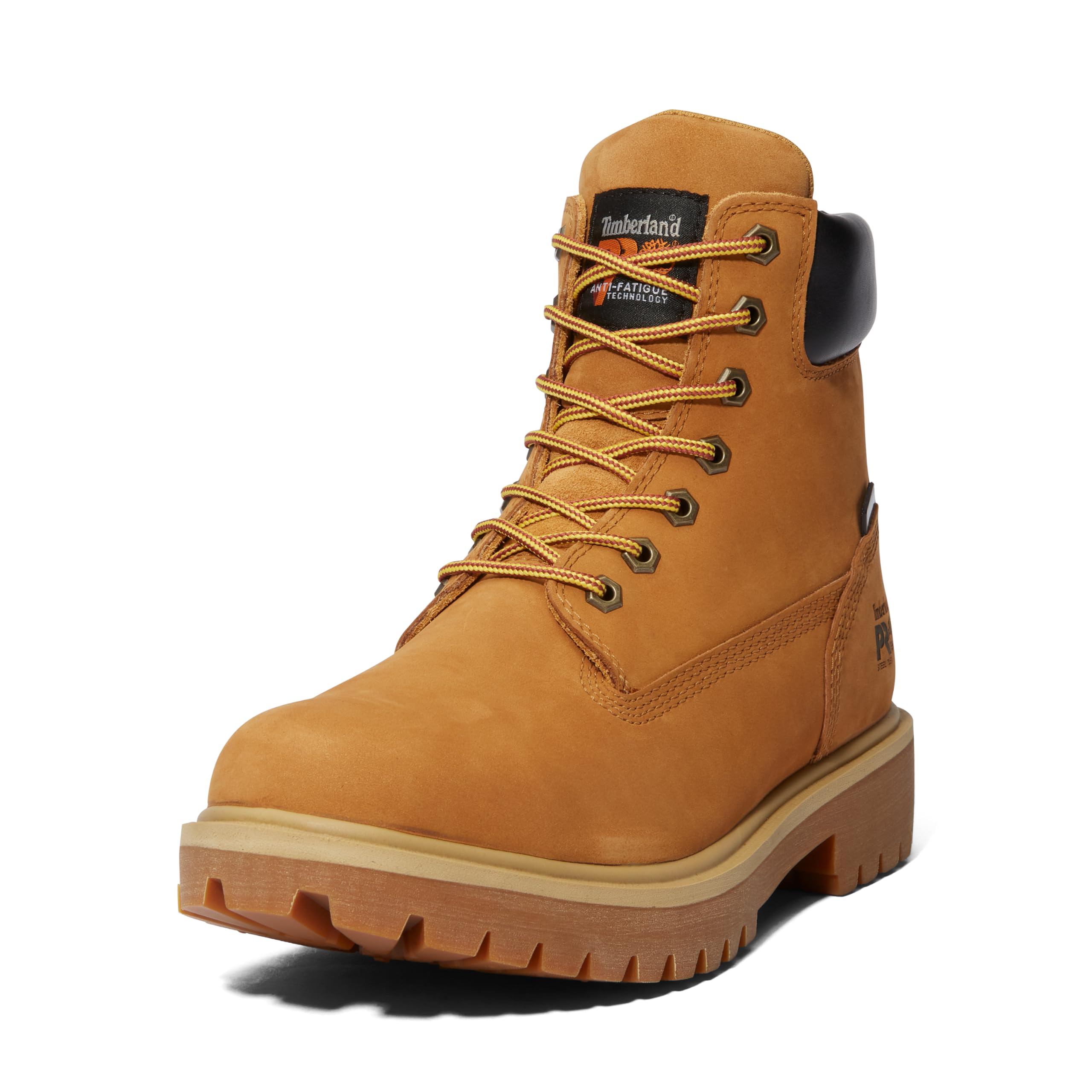
The six-inch low-cut boot that handles a cold warehouse or a wet loading dock without bulk.
Timberland PRO’s Direct Attach carries 200 grams of insulation — a light fill that warms a cold concrete floor and a winter commute without overheating you indoors. The six-inch height keeps it low and mobile. The waterproof leather upper is seam-sealed, so it holds out rain and puddles, and the padded collar adds comfort around the ankle.
Safety and support are covered here. A steel safety toe guards against drops and kicks, and electrical hazard protection adds a layer for site work. The Anti-Fatigue Technology polyurethane footbed absorbs shock and returns energy, which matters when you stand on concrete for hours. The rubber lug outsole resists heat, oil, slip, and abrasion for traction that holds up. The breathable, moisture-wicking lining is made of ReBOTL fabric containing at least 50% recycled plastic.
Sizing is the one thing to watch. Several buyers find the boot runs about half a size too large, so a half-size down often fixes it. It is built for warehouse and mixed indoor-outdoor work, not subfreezing sites — 200 grams will not carry you through deep cold. Treat it as a comfortable, protective three-season boot.
Where it shines: waterproof leather, a steel toe, electrical hazard protection, and energy-returning footbeds in a low six-inch boot.
The fit note: it runs about half a size large — size down for a locked-in feel.
Right for: warehouse, dock, and mixed indoor-outdoor work where you want warmth without bulk.
Wrong for: outdoor subfreezing sites that need serious insulation weight.
8. Wolverine Men’s I-90 Durashocks® 6″ Insulated

A six-inch insulated boot that feels closer to a sneaker than a slab of leather.
Wolverine built the I-90 around comfort, and that is what comes through most in the feedback. Durashocks is Wolverine’s shock-absorbing sole system, and it cushions each step so long shifts on hard ground do not wear through your feet. The boot is insulated to hold warmth in cool weather, and the six-inch height keeps it agile.
Durability holds up to rough conditions. One buyer reports it survived pesticide spraying, and the water resistance keeps feet dry in wet work. The lightweight design means you can move fast and stay on your feet for hours without the boot dragging. Functionality and warmth round out the strengths — it is a boot that works hard without feeling like one.
A few things to keep honest. The value is debated — some see a well-priced boot, others feel it asks a lot. Fit draws disagreement too, so try it if you can. But for someone who values cushioning and a light step over a heavy-duty deep-cold machine, the I-90 delivers the comfort payoff.
The comfort argument
- Durashocks sole cushions long shifts
- Lightweight build keeps you moving
- Durable enough for spraying and wet work
What to weigh
- Value is a matter of opinion
- Fit draws mixed reports — confirm your size
- Not a deep-freeze boot despite the insulation
Get it if: cushioning and a light step matter more to you than maximum insulation weight.
Pass if: you need a boot proven in extreme cold or want a clear fit at ordering.
9. Dunlop Explorer Full Safety Work Boots with Vibram Sole

A fully certified safety boot built to keep feet warm in extreme cold and hazardous conditions.
Dunlop’s Explorer is the most heavily protected boot on this list, and it is built for the worst conditions on the job. The Purofort shell is a waterproof synthetic build rated to keep feet warm down to minus 58 degrees Fahrenheit. That cold rating plus certification to ASTM and CSA Omega standards makes this a serious boot for utilities, construction, and hazardous sites.
Safety is where it earns its place. A steel toe handles impact, and a steel midsole protects underfoot from punctures — a level of protection the leather boots here do not carry. The slip resistant outsole grips slick, icy, and uneven surfaces. It resists chemicals, fuel oils, and workplace grime, so it holds up near fuel and chemical exposure. Available in US sizes 6 to 15, it fits a wide range of workers.
The trade-offs are worth naming. Fit and traction draw mixed reports — some find a great fit and solid grip, others say the boot runs narrow and is not slip resistant enough for their site. The price tag puts it near the top of this group, so it suits buyers who need the full safety package and cold rating rather than someone after a budget pair. Buyers most often praise how comfortable the boot stays through a full shift.
Why it costs more: Purofort waterproofing cold-rated to minus 58 degrees Fahrenheit, a steel toe and steel midsole, and ASTM/CSA Omega certification.
What to check: the fit runs narrow for some and the traction gets mixed reports — confirm the width before ordering.
Buy it for: hazardous, chemical-exposed, extreme-cold sites where full safety certification is non-negotiable.
Skip the splurge if: you work a clean, moderate-cold job — a leather boot will serve you for less.
Know the Specs
Insulation weight (grams and millimeters)
Insulation weight tells you how much thermal fill sits between your foot and the outside air. Leather boots usually list it in grams of Thinsulate — 200 g, 600 g, and 1200 g are the common steps, and each jump means more warmth and more bulk. Rubber boots list neoprene thickness in millimeters — 5 mm and 8 mm are typical, and the thicker the foam, the colder the weather it can handle. Match the weight to your actual work temperature: heavy fill in a warm space overheats your feet and turns sweat into cold later.
Safety toe and shank
A safety toe is a rigid cap over the front of the boot that protects against drops and compression. Steel toes are the classic choice, and a spec sheet may rate them for impact and compression in pounds. Composite toes do the same job with less weight. The shank is a stiff plate inside the sole — steel or nylon — that supports your arch on ladders and uneven ground and keeps the sole from flexing where it should not.
Waterproof construction types
Waterproofing comes in three main flavors on this list. A membrane like GORE-TEX blocks water while letting vapor escape, which suits leather work boots. Full rubber or neoprene shells stop water entirely, which is why they dominate flooded and muddy sites. Seam-sealed leather uppers with a waterproof membrane handle rain and puddles. Whichever you choose, a sealed tongue and a tall shaft keep snow from dropping in over the top.
Outsole and traction
The outsole is the bottom tread, and its job is grip. A lug pattern — raised rubber blocks with channels — bites into mud, snow, and ice. A multi-directional tread grips in every direction for uneven terrain. Rubber compounds that resist oil, heat, and chemicals hold up longer in industrial work. If you work on ice, a molded rubber sole with deep channels beats a flat, smooth sole every time.
Common Questions
How many grams of insulation do I need for winter work boots?
Are insulated work boots too warm for indoor work?
What is the difference between rubber and leather insulated work boots?
Does a steel toe make insulated boots colder?
Will insulated work boots stretch out after a few weeks?
How long do insulated work boots usually last?
Should I size up for insulated work boots and thick socks?
What does the ASTM F2413 rating on insulated work boots mean?
Can I wear insulated work boots in the rain and snow all day?
The Bottom Line
For most working buyers, the work boots with insulation winner is the Georgia Boot Low Heel Logger because its GORE-TEX barrier, 200-gram Thinsulate fill, and Goodyear welt construction handle wet cold with a build that holds together. If you want the warmth for deep-freeze sites, grab the ROCKY Blizzard Stalker with its 1200-gram fill and steel toe. And for standing water and mud, the Trudave Rubber Boot keeps your feet dry without a second thought — start by matching the insulation weight to your actual working temperature, and the rest of the choice falls into place.
How we choose
We do not accept paid placement. Every pick is matched to a real buyer and a real use-case; we do not hands-on test units.
Sources
Specifications: manufacturer listings and product documentation. Review insights: verified customer reviews, as of November 2026. Pricing: not shown on this page (it changes often); check the current price via the retailer link.
As an Amazon Associate, Tactical Gear Guy earns from qualifying purchases. This does not affect which products we feature.