Specs are compiled from manufacturer listings and verified buyer reviews and can change over time — please confirm the key details on the product page before buying.
You want clear water without a pump humming at full blast all day. A variable-speed pump (a pump whose motor can run at many speeds instead of one fixed speed) fixes that. You drop the motor to a low speed for everyday filtering, then ramp it up only when you need heavy turnover (a full pass of the pool’s water). The picks below run from an entry-level value option to mid-range units with smart timers to premium pumps from the big names. That way you match a pump to your pool size and your plumbing instead of guessing.
This guide is built by comparing the manufacturers’ published specifications and the patterns across verified customer reviews, so you get each pick’s real strengths and trade-offs instead of marketing spin.
Energy use, plumbing fit, and a timer you can actually program decide whether a pump feels like a bargain or a headache. Here is how to weigh those against the horsepower number on the box, using the best variable-speed pool pump options that hold up in real backyards.
Top Picks

How To Choose The Best Variable-Speed Pool Pump
A pool pump’s job is simple to describe: pull water from the pool, push it through the filter, and send it back. The trouble is that most pumps do that at one fixed speed, which is why they can sound like a small engine running all afternoon. A variable-speed pump lets you dial the motor down for the hours when the pool is just sitting, then spin it up for a heavy cleaning cycle. That single feature is the whole reason these pumps exist.
Start with flow rate, not horsepower
Horsepower (hp) is the motor’s stated strength, but flow rate — measured in gpm, or gallons per minute — is what actually turns your water over. Two pumps with similar hp numbers can move very different volumes. A 1.5 hp unit may list one gpm figure while a 1.85 hp unit lists a completely different one. Check the gpm that fits your pool’s volume, then confirm the pump can handle your total head, which is the height in feet it has to push water. If your equipment pad sits above the pool or your plumbing runs long, head matters as much as raw flow.
Check the plumbing and voltage before you buy
Most residential pumps connect to either 1.5-inch or 2-inch PVC pipe. The good listings include adapter connectors for both, which spares you a trip to the hardware store mid-install. Voltage matters too: a dual-voltage pump that runs on 115V or 230V gives you flexibility if your wiring is already set up one way. Pumps that list only 220V need that circuit available. Skipping this check is the number-one reason a pump sits in the box instead of on the pad.
Look for a timer you can live with
Speed settings only pay off if the pump runs at the right times. A built-in programmable timer with multiple daily periods lets you set a low-speed filter run overnight and a higher-speed burst for cleaning. The catch is that timer accuracy varies between brands — some owners have reported clocks that drift, so a pump whose timer stays true is worth more than one with a longer feature list.
Side-by-Side Comparison
| Model | Best For | Horsepower | Flow Rate | Weight | Amazon |
|---|---|---|---|---|---|
| Hayward TriStar VS 1.85 HP★ Best Overall | Replacing a single-speed pump | 1.85 hp | 40 gpm | 52 pounds | Amazon |
| Varpoolfaye 1.8HPBest Value | Small to mid pools on a budget | 1.8 hp | 151.9 gpm | — | Amazon |
| Aquastrong 1.5 HPSpeed Range Champ | Flexible speed control | 1.5 hp | 136 gpm | — | Amazon |
| BLACK+DECKER 1.5 HP | WiFi control and low-speed filtering | 1.5 hp | 80 gpm | 29 pounds | Amazon |
| Waterway Power Defender 165 | Freeze protection in cold snaps | 1.65 hp | — | 47 pounds | Amazon |
| Hayward MaxFlo XE 1.65 HP | Drop-in upgrade with 6 speeds | 1.65 hp | 240 gpm | 27.5 pounds | Amazon |
| Pentair WhisperFlo VST 2.6 THP | Big pools that need high turnover | 2.6 hp | — | 45 pounds | Amazon |
| Pentair IntelliFlo VS | Premium Pentair system buyers | — | — | — | Amazon |
Detailed Reviews
1. Hayward TriStar VS Variable Speed Pool Pump, 1.85 HP
Our pick — 4.5+★ from 300+ verified ratings; the strongest balance of quality and price.
The 1.85 hp workhorse that slides in wherever a loud single-speed pump used to live.
This is the one buyers reach for when the old pump quits and they want the swap done in an afternoon. Its 1.85 hp motor is rated to replace most full-rate high-performance pumps up to 1.5 full-rate or 2.0 max-rate hp. So if your equipment pad already has a big-name pump in that range, this is designed to drop onto it rather than force a rebuild. The permanent-magnet, totally enclosed fan-cooled motor (a sealed motor with a fan that keeps it cool) is built to run cooler than an open motor. The no-rib extra-large basket (a wide leaf basket with smooth sides) catches leaves so you empty it less often.
The day-to-day win is quiet. The pump is the most-compared topic in its own reviews, and owners consistently describe it as extremely quiet once it drops below full speed. Programming is handled by an integrated digital interface with a 24-hour clock, so you can set a low overnight filter cycle and a stronger daytime burst without touching it again. Installation and energy efficiency both draw heavy praise — buyers report noticeable drops in the electric bill after swapping out a single-speed unit.
The honest trade-off is the frame and hardware over time. The internal components hold up, but a few owners have noted screws showing rust and one pump failing past the one-year mark. Treat the mounting hardware as a wear item and it stays a non-issue. At 52 pounds it is the heavy option here — the BLACK+DECKER 1.5 HP weighs 29 pounds by comparison, so plan a second pair of hands for the lift onto the pad.
What earns it the top spot
- 1.85 hp motor designed as a direct replacement for most full-rate pumps up to 1.5 full-rate or 2.0 max-rate hp
- Quiet below full speed — the thing owners talk about most
- 24-hour programmable clock makes low-speed overnight filtering easy
- Extra-large no-rib basket means fewer leaf-cleaning stops
Where it asks a little patience
- At 52 pounds it is the heaviest pump in this lineup — get help lifting it
- Hardware can rust; check the mounting screws each season
- Listed 40 gpm flow is modest next to the Varpoolfaye’s 151.9 gpm figure
Pick it when: you are swapping out a full-rate single-speed pump and want the quietest, best-supported drop-in replacement in this group.
Think twice when: your pad sits far above the pool and you need maximum flow at a given speed — compare the gpm numbers carefully first.
2. Varpoolfaye 1.8HP Variable Speed Pool Pump, 220V
A 151.9 gpm mover that outperforms its price class on raw flow.
If your pool is small to medium and you mainly want strong, steady circulation without paying premium-tier money, start here. The Varpoolfaye’s 151.9 gpm flow rate dwarfs the Hayward TriStar’s 40 gpm listing — nearly a four-fold difference on paper — so this pump pushes serious water volume for its class. The permanent-magnet motor is built to cut daily power draw while running quieter than a traditional single-speed, and built-in overload and anti-dry protection shut it down when the water level dips.
Setup is a genuine selling point. It ships with two adapter sizes and is designed for standard 2-inch and 2.5-inch Schedule 40 PVC pipe systems, so most residential pools connect without a custom fitting. Programming the controller earns its own praise — owners find the schedule setup straightforward, and the multiple speed settings let you run a slow filter cycle most of the day and crank it up for cleaning.
One caveat worth knowing before you buy: this pump is 220V only, so the breaker and wiring need to match. The timer is the other soft spot — several owners mention it running fast or not keeping accurate time, so verify the clock against a phone once a week and adjust. That is a minor habit, not a reason to pass, but it is where the savings show up as consistent maintenance rather than push-button convenience.
Flow-first philosophy: the 151.9 gpm rating is the standout number and the main reason to consider it against higher-priced rivals.
The catch to plan for: 220V wiring is required, and the timer can drift — treat the clock as something to check rather than trust.
Reach for this if: you have 220V service already and want maximum gpm for the money.
Leave it if: your pad is wired for 115V only or you want a set-and-forget timer.
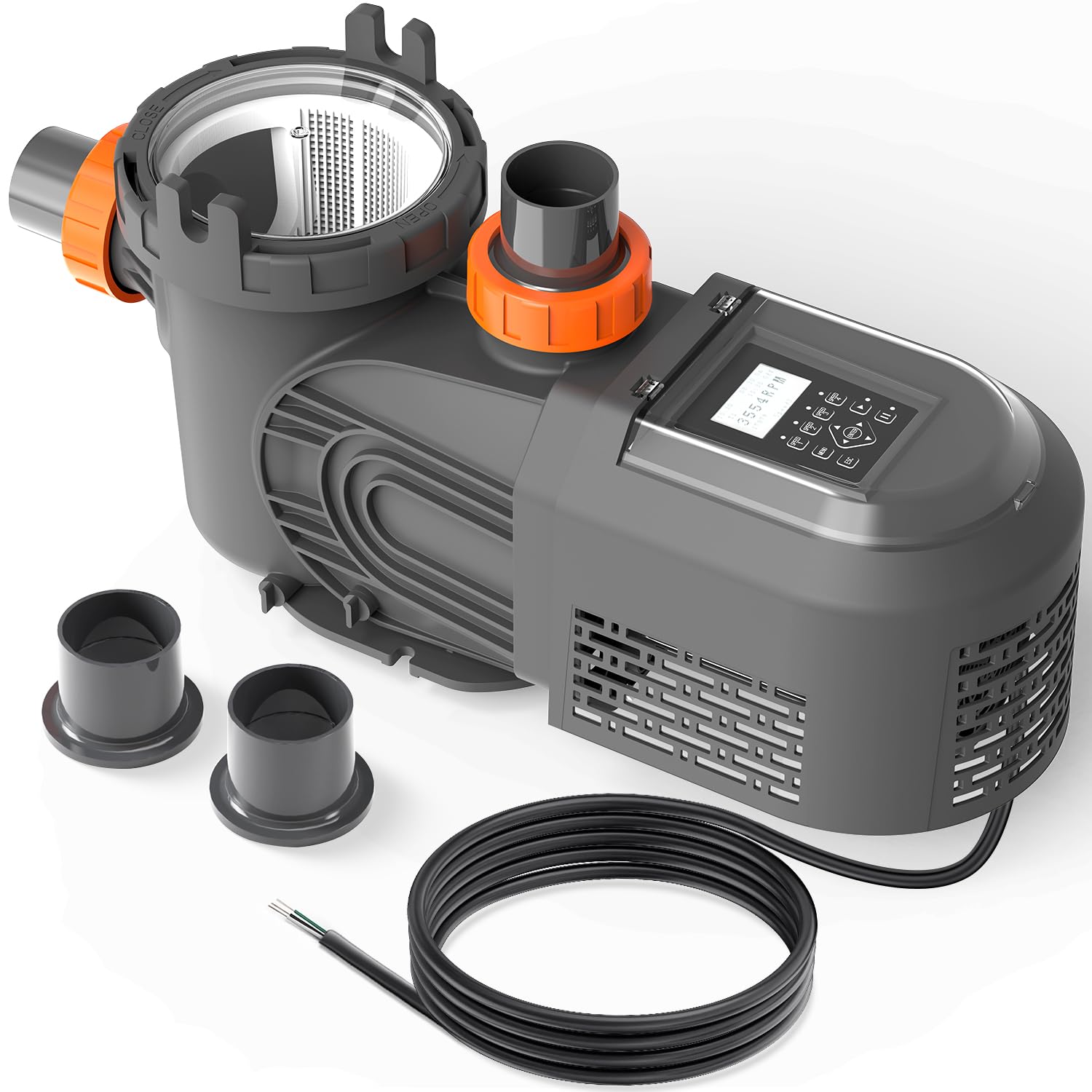
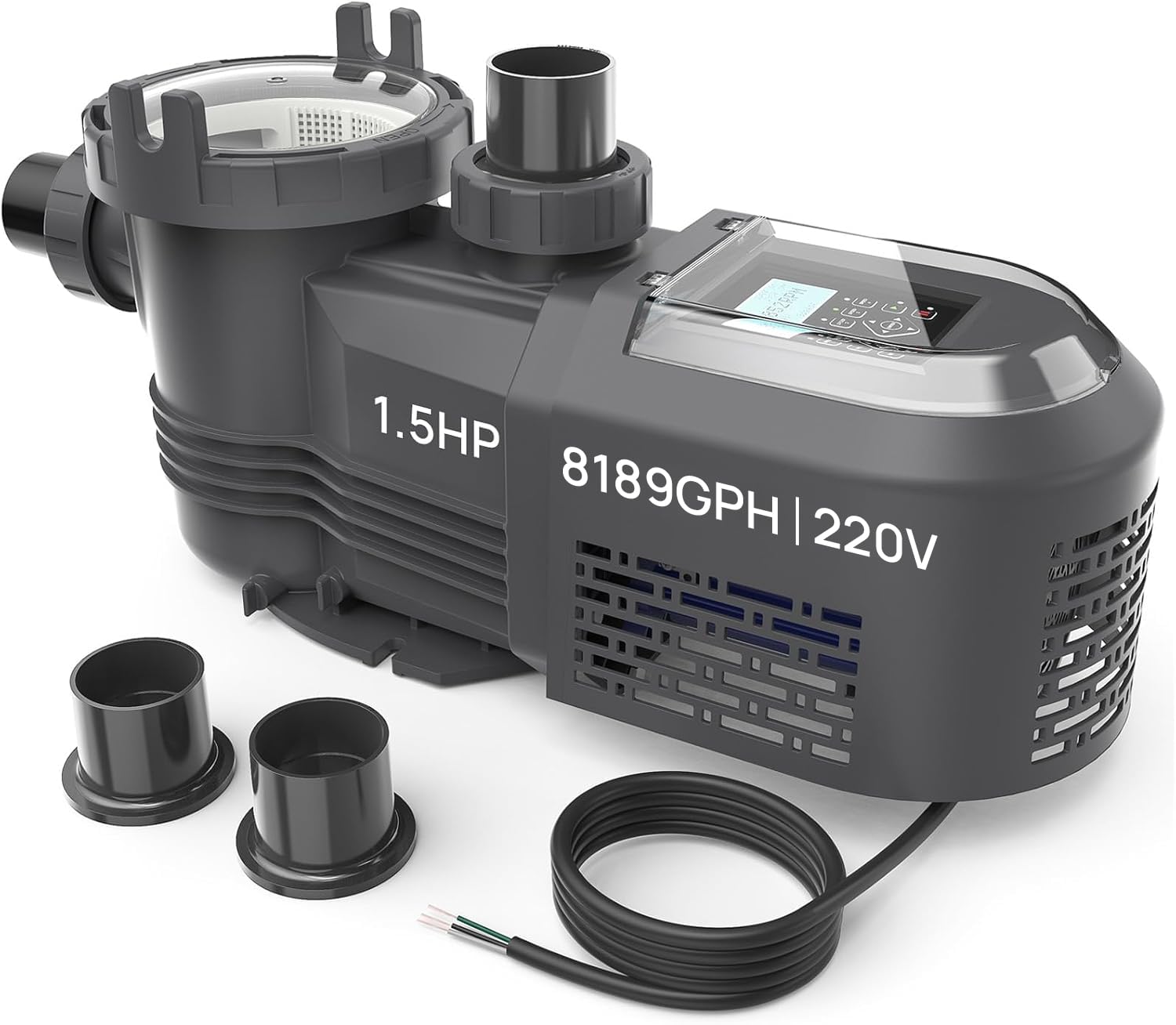
3. Aquastrong Variable Speed Pool Pump, 1.5 HP, 220V
Dial from a whisper at 1200 RPM to a full 4000 RPM blast when the water needs it.
The Aquastrong gives you the widest speed spread in this group. Its smart controller lets you customize from 1200 RPM (3302 GPH) all the way to 4000 RPM (8189 GPH), so you can run a slow, near-silent filter cycle and then hit a full turnover when leaves fall. That adjustable range is matched by up to 4 customizable time periods inside a 24-hour cycle — set the schedule once and let the pump do the shifting.
Performance is what wins people over. Owners describe it as excellent quality that exceeds expectations, and the pump is praised for running incredibly quiet — 62 of 69 noise-level mentions are positive, making silence its signature trait alongside reliability. The variable-speed design is stated to cut consumption by up to 80% versus traditional pumps, and value-for-money comments cluster around lower electricity costs through the season.
Compatibility is handled well with two adapter interfaces — 1.5-inch and 2-inch — for both in-ground and above-ground systems, and the 65-foot maximum head gives you room on a tall equipment pad or long run. Two things to weigh: the pump is 220V like the Varpoolfaye above, and its listed 136 gpm flow lands below that pump’s 151.9 gpm, so compare if raw volume is your priority. Otherwise this is the most versatile speed machine here.
Widest RPM window: 1200 to 4000 RPM translates to a genuinely adjustable day — slow filter, fast clean.
Know before you order: 220V service is mandatory, and the lower 136 gpm means it is less of a raw-volume pick than the Varpoolfaye.
Best match: pools that need both a whisper-quiet daily cycle and a high-RPM cleaning burst on the same schedule.
Second-guess it: if you are wired for 115V or need maximum gpm rather than maximum RPM range.
4. BLACK+DECKER 1.5 HP Pool Pump
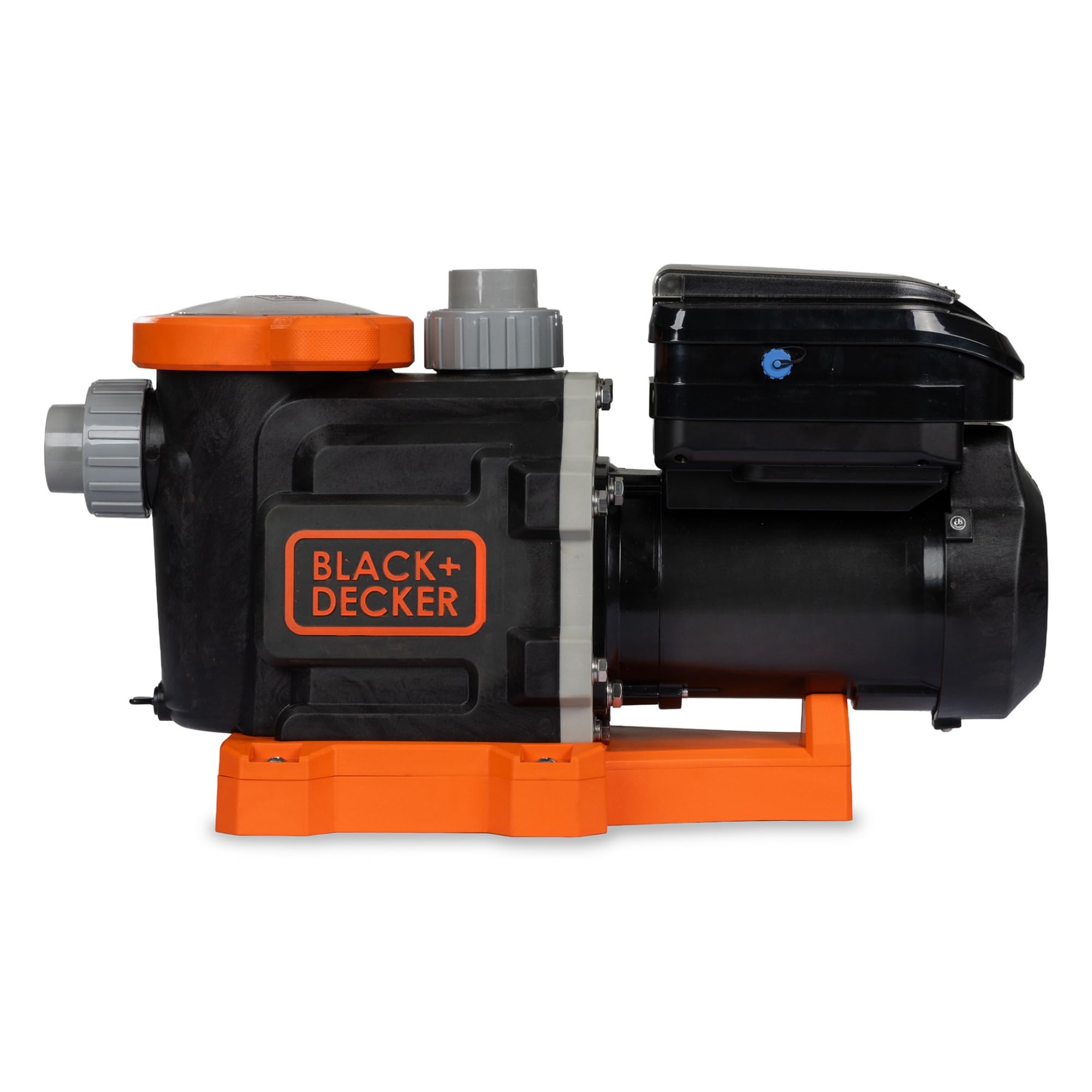
Control your filter cycle from your phone without leaving the deck chair.
This is the one for the owner who wants to adjust speeds from a smartphone rather than crouch at a touchpad. The pump connects to WiFi and pairs with your phone or smart device, and the self-priming motor offers low-speed options for thorough filtration. Its permanent-magnet motor is Energy Star certified, which means it can qualify for utility rebates in select states.
Fitting it is unusually friendly. An automatic smart dual-voltage sensor handles 115V or 230V, so you do not have to match a fixed-voltage pump to your wiring, and the install includes 1.5-inch and 2-inch ports. At 29 pounds it is the lightest pump here — the Hayward TriStar is 52 pounds by comparison — so getting it onto the pad solo is realistic. Owners rate quiet operation extremely highly (75 of 77 noise mentions positive) and describe the day cycles as running at very low speeds, which is exactly where the electric bill savings appear.
The honest follow-up question: does the smart feature add complexity? The touchpad is easy enough, but the most-discussed weakness is reliability, where some customers note issues after an extended run. Treat the 5-year warranty as your safety net and keep an eye on the pump’s self-diagnostics. The 80 gpm flow is lower than the Aquastrong’s 136 gpm, so this is a smart-control pick, not a raw-volume one.
Phone-in-control perk: WiFi plus ELPC dual-voltage 115V/230V means flexible wiring and remote speed tweaks.
Trade-off to note: 80 gpm is modest for big pools, and reliability is the spot to watch — lean on the 5-year warranty.
Pick it if: you want app control, dual-voltage flexibility, and the lightest lift onto your equipment pad.
skip it if: your pool is large and needs a high gpm turnover, or you would rather not depend on an app.
5. Waterway Power Defender 165 Pool Pump
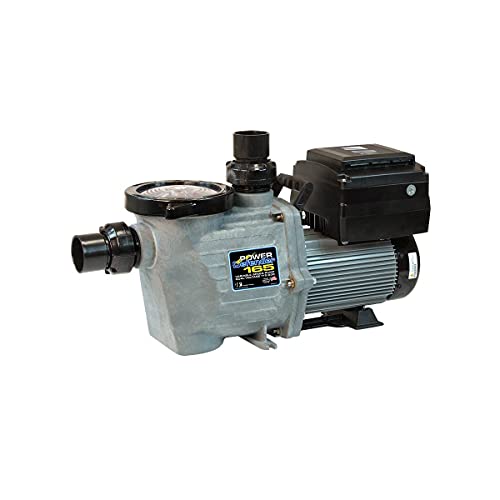
A self-priming pump that protects your plumbing when temperatures plunge.
If your pool sees frosty nights, the Waterway’s built-in freeze protection is the feature that makes it worth a look. The pump self-primes, runs a full variable 600–3450 RPM range, and kicks on automatically to keep water moving when the cold threatens your lines. At 1.65 hp it sits between the 1.5 hp mid-range units and the bigger Pentair motors, and it runs on 115/230V.
What owners value is quiet and dependable operation — the reviews are slim, but the pattern is a pump that hums along without drama. It is a self-priming pool filter pump with a super-quiet operation note in its own materials, and the reliability feedback is uniformly positive across the available comments. Treat the limited review base as a reason to confirm your plumbing matches before ordering, not as a strike against the hardware.
Standout safeguard: freeze protection plus self-priming means fewer winter surprises and fewer manual re-primes.
For the careful buyer: the review pool is small, so double-check your pipe size and voltage against the spec sheet first.
Worth it for: cold-climate pools that need freeze protection built in.
Hold off if: you want a large body of owner feedback to lean on before committing.
6. Hayward MaxFlo XE 1.65 HP Variable Speed In Ground Pool Pump

Six preset speeds and a 240 gpm rating make this the flow leader of the lineup.
Hayward built this as a direct replacement for single-speed pumps, and the 240 gpm flow rate is the highest listed in this group — well above the BLACK+DECKER’s 80 gpm and even the 136 gpm Aquastrong. The 1.65 hp motor supports dual voltage (230/115V), and the intuitive six-speed programming with a single-button interface lets you set a daily schedule without a learning curve. It is the lightest Hayward here at 27.5 pounds.
What owners single out first is how quiet it runs and how simple the variable-speed settings are to dial in. It runs efficiently for a variable-speed pump, so the energy savings are the quiet second win. Installation is straightforward on an existing pad, and the drop-in compatibility means less downtime between the old pump failing and the pool circulating again.
Here is the honest catch: reliability feedback is genuinely mixed in a way the higher-rated pumps are not. Some reviewers point out years of trouble-free service, while others hit motor failures inside the first three months. Weigh that spread if you want maximum confidence. Value-for-money feedback on the MaxFlo is split too. Buy it for the flow and the six-speed simplicity, and register it the day it arrives.
Flow leader: 240 gpm plus six selectable speeds give you the most headroom of any pump listed here.
The fair warning: reliability reports are split between long service and early motor issues — register it and keep receipts handy.
Go for it if: you need a high-gpm drop-in replacement and want the simplest six-speed interface.
Look elsewhere if: a mixed reliability record is a deal-breaker and you want the steadiest reputation.
7. Pentair 011533 WhisperFlo VST Pool Pump

The big-motor Pentair built for large pools that need serious turnover.
At 2.6 total horsepower (THP), this is the strongest motor in the Pentair lineup here, aimed at large pools or systems with heavy circulation demand. It is a drop-in replacement for existing Pentair WhisperFlo pumps and a replacement for Pentair IntelliFlo variable-speed models, which makes it an easy upgrade if you are already on Pentair hardware. The totally enclosed fan-cooled (TEFC) motor is designed for top durability, and user-friendly programming lets you pick the best speed for your pool.
Shoppers say the WhisperFlo VST performs well and runs efficiently, and buyers report quiet operation plus easy setup and programming. Its 2.6 THP motor (total horsepower, a rating that counts the motor’s full power) gives headroom the 1.5 hp mid-range pumps simply do not. So on a large pool or a demanding equipment pad, that extra power shows up in how quickly the water clears.
The main thing to check is reliability, which is split: some owners mention it running like a champ for the long haul, while a few describe an early failure. That spread is why the one-year limited warranty and a careful install matter here. It is also 45 pounds — lighter than the Hayward TriStar’s 52 pounds but still a two-person lift.
Motor muscle: 2.6 THP is the power number that matters if your pool is large or your turnover is sluggish.
Do your homework: the drop-in fit is easiest on existing Pentair systems, and reliability reports are split enough to justify confirming your installer will honor the warranty.
Reach for this if: you have a large pool and want the extra horsepower of a Pentair drop-in.
Pass it by if: you are not on Pentair plumbing and want the simplest universal fit.
8. Pentair 011028 IntelliFlo VS Pool Pump, Almond

The premium IntelliFlo that anchors a full Pentair pool system.
If you already run Pentair automation or plan to, the IntelliFlo VS is the natural centerpiece. It is a variable-speed pump with a manufacture warranty of 2 years when installed by a pool professional — a longer coverage window than the WhisperFlo VST’s one-year limited warranty. It is built from aluminum and comes in almond, matching the rest of the Pentair family.
Owners describe it as of very good quality and super quiet, with easy installation and a straightforward programming unit. Every energy-efficiency comment is positive, and owners say it works like a charm for daily circulation. The clever part is the total-system fit: the more of your pad that runs on Pentair, the more this pump’s controls make sense together.
The honest caveat is value, and opinions on it are split. This is the most premium pump in this guide, and its energy savings are real over the long haul but arrive slowly. A professional install is also the condition for the two-year warranty, so budget for a pro install rather than a DIY swap. If your pool build already leans Pentair, this is the pump that ties everything together.
System anchor: 2-year warranty when pros install it, and unanimous praise for quiet, efficient operation.
The slow payoff: value is mixed because the upfront cost is high — the savings accumulate over years, not weeks.
The right call: pentair households who want the longest warranty and a pump that works with their existing automation.
Not the right call: budget-focused buyers who want quick payback or who plan a DIY install that voids the two-year coverage.
Know the Specs
Flow Rate and Total Horsepower
Flow rate, measured in gpm (gallons per minute), tells you how much water the pump moves — the number that actually governs how fast your pool turns over. Horsepower is the motor’s stated strength, but it is not a direct stand-in for flow. Total horsepower (THP) is a combined rating some brands use to account for the motor plus drive. Compare gpm between pumps rather than horsepower labels alone: a lower-hp pump can list a higher gpm than a bigger one, depending on design.
Voltage, Timers, and Speed Settings
Voltage determines what wiring the pump needs. Dual-voltage pumps (115V/230V) fit either service, while fixed 220V pumps require that circuit. Timers and speed settings are how you actually save: multiple programmable periods in a 24-hour cycle let the pump run slow when the pool is quiet and fast when it needs cleaning. Look for accurate timer clocks — drift forces you to re-check schedules. Freeze protection, on cold-climate pumps, automatically runs the pump to protect lines from freezing.
Common Questions
Will a variable-speed pump save me money on electricity?
What is the difference between 115V and 230V pool pumps?
How do I know what flow rate my pool needs?
Can I install a variable-speed pool pump myself?
What is freeze protection on a pool pump?
Why does my pump timer run fast or slow?
Is a higher horsepower pump always better?
How do I keep leaves out of the pump basket?
Can I replace my single-speed pump with a variable-speed one?
How long does a variable-speed pool pump last?
The Bottom Line
For most pools, the best variable-speed pool pump is the Hayward TriStar VS 1.85 HP. It pairs quiet operation with a reliable drop-in replacement design and a 24-hour programmable clock (a timer you set for any hour of the day), which is why it leads this list. If raw flow for the money matters more, grab the Varpoolfaye 1.8HP and check its 151.9 gpm (gallons per minute, the flow rate) against your pool size. For the widest speed range or the most premium Pentair system fit, reach for the Aquastrong 1.5 HP or the Pentair IntelliFlo VS.
How we choose
We do not accept paid placement. Every pick is matched to a real buyer and a real use-case; we do not hands-on test units.
Sources
Specifications: manufacturer listings and product documentation. Review insights: verified customer reviews, as of November 2026. Pricing: not shown on this page (it changes often); check the current price via the retailer link.
As an Amazon Associate, Tactical Gear Guy earns from qualifying purchases. This does not affect which products we feature.