Specs are compiled from manufacturer listings and verified buyer reviews and can change over time — please confirm the key details on the product page before buying.
A heavy helmet doesn’t feel heavy in the shop. It announces itself two hours into a ride, as a dull ache at the base of your skull that has you pulling over to stretch. That’s the point of a lighter full-face lid — not a spec-sheet bragging right, but a neck that still feels fine when you get home. The ten helmets below all use a lightweight shell material (fiberglass, carbon fiber, or a composite blend) rather than plain polycarbonate, and this guide walks you through exactly how light each one actually is, what you give up to get there, and who each one genuinely suits.
This guide is built by comparing the manufacturers’ published specifications and the patterns across verified customer reviews, so you get each pick’s real strengths and trade-offs instead of marketing spin.
Weight is only half the story, though; shell material, certification, and how the liner actually grips your head all change how a lid feels on a real road. Below you’ll find a full breakdown of the lightest full face helmet options worth your money.
Top Picks


How To Choose The Lightest Full Face Helmet
The wrong way to shop this category is to find the smallest number on the scale and buy it without checking fit. A lid that weighs nothing but fits badly will rattle your head around at speed and leave you more fatigued than a slightly heavier helmet that actually grips your skull. Weight is the starting filter, not the finish line — fit decides whether a light lid actually feels light. Here is what to weigh alongside the scale number.
Shell material is the real weight lever
Carbon fiber and carbon-aramid composites are the lightest shells you will find here, which is why the carbon-fiber picks sit at the low end of the weight range. Fiberglass sits a step above them on the scale but typically brings a warmer price. Plain ABS or polycarbonate is heavier again and generally gets left out of a light-helmet shortlist. The trade-off is that the very lightest carbon shells often cost more for the same protection standard.
Certifications you should look for
DOT is the baseline legal standard in the U.S. SNELL and ECE (the European standard) add tests, and a lid carrying two or three of them has passed more than the minimum. ECE 22.06 is the newer, wider version of the European standard. None of these ratings tell you how light a helmet is — you still have to check the scale figure separately.
Fit, pads, and the shape of your head
A helmet can be the right size on paper and still be the wrong shape — an oval head and a round head press the cheek pads and crown differently. Many of the picks here let you swap cheek pads or come with removable, washable liners, which makes fine-tuning the grip possible without buying a whole new lid. If a brand runs small or large against its size chart, the reviews will usually say so, and that is worth reading before you commit.
Noise, vents, and everyday comfort
Light helmets have a reputation for being loud, since less shell material and thinner padding can let more wind roar through. A rear spoiler, a chin curtain, or denser ear padding can help. Ventilation is the other half — enough intake and exhaust ports keep you cool on a warm ride, but vents that don’t seal well add noise back in. Balance the two against the temperatures you actually ride in.
Side-by-Side Comparison
| Model | Best For | Shell Material | Stated Weight | Certification | Amazon |
|---|---|---|---|---|---|
| Shoei RF-1400★ Best Overall | All-around road riding | Fiberglass / EPS | 3.6 lb | DOT, SNELL | Amazon |
| LEM Retro Full FaceBudget Retro | Budget café racer look | Fiberglass | 1687 g | DOT | Amazon |
| CRG Sports RetroVintage Look | Vintage styling on a budget | Fiberglass | 4 lb | DOT | Amazon |
| LS2 Blaze II | Adventure and touring | Kinetic Polymer Alloy | — | DOT, ECE | Amazon |
| 1Storm HG335 Carbon Fiber | Lightest carbon-fiber build | Genuine carbon fiber | 3.2 lb | FMVSS 218 | Amazon |
| LS2 Citation II | Sun-shade touring | Fiberglass composite | 2.38 kg | DOT | Amazon |
| ILM 861C Carbon Fiber | Dual-visor street riding | Carbon fiber / EPS | 2.36 kg | DOT | Amazon |
| Sena Stryker | Built-in comms and audio | Fiberglass | 3.9 lb | DOT | Amazon |
| ScorpionEXO Covert FX | Quiet, light street fighter | TCT-Ultra Composite | ±1,348 g / 2.9 lb | DOT, ECE 22.06 | Amazon |
| AGV K6 S | Premium race-derived lightness | Carbon-Aramid | 1290 g | ECE | Amazon |
Detailed Reviews
1. Shoei RF-1400 Full Face Motorcycle Helmet
Our pick — 4.5+★ from 500+ verified ratings; the strongest balance of quality and price.
The quiet, SNELL-rated road lid that proves light doesn’t have to mean loud.
If you are riding daily and want one helmet that does the whole job, the RF-1400 is the pick. It weighs 3.6 pounds and passes both DOT and SNELL — the extra rating means it has cleared a second, tougher set of impact tests. Shoei builds the shell from hand-laid fiberglass and lightweight organic fiber, and the payoff is a lid that holds up as one of the brand’s lightest SNELL-approved full-face designs.
Where it separates itself is wind management. The shell shape was refined in wind tunnel testing, and the result is a genuinely quiet helmet — Shoei trimmed drag and lift from the previous generation and added removable ear pads and fuller cheek pads to soften the roar. The dual-layer, multi-density EPS liner (the impact foam inside the shell) is channeled so cool air still moves through. What wins people over here is the overall build quality above everything else, with fit close behind — the liner suits a large head well, which is rare in this category.
Here is the honest catch: the value question divides opinion, and the visor release takes some getting used to if you are used to simpler lids. Neither makes it a bad helmet — it just means you are paying for the certification and the noise work rather than for features on a checklist. It also is not the lightest figure on this page, so if the scale number is your only goal, look at the carbon picks. If you want one do-everything lid, this is the one.
Why it earns the top slot
- Meets both DOT and SNELL — one of the few on this list with the stricter rating
- Wind-tunnel-shaped shell keeps noise low for a light lid
- Removable ear pads and fuller cheek pads soften wind roar
- Fiberglass shell at 3.6 pounds stays comfortable on long rides
Where it asks more of you
- Not the lightest raw weight here — the carbon builds dip lower
- Visor opening mechanism takes practice before it feels natural
Pick this if you ride year-round: the RF-1400 is for the daily rider who wants one helmet that stays quiet, fits a large head, and carries a tougher certification.
Look elsewhere if: the absolute lowest scale number is your whole goal — the carbon-fiber options below beat it on raw weight.
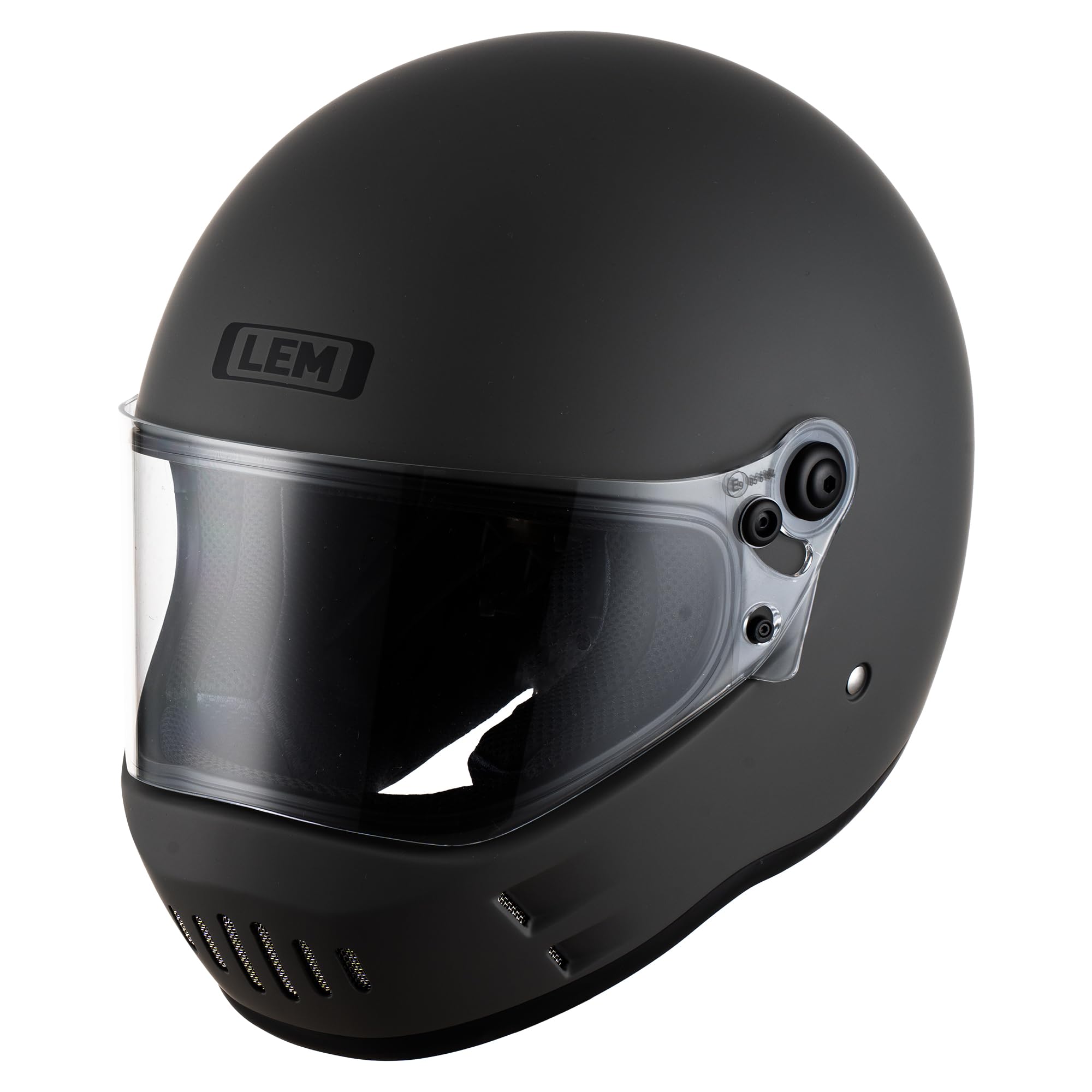
2. LEM Retro Full Face Motorcycle Helmet (Matte Black, Size M)
A fiberglass café-racer lid that keeps the scale around 1687 grams and leaves room for a headset.
The 1687-gram figure (about 3.7 pounds) puts this in the same weight neighborhood as pricier fiberglass lids, which is impressive at the entry end of the market. The shell is fiberglass, rated to DOT, and closes with a double D-ring buckle — the two-loop strap that has to be threaded by hand, which is the most secure type but the slowest to put on. The blue hexagonal liner is fixed 3D padding, and the liner plus ear pads pop out for washing.
Two details are built for real commuting. There’s a Bluetooth headset slot molded into the shell, so adding music or calls doesn’t mean cutting foam or taping a unit to the outside. And the anti-fog setup pairs an external scratch-resistant lens with an internal anti-fog coating, and a windproof nose mask to keep fog off in cold or rainy weather. The design leans retro — red accents, café-racer lines — so it suits a cruiser or scooter as much as a street bike.
The catch is quieter than you might expect: the quick-release liner and the headset slot are the sorts of features usually reserved for pricier helmets, but the trade-off shows up in the finish and hardware rather than the weight. This is not the lid to buy if you want carbon-level lightness, but it is a solid fiberglass option that doesn’t punish your neck on a long ride.
Where the value sits: the Bluetooth slot and removable washable liner are usually premium features, and at 1687 grams the weight holds its own against fiberglass lids that cost more.
What to know before you buy: the D-ring buckle is the most secure closure but the slowest to fasten, so daily stop-start city riding will feel like more fiddling than a quick-release strap.
Built for: the rider who wants a retro fiberglass full-face without paying premium prices, and who already plans to add a Bluetooth headset.
Think twice if: you want a quick-release chin strap for constant on-off city riding.
3. CRG Sports Retro Full Face Motorcycle Helmet
The retro silhouette that turns heads first — then asks you to check the sizing chart carefully.
Appearance is the headline here, and by a wide margin. The classic full-face shape and glossy finish draw the most praise of any trait on this helmet — riders describe it as both nice-looking and high quality, and the vintage street-racing look is the whole reason to buy it. Set against the 1Storm carbon below, it is a heavier lid at 4 pounds versus 3.2 — a quarter more weight, and you will notice the difference at the end of a long day.
The shell is fiberglass and carries DOT approval, and the clear visor gives a wide field of view with a minimalist profile. The padded liner is soft and helps absorb vibration, and buyers consistently point to the value — quality that feels better than what they paid. That combination is why it remains a common first retro full-face for anyone building out a café racer or cruiser look.
The honest trade-offs sit in sizing and the finish. Sizing runs small for some riders and isn’t friendly to large heads, so measure carefully and consider going up a size. The matte finish is also known to scratch with wear, so treat the shell gently. Neither undoes the retro appeal if that look is what you came for.
The look is the sell: the iconic full-face profile earns more praise than anything else on this helmet, and the fiberglass shell plus DOT approval backs it with real protection.
The sizing caveat: the fit runs small for some riders and isn’t suited to large heads, so check the size chart and be ready to size up — and expect the matte finish to show scratches over time.
Reach for this if: the vintage café-racer look is the point, and you want a DOT fiberglass full-face that looks better than its price.
skip it if: you have a large head or want the lightest possible shell — this is the heavier retro option.
4. LS2 Helmets Blaze II Adventure Motorcycle Helmet W/SunShield

A flip-down sun shield you can deploy mid-ride without stopping to swap visors.
For riders who go from bright highway to tree-shadowed canyon road and back, the Blaze II solves a very specific annoyance: the integrated drop-down sun shield slides in behind the clear face shield, so you are not pulling over to change lenses. The Kinetic Polymer Alloy shell is a lightweight composite, and the lid carries both DOT and ECE approval — two certification systems rather than one.
The safety features go beyond the paperwork. There’s an emergency release system that lets first responders pull the cheek pads out safely in an accident, and a quick-release chin strap that closes without the double D-ring fumbling. Multiple intake and exhaust ports push air through the EPS liner. Build quality is where the helmet draws its strongest response — not a single negative note on it — and the fit and finish land above expectations for the price.
Ventilation is where opinion splits. Some riders get plenty of airflow; others find the air movement thin on hot days, and the ratchet chin strap and quick-release feel convenient to some and fiddly to others. Worth a real look if you tour or adventure-ride, but not the lid if maximum airflow is your priority.
The touring argument: DOT plus ECE approval, an emergency cheek-pad release, and a sun shield that deploys without a stop make this a genuine adventure helmet rather than a styled street lid.
The honest split: airflow is genuinely loved by some riders and found lacking by others, and the ratchet chin strap is either convenient or fiddly depending on your hands.
Suits: the adventure or touring rider facing changing light — the drop-down sun shield and dual certification do the work on long mixed-road days.
Not for: hot-weather riders who need maximum airflow, or anyone who dislikes a ratchet-style chin strap.
5. Carbon Fiber Motorcycle Full Face Helmet HG335

Real carbon fiber at 3.2 pounds — the lightest shell material on this list, full stop.
3.2 pounds is the number that defines this helmet. The shell is genuine carbon fiber, not a carbon-look film, and the maker claims it is stronger and lighter than ABS or fiberglass builds. That is the whole reason it sits high on this list: if raw weight is your filter, this is the figure that matters. Its glossy UV-protective finish and rear venturi-effect spoiler (a shaped exhaust vent that pulls warm air out the back) give it a clean, sporty look.
The ventilation is genuinely adjustable — three levels of top control plus a five-position channel let you tune the airflow to the day. The interior is heavily cushioned and fully removable and washable, and it meets FMVSS 218, the federal motorcycle helmet standard. Build quality and the lightweight feel both draw strong praise, and the carbon construction itself earns its own following — people buy this lid for the material as much as anything.
The real caveats are fit and visor. The fit runs small for some riders and large for others, so it is genuinely worth trying the size chart against your head shape. And it ships with a smoked shield rather than a clear one — great for daytime, less so for night rides unless you swap it. Neither ruins a genuinely light carbon lid, but plan ahead on both.
What the scale buys you
- Genuine carbon-fiber shell at 3.2 pounds — the lightest material spec here
- Three-level top vent plus five-position channel for adjustable airflow
- Removable, washable cushioned interior
- Glossy UV-protective finish with a rear venturi spoiler
What to plan around
- Ships with a smoked shield, not a clear one — night riding needs a swap
- Fit runs small for some and large for others — check the size chart
The carbon-for-weight buyer: if the scale number is your first filter and you want a genuine carbon shell at 3.2 pounds, this is the one.
The rider to steer away: if you need a clear shield for night riding from the start, or a fit that runs generous.
6. LS2 Helmets Full Face Citation II Helmet
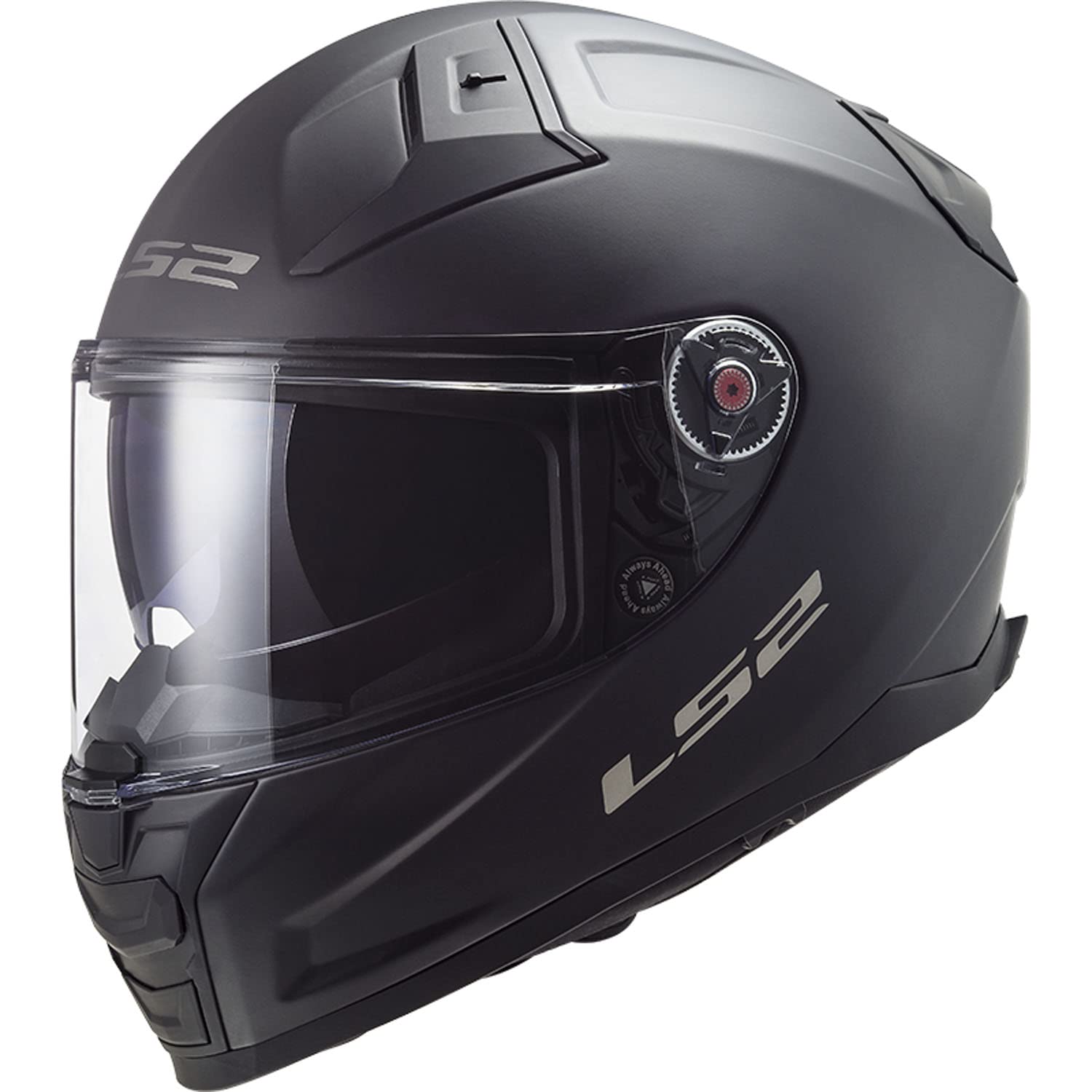
A high-performance fiberglass composite lid with a sun shade and a shield that resists fog and UV.
At 2.38 kg (about 5.2 pounds) this is the heaviest stated weight on the page, and that matters because weight is the whole point of this list. The trade-off is a fiberglass composite shell — High Performance Fiberglass Composite, in LS2’s terms — plus the sort of sun-shade and anti-fog features that make long daylight rides easier. The shield is a scratch-resistant, UV-resistant “A Class” polycarbonate with an optically correct curve.
What the helmet does well is comfort and sun control. The Magna-Tech liner is removable and washable, the fit draws strong praise, and the sun shade plus clear visor are called out as genuinely useful on bright days. It’s DOT approved and carries the micrometric quick-release chin strap — a ratchet-style closure that clicks tight with one hand. Lightness itself earns consistent praise from the riders using it.
The catch is noise and the chin strap position. Some find the chin strap sits too far back, and noise divides opinion — some report decent quiet, others find it loud.
The sun-riding case: a useful sun shade, a fog-and-UV-resistant “A Class” shield, and a removable Magna-Tech liner make it a strong daylight touring lid.
Weigh this honestly: at 2.38 kg it is the heaviest stated weight here, and the chin strap sits far back for some riders while noise splits opinion.
Good match for: daylight touring riders who value a sun shade and a UV-resistant shield over the lowest possible scale number.
Better to pass if: lightness is your top filter, or you need the chin strap to sit forward.
7. ILM 861C Carbon Fiber Full Face Dual Visor Helmet

Two visors in one shell — a clear outer and a retractable inner that flips down on the fly.
The dual-visor system is the defining feature: a wide-angle clear shield on the outside and a retractable tinted inner visor behind it, so you can change for the light without stopping to swap shields. The clear shield even takes Pinlock EVO pins — the anti-fog insert system — though Pinlock itself is not included. The shell is carbon fiber over EPS foam, and the helmet meets both DOT and FMVSS 218.
Build quality is the standout, with the design close behind — riders consistently say it looks good and draws compliments. The carbon construction and lightweight feel both land well, and the cheek pads are soft with removable, washable liners so you can adjust the grip. A rear spoiler with a passive exhaust vent pulls warm air out the back and adds stability at speed, and the metal quick-release strap releases with a pull on the red rope.
Fit and noise are the split points. Sizing runs a little bigger than expected for some riders, and wind noise becomes noticeable for others while staying quiet for the rest. Worth the look if the dual visor and the carbon shell are what you’re after; size down and consider ear plugs if noise bothers you.
What stands out: a dual visor system with a retractable inner tint, a carbon fiber shell, and a rear spoiler with a passive exhaust vent for cooler air at speed.
The split points: sizing runs a little big for some riders, and wind noise becomes noticeable for others while staying quiet for the rest.
The commuter who hates stopping: ride-and-go light changes are handled by the retractable inner visor without pulling over to swap shields.
Second-guess it if: you want a fit that runs true to size, or are sensitive to wind noise — size down and add ear plugs.
8. Sena Stryker Full Face Smart Helmet
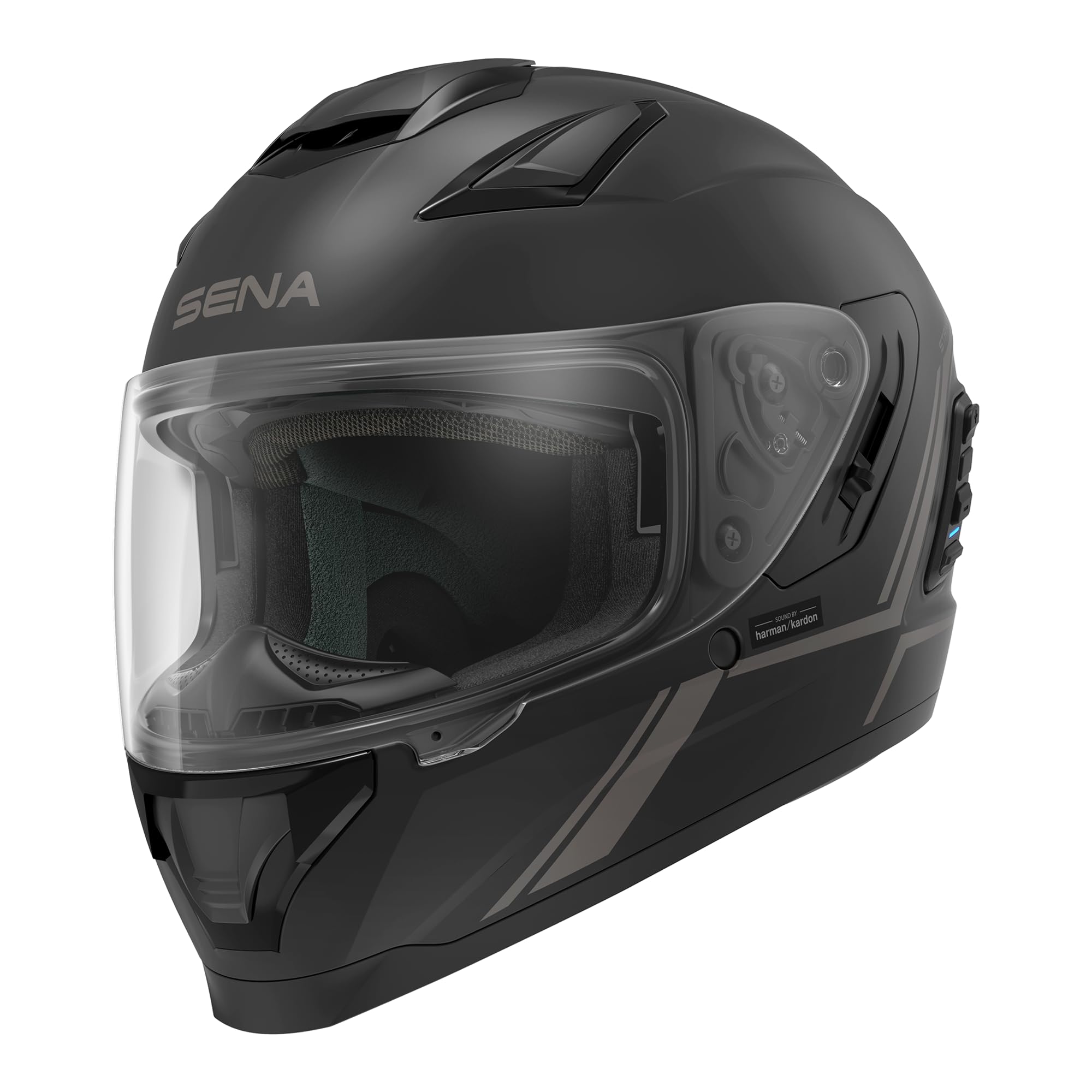
Comms built into the shell — but 3.9 pounds, and the reviews are genuinely divided.
This one is the heaviest full-face on the page at 3.9 pounds, so if lightness is the whole brief, it doesn’t lead. What it offers instead is integration: Mesh and Bluetooth built into the helmet for talking to other Sena-equipped riders or linking your phone, with SOUND by Harman Kardon speakers and microphone tuned for clarity in and out. There’s also an LED taillight for visibility day or night, a retractable sun visor behind the clear shield, and a magnetic Pogo charging port.
The shell is fiberglass and DOT-rated, and the padding is designed with acoustic dampening to quiet the interior. That comms-and-audio package is the real reason to pick it — you skip the bolt-on headset and cable routing entirely. For riders who ride in groups and want clear talk without adding a separate unit, that integration is the whole value.
Be realistic about the feedback, though. Quality, sound, fit, and Bluetooth all land mixed — some riders love the Harman Kardon audio and the quiet, others find it tight or defective. Charging draws the strongest complaint: reports of short battery life and slow recharge. And value draws the weakest response, with several saying it isn’t worth the cost. It’s a specialty buy — pick it for the comms, not for lightness or at-a-glance reliability.
Built-in where it counts
- Mesh and Bluetooth integrated — no separate headset to bolt on
- SOUND by Harman Kardon speakers and microphone
- LED taillight plus retractable sun visor
- Acoustic-dampened padding for a quieter interior
The trades to weigh
- 3.9 pounds — the heaviest full-face on this list
- Charging and battery life draw the strongest complaints
- Quality and Bluetooth are genuinely mixed in the reviews
For the group rider: the Stryker is for the rider who wants Mesh and Bluetooth audio built in and is willing to accept the weight and the variable feedback.
For a lighter build: anyone buying on weight alone should look at the carbon lids above — 3.9 pounds is the heaviest here.
9. ScorpionEXO Covert FX Full Face Motorcycle Helmet

The most thorough certification here plus a stated 2.9 pounds — and riders call it quiet.
Start with the certifications: U.S. DOT plus ECE 22.06, the newer European standard that Scorpion notes requires a wider range of testing than the previous 22.05 version. Then the shell — an “extremely lightweight” TCT-Ultra Composite, with the maker stating a weight of about 1,348 grams, or 2.9 pounds, in size medium. That makes it one of the lightest lids here by its stated figure, and the CAD-refined aerodynamics cut lift and turbulence for a more stable ride.
The comfort engineering is where it shines: a KwikWick C moisture-wicking liner, KwikFit 3D cheek pads that accommodate most eyeglasses, and comm-ready speaker pockets for a Bluetooth system. There’s aero-tuned ventilation with a large top intake and exhaust vents, a dual-position mouth vent that doubles as a defroster, and reflective cheek-pad material for night riding. It even ships with an extra dark-smoke Everclear shield, fog-free and rated for 95% UV-A and UV-B protection. Quietness is a genuine strength — riders say they can hear music above 80 mph.
Airflow is the one point to weigh: some find the ventilation phenomenal, others report no real airflow. It’s also the most feature-dense lid on the list, so it costs the most of the light options — but the 5-year warranty, dual certification, and second shield soften that. Best for the rider who wants a light street-fighter lid that stays quiet.
Why quiet and light win here
- DOT plus ECE 22.06 — the widest certification on this list
- Stated weight of ±1,348 grams / 2.9 lb in a medium shell
- Quiet enough to hear music above 80 mph, riders report
- Ships with an extra fog-free dark-smoke Everclear shield, rated for 95% UV-A and UV-B protection
- KwikFit 3D cheek pads accommodate most eyeglasses; comm-ready speaker pockets
Where it may fall short
- Airflow divides opinion — phenomenal to some, thin to others
- Feature-dense build puts it at the top of the light-helmet price band
The light-but-quiet rider: a light composite shell, dual certification, and a second shield make this the strongest all-rounder for quiet street riding.
The airflow-first rider: if you ride in extreme heat and need maximum vent flow, weigh that mixed airflow feedback before you commit.
10. AGV K6 S Full Face Motorcycle Helmet
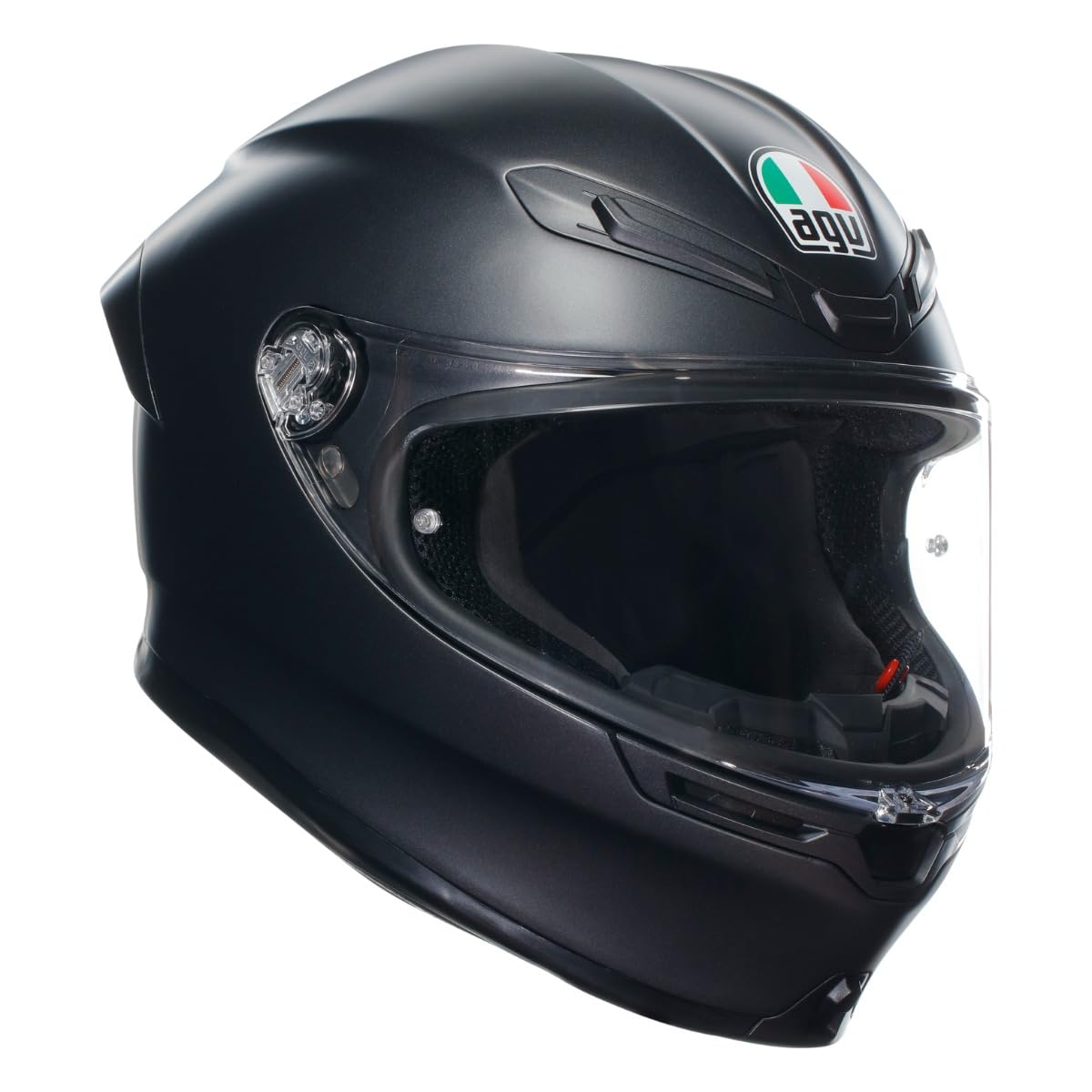
1290 grams and a 190° visor — the lightest stated weight on this page.
The number that matters here is 1290 grams — the lowest stated weight on this entire list, built from a carbon-aramid fiber composite shell that AGV calls one of the lightest full-face road helmets in its class. The visor is the other headline: a panoramic 190° horizontal field of view, which means less head-turn to check a blind spot. Six vents, glove-adjustable, feed a ventilation system with multiple front intakes and rear extractors.
The racing DNA is visible in the aerodynamics — developed with AGV racing tech and wind-tunnel testing, with an integrated rear spoiler to cut drag and keep it stable across riding positions. Inside there’s a removable, washable, waterproof interior with Dry fabric technology, reflective inserts, and an ergonomic neck roll. The fit and finish draw the strongest praise, and its lightness and low noise both register as strengths.
The honest note is certification. It carries ECE, the European standard, not DOT — so if you specifically need U.S. DOT approval for your riding, check that against your local rules before buying. Otherwise, this is the premium lightness pick: highest price of the light options, lowest stated weight of the bunch.
The lightness headline: a carbon-aramid shell at 1290 grams — the lowest stated weight here — paired with a panoramic 190° visor and six glove-adjustable vents.
The one check first: it carries ECE certification rather than DOT, so confirm that meets your local requirements before you buy.
The weight-at-any-cost buyer: if 1290 grams and a 190° visor are what you want, this is the lightest lid on the page.
Check before you commit: it’s the priciest light option and carries ECE, not DOT — verify your local standard first.
Know the Specs
Shell material and weight
The shell’s material is the biggest single lever on a helmet’s weight. Carbon fiber and carbon-aramid composites are the lightest you’ll find, which is why the carbon picks sit lowest on the scale here — the 1Storm at 3.2 pounds and the AGV at 1290 grams are the proof. Fiberglass sits a step above carbon on the scale but often costs less. Kinetic Polymer Alloy and TCT-Ultra Composite shells are branded lightweight blends that land in between. Heavier shells aren’t automatically unsafe — they may just tire your neck sooner on a long ride.
Certifications: DOT, SNELL, and ECE
DOT is the baseline U.S. legal standard and the FMVSS 218 reference you’ll see repeated. SNELL is a stricter independent rating, and the RF-1400 is the pick here that carries both DOT and SNELL. ECE is the European standard, and ECE 22.06 is its newer, wider version — the Blaze II and the Covert FX both carry it, and the Covert FX carries DOT alongside it. The AGV K6 S carries ECE only. None of these ratings indicate weight; you have to check the scale figure separately to compare lightness.
The EPS liner and impact foam
EPS is expanded polystyrene — the crushable foam inside the shell that absorbs impact energy. Many helmets use a dual-layer or multi-density EPS, and the RF-1400 channels its liner so cooling air flows through it. The number of shell sizes and EPS sizes a helmet is built in affects how well it fits a given head shape; the Covert FX is built on two shells with three EPS sizes. More sizes generally mean a closer fit without extra padding.
Ventilation, visors, and noise
Vents let air in through the front and out through exhaust ports, and the number and adjustability of them determines how well you stay cool. Some lids, like the LS2 Blaze II, add an internal drop-down sun shield so you don’t swap face shields for changing light. A rear spoiler or venturi exhaust, as on the 1Storm and ILM, pulls warm air out the back. Light helmets can be noisy, so check for ear pads, a chin curtain, or acoustic-dampened padding if quiet matters to you.
Common Questions
Is a full face helmet under 3 pounds actually safe?
Will a lightweight helmet be louder than a heavy one?
What’s the difference between DOT and ECE certification?
Does SNELL certification matter more than DOT?
How do I pick the right size in a helmet that runs small?
Can I use a helmet with a drop-down sun visor for night riding?
Are carbon fiber helmets really lighter than fiberglass ones?
Can I add a Bluetooth headset to any of these helmets?
Does a lighter helmet tire my neck less on long rides?
How do I keep the liner and pads from getting musty?
The Bottom Line
For most riders, the lightest full face helmet winner is the Shoei RF-1400 — it carries both DOT and SNELL approval, manages noise through wind-tunnel-shaped aerodynamics, and its 3.6-pound fiberglass shell stays comfortable on a full day of riding. If raw lightness is your whole filter, reach for the AGV K6 S at a stated 1290 grams, or the genuine carbon 1Storm at 3.2 pounds if you want the carbon shell without the premium price gamble. And for a rider who wants the quiet, light, dual-certified package with a spare shield in the box, the ScorpionEXO Covert FX delivers that at about 2.9 pounds.
The one honest nudge: the RF-1400 is the highest-rated of the light picks, so if you want the safest bet on a single helmet for daily riding, start there. The carbon lids are the ones to grab if your neck is the thing you’re trying to save.
How we choose
We do not accept paid placement. Every pick is matched to a real buyer and a real use-case; we do not hands-on test units.
Sources
Specifications: manufacturer listings and product documentation. Review insights: verified customer reviews, as of November 2026. Pricing: not shown on this page (it changes often); check the current price via the retailer link.
As an Amazon Associate, Tactical Gear Guy earns from qualifying purchases. This does not affect which products we feature.