Specs are compiled from manufacturer listings and verified buyer reviews and can change over time — please confirm the key details on the product page before buying.
If you drive a rig long enough, you already know the worst part of the job is not the backing — it is the lane beside you. A truck side camera puts a live picture of that blind spot on a screen in your cab, so you can see a car sitting in your mirror’s dead zone before you swing over. The short answer: buy a wired system if you can run cable once and never think about it again, and buy wireless only when routing wire through a trailer is genuinely impossible.
This guide is built by comparing the manufacturers’ published specifications and the patterns across verified customer reviews, so you get each pick’s real strengths and trade-offs instead of marketing spin.
Nine systems sit below, split between hard-wired kits with big touch screens and wireless units that bolt onto marker light housings. Each entry names the actual viewing angle, resolution, waterproof rating, and cable lengths you are buying, so you can match a kit to your cab size and trailer length before you order. This is what changes a white-knuckle lane change into a glance at the screen, and the right truck side camera makes that glance second nature on every haul.
Top Picks

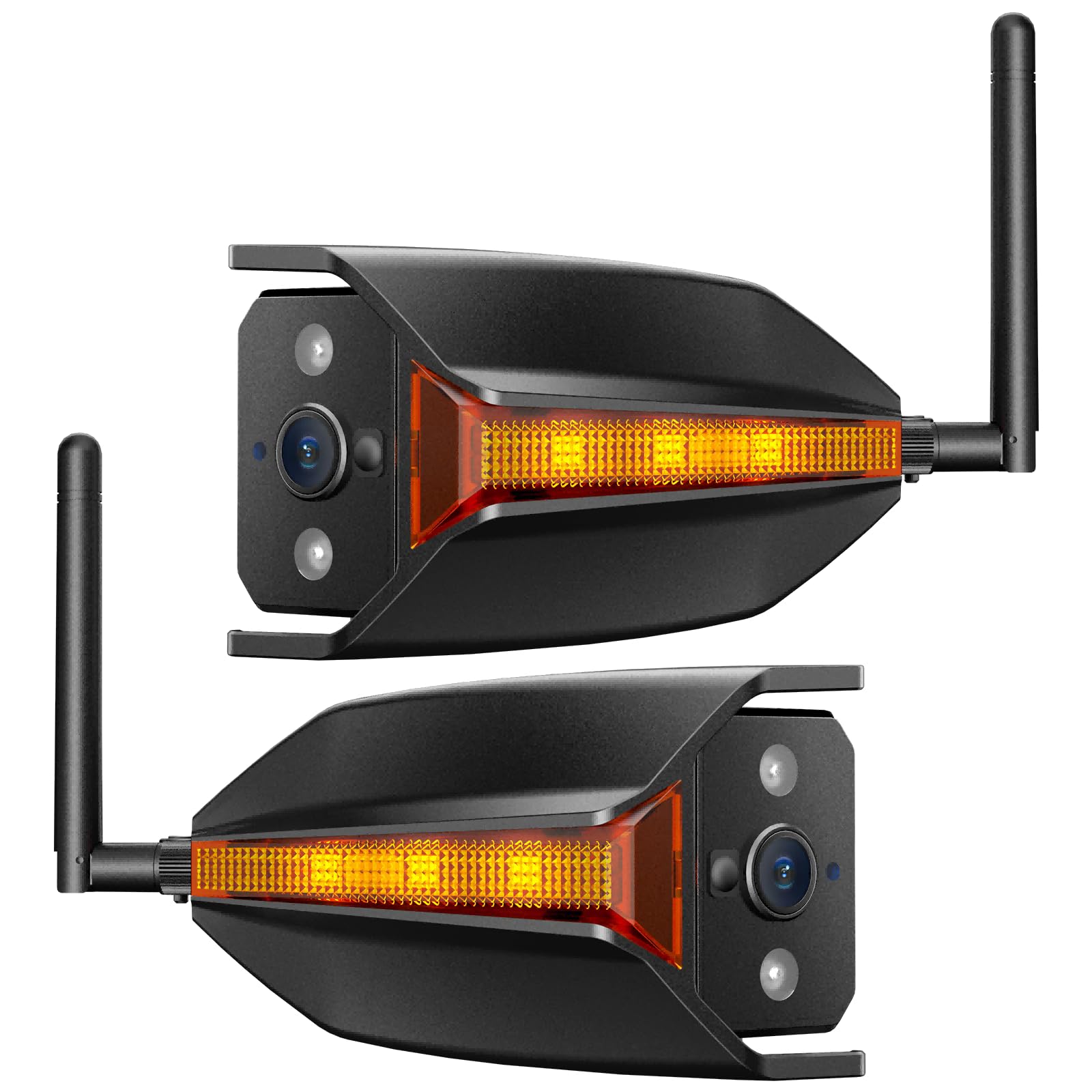

How To Choose The Best Truck Side Camera
The decision depends on four things: whether you can run cable, how long your vehicle is, how big a screen your dash can take, and how much of the side lane you need to see. Get those four right and the rest of the spec sheet matters far less.
Wired or wireless — the first real fork in the road
A wired system sends video through a physical 4-pin cable, so the picture stays put no matter how long the trailer is or what tower you drive past. The trade-off is labor: you are routing cable from the mirror housing back to the cab. Wireless skips that run but asks the transmitter to fight interference, and the honest pattern across owner feedback is that wireless units can lose a beat in heavy traffic or at long distances. If your rig is 40 ft or longer, wired is the calmer choice.
Field of view in degrees — the number that saves your paint
Field of view is how wide a cone the lens sees. A 170-degree lens catches the lane beside you plus a slice of the lane beyond it, which is what you want on a side camera. A 105-degree lens is tighter and shows less of the neighboring lane. Wider is not automatically better — a very wide lens bends straight lines at the edges — but for side coverage, 140 to 170 degrees is the range that actually covers a blind spot.
Screen size against cab space
A 10.1-inch monitor splits into four readable panes, so front, rear, left, and right all stay legible at a glance. A 7-inch screen does the same job in far less dash real estate. A 10-inch panel is easier to read at a glance; a 7-inch panel fits a dash that is already full. Measure the space on your dash before you fall for the biggest panel.
Cable length decides whether the kit fits at all
Side and rear cameras sit far from the cab. Kits here ship with combinations like a 49 ft cable plus 23 ft runs, or a 49.2 ft cable with several 16.4 ft cables. On a long wheelbase tow rig, a short cable means a splice you do not want. Check the longest run against your vehicle before ordering.
Side-by-Side Comparison
| Model | Best For | Field of View | Resolution | Connection | Amazon |
|---|---|---|---|---|---|
| Losuudy 3-Camera 10.1″ Wired Kit★ Best Overall | Best overall for long wheelbase rigs | 170 degrees | 1080 pixels | Wired RCA | Amazon |
| AUTO-VOX WF2 Side CamerasBest for WF1 Owners | Adding side view to an existing WF1 | 120 degrees | 1080 pixels | Wireless | Amazon |
| EVERSECU 9″ Quad Split with DVRRecords Every Mile | Recording every trip as evidence | 120 degrees | 1920 pixels | Wired | Amazon |
| Losuudy L-A5 4-Camera Kit | Full 360 coverage on a big rig | 140 degrees | 1080 pixels | 4-Pin Aviation | Amazon |
| Fubedo 9″ DVR Kit | Card included, no extra shopping | 140 degrees | 1080 pixels | Wired | Amazon |
| Losuudy L-A2 10.1″ Kit | Biggest screen for a full-size cab | 170 degrees | 2.1 mp | Cigarette Lighter | Amazon |
| VOONOA 7″ Wireless Kit | Wireless scope on a tight budget | 360 degrees | 1080 pixels | Wireless | Amazon |
| WOOCARTY 10.1″ Wireless Kit | Cable-free install on a tow rig | 120 degrees | 1080 lines_per_inch | Wireless | Amazon |
| AUTO-VOX Campsync | Rear plus both sides on one screen | 105 degrees | 1080 pixels | Wireless | Amazon |
Detailed Reviews
1. Losuudy 3 Camera Wired Backup Camera System
Our pick — 4.5+★ from 100+ verified ratings; the strongest balance of quality and price.
Three cameras, a 170-degree side lens, and a screen big enough to read at highway speed.
The widest lens in this lineup belongs here — a 170-degree field of view, which is the cone of the world the lens captures. That is what lets a side camera catch a sedan sitting in the lane beside your trailer, not just the space directly behind you. Each of the three included cameras is rated to 1080P resolution over AHD (analog high-definition, an older but very stable video standard that does not drop frames), and each one carries night vision for the dark side of the run.
The 10.1-inch panel is a 2.5D IPS screen, which means the glass curves gently at the edges and the image stays readable when you glance at it from the passenger seat angle. Losuudy stripped off every physical button except power, so the whole thing runs on touch. Split it four ways and each pane is still readable — the spec sheet is explicit that the display area is far bigger than a 5-inch or 7-inch monitor, which is why quad view survives here when it turns to mush on smaller panels. What wins people over across the review pages is build quality, and the picture clarity ranks right behind it.
Cabling is where this kit earns its keep on a long rig: one 49 ft run plus two 23 ft runs, all powerable from the cigarette lighter or a hardwired ACC (accessory) ignition feed, on DC 12~36V. It has a spare fourth channel waiting if you later add a front camera. The trade-offs are real and worth reading before you buy. It ships without a microSD card, and Losuudy specifies a basic Class 10 card between 32GB and 128GB — high-speed cards are not supported. And this kit is built for semi-trailers, RVs, and buses, not for a pickup or an SUV; the 10-inch panel simply overwhelms a small cab.
What you gain
- 170-degree side lens — the widest single-angle view here — catches the full side lane
- 10.1-inch 2.5D IPS touch screen stays legible even split four ways
- 49 ft plus two 23 ft cables cover a long wheelbase without splicing
- Fourth channel free for a front camera later
- Three AHD 1080P cameras, all with night vision
What to plan around
- No microSD card in the box — a basic Class 10 card of 32GB to 128GB is a separate buy
- Hard-wired install takes real time; nothing here is magnetic or plug-and-go
- Oversized for pickups, SUVs, and minivans per the maker’s own note
Made for: Long-haul drivers with a trailer behind them who want one screen showing rear and both sides at once, and who are willing to spend an afternoon on the install.
Think twice if: You drive a pickup or SUV rather than a commercial rig — the 10-inch panel is sized for a semi cab.
2. AUTO-VOX RV Backup Camera Wireless System
The side camera that slides into your marker light housing and skips the cable run entirely.
Marker light mounting is the clever bit here. You pull the existing RV marker light out, wire the WF2 into that same feed, and screw the new housing back in place — AUTO-VOX quotes about 30 minutes for the job, and the built-in marker light means other drivers still see you in low light or bad weather. If you already run the AUTO-VOX WF1 monitor, this pairs to it for a three-way split of front, rear, and side. That is a narrow club, and it is worth being clear about: this is a side-camera add-on, not a standalone kit.
The lens is a 120-degree wide angle at 1080P with infrared LEDs for night viewing, which is a tighter cone than the 170-degree Losuudy above — you get a clean picture of the lane directly beside the rig, not a sweeping panorama. Waterproofing is the standout spec: IP69K, a rating that covers high-pressure, high-temperature water jets, which is exactly what a passing semi throws at a side housing on a wet interstate. Owners clearly value the function of the thing, and installation gets nearly as much praise as the hardware itself.
Here is the honest catch. Viewing angle, connectivity, and signal quality all draw a genuinely mixed response, and the pattern behind the mixed verdicts is steady — some drivers report the side view stops well short, seeing only about 30 ft behind the vehicle, while others lose the wireless link while driving. If your rig is a long fifth-wheel, check the distances before you commit. For a travel trailer or camper where the side cam sits close to the monitor, the quick pairing is the whole appeal.
Where it fits: Best for an AUTO-VOX WF1 owner adding side coverage, or any RV where drilling a marker light beats fishing cable through a wall.
Worth confirming first: It works only with the WF1 monitor — no WF1 in your cab means no picture, so this is a package deal.
Reach for this if: You want side view back on the road this weekend and a marker light swap is the shortest path there.
Look elsewhere if: You have no WF1 monitor, or you need a guaranteed signal on a 60 ft rig — go wired instead.
3. EVERSECU 9″ Quad Split Monitor Backup Camera System with DVR
Four cameras, a 9-inch quad screen, and a built-in recorder that quietly saves the whole trip.
If you want a recorded clip of the incident, not just a live view of the moment, this is the kit for you. The monitor carries a built-in DVR with an SD card slot, records continuously by loop (it overwrites the oldest footage once the card fills), and plays clips back on the screen itself. Four AHD 1080P cameras come in the box, and the 4-split 1080p monitor shows front, rear, and both sides at once. Notably, its effective still resolution is listed at 1920 pixels against the 1080 pixels on the Losuudy 3-camera kit.
Signal stability is the wired payoff. The 49.2 ft 4-pin cable plus three 16.4 ft 4-pin cables run the feeds back with no wireless link to drop, which EVERSECU frames as a consistent picture in critical moments. The cameras themselves carry a CMOS sensor and infrared IR LEDs for night work, and are built to IP67 — protection against dust and temporary immersion, which handles rain and puddles but is one step below the IP69K on the AUTO-VOX above. A remote control lets you switch the screen without reaching for it.
A screen protection feature shuts the display off after 1, 2, or 5 minutes of inactivity, which keeps the panel from burning a bright rectangle into your windshield at night. Setup and picture quality both draw warm feedback overall, though reliability is the one place opinions split, with a small number reporting the screen going dark or the unit stopping after a stretch of use. That is a minority, and it keeps the honest recommendation simple: this is a strong pick if the DVR or the 9-inch quad screen is the feature you actually need.
The real draw: Built-in DVR recording plus a 9-inch quad view in one wired box — evidence and visibility in the same unit.
The sizing note: A 9-inch screen splits four ways comfortably, but if your dash already feels crowded, measure before you mount the bracket.
Best for: Drivers who want a running video record of the trip — for an incident or an insurance conversation — not just a live side view.
Skip if: You only want a side mirror replacement and would never touch the DVR or playback.
4. Losuudy L-A5 10.1″ Touch Monitor with 4 HD 1080P Cameras
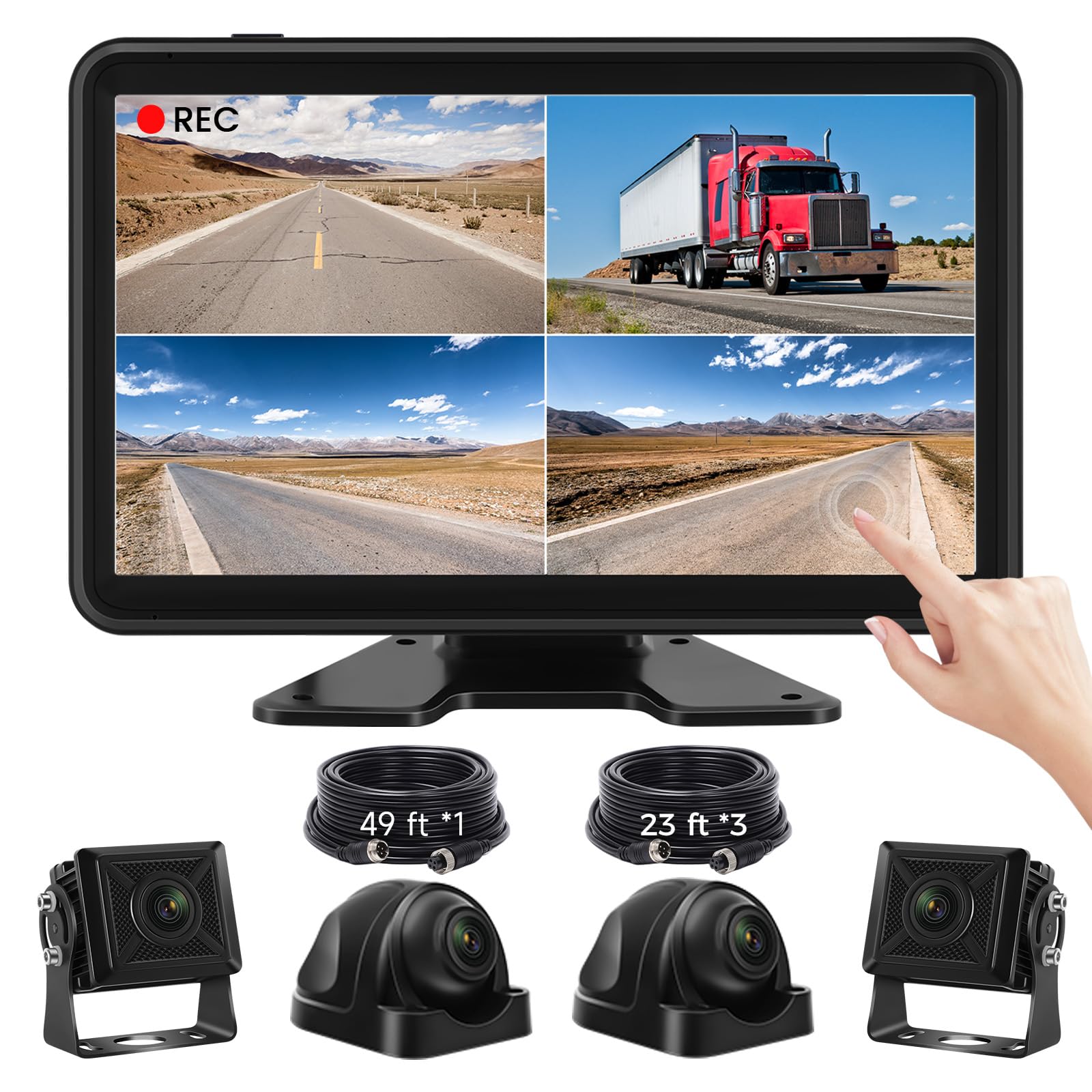
Front, rear, and both flanks on a single 10-inch glass panel, with no pane sacrificed.
Four cameras here rather than three — a front unit and a rear unit plus two side views — so the 10.1-inch screen gives you the whole perimeter rather than just behind and beside. That is a 140-degree field of view on each lens, a sensible middle ground between the ultra-wide 170-degree lenses and the tighter 120-degree ones on this list. The touch panel is a full IPS type, so the picture holds its color when you view it from an angle, and the split modes run as single, dual, triple, or quad to match whatever you actually need on a given stretch.
The parking lines are adjustable, not just on or off — you can nudge them to line up with your own rig’s width, which matters more on a dump truck or snow plow than on a flatbed. This one also connects over a 4-pin aviation connector rather than plain RCA, a round locking plug that resists vibration loosening better than a push-on connector. Cabling is one 49 ft run plus three 23 ft cables, powered by cigarette lighter or hardwired ACC feed, on DC 12~36V.
Buyer feedback leans positive on quality, and the picture quality is called out separately as beautiful — the visibility features that let a driver see the corners of the truck get their own share of praise. Reliability is the honest asterisk, with a small pocket of feedback about a screen going dark or a system quitting after a couple of months. It ships without a microSD card, and like the other Losuudy kits it wants a basic Class 10 card between 32GB and 128GB. This is the pick when front coverage matters as much as the side.
The case for four lenses
- Front and rear plus two side cameras — the whole truck perimeter on one panel
- 140-degree lenses with four selectable split layouts
- 4-pin aviation connectors lock in against road vibration
- Parking guidelines you can resize to your own bumper width
Where it asks more of you
- No microSD card in the kit — basic Class 10, 32GB to 128GB, is on you
- A few buyers report early failures; buy knowing the online support path matters
- Hard-wired and sized for large vehicles, so small cabs need not apply
Go this route if: Your problem is not just the lane beside you but the whole perimeter — a dump truck, a plow, or a box truck with corners you cannot see.
Pass if: Three cameras cover your truck and you would rather not wire a fourth.
5. Fubedo 9″ HD Touch DVR Quad Split Monitor
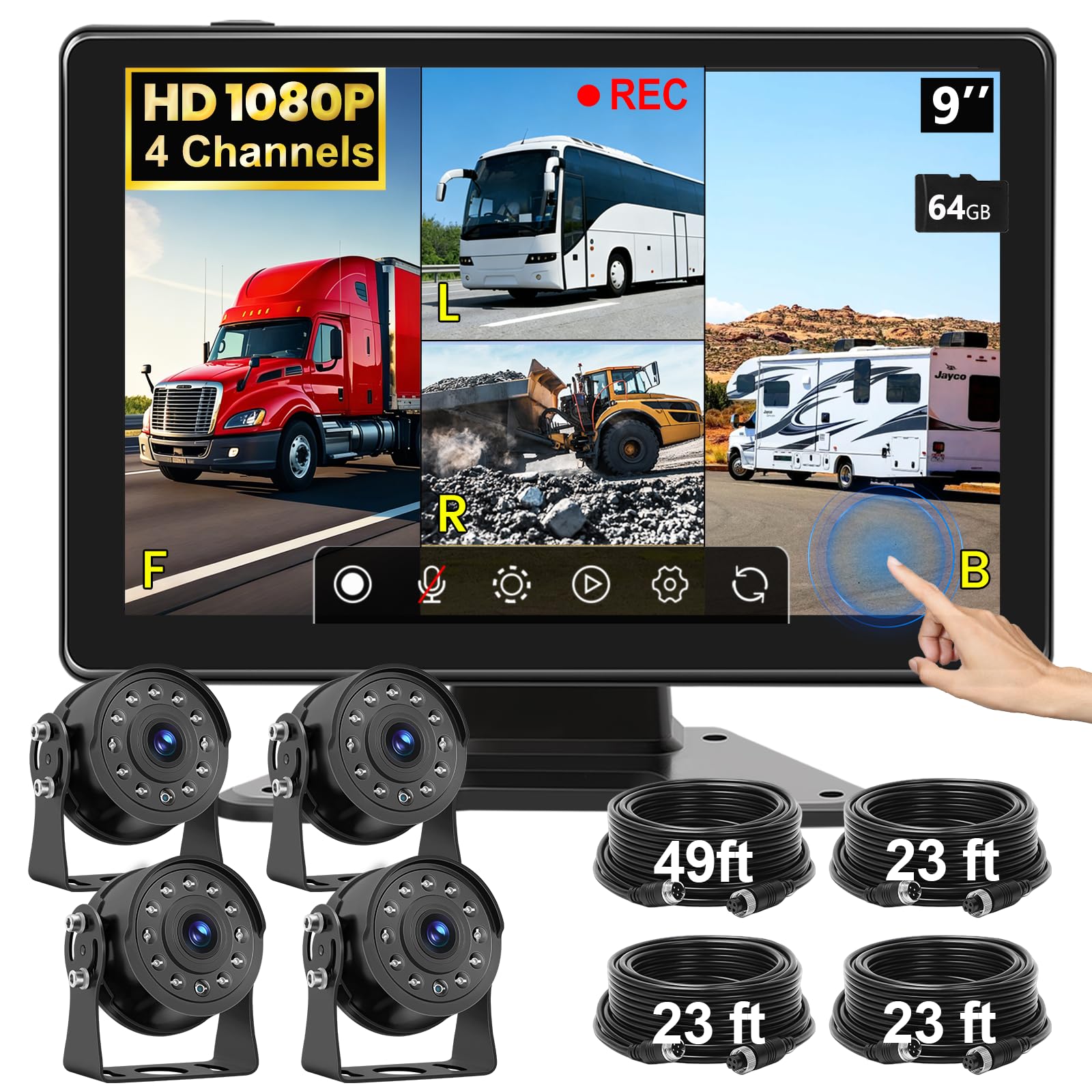
The one that ships with the memory card already inside, so recording starts on day one.
Storage is the small annoyance of DVR kits — most arrive with an empty slot and a note to buy your own card. Fubedo skips it: a 64GB SD card comes in the box, along with four 1080P cameras, a 49 ft cable, and three 23 ft cables. Loop recording overwrites the oldest clips automatically once the card fills, so you never stop recording to clear space. The 9-inch anti-glare IPS touch panel is sized so the quad view stays sharp, and the glare-reduction is a nice touch when the sun swings low behind the cab.
Each of the four lenses runs a 150-degree viewing angle with infrared night vision and a 6-layer glass design, which is the widest single lens spec of any wired kit here short of the 170-degree Losuudy units. Power comes from DC12~36V, which is the spec that lets this run on 24V commercial vehicles, not just 12V pickups and RVs. The 4-pin waterproof, rust-proof aviation connectors are the reason Fubedo claims no signal loss or interference despite the length of the run.
What buyers appreciate here is plainly the quality of the build, with clear picture and simple installation right behind it, and the touch screen gets called out for how smoothly it responds. Parking monitoring keeps the cameras watching when the truck is parked at a campsite or a roadside pull-off. The honest limits: this is explicitly a heavy-duty kit for 45 ft Class A RVs, semis, and box trucks, not passenger cars, and the 9-inch panel is smaller than the 10.1-inch screens on the Losuudy kits — the trade for a more compact dash footprint.
What you pay for: Four 150-degree night-vision cameras, a 9-inch anti-glare touch screen, and a 64GB card already loaded — recording with zero extra shopping.
What you give up: An inch and a bit of screen real estate. The quad view is still clear, just tighter than a 10.1-inch panel.
Suits you if: You want a wired, recording four-camera system with the card supplied — install it, power it, and it starts capturing.
Not your pick if: You need the widest possible screen for aging eyes, or you drive a passenger vehicle this kit will not fit.
6. Losuudy L-A2 10.1″ IPS Monitor

A 2.1 mp sensor paired to the biggest screen in this lineup — for the cab that has room.
This is the biggest panel on the list at 10.1 inches, and it carries the sharpest sensor spec too, at 2.1 megapixels, with a 0.1 lux low-light rating — meaning it is designed to pull a usable picture out of near-darkness, useful when you are backing into a hookup at dusk. Four AHD 1080P cameras cover rear, both sides, and front, and you can flip any single camera between mirror and front-facing display from the menu.
The parking guidelines here are unusually flexible: you can leave them always-on, show them only when the camera triggers, or turn them off, and you can adjust them yourself to line up with your bumper. That is a small thing until the day you are threading a fifth-wheel onto a pad and want the lines where your wheels actually are. Cabling is one 49 ft run plus 23 ft runs, powered from the cigarette lighter or a hardwired ACC feed, on DC 12~36V.
Feedback favors the quality of the build, with the picture clarity ranked close behind, and owners mention the connections sit under the dash and out of the way — a clean install matters as much as a big screen. Reliability is the mixed note here, with some reporting the unit quitting unexpectedly. Buy it for the screen and the sensor, and know that if something goes wrong the support channel is your first call. Like its siblings, it wants a basic Class 10 microSD card between 32GB and 128GB bought separately.
what separates it: The 2.1 mp sensor and 10.1-inch IPS panel together give the most image detail on this list, with 0.1 lux low-light behavior to back it up.
What to weigh: A mixed reliability signal is the honest caveat; the L-A5 above runs a similar Losuudy build with more consistent owner feedback.
Pick this if: You have dash room for a full-size panel and want the sharpest picture per pixel the wired kits here offer.
Consider the L-A5 instead if: Consistent reliability matters more than the extra megapixel.
7. VOONOA 1080P Wireless RV Camera System with 7″ HD Monitor

Four cameras and a seven-inch screen that hook up without a single video cable between them.
The wireless range figure is the conversation starter: the dual-antenna design is rated to reach up to 500 ft in open areas and 320 ft on an RV, which is the spec that makes a wireless setup credible on a long trailer. Four cameras — front, rear, and two sides — give 360 degrees of view, and the 1080P picture runs off a CCD color sensor. A 7-inch monitor keeps the dash footprint modest, and the kit includes six antennas counting a spare, plus a sunshade for the screen.
Night vision comes from four large LED lights with automatic light sensors, and the entire camera body is metal construction sealed to IP69K — the high-pressure water jet rating, with a stated operating range from -4°F to 149°F, which covers a cold mountain pass and a summer desert lot in the same season. Installing it is a two-part job: plug the monitor into the car charger, then wire each camera to the running, reverse, or turn-signal lights to trigger it.
Owner feedback is warm on quality and reliability, with setup and picture clarity drawing solid praise and visibility called out for letting drivers see all around the trailer. The caveat worth naming is on ease of use and connectivity, which split both ways — some report an instant connection, others note the system does not play nicely with Furrion-brand setups, so if you are upgrading an existing Furrion rig, confirm compatibility before you buy. The two-year replacement and unlimited tech support make the wireless gamble easier to take.
Why it earns a spot: 500 ft open-air range, four cameras, IP69K metal housings, and a 7-inch screen — a full wireless kit without the premium price.
The compatibility check: If your trailer already has Furrion wiring, verify the VOONOA will pair before you commit.
Your move if: You want wireless side, front, and rear coverage on a travel trailer and a 7-inch screen fits your dash.
Think twice if: You are replacing an existing Furrion camera — the wireless pairing is not guaranteed.
8. WOOCARTY 10.1″ Wireless RV Backup Camera System
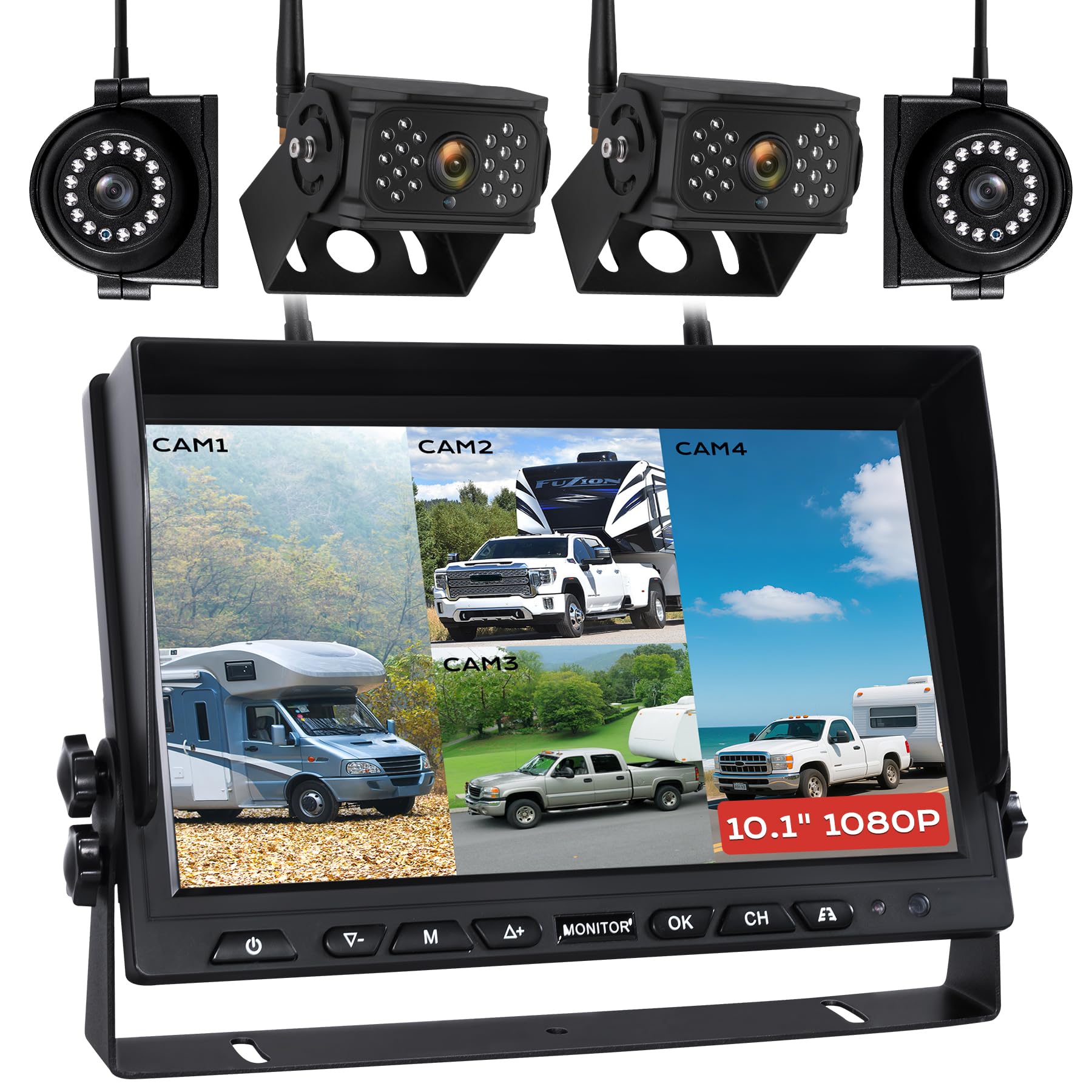
A 10-inch screen and two rear plus two side cameras, with no video cable to route.
If running cable from a mirror housing through a trailer wall makes you want to sell the trailer, this kit sidesteps it. Two rear cameras and two side cameras feed a 10.1-inch wireless monitor over a cable-free video link, and the only wiring you do is power — the monitor plugs into the cigarette lighter or a fuse box, and each camera taps a tail light for constant monitoring or a backup light for reverse-only mode. The maker quotes a 10.1 by 6.69 inch screen area, which is the size that makes a four-way split readable.
Night vision reaches up to 60 ft with auto-activated IR lights, and the wide-angle lens uses 6-glass elements with a high-resolution sensor. The split-screen system shows up to four angles at once — rear for backing, a towing-assist camera, and left and right side coverage for the blind zones. Loop recording overwrites the oldest clips when the SD card fills, and while the card sells separately, the recording logic itself never stops. The kit ships with windshield and table mounts, a 12V DC connector, and dual power routes — car charger plus USB cable.
Owners praise the camera quality and report a clear, sharp image on that big monitor, with installation rated positively across the board. The mounting hardware is the one place opinions split, with some drivers finding the brackets easy and others reporting display-mount trouble or a missing screw. Signal reliability splits the same way, with the rear camera occasionally losing its link. Neither is a reason to walk away — they are reasons to check the box contents on arrival and give the camera mount a little extra attention.
Why it suits a DIYer
- No video cables between cameras and monitor — power only
- 10.1 x 6.69 inch screen keeps a four-way split legible
- Two rear plus two side cameras cover the tow and the flanks
- Night vision to 60 ft with automatic IR activation
Small things to allow for
- SD card sold separately for recording
- Some report mount trouble or a missing screw — inspect the box on delivery
- Wireless means a rear signal can drop now and then
Worth a spot if: You are handy, you want the 10.1-inch screen without the cable run, and a two-rear, two-side layout fits your tow setup.
Not for you if: You want zero chance of a dropped signal — a wired kit is the safer bet there.
9. AUTO-VOX Campsync Wireless RV Backup Camera System
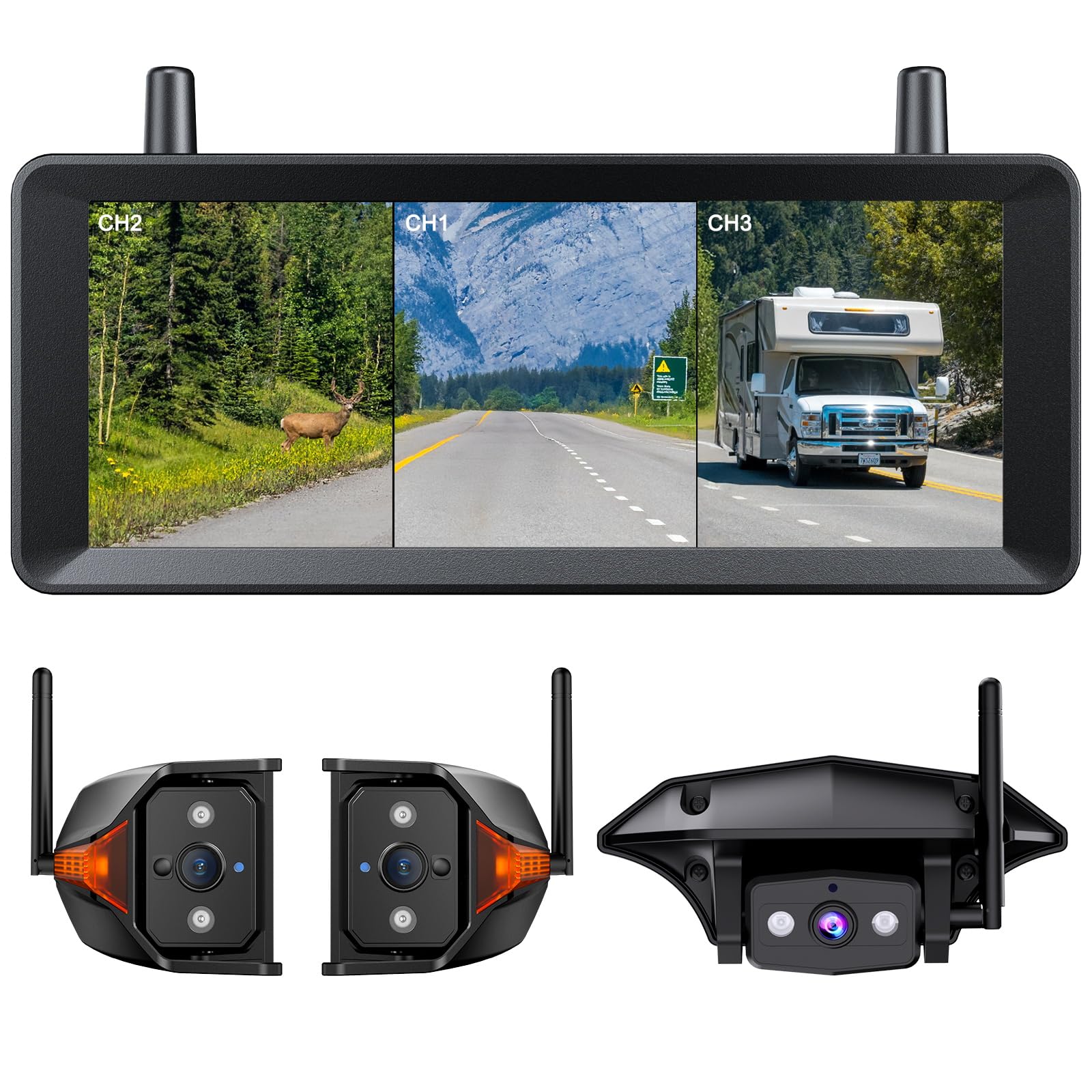
Rear and both flanks on a 7.2-inch screen, with a recorder that starts the moment you power up.
This kit is built for the driver who wants the whole picture but does not want a big panel on the dash. A 7.2-inch HD monitor shows rear and both side angles at once, and you can run it full-screen on the highway then click to a split for backing into a tight campsite or lining up the hookups. The DVR starts recording the moment the system powers on and writes to an included 32GB card, with loop recording overwriting the oldest clips — so the trip log builds itself without a button press.
AUTO-VOX quotes the wireless link as tested to 500 ft with dual antennas, framed for 60 ft plus rigs, with the picture holding up at highway speed. Power is flexible — either a USB port or a 12V outlet, whichever your tow vehicle offers — and multiple power cables help keep the dash tidy on an older truck as well as a newer one. That dual-power route is a practical detail when your cigarette lighter is already taken by a dash cam or a phone charger.
What stands out in owner experience is how reliably it all comes up and how quickly it goes in, with picture quality and visibility — seeing all the way around the truck and picking out objects in the blind spots — drawing steady praise. The honest trade-off is the 105-degree field of view, the tightest lens on this list, paired with a 7.2-inch screen that some drivers find small for a quick glance. If you want a wide side sweep, the wider lenses above will serve you better; if you want a compact, recording, triple-view system, this fits.
The strong suit: Rear plus both sides on one compact 7.2-inch screen with automatic DVR recording to a 32GB card already in the box.
The honest limit: A 105-degree lens and a 7.2-inch panel — a tight view on a small screen, which suits a glance but not a wide scan.
An easy yes if: Dash space is scarce and you want recording plus rear-and-side coverage without a 10-inch panel crowding the windshield.
A maybe not if: You want the widest possible field of view — go for a 140- or 170-degree lens instead.
Know the Specs
Field of View (Degrees)
Field of view is the width of the cone a lens can see, measured in degrees. A 105-degree lens is a tight view; a 170-degree lens sweeps the neighboring lane. For a side camera, 140 to 170 degrees is the range that actually covers a blind spot, because it captures the lane beside you plus a slice beyond. The catch is edge distortion — very wide lenses bow straight lines — but for spotting a car, the sweep is worth it.
Waterproof Ratings (IP67, IP68, IP69K)
The IP number has two parts: the first digit is dust and the second is water. IP67 shrugs off dust and survives a dunk; IP69K survives high-pressure, high-temperature water jets. A side camera mounted on a mirror housing takes the full brunt of spray from passing trucks, so an IP69K rating is the one to want if you drive wet interstates all winter. A camera rated IP67 still handles rain — it just has less margin against a pressure wash.
Wired vs. Wireless Video
A wired system carries the picture through a cable — often a 4-pin aviation plug that locks in and resists vibration. The picture does not drop, even on a long trailer. Wireless transmits over a radio link, which saves the cable run but asks the transmitter to fight interference from traffic and distance. Wired buys you a picture that never drops; wireless buys you an install with no cable to fish through a trailer wall.
Resolution and Low-Light (Lux) Specs
Resolution tells you how much detail the image holds — 1080P is the standard here, with one kit listing 1920 pixels and one listing 2.1 mp for more detail. Lux is the low-light rating: 0.1 lux means the camera is built to pull a usable image from near-darkness. Together, higher resolution and a lower lux rating mean a clearer picture at night and in bad weather.
Common Questions
Will a truck side camera work on my trailer if the cable run is longer than the one in the box?
Is a wired or wireless side camera better for a long trailer?
What does IP69K mean on a side camera?
Do I need a microSD card for these camera systems?
Will a 10.1-inch monitor fit in my truck cab?
Can I add a front camera to a three-camera kit later?
How long do these side cameras last in constant road spray?
Why does my wireless side camera lose signal while driving?
Do side cameras work at night and in heavy rain?
Can I power a side camera system from the cigarette lighter?
The Bottom Line
For most drivers hauling a trailer, the truck side camera to buy is the Losuudy 3-Camera 10.1″ Wired Kit — the 170-degree lens gives the widest side sweep here, the 10.1-inch 2.5D IPS panel stays legible split four ways, and the 49 ft plus two 23 ft cables cover a long wheelbase without splicing. If you already own an AUTO-VOX WF1 monitor, the WF2 Side Cameras drop into your marker light housing in about the time it takes to make coffee. And if you want the recording and the four-camera perimeter in one wired box, the Fubedo 9″ DVR Kit arrives with the 64GB card already inside, so capture starts on the first trip out.
Pick the field of view before you pick the screen size. A 170-degree or 140-degree side camera catches the lane beside you and the space beyond it, while a tighter 105- or 120-degree lens shows only what is directly adjacent. Match the longest cable run to your wheelbase and the IP rating to the spray your camera actually faces, and the side-lane guesswork stops being part of the job.
How we choose
We do not accept paid placement. Every pick is matched to a real buyer and a real use-case; we do not hands-on test units.
Sources
Specifications: manufacturer listings and product documentation. Review insights: verified customer reviews, as of November 2026. Pricing: not shown on this page (it changes often); check the current price via the retailer link.
As an Amazon Associate, Tactical Gear Guy earns from qualifying purchases. This does not affect which products we feature.