Specs are compiled from manufacturer listings and verified buyer reviews and can change over time — please confirm the key details on the product page before buying.
An Energy Star badge on a fridge door tells you one thing only: the machine passed a federal efficiency test. It says nothing about whether the freezer will still hold temperature in a 50°F garage, whether the door bins will swallow a gallon of milk, or whether the compressor will be humming quietly next year. That gap between the badge and the daily reality is where most fridge buyers get burned. This list covers eight certified refrigerators that also hold up on the boring stuff — layout, noise, defrost, and how much cold storage you actually get per year of electricity.
This guide is built by comparing the manufacturers’ published specifications and the patterns across verified customer reviews, so you get each pick’s real strengths and trade-offs instead of marketing spin.
Certification is the entry ticket, not the finish line, so each pick below is judged on capacity, door storage, and yearly kilowatt draw. Read on for the best energy star refrigerator for your kitchen, garage, or rental.
Top Picks
How To Choose The Best Energy Star Refrigerator
The certification is the easy part — every fridge here carries it. The hard part is matching the machine to your kitchen, your grocery habits, and the room it will sit in. Start with the cutout, then work outward.
Match the width to your cutout before anything else
A 30-inch fridge slides into a standard apartment or older-kitchen slot. A 36-inch model needs the full cabinet opening, and counter-depth designs trade interior room for a flush look against your counters. Measure the opening twice — depth with the door open matters as much as width.
Read the annual kilowatt-hour figure, not the sticker word “efficient”
Annual energy consumption (measured in kilowatt hours per year, the total electricity the fridge draws over twelve months) is the number that actually predicts your bill. A bigger fridge usually draws more, so compare the draw against the capacity you gain. A 367 kWh unit and a 740 kWh unit both wear the badge, but they are very different monthly costs.
Decide whether the freezer belongs on top, on the bottom, or in a drawer
Top-mount freezers put the frozen food at eye level and leave the fresh section at waist height. French-door and bottom-freezer layouts move the freezer down and give you a wide, shelf-heavy fridge compartment. Neither is better — one suits a short reach, the other suits wide platters and party trays.
Check the garage-ready temperature range if the fridge lives outside the kitchen
A fridge in a garage or workshop faces swings from cold winter nights to hot summer afternoons. A published operating range tells you whether the compressor and thermostat are built to hold temperature in that environment.
Side-by-Side Comparison
| Model | Best For | Capacity | Annual Energy Use | Door Storage | Amazon |
|---|---|---|---|---|---|
| Kenmore 18.1 cu. ft. 30″ Top Mount★ Best Overall | Tight kitchens on a budget | 18.1 cu. ft. | 367 kWh/yr | 5 door shelves | Amazon |
| Sharp SJB1045SNS 10.3 cu. ft.Compact Pick | Small spaces and second kitchens | 10.3 cu. ft. | 385 kWh/yr | 3 door shelves | Amazon |
| Kenmore 20.2 cu. ft. 30″ Top MountGarage Ready | Garage or basement second fridge | 20.2 cu. ft. | 382 kWh/yr | 6 door shelves | Amazon |
| BLACK+DECKER 16 Cu. Ft. French Door | Built-in ice without a plumb line | 16 cu. ft. | — | — | Amazon |
| Frigidaire FRFS2823A 27.8 cu. ft. | Door-dispensed water and ice | 27.8 cu. ft. | 725 kWh/yr | 9 door shelves | Amazon |
Detailed Reviews
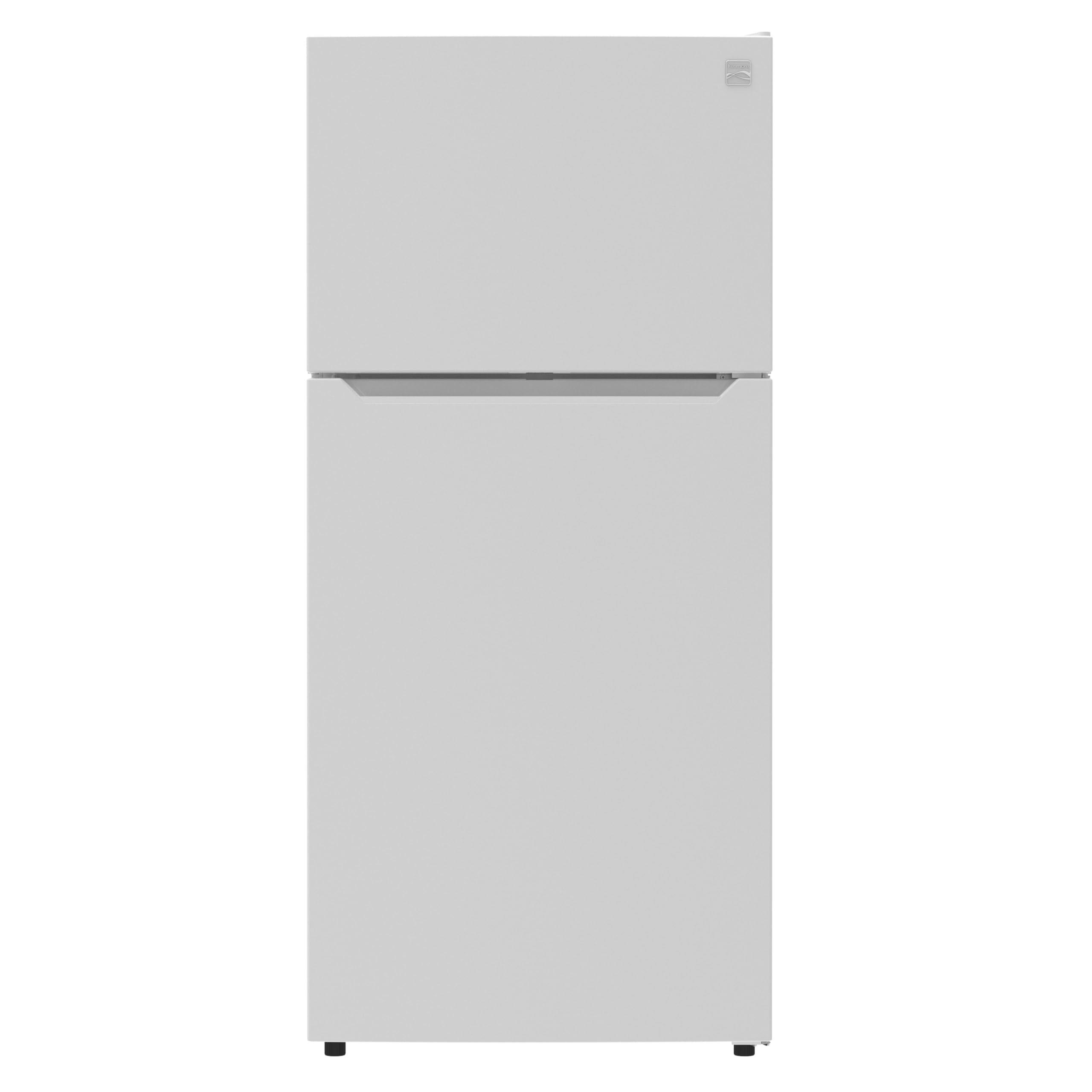
1. Kenmore 18.1 cu. ft. 30″ Wide Top Mount Refrigerator – White
Our pick — 4.0+★ from 250+ verified ratings; the strongest balance of quality and price.
The fridge that fits a 30-inch slot and still swallows the whole grocery run.
Most apartments and older kitchens hand you a 30-inch hole and nothing else. This Kenmore fills it with 18.1 cu. ft. of standard-depth storage (the interior volume you can actually load) — enough for a family shop without bumping the counters. At 4.0+ stars across 250+ ratings, it is the strongest all-rounder on this list by both score and track record.
You save the most electricity with this fridge: it uses 367 kilowatt hours per year (the total electricity it pulls over twelve months), the lowest figure on this list. The 28.6 cu. ft. Kenmore above it draws 740 kWh per year. Owners consistently describe it as a great buy and quietly note they can’t hear it running. Reliability is what wins people over most here, and the layout backs that up: four clear door bins plus one gallon-sized bin, two full-width freezer door bins, and edge-to-edge tempered glass shelves that slide to fit a sheet cake.
The honest catch is temperature control. Some owners find the freezer temp spot-on; others report it doesn’t cool at all, so buy from a seller with a real return window and give it a full day to settle before you load it. The inverter compressor (a variable-speed motor that holds a steady temperature instead of kicking on and off) is the part that keeps things quiet once it does.
What earns its keep
- Lowest annual draw here at 367 kWh, so the badge actually shows up on your bill
- Two humidity-controlled crispers plus a gallon door bin for family-sized jugs
- Inverter compressor keeps the kitchen quiet enough to forget it’s running
- Reversible door and automatic defrost mean no manual scraping or re-hanging
Where it asks patience
- Freezer temperature is the split point — some units run cold, others need a service call
- Standard depth means it won’t sit flush with your counters
First choice if: you have a 30-inch cutout and want the lowest running cost on the list.
Give it a beat if: you need the freezer to hit a hard number on day one — test it before the return window closes.
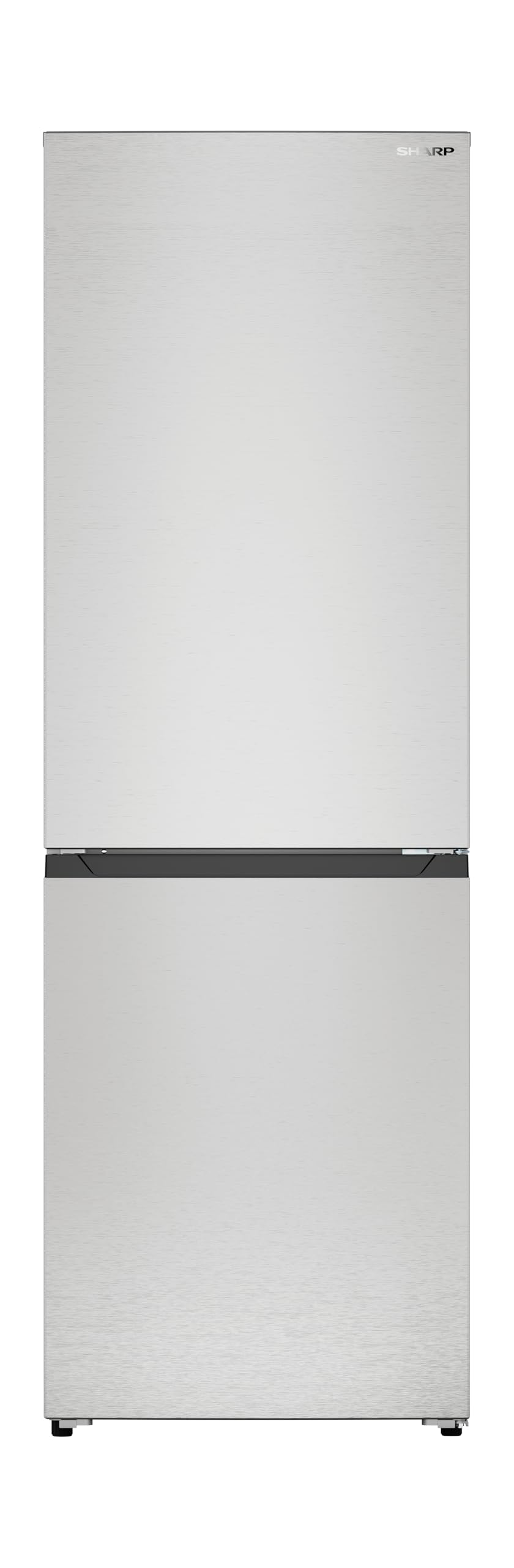
2. Sharp SJB1045SNS 10.3 cu.ft. 24 in. 2 Door Refrigerator
A 24-inch footprint for the galley kitchen that cannot spare another inch.
If your tape measure says 24 inches and no more, this is the fridge to consider. The Sharp packs 10.3 cu. ft. — 7.4 cu. ft. of fresh food and a 2.9 cu. ft. freezer — into a counter-depth body that sits flush instead of jutting into the walkway. Compare that to the 28.6 cu. ft. Kenmore French door on this list; the Sharp is a different class of machine built for a different room.
You get quiet operation at 43 dB (decibels, roughly the sound of a quiet library) and a Multi Air Flow system (fans that push cold air through several vents so the shelves don’t stratify) with an auto-defrost freezer that never needs manual ice scraping. The stainless exterior resists fingerprints and smudges, and the doors reverse so you can hang them either way. Inside you get a dedicated crisper drawer, two shelves, a wine rack, three door balconies, and three freezer drawers — that is three door shelves against the Kenmore 20.2’s six, so plan on using the shelves for jugs.
The garage-ready claim matters here: it is built to keep running outside the kitchen, which is why it earns a spot even at a smaller size. What buyers talk about most is straight performance, and the compact size is the close second — the trade-off is simply that 10.3 cu. ft. fills up fast with a family-sized shop. A wine rack does not replace a gallon bin, so plan on the three door balconies for jugs.
Footprint verdict: the 24-inch width and counter-depth body are the whole point — this is a fridge for people whose space problem is solved by geometry, not by cubic feet.
Size ceiling: at 10.3 cu. ft. it suits one or two people well, and it will crowd quickly for a family of four.
Reach for this if: your opening is narrow, your kitchen is small, or you need a garage-ready second unit that sounds like nothing at 43 dB.
Think twice if: you shop weekly for a full household — 10.3 cu. ft. leaves little slack.
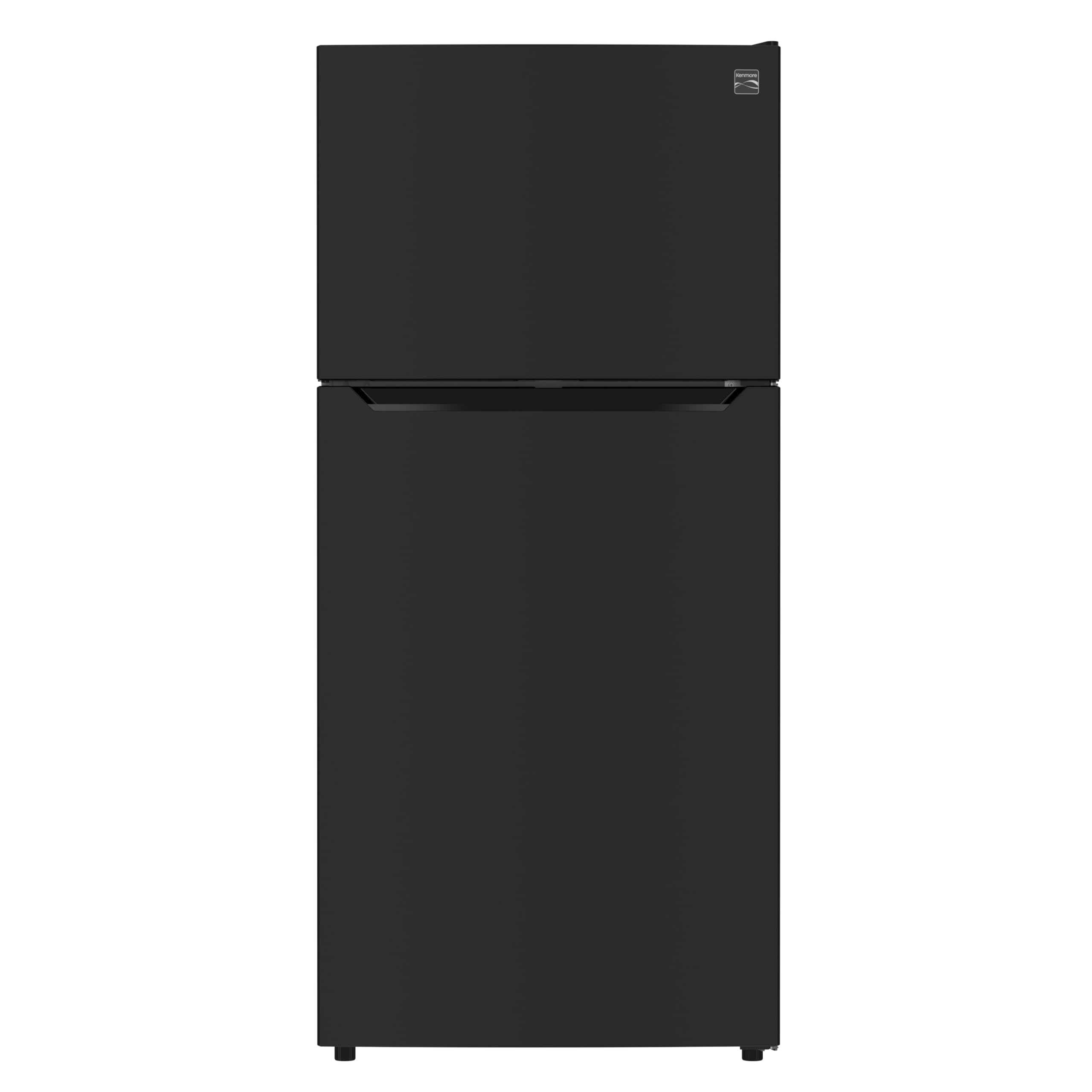
3. Kenmore 20.2 cu. ft. 30″ Wide Top Mount Refrigerator – Black
Built to hold temperature in a workshop that swings from freezing to baking.
A built-in temperature sensor keeps this one running between 45°F and 110°F (the ambient range the compressor is rated to hold steady in). That is the spec that decides whether a second fridge survives a garage in February and a workshop in August. It also explains why this is the pick for basements, shops, and overflow cold storage rather than a showcase kitchen.
You get 20.2 cu. ft. of standard-depth room, the most of the Kenmore top-mounts here, with a 5.09 cu. ft. freezer against the Sharp’s 2.9 cu. ft. Door storage is where it pulls ahead of almost everything on this list: six clear bins including a gallon bin, versus three on the Sharp. Tempered spill-proof shelves slide to fit sheet cakes and tall pitchers, and the inverter compressor keeps the room quiet while drawing 382 kWh per year — a touch above the 18.1 cu. ft. Kenmore’s 367 kWh, which is the price of the extra two cubic feet.
Build quality is what earns the most respect here, and the matte black finish gets consistent praise for looking sharp. The honest caveat is shipping condition: some units arrive with dented or scratched fronts, so inspect before you sign and keep the packaging until you’ve looked it over. Temperature distribution is also a split point — most say it stays very cold and cools down fast, while a few report it isn’t cooling properly.
The garage case: the 45°F to 110°F operating range is the single most useful line on the spec sheet for anyone buying an overflow fridge.
Inspect on arrival: dented units are the recurring note, and a quick look before you discard the box saves a headache.
Made for: garages, basements, and workshops that need a 30-inch fridge to keep working through temperature swings.
Look elsewhere for: a showpiece kitchen install — the standard depth will stand proud of your counters.
4. BLACK+DECKER 16 Cu. Ft. French Door Refrigerator
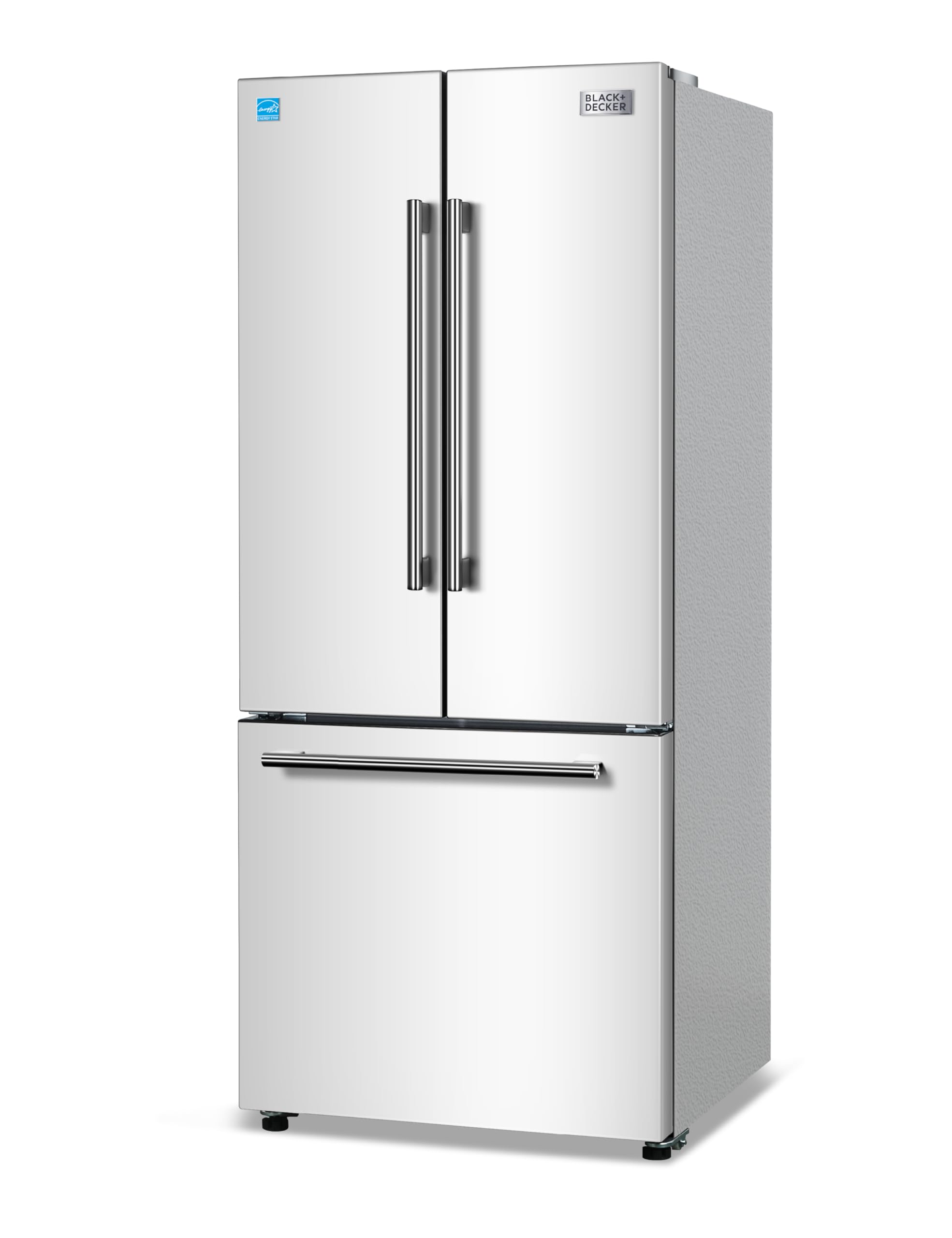
French-door style and an ice maker that makes up to 3.5 lbs. a day, no plumber needed.
If you want the wide, shelf-heavy feel of a French door without tapping a water line into the wall, this is the entry point. The built-in ice maker runs off a sensor in the freezer and produces as much as 3.5 lbs. of ice per day. A digital thermostat lets you set the fridge and freezer compartments separately, so the ice tray and the crisper drawer each get their own temperature.
The split is 11.15 cu. ft. of fresh food and 5.06 cu. ft. of freezer across a bottom drawer. The freezer is what owners praise most — it outperforms expectations for a unit this size — and the space is the runner-up, with buyers pointing to the interior as generous for a 16 cu. ft. cabinet. It’s frost-free with auto defrost, so no chipping ice out by hand, and it runs quietly enough that noise is rarely the complaint.
Where it asks you to be careful: reliability is a split picture, with a share of buyers reporting a unit that quit months in, and a few noting temperature fluctuation. That isn’t a reason to rule it out — it is a reason to register the warranty and buy where returns are easy. The door steel and French-door finish do the style work here that a plain white top-mount can’t.
Standout features
- 3.5 lbs. of ice per day from a built-in sensor-driven maker, no plumb line required
- 11.15 cu. ft. fridge plus 5.06 cu. ft. freezer split keeps the fresh section wide
- Separate digital thermostats for each compartment
- Frost-free auto defrost and quiet running
Worth knowing
- Reliability is a split report — register the warranty and keep the receipt
- Some units show temperature swings, so check with a fridge thermometer early
Pick this for: French-door looks plus on-demand ice where running a water line isn’t practical.
Weigh instead: if a long service record matters more to you than the ice maker, the 18.1 cu. ft. Kenmore at the top is the safer bet.
5. Kenmore 17.5 cu. ft French Door Refrigerator
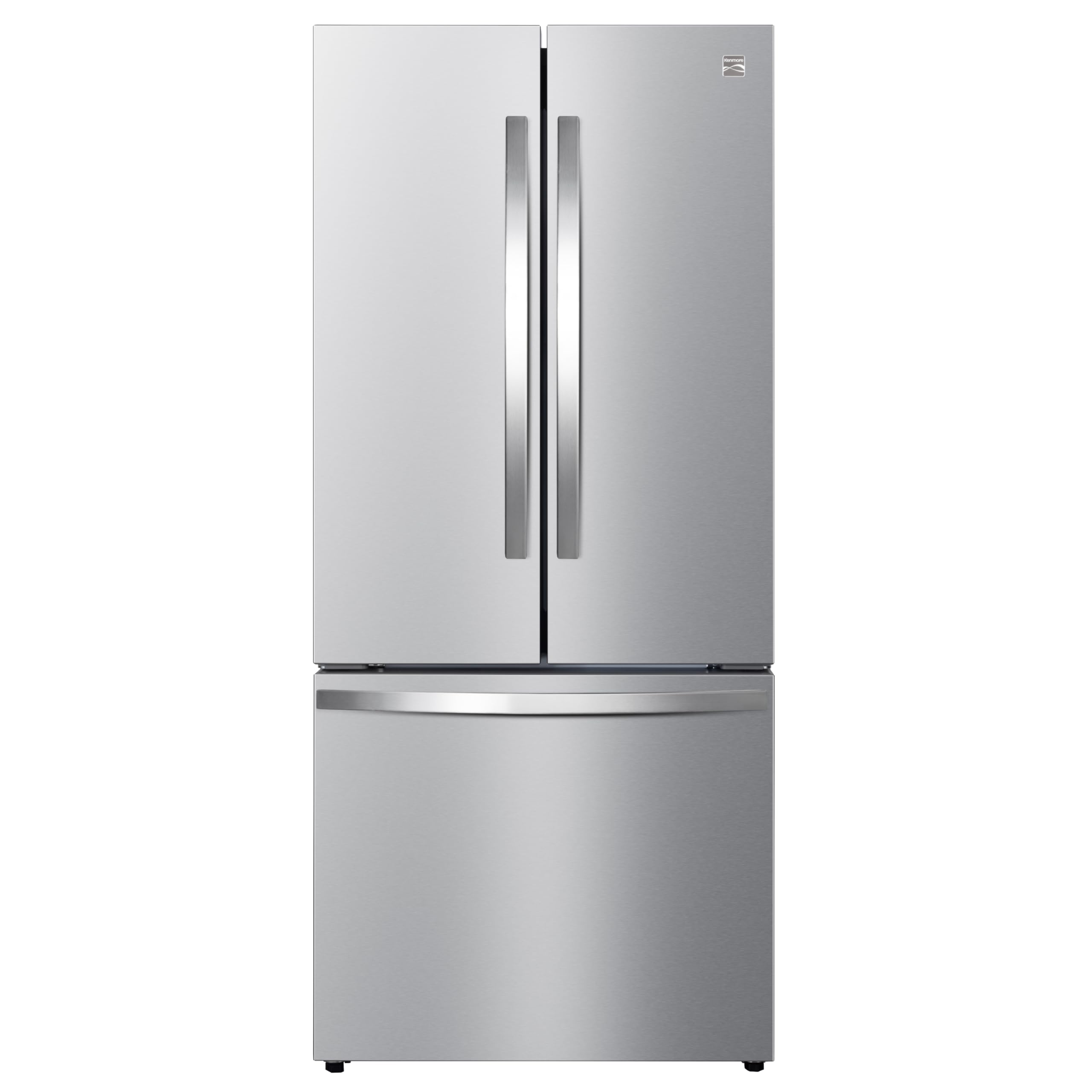
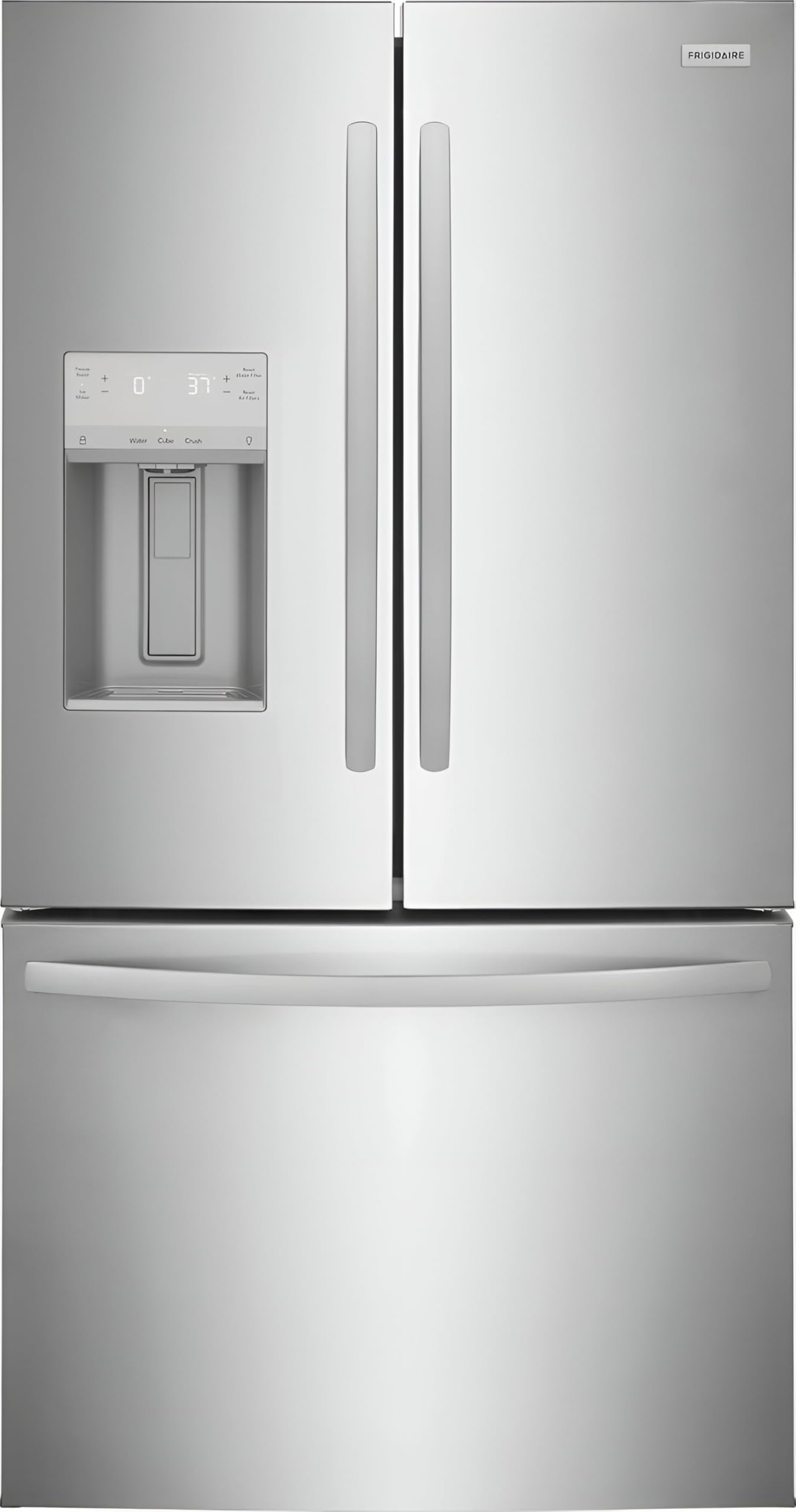
Cold water and crushed ice through the door — no pitcher, no tray, no bending.
This is the fridge for the household that drinks water all day and fills glasses straight from the door. The external dispenser pours chilled filtered water plus cubed and crushed ice on demand, and the interior splits 18.8 cu. ft. of fresh food from a 9 cu. ft. freezer. Nine door shelves is the most storage-on-the-door of anything on this list.
It’s a 36-inch French-door cabinet with adjustable shelves and crispers, LED lighting, door alarms, and a Sabbath mode that keeps the lights and alarms off on observance days. The single-stage compressor (one fixed speed rather than a variable one) keeps the design simpler, and ENERGY STAR certification is on the badge. Expect a wide footprint: the doors swing out to 48.5 inches when fully open, so plan clearance for the walkway.
The honest trade shows up on the meter. Annual energy consumption is 725 kWh per year — nearly double the 367 kWh the 18.1 cu. ft. Kenmore draws. A water-and-ice dispenser plus 27.8 cu. ft. of space is where that electricity goes. There’s no owner feedback on record yet, so weigh the dispenser convenience against the running cost before you buy.
Convenience first: filtered water and both ice styles from the door is the reason to choose this one over a top-mount.
Clearance check: 48.5 inches of door swing means it needs room to open — measure your aisle before ordering.
Good match for: a 36-inch kitchen where everyone wants water and ice without opening a door.
Second-guess it if: the electricity bill is a priority — 725 kWh per year is the highest draw among the top-mounts and French doors here.
Know the Specs
Annual energy consumption (kWh per year)
This is the total electricity a fridge draws across a full year, measured in kilowatt hours. It is the one figure on the badge that predicts your bill, and it scales with size and features. A 367 kWh unit and a 740 kWh unit are both certified, but the bigger one costs more to run every month.
Counter depth vs. standard depth
A counter-depth body is built shorter front-to-back so the fridge sits closer to flush with your cabinets. It usually costs some interior room for the look. Standard depth gives more capacity for the same width but stands proud of the counter line.
Inverter vs. single-stage compressor
An inverter compressor varies its speed to hold a steady temperature, which tends to run quieter and use less energy. A single-stage compressor runs at one fixed speed. Inverter models are quieter in day-to-day use; single-stage models are simpler to service.
Defrost system: automatic and frost-free
Both terms mean the fridge handles ice buildup itself, cycling a heater on a timer so you never chip out a freezer. A manual-defrost unit requires you to empty and thaw it. Every fridge on this list is automatic or frost-free, which is the modern norm.
Garage-ready operating range
This is the ambient temperature range a fridge is rated to hold steady in. A wide range (like 45°F to 110°F) covers garages and workshops that swing from cold nights to hot afternoons. A fridge without a stated range is best kept in a temperature-controlled kitchen.
Door shelf count and gallon bins
The number of door bins, and whether one fits a gallon jug, decides how much of your shopping can live on the door instead of the main shelves. More bins means more small items at easy reach; a gallon bin keeps the big jugs off the glass.
Common Questions
Does an ENERGY STAR refrigerator actually save money on the electric bill?
Can I put an Energy Star refrigerator in my garage?
What is the difference between counter depth and standard depth in a refrigerator?
How much freezer space should I look for in a family refrigerator?
Do I need to run a water line for a refrigerator with an ice maker?
How quiet is a modern Energy Star refrigerator?
Is a French-door refrigerator better than a top-mount?
How long should a refrigerator last?
Do I need to defrost an auto-defrost refrigerator?
What size refrigerator fits a 30-inch opening?
The Bottom Line
For most households, the best energy star refrigerator is the Kenmore 18.1 cu. ft. 30″ Top Mount. It uses 367 kWh per year — the lowest draw here — and fits a standard 30-inch opening with 18.1 cu. ft. of storage and five door bins. If you need a fridge in the garage or shop, the Kenmore 20.2 cu. ft. Top Mount has the 45°F to 110°F range that holds steady through temperature swings. And for a 24-inch kitchen or a small second unit, the Sharp SJB1045SNS squeezes 10.3 cu. ft. into a counter-depth body that runs at 43 dB. That’s the short list: low draw, the right footprint, and a freezer rated to hold temperature.
How we choose
We do not accept paid placement. Every pick is matched to a real buyer and a real use-case; we do not hands-on test units.
Sources
Specifications: manufacturer listings and product documentation. Review insights: verified customer reviews, as of November 2026. Pricing: not shown on this page (it changes often); check the current price via the retailer link.
As an Amazon Associate, Tactical Gear Guy earns from qualifying purchases. This does not affect which products we feature.