Specs are compiled from manufacturer listings and verified buyer reviews and can change over time — please confirm the key details on the product page before buying.
In traffic, the real question is not “does it fit?” — it is “can the driver behind me see what I am about to do?” A smart helmet puts lights, turn signals or a brake warning on your head, the highest point a driver actually notices. The picks below sort by what you need most: visibility, audio, or crash alerts for a solo rider nobody is watching.
This guide is built by comparing the manufacturers’ published specifications and the patterns across verified customer reviews, so you get each pick’s real strengths and trade-offs instead of marketing spin.
You will see which helmets include the remote and which sell it separately, how long their batteries actually run, and where the fit runs small. Everything here earns its place by doing one smart job well — and this breakdown of smart bike helmets tells you which one matches the way you actually ride.
Top Picks

How To Choose The Best Smart Bike Helmets
The smart part of a helmet is the rear light and turn signals a driver reads from forty feet back. That is why the first question is not audio or app features — it is what the helmet shows the traffic behind you, and whether the buttons to run it sit on your handlebar or in a pocket.
Start with what the lights do, not how bright they look
A rear light makes you visible; a brake light and turn signals tell the driver what you are about to do. A brake warning and turn signals tell that car what you are about to do, which is the difference between being seen and being understood. Look for a helmet whose rear light is built in, and check whether the turn-signal remote comes in the box or is sold separately — that single detail changes what you get on day one.
Check the certification against your bike’s top speed
A standard bike helmet is tested for pedal-speed riding. An e-bike helmet rated to NTA-8776 is built for higher-speed use, and you will find that rating spelled out in the specs of the LUMDEER below. If your bike is a Class 3 e-bike, a scooter or a onewheel, match the helmet’s rated use to the machine, not to the look of the shell.
Decide if you want sound in your ears
Bluetooth speakers sit in the helmet rather than inside your ear canal, so you keep traffic noise around you. That is the appeal of the audio picks below. If you mostly ride alone and want music plus calls, sound matters. If you ride in a group and want to talk to the rider beside you, intercom range matters more — and one pick here lists a range of 900 meters / 980 yards.
Battery runtime and charging
Lights that die halfway home are worse than no lights, because you stop trusting them. Look for a stated runtime, a stated standby figure and a USB-C or Type-C charge port. The runtime figures below run from 10 hours of lighting up to 120 days of standby, so read them against how often you actually plug in.
Side-by-Side Comparison
| Model | Best For | Smart Feature | Claimed Runtime / Battery | Weight | Amazon |
|---|---|---|---|---|---|
| Lumos Ultra★ Best Overall | Everyday commuting | Front & rear LED lights with rear turn signals | Up to 10 hours of lighting | 390 g | Amazon |
| LUMDEER 16F Darknight ProBest for E-Bikes | E-bike and scooter riders | Front & rear turn signals with auto brake light | 12-hour lighting runtime | 13.76 oz | Amazon |
| LIVALL BH60SE NeoTalk Between Riders | Group rides and calls | Speakers, mic and patented fall detection | — | 10.56 oz | Amazon |
| LIVALL EVO21 | Crash alerts on a solo commute | Fall detection with SOS alert via app | — | 12.32 oz | Amazon |
| ASIEVIE LS01 | Music and calls on the move | Bluetooth 5.3 audio with 80-lumen headlight | 1000mAh, up to 120 days standby | 12.8 oz | Amazon |
| Sena M1 | Talking between riders | 4-way Bluetooth intercom, 900 m range | — | 430 g | Amazon |
| Sena R1 | Long group rides | Group intercom for up to three other riders | — | 380 g | Amazon |
| UNIT 1 AURA | Riders who want MIPS plus crash alert | 14 vents, MIPS, app crash alert (remote separate) | — | 1.3 lb | Amazon |
Detailed Reviews
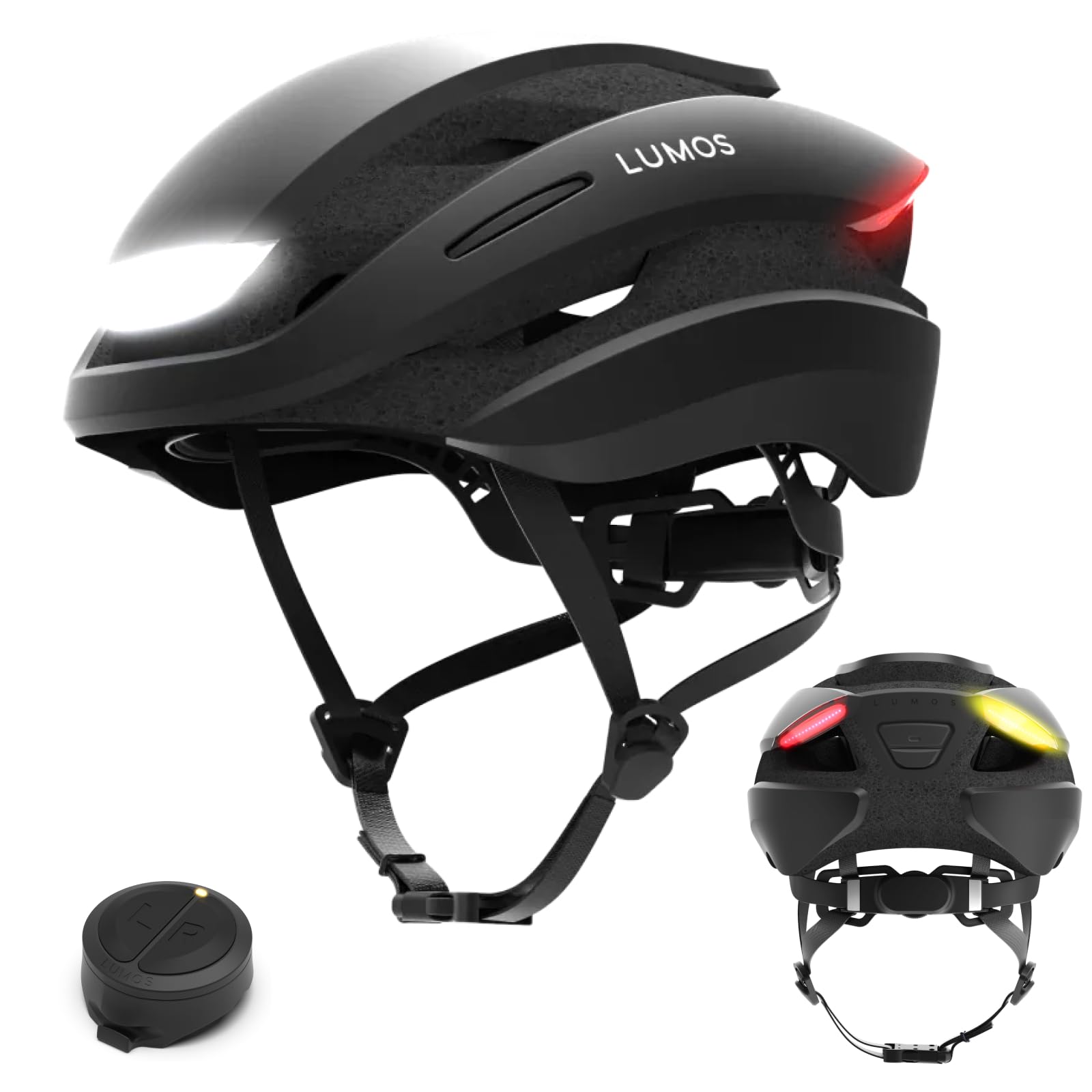
1. Lumos Ultra Bike Helmet
Our pick — 4.5+★ from 600+ verified ratings; the strongest balance of quality and price.
The helmet that puts your turn signal up where drivers are already looking.
What you get here is a full lighting rig built into the shell rather than strapped on. Front and rear LEDs give what Lumos calls TÜV-certified 360° visibility — a certification that the light output was checked, so drivers catch you in daylight and after dark. The rear turn signals run off the included Wireless Remote Lite, a small handlebar button you press without moving your hand off the bar. That is the whole point: your turn shows up as a rear light at driver eye level, not a hand signal a car may never register.
Battery and charging are settled too. A USB-C port refills the lighting system, and Lumos states up to 10 hours of runtime depending on mode, with brightness and light patterns adjusted in the Lumos app. The shell meets the U.S. CPSC Safety Standard for Bicycle Helmets, and select versions carry the MIPS system — an extra low-friction layer designed to help reduce rotational forces in certain angled impacts. This specific Charcoal Black listing is the non-MIPS version, so check the variant name before you click.
Build quality is the most-praised strength in the feedback, with fit and safety close behind. The honest catch: the automatic brake light and synchronized flashing need the separate Lumos Remote, not the Remote Lite in the box. Buy the base lid and you get turn signals, not the full brake-light setup.
What earns it first place
- TÜV-certified 360° front and rear lighting for day and night rides
- Rear turn signals triggered from the included handlebar Remote Lite
- USB-C charging with up to 10 hours of lighting runtime
- Meets the U.S. CPSC Safety Standard for Bicycle Helmets
Where it asks more of you
- Automatic brake lights need the separate Lumos Remote
- This Charcoal Black variant ships without the MIPS layer
Reach for this if: you commute daily and want drivers behind you to see your next move without lifting a hand.
Check the variant first: the MIPS layer lives on other versions of this shell, not this one.
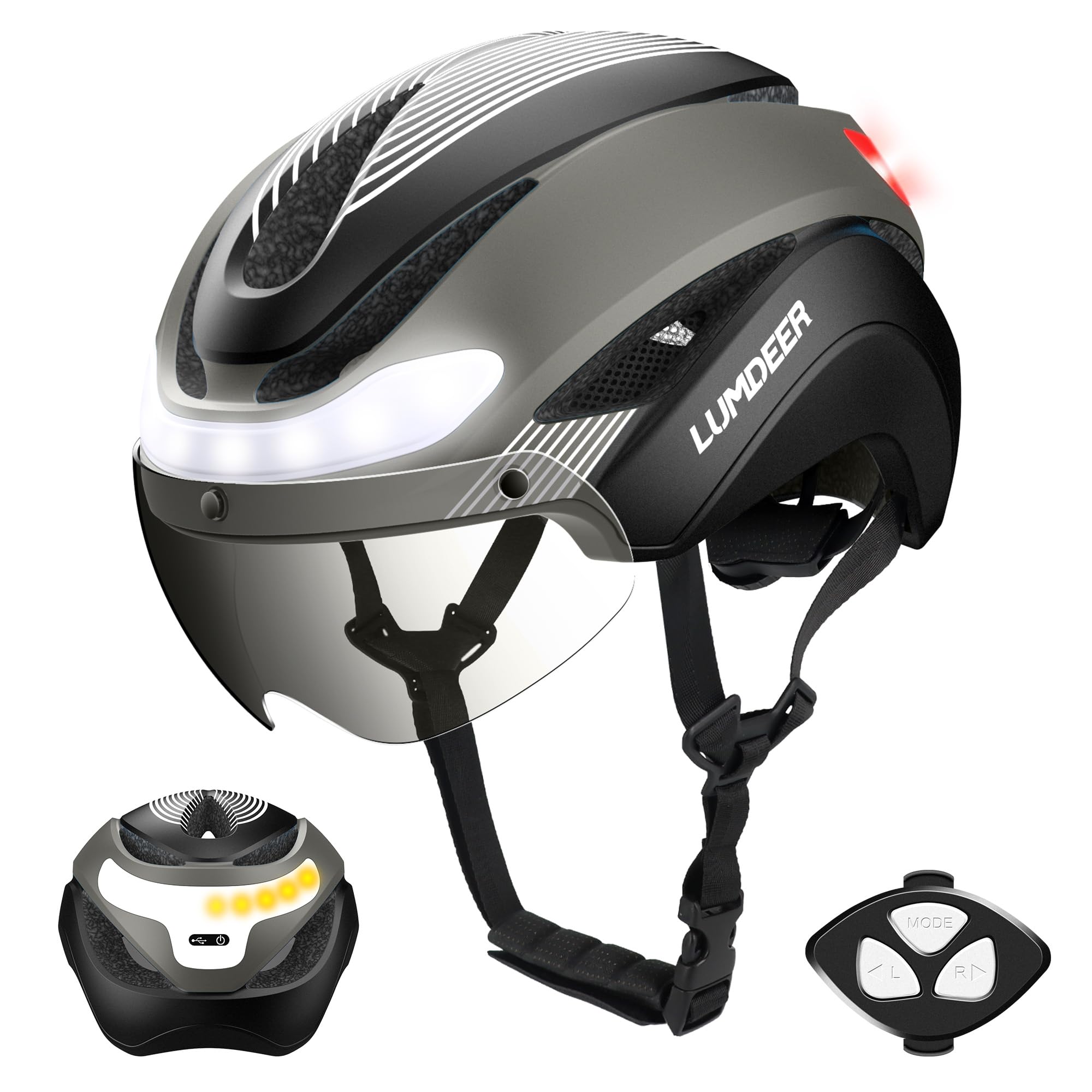
2. LUMDEER E-Bike Smart Helmet
Built for the speed a standard bike helmet was never tested against.
Most helmets on this list are pedal-bike helmets with lights attached. This one is certified to NTA-8776, the e-bike standard, alongside U.S. CPSC and EU EN 1078 — and LUMDEER states it is built to handle speeds up to 28 MPH. If you ride a Class 3 e-bike, a scooter or a onewheel, that rating is the reason to start here rather than with a commuter lid.
The smart hardware is a front-and-rear turn signal set run from the wireless handlebar remote, plus an automatic brake light that fires during sudden braking to warn traffic behind you. Four modes cover standard, cycling, illumination and warning. The removable magnetic photochromic visor is the sleeper feature — it tints darker in bright UV and clears in cloud or at night, so one visor covers a dawn start and a dusk ride home. Charging is USB, the lighting is stated at 12-hour runtime, and ten vents keep air moving.
Weight is where it separates from the LIVALL BH60SE Neo: 13.76 ounces against 10.56 ounces, so the LIVALL is the lighter lid on the scale and this one carries more shell. Fit is what most of the feedback circles around, and it mostly lands well on head size. The remote is the sore point — a cluster of complaints centers there, from pairing to buttons. Treat the remote as the fragile link and keep it charged and paired before you roll out.
The case for it: NTA-8776 plus CPSC and EN 1078 in one shell is rare at this tier, and the auto brake light is a real traffic tool, not a gimmick.
Watch the remote: the handlebar unit is the weakest part of an otherwise solid package — pair it at home, not at the curb.
Made for: e-bike, scooter and onewheel riders who need the higher-speed certification and a tinted visor for mixed light.
Think twice if: you want the lightest shell on your head — the LIVALL below saves you 3.2 ounces.
3. LIVALL BH60SE Neo Bluetooth Bike Helmet
Speakers in the shell, a mic that cuts wind, and a crash alert that calls for you.
If your ride is a conversation, this is the pick. Speakers sit inside the helmet and a wind-proof microphone handles calls, so you hear your surroundings and your caller at once. The scope goes past audio: patented fall detection with real-time GPS positioning triggers an emergency signal and sends an SOS alert through the LIVALL app when it registers an impact. There is also a push-to-talk walkie-talkie mode in the app for group rides. Both certifications — EN1078 and CPSC1203 — are listed, and the shell weighs 10.56 ounces with 24 vents for airflow.
At 10.56 ounces it is the lighter of the two against the LUMDEER’s 13.76 ounces, so the airflow story matches the scale. What buyers report most is overall performance, with the rear lighting close behind — it is bright enough to be the reason people mention it after dark. Comfort lands cleanly too.
Here is the honest part. Sound quality splits both ways: clear enough for some, light on bass and low in volume for others. Fit draws the largest volume of comment of any topic, and it divides people — some find the shape terrific, others do not. The remote control is the most consistent gripe, with pairing and connection trouble showing up repeatedly. Two practical notes from the maker: both the remote and helmet need a charge to work, and the walkie-talkie, fall detection and SOS indicators only run once the helmet is paired with the LIVALL app.
What it does well: hands-free calls, group push-to-talk and a crash alert that reaches your contact through the app — all in a 10.56-ounce shell.
The trade-off: audio and app features are only as good as the connection, and the remote is where that connection tends to slip.
Pick it for: group rides and phone calls, where talking to the rider beside you matters as much as being seen.
Go another way if: you want plug-and-play simplicity — this helmet wants the app set up before it gives you the full feature set.
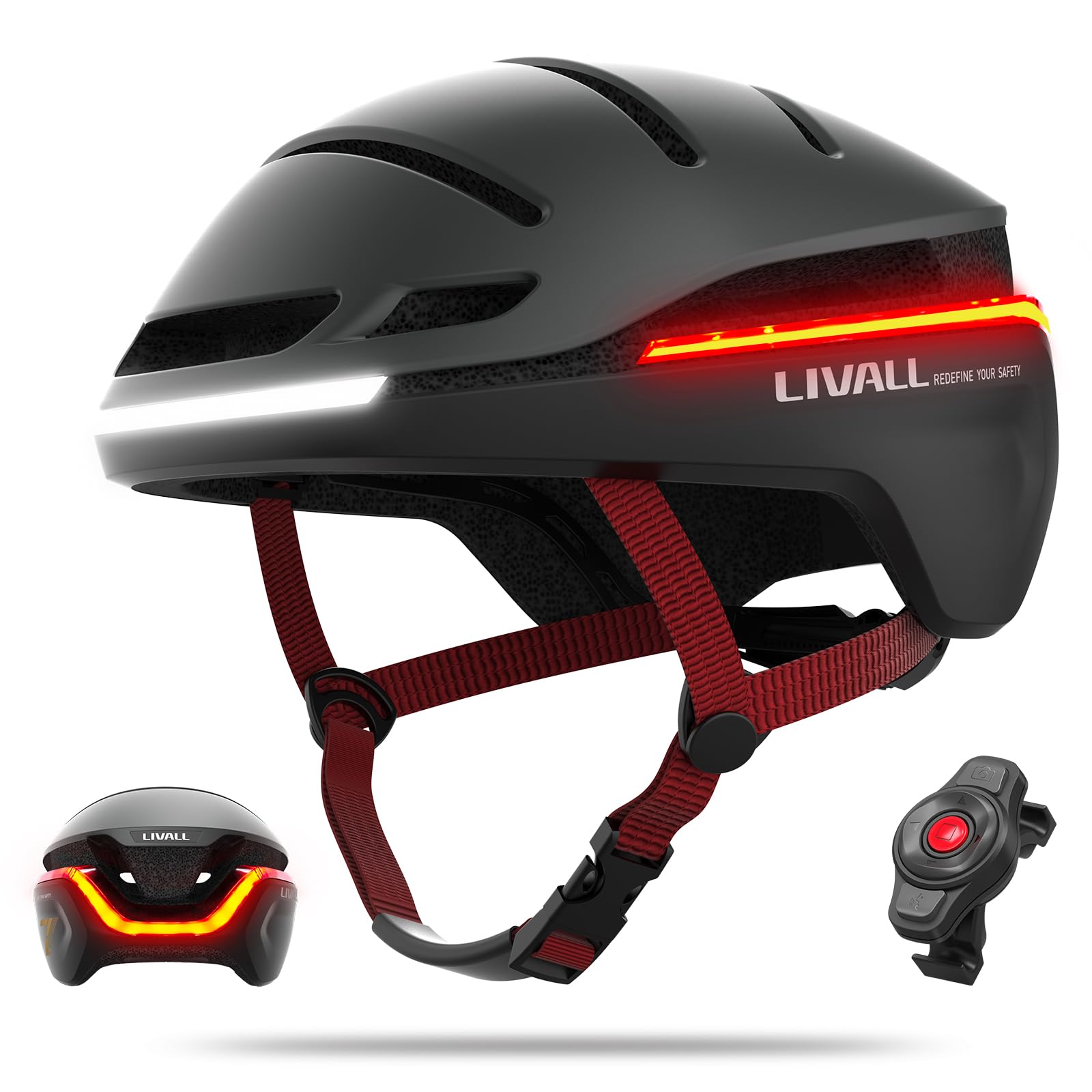
4. LIVALL EVO21 Smart Bike Helmet
The helmet built around one question: what if you crash and no one knows?
That is the actual pitch here. The EVO21 detects a fall and, on impact, sends an SOS alert to your chosen contact through the LIVALL app — the feature for the rider who trains alone on quiet roads. Around that sit 360° visibility, brake warning lights and turn signals controlled by a wireless remote, plus intelligent power management. Auto-Standby puts the helmet to sleep when you stop moving and a shake wakes it, so it is not draining in the garage. The shell weighs 12.32 ounces with what LIVALL lists as 30% more ventilation.
Build quality is the loudest theme in the feedback and the appearance draws consistent praise — owners describe the lid itself as wonderful, and the look is the second most-discussed positive. The turn signals and brake warning lights land well too. The design won an IF Gold Award, per LIVALL, which explains the finish and the price tier it sits in.
The catch is in the details. Lighting draws a real share of complaints, with some units reporting lights that never worked — worth testing the moment the box opens. Fit skews tight for some heads, and the remote control has the roughest record on the whole helmet, from dead batteries to pairing failures. Comfort and value also split. Buy it for the crash alert and the shell, not for a remote you can count on.
Where it stands out
- Fall detection fires an SOS alert to your contact through the app
- Auto-Standby sleeps the helmet when stationary, shakes awake
- 360° visibility with brake warning lights and remote turn signals
- 12.32-ounce shell with 30% more ventilation, per LIVALL
The honest caveats
- Some units arrive with lights that never work — test yours on day one
- The wireless remote is the least reliable part of the system
- Fit runs tight on some head shapes
Suits: the solo rider on unlit roads who wants someone notified if a fall happens.
Not for: anyone who wants the remote to just work every time — that is the weak link here.
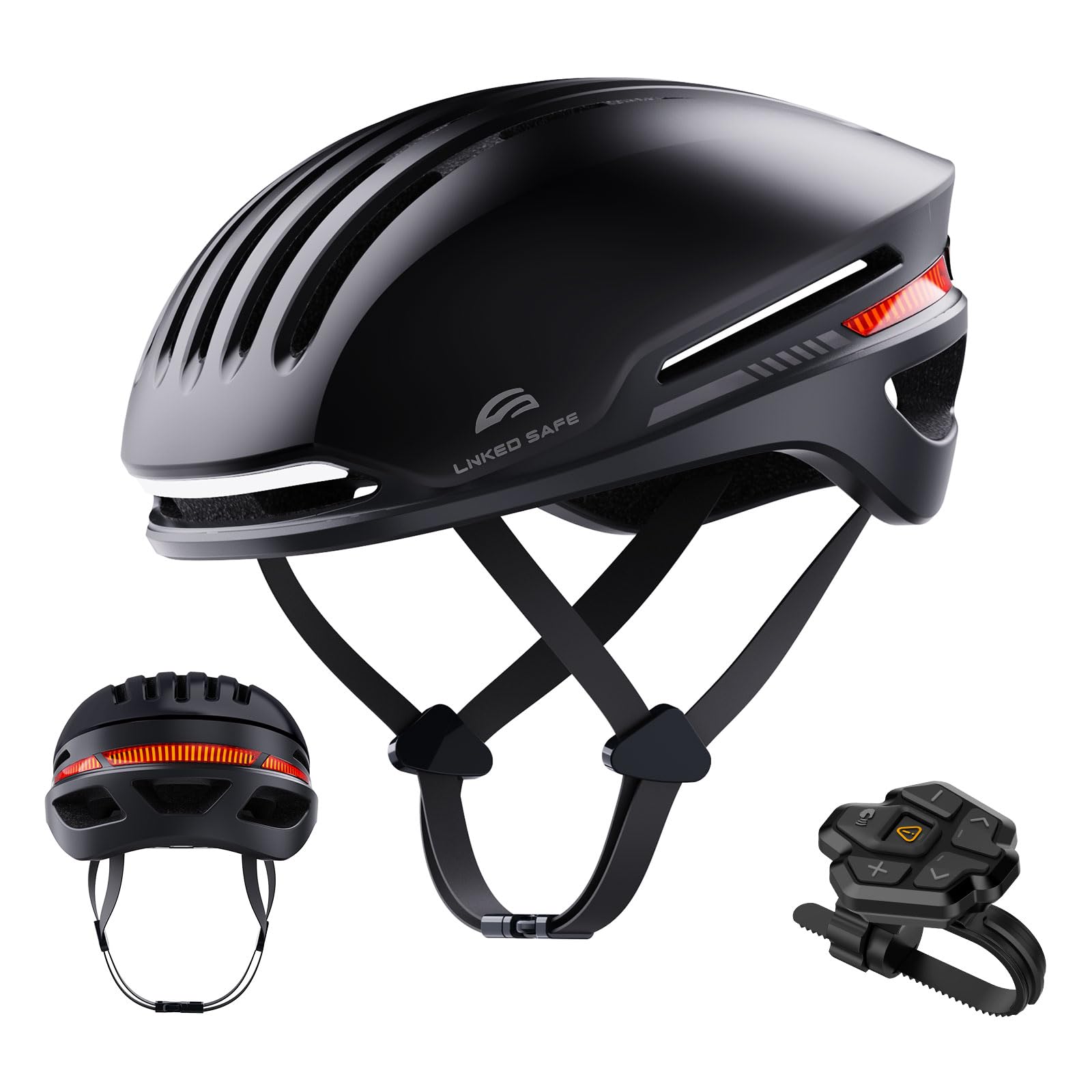
5. ASIEVIE Bike Helmet
Music that stays out of your ear canal and a battery that lasts for months.
Sound is the headline. Bluetooth 5.3 pairs to your phone, and the speakers sit in the shell so traffic noise stays audible around you — the point of helmet speakers over earbuds. A 42dB microphone handles calls, with one manufacturer note worth repeating: this is a Bluetooth earphone function, not an intercom, so you talk to your phone, not to another rider.
The numbers are where it outlasts the field. A 1000mAh battery recharges in a stated 3 hours and holds up to 120 days of standby, with 3 to 18 hours of music depending on whether the warning lights are on. Up front, an 80-lumen headlight lights the road. Turn signals and an automatic brake flash alert cover the rear, and the shell runs 19 ventilation holes at 365 grams, with EN1078, ROSH, IC, CPC and FCC certifications listed.
What buyers keep coming back to is the sound — the speakers and mic both perform past expectation, and the audio does not drown out what is happening around you. Front and rear lighting gets its own praise, and the fit reads well. The honest limit: the front light is not the brightest beam in this group, and several owners say so. It is bright enough to be seen, not to light up an unlit path.
Why it earns a slot: 120 days of standby and 1000mAh of music make this the set-and-forget audio pick, with a headlight thrown in.
The weak spot: the 80-lumen beam is a visibility light, not a night-riding spotlight — bring a bar light if your route is dark.
Right for: the rider who wants music and calls without losing traffic sound, and does not want to charge every night.
Look past it if: your commute is unlit and you need the helmet itself to light the way.
6. Sena M1 / M1 EVO Mountain Bike Helmet

A trail helmet that turns four riders into a rolling conference call.
For mountain bikers who ride in a group and want to talk without stopping, this is the tool. The built-in audio system connects up to three other riders for 4-way Bluetooth intercom, with a stated effective range of 900 meters / 980 yards. That is a serious distance on singletrack — your riding partner can be out of sight and still in your ear. Bluetooth also pairs to your phone for music and calls, and there is an integrated tail light on the back.
Weight is 430 grams, which is the heaviest shell in the group and honest for the electronics inside. Sizing runs small per the manufacturer, so measure your head before you order rather than trusting your usual size. It ships with a sun visor, and the dimensions change when the visor is off — 8.93 x 11.33 x 6.69 inches versus 8.93 x 12.87 x 6.69 inches with it attached.
The look is the most-praised part of this helmet in the feedback, with functionality close behind — owners say the intercom works well between two helmets and the finishing looks sharp. Communication itself draws clean reviews with no complaints. The split comes on sound: some find calls clear and traffic noise blocked out, others call music playback tinny, and Bluetooth pairing is inconsistent. It is the most expensive audio-and-intercom pick here, so go in knowing the audio is built for talking, not for hi-fi.
The core value: 4-way intercom at a stated 900 meters / 980 yards is a real conversation tool on a group trail ride.
The honest mark: audio quality is fine for voice, weak for music, and the helmet is the heaviest of the nine.
For you if: you ride MTB in a group and want to talk trail conditions without stopping.
Skip the idea if: you ride alone — you would be paying for intercom hardware you never switch on.
7. Sena R1 / R1 EVO Smart Communications Cycling Helmet
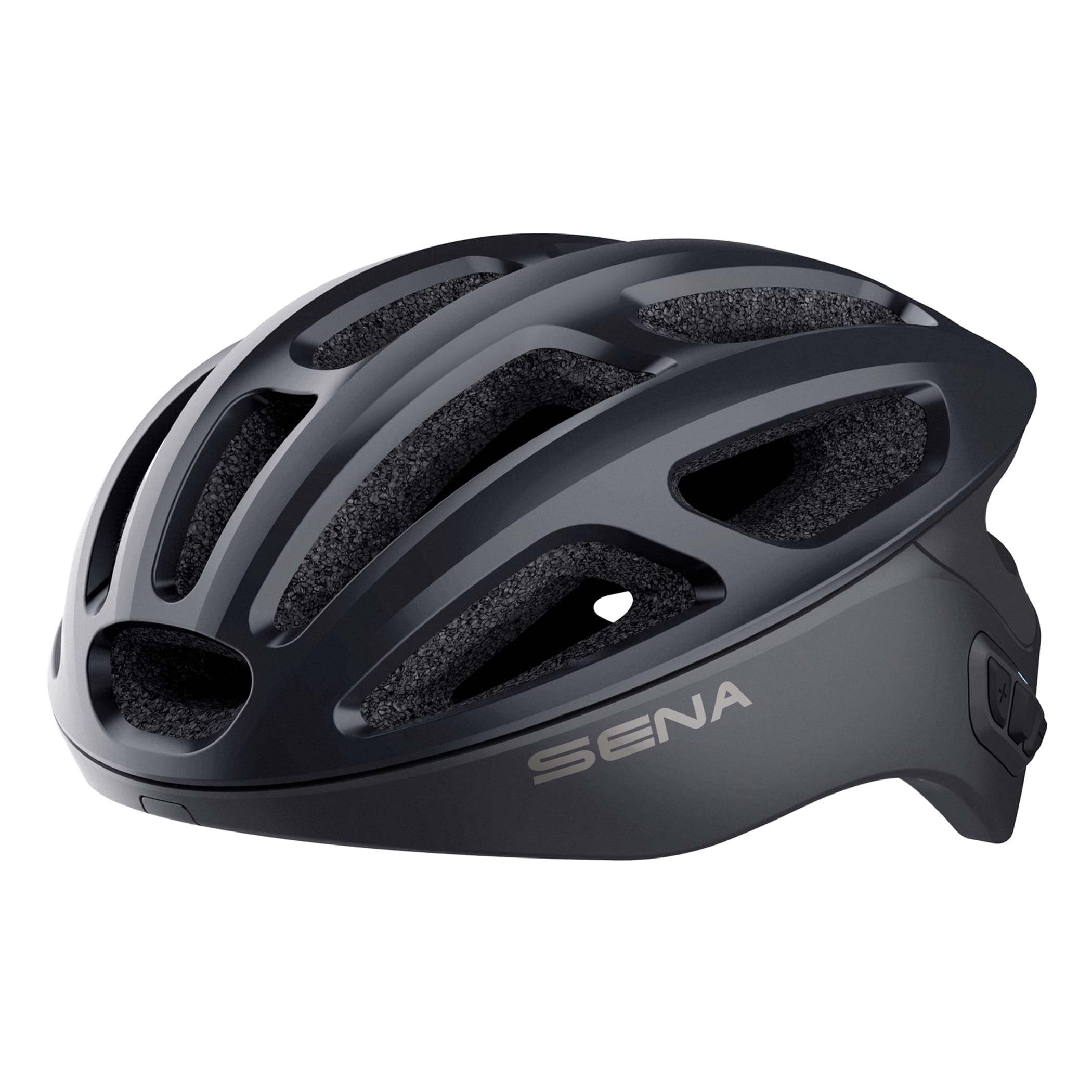
Comfort-first road helmet with a group intercom built in — the fit is the story.
Fit is the most-discussed topic on this helmet and it lands strongly — owners call it wonderful and a few rate it their best purchase. That is not an accident of the design: removable and washable padding, a nylon chinstrap and a spin lock dial let you shape it to your head. The smart gear is Sena’s communications system — built-in speakers and mic for music and calls, plus a Group Intercom for up to three other riders. Bluetooth pairs to your phone for on-the-go features, and a dedicated app sets friend groups and volume levels.
At 380 grams it is the lightest Sena here, which lines up with the comfort read. Communication is the second-most-praised feature — hands-free talking with clear voice transmission between riders draws clean reviews. Noise control is praised too, with riders noting little wind noise or static at speed.
Two things to weigh. Setup splits the feedback — some find it easy, others call it frustrating and unintuitive, so budget an evening with the app before the first group ride. Sound quality also divides, from clear enough to hear your riding partner clearly to cheap-sounding speakers, and Bluetooth pairing is inconsistent. Sizing runs small, and the optional Sena R1 visor is sold separately.
Strengths that stand up
- Excellent fit record, with washable padding and a spin lock dial
- Group Intercom for up to three other riders
- Low wind noise and minimal static at speed
- 380 grams — the lightest Sena on this list
What to know before you buy
- Setup frustrates part of the buyer pool
- Speaker sound is clear for voice, thin for bass
- Sizing runs small; visor sold separately
Fits best for: riders who have struggled with helmets that sit wrong, and who ride with the same two or three people.
Be ready for: a first setup session in the app before the intercom feels natural.
8. AURA Smart E-Bike Helmet with Turn Signals & Brake Light
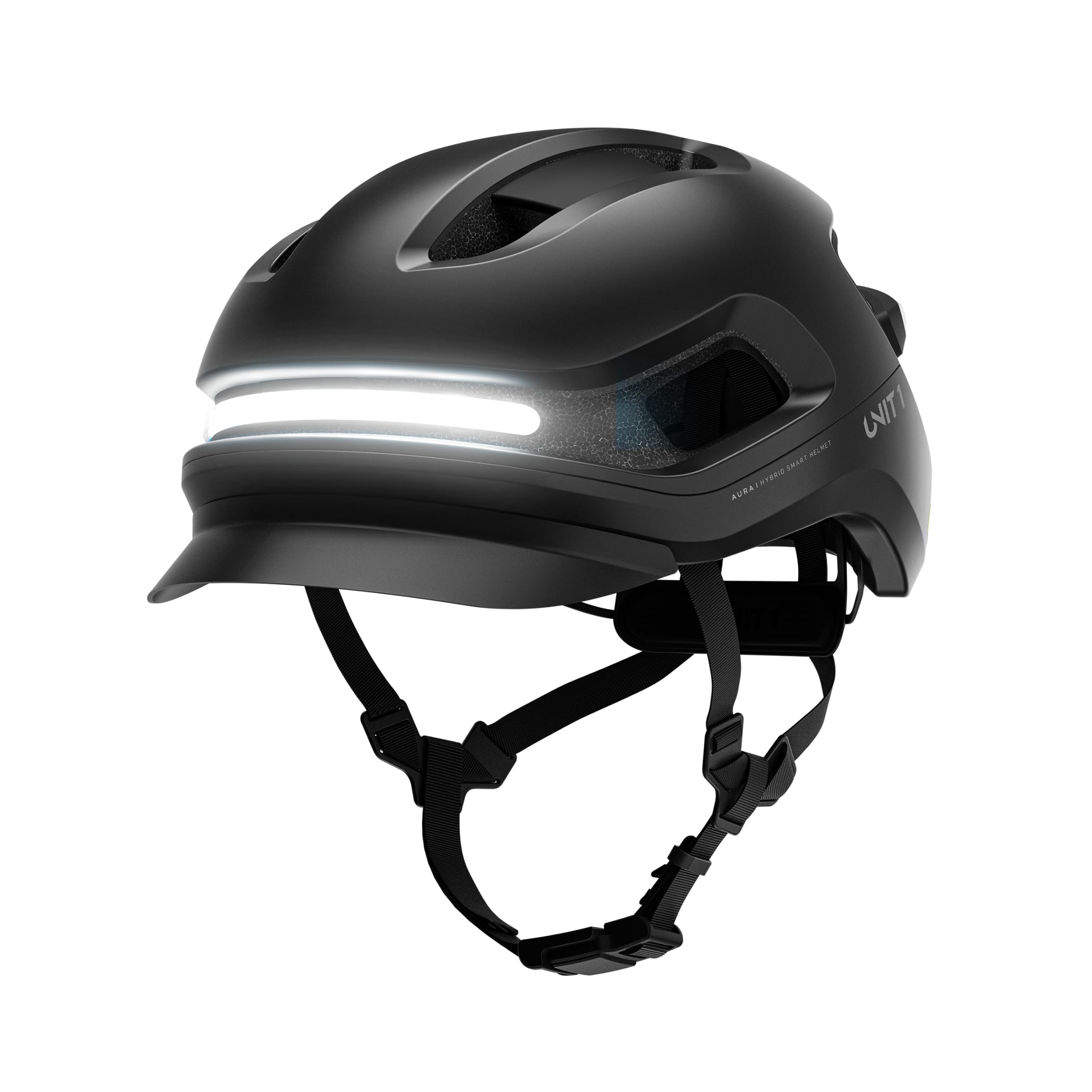
The premium lid that puts MIPS, lights and a crash countdown in one shell.
If you want the most protection tech stacked on one helmet, start with what is inside the shell. The MIPS system is designed to help reduce rotational motion transferred to the head during certain angled impacts — the low-friction layer serious riders look for. Front and rear lights are integrated into a ventilated build with 14 vents, and the rear fit dial, straps and magnetic buckle let you lock in a snug fit. It weighs 1.3 pounds, honest for a shell carrying lights and MIPS.
Two features set it apart from the LIVALL options. First, the separately sold Remote puts turn-signal buttons on your handlebars and uses sensors to detect deceleration and trigger automatic brake lighting — that remote is required for turn signals, so budget for it. Second, Crash Alert: with a connected phone, a detected crash starts an app countdown and, if you do not respond, the app can send your location to your chosen emergency contact. Light settings personalize in the UNIT 1 app.
Quality is the loudest note, drawing entirely positive comment, and owners describe it as one of the best e-bike helmets they have owned. Fit, comfort and safety all read well, and the sleek design draws praise. The catch is the remote — sold separately, so the turn signals you see in the photos need an extra purchase to work — and value for money is the one metric that divides. Sizing also matters: use the AURA size chart for head shape as well as circumference.
What justifies the premium: MIPS protection, 14 vents, integrated front and rear lighting and a crash alert that can share your location.
The fine print: the remote that runs the turn signals and auto brake light is sold separately — factor it in before you order.
For the buyer who: wants MIPS and a crash countdown on a premium commuter shell.
Factor in: the remote is extra — without it you get lights and MIPS, not turn signals.
Know the Specs
Turn Signals and the Handlebar Remote
A turn signal on a helmet is only useful if you can trigger it without taking your hand off the bar. That is why every signal helmet here pairs with a small wireless remote — a button you press with your thumb. Some helmets include the remote in the box; others sell it separately and require it for the signals to work at all. Check that detail before you buy, because a helmet with lights and no remote gives you visibility, not intention.
NTA-8776 and E-Bike Certification
A standard bike helmet is tested for pedal-speed riding. NTA-8776 is the e-bike standard, and the LUMDEER here is certified to it alongside CPSC and EN 1078, with a stated top speed of 28 MPH. If your machine is a Class 3 e-bike, a scooter or a onewheel, match the helmet’s rated use to the machine. For pedal-bike commuting, CPSC is the baseline to look for.
Runtime, Standby and Charging
A dead light mid-commute is worse than no light at all. Runtime runs from up to 10 hours of lighting on the Lumos Ultra to 12 hours on the LUMDEER, so a week of short commutes can pass before a recharge. The ASIEVIE lists 3 to 18 hours of music plus up to 120 days of standby on a 1000mAh battery (a 1000 milliamp-hour pack, roughly a small phone battery). Look for USB-C or Type-C charging so one cable covers your phone and helmet, and check whether the standby figure assumes the lights are off.
MIPS and Fall Detection
MIPS is a low-friction layer inside the helmet designed to help reduce rotational motion transferred to the head during certain angled impacts — the AURA has it, and select Lumos Ultra versions do too. Fall detection is different: it is an app feature on the LIVALL helmets and the AURA that reacts to an impact by sending an alert to a contact you set. One is physical protection, the other is a phone notification. Neither replaces the other.
Common Questions
Do I need a different helmet for an e-bike than a regular bicycle?
Is the turn-signal remote included with every smart helmet?
How long do the lights and battery actually last on a smart helmet?
Will helmet speakers block out traffic noise?
What does fall detection actually do on a bike helmet?
Do these helmets run small or true to size?
Can I use a helmet intercom with any Bluetooth headset?
How do I keep the electronics working through rain and cold?
Is MIPS worth paying extra for on a smart helmet?
Can I wear a smart helmet with a regular bike light too?
The Bottom Line
For most riders, the best pick in smart bike helmets is the Lumos Ultra — it holds the highest rating in the field on the most review feedback, and it ships the handlebar turn-signal remote in the box. Ride an e-bike or scooter at speed? The LUMDEER carries NTA-8776 certification (a Dutch safety standard for faster e-bikes) and an auto brake light. And if you ride in a group and want to talk to the person beside you, reach for the Sena R1, with the strongest fit record of the three Sena shells.
How we choose
We do not accept paid placement. Every pick is matched to a real buyer and a real use-case; we do not hands-on test units.
Sources
Specifications: manufacturer listings and product documentation. Review insights: verified customer reviews, as of November 2026. Pricing: not shown on this page (it changes often); check the current price via the retailer link.
As an Amazon Associate, Tactical Gear Guy earns from qualifying purchases. This does not affect which products we feature.