Specs are compiled from manufacturer listings and verified buyer reviews and can change over time — please confirm the key details on the product page before buying.
You want one thing from a winter boot: to walk across a frozen parking lot without your feet sliding out from under you. That is the whole job. Everything else — warmth, dry feet, how fast you get them on — is a bonus. The picks below all have a real ice-gripping feature built into the sole, whether that is steel carbide studs that bite into ice or a Vibram Arctic Grip rubber that stays tacky on wet ice. Two Icebug models use studs, three boots use Vibram Arctic Grip, one uses retractable cleats, and one is an overshoe that straps over whatever you already wear. The crowd favorite, the Icebug Metro2, holds 4.5+ stars across 300+ ratings, and its 16 carbide steel studs give it the most aggressive ice bite in this group.
This guide is built by comparing the manufacturers’ published specifications and the patterns across verified customer reviews, so you get each pick’s real strengths and trade-offs instead of marketing spin.
Below you will find the boots that actually grip, sorted by who they suit best, from sidewalk commuters to ice fishermen standing on a frozen lake all day. This guide to the best traction shoes for ice focuses on the sole under your foot, not the marketing on the box.
Top Picks
How To Choose The Best Traction Shoes for Ice
The single decision that matters most is what kind of grip the sole uses. Everything else follows from that. Here is how to read the three main traction types before you spend a cent.
Steel carbide studs versus Vibram Arctic Grip rubber
Studs are small metal points set into the outsole. They physically dig into ice, so they hold on glare ice — the black, glassy stuff that forms after a freeze-thaw cycle. Icebug uses these on both of its boots here. Vibram Arctic Grip is a rubber compound that stays grippy on wet ice without metal. It is quieter on indoor floors and does not scratch a shop doorway, which is why MUCK and Merrell use it on their commuter-friendly boots. If your route is mostly a cleared sidewalk with patches of ice, Arctic Grip feels more natural. If you cross an unplowed lot or a frozen lake, studs win.
Shaft height and how deep the snow gets
A taller shaft keeps snow out of the boot when you step into a drift. The MUCK Arctic Ice Tall has a 17-inch shaft, which reaches well up the calf, so deeper snow stays out of the front. A mid-cut boot like the Icebug Metro2 sits lower and is easier to walk in on cleared pavement. Match the shaft to your real winter: a city commuter rarely needs a knee-high boot, but an ice fisherman standing in slush does.
Waterproofing and insulation numbers
Look for the word waterproof on the shell, not just water-resistant. Rubber shells like the Clam Sub-Zero and MUCK keep standing water out completely. Suede uppers like the Icebug Metro2 are water-repellent, which handles slush and snow but not a puddle you stand in. Insulation is measured in grams on some boots — the Merrell Coldpack 3 lists 200 grams — and as a temperature rating on others, like the NORFIN Klondike 2’s -40°F claim. A gram count tells you how much synthetic fill is inside. A temperature rating is the maker’s own claim, so treat it as a guide, not a guarantee.
Side-by-Side Comparison
| Model | Best For | Traction Type | Waterproofing | Weight | Amazon |
|---|---|---|---|---|---|
| Icebug Metro2 BUGrip★ Best Overall | City commuting on icy sidewalks | 16 carbide steel studs | Water-repellent suede | — | Amazon |
| MUCK Arctic Ice TallDeep Snow Pick | Deep snow and wet slush | Vibram Arctic Grip A.T. | 100% waterproof rubber | 5.4 lb | Amazon |
| STEADYETI AnkleEasiest On | Quick errands, easy on and off | Vibram Arctic Grip | Waterproof | 4 lb | Amazon |
| Clam Sub-Zero | Ice fishing and winter work | Aggressive slip-resistant sole | Waterproof rubber shell | 4 lb | Amazon |
| NORFIN Klondike 2 | Standing on frozen lakes | 2 retractable cleats | EVA shell | 5 lb | Amazon |
| Merrell Coldpack 3 | All-day winter wear | Vibram Arctic Grip | Waterproof | — | Amazon |
| NEOS Navigator-Glacier Trek | Overshoe for existing footwear | 32 replaceable cleats per pair | Waterproof and windproof | 5.85 lb | Amazon |
| Icebug Ivalo4 BUGrip | Long walks and winter hiking | Carbide studded sole | Quilted RipStop upper | — | Amazon |
Detailed Reviews
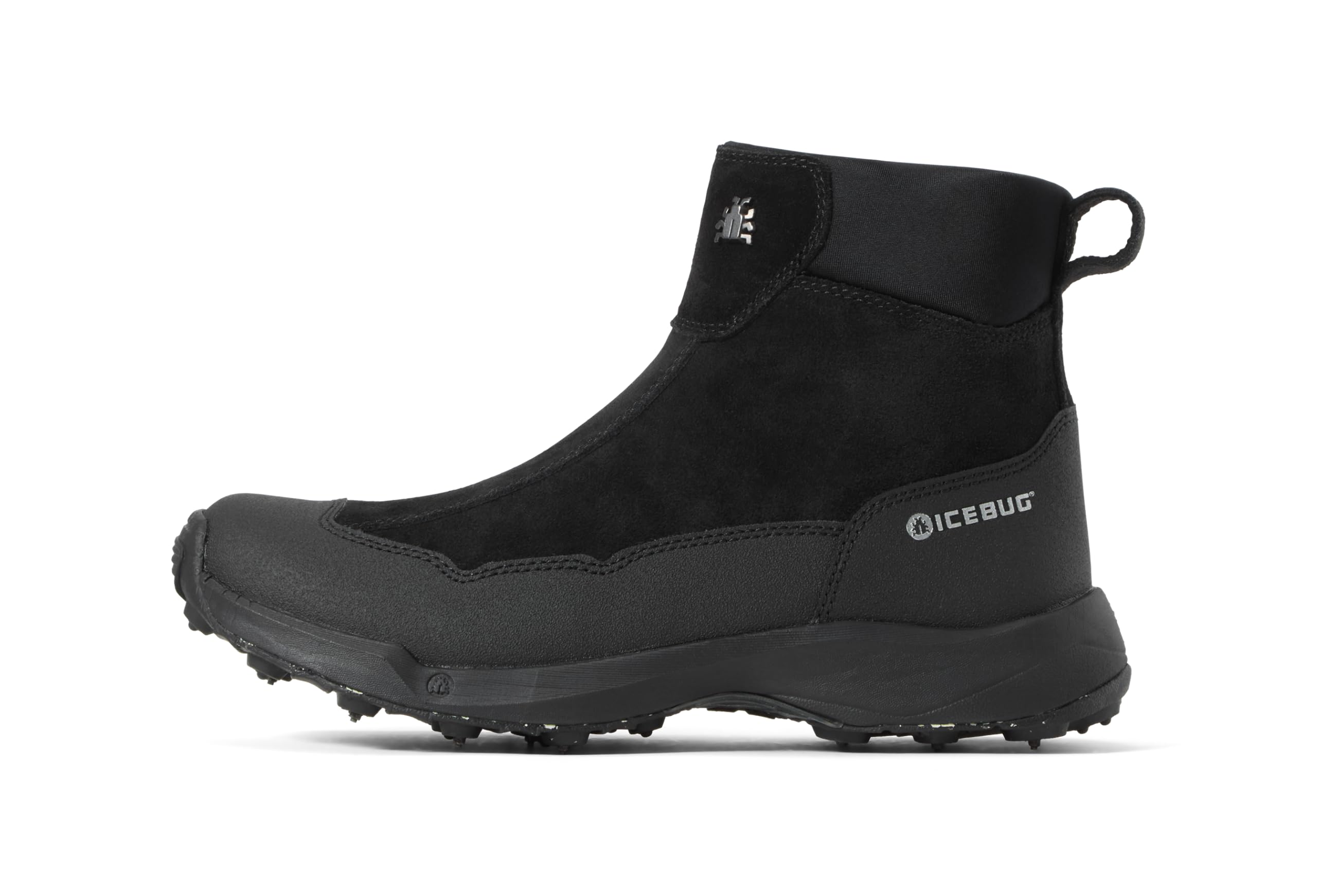
1. Icebug Metro2 BUGrip Women’s Winter Walking Boots
Our pick — 4.5+★ from 350+ verified ratings; the strongest balance of quality and price.
Sixteen steel studs that dig into glare ice and retract enough not to wreck a grocery store floor.
The Metro2 is a mid-cut call boot for the person who walks a real sidewalk every day from November to March. Its defining part is the BUGrip outsole, which holds 16 dynamic carbide steel studs — carbide being a hard metal tip that keeps its point rather than rounding off. The word “dynamic” here means the studs are set on small flexible posts, so they press into ice when you step and sit slightly back on harder ground. That is why you can walk from an icy street into a shop without the clatter of a full metal-cleat boot.
The upper is water-repellent suede, which shrugs off slush and light snow but is not a rubber shell you can stand in a puddle with. Getting them on is quick thanks to the inside zipper. Owners call the build quality the best purchase they have made in years, and the trait they rave about most is how well the studs bite on actual ice and snow. Appearance draws no complaints either: all 16 buyers who mention the look are happy with it. Sizing is the one wrinkle: some find the fit true to size with a roomy toe box, while others find them running large, so measure your foot and read the size chart rather than guessing. Read the top spec the way it is meant: this is the kind of grip that gets a commuter across a frozen lot with a coffee in one hand.
Where it earns its crown
- 16 carbide steel studs give the most aggressive ice bite in this group.
- Water-repellent suede and a membrane keep feet dry through slush.
- Inside zipper makes a mid-cut boot quick to pull on.
- Casual looks let it pass on a city street, not just a trail.
What to weigh before you buy
- Fit runs large for some wearers — go by your measured foot, not your usual size.
- Suede is water-repellent, not a rubber shell, so standing water soaks through.
The right call for: anyone who walks icy sidewalks daily and wants metal-bite grip that still looks like a normal boot.
Pass if: you need to wade through deep puddles or a flooded slush trough, where a rubber shell does the job better.
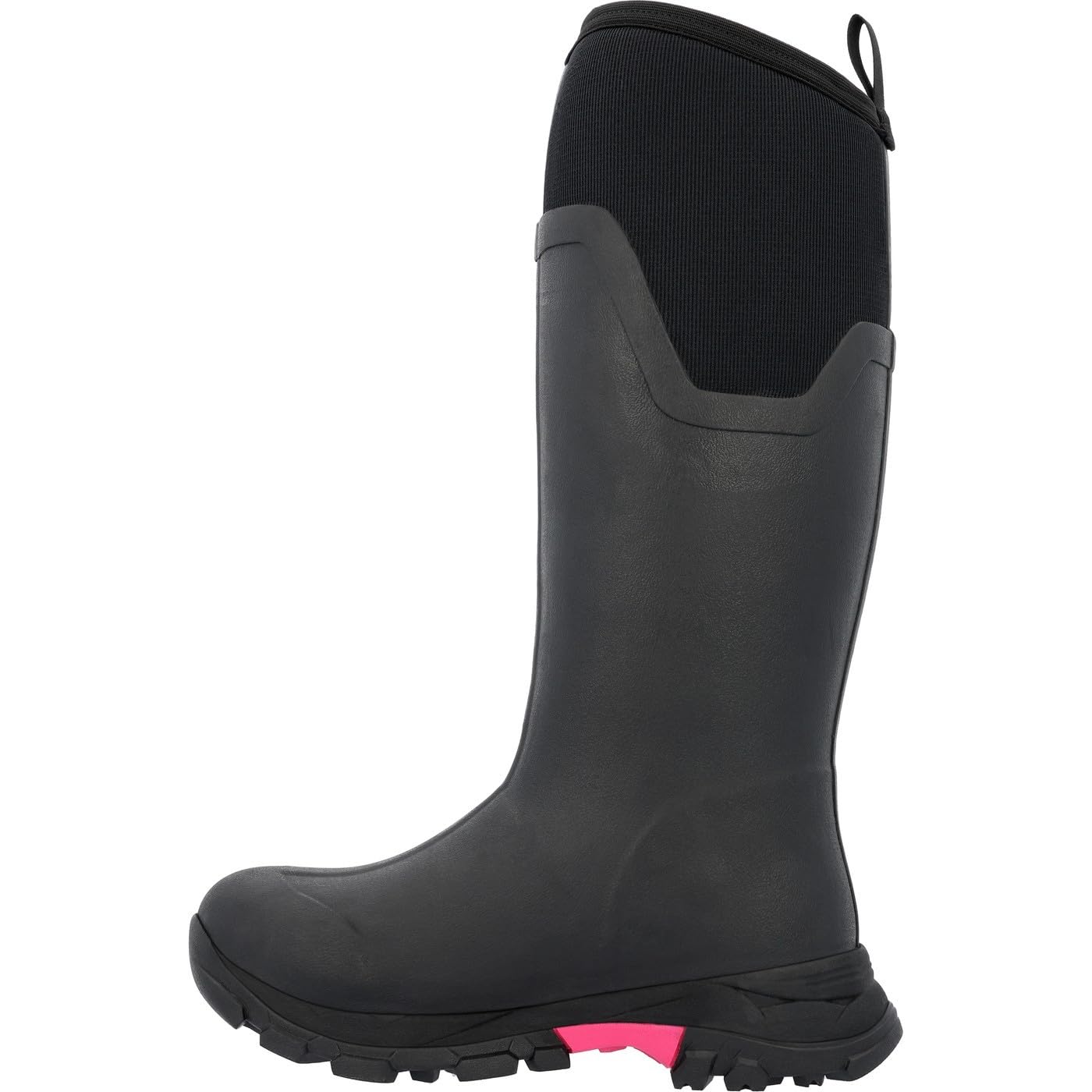
2. MUCK Women’s Arctic Ice Tall Boot + Vibram Arctic Grip A.T.
A 17-inch rubber shaft that keeps deep snow out, and Vibram Arctic Grip that holds on wet ice without metal studs.
This is the boot for the person who steps off the porch into a drift rather than a plowed walk. The 17-inch shaft is the number that matters — that is how high the boot climbs your leg, so snow does not fall in over the top when you wade through it. The shell is 100% waterproof rubber, meaning standing water has nowhere to get in. Underneath is a Vibram Arctic Grip A.T. outsole, a rubber compound engineered to stay grippy on wet ice, paired with an XS Trek Evo tread that adds grip on dry ground too. The EVA midsole — a foam layer that cushions each step — softens the walk, and the footbed pulls out so you can dry it.
Fit is where these shine: owners describe them as their perfect snow boots, and the roomy-but-secure feel is what wins people over most. Warmth is the second thing buyers bring up, and it holds up against severe cold and wet, blocking snow from creeping in at the front. The honest caveat is durability. Some wearers find the rubber holds up for years, while others have seen it crack apart, so how you store and care for them between seasons matters.
The real trade-off: a tall rubber boot that handles deep snow beautifully can feel bulky on a short dry walk. So treat it as the boot you reach for on the worst days, not the one you slip on for a quick errand.
Reach for this if: your winters mean deep drifts and wet slush, and you want a fully waterproof shaft that reaches up the calf.
Look elsewhere if: you mainly cross cleared pavement and want something lighter to pull on — a shorter boot handles that fine.
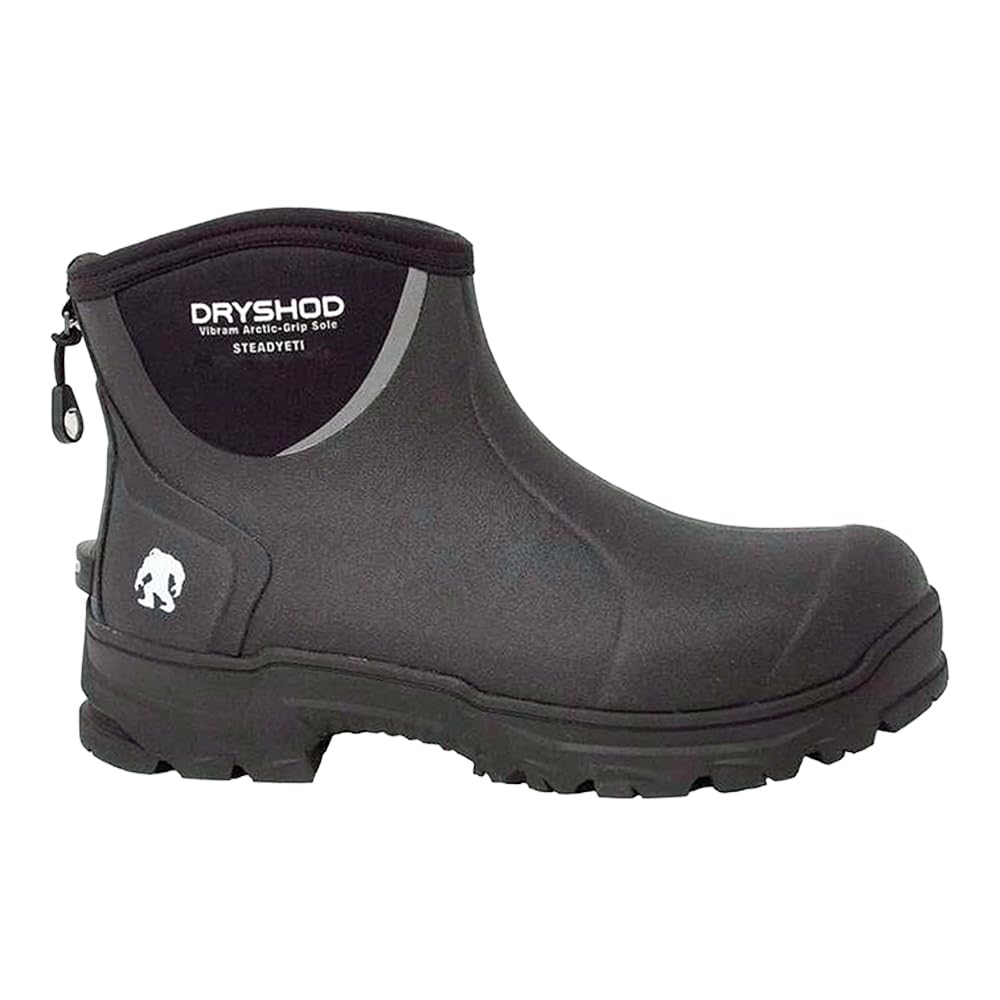
3. STEADYETI Ankle Winter Boots Vibram Arctic Ice Grip Outsole
An ankle boot you step into without bending down, built on the same Arctic Grip compound as the big boots.
If bending over to tie laces is the part of winter you dread, this ankle boot is aimed straight at you. It slips on hands-free, meaning you can shove your foot in and go without crouching. The sole is a genuine Vibram Arctic Grip outsole, the same grip compound Merrell and MUCK use, so it stays grippy on wet ice. At 4 pounds it is lighter than the MUCK Arctic Ice Tall at 5.4 pounds, which makes a difference over a long day on your feet.
Owners call the build quality excellent and say the ankle feels snug rather than floppy while walking, which matters when a loose ankle boot rolls your foot. Warmth gets consistent thumbs-up, and the easy on-and-off is clearly the star: the hands-free entry is what owners praise most. Keep sizes honest: it runs true for most, but measure if you are between sizes.
Why owners keep them
- Hands-free slip-on saves your back on a cold morning.
- Genuine Vibram Arctic Grip holds on wet ice.
- 4 pounds is light for a winter boot.
Where it stops short
- An ankle boot lets deep snow find the top of the shaft.
- Snug fit leaves little room for very thick socks.
Best for: commuters, dog walkers, and anyone with a bad back who wants grip without the bend-over.
Skip the ankle cut if: you regularly walk through snow deeper than the boot shaft.
4. Clam Sub-Zero
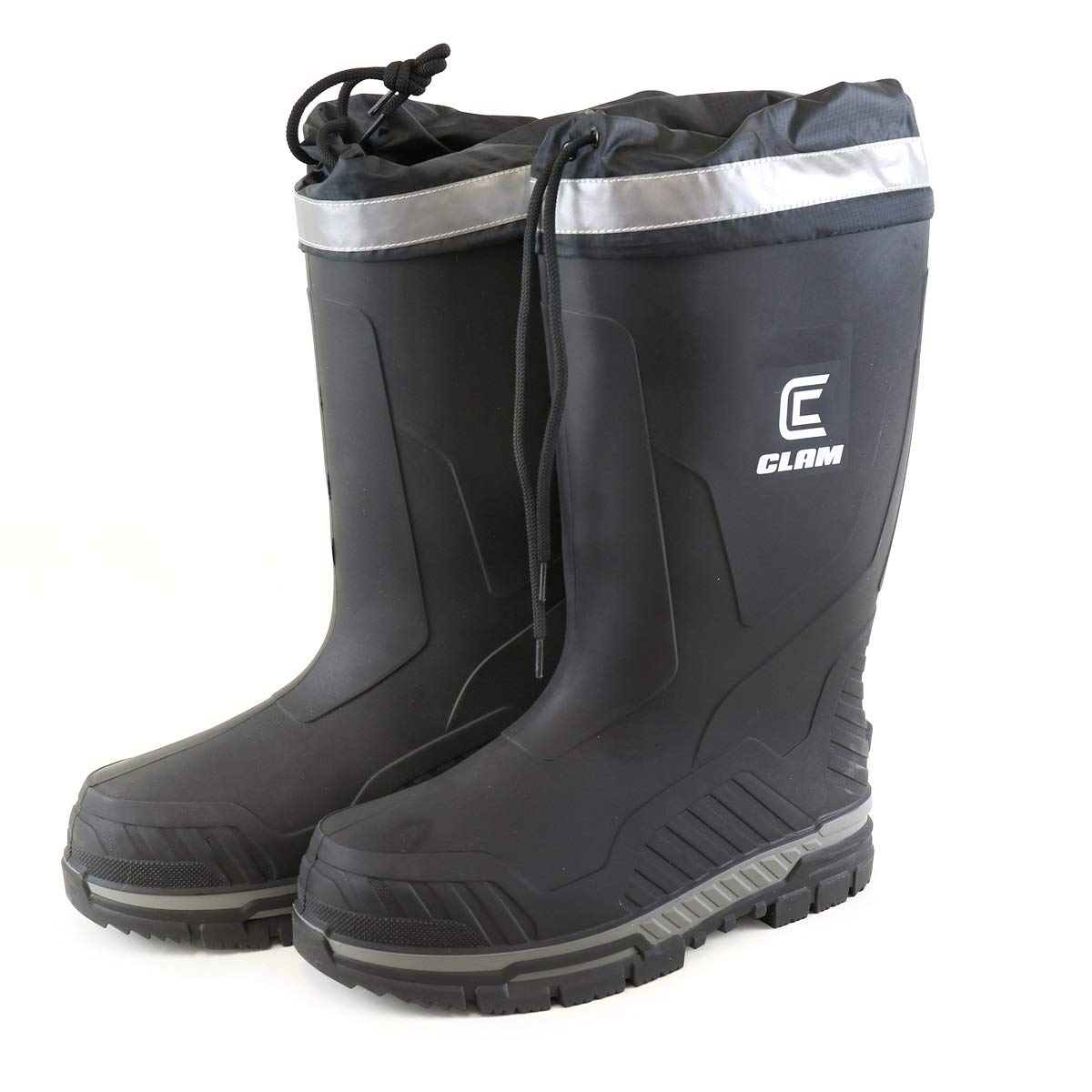
A mid-calf rubber boot built for standing on frozen lakes, with a liner you can pull out and dry overnight.
Clam builds these for ice fishermen and winter workers, and the design shows. The mid-calf shape is made to step into with gloves on, so you are not fumbling with laces at 4 in the morning on a lake. The waterproof rubber shell creates a full moisture barrier against slush, snow, and standing water, and the insulated liner pulls out so the inside can breathe and dry between trips. A slip-resistant sole handles glare ice and snow-covered ground, and at 4 pounds it is lighter than the NEOS overshoe at 5.85 pounds.
Warmth is the trait that carries these boots on a frozen lake — every owner who brings it up is satisfied. Quality is the second thing people bring up, and it holds up. On sizing, some find the fit great while others say they run small, so if you plan on a thick sock, size with that in mind.
what separates it: you stay dry when you are in and out of a shanty all day, because the liner pulls out. Pull it, air it, and wear it dry the next morning.
Made for: the ice fisher who lives on the lake all weekend and wants dry feet and a pull-on instead of laces.
Not your boot if: you want a walkable city profile — this mid-calf rubber boot is a standing-and-working boot, not a commuter.
5. NORFIN Klondike 2 Winter Boots
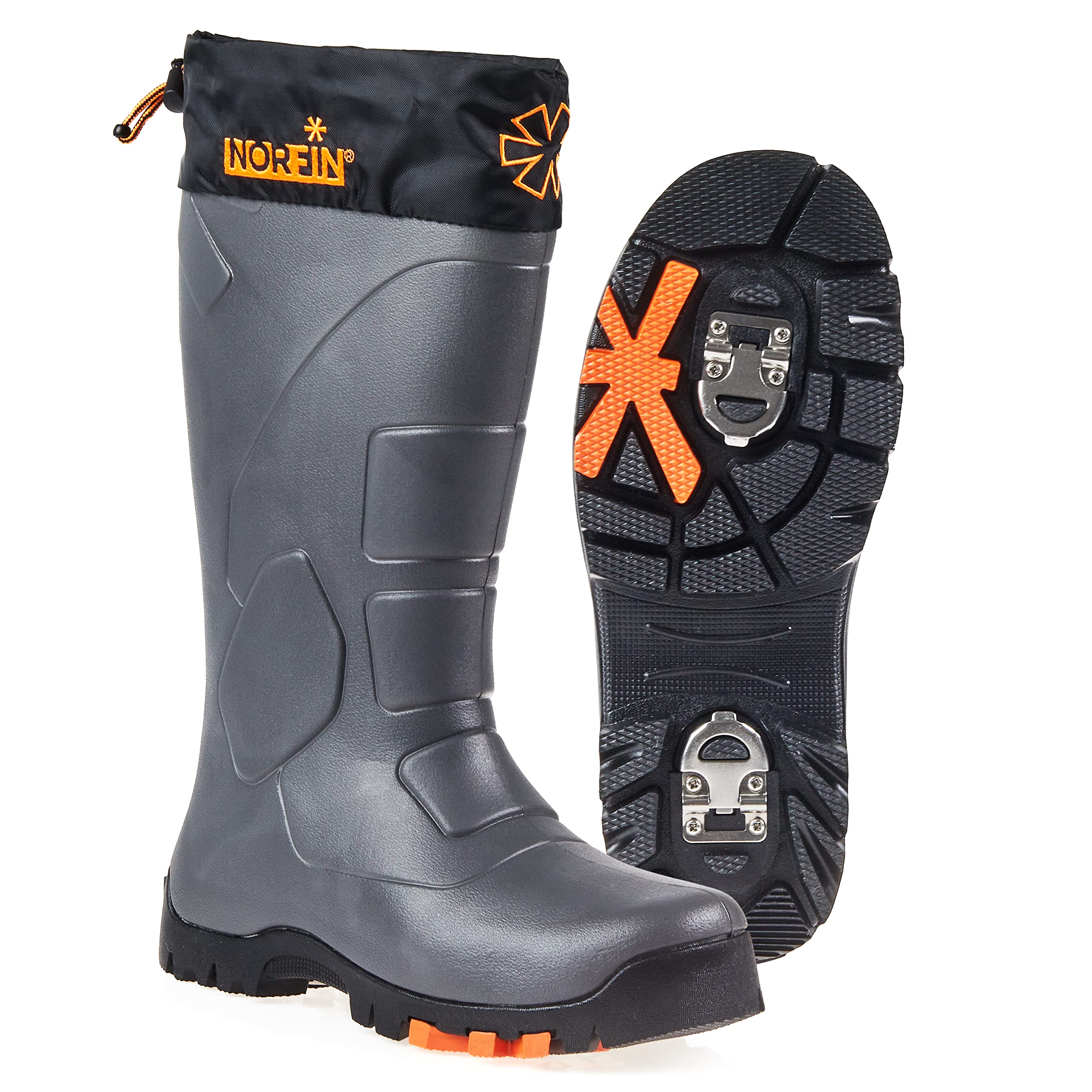
Cleats that flip out when you need grip and tuck away when you hit the cabin floor.
The Klondike 2 solves a real problem with metal grip: what to do with the cleats once you are indoors. Its rubber outsole carries 2 retractable cleats that flip out to bite into ice and back in when you step onto a floor. The shell is EVA foam rubber, a lightweight closed-cell material that keeps its shape and sheds water, and it comes with a thick removable insole. A Thinsulate inner layer — a synthetic insulation that traps heat while wicking moisture — plus a heat-reflective foil lining combine to keep the cold out. NORFIN rates it to -40°F, which is the maker’s own temperature claim, so treat it as a guide rather than a promise.
Comfort is what carries these: owners count them among the best boots they have worn, and the Thinsulate-and-foil lining draws consistent warmth praise with no complaints. The honest caveat is the cleats themselves — the recurring gripe is that they can fall off with heavy use, so treat the flip mechanism gently. Sizing is mixed, and some find one size off runs too small or too big, so check the chart carefully.
Go for it if: you ice-fish or hunt and want flip-out grip without a separate pair of cleats to keep track of.
Think twice if: you will be on extreme cold-plus-hard use all day — the cleats are the wear point.
6. Merrell Men’s Coldpack 3 Thermo Tall Zip Waterproof Snow Boots
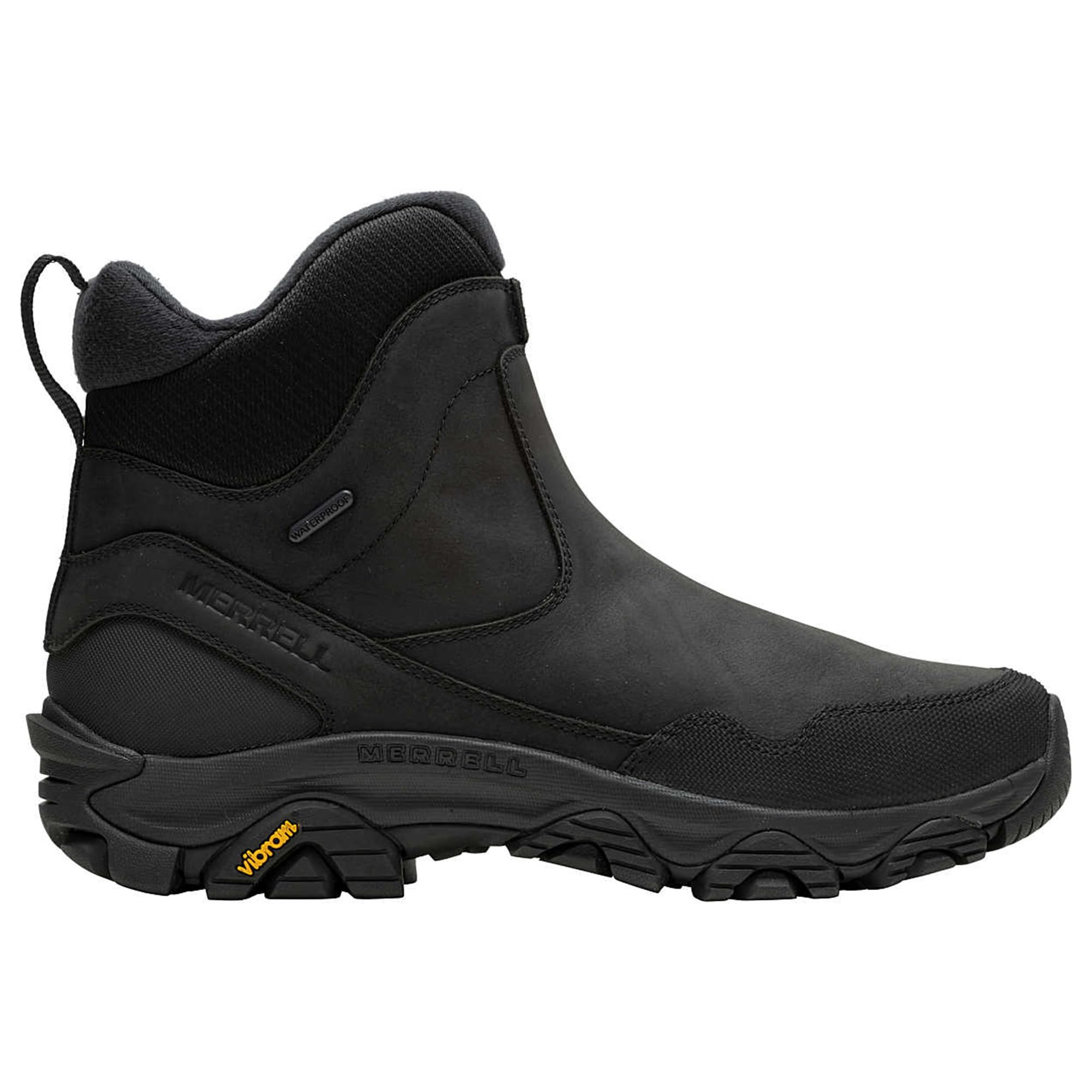
200 grams of insulation, a fleece lining, and Arctic Grip rubber underfoot — a tall boot built to be walked in.
This is the tall winter boot for someone who wants to wear one pair all day, from a commute to a walk to the store. The waterproof construction keeps feet dry, and the fleece lining with 200 grams of insulation — the fill weight inside the boot — traps warmth when the temperature drops. Underfoot sits Vibram Arctic Grip, the same wet-ice rubber compound MUCK and STEADYETI use, so it stays grippy without metal studs. The tall shaft plus a full-length zipper means you get the coverage of a tall boot with an easy entry.
Owners prize the build quality most and the fit second, calling them the best winter footwear they have worn and stable in snow. Traction earns solid praise too. The one real wrinkle is the zipper: it works well for many, but some find it pops open or fails, and getting them on can take some effort. Treat the zip as the wear point and you will get along fine.
Why it fits so many people
- 200g insulation plus fleece lining for cold days.
- Vibram Arctic Grip rubber grips wet ice without studs.
- Waterproof build keeps feet dry.
The honest snag
- The full-length zipper is the one part to watch — some units fail or pop open.
- Getting a tall boot on takes a little effort even with the zip.
The pick for: someone who wants one good-looking boot for the whole winter day, dry and warm without metal clatter.
Not ideal if: you want the absolute hardest bite on bare glare ice — that still goes to a studded sole.
7. NEOS 15 Navigator-Glacier Trek Spk
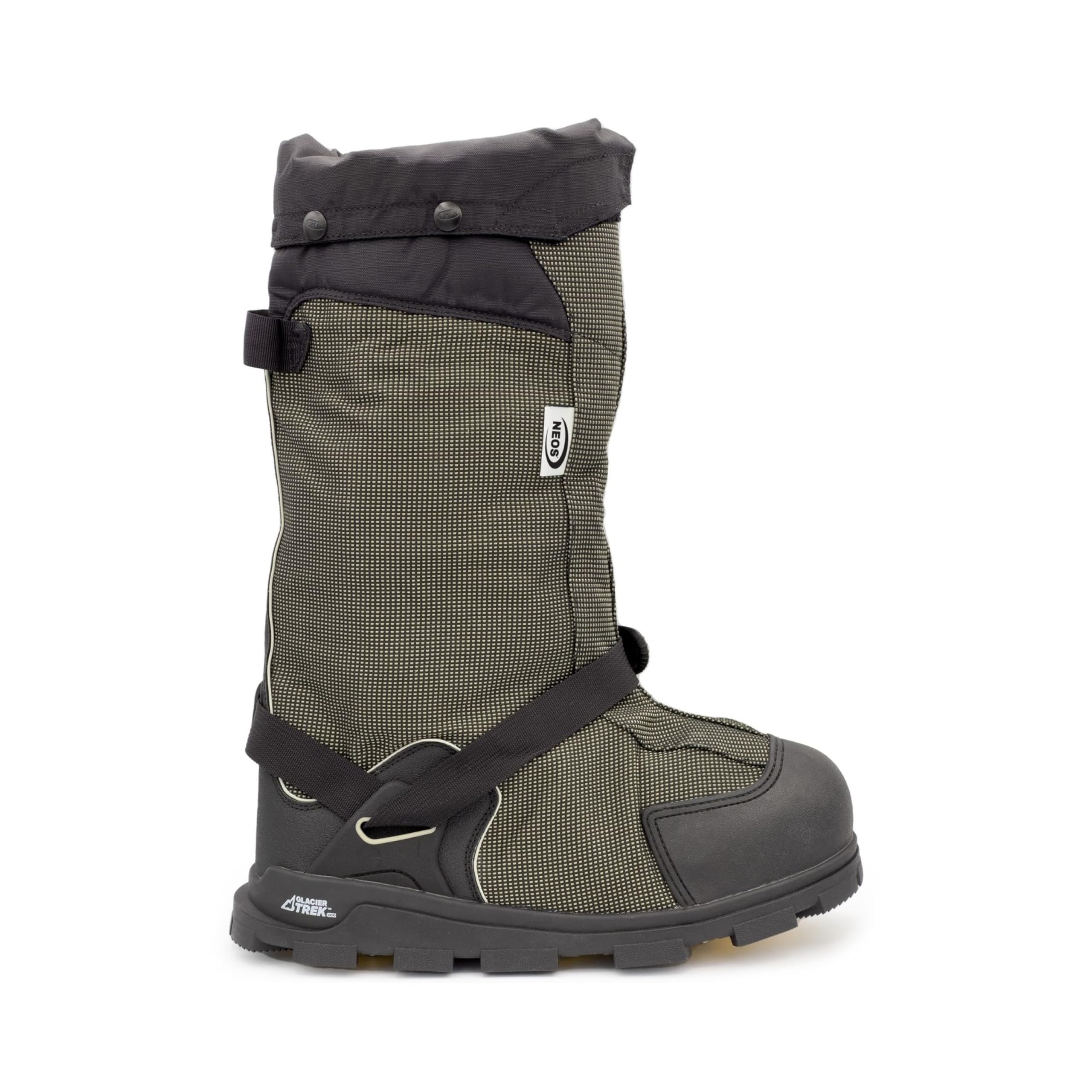
An overshoe with 32 replaceable spikes a pair, built to strap over the shoes you already wear.
Not everyone wants a dedicated winter boot. The NEOS Navigator is an overshoe — it pulls on over your regular shoes and locks in with a hook-and-loop strap system, so a secure fit does not mean laces. Its Glacier Trek SPK outsole carries 32 replaceable cleats per pair, the most metal grip in this whole group, and a cleat wrench comes tucked in an internal pocket so you can swap worn spikes on the job. The upper is 840 denier woven polyester — a heavy, tightly woven fabric — that is waterproof and windproof, with 4mm polyurethane foam insulation for warmth.
Here is the one number to respect: at 5.85 pounds it is heavier than the Clam Sub-Zero at 4 pounds, and that weight is on top of your street shoes. Also, these are not for hard surfaces — the maker says so plainly — so they are a boot for snow and ice, not a walk into town. Fit is the mixed part; the overshoe works best over regular everyday shoes, and if you plan to wear it over chunky boots, sizing gets tighter.
Best use: keep a pair by the door for the days the lot turns to ice — they go over whatever you are already wearing.
Made for: people who want serious ice grip without buying a whole new boot — slip these over your shoes and go.
One caution: keep them off hard floors and clear pavement, where the metal cleats are not meant to go.
8. Icebug Womens Ivalo4 BUGrip Winter Walking Boot
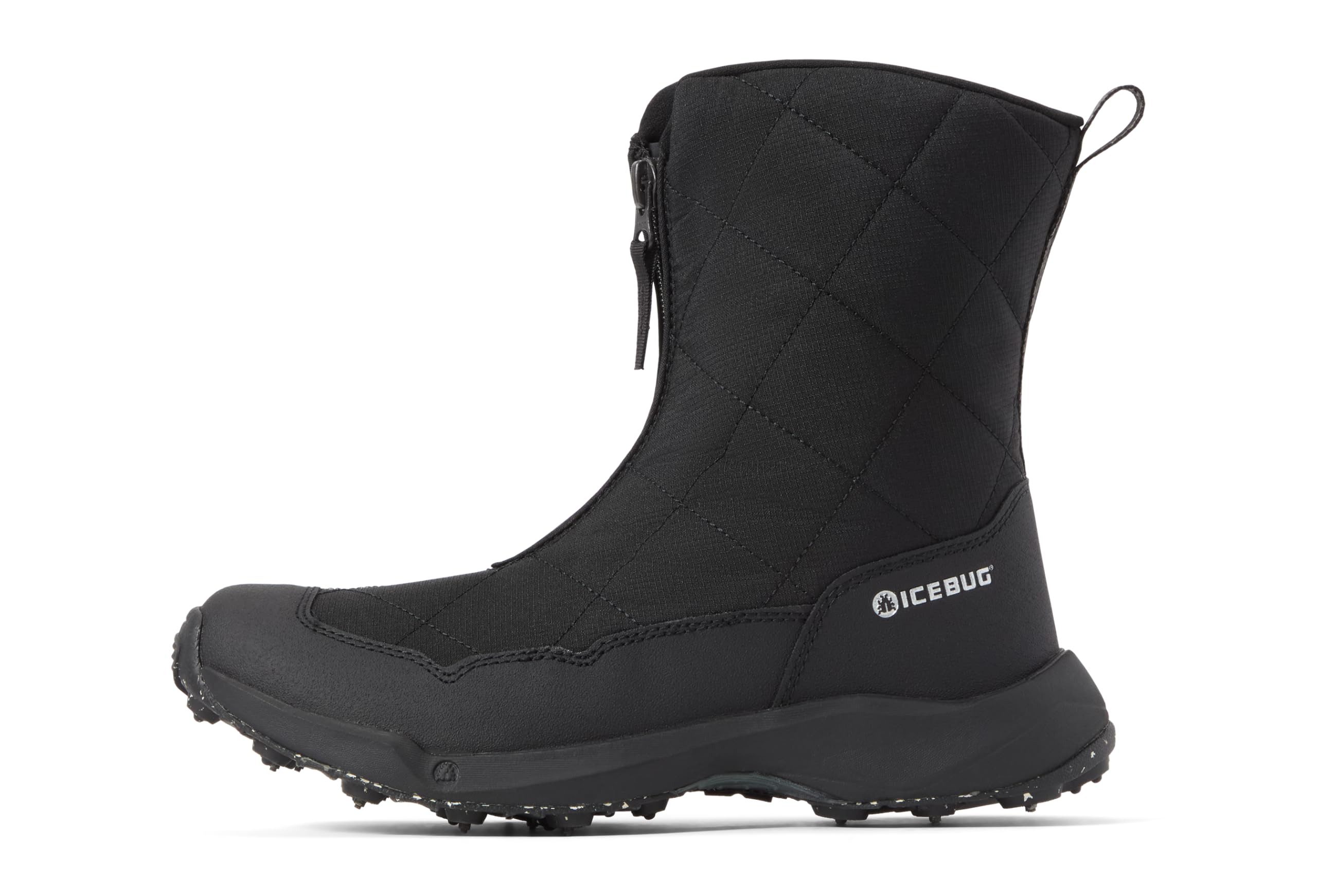
A rocker sole and carbide studs for the woman who wants to keep logging miles through the winter.
The Ivalo4 is the Icebug to pick if you walk far, not just across a lot. Its outsole is set with dynamic carbide tip studs — hard metal points that grip ice — and it also walks cleanly on other surfaces. An ESS stabilizer and a forefoot rocker give it a stable platform that rolls you forward with each step, and the wide ergonomic last (the shape of the boot’s interior) leaves room for your foot. The quilted RipStop upper resists water, insulation is 100% recycled polyester, and a mudguard keeps snow and slush away from the ankle. A weather-resistant front zipper gets you in and out fast.
Traction is the star here: buyers report virtually no fear of slipping and feel secure on the ice. The look earns its own fans too, and waterproofing draws no complaints, keeping feet warm through the slush. Fit is the mixed part: some find it good, others find it a bit too roomy, so it suits a wider foot better than a narrow one. Some also feel the price is steep for what it is.
The match for: a walker or hiker who logs real winter miles and wants a rockered, stable studded boot.
Consider a different width if: your foot is narrow — this last runs roomy, so try a snugger boot instead.
Know the Specs
Carbide studs vs Arctic Grip rubber
Carbide studs are hard metal points set into the sole — they bite mechanically into ice, so they hold best on the glassy stuff. Vibram Arctic Grip is a rubber compound that stays grippy on wet ice without any metal, so it feels normal indoors and on pavement. The Icebug boots use studs; MUCK, STEERADYETI, and Merrell use Arctic Grip. Pick studs for unplowed ice, rubber for mixed cleared paths.
Shaft height and weight
Shaft height is how high the boot climbs your leg — the MUCK Arctic Ice Tall is 17 inches, which keeps deep snow out, while an ankle boot lets snow reach the top. Weight matters for long wear: the NEOS overshoe is 5.85 pounds, the MUCK 5.4, and lighter ankle and mid-cut boots are easier on your legs over a full day.
Insulation grams and temperature ratings
Insulation is measured in grams (Merrell lists 200 grams) or as a temperature claim (NORFIN rates to -40°F). A gram count tells you how much synthetic fill is inside. A temperature rating is the maker’s own guide to how cold the boot is built for — treat it as a starting point, not a guarantee, and pair it with a warm sock.
Waterproof shell vs water-repellent upper
A rubber shell like the MUCK and Clam keeps standing water out completely. A water-repellent suede upper like the Icebug Metro2 sheds slush and light snow but will not survive a puddle you stand in. Match the shell to your real route: a slushy city street needs the waterproof shell, while a cleared walk can get by with a water-repellent upper.
Common Questions
Do steel studs damage indoor floors when I walk into a store?
Is Vibram Arctic Grip as good as metal studs on ice?
How do I size a winter boot when I wear thick socks?
Will Arctic Grip boots keep my feet dry in deep slush?
What does a -40°F temperature rating actually mean?
Can I replace the studs or cleats when they wear down?
Are these boots good for ice fishing or standing on a frozen lake?
Do I need a tall boot or is an ankle boot enough?
How long should a pair of ice traction boots last?
Will a studded boot scratch or mark my car pedals and floor mats?
The Bottom Line
For most people, the winner among the best traction shoes for ice is the Icebug Metro2 BUGrip. Its 16 carbide steel studs (hard metal points set in the sole) give the hardest bite on real ice, so you stay upright on a slick sidewalk. The suede upper and inside zipper keep it wearable on a normal commute. If your winters mean deep drifts, grab the MUCK Arctic Ice Tall. Its 17-inch waterproof shaft (the tall part that covers your leg) keeps snow out, and Vibram Arctic Grip (a sole compound made to grip wet ice) holds on frozen ground. For standing on a frozen lake all day, reach for the Clam Sub-Zero and its removable liner. And if you want grip without buying a whole new boot, the NEOS Navigator straps 32 replaceable cleats (metal grips you swap when they wear) over the shoes you already own. Whichever you choose, the sole is the thing that keeps you upright. Pick the grip that matches your actual ice, and the rest follows.
How we choose
We do not accept paid placement. Every pick is matched to a real buyer and a real use-case; we do not hands-on test units.
Sources
Specifications: manufacturer listings and product documentation. Review insights: verified customer reviews, as of November 2026. Pricing: not shown on this page (it changes often); check the current price via the retailer link.
As an Amazon Associate, Tactical Gear Guy earns from qualifying purchases. This does not affect which products we feature.