Specs are compiled from manufacturer listings and verified buyer reviews and can change over time — please confirm the key details on the product page before buying.
Quick answer first: for the best 50-inch picture in a bright room, buy the Samsung QN90F at the top of this list. For the best picture per dollar, the TCL QM6K is the one to beat. And for a bedroom or spare room where you just want to stream without overspending, the Toshiba M450 does the job. One thing to know before you read the picks: this list uses flexible, human-like matching for a 50-inch screen, so not every set here is the exact number you typed — a couple of picks are the nearest sold size in the same model line, and they serve exactly the same purpose on your wall. Each pick’s listing states its exact size, so you know what arrives.
This guide is built by comparing the manufacturers’ published specifications and the patterns across verified customer reviews, so you get each pick’s real strengths and trade-offs instead of marketing spin.
Reflections, motion blur and dim HDR highlights are usually what disappoint people after the box is open — so the picks below are ranked on how well they handle a real living room. Here are the 50-inch sets that hold up in a real living room.
Top Picks

How To Choose The Best TV 50 Inches
A 50-inch set fits most living rooms and bedrooms without dominating the wall, so the fight is not about size — it is about how the panel handles light, motion and colour once it is home. Measure your window light and viewing distance before you compare panels.
Match the panel to the light in your room
If daylight hits the screen for most of the afternoon, a matte anti-glare finish saves you from watching your own reflection instead of the film. The Samsung QN90F leans on exactly this: its matte screen finish is built to cut reflections when sun streams through the window.
If the room stays dim, contrast matters more than glare control. That is where Mini LED backlighting earns its place — thousands of tiny LEDs dim and brighten in zones, so dark scenes keep their depth instead of washing out to grey.
Decide if you need 144Hz or 60Hz
Refresh rate in hertz (Hz) is how many times per second the screen redraws the picture. A 60Hz panel is fine for films and casual streaming. If you play fast shooters or watch a lot of live sport, a 144Hz panel with VRR (variable refresh rate, which syncs the screen to your console to stop tearing) is the difference between smeary and sharp.
Pick your smart platform before you pick the panel
Roku, Fire TV, Google TV and Samsung’s own system all run Netflix and YouTube. They differ in how much they push recommendations at you, how good voice search is, and how often the interface changes under your feet. Pick the platform you already use daily — you will navigate it far more often than you will study any spec.
Side-by-Side Comparison
| Model | Best For | Backlight | Refresh Rate | Smart Platform | Amazon |
|---|---|---|---|---|---|
| Samsung QN90F (50″)★ Best Overall | Bright rooms and glare | Mini LED | Up to 4K 165Hz for VRR gaming | Samsung Smart TV with Alexa built-in | Amazon |
| Hisense E6SR (50″)Best for Streaming | Budget Roku streaming | Hi-QLED | — | Roku TV | Amazon |
| Toshiba M450 (50″)Everyday Value | Everyday value | QLED | 60Hz | Fire TV with Alexa | Amazon |
| VIZIO V-Series (50″) | Free channels, cord-cutters | LED | — | VIZIO SmartCast | Amazon |
| Westinghouse Roku Mini LED (50″) | Big-picture look on a small budget | Mini LED | — | Roku TV | Amazon |
| TCL R7D (50″) | Bezel-less film nights | QLED | 60Hz | Roku TV | Amazon |
| Hisense E7 Cinema (50″) | Movie buffs and sports | Mini LED | Native 144Hz | Fire TV with Alexa+ | Amazon |
| TCL QM6K (50″) | Best picture per dollar | QD-Mini LED | 144Hz | Google TV with Gemini | Amazon |
| Samsung QN70H (50″) | Pure colour and contrast | Quantum Mini LED | 60Hz | Samsung Smart TV with voice control | Amazon |
Detailed Reviews
1. Samsung 50-Inch Class Neo QLED 4K QN90F Series
Our pick — 4.5+★ from 350+ verified ratings; the strongest balance of quality and price.
A matte anti-glare panel that holds the picture steady when sun hits the screen.
If your sofa faces a window, this is the one to buy. Samsung’s matte finish is built to hold the picture steady even with sun streaming through the glass or that one lamp you leave on during a thriller — and it is the single most praised trait in the whole range of owner feedback. The panel is Mini LED backlit (thousands of tiny LEDs that brighten and darken in zones), so dark scenes keep real depth and bright scenes keep their punch.
The processing side is where this earns Best Overall. Samsung’s NQ4 AI Gen2 processor uses 128 neural networks — essentially 128 trained pattern-matching models — to upscale everything you watch to 4K, so an old sitcom or a 1080p stream arrives looking sharper than the source. For gaming it supports VRR (variable refresh rate) at up to 4K 165Hz, which is the headroom that keeps a fast shooter from tearing on screen. Football and tennis benefit too: the processor smooths fast-moving balls and on-screen text so you do not lose the play in a blur.
Sound is handled by Object Tracking Sound Lite with Dolby Atmos, which follows on-screen action with the built-in speakers — good enough that a soundbar becomes optional rather than mandatory. Bluetooth 5.3, Ethernet, HDMI, USB and Wi-Fi are all on board, and the stand’s 20.4-inch base width means you need a reasonably wide console. The most-discussed trade-off in owner feedback is value rather than performance, so read this as a set you buy for the panel and the glare control, not as the cheapest way to get 50 inches.
What the panel gets right
- Matte, Glare Free screen keeps the picture readable in a sunlit room — the trait buyers bring up most.
- 128 neural networks upscale lower-resolution content to 4K so older shows still look crisp.
- Up to 4K 165Hz VRR for gaming, plus motion smoothing that keeps fast balls and text legible.
- Object Tracking Sound Lite with Dolby Atmos follows the action without a separate soundbar.
- Bluetooth 5.3, Ethernet, HDMI, USB and Wi-Fi cover consoles, soundbars and streaming sticks.
Where it asks more of you
- The 20.4-inch stand base needs a wider media unit than a basic 50-inch set.
- Value is the split opinion among owners — you are paying for anti-glare and processing.
- Some report the smart interface occasionally needs a moment to settle.
Buy this one if: your living room gets daylight and you refuse to hang curtains just to watch a match.
Look at the TCL QM6K instead if: you want a similar Mini LED punch and would rather put the difference toward a soundbar.
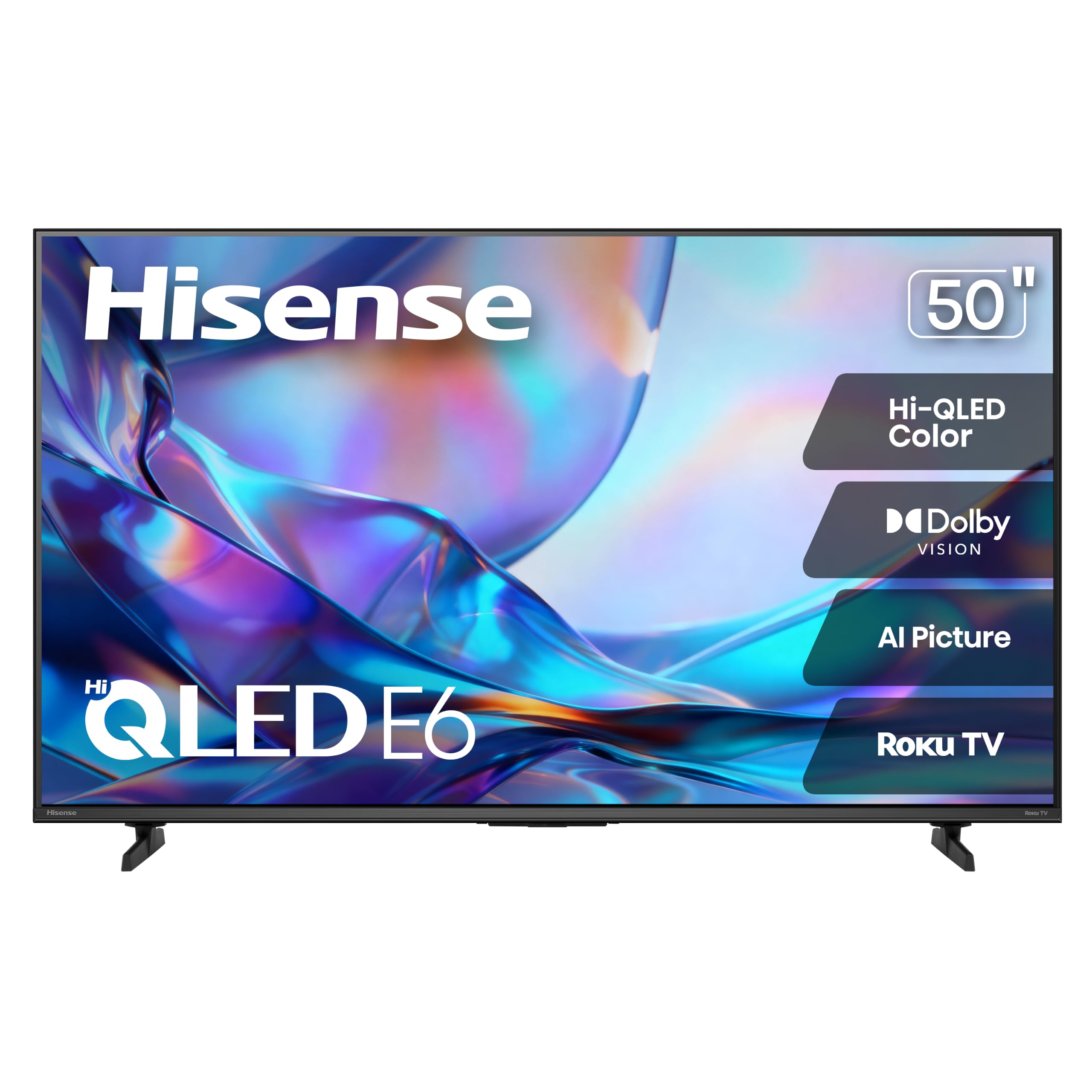
2. Hisense 50″ Class E6SR Series Hi-QLED 4K UHD Smart Roku TV
A Roku TV that is signed in and streaming minutes from the start.
Setup is the headline here. Owners describe it as ready to use right from the start, and that is the whole point of a Roku TV — you sign in, the home screen fills with your apps, and you are done. The panel is Hi-QLED, which adds a quantum-dot layer for more saturated, truer colour than a plain LED, backed by Dolby Vision HDR so bright highlights and deep shadows both survive the grade.
What wins people over beyond the colour is the feature spread at this level. An AI 4K upscaler lifts older content toward 4K, DTS Virtual:X expands the built-in speakers into something closer to surround, and HDR10 and HLG support cover the broadcast and streaming formats most services actually use. Apple AirPlay and Apple Home let you throw video from an iPhone or control the set from your smart home with no extra box.
For gamers there is Game Mode Plus with VRR and ALLM (auto low latency mode, which flips the TV into its fastest setting the moment a console wakes). The honest catch is long-term reliability: that is the one split note in owner feedback, with most sets running fine and a small number failing early. Treat this as a bedroom or second-room set where a warranty is easy to use, and it is a smart buy.
Colour and sound together: Hi-QLED colour plus DTS Virtual:X means you can skip a soundbar in a smaller room and still hear dialogue clearly.
The one thing to weigh: reliability divides opinion, so buy it where returns are simple.
Reach for this if: you want Roku, Dolby Vision and AirPlay for a bedroom without spending Mini LED money.
Think twice if: this is the family’s only TV — the split reliability feedback makes a low-stress return policy worth having.
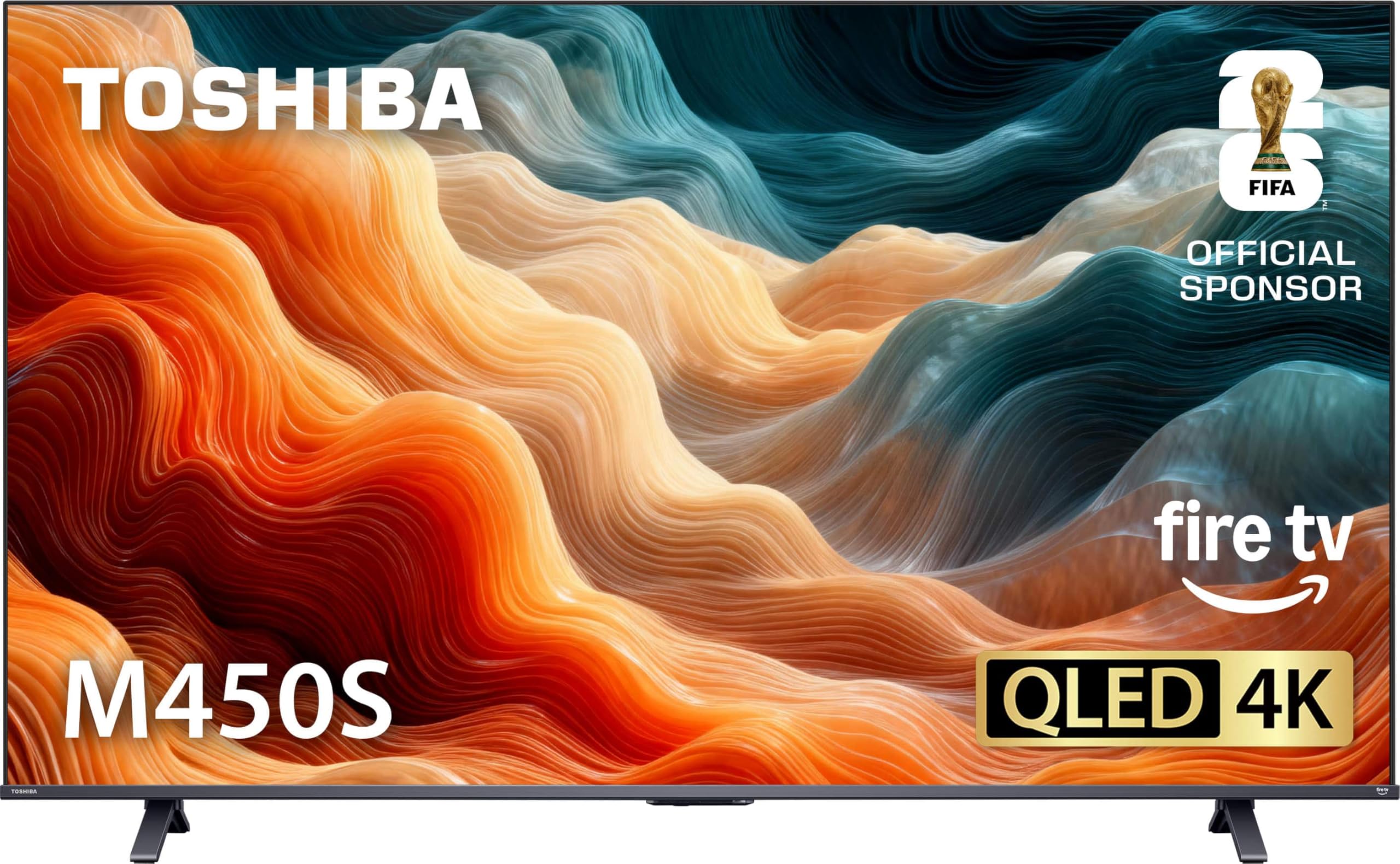
3. TOSHIBA 50″ Class M450 Series QLED 4K UHD Smart Fire TV
QLED colour, Dolby Vision and Alexa voice search at an entry-level price.
A QLED panel and Dolby Vision in the same set is the value story here, and it lands: value for money is the aspect owners call out most, with several saying they would buy it again. The 50-inch QLED screen layers quantum dots over the backlight for richer colour, and the REGZA Engine ZR processor runs AI upscaling to bring lower-resolution shows closer to 4K while cutting noise.
Fire TV is the part you will touch every day. Press and ask Alexa to find a show, change the volume or check a score, and the interface picks up where you left off rather than making you scroll. Dolby Vision (an HDR format that adds detail to bright and dark scenes) and Dolby Atmos (an audio format that spreads sound around the room) pair up for HDR images with expanded audio. Game Mode brings ALLM (auto low latency mode, so the set switches to its fast gaming picture when a console turns on), VRR (variable refresh rate, which smooths out frame-rate changes) and eARC (a single cable that passes high-quality audio out to a soundbar). HDR10+ Adaptive adjusts brightness and contrast scene by scene as the light in your room shifts.
At 60Hz this is not the panel for a competitive gamer, and the mixed notes on the smart interface and built-in sound reflect what you trade for the price. Setup, though, is quick, and the 43.7-inch width is a straightforward fit for a standard console. It is a sensible first 4K TV for a spare room, a kitchen or a flat where one set does everything.
Why the price feels fair: QLED colour, Dolby Vision and Dolby Atmos are not usually bundled into the same entry-level set, and the 60Hz panel is the compromise that makes that possible.
Great for: a spare room or first 4K set where QLED colour and Alexa voice search do the heavy lifting.
Step up if: you game competitively — the 60Hz panel will not keep up with a 144Hz screen.
4. VIZIO 50 Inch 4K Smart TV, V-Series UHD LED HDR

The cord-cutter’s set — free channels built in, no subscription required.
Cut the cord and this set keeps the screen busy. VIZIO’s SmartCast home screen pulls together your paid apps alongside free streaming channels — movies, TV shows and news with no fees and no login — so there is always something on without adding another subscription. Inside, the IQ Active processor does the 4K upscaling of HD content, and Active Pixel Tuning adjusts brightness at the pixel level to sharpen contrast and colour accuracy.
The V-Gaming Engine drops input lag for Xbox and PlayStation with auto game mode, and a 200K:1 contrast ratio gives dark scenes more weight than a basic LED. Apple AirPlay and Chromecast are built in, so a phone or laptop can throw video and photos to the screen in seconds. What owners praise most is straightforward: the set feels well made for what it asks.
The trade-off to understand is that reliability is the weakest part of this set’s record, and sound is a recurring complaint — the volume spikes when you change channels. Pair it with a soundbar and buy it from a seller with an easy return path, and it works fine as a second TV or a bar-room screen.
What makes it useful
- Free streaming channels with no fees or logins keep the screen busy for cord-cutters.
- 200K:1 contrast ratio gives dark scenes more depth than a basic LED panel.
- V-Gaming Engine with auto game mode reduces input lag on Xbox and PlayStation.
- AirPlay and Chromecast built in for casting from Apple and Android devices.
Plan for these
- Built-in sound is the weakest link — budget for a soundbar.
- Reliability is the most-discussed negative in feedback, so keep the receipt handy.
- The interface can need a reboot when it freezes.
Pick it for: a cord-cutter’s spare-room set where free channels and casting matter more than HDR muscle.
Skip the built-in speakers: add a soundbar and this becomes a much easier set to live with.
5. Westinghouse Roku 50 Inch Smart TV, Mini LED QLED 4K UHD

Mini LED backlighting on a budget badge — the picture outruns the nameplate.
Mini LED backlighting is normally a premium feature, and here it arrives under a familiar budget brand. Thousands of tiny LEDs dim and brighten in local zones for sharper contrast, less light bleed around bright objects and more believable detail in dark scenes. On top of that, QLED Quantum Dot colour reaches up to 93% of the DCI-P3 colour range (the industry’s reference palette for film), so hues sit closer to what the director graded.
The rest is sorted for a living room. Dolby Vision, HDR10 and HLG cover the main HDR formats, MEMC motion smoothing cuts blur in sport and action, and the panel runs at 3840×2160 4K resolution. Four HDMI 2.1 ports — including eARC for passing high-bandwidth audio like Dolby Atmos to a soundbar — plus USB, Ethernet and optical give you room to plug in everything at once. Roku brings 350+ free live channels and the big apps, with Apple HomeKit and AirPlay 2 for casting.
What people rave about is simply the picture: owners describe it as beautiful, and that praise is unanimous among those who have written in. The catch is that this model has far less owner history behind it than the bigger names here, and value opinions are split — a few would not buy it again. It is the pick for someone who wants the Mini LED look without paying Mini LED money and is comfortable being an early adopter.
The stand-out spec: up to 93% DCI-P3 coverage plus local dimming is a rare pairing at the budget end, and the 3840×2160 resolution is genuine 4K rather than an upscaled label.
What to know first: the owner history here is thin compared with the Samsung and TCL picks, so weigh that alongside the picture.
Worth it for: buyers who want Mini LED contrast and four HDMI 2.1 ports without stepping up to a premium badge.
Hold off if: you want years of owner feedback before you commit — the bigger names here have far more of it.
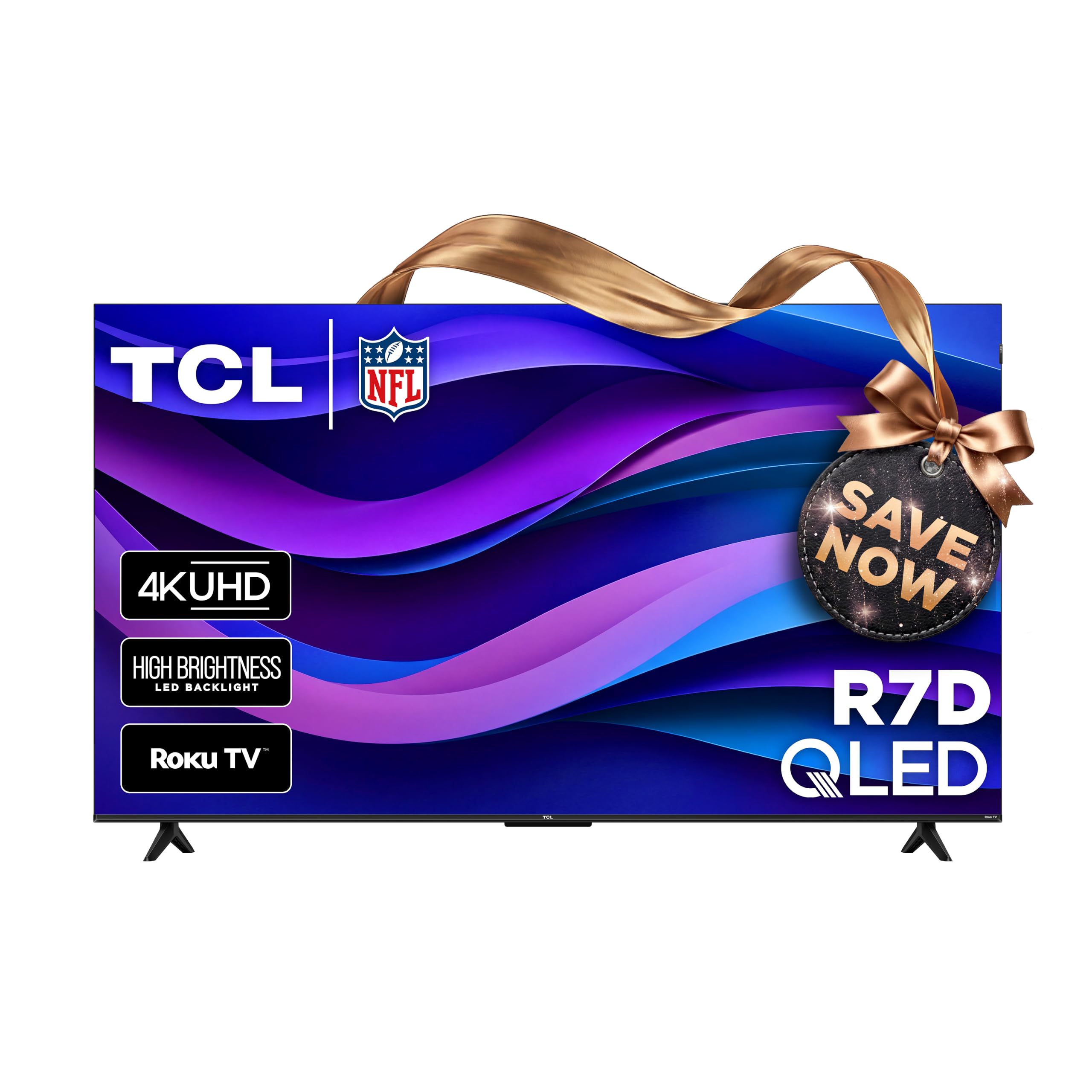
6. TCL 50″ R7D 4K QLED Roku TV
A slim metal frame that disappears, leaving only the film.
This is the set you buy when the TV has to look good switched off. The FullView bezel-less design runs a slim metal frame nearly edge to edge, so the screen reads as the centrepiece of the room rather than a plastic box on a stand. Behind the glass sits a true 4K UHD panel at 3840×2160 with Open HDR, HDR10, HDR10+ and HLG support, which covers the HDR formats the big streaming services actually deliver.
Motion is the second strength. Motion Rate 240 with MEMC reduces blur and judder during fast sport, action films and games, so the picture holds sharp when things move quickly. Roku does the streaming with live local news, sports and thousands of free and paid channels on one home screen, no extra box needed. Alexa, Google Home and Apple HomeKit compatibility, plus Google Cast and AirPlay 2, cover voice control and phone casting from either camp.
Gaming gets ALLM, which switches to game mode the moment a console powers on, cutting input lag without you digging through menus. Three HDMI inputs including ARC/eARC, a USB port and optical audio let a soundbar, console and streaming stick coexist. The honest note is reliability: it is the split topic in owner feedback, so buy with a return option in reach.
The design and motion case
- Bezel-less metal frame keeps the focus on the picture, not the chassis.
- Motion Rate 240 with MEMC keeps sport and action sharp when the scene moves fast.
- HDR10, HDR10+ and HLG support covers the formats the main streaming apps use.
- ALLM switches to game mode automatically when a console turns on.
Before you commit
- 60Hz panel is not built for high-frame-rate competitive gaming.
- Reliability feedback is split, so a simple return path matters.
- Remote issues come up in a handful of accounts.
Made for: film nights in a room where the TV is on display all day.
Not the one for: high-frame-rate gamers who need 144Hz — the E7 Cinema two spots down covers that.
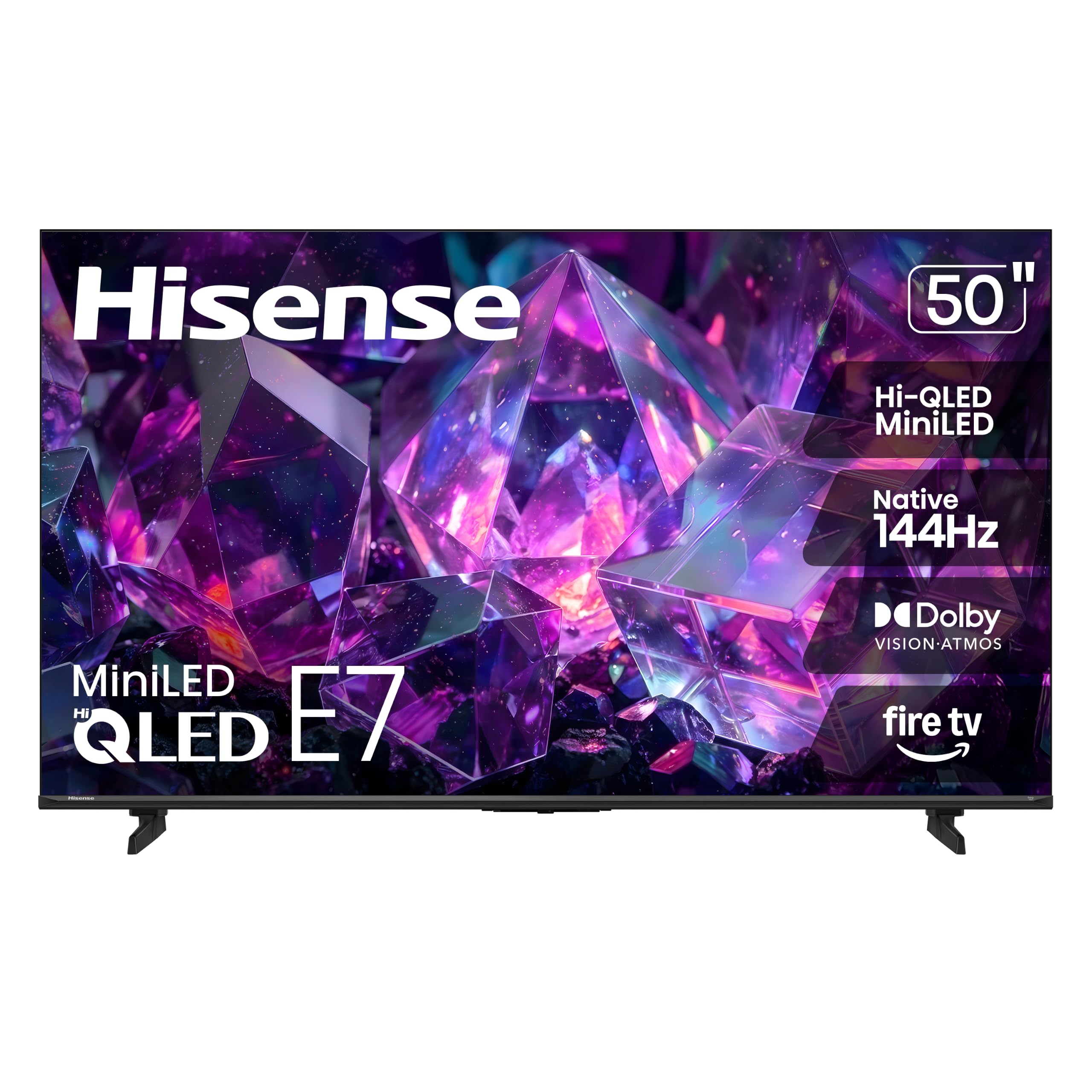
7. Hisense 50″ E7 Cinema Series Hi-QLED Mini-LED 4K Smart Fire TV
A native 144Hz Mini LED panel with a Filmmaker Mode that respects the director.
Native 144Hz is the number that separates this from most 50-inch sets. It redraws the picture up to 144 times a second and pairs with AI Smooth Motion with MEMC to keep fast pans and live sport sharp, so watching a Premier League counter-attack does not turn into a smear. Behind the panel, Mini LED backlighting uses thousands of precise light zones so dark scenes keep depth and highlights stay bright whether you watch at noon or midnight.
HDR support is unusually complete for the tier: Dolby Vision IQ, HDR10+ Adaptive, HDR10 and HLG (four HDR formats that each add detail to bright and dark scenes) are all covered, and the set adjusts brightness to the room through an AI light sensor so you are not squinting at night. Dolby Atmos expands the audio to fill the room, while Filmmaker Mode locks the original aspect ratio, colour, frame rate and sound so a movie looks the way it was graded. An AI Sports Mode recognises a match and boosts motion, detail and crowd sound without you touching a setting.
Picture and colour are the aspects buyers raise most, with deep blacks getting their own call-out. The trade-off is reliability: the feedback is split, with some sets running without issue and others stopping unexpectedly. Buy it as a cinema-first set for films and sport in a dark room, keep the receipt, and it delivers a picture well above its price band.
Why film fans should look here: Filmmaker Mode plus Dolby Vision IQ and HDR10+ Adaptive means the set respects the original grade instead of over-processing it.
The deciding spec: native 144Hz at this size is rare, and it is what makes sport and gaming feel fluid rather than laggy.
The catch: reliability feedback splits, so an easy return path is worth keeping.
Ideal for: the film fan who wants Filmmaker Mode, Dolby Vision IQ and deep blacks in a dark room.
Weigh the risk if: this is a long-term family TV — the split reliability record is the one thing to accept going in.
8. TCL 50 Inch QM6K Series QLED Mini LED 4K HDR Smart Google TV
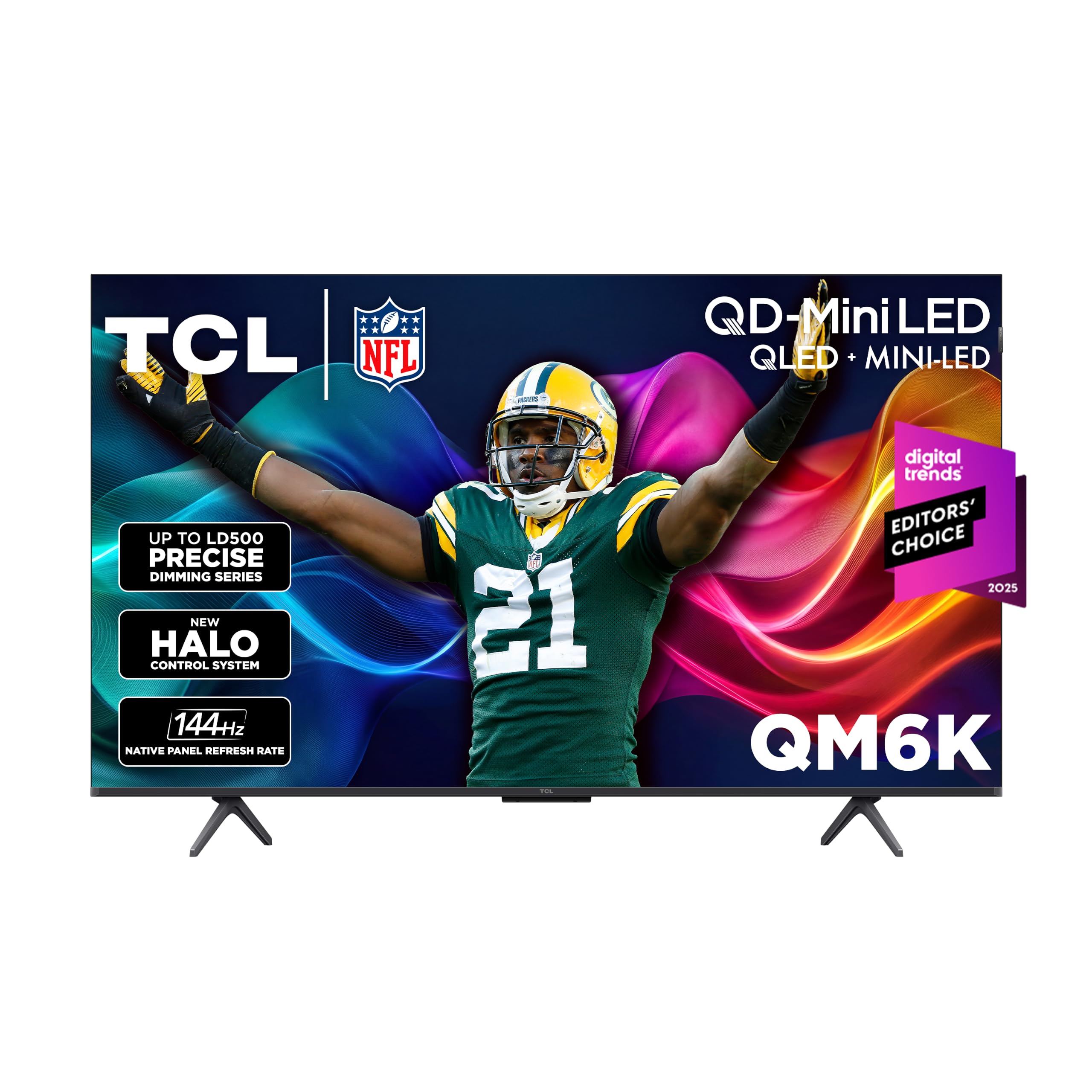
Mini LED contrast and 144Hz motion at a price that undercuts both.
This is the pick that makes the premium brands nervous. QD-Mini LED backlighting with TCL’s Halo Control System delivers the deep blacks, vivid colour and strong brightness that normally carry a much higher tag. Brightness is one of the traits owners praise most — the panel holds up against overhead light and direct sunlight, and glare stays minimal in a bright room. If your living room has a window behind the sofa, this is a genuinely strong option.
Gaming gets 144Hz refresh, which is the smoothness that separates a fluid shooter from a jittery one. Google TV with Gemini replaces endless scrolling with a chat box: ask for a genre or a mood and it pulls up something tailored to you. The panel supports HDR10, and setup is quick enough that several owners mention getting to a picture in minutes. Three HDMI inputs, USB and Wi-Fi cover consoles, soundbars and streaming sticks.
The one thing to plan for is reliability: it is the most-discussed mixed topic here, with some sets running flawlessly and others turning themselves off. That is the trade for this much panel at this price. Buy from a seller with a simple return window and it stacks up as the best value in the whole list.
Where it punches above its class
- QD-Mini LED backlighting with local dimming for deep blacks and bright highlights.
- Brightness holds up against overhead light and sun with minimal glare.
- 144Hz refresh keeps fast games and sport fluid rather than blurry.
- Google TV with Gemini turns a chat prompt into a recommendation.
The honest caveats
- Reliability feedback is split — a handful report unexpected shutdowns.
- Sound is serviceable rather than cinematic; a soundbar helps.
- Google TV’s layout takes a little getting used to.
Top of the value stack: this is the pick that delivers Mini LED contrast and 144Hz for the least money in the list.
The one hesitation: mixed reliability reports mean you should confirm the return window before it ships.
9. Samsung 50-Inch Class QN70H Series Neo QLED Mini LED 4K Smart TV
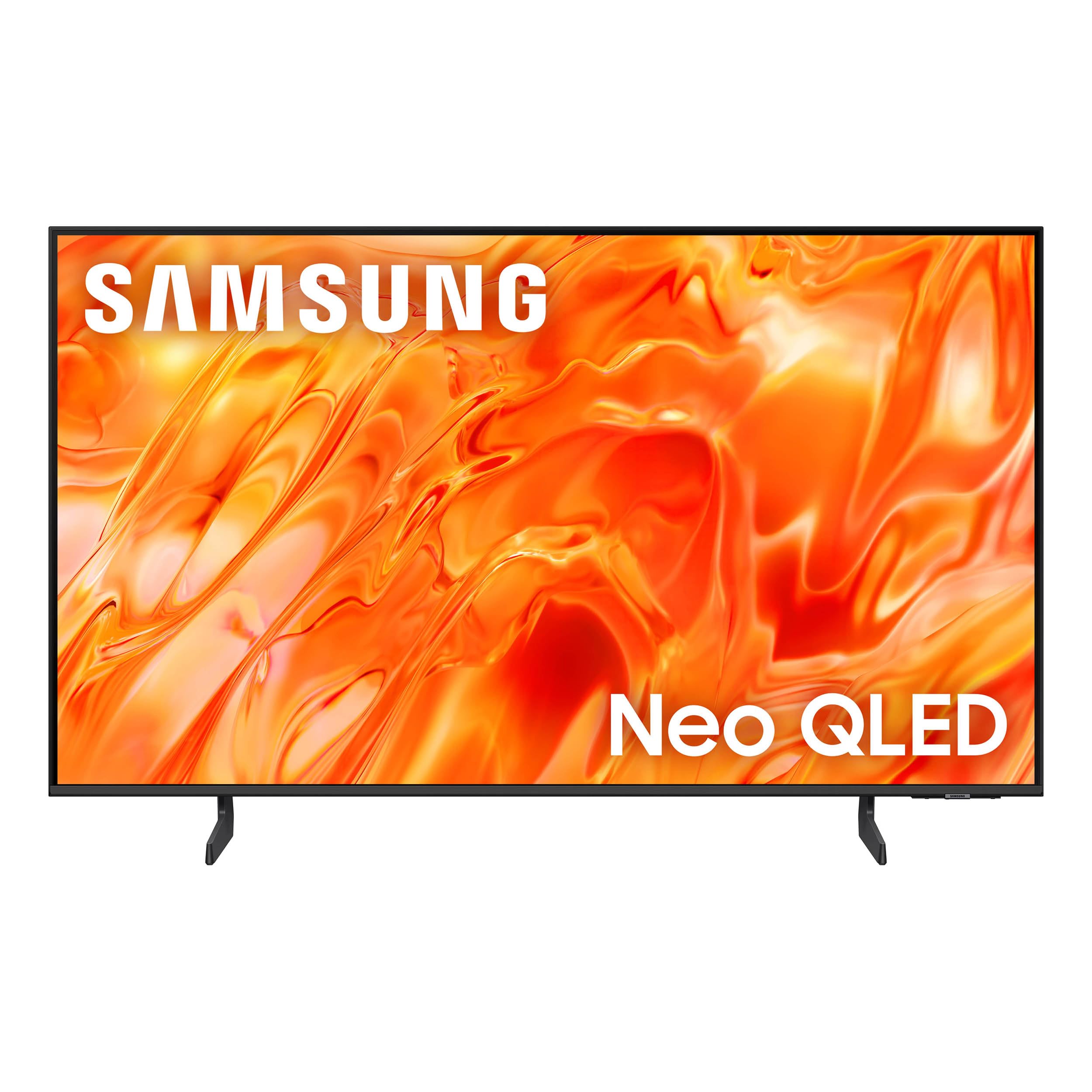
Quantum dots that keep every shade accurate at any brightness level.
Colour is where this earns its keep. Samsung’s 100% Color Volume with Quantum Dot uses nano-sized particles — dots measured in nanometres — to display the full colour spectrum across billions of shades, and crucially at any brightness level. That means a bright sunset keeps its orange instead of bleaching to yellow the moment the panel gets loud. Quantum Mini LED backlighting tightens contrast at the same time so dark drama scenes keep their detail.
The NQ4 AI Processor handles 4K upscaling regardless of source resolution, so an old broadcast or a 1080p stream arrives looking closer to native. Colour Booster Pro leans on AI to shift hues in real time for a richer, more lifelike image. Setup is quick and the built-in Bluetooth 5.3, HDMI, USB and Wi-Fi all cover the usual soundbar and console connections. It sips power at 188 kWh annual consumption, which is a modest figure for a Mini LED panel.
The friction is on the software side. Usability is mixed — some find the menu easy, others wrestle with navigating the options — and the remote is the most-criticised single item in the feedback. If you mainly stream through a separate box or a console, that noise fades quickly. The panel itself is the reason to buy.
The spec that matters: 100% Color Volume means brightness no longer washes out colour, which is what separates quantum dot panels from a plain LED.
What owners notice: picture quality and value both come up positive — the friction is with the remote and the menus.
The right call for: someone who wants colour accuracy and deep blacks above all else and streams through a stick or console.
Second-guess it if: you use the TV’s built-in apps daily — the remote and menus are the weakest part.
Know the Specs
Mini LED backlighting versus standard LED
A standard LED TV has a row of lights across the back of the panel, so a bright object on a dark scene tends to bleed a halo of light around it. Mini LED packs thousands of much smaller LEDs behind the screen and dims them in zones. Dark skies stay dark, bright highlights stay clean, and the picture reads deeper. If you watch a lot of films with night scenes or sport under stadium lights, this is the spec that decides how happy you are.
Refresh rate and VRR for motion
Refresh rate is how many times per second the screen redraws, measured in hertz. A 60Hz panel redraws 60 times a second; a 144Hz panel redraws 144 times, which softens fast pans and quick camera moves. VRR (variable refresh rate) syncs that redraw to whatever your console sends so the picture stops tearing. ALLM (auto low latency mode) is the companion feature: it flips the set into its fastest gaming picture the moment the console wakes, without you digging through menus.
HDR formats and why the acronyms matter
HDR (high dynamic range) tells the TV what brightness and colour to show in any given scene. Dolby Vision carries scene-by-scene instructions; HDR10 and HLG are the more widely broadcast formats; HDR10+ Adaptive adjusts brightness to the room. The more formats a set supports, the fewer times you will see a washed-out or crushed picture when you switch apps. Dolby Vision IQ and Filmmaker Mode go a step further and lock the picture to the director’s intent.
Smart platforms and voice control
Roku, Fire TV, Google TV and Samsung’s own system are the four you will meet here. They all run the major apps, but they differ in how loud the recommendations are, how reliable voice search is and how often the layout changes. Google TV with Gemini lets you describe what you want in chat terms; Fire TV leans on Alexa; Roku keeps the home screen simple and app-forward. Stick with the platform you already use daily — its layout is what you will navigate for years.
Common Questions
Is a 50-inch TV big enough for a living room?
What is the difference between Mini LED and regular LED?
Do I need a 144Hz TV for gaming?
Which HDR format should I look for — Dolby Vision or HDR10+?
Will a 50-inch TV fit on a standard media console?
Do I need a soundbar with a 50-inch TV?
Is Roku, Fire TV or Google TV better?
How much should I worry about TV reliability?
Can I use a 50-inch TV as a monitor for work?
The Bottom Line
If your room gets daylight and you refuse to watch your own reflection, the Samsung QN90F is the best overall TV 50 inches buyers can put on a bright wall — matte anti-glare, 128 neural networks behind the upscaling (so lower-resolution shows look sharper), and up to 4K 165Hz for gaming (a fast refresh rate that keeps fast motion smooth). If you want the best picture per dollar, the TCL QM6K undercuts it with QD-Mini LED (quantum-dot colour plus zone-based backlighting) and 144Hz and holds up against overhead light. And for a spare room where the set just has to stream, the Toshiba M450 brings QLED colour and Dolby Vision to a first 4K setup.
Honest nudge: every pick here earns positive feedback on picture and setup — the variable is how much owner history sits behind it. The Samsung QN90F and the TCL QM6K carry the most of it, and that is why they hold the top of this list.
How we choose
We do not accept paid placement. Every pick is matched to a real buyer and a real use-case; we do not hands-on test units.
Sources
Specifications: manufacturer listings and product documentation. Review insights: verified customer reviews, as of November 2026. Pricing: not shown on this page (it changes often); check the current price via the retailer link.
As an Amazon Associate, Tactical Gear Guy earns from qualifying purchases. This does not affect which products we feature.