Specs are compiled from manufacturer listings and verified buyer reviews and can change over time — please confirm the key details on the product page before buying.
The short answer: your car stereo either takes Bluetooth music over its USB port or only through the round 3.5mm aux jack, and that decides which adapter you buy. Pick the wrong one and the adapter never streams. One note on this list: the picks below are matched by function for USB-powered and USB-connection car audio, so not every one is the exact part number you searched for. Each is a same-type device that does the same job, and every one is a genuine Bluetooth audio receiver, not a transmitter-only gadget.
This guide is built by comparing the manufacturers’ published specifications and the patterns across verified customer reviews, so you get each pick’s real strengths and trade-offs instead of marketing spin.
Below, we cover what separates a clean-streaming unit from a hiss-and-drop headache, then rank nine real options by the job they do best. This breakdown of the usb bluetooth audio receiver for car covers vehicle-specific models, jack-based kits, and the trade-offs behind each one.
Top Picks


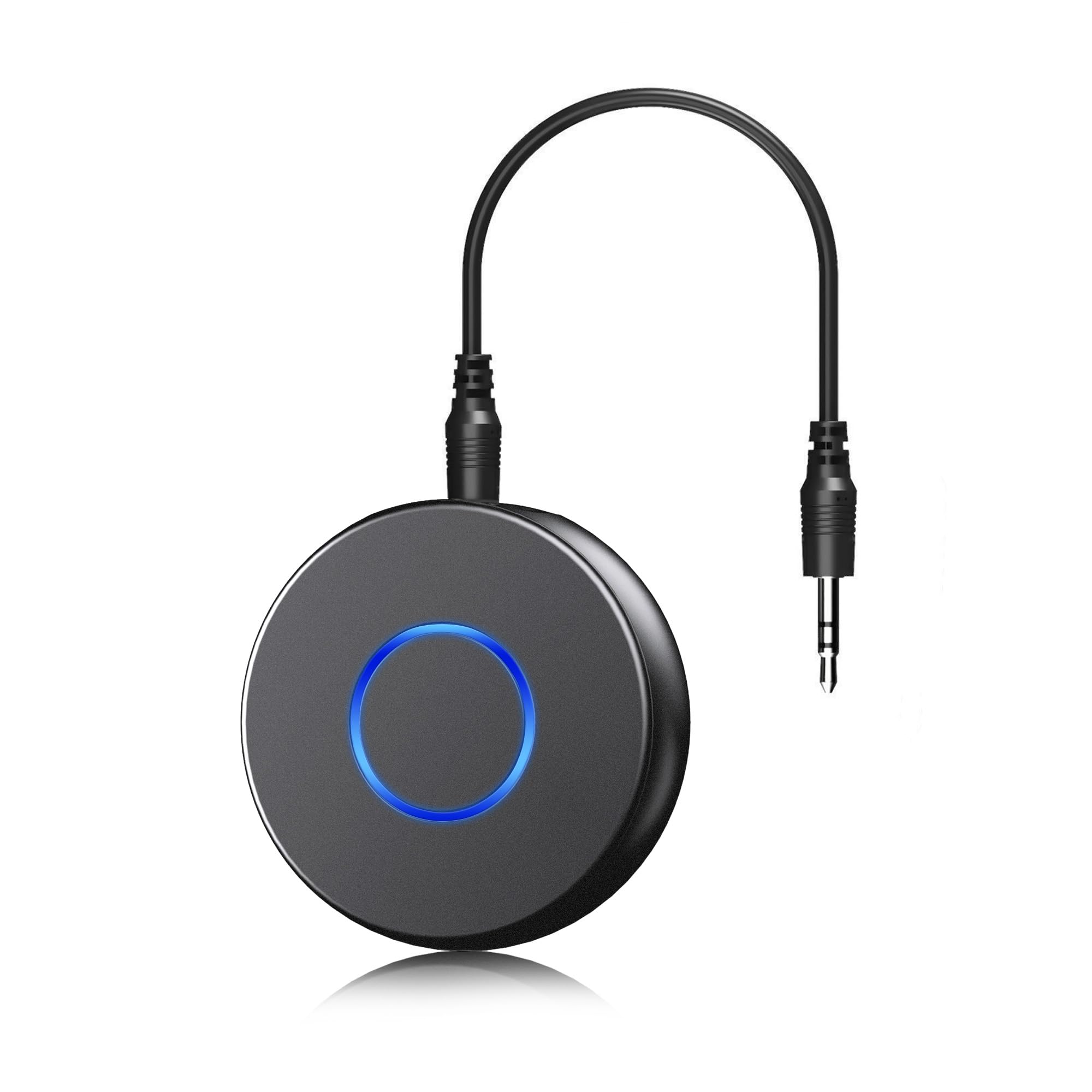
How To Choose The Best USB Bluetooth Audio Receiver for Car
The first decision is not brand or price — it is the plug. A USB receiver pushes audio into your head unit through the car’s USB socket, while an aux receiver sends audio into the round 3.5mm jack. Some cars accept music over USB and some flatly refuse it, so check your owner’s manual or test a USB stick with music on it first. If your stereo only plays from the aux jack, choose a jack-based receiver and power it from USB.
Vehicle compatibility lists are the real filter
Several picks here are built for specific makes and model years — Infiniti G37, Nissan Altima, a long list of Mazda models, and more. Read the year range carefully, because a 2013 unit and a 2014 unit can live on different head units. Trim exceptions matter too; one Mazda pick here explicitly does not fit Bose systems on certain models. If your car is not named, a generic aux receiver is the safer bet.
Bluetooth version versus real-world connection quality
A newer Bluetooth chip number looks good on the box, but behind the wheel what counts is whether the phone reconnects on its own when you start the engine. Auto-pairing is the feature to hunt for. Range matters little for a receiver sitting inches from your phone, but it counts if you leave the phone in a bag in the back seat.
Calls, music, or both
Some receivers stream music only, and that is not a fault — it is a design choice for cars that already handle phone calls through their own Bluetooth. Those units let you pair the car for calls and the receiver for music at the same time. If your stereo has no calling ability at all, pick a receiver with a built-in microphone and hands-free buttons.
Noise, hiss, and the ground loop problem
A faint buzzing that rises and falls with the engine is a ground loop, caused when the audio source and the speakers share a power source. The fix is a noise isolator, and a couple of picks here either include one or are praised for filtering it out. If you have ever plugged a phone into a car aux jack and heard a whine, you already know exactly what this sounds like.
Side-by-Side Comparison
| Model | Best For | Connection | Bluetooth Version | Call Support | Amazon |
|---|---|---|---|---|---|
| Gitank USB Bluetooth 5.3 Adapter★ Best Overall | Infiniti and Nissan owners | USB Type A | 5.3 | Music only | Amazon |
| JOYROOM Bluetooth 6.0 AUX AdapterCrowd Favorite | Hands-free calls on the road | 3.5mm AUX + USB power | 6.0 | Dual mics | Amazon |
| SONRU Bluetooth Aux AdapterLongest Runtime | Long battery, home or car | 3.5mm AUX | 5.0 | Built-in mic | Amazon |
| BESIGN BK01 Car Kit | Buzzing-noise cleanup | 3.5mm AUX + USB power | 5.3 | Built-in mic | Amazon |
| Yomikoo Mazda Bluetooth Receiver | Older Mazda stereos | USB + AUX | 5.0 | Clip-on mic | Amazon |
| QOFOWIN Mini 2-in-1 Receiver | Pocket-sized travel use | USB + 3.5mm AUX | 5.4 | Not supported | Amazon |
| QOFOWIN USB to Bluetooth H222 | Speakers and home stereo | USB | 5.3 | Not supported | Amazon |
| Wodgreat 2-in-1 Transmitter Receiver | TV and headphone use too | 3.5mm AUX + USB power | 5.0 | Not supported | Amazon |
Detailed Reviews
1. USB Bluetooth 5.3 Car Adapter
Our pick — 4.5+★ from 150+ verified ratings; the strongest balance of quality and price.
A factory-fit USB stick that turns an older Infiniti or Nissan stereo into a wireless music player.
If you drive a G37 or an Altima with a USB socket but no Bluetooth music, this is the shortest path to streaming. The Gitank 300A plugs straight into that USB connector, then pairs with your phone so the car plays your music through its own head unit. The crowd backing it is small but happy — 4.5+ stars across 150+ ratings — and it holds the top spot here on score alone.
What wins people over is simple: it just works. Owners flock to it for function above all, and long lists of G37, Q50, and Pathfinder drivers confirm the fit. Sound quality draws real praise, and phones are typically discovered the moment you switch the ignition on. The steering-wheel and multimedia buttons still skip tracks, so your hands never leave the wheel. Song titles and artist names show on the in-car screen for Spotify, Pandora, and Apple Music, though playlists themselves stay hidden.
The trade-off is its narrow job. This unit streams music and nothing else — no phone calls through the adapter. The workaround baked into the design is to pair your car’s own Bluetooth for calls and this adapter for music at the same time. It is also built for a specific vehicle list rather than every car on the road, and it will not serve a home stereo. If your car is not on that roster, look at a jack-based kit instead.
What earns the top slot
- Keeps factory steering-wheel and dashboard buttons controlling your tracks
- Shows song and artist info on the in-car display for the major streaming apps
- Plug-in, pair, play setup with no app to download
- Covered by a 1-year warranty from the maker
Where it stops short
- Music streaming only — no hands-free calling through the unit
- Works only with the listed Infiniti and Nissan models and years
- Not intended for home stereos
Reach for this if: you own one of the listed Infiniti or Nissan vehicles and want wireless music without losing your steering-wheel buttons.
Look elsewhere if: you need hands-free calls through the adapter itself — a dual-mic kit will serve you better.
2. JOYROOM Bluetooth 6.0 AUX Car Adapter
The jack-based workhorse that brings calls and music to any car with a round aux socket.
Here is the reach gap that matters. The JOYROOM holds a working distance of up to 100FT, while the Wodgreat 2-in-1 below tops out at 33 ft — the JOYROOM stretches roughly three times further. In practice that means your phone can stay in a bag on the back seat and the music keeps playing. It sits at 4.0+ stars from 3,500+ buyers, the deepest review base on this list.
Plug it into the 3.5mm aux jack, power it over USB, and the car’s stereo becomes wireless. Start the engine and it pairs your phone on its own, and it can hold two devices at once. The independent button handles play, pause, volume, and call control without you hunting through a menu, and the LED lights make those buttons findable after dark. Its CVC8.0 noise filtering and built-in filter chip are there to cut road noise and current hum on calls.
Be honest about the audio ceiling. Music and call quality split opinion — plenty of drivers find it clear, and a share report the bass getting muddy at higher volume. It is a -class adapter, so treat it as a clean convenience upgrade rather than a sound-system rebuild. Physical fit is a non-issue since it lives in the aux jack and draws power from USB.
The call-side detail: two microphones capture your voice from 360 degrees, which is why hands-free conversation holds up better here than on music-only pucks — you talk at the cabin, not at a single tiny hole.
Peace-of-mind extras: the unit carries FCC, CE, RoHS, and BQB certifications and adds built-in voltage, overcurrent, short-circuit, and overheating protection. Two adhesive patches come in the box for mounting.
The verdict: for most cars with an aux jack, this is the one to buy — calls, music, and auto-pairing in a single small plug.
One honest catch: if you chase deep, clean bass at loud volume, set expectations at convenience level.
3. SONRU Bluetooth Aux Adapter for Car, Wireless Audio Receiver
A rechargeable aux receiver that outlasts a full day of driving on one charge.
Twelve point eight hours of nonstop music streaming, radio, GPS, or hands-free calls, plus 250 hours of standby — that is the number that separates this one from the pack. It runs on its own internal battery instead of demanding a USB tether, which makes it as happy in a home stereo or with wired headphones as it is in the car. Reviewers back it heavily, and the compact footprint is a recurring reason people pick it.
Bluetooth 5.0 with A2DP, AVRCP, HSP, and HFP support keeps the connection steady, and two phones can be paired at once so you and a passenger can both take the aux stream. Answer, end, reject, and redial calls all happen on the adapter itself, and it handles GPS prompts and music over the same 3.5mm cable. The range is rated to 33 ft without obstacles.
The battery is the one place to think twice. Some buyers report it lasting a long while, while others find it stops taking a charge or drains quicker than expected. If yours lives permanently in a car, a USB-powered unit may suit you better. Otherwise, this is the pick for anyone who wants one adapter that moves between vehicles and the kitchen stereo.
Why drivers keep it
- 12.8 hours of streaming per charge and 250 hours standby
- Paired with two devices at the same time
- Built-in mic for hands-free calls and redial
- Works with older home systems and wired headphones, not just cars
Where the weak spot is
- Battery lifespan is the recurring gripe; a share stop taking a charge
- Needs recharging, unlike the USB-tethered kits on this list
Best matched to: the driver who moves the same adapter between a car, a garage stereo, and headphones.
Think twice if: you want a set-and-keep device in one vehicle — the recharge cycle will wear thin.
4. BESIGN BK01 Bluetooth Car Kit with Ground Loop Noise Filter
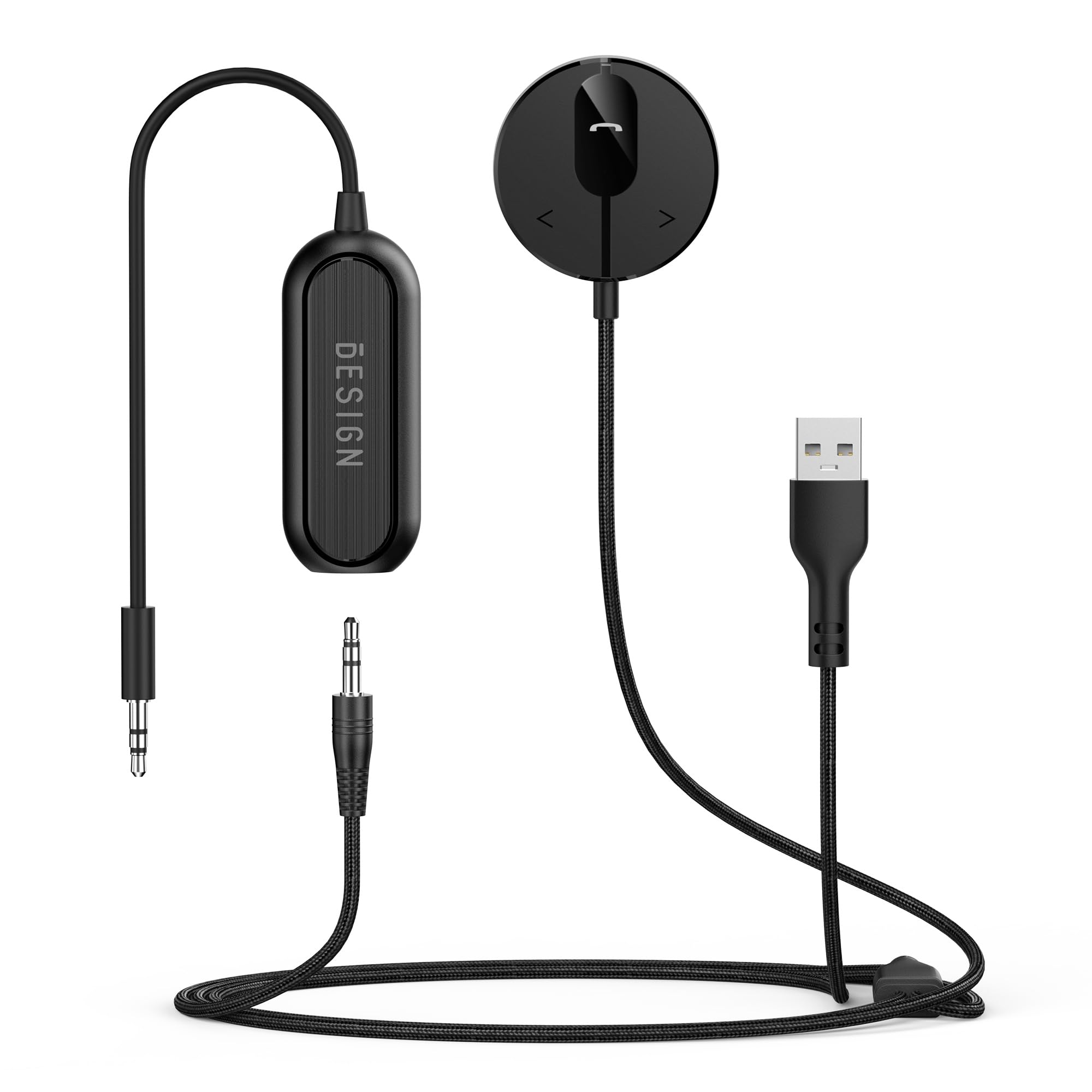
For anyone who already hears a buzz through the aux cable and wants it gone.
If your stereo whines with the engine, this kit was built for you. A ground loop noise isolator ships in the box, and the maker’s own framing is honest — in most cases the sound is already fine, and the isolator is there for when it is not. That single included part solves a problem several cheaper adapters leave you to sort out on your own.
Bluetooth 5.3 keeps power draw low and compatibility wide, so music and hands-free calls both run through your existing stereo speakers. The kit powers up the moment you start the car, then reconnects to the last phone — just make sure phone Bluetooth is on before you turn the key. Installation is a USB power plug and a 3.5mm aux plug, then a one-time pairing.
The honest pattern is uneven longevity. Many drivers report it working great for the long haul, while others had a unit give up after a couple of weeks. A share also note bass getting blown out on certain tracks. Buy it for the noise filter and easy setup, and keep a receipt in case you draw a short-lived unit.
Setup in plain words: two plugs, one pairing, done — the auto-on behaviour means you never reach for it again on a daily commute.
The realistic read: this is the best fit for a car with active engine whine and a driver who values that fix over absolute audio polish.
Worth choosing when: a rising buzz through your aux jack is the thing driving you to replace your current setup.
Skip past if: you want a long-term hands-off install and durabilty variance would bother you.
5. Yomikoo Car Stereo Bluetooth Receiver for Mazda
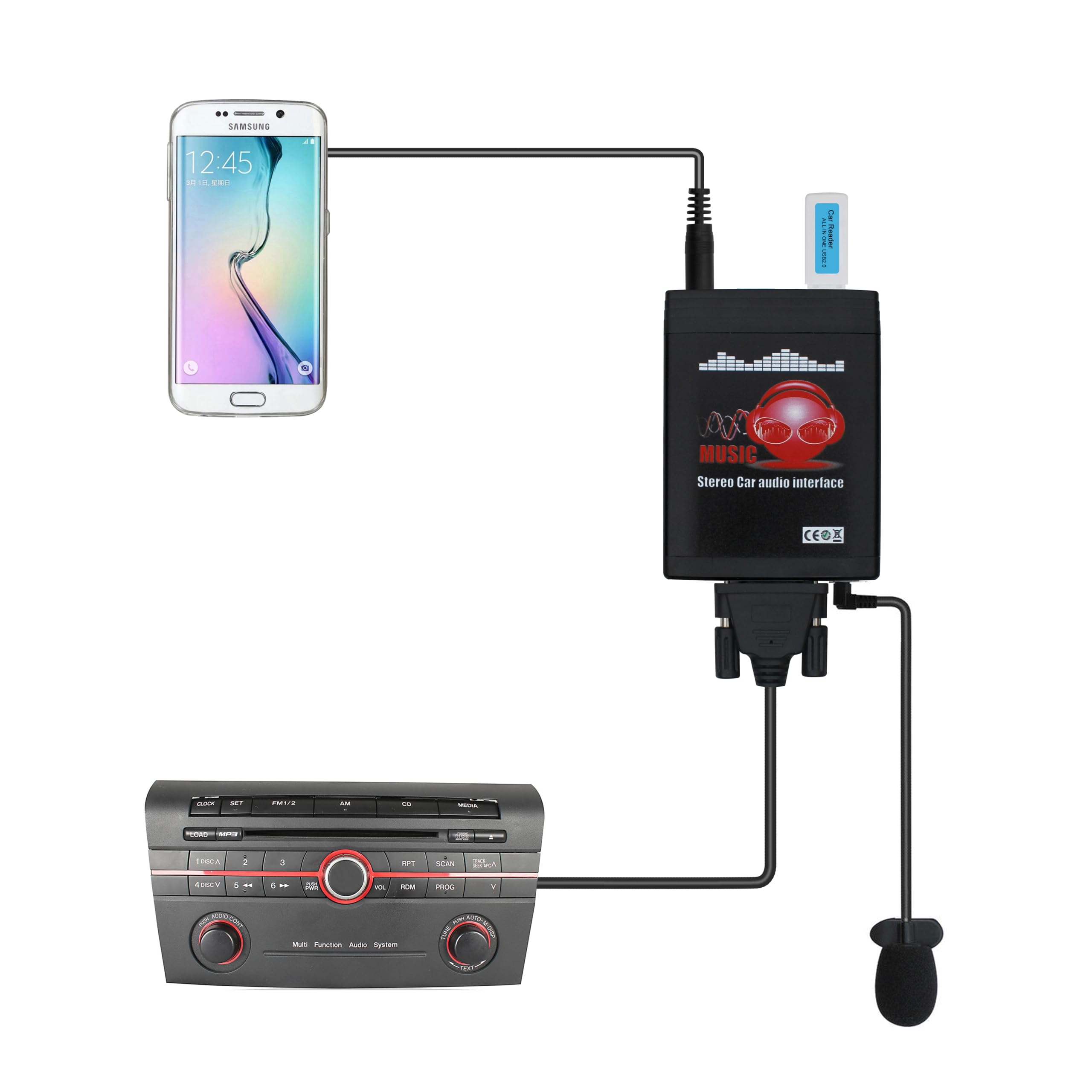
A Mazda-specific receiver with a clip-on mic for cars that never had Bluetooth at all.
Owners of a 2004–2008 Mazda 3 or a 2002–2008 Mazda 6 know the problem: no Bluetooth, no aux kit worth trusting, and a factory radio that fights back. This receiver targets that exact set of cars and adds Bluetooth 5.0 with a high-performance built-in mic on a clip. Both steering-wheel and radio-panel controls keep working, and the unit handles your calls.
Check your Mazda’s year before you buy, because the fit list is exact: Mazda 3 from 2004 to 2008, Mazda 5 from 2005 to 2009 without the entertainment system, Mazda 6 from 2002 to 2008, plus 323, B-Series Pickup, CX-7, MPV, MX-5, Protege, RX-8, and Tribute in their stated years. Two Bose-equipped models are excluded, so if your car has a Bose system, this adapter will not work. Certain Mazda2 and mid-2003-to-2005 Mazda 6 radios need a jumper or 0-ohm chip (a tiny zero-resistance part) soldered on the board at location L716. The RX-8 radio must run firmware v9.55 or later (the radio’s internal software version).
Installation scores well, and the quality of the piece is respected. Dependability is the split: some Mazdas work perfectly, others never connect at all. If your head unit falls in that incompatible pocket, this is not a fix. If it lands in the supported years, it is the most tailored Mazda option available.
The soldering asterisk: check your radio’s version and trim before buying — the jumper requirement on a few Mazda2 and Mazda 6 units is a real step, not a marketing note.
Sound verdict: the quality of the unit is what reviewers respect most, and the clip-on mic layout suits older cabins with no factory mic.
Fits best with: a Mazda whose year and radio version land squarely in that compatibility list.
Wrong tool if: you drive a Bose-equipped CX-7 or MX-5, or a Mazda outside those year windows.
6. QOFOWIN Mini 2-in-1 USB Bluetooth Receiver
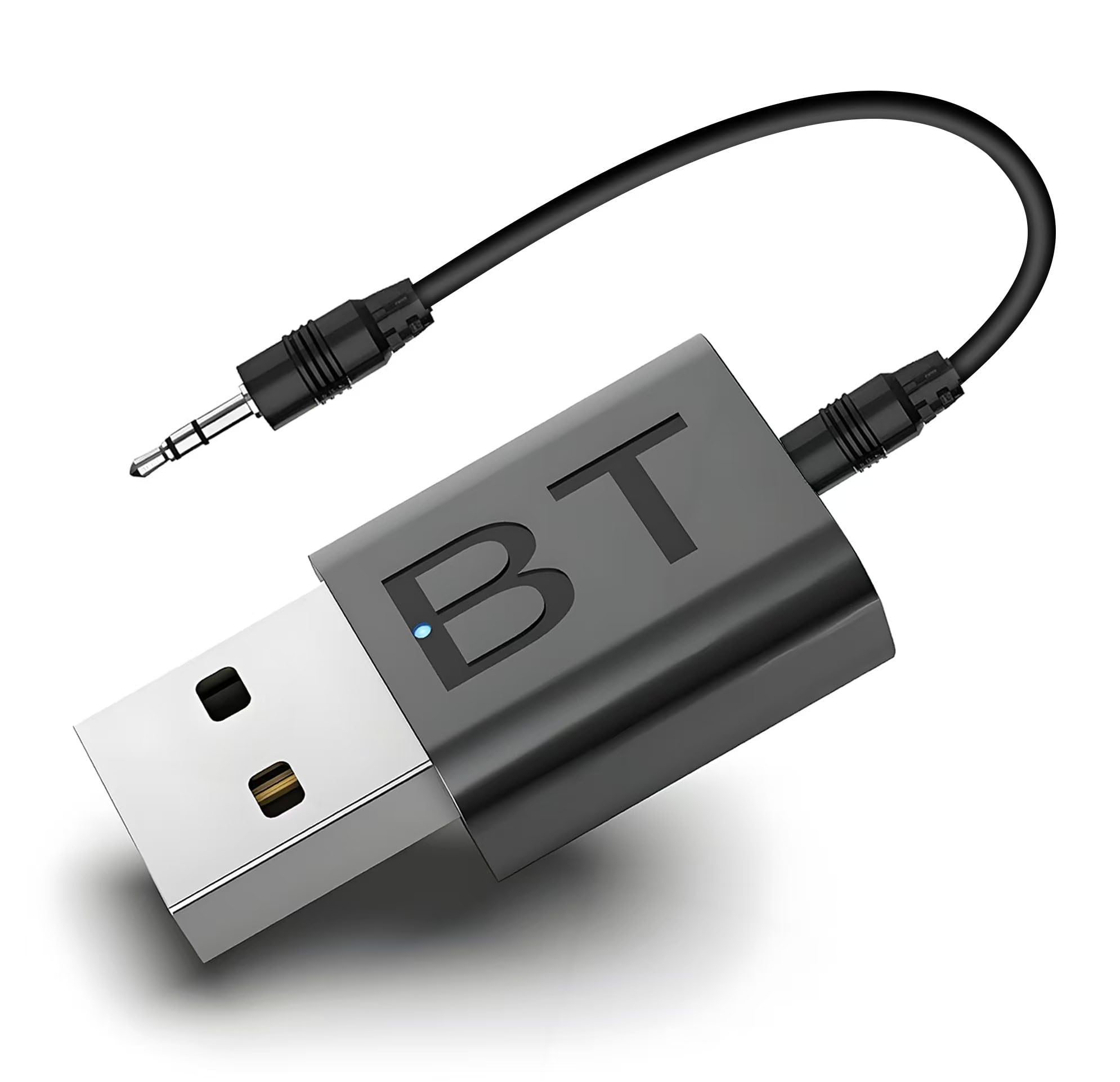
Two connection modes in one tiny adapter, for cars that refuse USB audio.
The QOFOWIN Mini reads a Bluetooth 5.4 chip and stretches its signal across 10m. It takes the 2-in-1 approach seriously: one adapter, two modes, so you can use USB playback where the car supports it or fall back to the aux input where it does not. That fallback matters because some head units simply will not accept Bluetooth audio over USB.
A2DP, AVRCP, AVDTP, HFP, and HSP support cover the main streaming profiles, and the unit advertises 2.4MHz at up to 100Mbps. It needs no app — plug it in and play from your phone. A supplied 3.5mm cable lets you route to a home theater, a speaker, a karaoke player, or a stage setup.
This is the lightest-reviewed option here, so treat the verdict as provisional rather than crowd-tested. The lack of a listed maker warranty is a real consideration if long-term backing matters to you. Its real strength is portability and flexibility — it slips into a pocket and works across several devices.
Very compact and versatile
- Bluetooth 5.4 with 10m range
- USB playback or aux input, whichever your car supports
- No app, just plug and play
- 3.5mm cable included for home gear too
Where to be careful
- Small review base — fewer real-world reports to lean on
- No stated manufacturer warranty
Best used as: a carry-everywhere adapter when you split your driving across several vehicles.
Hold off if: you want a proven long install and a written warranty behind it.
7. QOFOWIN USB to Bluetooth Adapter H222

Built for older speakers and home stereo gear first, the car second.
The H222 is a USB stick with a 3 Mbps transmission rate and a 10m reach, aimed at turning older speakers into wireless ones. Its own listing says it fits older speakers and 99% of cars — with the warning that some cars will not take Bluetooth audio over USB and need the aux input route instead. It pairs under the name “H222” and needs no app.
Bluetooth 5.3 with EDR and support for A2DP, AVRCP, AVDTP, HFP, and HSP rounds out the profile set. Setup is a plug and a pair, and the small plastic body is easy to move from the car to a home theater or karaoke setup.
Of every pick here, this one has the most divided record. Some drivers have it working great and starting instantly with the ignition, while others report it dropping out, stopping entirely, or refusing certain vehicles like the F150. Signal quality draws the sharpest notes, with audio that cuts and skips for a share of owners. Treat this as a flexible secondary adapter for older stereo gear rather than a long-term car install.
The honest framing: the wide device list — phones, laptops, tablets, TVs, speakers — is the real reason to consider it; a permanent car install is not its strength.
The check before you buy: confirm your head unit accepts USB audio input before committing, since the aux path is the fallback and not every car offers it.
Reach for it when: you want to make an older speaker or secondary stereo wireless for occasional use.
Leave it if: a stable daily car connection is what you need — the consistency gap here is real.
8. Wodgreat Bluetooth 5.0 Transmitter Receiver

A dual-mode puck that sends audio out of your TV and into your car, depending on the switch.
Two modes on one device. In TX mode it takes audio from a PC or TV and beams it to Bluetooth headphones. In RX mode it receives from your phone and pushes the music into a car or home stereo over the included 3.5mm cable, with USB power so it never runs flat mid-song. If you want one gadget for TV and car duty, this splits the job.
Bluetooth 5.0 with the maker’s smart chip sends a stable signal with a rated range of 33 ft unobstructed — noticeably shorter than the 100FT the JOYROOM claims. An LCD screen makes the working mode visible, and a simultaneous press of the two arrow buttons flips between TX and RX. The adapter weighs 5 g and travels in a pocket.
Read the fine print on modes. The USB Bluetooth side does not support hands-free calls, and the TX transmitter cannot pair with a mobile phone — those are hard limits, not bugs. It is the least-reviewed unit in this set, so weigh the specs and the two-year warranty rather than community consensus.
Two jobs, one device
- TX for TV and PC to headphones, RX for phone to car stereo
- LCD screen shows the active mode at a glance
- USB powered, so no battery to charge
- Two-year warranty included
Limits to plan around
- 33 ft range, shorter than several rivals on this list
- No hands-free calls through the adapter
- TX mode cannot pair with a phone
Choose it if: you want a swap-in adapter for late-night TV headphones and the car on weekends.
Pass on it if: your priority is maximum Bluetooth range or in-car call handling — both come up short here.
Know the Specs
USB Audio versus 3.5mm Aux Input
A USB receiver sends digital audio into your head unit through the car’s USB socket, so the stereo’s own controls and screen keep working. An aux receiver sends analog audio through the round 3.5mm jack, which nearly every older car has. Not all cars accept Bluetooth audio over USB, so check your manual or test a music-loaded USB stick before you buy a USB-only model.
Bluetooth Version Numbers
The version number (5.0, 5.3, 5.4, 6.0) mostly affects connection stability, power draw, and how quickly the pair reconnects. A higher number usually means a steadier link, but the chip implementation matters as much as the badge. For car use, auto-pairing on ignition is what you feel day to day — not the digit after “Bluetooth”.
Range In Real Terms
Rated range is measured without obstacles. One pick here claims up to 100FT and another 33 ft. Indoors, seats and metal block part of that range, so a rated 33 ft often translates to a comfortable cabin-distance connection while a 100FT unit tolerates a phone left in a bag or a passenger’s pocket.
Hands-Free Call Support
A music-only receiver will not route calls through your car speakers at all. If you want to speak hands-free, look for a built-in microphone and answer/end/redial buttons on the adapter itself. Some newer designs pair two microphones for a full 360-degree pickup, which helps in a noisy cabin.
Noise Isolators and Ground Loops
A ground loop is a whine or buzz that rises with engine speed, caused when the audio source and speakers share a power source. A noise isolator breaks that loop. Some kits include one in the box, which saves you chasing the buzz afterwards.
Vehicle Compatibility Lists
Make-specific receivers name exact model years and trims. A list that covers your car to the year is the strongest sign it will work, and exceptions like “not for Bose” or a required firmware version are the details worth checking first. A generic aux receiver is the safety net when your car is not named.
Common Questions
Will a USB Bluetooth receiver work in my car if I have no Bluetooth at all?
What is the difference between a USB Bluetooth receiver and a 3.5mm aux receiver?
Can I take calls through these adapters while driving?
Why do I hear a buzzing sound when my phone is connected?
Do these adapters pair automatically when I start the car?
How far away can my phone be and still stream?
Will these work with an older Mazda or Infiniti stereo?
Can I use the same receiver for home stereo and headphones, or is it car-only?
Does a newer Bluetooth version like 5.3 or 6.0 sound noticeably better than 5.0?
What if my car has a USB port but it does not accept audio input?
The Bottom Line
If your car has a factory USB port but no Bluetooth, the usb bluetooth audio receiver for car that earns the top spot is the Gitank USB Bluetooth 5.3 Adapter. It plugs straight into the factory USB socket on listed Infiniti and Nissan models, so your steering-wheel controls and on-screen song info keep working. If you would rather have hands-free calls and the widest jack-based reach, grab the JOYROOM 6.0 AUX Adapter: its dual mics and up-to-100FT range (about 30 metres) cover calls and music together. For a premium audio chip with the longest vehicle compatibility list here, reach for the CHOOCL USB Bluetooth Adapter. If your car falls in the gap between USB input and a specific model list, start with the JOYROOM — the most crowd-trusted option on this page, at 4.0+ stars from 3,500+ owners.
How we choose
We do not accept paid placement. Every pick is matched to a real buyer and a real use-case; we do not hands-on test units.
Sources
Specifications: manufacturer listings and product documentation. Review insights: verified customer reviews, as of November 2026. Pricing: not shown on this page (it changes often); check the current price via the retailer link.
As an Amazon Associate, Tactical Gear Guy earns from qualifying purchases. This does not affect which products we feature.