Specs are compiled from manufacturer listings and verified buyer reviews and can change over time — please confirm the key details on the product page before buying.
If you want the shortest answer on gas hedge trimmers: buy on handle comfort and blade reach first, not on engine size alone. A 21.7cc motor on a tilting rear handle beats a bigger engine on a fixed grip, because hedge work hurts from reaching, not from power. This guide sorts nine gas hedge trimmers by who each one actually suits.
This guide is built by comparing the manufacturers’ published specifications and the patterns across verified customer reviews, so you get each pick’s real strengths and trade-offs instead of marketing spin.
Gas trimmers are a commitment: you mix fuel, you pull a cord, and you get power a corded unit cannot match in deep growth. Below are the models worth the fuel can, the pole trimmer built for tall hedges, and one budget pick that asks for patience. Here is how the top gas hedge trimmers stack up for real yard work, from handle angle to blade steel.
Top Picks
How To Choose The Best Top Gas Hedge Trimmers
Most people buy a gas hedge trimmer because a battery unit died halfway through a long hedge. The wrong reason is chasing the biggest engine number on the box, because a heavy motor on a short blade wears you out before the hedge is done.
Engine type decides your morning routine
A 2-cycle engine (two-stroke) needs oil mixed into the gasoline before every fill. A 4-cycle engine (four-stroke) takes plain gasoline from the pump with no mixing, which is why the SENIX 4QL runs on regular fuel. If you hate measuring oil, the 4-cycle SENIX 4QL settles the choice on that alone.
Blade length and cutting capacity are two different numbers
Blade length is how wide a swath you sweep per pass — 24 inches covers ground fast on long runs. Cutting capacity is the thickest branch the teeth can bite, measured like the SENIX’s 1-1/8 inch figure. A long blade with a thin capacity still jams on woody stems.
Handle adjustment saves your back and your ladder
An adjustable or rotating rear handle lets you angle the cutting head to trim the flat top of a hedge while standing on the ground. On tall hedges, you will use that adjustment on every pass. Fixed handles force you to lean, reach, and reposition constantly.
Weight and vibration decide how long you last
Anti-vibration dampeners (rubber mounts that soak up the engine’s shake before it reaches your hands) matter more than most shoppers expect. So does raw weight. A 9.4-pound trimmer and a 22-pound trimmer are the same job on paper and completely different jobs by the third hedge.
Side-by-Side Comparison
| Model | Best For | Blade Length | Cutting Capacity | Weight | Amazon |
|---|---|---|---|---|---|
| Husqvarna 122HD60★ Best Overall | All-round home hedging | 24 inches | — | 16.2 pounds | Amazon |
| Baotree 24-Inch 2-CycleBudget Contender | One-hand trimming on a budget | 24 inches | 2 inches | 16 pounds | Amazon |
| Bavnnro 48cc Pole TrimmerBest Reach | Tall hedges from the ground | 17 inches | — | 22 pounds | Amazon |
| SENIX 4QL 26.5cc | No-mix fuel simplicity | 22 inches | 1-1/8 inches | 9.4 pounds | Amazon |
| Sybrioka 26CC | Wide sweeps on medium yards | 24 inches | 24 inches | 14 pounds | Amazon |
| PROYAMA PHT230 | Angled cutting without strain | 25 inches | 1 inch | 11.7 pounds | Amazon |
| Husqvarna 322HD60 | Frequent residential trimming | 24 inches | 4/5 inch | 11.5 pounds | Amazon |
| ECHO HC-2020 | Part-time professional work | 20 inches | — | — | Amazon |
| ECHO HCA-2620 | Commercial-grade pruning | 21 inches | — | — | Amazon |
Detailed Reviews
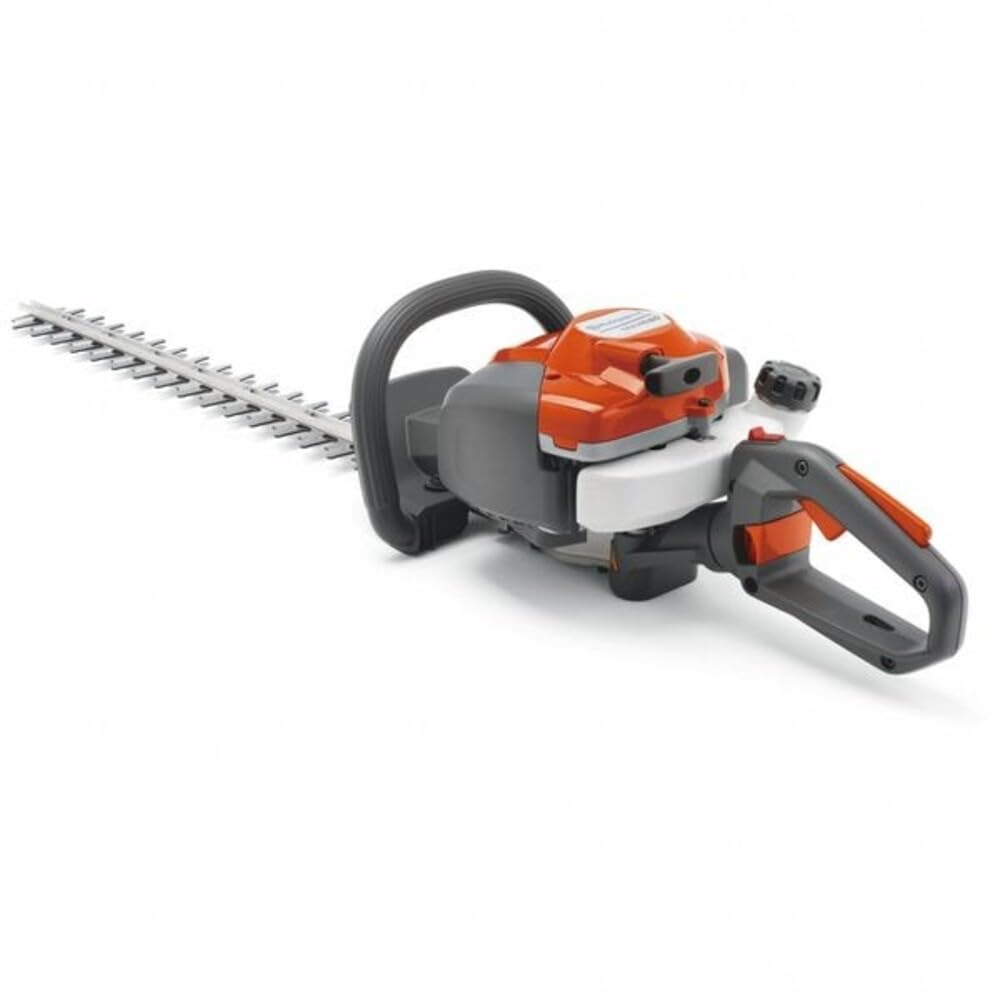
1. Husqvarna 122HD60 Gas Hedge Trimmer
Our pick — 4.5+★ from 300+ verified ratings; the strongest balance of quality and price.
The starter that does most of the pulling for you — and a handle that tilts to the hedge.
For a homeowner with a long boundary hedge and a short fuse for pull cords, the 122HD60 earns its spot through three features that work together. Smart Start pairs a starter and engine design so the machine fires up with minimum effort. A carburetor air purge pushes air out of the fuel system first, so the mix arrives ready to burn. And the stop switch snaps back to the start position by itself when you shut the engine off, so your next start is a start, not a troubleshooting session.
The 24-inch high-carbon steel blade cuts a wide swath per pass, and the dual-action design (both blade edges move, one against the other) keeps the cut smooth rather than snatching. The rear handle adjusts so you can trim the sides and the flat top of a hedge by changing the angle in your hands instead of climbing a ladder. Anti-vibration dampeners soak up the engine’s shake before it reaches your arms and hands — a real difference after twenty minutes of work. It weighs 16.2 pounds, which is middle-of-the-road for the class.
What wins people over most is the build quality, and cutting performance runs close behind — dense growth gives way, and thicker limbs up to a couple of inches get handled. The honest follow-up question is reliability: most machines start and run cleanly, but the days when it will not hold a steady run are the recurring frustration. Fuel mixing is part of the deal here, since this is a 2-cycle engine that needs oil blended into the gasoline.
Where it pulls ahead
- Smart Start plus air purge removes most of the pull-cord fight on a cold engine
- 24-inch dual-action blade covers wide swaths and leaves a cleaner finish
- Adjustable rear handle angles the head to trim hedge tops from the ground
- Anti-vibration dampeners ease stress on your arms and hands during long runs
What to weigh honestly
- Some units develop running problems and won’t stay at speed — keep fresh mixed fuel and a spare plug on hand
- 16.2 pounds gets tiring overhead on a tall hedge
- 2-cycle engine means oil measuring at every fill-up
The right buyer: someone with a big hedge who wants a proven name and a starter that behaves.
The honest catch: reliability is the one thing you cannot take for granted — treat fuel freshness as maintenance, not an afterthought.
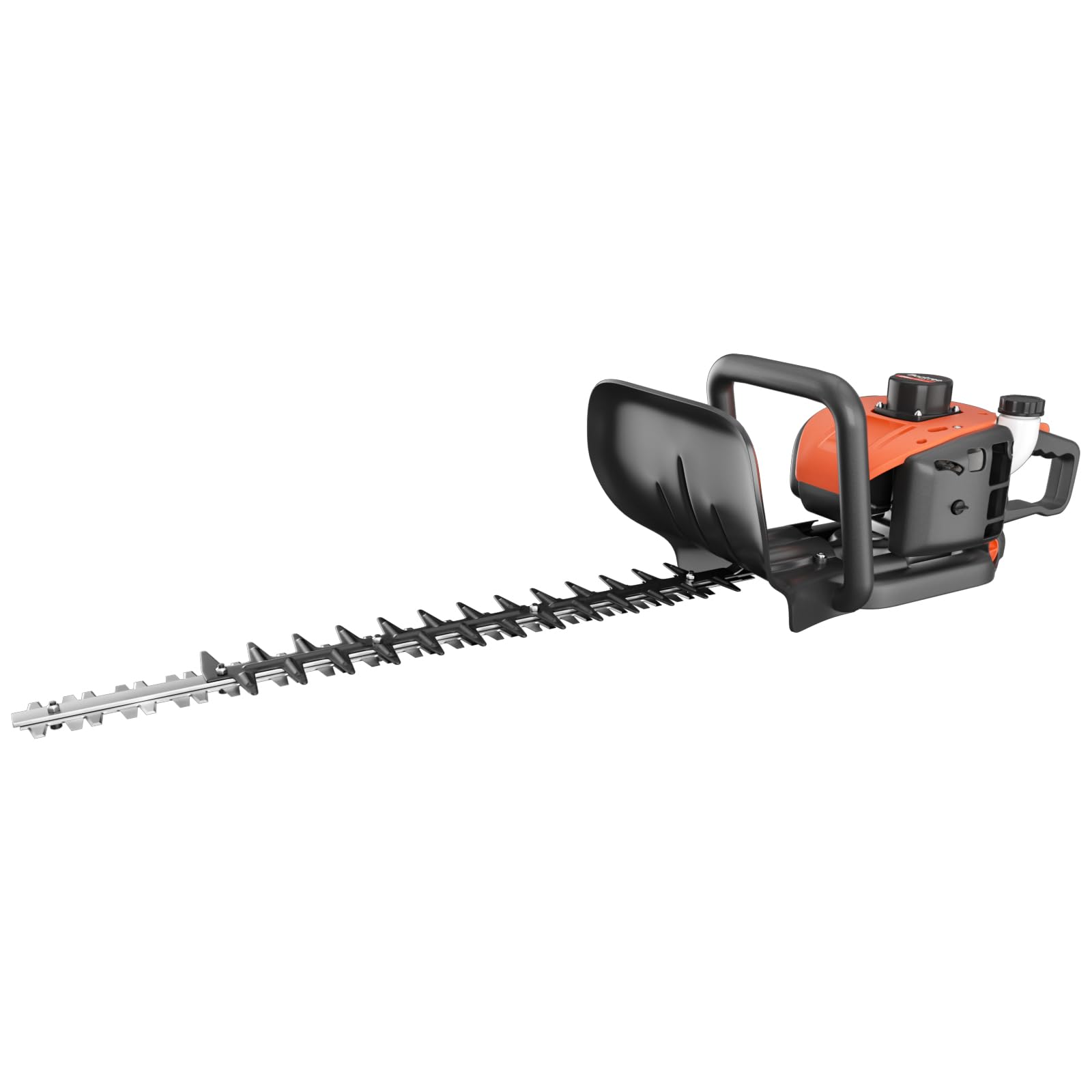
2. Baotree 24-Inch Gas Hedge Trimmer
A 24-inch blade and a one-hand pitch — the spec sheet promises a lot for the money.
The Baotree’s headline is reach: a 24-inch double-edged serrated blade sweeps a wide path across shrub rows, holly, and vines, so fewer back-and-forth passes. The 2-stroke engine is rated to cut 1-inch-thick branches, and the magnesium alloy gearbox with an anti-rust coating is the kind of detail that matters when the tool lives in a damp shed. A 3-in-1 safety package — instant brake, throttle lock, and hand guard — rounds out the spec list.
That weight is the trade-off hidden under the one-hand operating claim. The anti-vibration handle helps, but a 16-pound machine at arm’s length gets noticed.
One detail to flag: this listing carries very thin real-world feedback, so the aggressive claims about continuous run time and fatigue reduction are the manufacturer’s numbers, not something a body of owners has backed up yet. That does not disqualify it — it simply means you are an early buyer relying on the spec sheet and the safety features rather than a crowd of confirmed experiences. Treat the brake and hand guard as the practical reasons to pick it.
Price-to-feature read: for an entry-level budget that still gives you a full 24-inch serrated blade and an instant-brake safety system, the value proposition is real. The proof is thin, though, so buy it expecting to learn its quirks yourself.
Worth a look if: you want the widest blade you can get at the entry tier and the safety brake matters to you.
Look elsewhere if: you need established reliability before you spend — the SENIX and the Husqvarnas carry far more owner history.
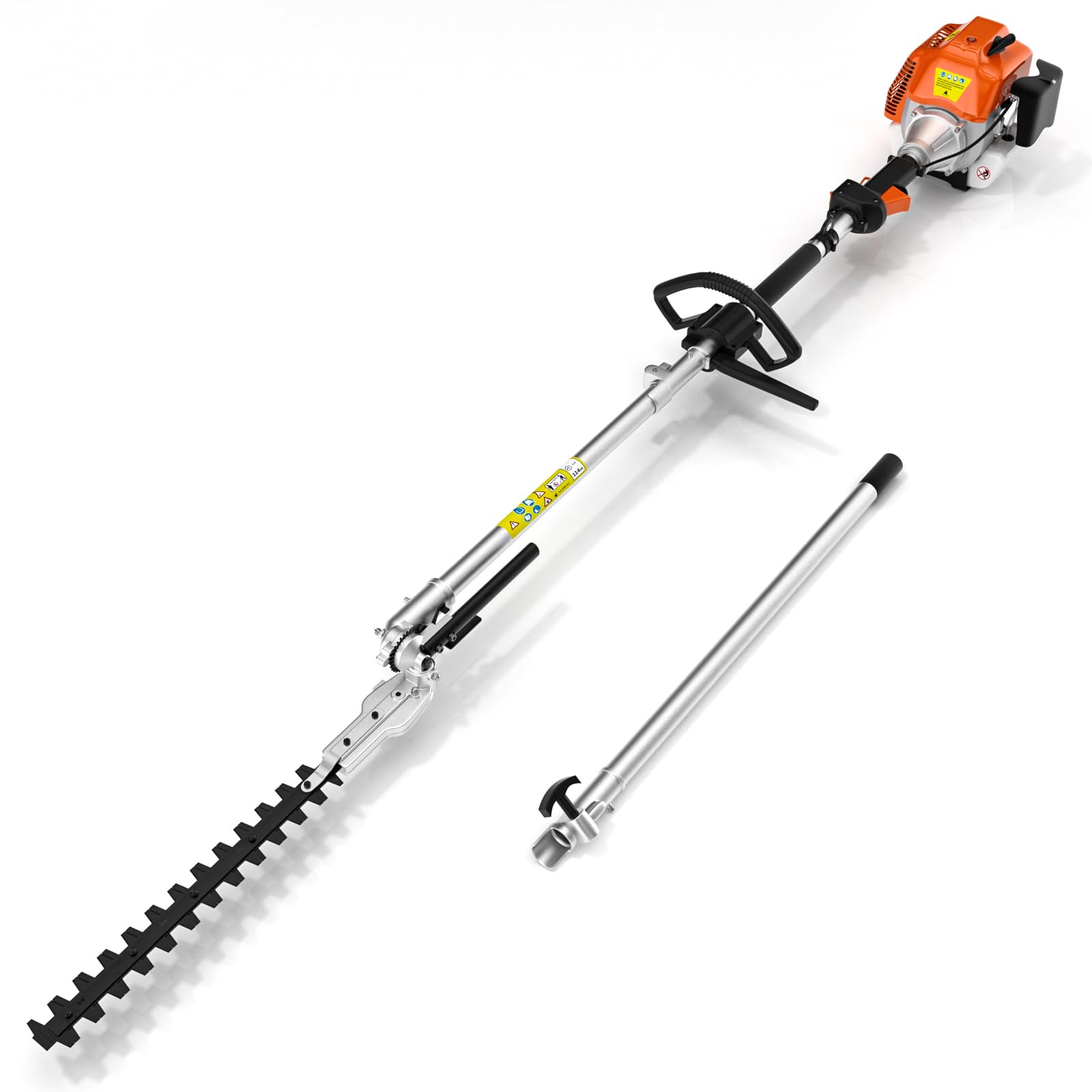
3. Bavnnro Gas Hedge Trimmer
The ladder-replacement tool: a 48cc engine on a pole that reaches 10.5 feet.
If your hedge is taller than your reach, this is the design that solves it. The 2.7-foot extension pole stretches the working length from 7.8 feet to 10.5 feet, so you trim high tops and dense shrubs from the ground. The head rotates through 10 angles from -90° to 180°, letting you swing the blades flat for a hedge top or vertical for a side face. The 48cc 2-stroke engine is the largest displacement in this list, and the 17-inch high-carbon steel blade handles the cutting.
Versatility is the word that fits, and power gets the credit — the trimmer is pitched for everything from thick brambles to overgrowth. That comes at a cost: at 22 pounds it is the heaviest tool here, and the Husqvarna 322HD60 at 11.5 pounds is a very different creature to hold. The 37-inch length is compact for storage, but a heavy pole held out at full extension is the real work.
Reliability is the honest question mark. Some units run great; others reportedly quit after the second outing. If you buy this, buy it for the reach it gives you — the ability to cut a 10.5-foot hedge without a ladder — and treat the warranty and fuel discipline as your safety net.
What it is really for: tall, awkward hedges and mixed yard cleanup where a single pole tool beats owning a trimmer and a separate hedger. The 10-angle head and extension combine into a genuinely useful tool.
The trade-off: that 48cc power and length comes in a 22-pound package, the heaviest in this lineup.
Reach for it when: your hedge tops are out of safe ladder range and you want one tool that does poles and pruning.
Think twice if: you mainly trim waist-high hedges — the weight is wasted effort on a job a smaller trimmer does easily.
4. SENIX 4QL 22-Inch Gas Hedge Trimmer

Fill it straight from the pump — no oil measuring, no two-stroke mix, and just 9.4 pounds.
You fill a can at the gas station and want to be done. The 26.5cc 4QL 4-cycle full-crank engine (a 4-cycle engine runs on plain gas, no oil mixing) runs on regular gasoline with no oil blending. The brand says 4QL technology is designed for low emissions and low fuel consumption. It stays lubricated in any orientation without stalling or oil leaking, so you can tip the blade sideways to trim a hedge’s side face. At 9.4 pounds it is the lightest model in this guide — noticeably lighter than the 16.2-pound Husqvarna 122HD60.
The 22-inch laser-cut dual-action blade handles a 1-1/8 inch cutting capacity, so twigs and heavier foliage both go through. A rotating rear handle lets you work flat along a hedge top or upright along a side without twisting your wrists. A blade cover, a spark plug wrench, and a 2.0oz/60ml bottle of engine oil ship in the box, and a 3-year limited warranty backs the tool.
Cutting performance is what earns the affection here — it slices dense hedges and thick branches with little fight. The real caveat is starting and staying started: some machines run like a champ from day one, while others are stubborn to fire and a few report early breakdowns. Do not overlook that this trimmer is not for sale in California.
Why it earns the spot
- 4-cycle engine takes plain gasoline — no oil mixing at every fill
- 9.4 pounds makes it the lightest pick here
- 1-1/8 inch cutting capacity handles twigs and thicker branches
- Rotating rear handle plus a 3-year limited warranty
The fine print
- Starting is the inconsistent part — some fire instantly, some take coaxing
- Not for sale in California
- Durability is the recurring question when things go wrong
Best for: the fuel-can purist who values light weight and zero mixing over a proven-brand badge.
Go another way if: you live in California or want the least possible starting drama — the Husqvarna’s Smart Start is steadier on a cold morning.
5. Sybrioka 26CC Gas Hedge Trimmer

Built for neighborhoods where a screaming two-stroke at 8 a.m. gets you a note on the door.
The Sybrioka’s angle is civic peace. Reduced noise output lets you work longer in noise-sensitive spots — residential streets, parks, school grounds — without drawing attention. Under the hood sits an EPA-compliant 26cc 2-cycle engine rated at 0.7kW / 7500 RPM, fed by a 0.65L fuel tank and started with a recoil cord. The double-sided blade has 33 teeth and cuts a 24-inch swath.
Against the SENIX, this trimmer’s 24-inch blade matches length but swings a heavier tool: 14 pounds versus the SENIX’s 9.4 pounds. That extra mass does buy the wider sweep per pass across medium and large yards. The low-vibration design and ergonomic handling are aimed squarely at long trimming sessions.
Performance is the thing people come back to praise, with functionality close behind — the trimmer simply does what it promises. The recurring note is heft: a chunk of owners find it a little heavy, so if you are trimming overhead for long stretches, plan your breaks. For flat, wide hedging, the weight is a fair trade for the coverage.
The case for it: a 24-inch, 33-tooth dual-sided blade with a name-the-maker noise claim and an EPA-compliant engine makes this a thoughtful choice for suburban lots where you trim season-long.
What to know: at 14 pounds it is no featherweight, so shoulder-level work will feel it.
Suits you if: noise matters where you live and you want a wide blade for big, flat hedges.
Not the pick if: you trim tall vertical faces for hours — the weight is against you there.
6. PROYAMA PHT230 Gas Hedge Trimmer
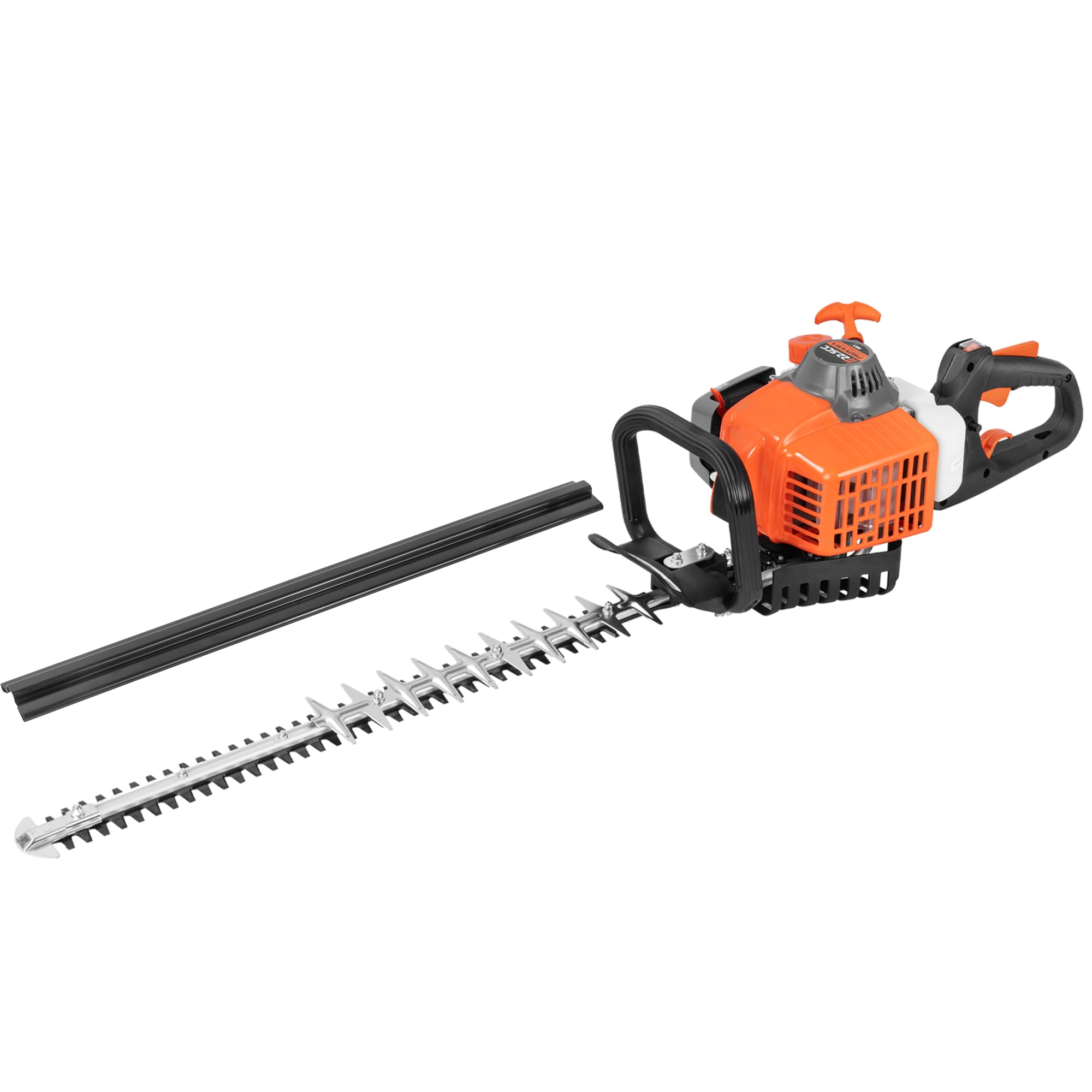
The full 180° swing on the rear handle is the angle most trimmers only half-give you.
Angles are the whole point here. The rear handle rotates a full 180°, so you can match the blade to hedge tops, sides, and low undergrowth without contorting. The 25-inch dual-action steel blades (two blades move in opposite directions) are the longest in this guide, cutting branches up to 1 inch thick with less vibration than a single-action design. A 22.5CC 2-stroke engine (a 2-stroke engine needs oil mixed into the gas) rated at 1 HP drives it all, and at 11.7 pounds the machine stays manageable for extended work.
The anti-vibration system is built to take the sting out of that engine, and a soft-grip handle keeps the tool comfortable through a long session on thick shrubs. Compared with the Sybrioka’s 24-inch blade, this trimmer adds an inch of length plus that wider handle rotation — small numbers that add up over a large yard. The 45.3-inch overall length gives it a long, balanced stance.
Real-world feedback on this model is still thin, so the 180° handle and 25-inch blade are the reasons to choose it — the specs, not a long track record, are doing the selling. If you want to trim a hedge in more positions than you can comfortably twist yourself into, that handle is worth the price of entry.
Standout spec: a 25-inch blade with a 1-inch capacity and a 180° rotating handle combine into the most position-flexible tool in this set for a mid-range outlay.
The caveat: a 22.5CC engine at 11.7 pounds means you are trading some raw cutting muscle for weight savings.
Best matched to: a homeowner who trims hedges in every direction and wants the handle to do the work.
Pass on it if: you need the most proven reliability — with limited owner history, you are trusting the specs here.
7. Husqvarna 322HD60 Gas Hedge Trimmer with 24 inch Blade

Light enough to swing all afternoon, tough enough to chew 4/5-inch twigs.
The 322HD60 is the trimmer you reach for when the hedge is big and the job is recurring. It weighs 11.5 pounds — lighter than the 122HD60’s 16.2 pounds and a world away from the 22-pound Bavnnro pole trimmer — and a 21.7cc 2-cycle engine keeps it moving without weighing you down. The 24-inch stainless steel dual-action blade cuts in either direction, which means less wrist fatigue and a cleaner finish.
The adjustable rear handle tilts to let you trim hedge sides and tops at the right angle, and the durable gear box is built for demanding residential or part-time professional use. The 4/5 inch cutting capacity covers twigs and shrubs up to that thickness. A 2-year warranty backs the tool, and for heavy seasonal work that coverage is worth noting.
Reliability is the reputation here — it starts and runs, and the power gets called out plainly. Value is where opinions split: some believe it earns its keep, others think a cheaper tool would do. That split is fair to pass along, because whether it feels like money well spent depends on how many hedges you actually own.
The strengths worth having
- Just 11.5 pounds — genuinely light for a 24-inch gas trimmer
- Stainless steel dual-action blade cuts both directions for a smoother pass
- Adjustable rear handle and a durable gear box for regular use
- Consistent starts and solid power are its calling card
Keep in mind
- 2-cycle engine still needs oil mixed into the fuel
- Value opinions are mixed for light-use owners
Pick it for: a big, hedged property you trim several times a season and a body that refuses to lift a heavy tool anymore.
skip it if: you trim one small hedge twice a year — a lighter-duty tool covers that fine.
8. Echo HC-2020 20 in. 21.2 cc Gas 2-Stroke Cycle Hedge Trimmer

Professional features, a 20-inch blade, and maintenance you can actually keep up with.
The HC-2020 wins its buyers on the blade and the upkeep. Its 20-inch double-sided, double-reciprocating razor edge blades carry twice as many cutting edges as typical bush trimmer teeth — a design aimed at a cleaner, faster cut. A zero-type grease fitting and a tool-less air filter cover make routine maintenance quick, so the tool stays sharp and breathing without a toolkit.
Quality is the thing that stands out most, with effectiveness right behind it. The 21.2cc 2-stroke engine stays light in the hand, and owners describe it as the best trimmer they have owned. The blade length is shorter than the 24-inch Husqvarnas, so you cover less ground per pass — the trade is a tighter, more precise cut for shaping.
Durability is the honest wrinkle. Most describe it as built to last, but a few have arrived with broken handles or a trigger that misbehaves. Register the tool and check it carefully on arrival.
What makes it a keeper: pro-grade blade design and easy maintenance at a mid-range price point make this a favorite for part-time professionals. The 20-inch blade is the give, precise rather than sweeping.
Watch on delivery: occasional units arrive with damage — open the box and check the handle and trigger before your return window closes.
Reach for this if: you value maintenance access and a razor-finished cut over sheer blade width.
Look elsewhere if: you want the longest blade on the block — the 25-inch PROYAMA covers more ground per pass.
9. Echo HCA-2620 Hedge Trimmer
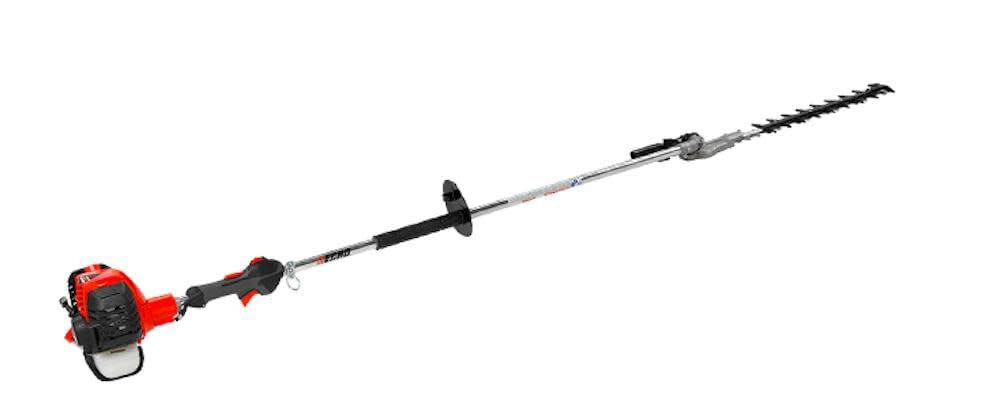
Three sharpened edges per blade and a magnesium body — the commercial-tier end of this list.
The HCA-2620 is a tool you buy when trimming is not a hobby. Its 21-inch double-sided, double-reciprocating RazorEdge blades carry three sharpened edges, and the cutting body is cast from magnesium, the same material choice that keeps professional outdoor gear light and stiff. The 21-inch cutting width walks through hedges at a smooth, controlled pace.
Against the HC-2020 above, the extra edge per blade and the magnesium construction are the step-up — the consumer Echo gets two edges and a 20-inch blade, while this commercial-grade unit gets three and a full 21 inches. It is built for pruning thick, dense hedges where clean, sharp cuts matter, and the warranty reflects that ambition: 5 years for consumer use and 2 years for commercial.
Feedback is limited for this model, so the blade and magnesium frame tell the story rather than a deep review history. For a commercial or semi-pro buyer, a blade that takes three edges to the hedge and a magnesium housing are tangible, checkable specs. This is the choice when a clean cut on a fine-leaf hedge matters to the finished look.
The premium logic: a 21-inch RazorEdge blade with three sharpened edges, a magnesium body, and a 5-year consumer warranty form a package aimed at serious pruning, not weekend upkeep. That is a real step up in build intent.
Where it asks trust: this is a premium outlay for a model with limited owner feedback, so buy it for the specs and warranty rather than a track record.
For the buyer who: earns part of a living from tidy hedges and wants three sharpened edges plus a magnesium housing to show for it.
For everyone else: a light-use homeowner gets more value from the Husqvarna 322HD60 — this tier is about professional finish and durability.
Know the Specs
2-Cycle vs 4-Cycle Engines
A 2-cycle engine needs oil mixed into the gasoline — you measure and blend it at every fill. That is why the Husqvarna units and Sybrioka ask for mixed fuel. A 4-cycle engine like the SENIX 4QL takes straight pump gasoline, with the oil kept separate in a crankcase, so there is no mixing and it can run in any position without oil leaking. The 2-cycle trade is a simpler, lighter motor; the 4-cycle trade is a more convenient fuel routine.
Blade Length and Cutting Capacity
Blade length is how much hedge you sweep per pass — a 25-inch blade covers more ground than a 17-inch one. Cutting capacity is the thickest branch the teeth can take, stated like the SENIX’s 1-1/8 inches or the Husqvarna 322HD60’s 4/5 inch. A long blade with a small capacity still jams; a short blade with a beefy capacity still finishes slowly. You want both matched to your hedge.
Rotating and Adjustable Handles
A rotating rear handle changes the angle between your hands and the blade, so you can lay the cut flat across a hedge top or turn it vertical for a side face. The PROYAMA swings a full 180°, while the Husqvarna models adjust the rear handle for the same purpose. This feature is the difference between holding a correct cutting posture and leaning awkwardly toward the work.
Anti-Vibration and Weight
Anti-vibration dampeners sit between the engine and your hands, absorbing the shake so it does not travel into your arms. Weight compounds that — a 9.4-pound tool and a 22-pound tool do the same job but feel entirely different over a long session. Lighter is easier on your arms; heavier can bring more motor and mass into the cut.
Common Questions
Do I have to mix oil into the fuel on every gas hedge trimmer?
What blade length do I need to trim a tall hedge?
Will a gas hedge trimmer cut through branches, or just leaves?
How long does the fuel in the tank last?
Is a 2-cycle engine harder to start than a 4-cycle?
Why would I want a rotating handle on a hedge trimmer?
Can I use a gas hedge trimmer near neighbors without annoying them?
Are these gas trimmers sold everywhere?
Which trimmer is best for one-handed use on small shrubs?
Do gas hedge trimmers come with a warranty?
The Bottom Line
For most homeowners, the top gas hedge trimmers winner is the Husqvarna 122HD60 because its Smart Start and air purge (features that make a cold engine easier to start) take the dread out of a cold engine, and its adjustable handle lets you trim hedge tops from the ground. If you hate mixing oil, the SENIX 4QL runs on plain gasoline at just 9.4 pounds and gives you a 4-cycle routine you can live with.
For tall hedges that exhaust your ladder budget, the Bavnnro 48cc pole trimmer reaches 10.5 feet with a rotating head. And if you want a proven, light, frequent-use tool, the Husqvarna 322HD60 at 11.5 pounds is the one to reach for. My honest nudge: check the fuel you can buy nearby before you choose between 2-cycle and 4-cycle — it is the decision that shapes every morning you own the tool.
How we choose
We do not accept paid placement. Every pick is matched to a real buyer and a real use-case; we do not hands-on test units.
Sources
Specifications: manufacturer listings and product documentation. Review insights: verified customer reviews, as of November 2026. Pricing: not shown on this page (it changes often); check the current price via the retailer link.
As an Amazon Associate, Tactical Gear Guy earns from qualifying purchases. This does not affect which products we feature.