Specs are compiled from manufacturer listings and verified buyer reviews and can change over time — please confirm the key details on the product page before buying.
The hardest part of buying a stair climbing machine isn’t the workout — it’s the fit. These machines are tall, heavy and expensive, and the wrong one either won’t clear your ceiling, won’t survive your weight, or sits loud enough that your downstairs neighbour files a complaint. So before you shop, know two numbers: your ceiling height and your body weight. Get those two right and the rest of the spec sheet matters far less.
This guide is built by comparing the manufacturers’ published specifications and the patterns across verified customer reviews, so you get each pick’s real strengths and trade-offs instead of marketing spin.
Below you’ll find eight machines sorted by the buyer they actually fit, from a 34.8-pound folding unit that tucks behind a door to a 550-lbs-capacity commercial frame with a two-year warranty. Every pick here is a genuine continuous-climb stepper, and this breakdown of the best stair climbing machine covers footprint, capacity and noise in plain terms.
Top Picks

How To Choose The Best Stair Climbing Machine
A stair climbing machine is a treadmill’s opposite: short in footprint, tall in height, and brutally honest about your fitness. It also costs enough that a return is painful. Three measurements decide whether you’re happy or returning it.
Measure your ceiling before anything else
The tallest machine in this group stands 83 inches at the top of its climb, and the manufacturer asks for a 9.2 ft ceiling so your head stays clear at full stride. Shorter units sit around 79 inches and suit a normal room. Grab a tape measure and check the ceiling above the spot where the machine will live — not the middle of the room. If you plan to put it in a basement with ductwork, measure under the ductwork.
Check weight capacity against your body weight, with margin
Capacity figures here run from 330 lbs on the lightest-duty unit up to 660 lbs on two of the heavier frames. You want headroom, not a machine working at its limit during every session. Heavy vertical climbing puts repeated shock through the frame and pedals, and a machine rated well above your weight simply has less to prove.
Understand step-up height and steps per minute
These two numbers define how hard the climb feels. Step-up height is how far each pedal rises — 6.9 inches is a natural stair-like rise, while 9 inches mimics a commercial gym unit and burns noticeably more per minute. Steps per minute (SPM) is your pace range; a machine reaching 164 SPM gives you short quick steps, and one reaching 188 SPM lets you sprint. Beginners should look at the low end too — a 15 SPM floor is a genuine warm-up pace.
Decide between folding and fixed
A folding climber typically weighs well under a hundred pounds and can be wheeled into a corner or storage position after each session. Fixed commercial frames run from around 220 lbs into the 400s and stay put. If your training space doubles as a living room, folding wins; if you have a dedicated gym corner, the heavier frame is steadier under hard effort.
Side-by-Side Comparison
| Model | Best For | Step Range (SPM) | Weight Capacity | Resistance Levels | Amazon |
|---|---|---|---|---|---|
| Fitvids Stair Stepper Machine★ Best Overall | Commercial feel at home | — | 375 lbs | 15 | Amazon |
| YOLEO Magnetic Stair StepperApartment Pick | Apartments and small rooms | — | 660 lbs | 16 | Amazon |
| Echelon Stair ClimberApp-Connected | App-guided home cardio | — | — | 3 inclines | Amazon |
| IQIRAF Commercial Grade Climber | Tall users and quiet homes | 15–164 | 400 lbs | 15 | Amazon |
| VEVOR Stair Stepper Machine | Big-screen metric tracking | 28–168 | 330 lbs | 15 | Amazon |
| Efficraft Commercial 90% Pre-Assembled | Heavy users wanting warranty | 15–188 | 550 lbs | 15 | Amazon |
| GMWD Stair Stepper Machine | Auto-locking pedal safety | 24–164 | 660 lbs | 15 | Amazon |
| Niceday SC2 Commercial Climber | Serious home gym setups | 20–164 | 397 lbs | 25 | Amazon |
Detailed Reviews
1. Fitvids Stair Stepper Machine
Our pick — 4.0+★ from 100+ verified ratings; the strongest balance of quality and price.
A gym-grade climber built to feel like the one at your health club, at home.
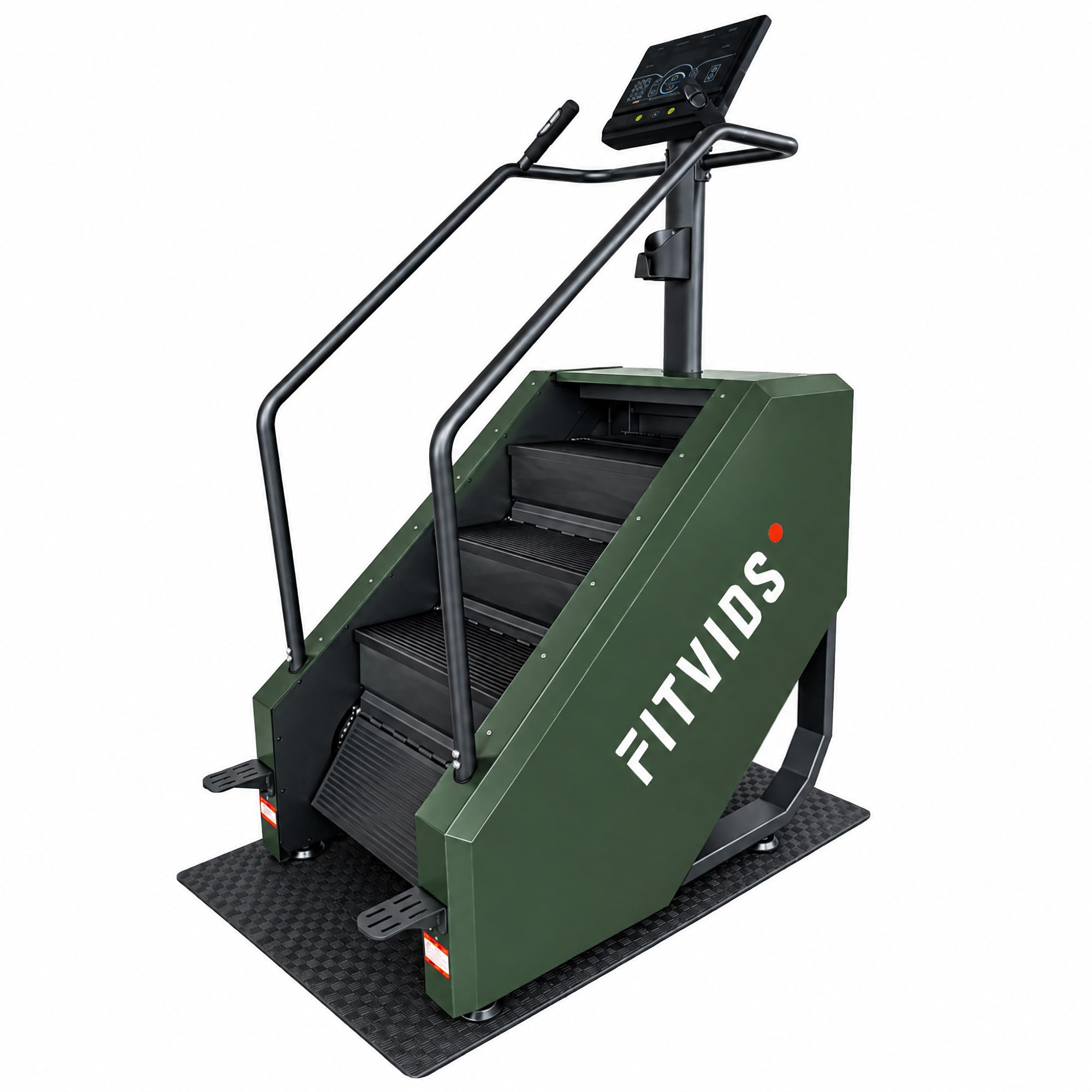
This is the pick that wins on sheer construction. At 418 pounds of alloy steel and plastic, the Fitvids is the heaviest machine in this whole roundup — roughly twelve times the 34.8 pounds of the YOLEO folding stepper. That mass is the point. Heavy frames don’t rock, don’t creep across the floor and don’t flex when you drive hard through a step. Owners describe it as a genuine gym-grade machine they loved, and the build quality is the single thing they talk about first.
You get 15 intensity levels to dial from easy walk to something you’ll feel in your glutes and calves, plus an electronic display for time, calories burned, heart rate, mileage and steps. There’s a reading rack and a water bottle holder so a long session is self-sufficient. Assembly is a job that surprised people in a good way — it goes together without a fight.
The catch is the 418 pounds. The Fitvids is not a machine you drag to a new spot on a whim; once it’s set, that’s its corner. The 54 x 38 x 51 inch footprint means you need real floor space with room to climb, and it’s the widest unit here at 38 inches. Its 375-lb capacity sits under the 400 lbs of the IQIRAF, and well under the 660-lb frames elsewhere on this list, so if you’re a heavier user look further down.
Where it earns its keep
- 418 pounds of alloy steel that stays rock-solid through hard climbs
- 15 resistance levels cover warm-up through intense intervals
- Console tracks time, calories, heart rate, mileage and steps together
- Reading rack and bottle holder built in for longer sessions
What you’re signing up for
- 418 pounds is genuinely hard to move once placed
- 375-lb capacity trails the 660-lb frames on this page
- 38-inch width needs more floor than most of the other picks
Best paired with: a dedicated gym corner where the machine can stay put and you want commercial-grade solidity.
Measure first: the 38-inch width and 418-lb heft make this the least movable pick here.
2. YOLEO Magnetic Stair Stepper for Home
Thirty-four pounds that folds away, holds 660 lbs, and still climbs quiet.
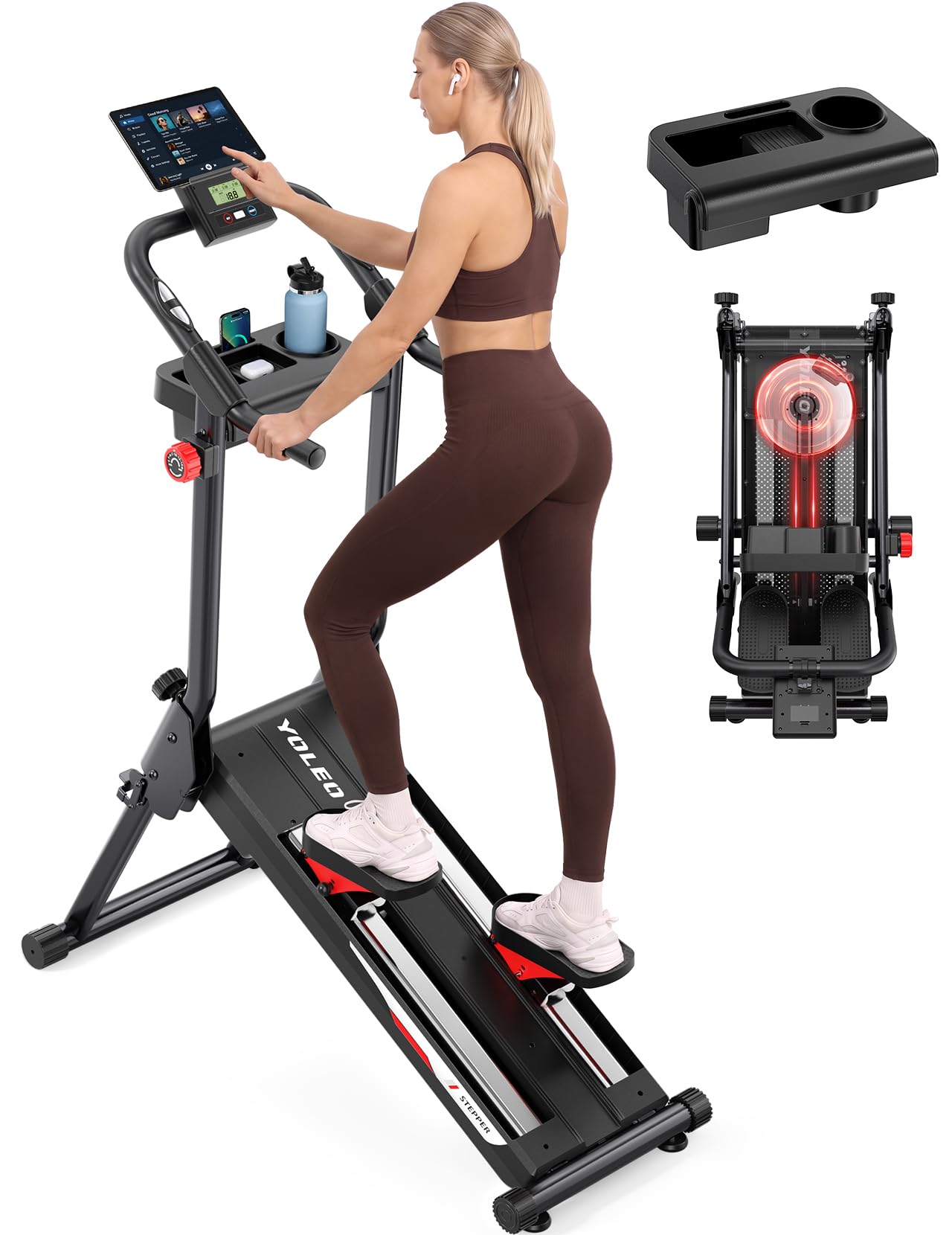
The YOLEO answers the question that kills most home gym plans: where does it live? Folded, it tucks into a corner with a dedicated storage angle, and at 34.8 pounds the whole thing rolls on transport wheels or lifts by the carry handle. That’s the lightest machine in this group by a wide margin — the Fitvids weighs 418 pounds, so the gap is enormous in practice. You can set this up in a bedroom and reclaim the floor by dinner.
Don’t mistake light for flimsy. The frame is a reinforced dual-triangle structure in steel with stainless-steel wear-resistant sliding rails, rated to 660 lbs — double the 330 lbs the VEVOR will take. Two incline modes give you a 77° steep climb for glutes and legs and a 61° endurance incline closer to outdoor jogging, and three pedal angles let you shift which muscles take the load. There’s a heart-rate sensor, an LCD readout and sweat-proof handlebars, so a full session is possible without extra gear.
The honest caveat is noise. The magnetic system is built for apartments and most owners find it very quiet in use, but the noise reports are split, and a persistent squeak has turned up for a portion of buyers. If you’re noise-sensitive, this is a machine to break in gently and check the assembly bolts rather than assume silence. It’s also a resistance stepper, not a motorized stairmill — you drive the pace with your own legs.
The real draw: 34.8 pounds and a folding storage angle mean this climber coexists with a normal living space instead of taking it over.
What to check on arrival: the noise feedback splits between very quiet and occasional squeaking, so give the frame a once-over and tighten as needed before you judge it.
Reach for this if: you rent, you’re short on floor space, or you want a climber you can put away between sessions.
Look elsewhere if: you want a motorized stairmill that sets the pace for you — this one is leg-powered.
3. Echelon Stair Climber
The compact climber that pairs with your phone and folds flat when you’re done.
At 39 x 22 x 55 inches, the Echelon takes up roughly the floor of a wide armchair — noticeably tighter than the 57.5 x 32.3-inch footprint of the IQIRAF. It folds either upright or flat and rolls on transport wheels, so a small apartment can host it. The 73-pound frame is light enough for one person to shift but heavy enough to feel planted.
The feature that earns it a spot is Bluetooth plus the Echelon Fit App. You get time, speed and calories on a 3-inch display, and the app adds saved workouts, guided classes and progress stats. If accountability is what keeps you climbing, that pairing is the reason to pick this over a bare-bones unit. Three incline levels and adjustable resistance let you move from light to hard, and the two foam-covered handle positions plus 11 x 7 inch foot platforms suit users of most heights.
Two honest notes. It uses two AA batteries, so keep a spare pair on hand. And the feedback on noise and sturdiness is mixed rather than universal — some find it quiet, others hit squeaks, and handle durability has come up. It stays an easy pick to live with in a small space, but if absolute silence matters, a magnetic unit is the safer bet.
Why it fits small homes: a 39 x 22 inch footprint plus flat-fold storage makes this the most space-forgiving motorized-style climber in the group.
Plan for this: two AA batteries and an app on your phone — the connectivity is the whole point of choosing it.
Suits you if: guided classes and a progress app keep you honest, and your workout space is genuinely tight.
Think twice if: you expect whisper-quiet operation or want zero dependence on a phone app.
4. IQIRAF Commercial Grade Stair Climber
Built tall for tall rooms — and it stops dead the instant you do.
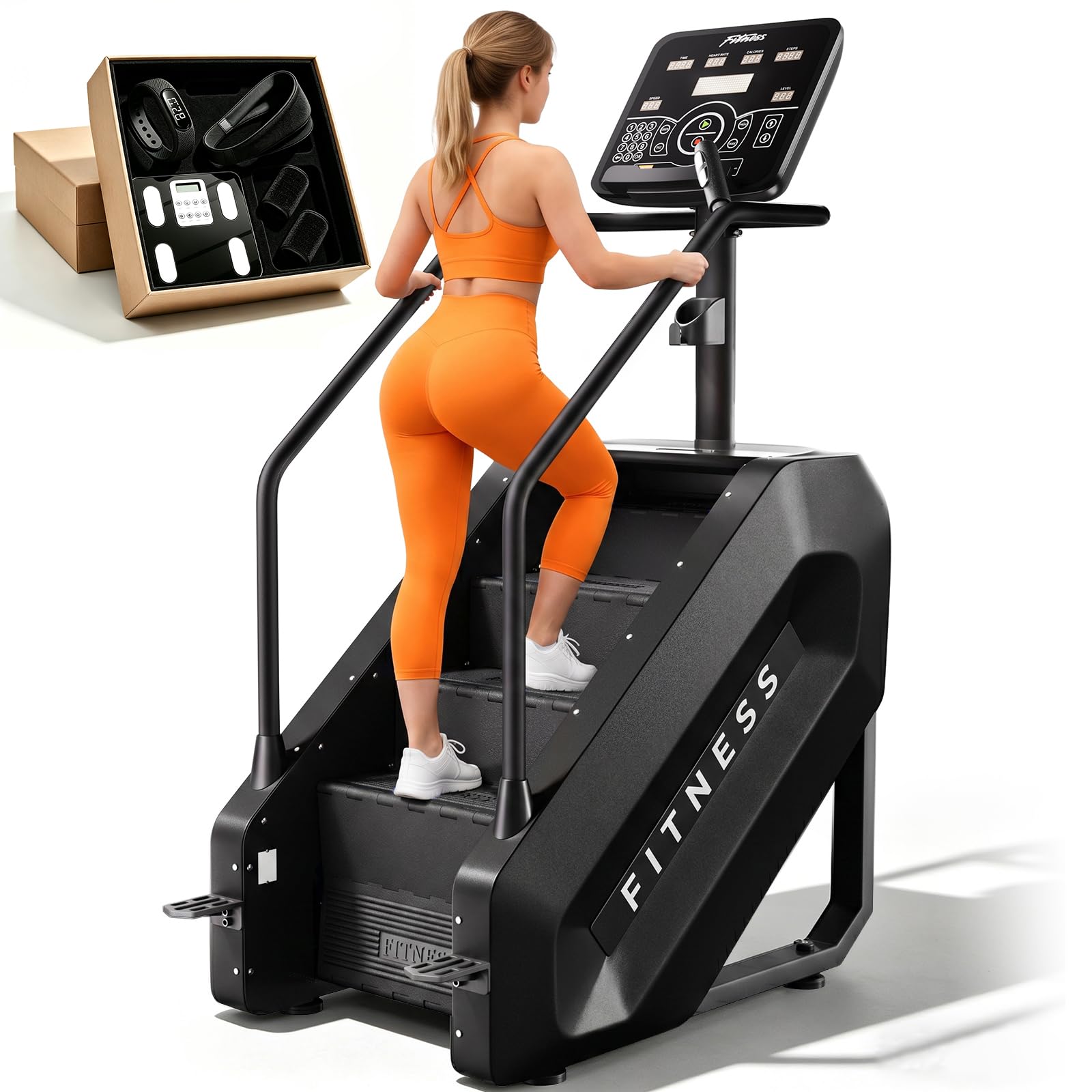
The safety engineering here is the headline. A gravity-sensing electromagnetic brake halts the machine within 0.3 seconds of detecting a stop, backed by non-slip pedals and an emergency stop button. For anyone stepping off mid-climb or sharing the machine with a beginner, that short stop window is the difference between a wobble and a fall. It rides an alloy-steel rust-resistant frame rated to 400 lbs — more headroom than the Fitvids’ 375 lbs.
The climb runs 15 resistance levels across a 15–164 steps-per-minute range with 8 preset programs, and the sweat-resistant LED console shows heart rate, calories, steps and time via hand pulse sensors. The industrial HDPE housing is designed to keep operation under 45 decibels, which is roughly a quiet conversation — useful if you climb early. It arrives 90% pre-assembled, with tools, and the maker’s stated 30-minute setup means you can climb the same evening.
Two things to plan around. The machine stands 81.9 inches tall and wants a recommended ceiling around 8 ft 6 in, so a low room is out. And the manufacturer lists no warranty, which is unusual at this tier — check the listing carefully before you commit.
The safety case
- Electromagnetic brake stops the machine within 0.3 seconds of a detected stop
- Non-slip pedals and an emergency stop button as backup
- Housing designed to hold operation under 45 decibels
- 15–164 steps per minute with 8 preset programs
Check before ordering
- 81.9-inch height needs a room near the recommended 8 ft 6 in ceiling
- No warranty listed by the manufacturer
- 57.5 x 32.3-inch footprint needs a real corner
Great match for: a household where several people of different abilities share one machine and safety is the deciding factor.
Mind the ceiling: at 81.9 inches tall it wants room above your head, so measure before you buy.
5. VEVOR Stair Stepper Machine
Six steps, a 14.5-inch screen, and a pace range that tops out at 168 SPM.
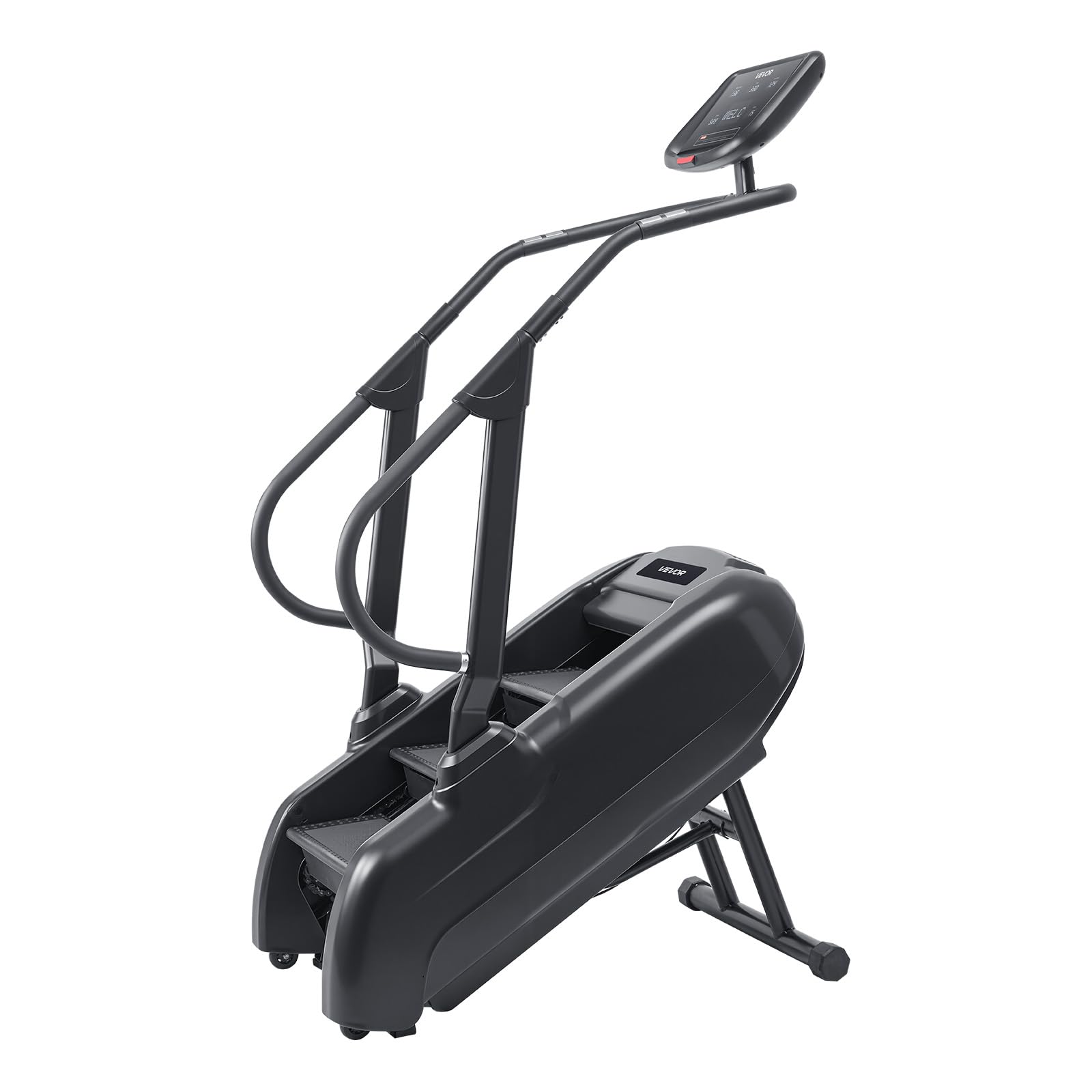
The reason to look at the VEVOR is the console and the pace range. A 14.5 inch LED screen shows time, calories, speed and heart rate via handlebar contact sensors, so you can track a workout without a phone or app. Fifteen speed levels run from 28 to 168 steps per minute, more headroom than the 15–164 SPM of the IQIRAF, which means faster sprints at the top end.
The climb is a six-step continuous structure with 17 x 9 inch stabilized textured steps that mimic a natural stair pattern, aimed at glutes and legs. An infrared auto-stop reacts instantly as a safety layer, and the 330-lb max load is the lowest of the machines here — the YOLEO’s frame takes double that. Dual transport wheels move it, and the 43 x 28 x 79-inch body is compact for a full-size stepmill, fitting ceilings around 8.8 to 9.8 ft.
Be clear-eyed on reliability. Quality and reliability feedback is genuinely split, with some units performing and others stopping after only a couple of days. That makes the warranty and returns policy the thing to confirm on the listing before you commit. If you buy it, put it through a hard test in the first two days.
What it does well: the 14.5-inch screen and 28–168 SPM range make it a self-contained way to track fast interval work.
The one risk: reliability feedback splits between working great and failing early, so confirm the return window covers a thorough first-week test.
Consider it if: you want a big screen and a fast top pace without syncing to an app.
Check first: the 330-lb capacity is the lowest here, so heavier users should step up to a higher-rated frame.
6. Efficraft Commercial 90% Pre-Assembled Stair Master
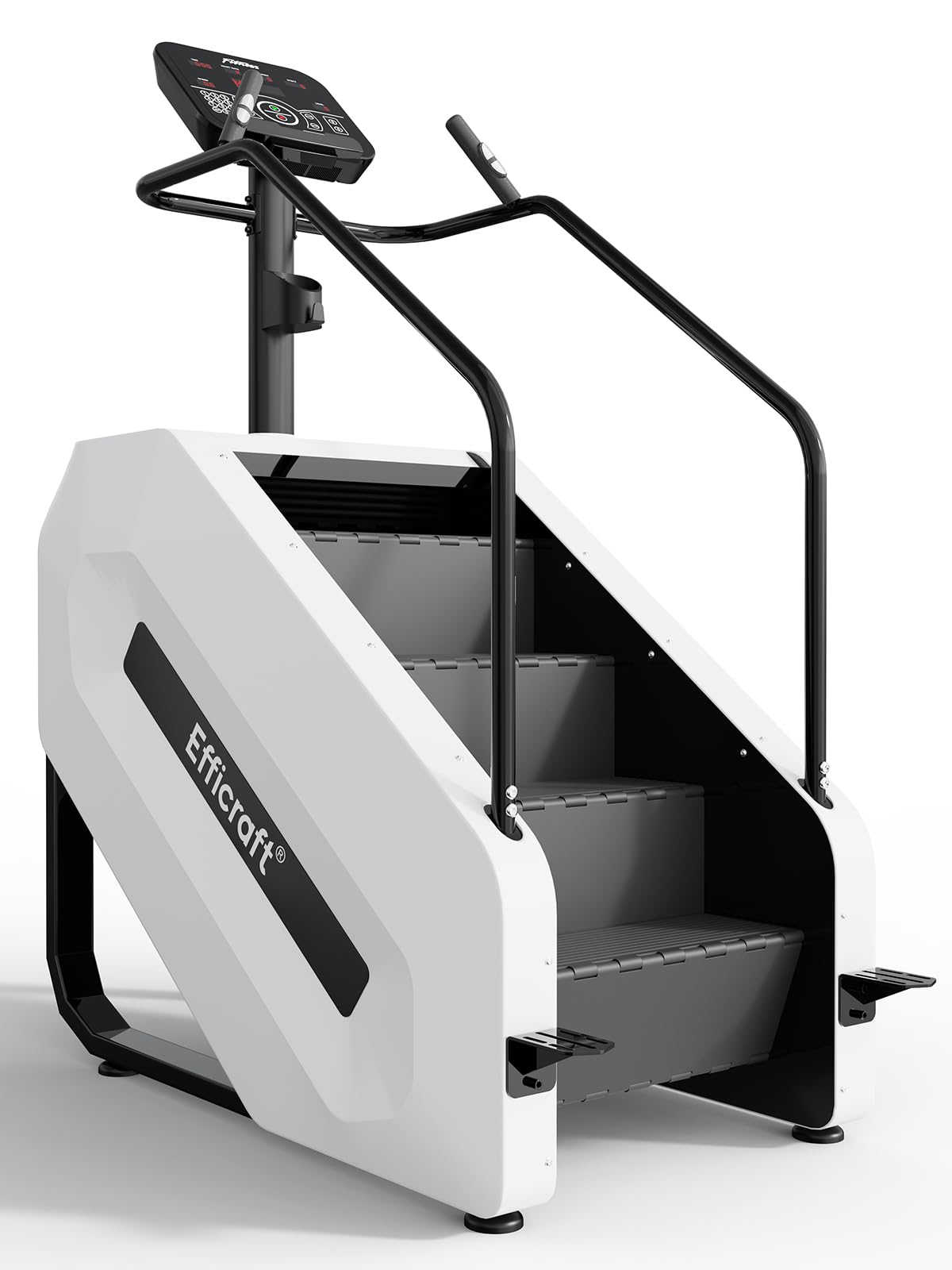
A 408-pound frame rated for 550 lbs, with a two-year warranty behind it.
For a heavy user, this is the safe call. A reinforced steel frame with a heavy-duty ABS shell and a 408-pound body resists wobble through hard sessions, and the 550-lb capacity sits well above the 400 lbs of the IQIRAF or the 375 lbs of the Fitvids. The 2-year warranty is the longest stated here and covers the part that matters most — the frame and drive.
The training coverage is generous too. Fifteen speed levels run from 15 to 188 steps per minute, the highest top-end pace in this group, and 12 built-in programs vary intensity for you. The LED console shows time, steps, calories and speed, and pulse sensors in the multi-grip handrails track your heart rate. Steps measure 8 inches high with 9 inches of tread, giving your whole foot room to land.
Two spatial facts need checking. At 56 x 33 x 83 inches with a recommended 9.2 ft ceiling, it wants a tall room, and the maker asks for 34 inches of doorway clearance to get it through. Also note the manufacturer text lists 550 lbs in one place and 375 pounds in the spec block — confirm the exact figure on the listing before relying on it for a heavier climber.
The reason it’s here: 550-lb capacity plus a 2-year warranty is the most reassuring combination on this page for a heavier user.
Do this before ordering: measure both ceiling height and your narrowest doorway — 34 inches of clearance is required to get the 408-lb unit inside.
Built for: heavier climbers who want capacity headroom and a warranty covering the frame.
Be ready for: a tall machine that needs a 9.2 ft ceiling and a doorway wide enough to pass it through.
7. GMWD Stair Stepper Machine
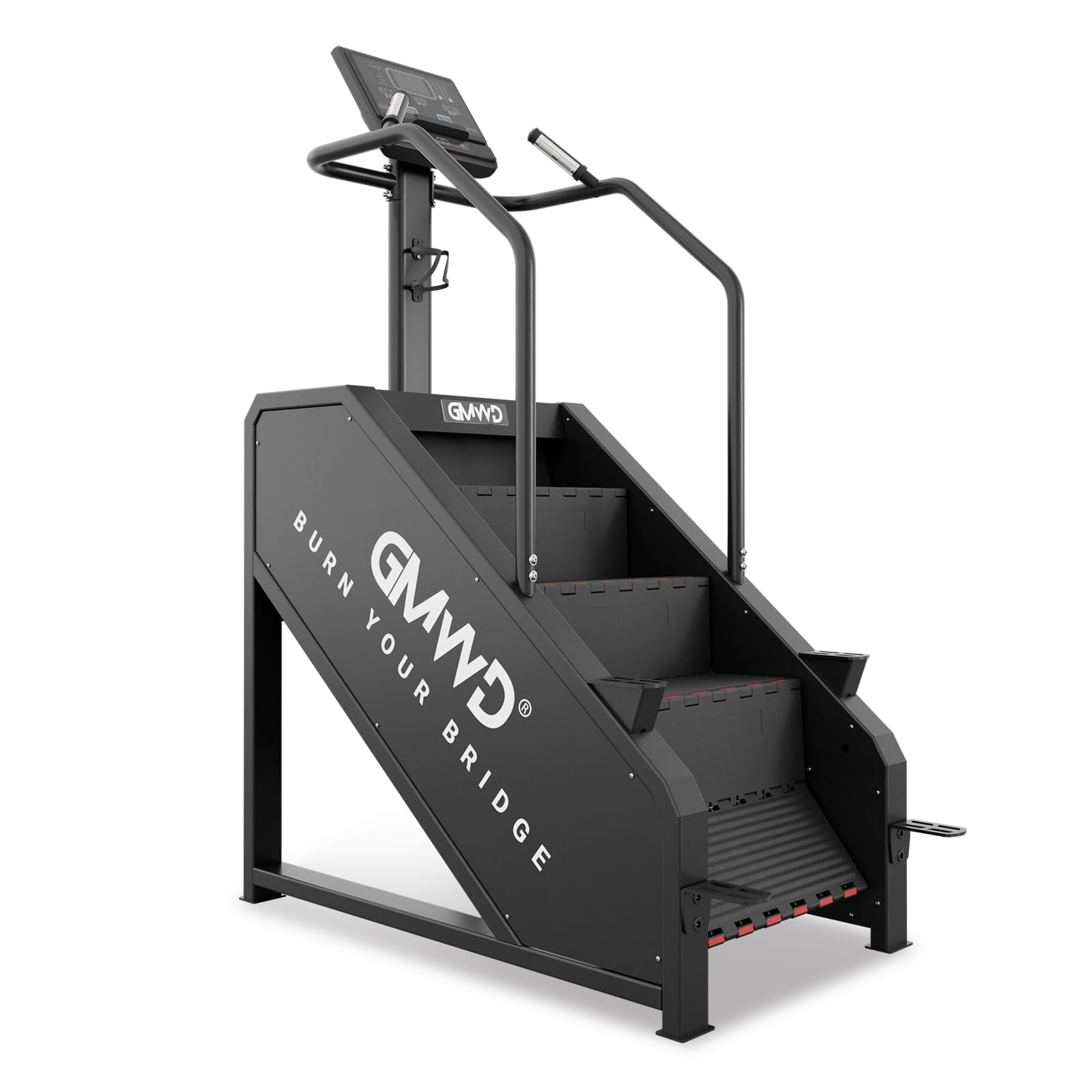
Pedals that lock on their own, and a 660-lb frame built to match.
GMWD leads with safety in a way the others don’t: gravity-sensing electromagnetic braking pairs with an anti-slip surface, and the pedals lock automatically so they can’t spin free when you step off. You enter your profile, press start, and the machine takes over the safety. For a mixed household with kids or anyone unsteady on their feet, that auto-lock is a real reason to pick this over a unit with a plain emergency button.
The frame is alloy steel rated to 660 lbs — matching the YOLEO’s top capacity and exceeding the IQIRAF’s 400 and the Efficraft’s 550. Speed runs 24–164 steps per minute, with a 17.3-inch LED screen tracking heart rate, calories and other metrics, plus integrated pulse sensors and ergonomic handrails for multiple climbing positions. Step area measures 9.4 inches high by 22 inches wide, a commercial-size footing, and step-up height is a full 9 inches. Dimensions come in at 54 x 30 x 77 inches with a recommended 8 ft 8 in to 9 ft 8 in ceiling, and it arrives 90% assembled.
Confirm the exact capacity and dimensions against the listing — the maker’s text lists 660 lbs in one place and 50 x 30 x 80 inches in the spec block. Owners say it performs as expected and rates the quality highly, though the review history is short, so a soak test in week one is wise.
Made for: households that need automatic pedal locking and a very high weight capacity in one frame.
Worth noting: the 660-lb rating is the standout draw, but verify it on the listing since the spec block differs.
8. Niceday SC2 Commercial Stair Climber
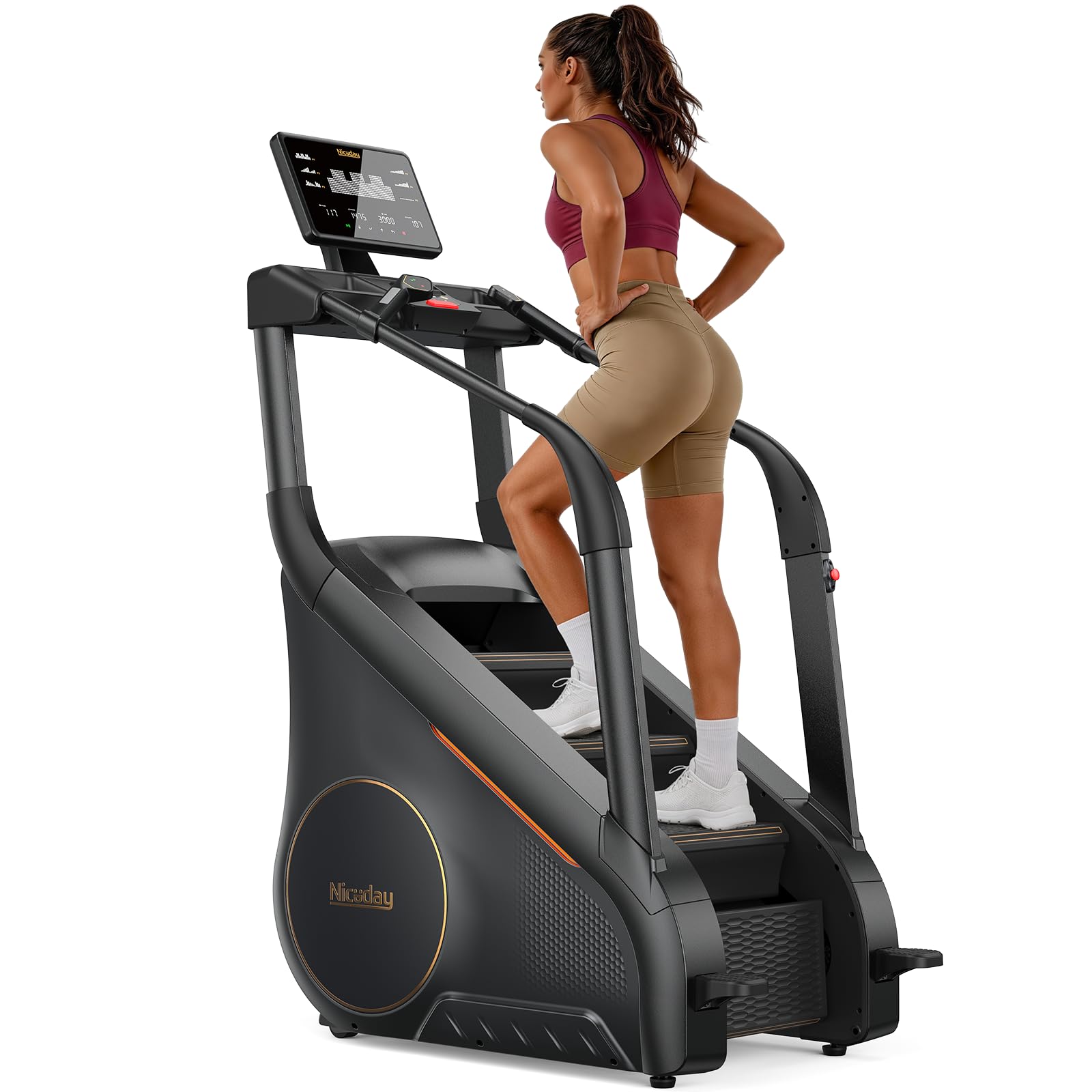
Twenty-five resistance levels, a 15.6-inch touchscreen, and pedals that float.
The SC2 gives you more fine-tuning than any other climber here. Twenty-five precision resistance levels across a 20–164 SPM range let you nudge intensity in small steps, and the decoupled floating pedal design mimics a natural climbing stride. Its 35° climb angle is built to load the glutes while easing joint stress.
Above the pedals sits a 15.6-inch tiltable touchscreen for workout data, 6 preset programs, hand-grip heart-rate monitoring, and a 15W wireless charger for your phone. Safety is layered: dual infrared sensors activate protection when pets or infants come close, a 44-lb minimum weight lock prevents accidental starts, and three pause buttons plus two emergency stop buttons sit within reach. A full-coverage handrail and dual assist pedals help when you tire.
It’s built for a dedicated room. The D-frame structure with four-point base supports weighs 324 pounds and supports up to 397 lbs — less capacity than the 660-lb GMWD or YOLEO frames. The 57.87 x 28.19 x 75.39-inch body needs real floor, and it’s the priciest pick here, arriving 90% pre-assembled with a 2-year parts and 1-year frame warranty.
What you’re paying for
- 25 resistance levels for the finest control on this list
- 15.6-inch tiltable touchscreen and a 15W wireless phone charger
- Dual infrared sensors and a 44-lb minimum weight lock add safety layers
- 2-year parts and 1-year frame warranty
Know before you commit
- 397-lb capacity trails the 660-lb frames here
- 324 pounds and a wide body demand a permanent space
- The highest-tier price on this page
The fit: a serious home gym with room to spare, where granular resistance and a big touchscreen justify the top tier.
The trade: 397-lb capacity is modest next to the 660-lb climbers, so factor your body weight in.
Know the Specs
Step-Up Height
This is how far each pedal rises between steps. A 6.9-inch rise feels like a natural staircase; a 9-inch rise mirrors a commercial gym unit and burns more per minute. If you have knee or hip limits, the shorter rise is kinder, while a taller step is harder work and better for building power.
Steps Per Minute (SPM)
SPM is your pace range — the slowest and fastest the pedals move. A 15 SPM floor is a gentle warm-up walk; a 188 SPM ceiling is a near-sprint. Beginners should care about the low end, sprinters about the top end. The spread between the two numbers matters more than either figure alone.
Weight Capacity
The maximum body weight the frame and pedals are built to bear. Ratings here span 330 lbs up to 660 lbs. Pick a machine rated comfortably above your weight so the frame isn’t straining at every session, and confirm the figure on the listing since spec blocks sometimes disagree.
Machine Weight
Heavier machines resist rocking and walking across the floor; lighter ones fold and move. A 408-pound fixed frame stays planted, while a 34.8-pound folding unit tucks away. Neither is better — pick based on whether the machine lives in a dedicated gym or a shared room.
Common Questions
What ceiling height do I need for a stair climbing machine?
What is the difference between a stair stepper and a stair climber?
Will a stair climbing machine fit through a standard doorway?
How loud is a stair climbing machine in an apartment?
Can a heavy user use a home stair climber?
How long does it take to assemble a stair climber?
Do I need an app or subscription to use a stair climber?
What safety features should I look for on a stair climber?
Is a stair climber better for your joints than a treadmill?
How much floor space does a stair climber take up?
The Bottom Line
The best stair climbing machine for most homes is the Fitvids Stair Stepper. Its 418-pound alloy-steel frame stays planted, the 15 resistance levels cover real cardio, and the console tracks your whole session. If space is the problem, the YOLEO folds away at 34.8 pounds and still takes 660 lbs. And if safety and capacity top your list, the GMWD with its auto-locking pedals and 660-lb rating is the one to reach for.
Owner feedback keeps returning to the same two points — build quality and quiet operation — so a magnetic or well-damped frame pays off the longer you own it.
How we choose
We do not accept paid placement. Every pick is matched to a real buyer and a real use-case; we do not hands-on test units.
Sources
Specifications: manufacturer listings and product documentation. Review insights: verified customer reviews, as of November 2026. Pricing: not shown on this page (it changes often); check the current price via the retailer link.
As an Amazon Associate, Tactical Gear Guy earns from qualifying purchases. This does not affect which products we feature.